

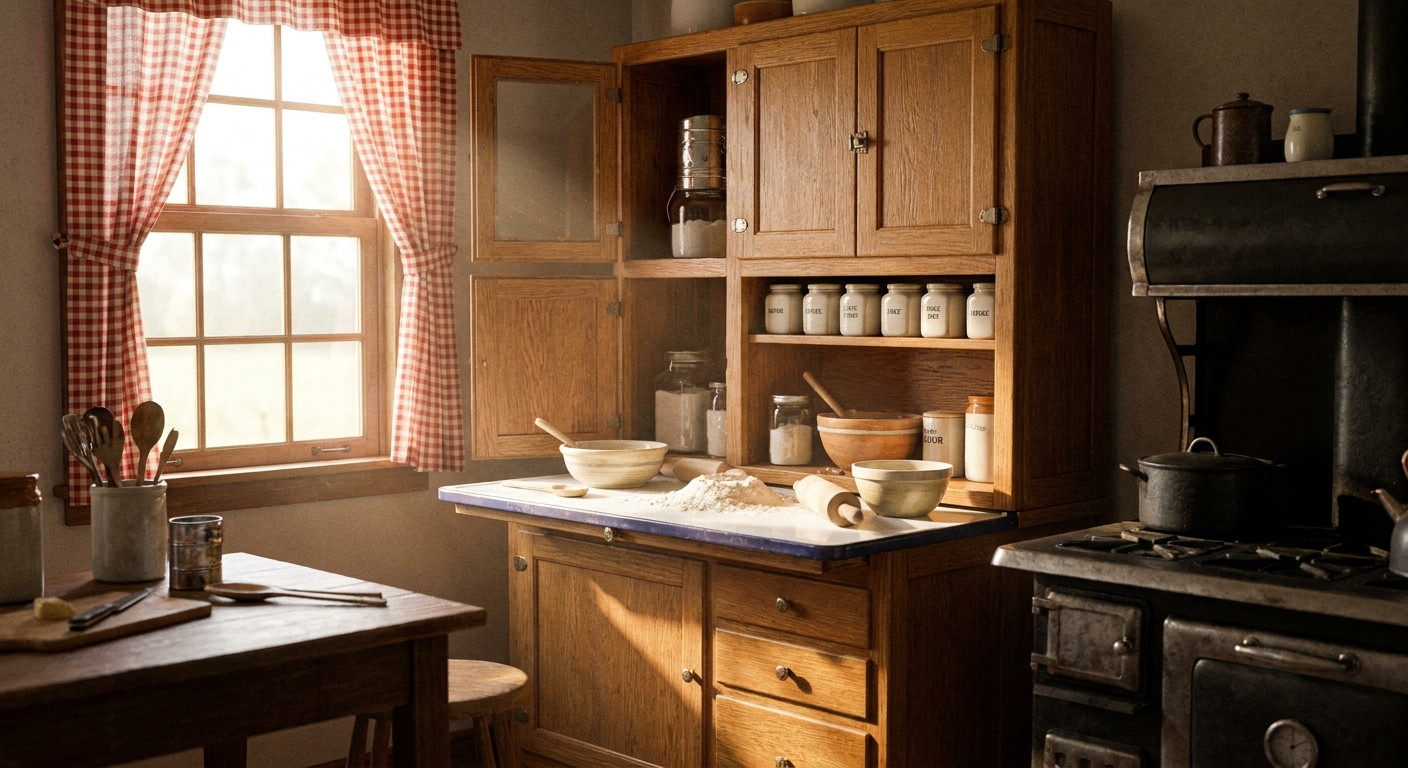
Walk into a modern kitchen, and you see a showroom.
It is pristine. It is white. It feels like an operating room.
Now, step into a kitchen built in 1940.
You see a workshop.
Before the “open concept” obsession took over, kitchens were distinct rooms designed for serious work. They were packed with clever gadgets, specific storage, and durable materials that could take a beating.
We traded them for islands the size of aircraft carriers and cabinets that fall apart in ten years.
Here are 25 genius kitchen features that we foolishly left behind, and why you should consider bringing them back.
1. The Pull-Out Cutting Board
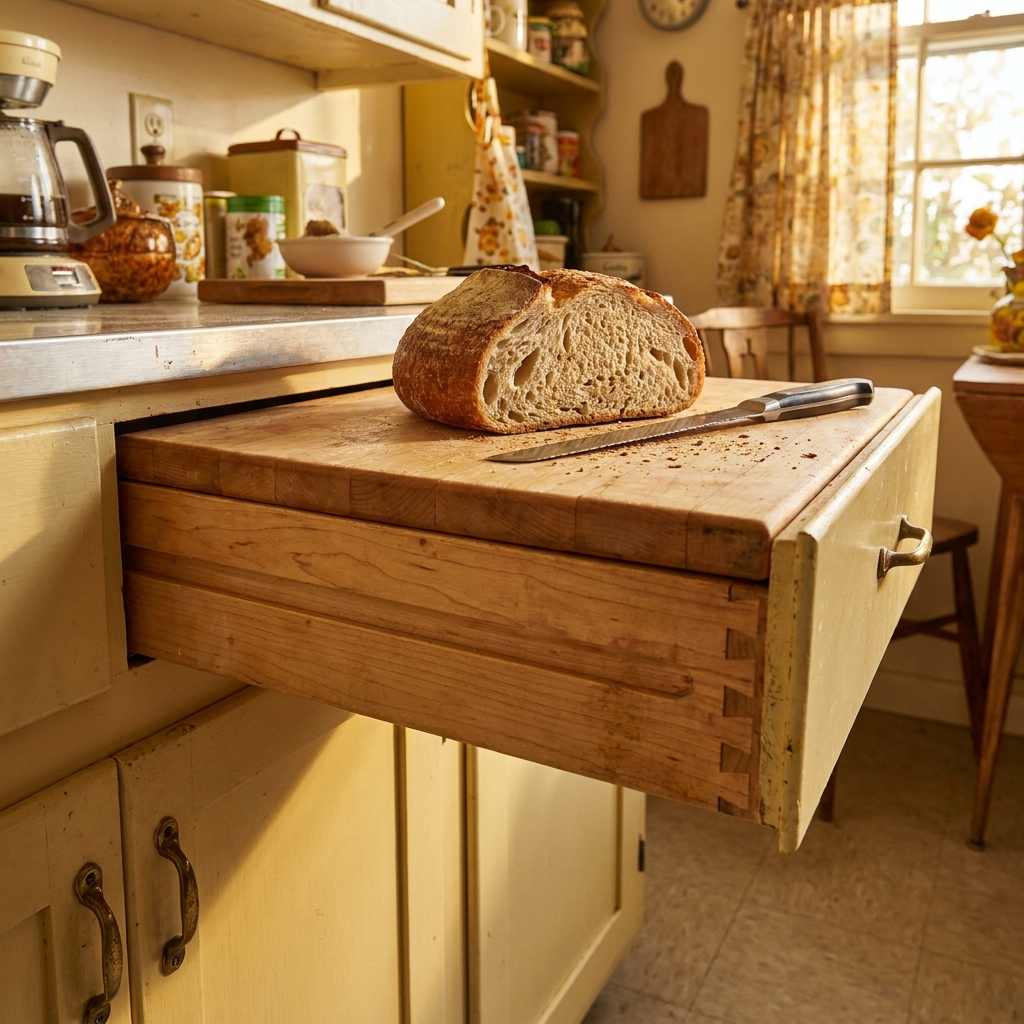
If you grew up in a mid-century home, you remember this board.
It was a slab of hardwood hidden right above the silverware drawer.
You did not need to hunt for a cutting board. You did not clutter the counter. You just pulled it out, sliced your sandwich, and wiped it down.
It was instant counter space, exactly when you needed it.
How to bring it back: This is an easy retrofit for custom cabinets. Just ask for a “bread board” slot.
2. The Double Drainboard Sink
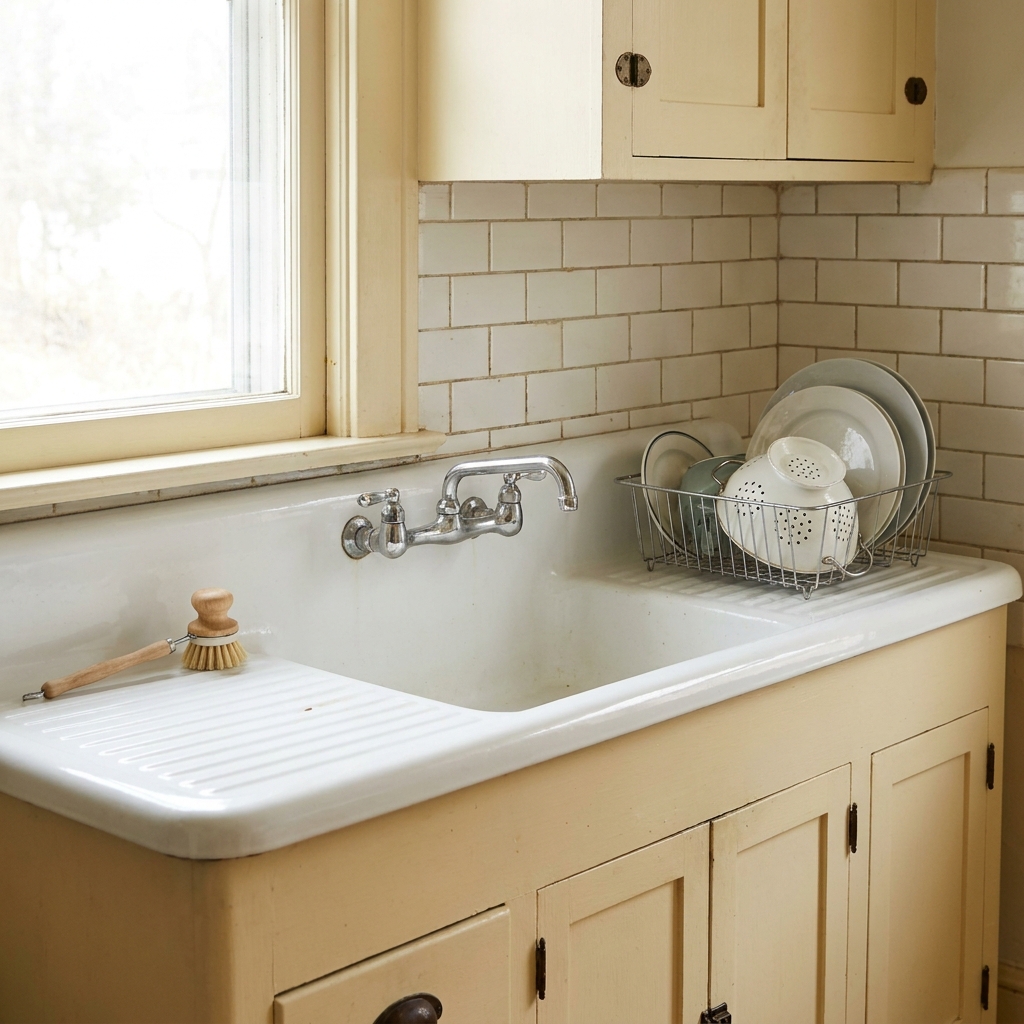
Modern sinks are just holes in the counter.
The vintage “farmhouse” sink was a beast. It was five feet of cast iron coated in porcelain.
It had built-in drainboards on both sides. The water ran right back into the sink.
You could defrost a turkey, wash a dog, or dry a dinner party’s worth of dishes without getting a drop of water on the floor.
How to bring it back: Buy a vintage refurbishment or a high-end reproduction. It will be the centerpiece of the room.
3. The Hoosier Cabinet
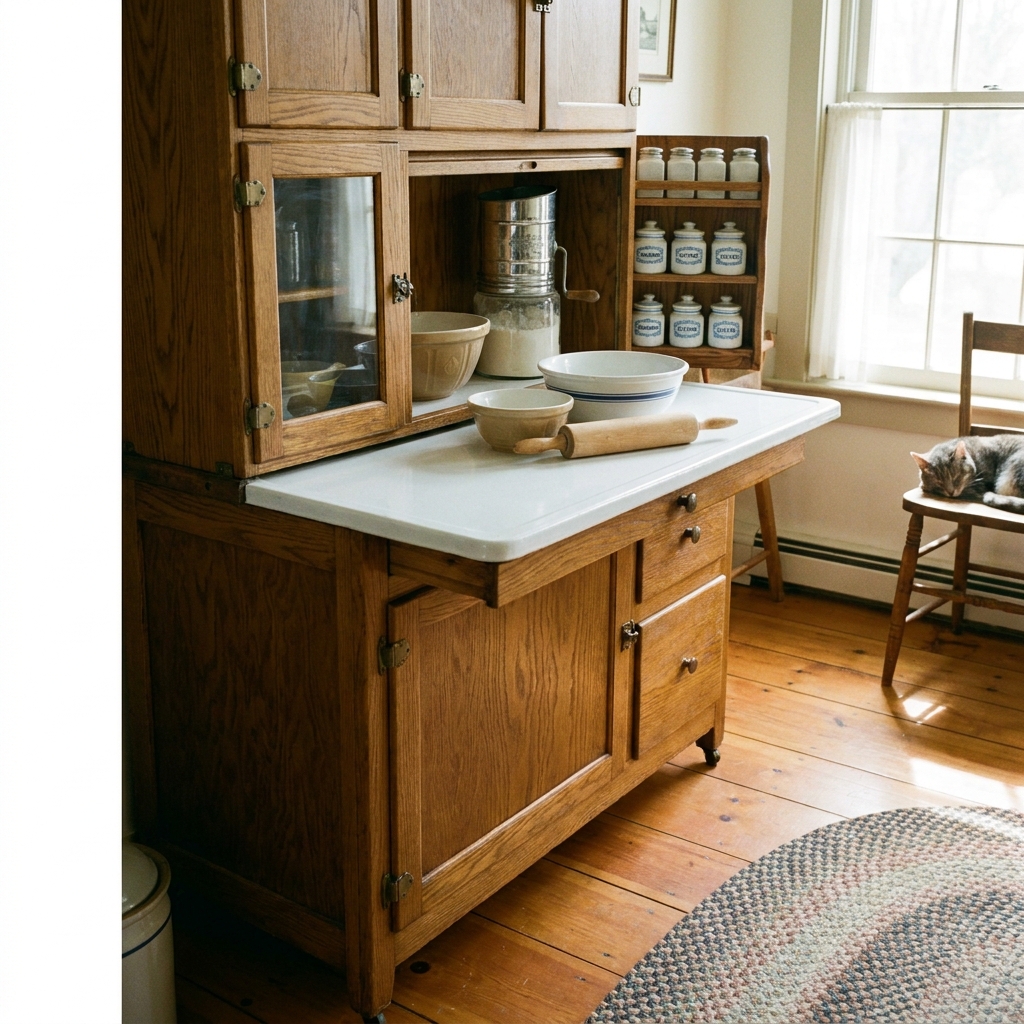
Before we had fitted cabinets, we had the Hoosier.
It was a baking station in a box.
It had a built-in flour sifter, a sugar bin, spice racks, and a slide-out porcelain table. It was the Swiss Army Knife of furniture.
You could do an entire day’s baking without taking a step.
How to bring it back: Use one as a coffee station. It is perfect for housing the grinder, the beans, and the mugs in one charming unit.
4. The Tin-Lined Bread Drawer
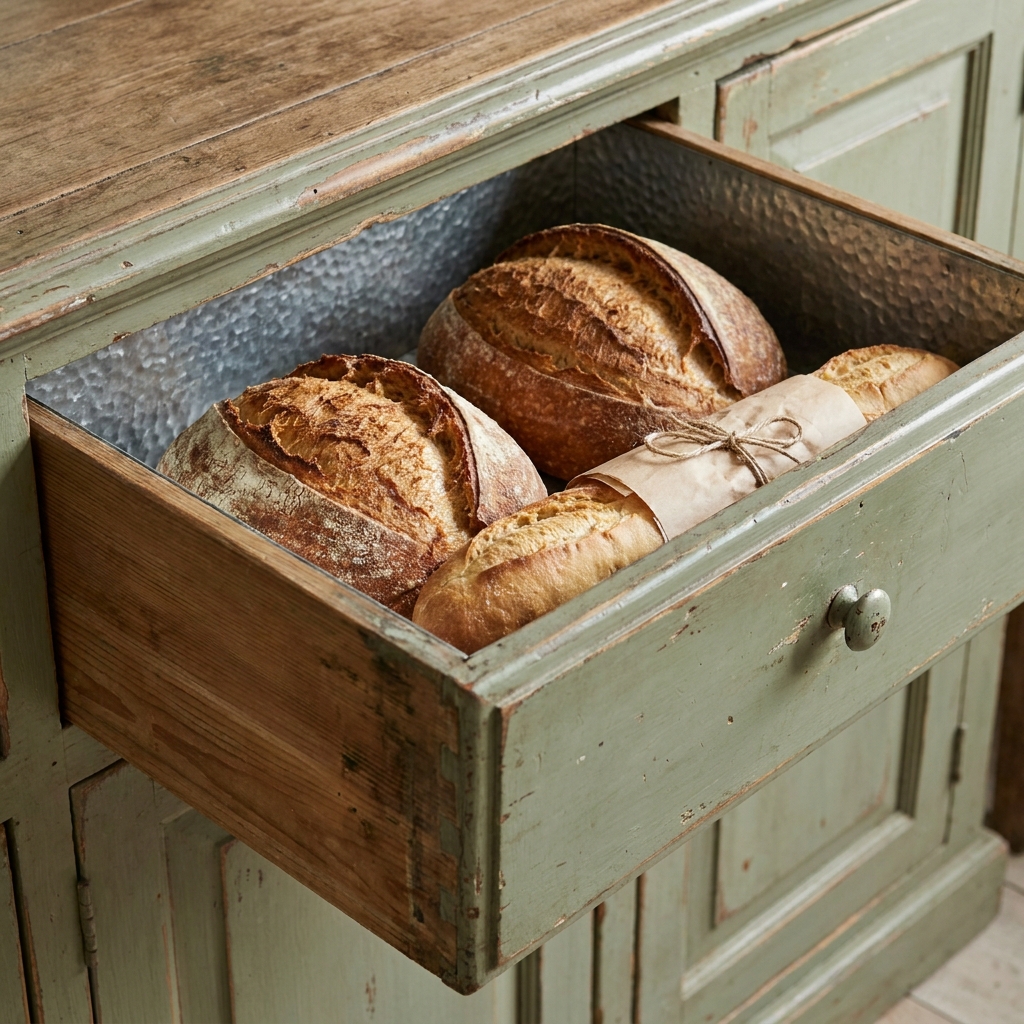
Bread goes stale in the open air. It gets moldy in plastic.
Old cabinets had the solution: a drawer lined with tin or zinc.
The metal kept the humidity perfect. It kept the mice out. It kept the bread soft for days longer than a countertop box.
How to bring it back: You can buy metal liner inserts for modern deep drawers. It is the secret to better toast.
5. The Pie Safe
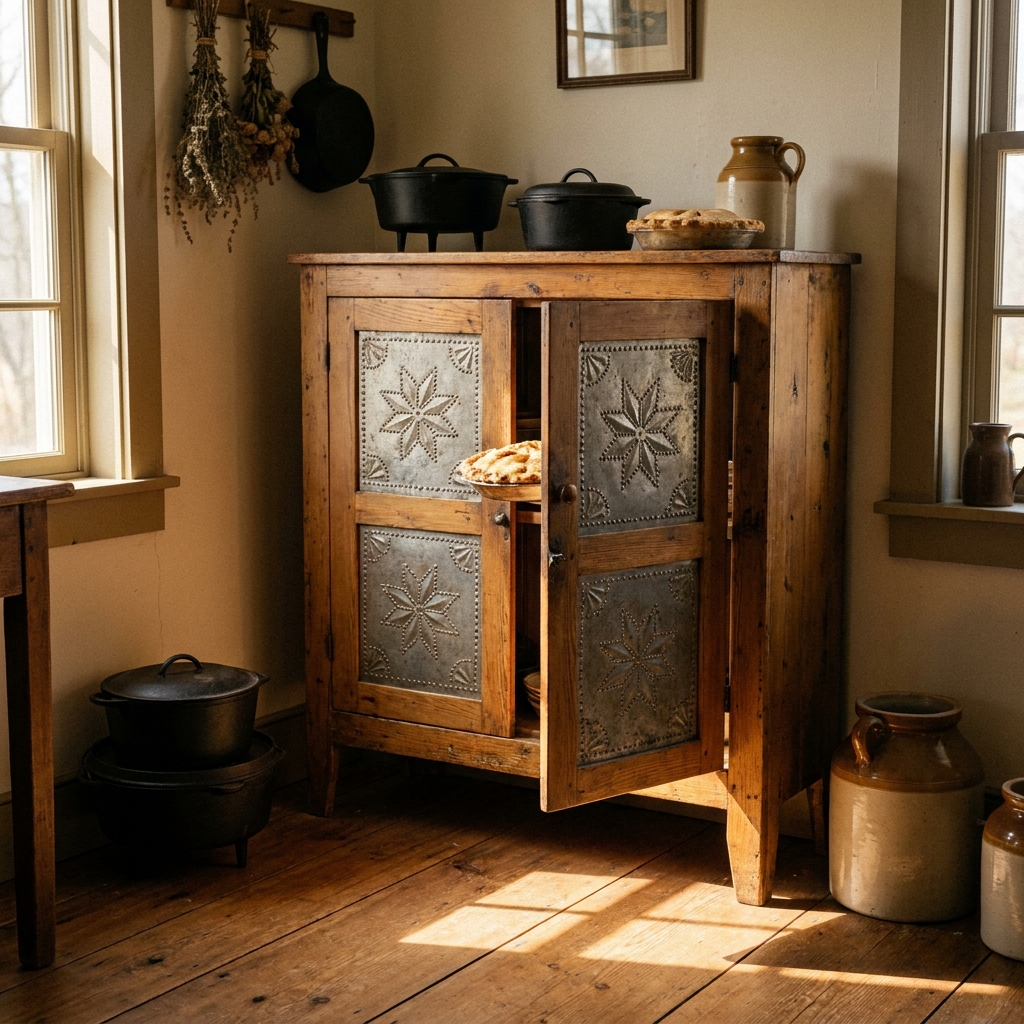
Before there was a microwave to reheat a slice, there was a pie safe.
It was a tall wooden cabinet with punched-tin panels for doors. The tin was hand-pierced in patterns of stars, hearts, and pinwheels — folk art that doubled as ventilation.
The holes let the steam escape from a fresh-baked pie. The tin kept the flies and the curious children out.
It was the original cooling rack, dessert vault, and conversation piece all in one.
How to bring it back: Antique stores still have them for a few hundred dollars. Use it for the same thing your great-grandmother did, or repurpose it as a liquor cabinet.
6. The Telephone Nook
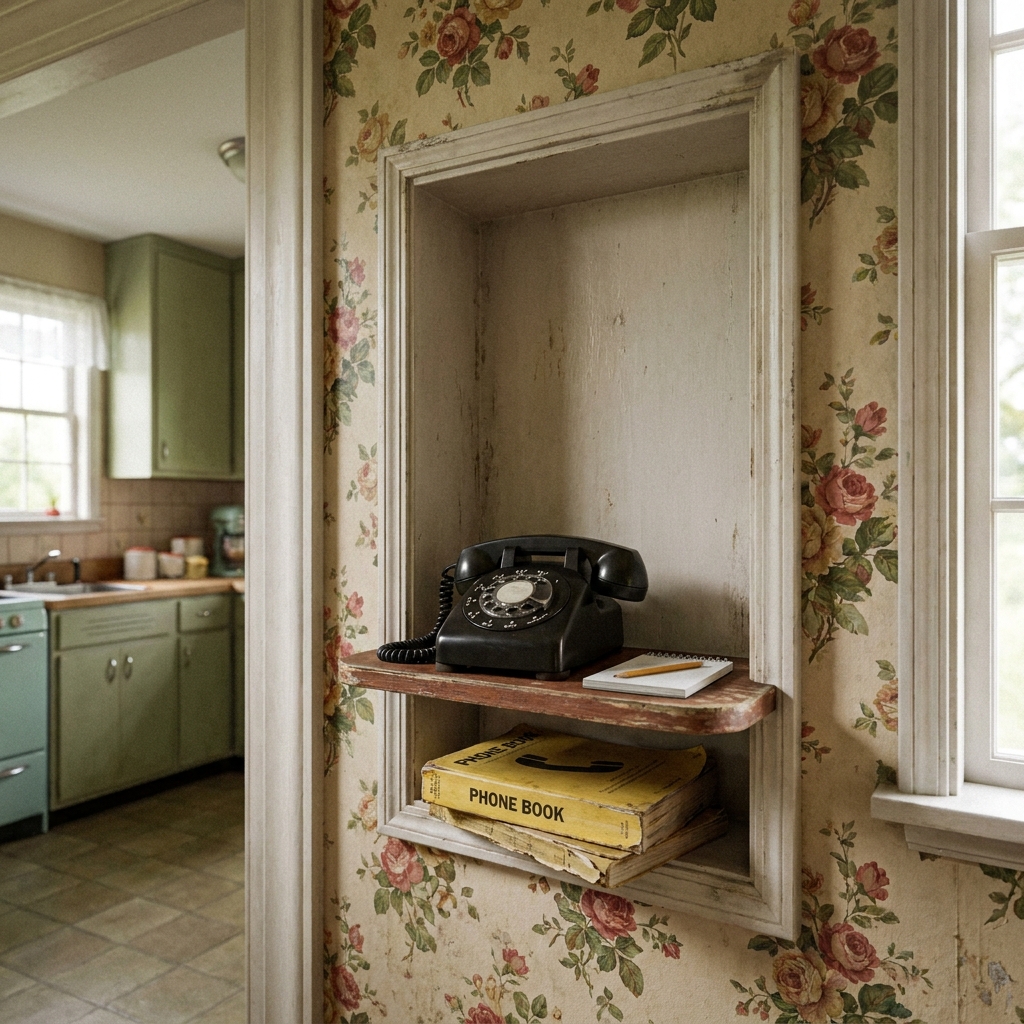
Every house built between 1930 and 1970 had this little wall niche.
It was a recessed cubby just deep enough for a rotary phone, with a small shelf for the phone book and sometimes a built-in seat.
It was the original family command center. Mom took recipe calls there. Teenagers stretched the curly cord around the corner for privacy. Grandma wrote down doctor appointments on the wall.
It was a tiny piece of architecture dedicated to a single household function.
How to bring it back: If your old house still has one, do not rip it out. Use it as a charging station, a mail drop, or a small bar nook. It is built-in character you cannot fake.
7. The Milk Door
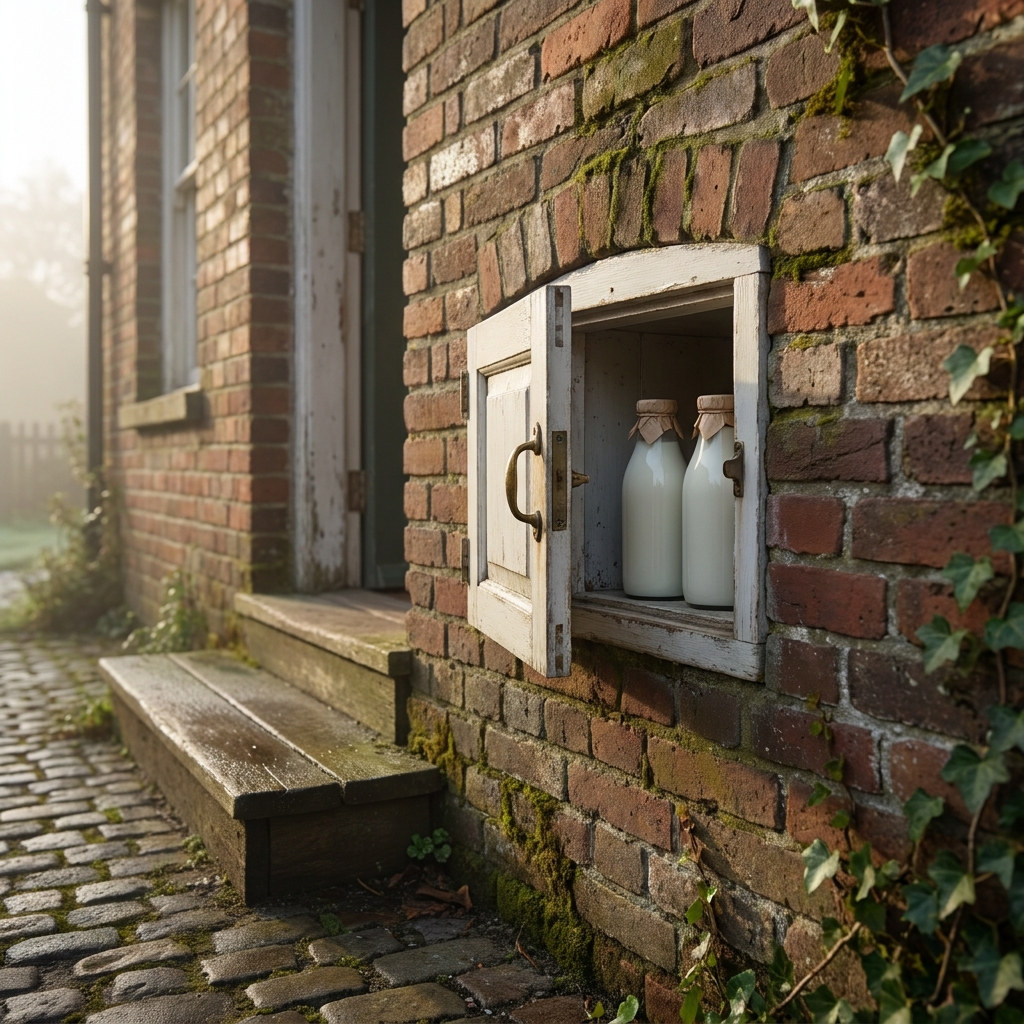
This one stops people in their tracks.
A milk door was a small insulated hatch built into the exterior wall of the kitchen, with a door on the outside and a door on the inside.
The milkman opened the outer door at 5 a.m. and dropped off the bottles. You opened the inner door at 7 a.m. and grabbed them for breakfast.
No porch. No coolers. No “leave it at the door” instructions. Just a brilliant little airlock that respected your sleep.
How to bring it back: If you have one, restore it as a charming pass-through for grocery delivery. If you are building, it is a clever feature to add — Amazon would approve.
8. The Icebox
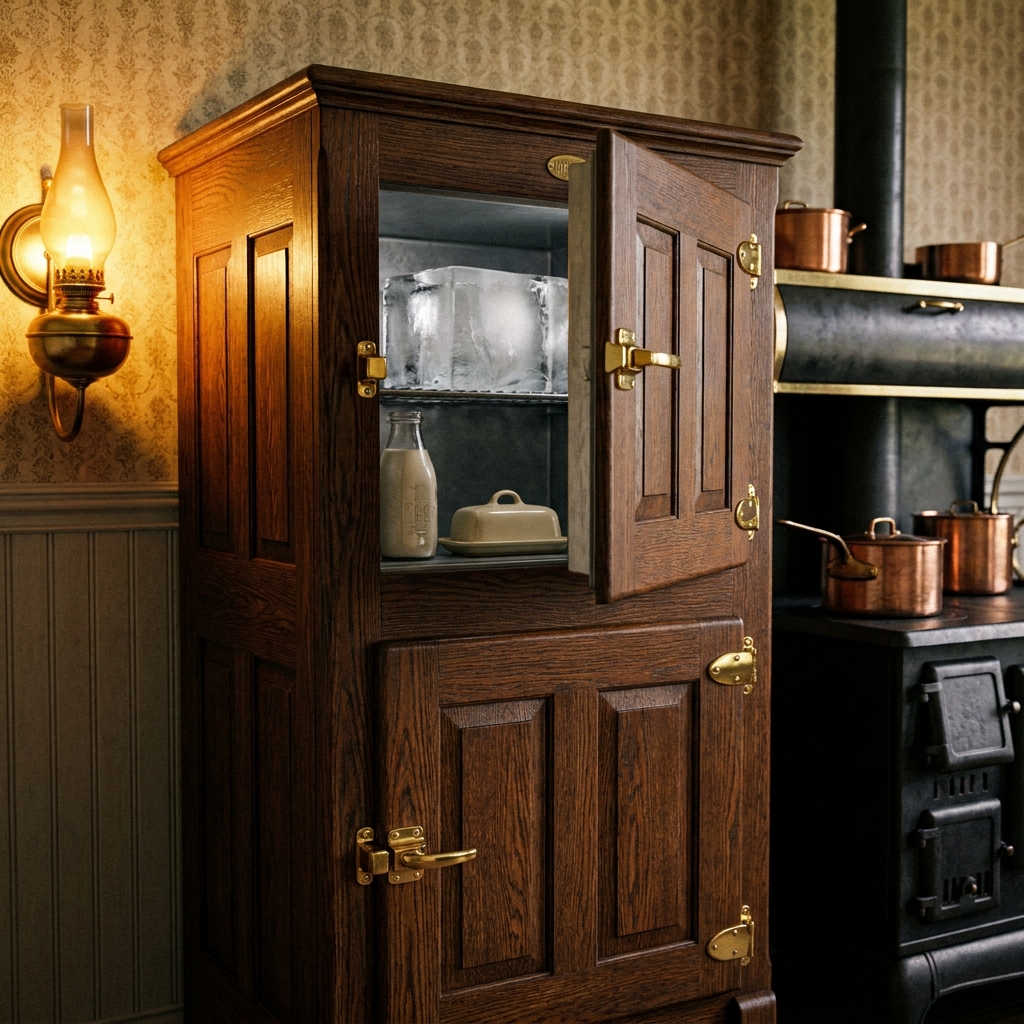
Before the Frigidaire, there was the icebox.
It was a wooden cabinet, beautifully built, with a zinc-lined chamber for a 50-pound block of ice. The iceman delivered the block twice a week, and a drip pan underneath caught the meltwater.
In fancier homes, the drip line ran straight to the basement floor drain.
The food stayed cold. The wood stayed warm. And the kitchen smelled like cedar instead of plastic.
How to bring it back: Antique iceboxes make stunning bar cabinets, linen storage, or pantry pieces. They are worth more restored than they were when new.
9. The Cold Cupboard
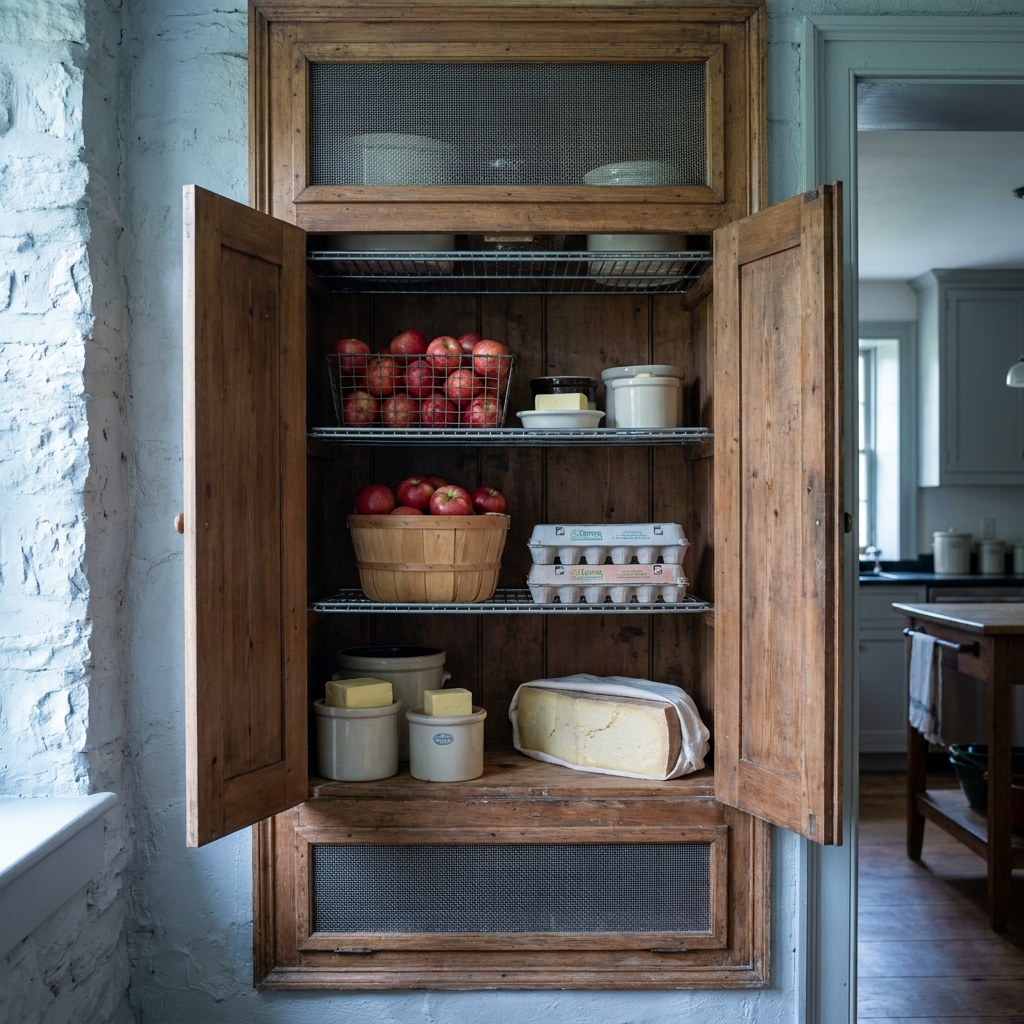
Out in California, they called it a “California Cooler.” Back East, it was just the cold cupboard.
It was a tall, narrow cabinet built against an exterior north wall, with screened vents at the top and bottom. Cool outside air flowed in through the bottom vent, rose past the food, and exited at the top.
You stored produce, butter, eggs, and bread in there. It stayed 20 degrees cooler than the rest of the kitchen, all year, with zero electricity.
How to bring it back: If you are building or remodeling, an exterior pantry wall is the perfect spot. It is essentially a free refrigerator that runs on physics.
10. The Plate Rail
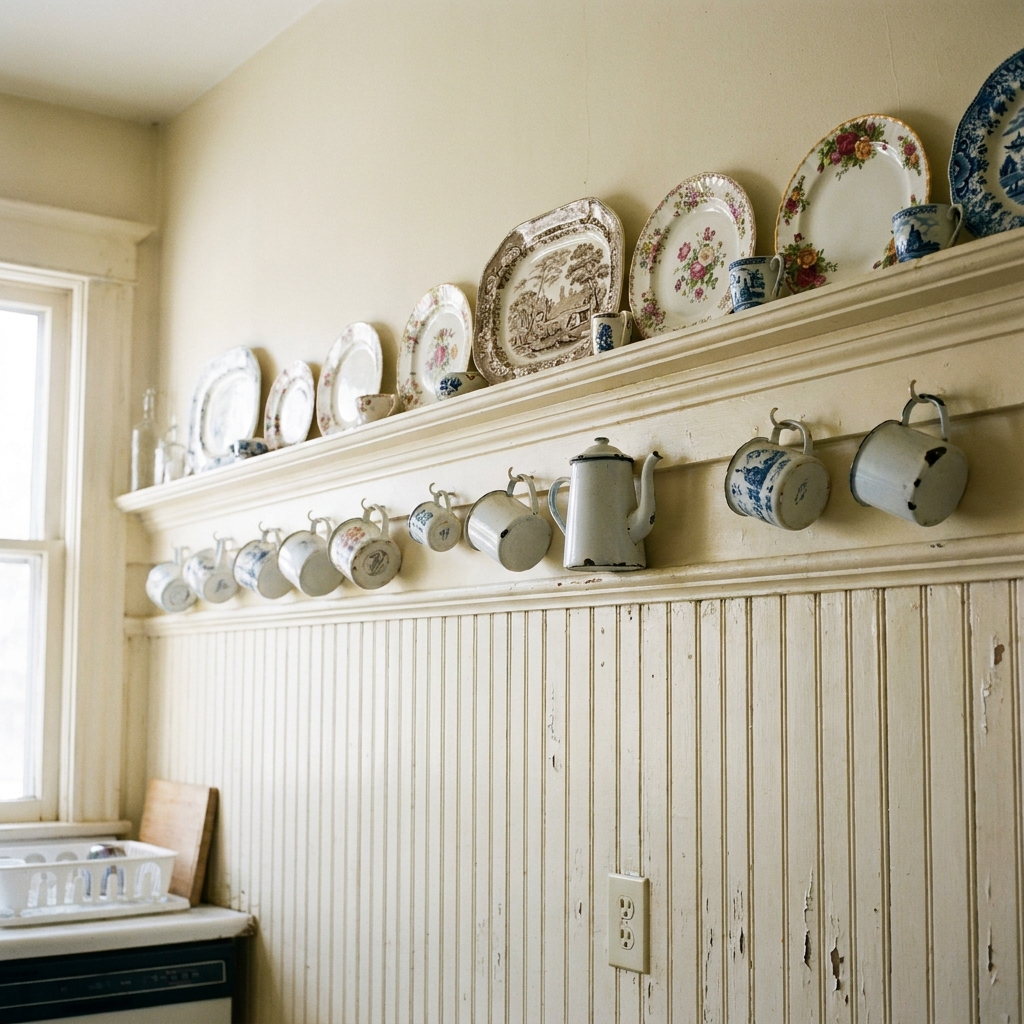
Look up in any old kitchen, and there it was.
A narrow wooden shelf running around the room at picture-rail height, with a small lip on the front edge.
It served two purposes. The first was display — your wedding china, the souvenir plates from Niagara Falls, the platter from your mother-in-law. The second was drying — wet plates leaned against the wall and air-dried while you ate.
It turned the kitchen into a gallery and a dish rack at the same time.
How to bring it back: A length of pine and a couple of brackets. It is the cheapest character upgrade you can make to a plain kitchen.
11. The Breakfast Nook
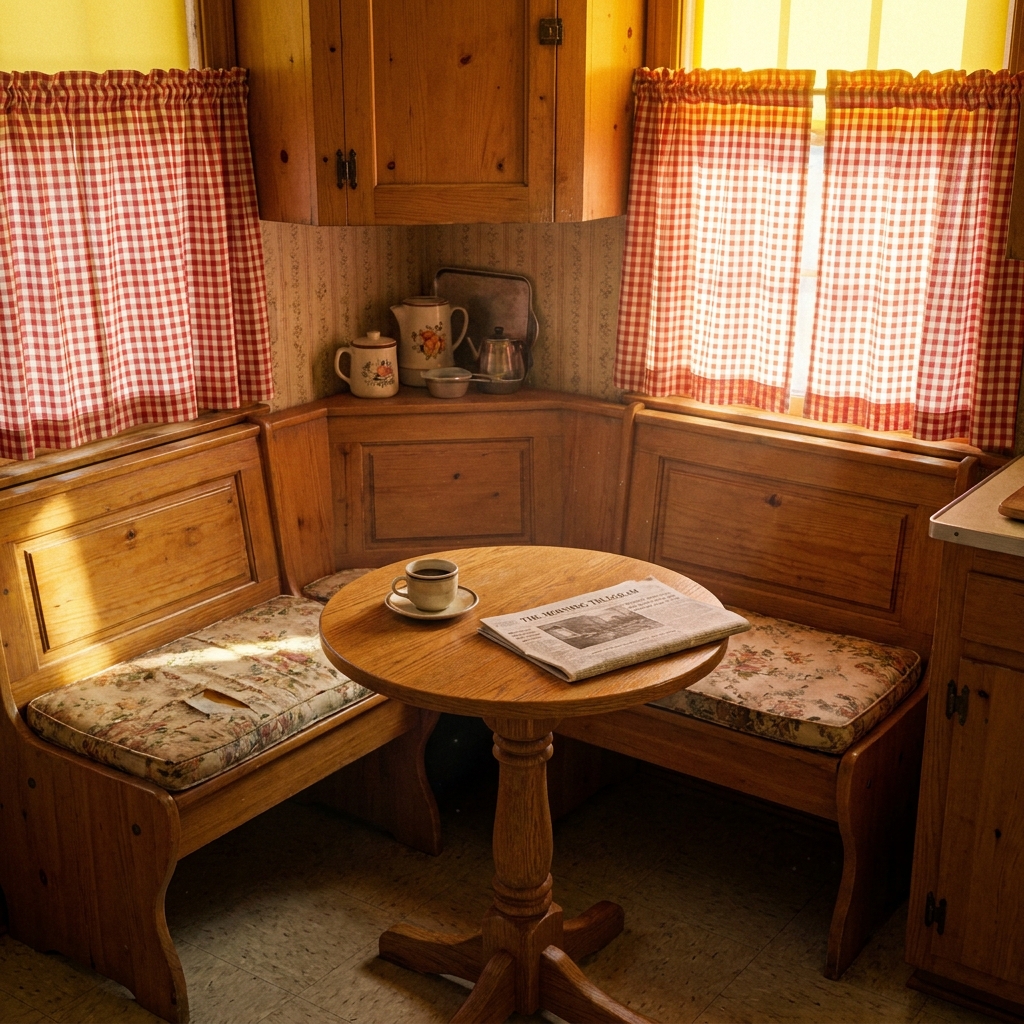
Modern designers want you to eat at a bar stool.
But our grandparents knew the value of the “Nook.”
Tucked into a corner, these built-in benches saved massive amounts of floor space. They were cozy, intimate, and kept the family out of the cook’s way.
It was the original “eat-in” kitchen, but warmer.
How to bring it back: Do not buy a table. Build a bench. Add storage under the seat, and you have just gained a pantry.
12. The Pass-Through Window
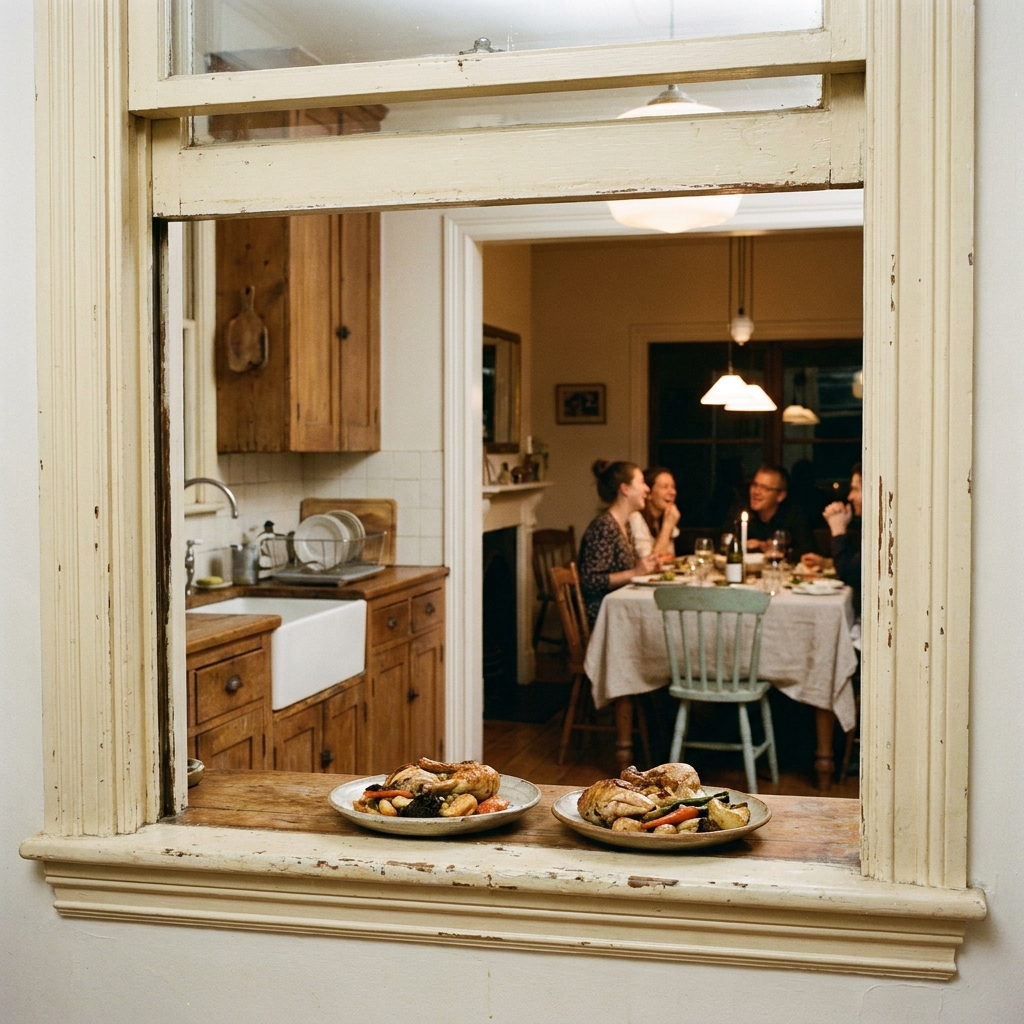
Before open-concept knocked down every wall, we had the “Pass-Through.”
It gave you the privacy of a closed kitchen but the convenience of an open one.
You could slide hot dishes to the dining table without walking around the wall. You could chat with guests without letting them see your dirty pots.
How to bring it back: If you are renovating, do not knock down the whole wall. Cut a window. It frames the view and hides the mess.
13. The Summer Kitchen
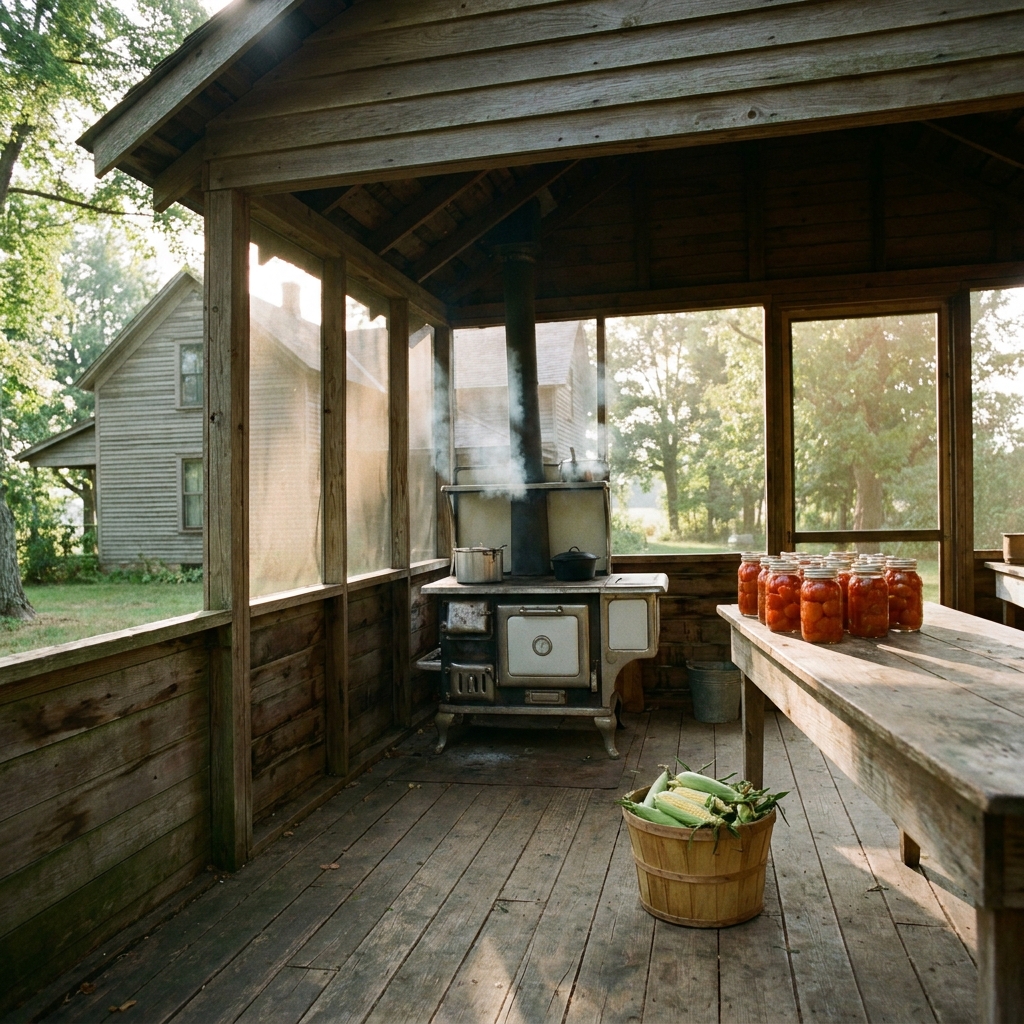
Before air conditioning, August was a problem.
The solution was the summer kitchen — a small second kitchen, often a screened porch or a small outbuilding behind the main house, where you did the heavy cooking in hot weather.
You canned tomatoes out there. You boiled corn. You roasted a chicken. The main house stayed cool, and the heat, smoke, and smells stayed outside.
It was a brilliant climate-control strategy that we replaced with running the AC and the oven at the same time.
How to bring it back: A covered patio with a grill, a sink, and a counter is essentially a modern summer kitchen. It pays for itself in July electric bills.
14. The Dumbwaiter
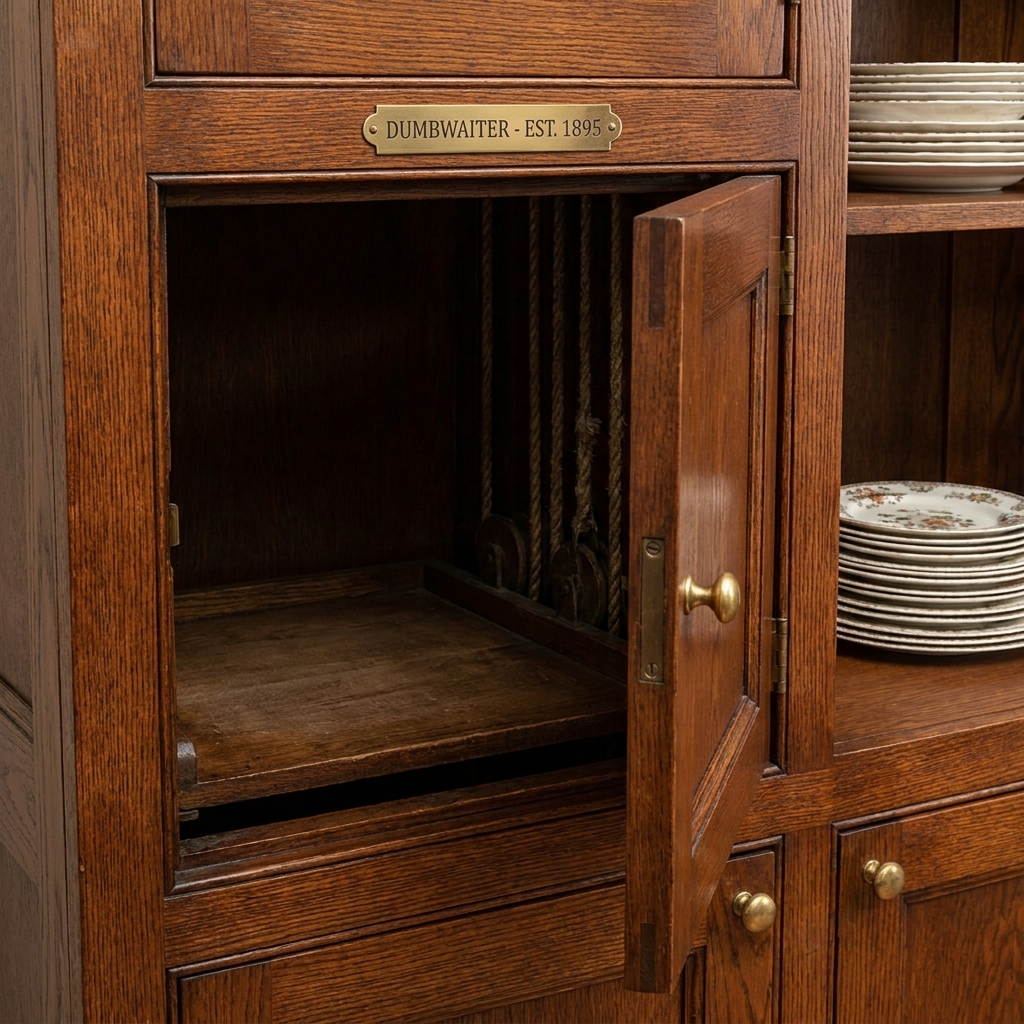
Estate homes had them. Victorian rowhouses had them. Even modest 1920s duplexes had them.
A dumbwaiter was a small elevator — a wooden box on a rope and pulley system — that ran between the kitchen and the dining room, or between the kitchen and the basement.
You loaded a roast onto the platform, pulled the rope, and the meal arrived upstairs without anyone hauling it up two flights.
It was Downton Abbey luxury that real middle-class people actually had.
How to bring it back: Modern residential dumbwaiters exist and are not as expensive as you think. They are a game-changer for laundry between floors, too.
15. The Kitchen Sink Skirt
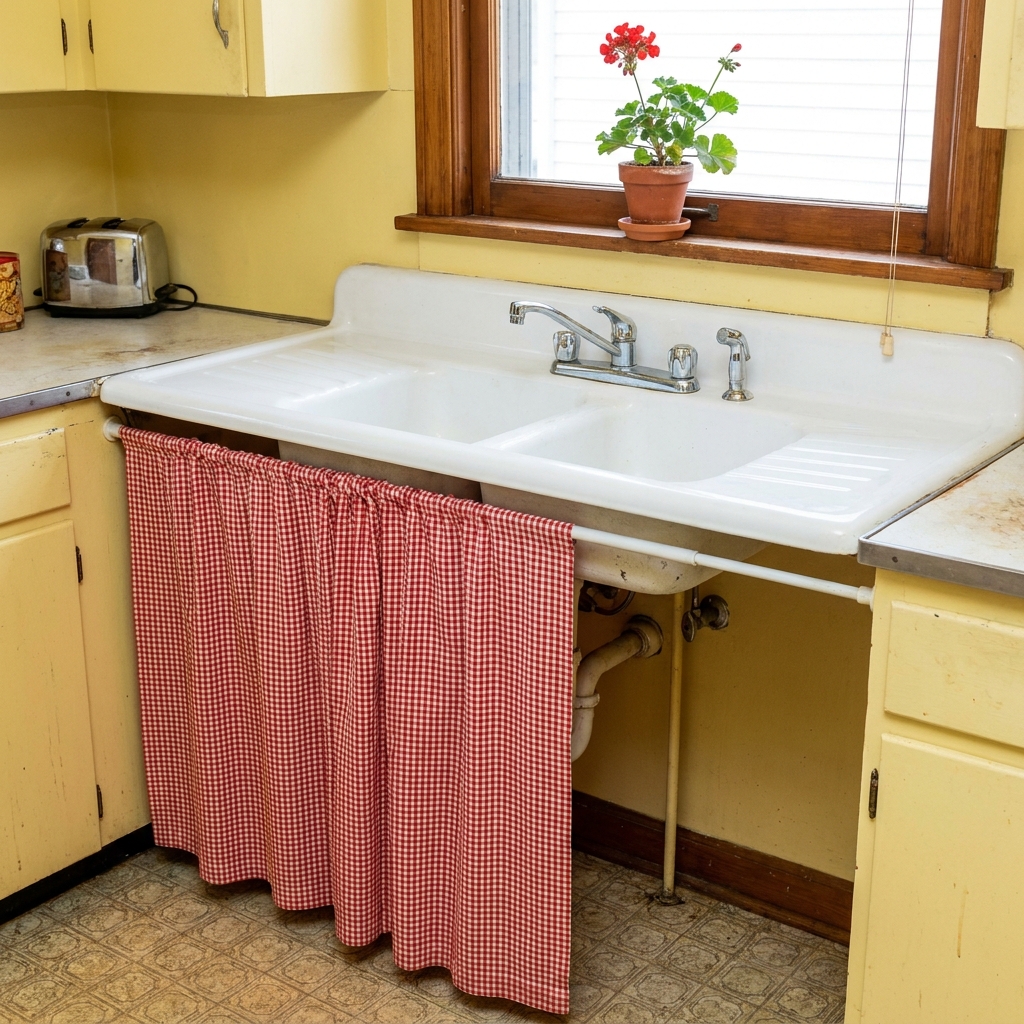
If you came of age in the 1940s or 50s, this image is burned into your memory.
A pleated fabric curtain hung around the front and sides of the kitchen sink, hiding the pipes and the cleaning supplies underneath.
It was usually red gingham, or yellow with little flowers, and Mom changed it twice a year.
It was warmer than a cabinet. It was cheaper than a cabinet. And it gave the kitchen a homemade softness that no slab of MDF can replicate.
How to bring it back: A tension rod and a yard of fabric. Total cost: ten dollars. Total charm: priceless.
16. The Pot Rack Hung from the Ceiling
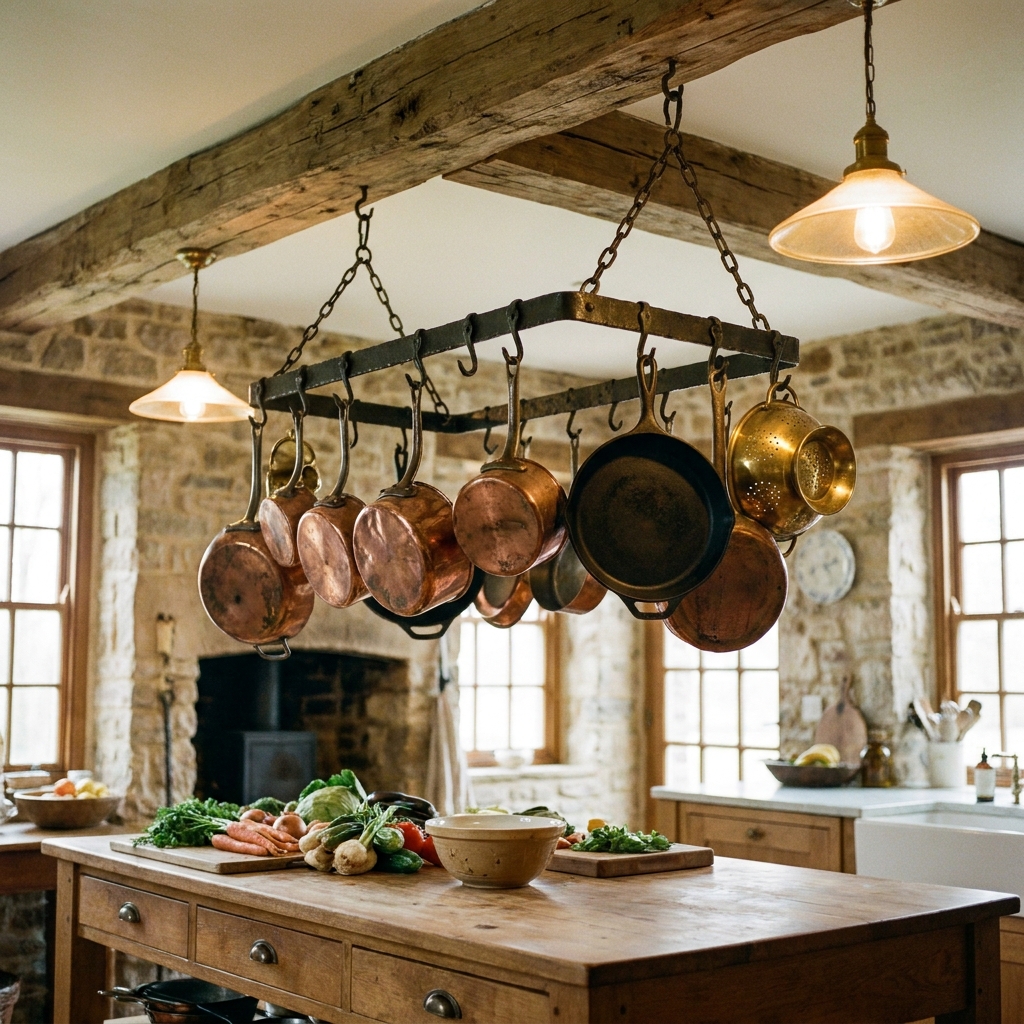
Copper, cast iron, and brass — dangling from a beam above the kitchen island.
The hanging pot rack was equal parts storage and art. Every pan you owned was within arm’s reach, no digging through a cabinet, no clanging a tower of nested pots.
The patina of well-used copper is one of the most beautiful things in any kitchen.
How to bring it back: A wrought-iron rack and four ceiling hooks. The pots have to be nice — this is the one place where you cannot fake it with cheap nonstick.
17. The Pantry With a Window
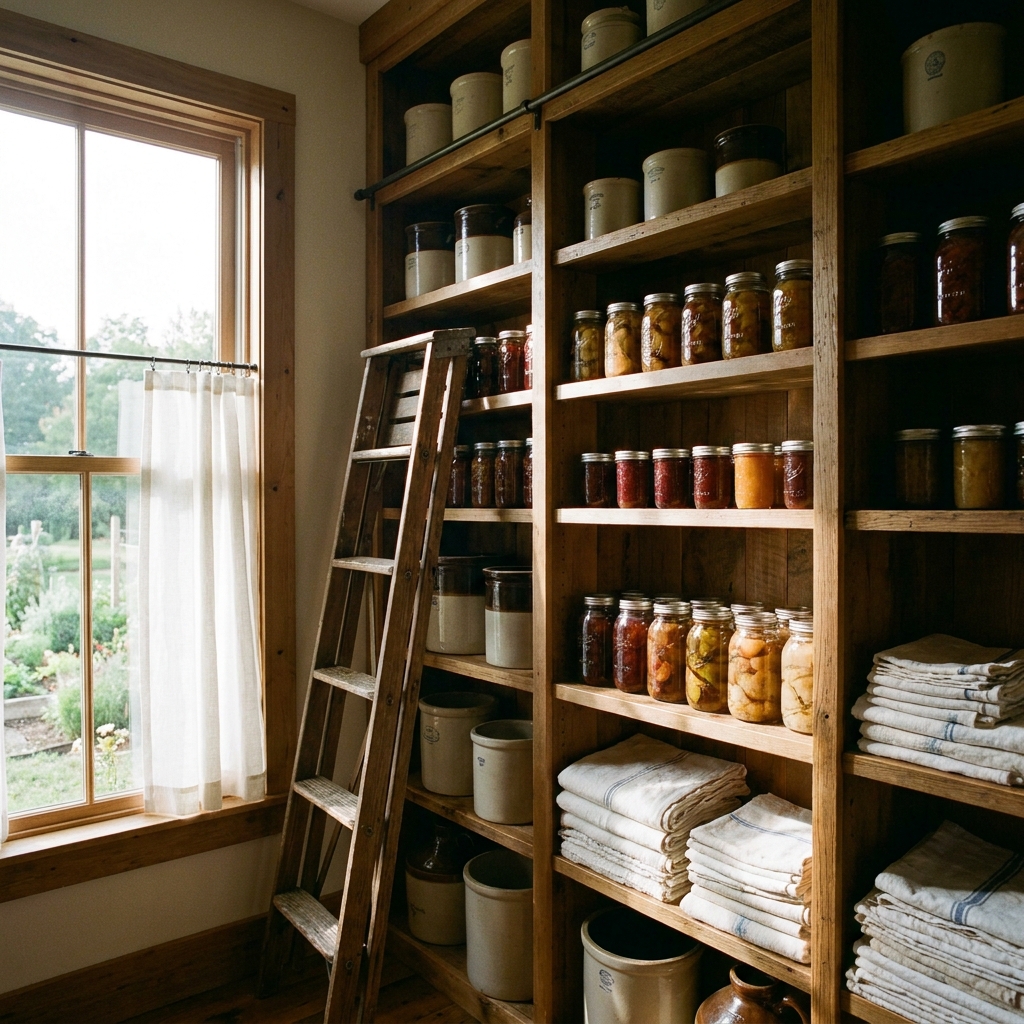
Modern pantries are dark closets shoved into interior walls.
The old butler’s pantry had a window.
It got real daylight. It got real airflow. And the cool air from a north-facing window kept produce, baked goods, and even cheese fresher than any sealed plastic container.
A windowless pantry is a humid pantry, and a humid pantry is a moldy pantry.
How to bring it back: When you design a kitchen, fight for the pantry to land on an exterior wall. It is the single biggest upgrade you can make to food storage.
18. The Dish-Drying Cabinet
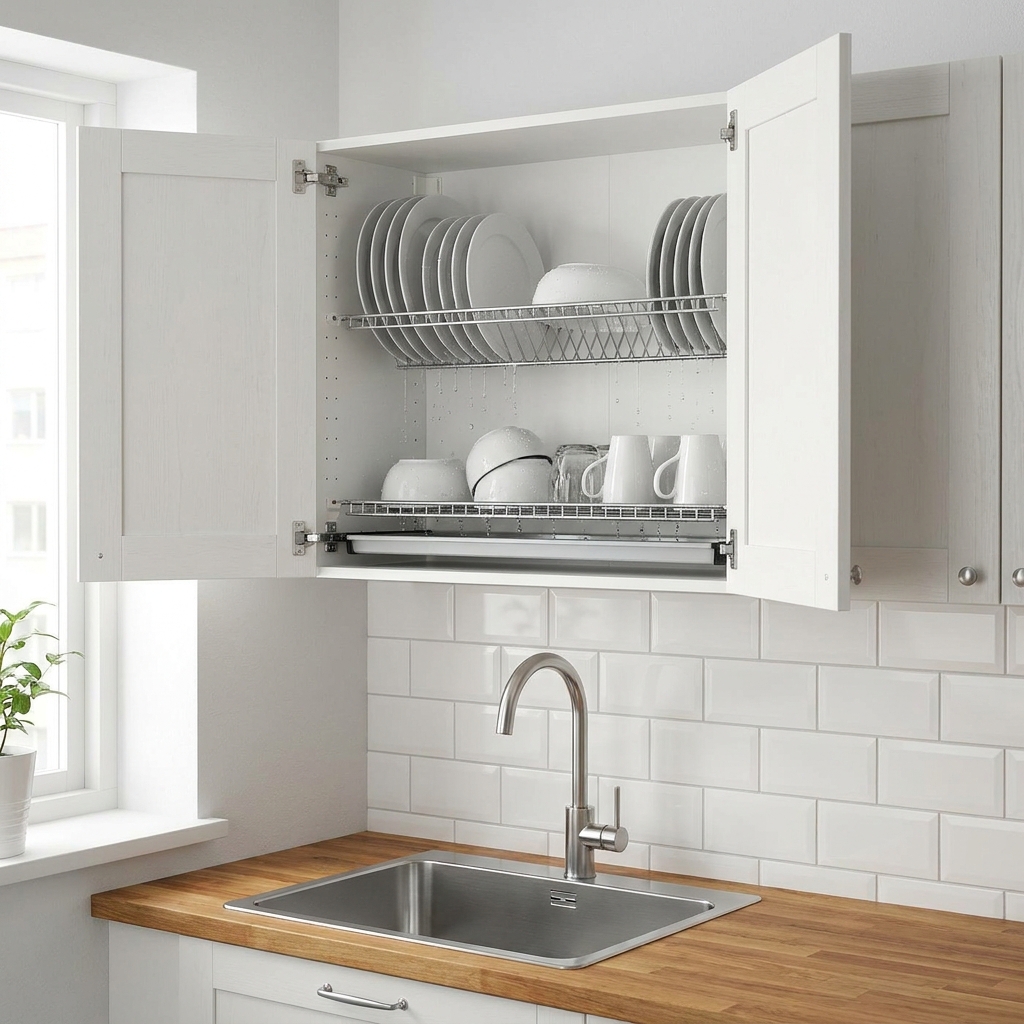
The Finns invented the smartest thing in any kitchen.
Above the sink, instead of a normal cabinet with a solid bottom, they built a cabinet with a wire-rack bottom. The doors closed. The dishes stacked on the rack. The water dripped straight down into the sink.
You washed. You stacked. You walked away.
The dishes stored themselves while they dried. No drying rack on the counter. No towel.
How to bring it back: A custom cabinet maker can build one for you, or you can find prefab kits called “astiankuivauskaappi.” It will change your kitchen forever.
19. The Dutch Door
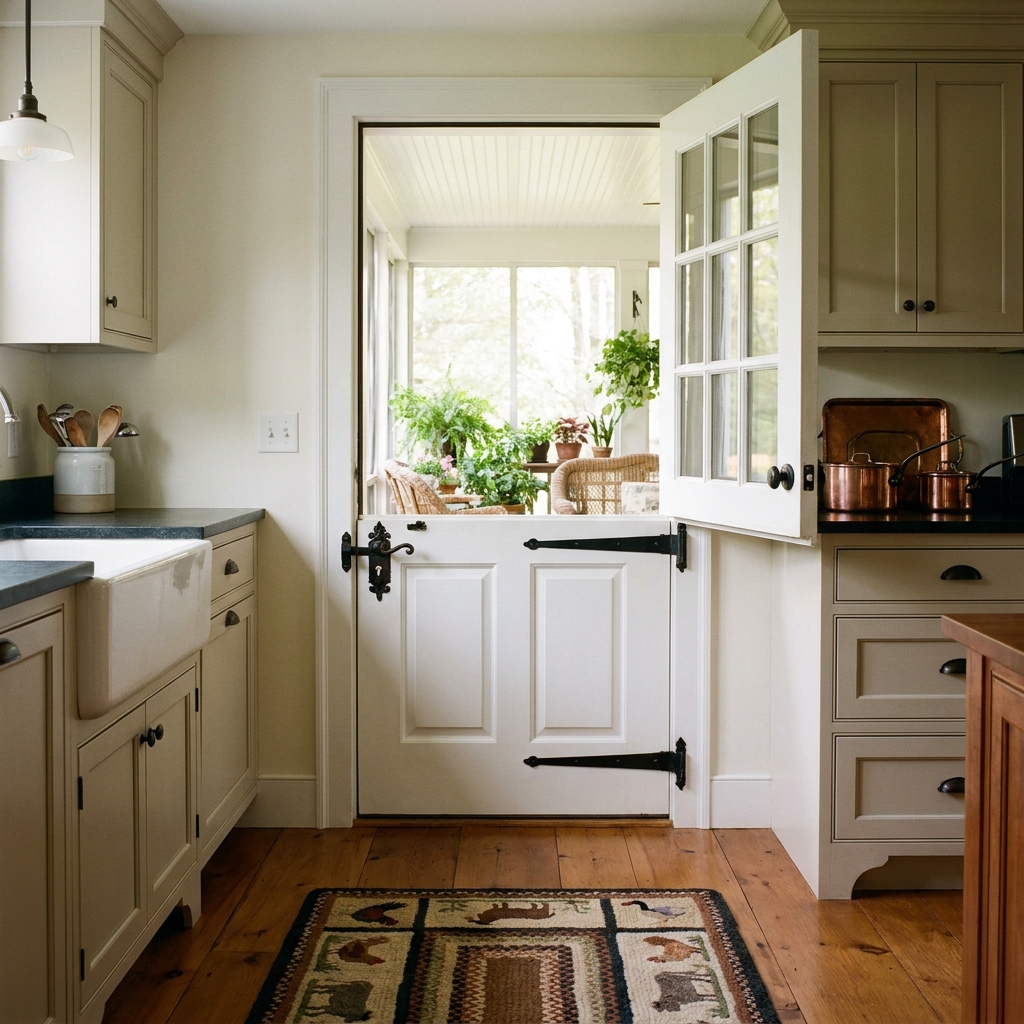
The kitchen Dutch door is the most charming compromise in residential architecture.
The top half opens. The bottom half stays closed.
You can chat with the neighbor on the porch. You can keep an eye on the kids in the yard. You can let the breeze in. But the dog stays out, the toddler stays in, and the mud stays in the mudroom.
It is also the single most photogenic feature you can put on a kitchen.
How to bring it back: Any decent door company makes them. It is a one-day install for a serious nostalgia upgrade.
20. The Built-In Spice Cabinet
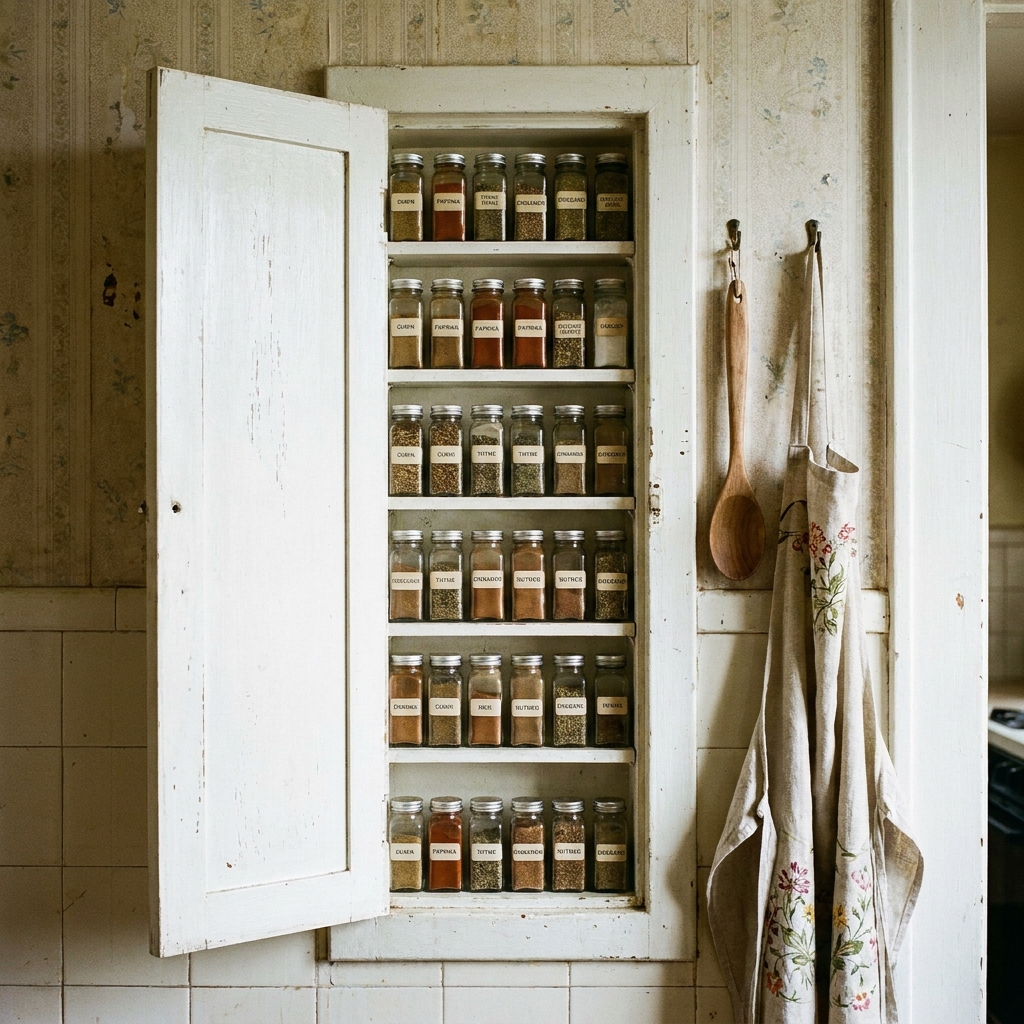
Old kitchens hid an entire spice rack between two studs.
A narrow door — sometimes only four inches deep — opened to reveal six or eight shallow shelves, each one holding spices a single jar deep.
Every label faced you. Nothing got lost in the back. Nothing went stale forgotten in a cabinet for ten years.
It was the most efficient use of three-and-a-half inches of dead wall space ever invented.
How to bring it back: Cut into your drywall between two studs and frame in a shallow cabinet. It is a Saturday afternoon project that pays off every single dinner.
21. The Counter Trash Chute
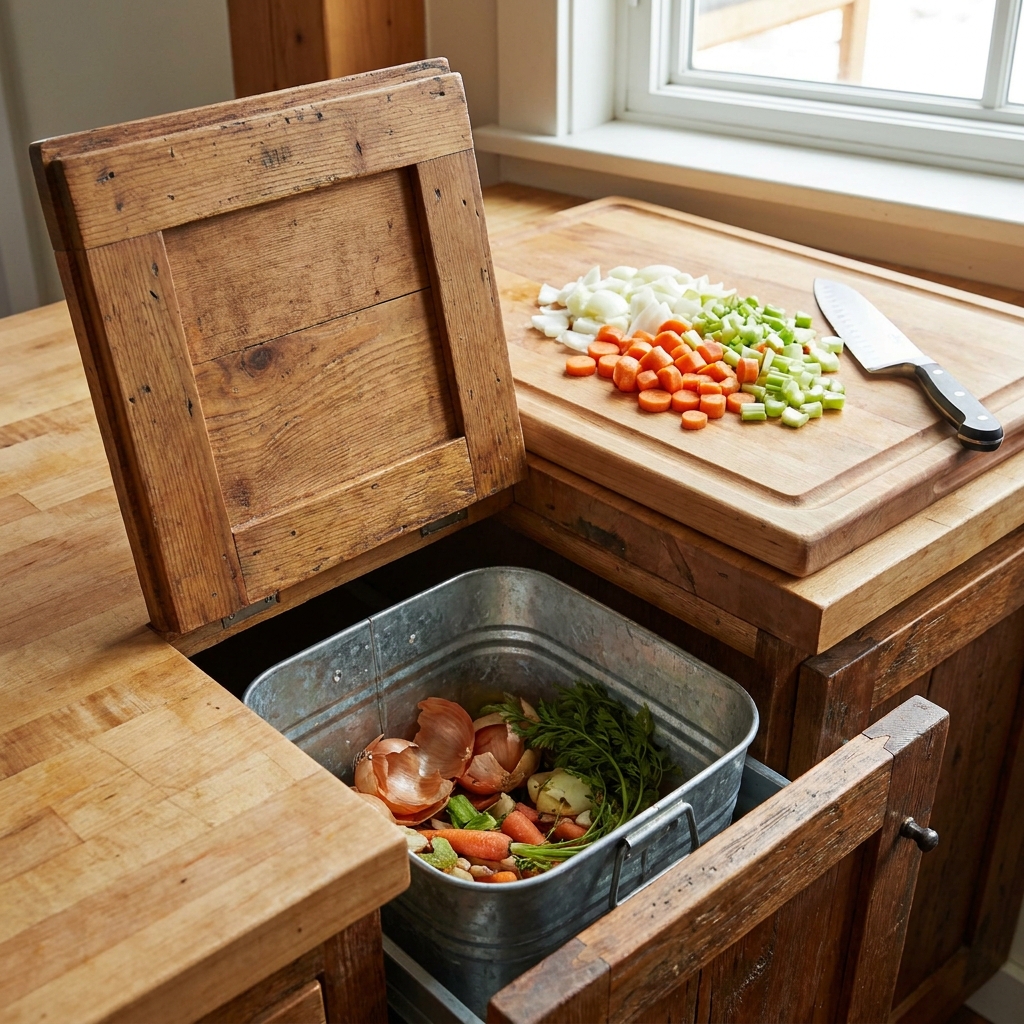
Built right into the counter, next to the cutting area, was a small flip-up door.
Underneath, a wooden bin or a galvanized bucket caught the scraps.
You chopped your onions. You scraped the peels right off the cutting board into the chute. No walking to the trash can. No bending over. No bag flapping in the wind.
Modern kitchens replaced this with a step-can three feet away that you have to wrestle with every time your hands are dirty.
How to bring it back: A custom cabinet maker can install one in a base cabinet for the price of a few drawer upgrades. The bucket is the easy part.
22. Tiled Countertops
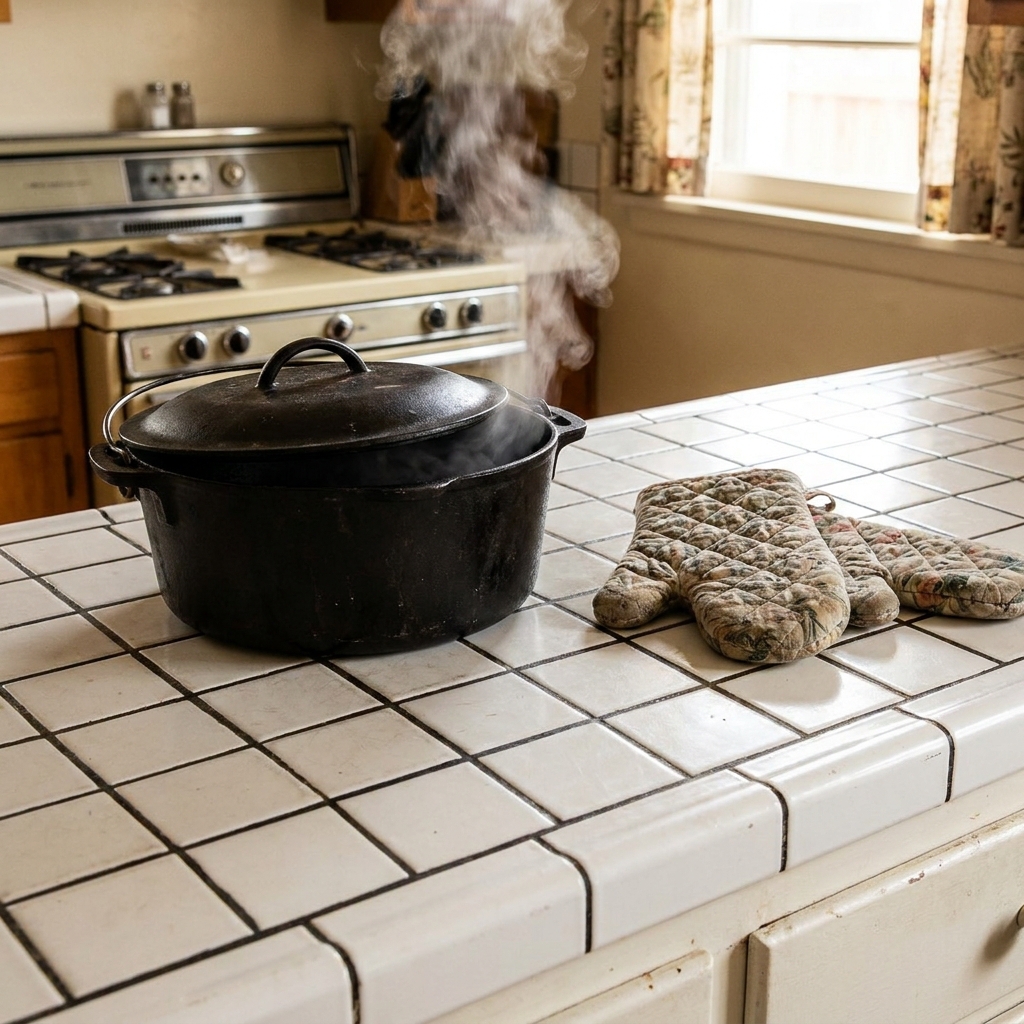
Today, everyone wants seamless quartz. They are terrified of grout.
But tiled countertops were indestructible.
You could take a roasting pan out of a 400-degree oven and set it right on the tile. Try that with your fancy laminate or resin, and you will leave a burn mark.
Yes, the grout got dirty. But the tile lasted forever.
How to bring it back: Use epoxy grout. It does not stain, and it lets you have the heat resistance of ceramic without the scrubbing.
23. Real Linoleum
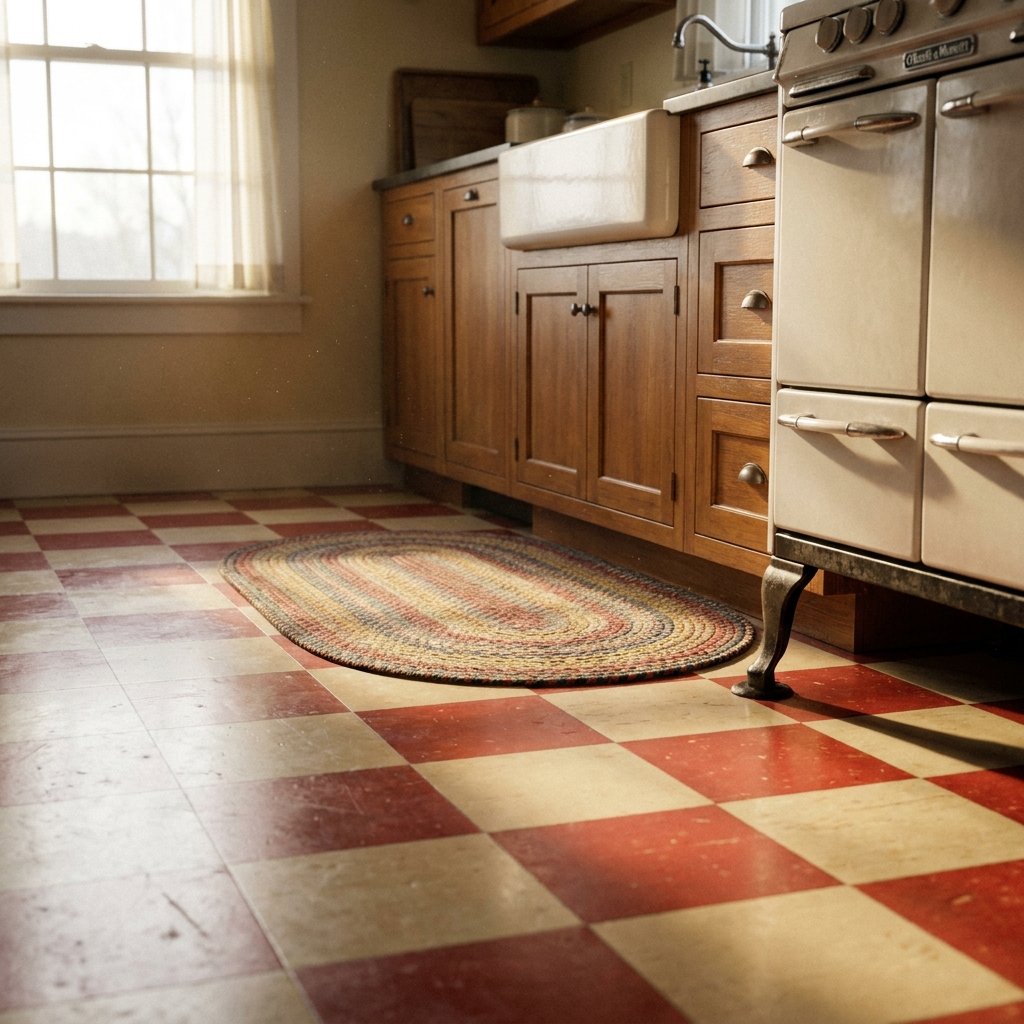
Stop confusing Linoleum with Vinyl.
Vinyl is plastic garbage. Linoleum is a natural miracle.
Made from linseed oil, cork dust, and wood flour, real linoleum is antibacterial, biodegradable, and self-healing.
If you scratch it, the color goes all the way through. You just buff it out.
How to bring it back: Look for “Marmoleum” or true linoleum sheets. It will outlast any luxury vinyl plank on the market.
24. The Meat Safe
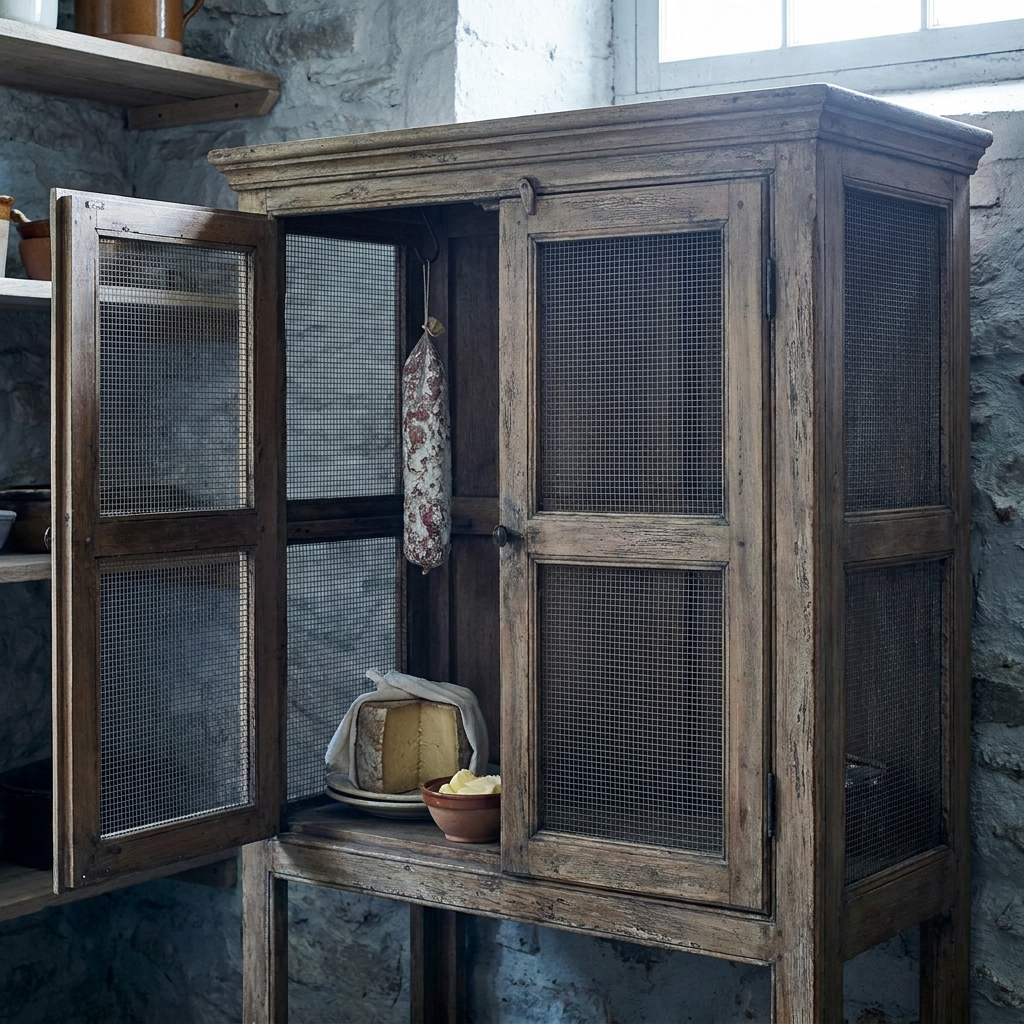
Before Frigidaire, we had air.
A “Meat Safe” was a vented cabinet with mesh screens. It kept the flies out but let the cool air circulate.
It was perfect for curing sausages, ripening cheese, or cooling a pie.
How to bring it back: Use one for storing root vegetables like potatoes and onions. They need airflow to stop from rotting, and modern cabinets suffocate them.
25. Central Vacuum Kick Plates
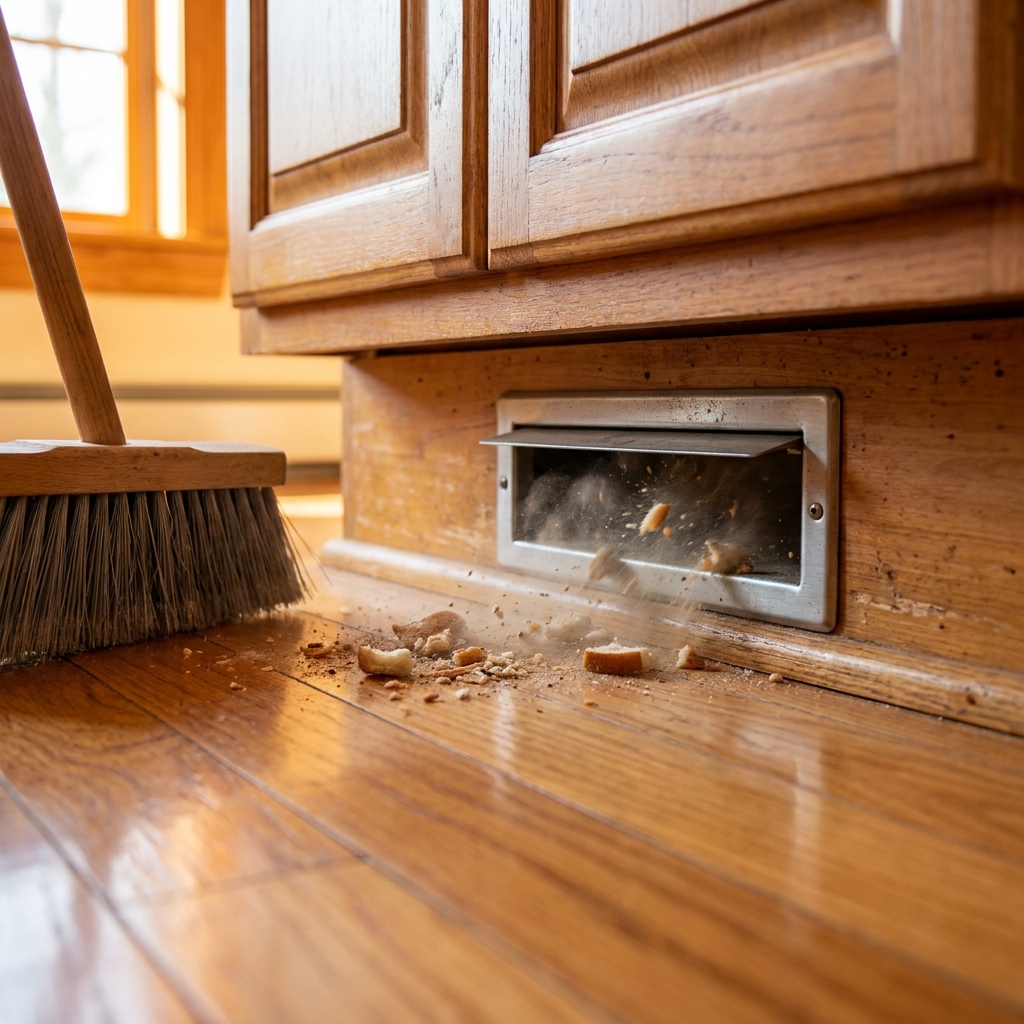
The “Toe-Kick Vac” is the ultimate luxury.
You sweep the crumbs to a little slot in the baseboard. You tap it with your toe. Whoosh.
The dirt is gone. No dustpan. No bending over.
How to bring it back: These are actually easy to install in modern cabinets if you have a central vac system. It is the one modern convenience that feels like magic.
Conclusion
We look at these features and call them “outdated.”
We rip them out to install white boxes from IKEA.
But these features were built for humans. They were built for work.
They respected your time and your space.
A kitchen that helps you cook, cleans up easily, and lasts for 50 years?
That is not vintage. That is just smart.