

We all say the same thing: “I just need one more closet.”
We feel cramped. The counters are cluttered. The garage is full.
But the truth is, most of us are not out of space. We are just looking in the wrong places.
Your house is full of invisible voids — hollow walls, empty gaps, and forgotten corners — that builders usually seal up with drywall and forget about.
If you can find them, you can double your storage without adding a single square foot to your home.
Here are 22 “dead zones” hiding in plain sight that you can transform into storage gold.
1. The Toe-Kick Drawer
Go to your kitchen cabinet. Look down at the floor.
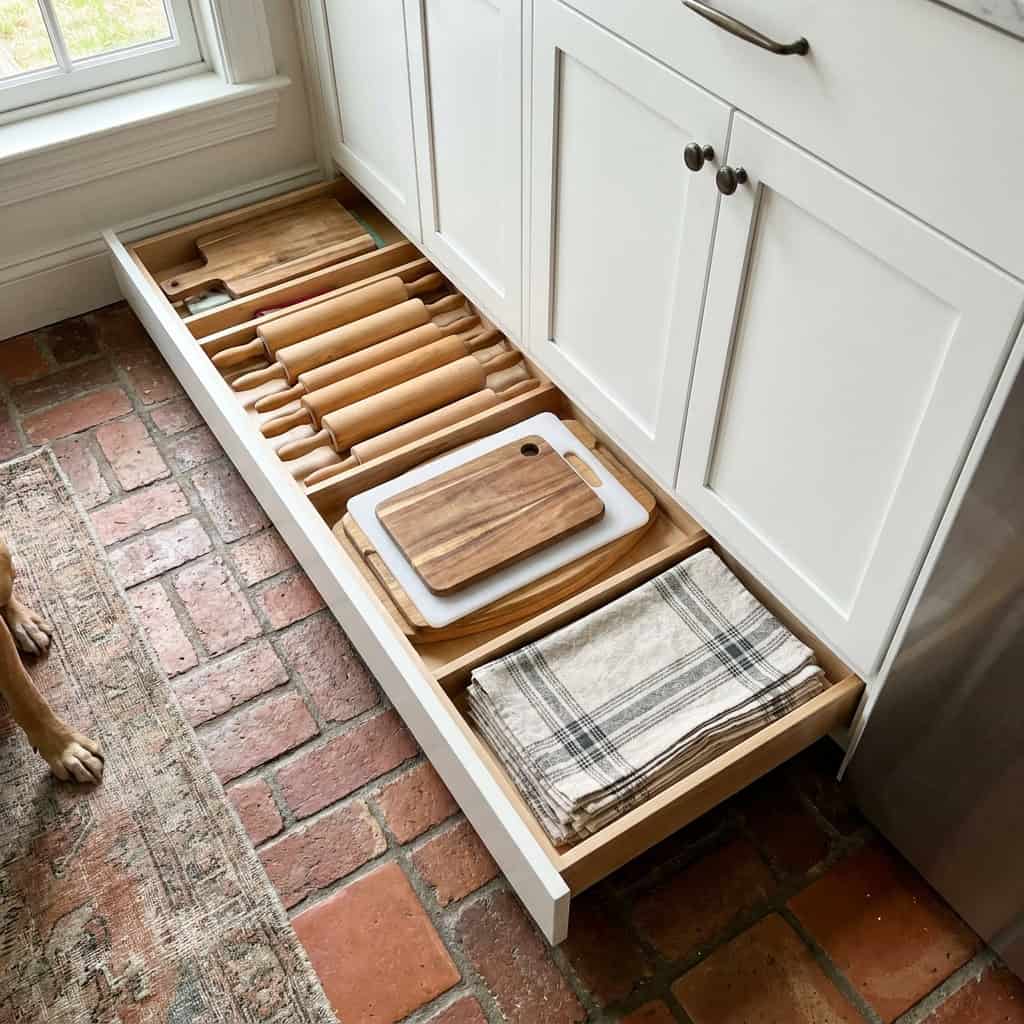
See that 4-inch recessed strip of wood where your toes go? Behind that piece of wood is… nothing. It is just empty air.
You can install “Toe-Kick Drawers” in this space.
They are flat, shallow drawers that you open with a tap of your foot. They are the perfect size for cookie sheets, cutting boards, or the good silver you only use once a year.
2. The “False Front” at the Sink
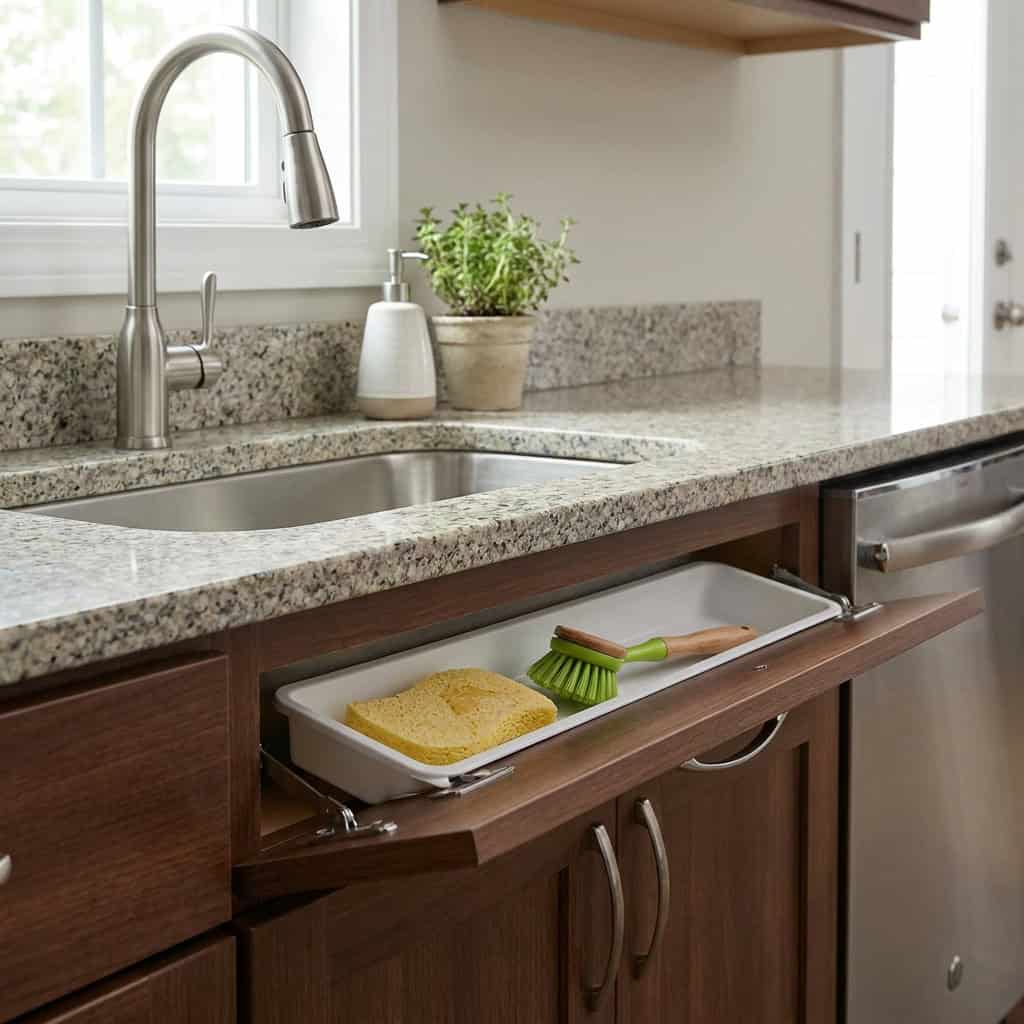
Look at the fake drawer front right in front of your kitchen sink. It does not open.
But it could.
You can install a “Tip-Out Tray” kit for about $20. The false front hinges forward to reveal a small plastic tray.
It is the exact right size for sponges and scrub brushes. No more gross, wet sponges sitting on your countertop.
3. Behind the Bathroom Mirror
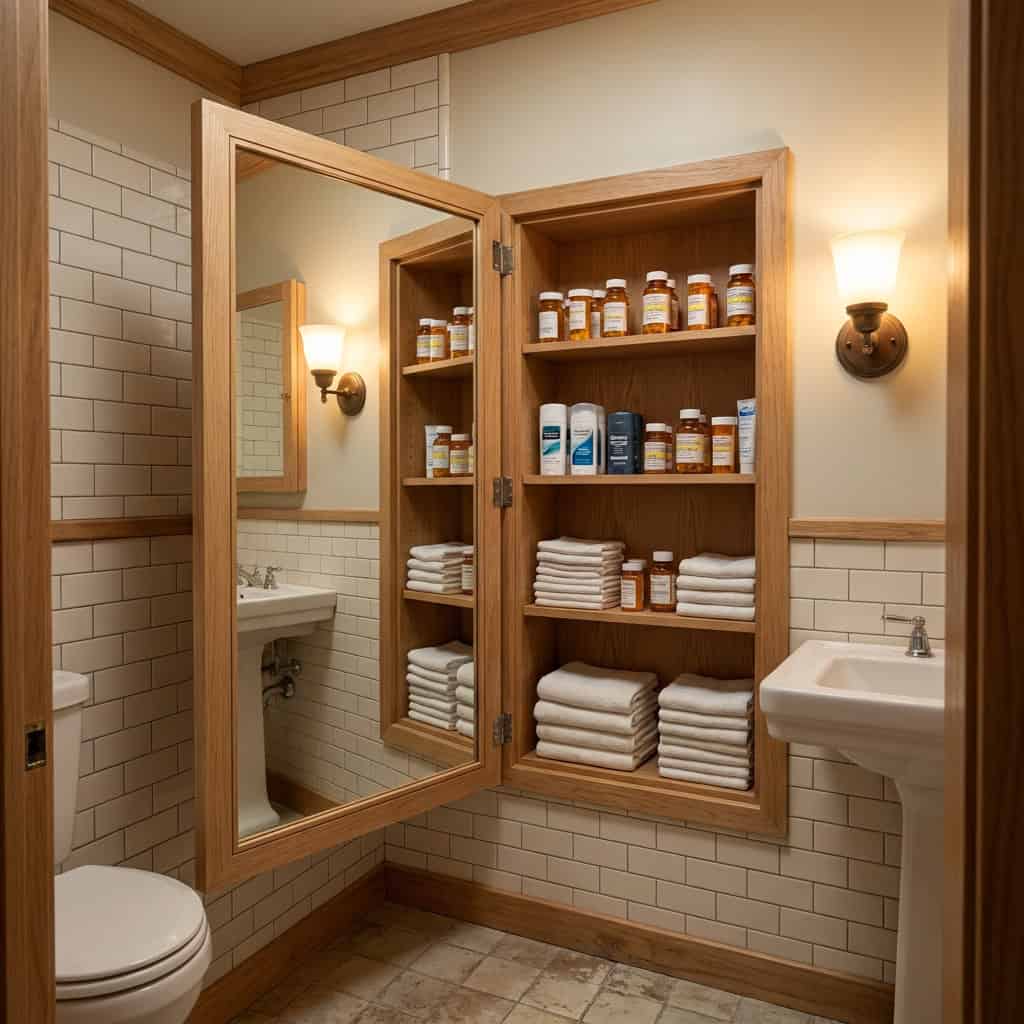
That big flat mirror over your bathroom sink? It is probably just glued to the drywall.
Pop it off, and you have access to the same hollow wall cavity that runs through the rest of your house.
You can install a recessed medicine cabinet right into the studs. From the outside, it looks like a normal mirror. But it opens to reveal 4 inches of shelving for toothpaste, prescriptions, and razors.
The whole bathroom feels less cluttered because nothing sits on the counter anymore.
4. Between the Wall Studs
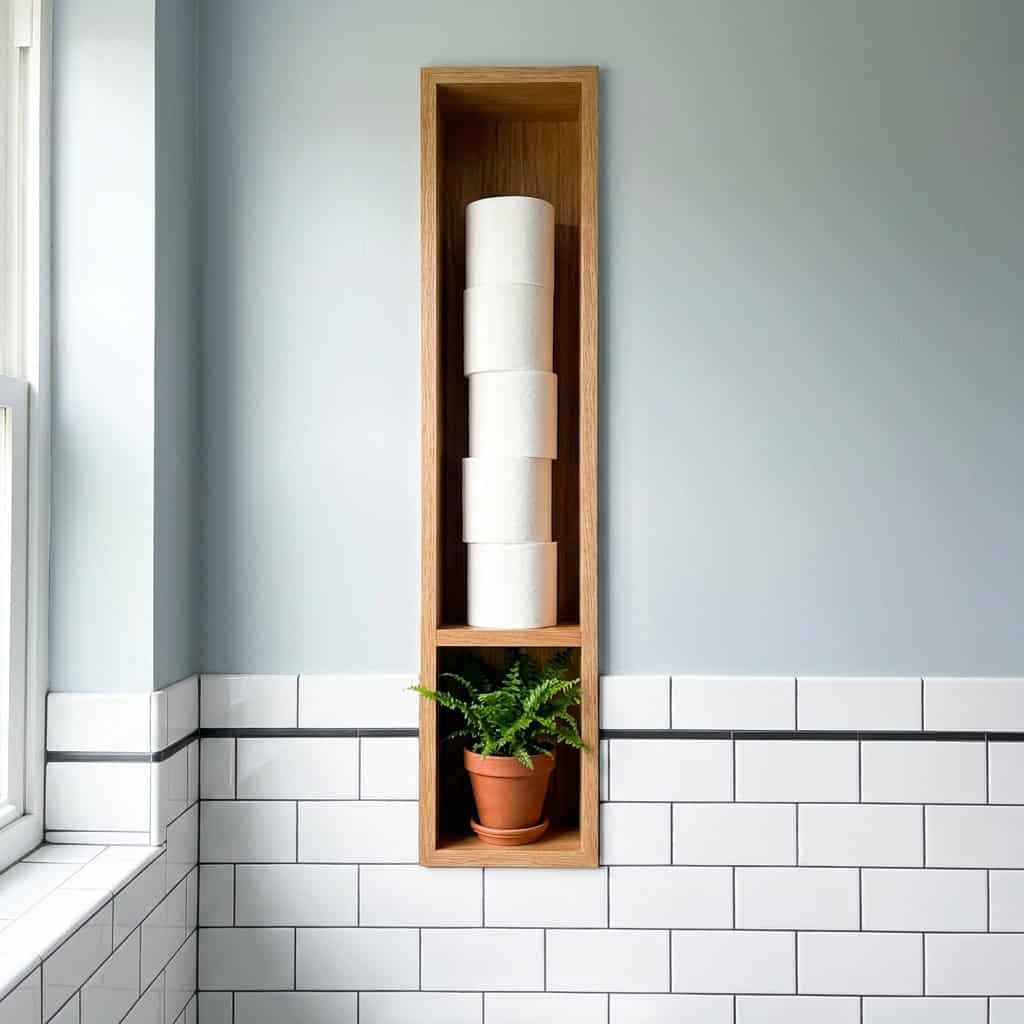
Most interior walls are hollow. They are made of 2×4 studs spaced 16 inches apart.
That means every 16 inches, you have a void space inside the wall.
You can cut the drywall and install a “recessed cabinet.”
These are perfect for jewelry cabinets hidden behind full-length mirrors, spice racks built into the kitchen wall, or extra storage in a tiny bathroom. Because they sit inside the wall, they take up zero floor space.
5. The “Fridge Gap”
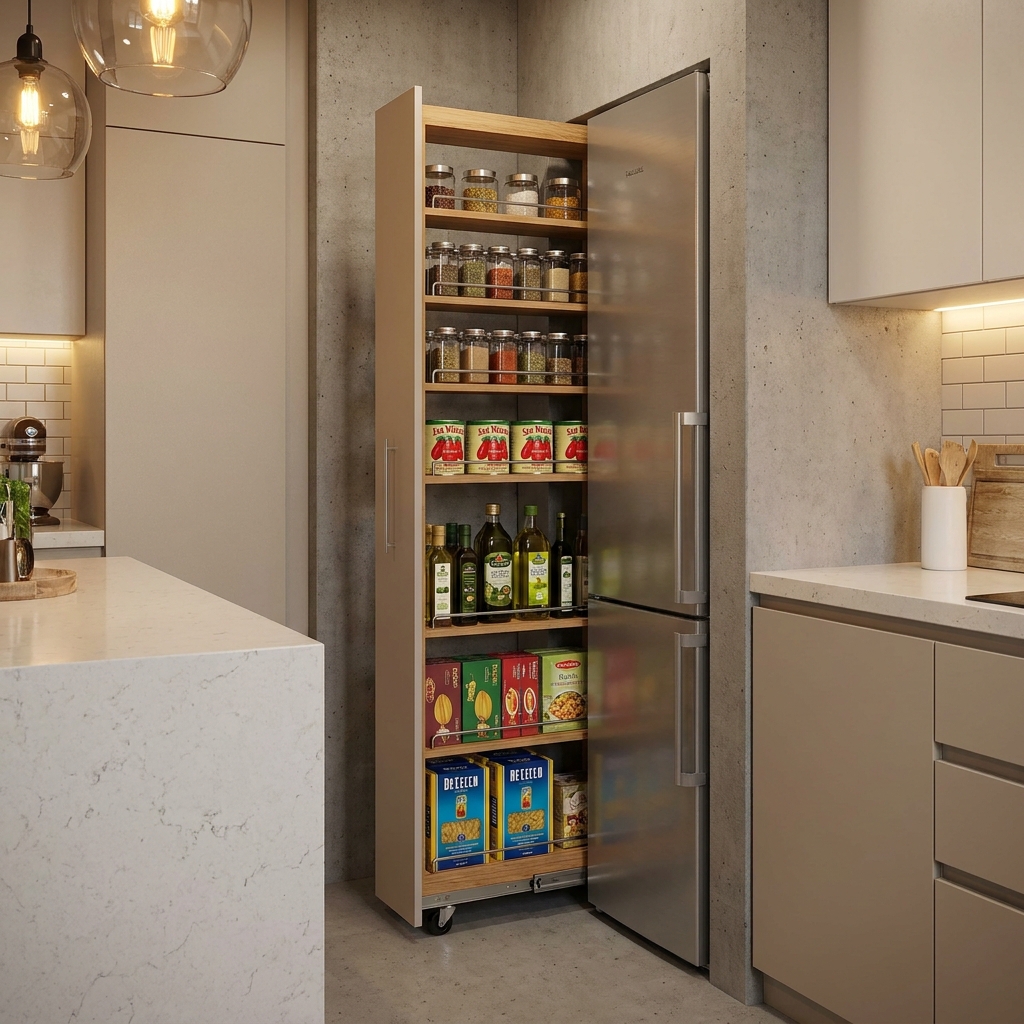
Unless you have a custom built-in refrigerator, there is almost always a 4 to 6-inch gap between the side of your fridge and the wall.
Right now, it is just collecting dust bunnies and lost magnets.
You can build (or buy) a “rolling pantry.” It is a tall, skinny shelving unit on wheels that slides into that crack.
It holds every spice jar, canned good, and bottle of oil you own, freeing up an entire cabinet elsewhere.
6. The 3-Inch Gap Where Two Cabinets Meet
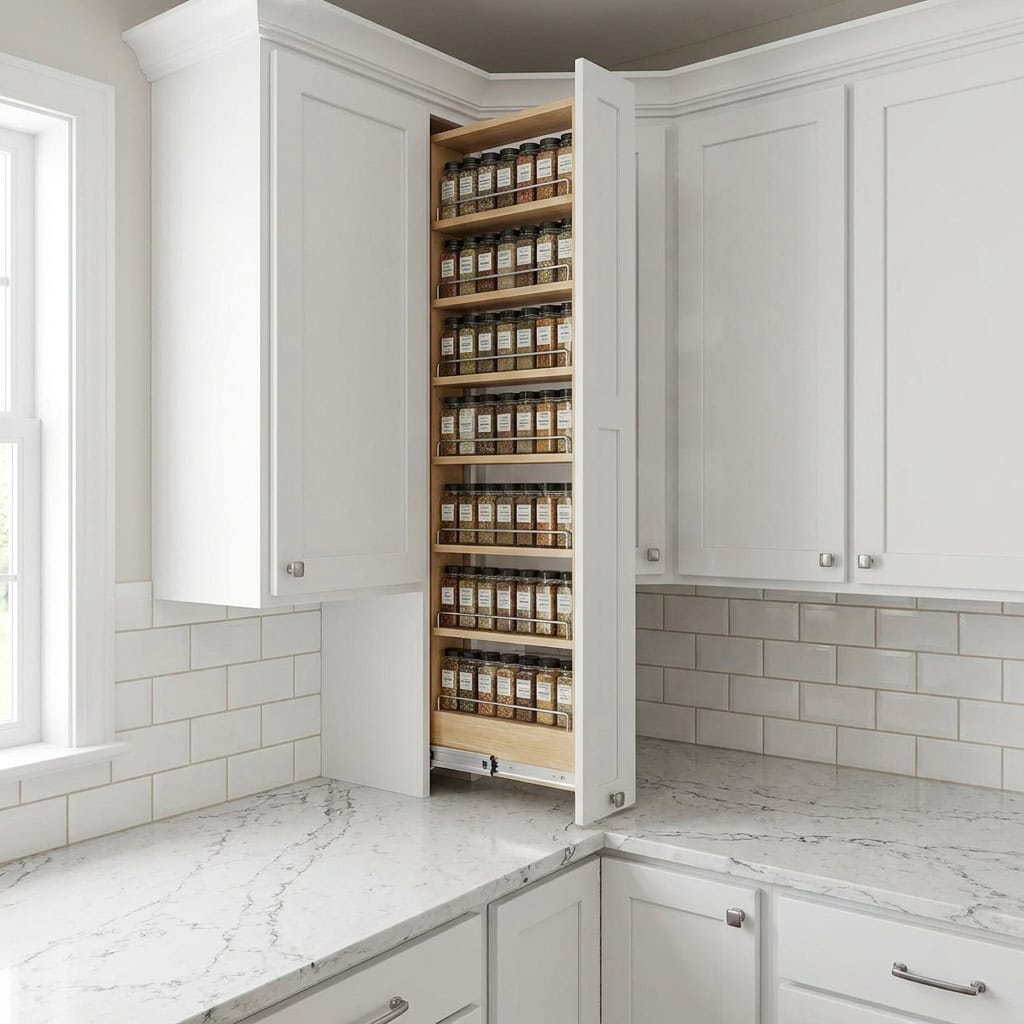
Walk over to the corner of your kitchen counter where two runs of cabinets meet at a 90-degree angle.
You will almost always see a vertical strip of “filler” wood — a plain board that is 2 to 4 inches wide. It is there to make the cabinets fit the wall.
That filler is hiding a usable cavity behind it.
You can replace it with a vertical pull-out spice tower. You grab a hidden handle, and a tall skinny rack rolls out with every spice jar visible from the side. It is the most efficient spice storage ever invented, in a space you did not know you had.
7. Inside Hollow Interior Doors
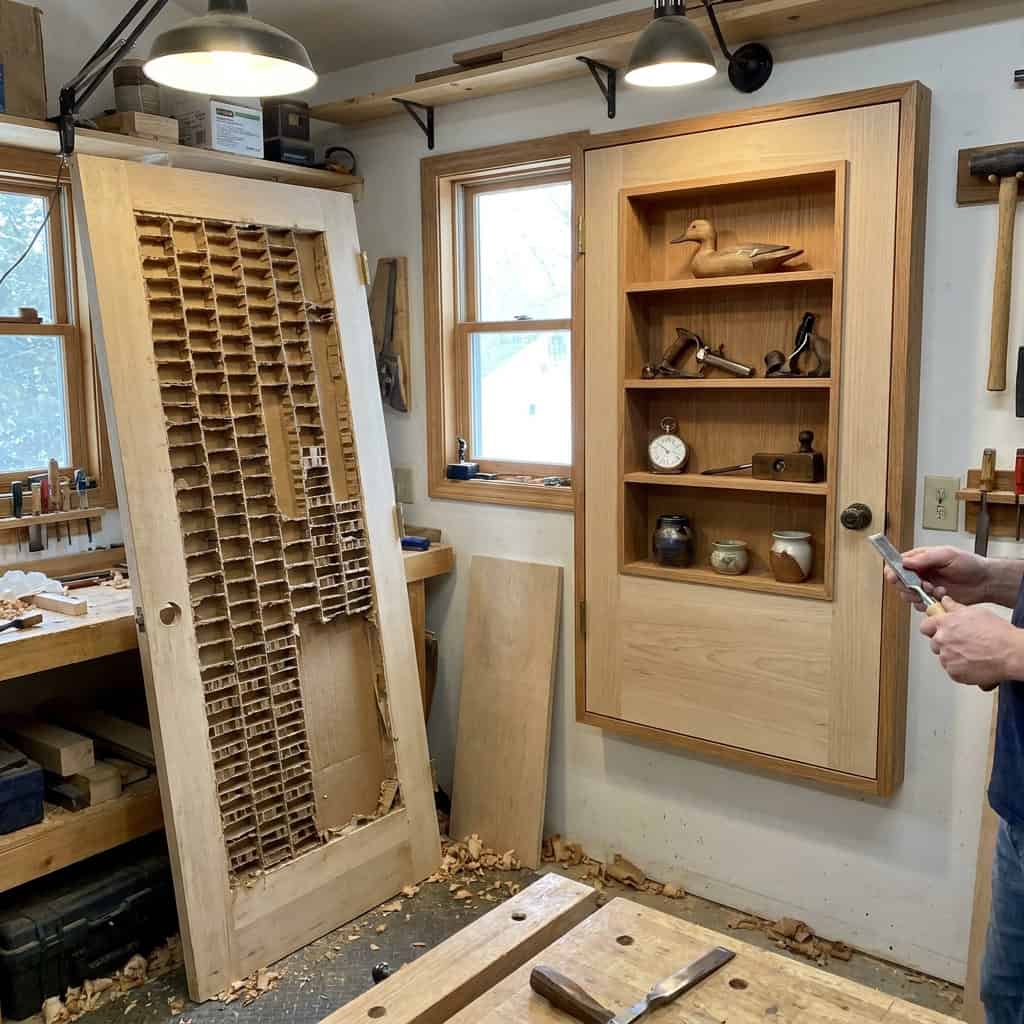
Most interior doors in modern homes are not solid wood. They are hollow shells with cardboard honeycomb inside.
A creative woodworker can cut a panel into the back of the door, hollow out the cavity, and turn the entire door into a hidden storage compartment.
It works for jewelry, important documents, or a bottle of bourbon you do not want the in-laws to find.
From the outside, it looks like a perfectly normal door. From the back, it looks like the most ingenious safe you have ever seen.
8. The Wall Behind a Door That Swings Open
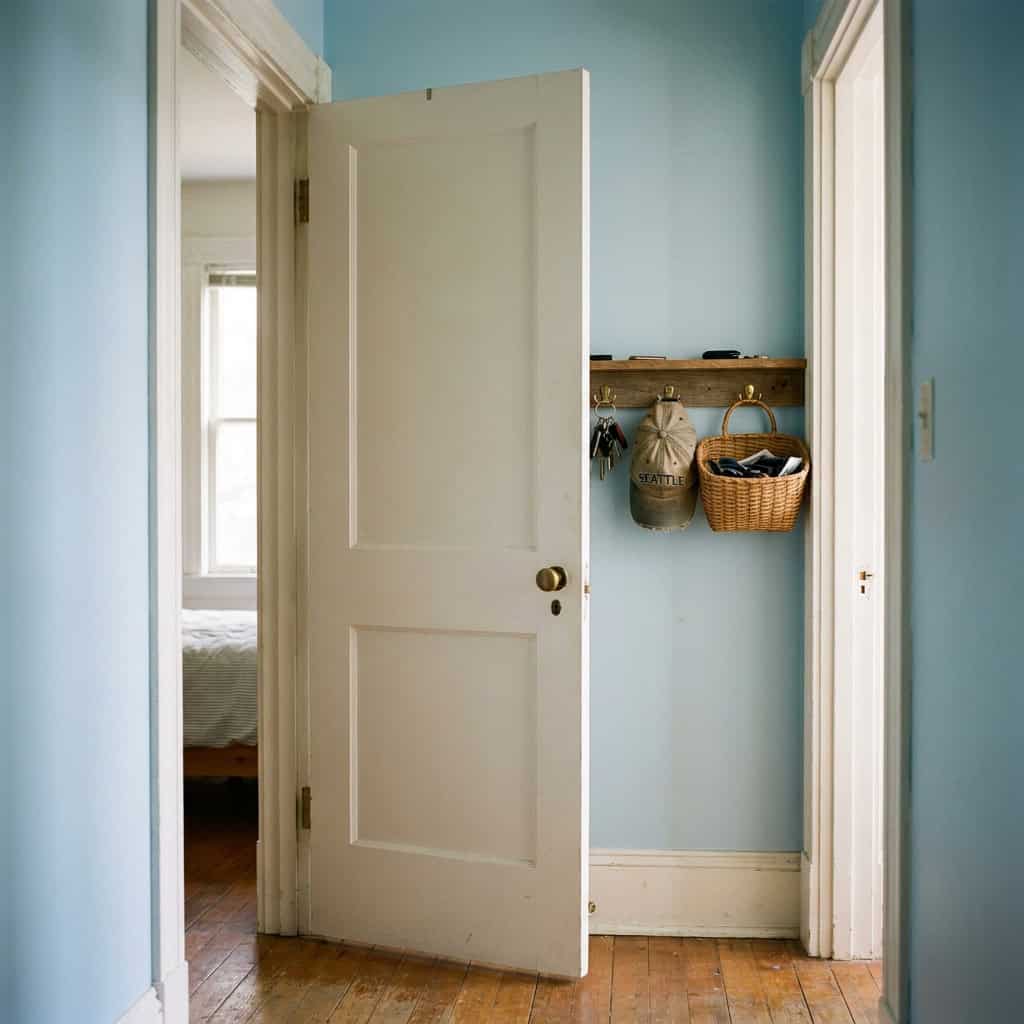
Pay attention to where your interior doors swing.
When the door is fully open, it presses flat against a section of wall. That section is essentially un-furnishable — you cannot put a bookshelf or dresser there because the door would slam into it.
But the wall itself is fair game.
You can mount hooks, a slim shelf, or a pegboard in that exact spot. When the door is open, it covers your storage. When the door is closed, you have full access. It is the closest thing to invisible storage in the average home.
9. The Hollow Under a Built-In Bench or Banquette
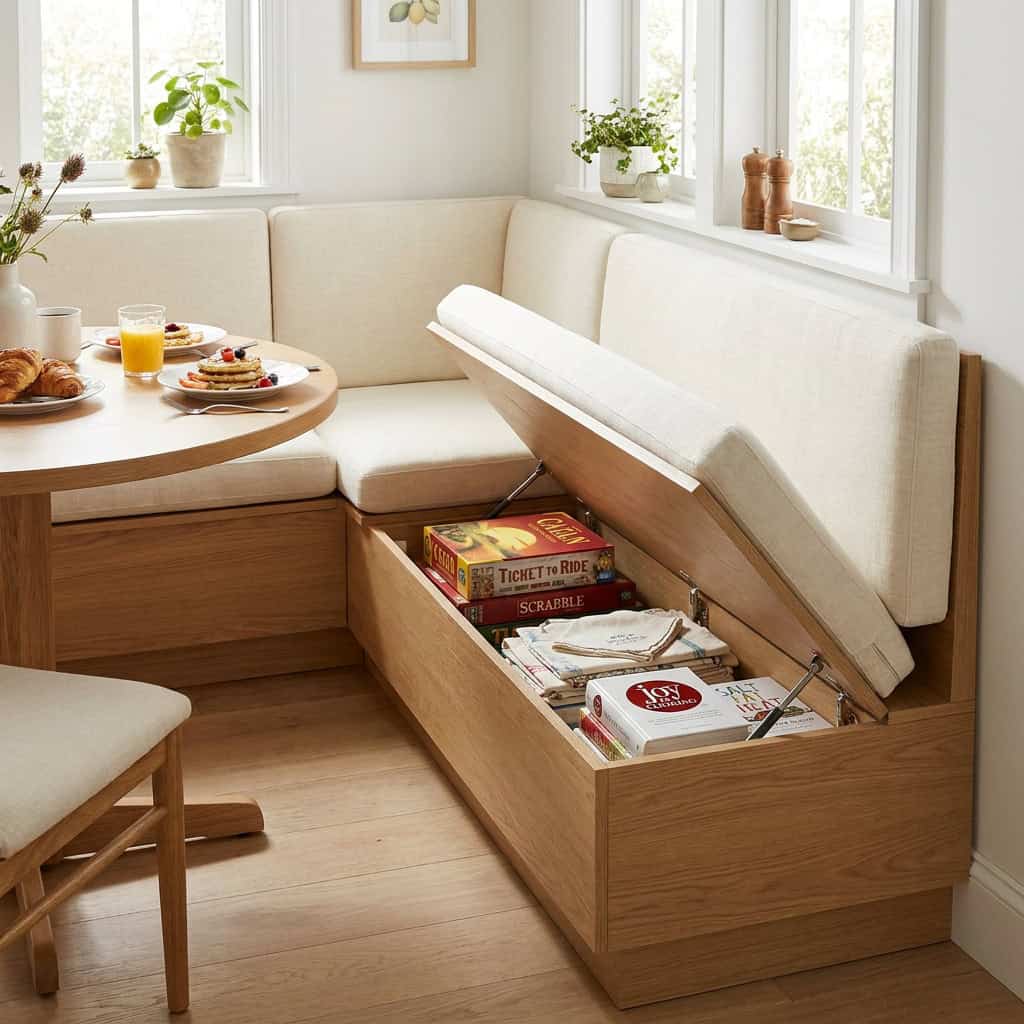
If you have a kitchen banquette, mudroom bench, or entryway seat, the space underneath is almost always wasted.
A solid base looks built-in and finished, but it is hiding a giant hollow box.
Add a hinged seat or pull-out drawers to the front. Now your bench eats sports gear, board games, winter boots, or pet supplies. The bench still looks like a bench.
10. The Window Bench
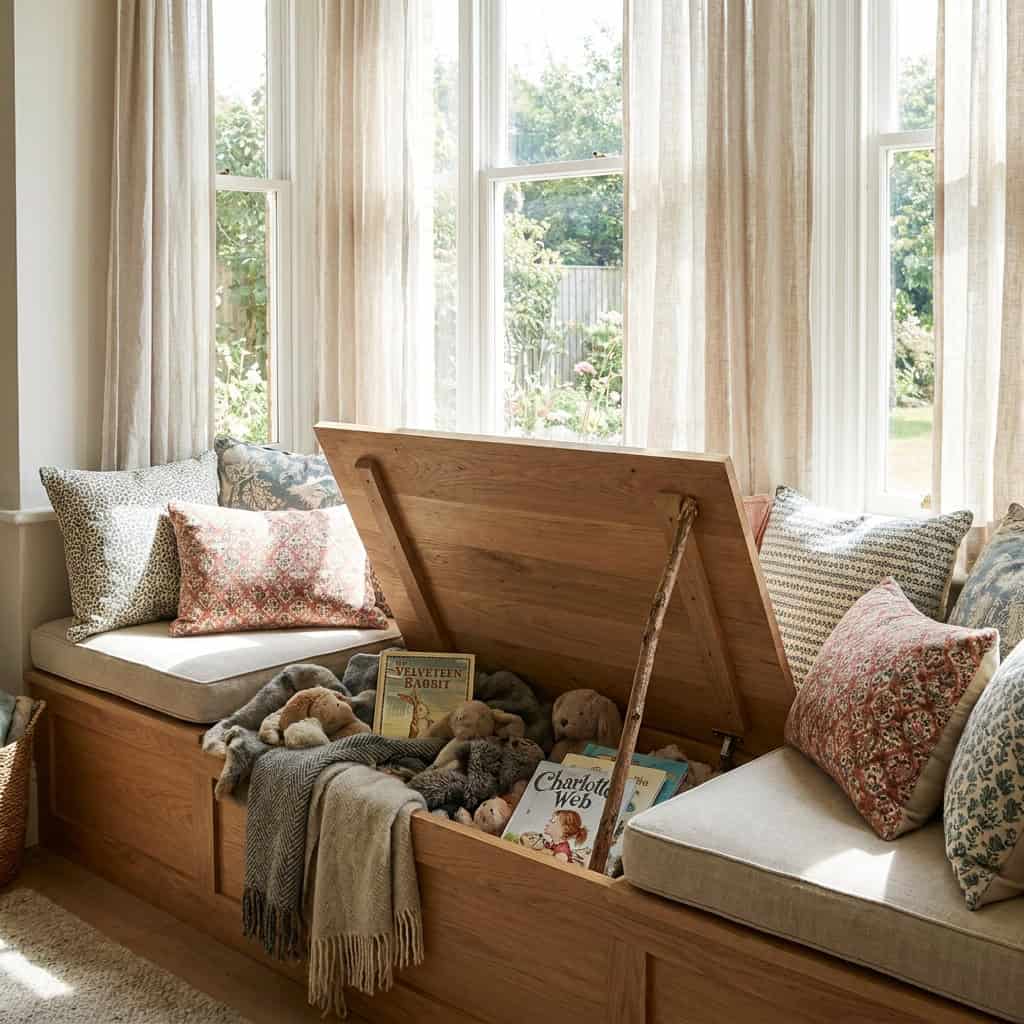
A bay window is beautiful, but it is often just empty floor space.
Building a bench seat across the window does two things:
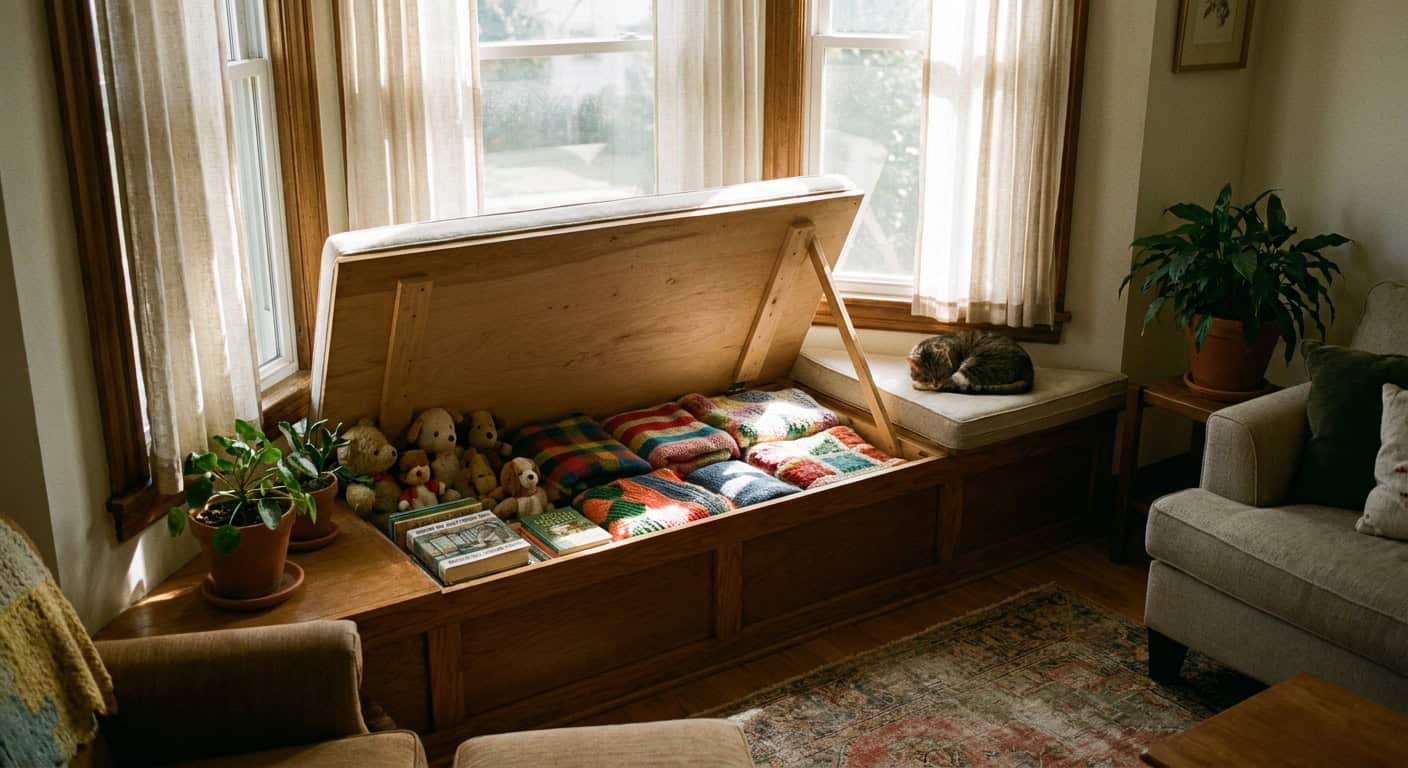
It gives you a cozy reading nook.
It gives you a massive toy box.
A hinged lid on a window seat can swallow every LEGO, stuffed animal, and blanket in the living room in seconds.
11. The Stair Risers
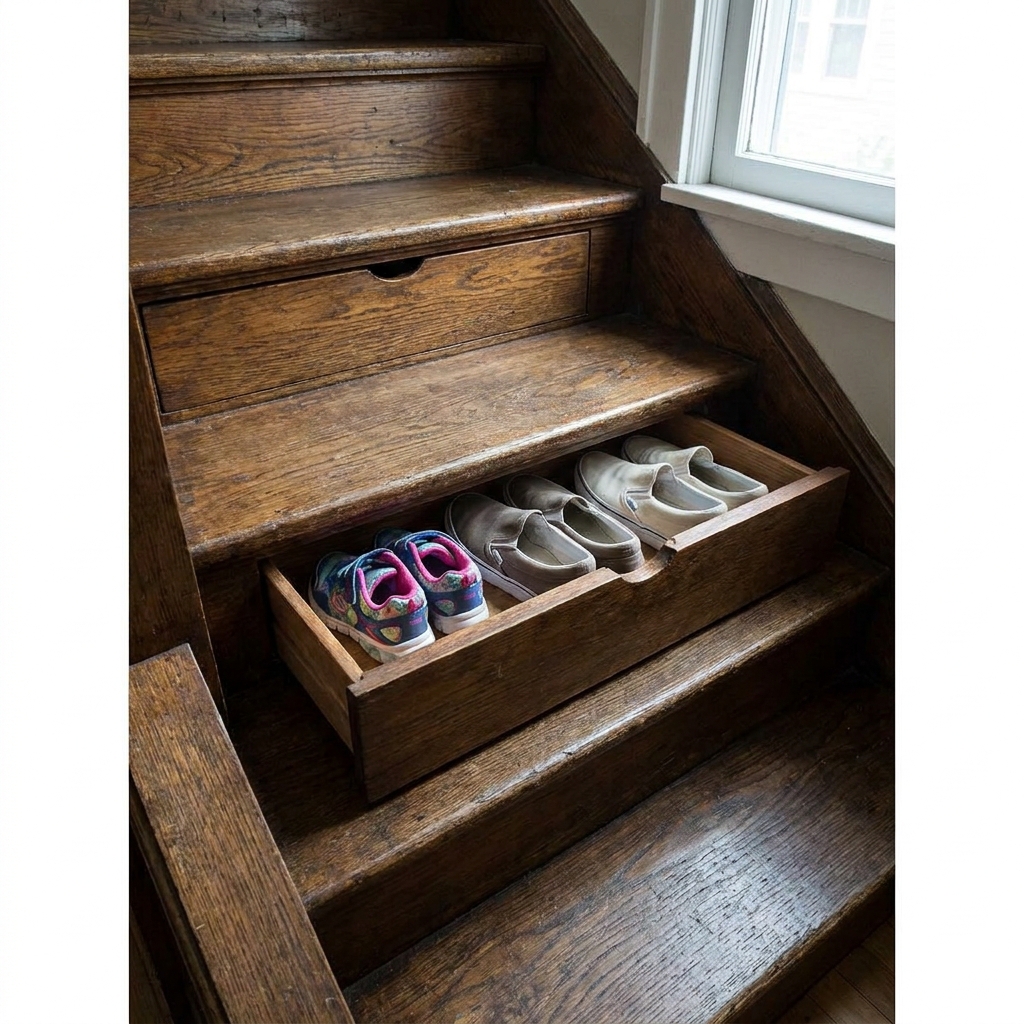
If you have a wooden staircase, the vertical part of the step (the riser) is usually just a decorative board.
But creative carpenters are turning these into drawers.
The riser pulls out to reveal a drawer that goes deep under the step above it.
It is the ultimate shoe storage. Each family member gets a step. You take your shoes off, put them in the stair, and walk up. No more pile of sneakers at the front door.
12. The Empty Cavity Inside Your Stair Stringer
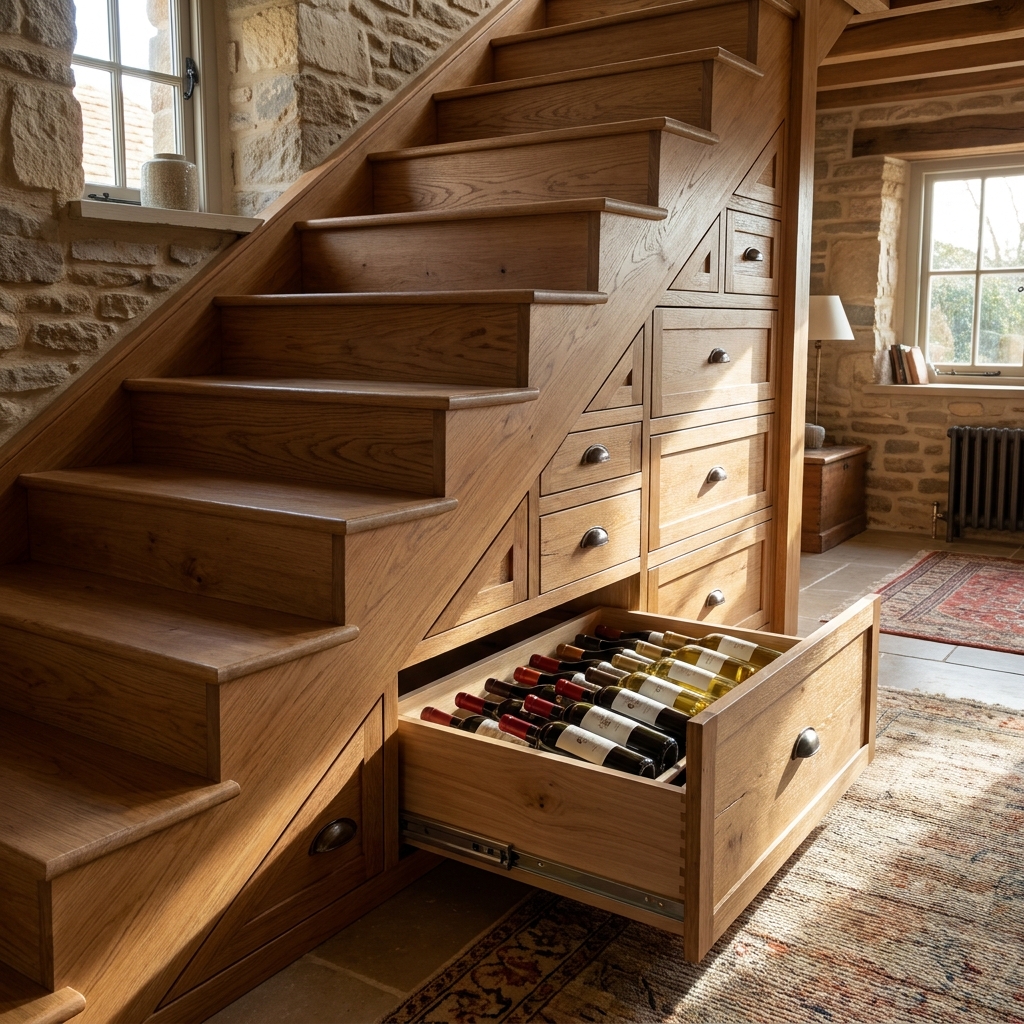
Walk over to the side of your staircase — the angled wall that runs alongside the steps.
That wall is hiding a long triangular cavity that follows the staircase up. Most homeowners never touch it.
You can cut openings into the side and build pull-out drawers, a sliding bookcase, or even a small wine rack that nests perfectly into the angle.
Every drawer is a different size because each one fits under a different step. It looks like a custom built-in. It is just air space being put to work.
13. The “Harry Potter” Closet (Under Stairs)
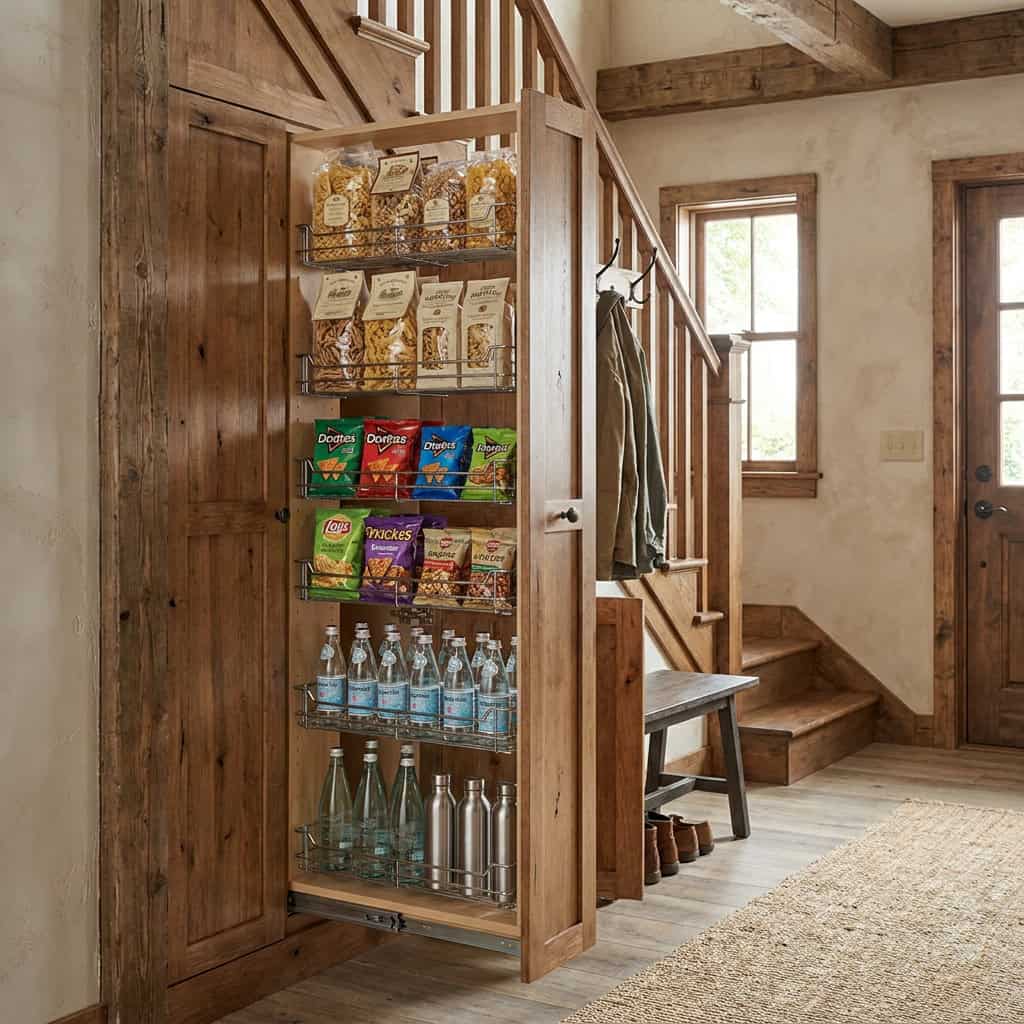
The space under a staircase is huge, but it often becomes a “black hole” closet where vacuum cleaners go to die.
Instead of one deep, dark closet, consider installing pull-out pantry units.
These are tall drawers that slide out sideways from under the stairs. You can access everything from both sides without digging into the dark.
14. The Knee Wall (Attic)
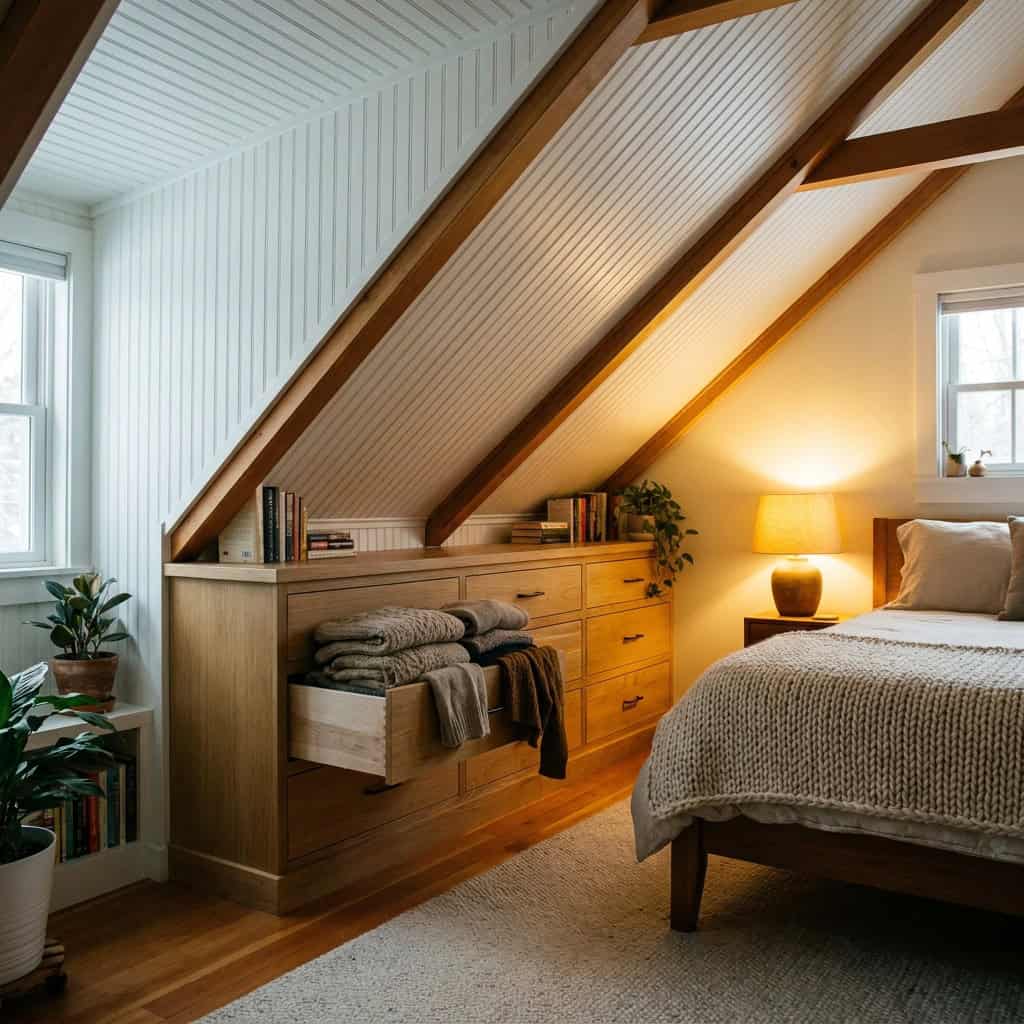
If you have a finished attic bedroom with slanted ceilings, you have “Knee Walls” — the short vertical walls where the roof meets the floor.
Behind that short wall is a triangle of wasted space.
Do not just wall it off. Build dresser drawers directly into the knee wall.
They can go deep into the eaves, providing massive storage for clothes without taking up any floor space in the room.
15. Behind a Hinged Headboard
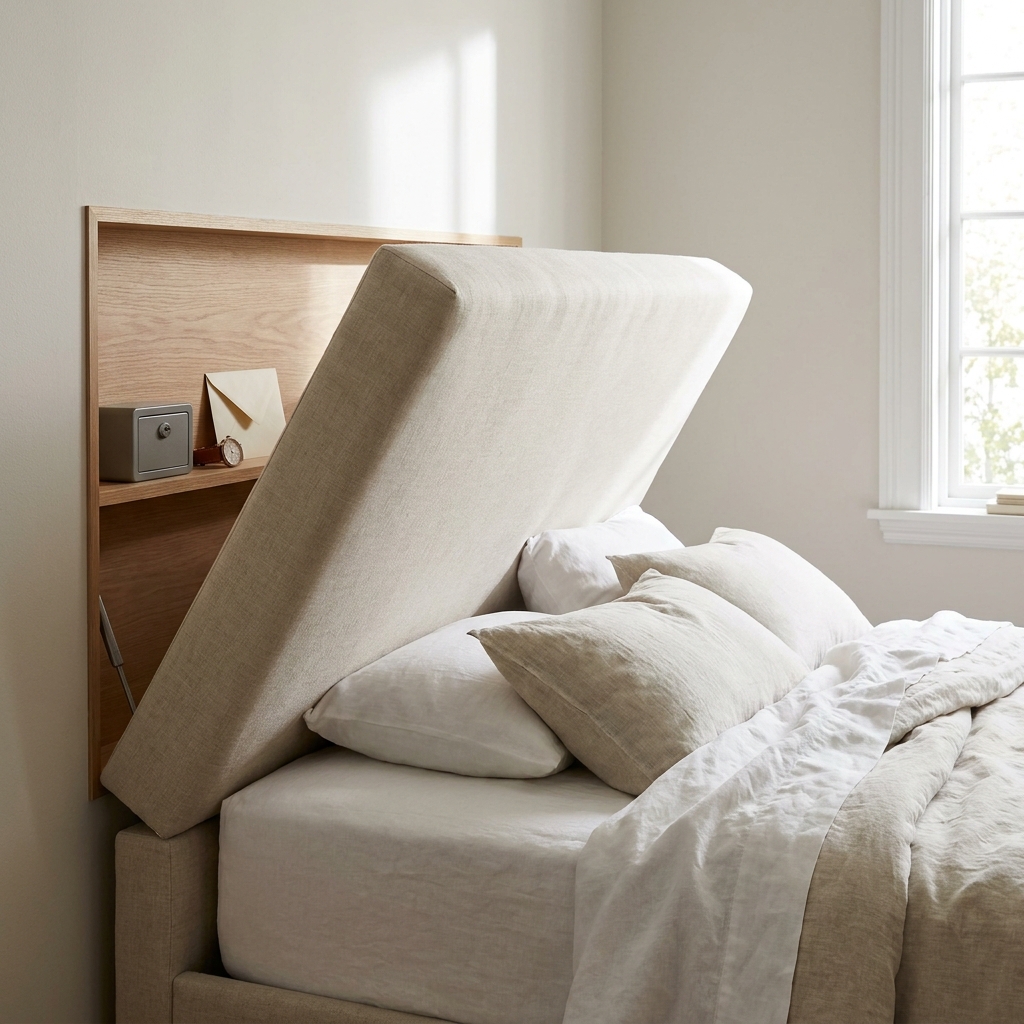
Most headboards are decorative. They sit flat against the wall and do nothing.
But a hinged headboard is a different animal.
You build the headboard with a piano hinge along the top, so the entire panel tilts forward to reveal a shallow storage box mounted to the wall behind it.
It is the perfect spot for valuables, important paperwork, or anything you want hidden in plain sight. Nobody who walks into your bedroom would ever think to look there.
16. The Dead Air Above Your Closet Rod
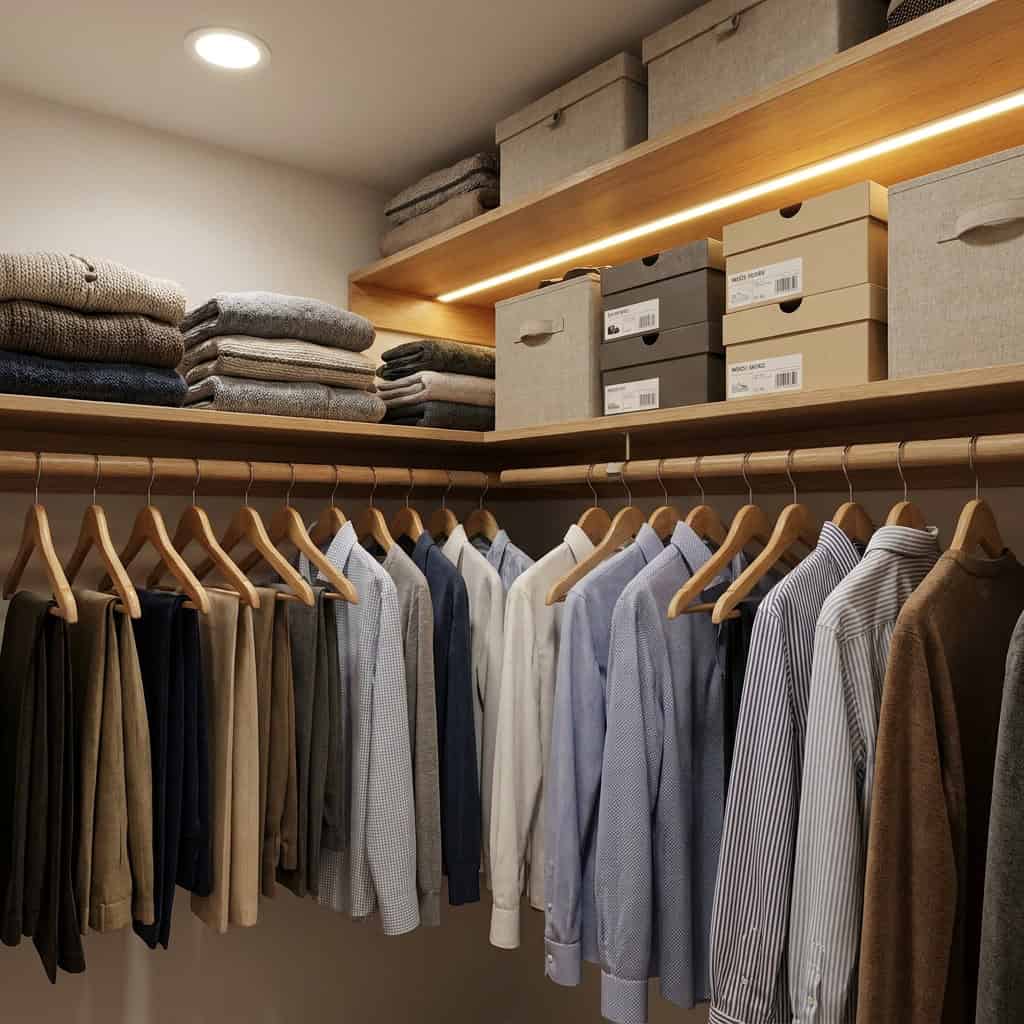
Open your bedroom closet. Look at the space above your hanging shirts.
Unless you are 7 feet tall, there is at least 18 inches of empty air between the top of your clothes and the standard shelf above them.
You can install a second hanging rod up there for off-season clothes. Or add a row of stackable bins. Or build a small cubby system that doubles your usable closet without changing its footprint.
Most closets waste half their vertical space by default.
17. Inside a Storage Couch
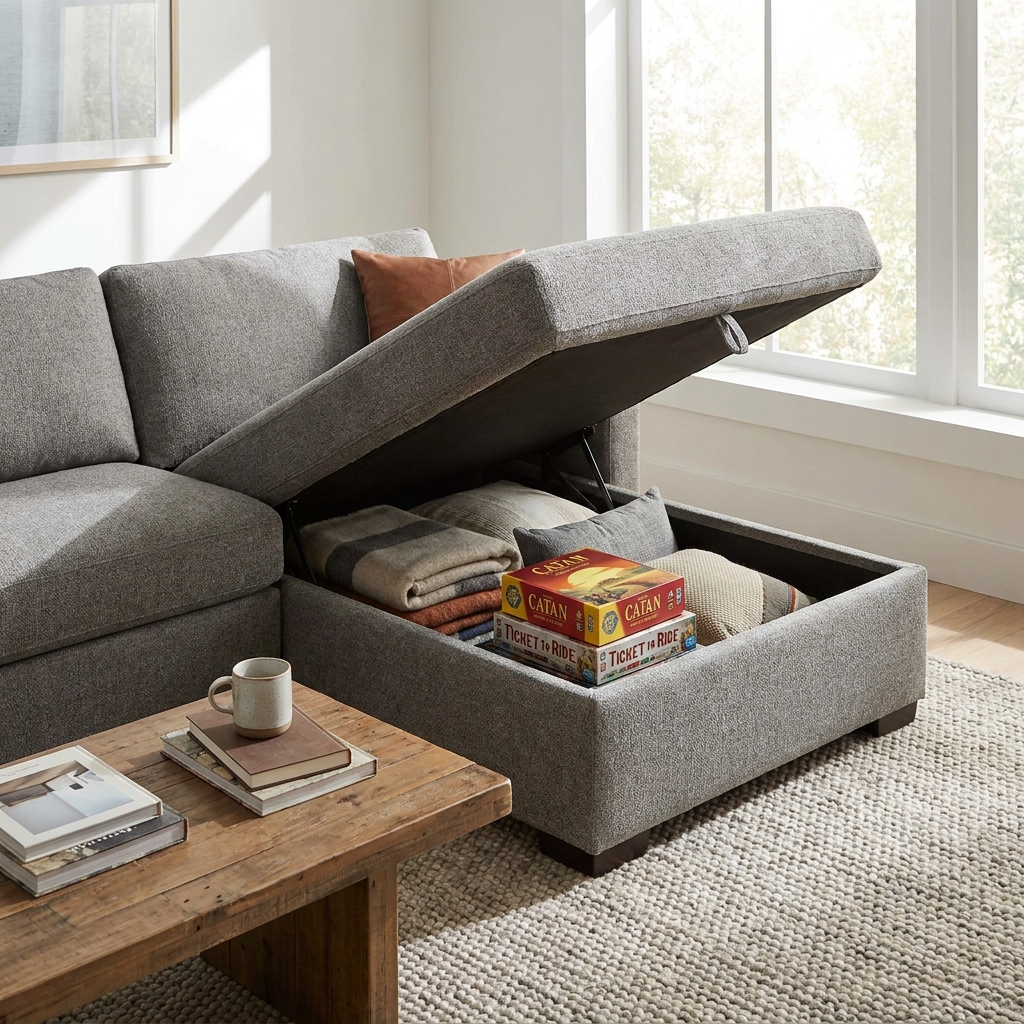
Most people know about storage ottomans. But storage couches are the real hidden gem.
The seat cushions lift up on hinges to reveal a massive hollow cavity that runs the entire length of the couch.
A standard 84-inch sofa can hold every blanket, board game, and extra pillow in the house. It is the size of a small closet, sitting in the middle of your living room.
You sit on it every night and never think about what is underneath.
18. The Sides of the Kitchen Island
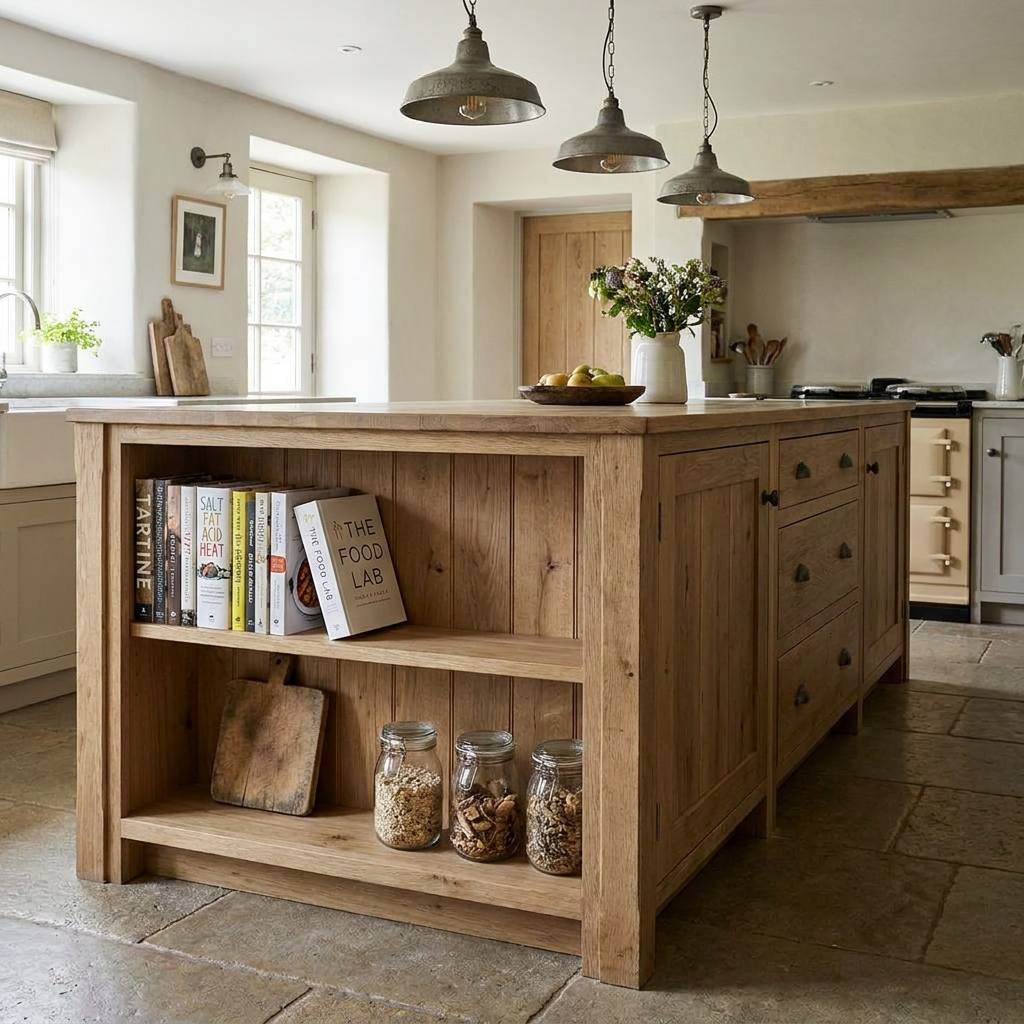
Most kitchen islands have cabinets on the front and back. But the ends are usually just decorative panels.
You can add shallow shelves or rails to these ends.
It is the perfect spot for cookbooks, cutting boards, or a spice rack. It turns a decorative surface into a working one.
19. Between Floor Joists in the Basement Ceiling
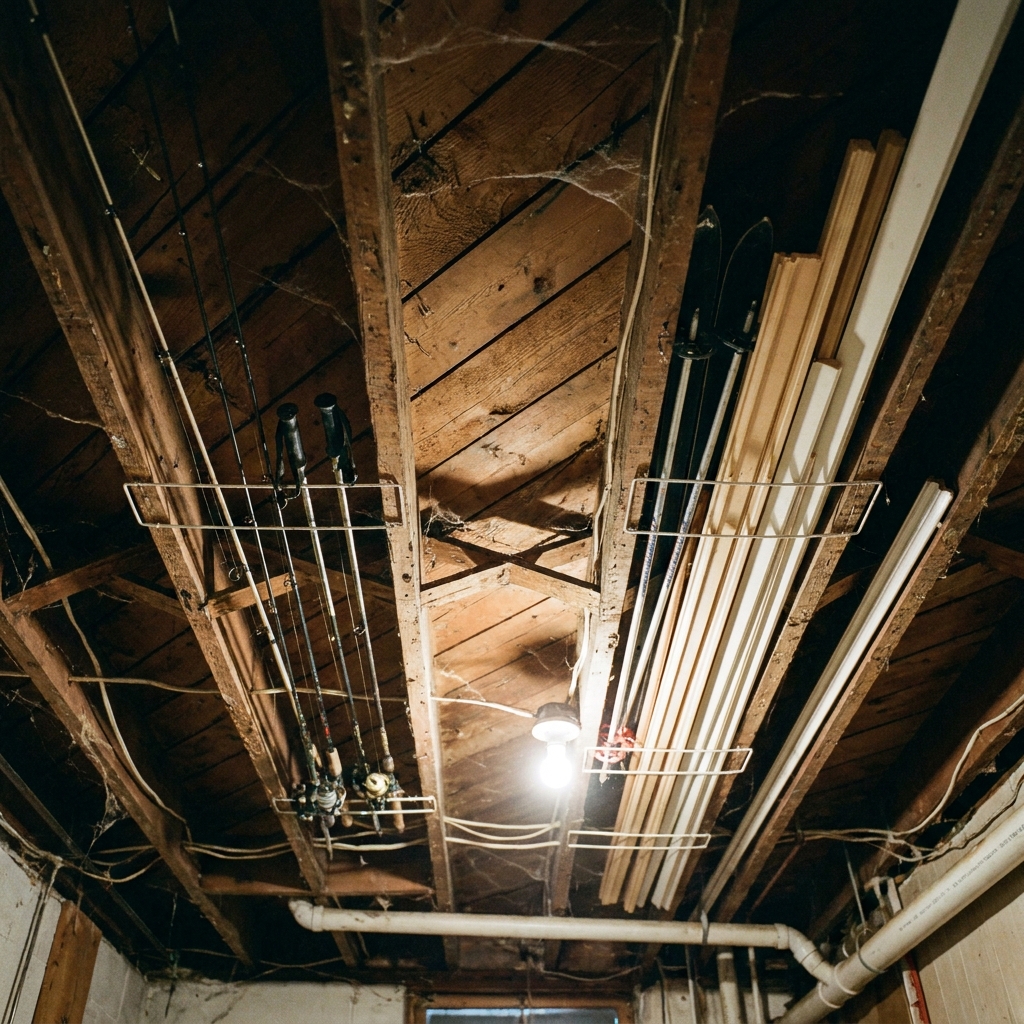
If your basement has an unfinished ceiling, look up.
You will see parallel wooden floor joists running across the ceiling, with hollow channels between them. Each channel is roughly 14 inches wide and several inches deep.
Those channels are perfect for storing long, skinny items.
Slide in fishing rods, ski poles, lumber scraps, fluorescent bulbs, or trim molding. Add a couple of cleats or a wire rack and they hold everything in place. You just gained dozens of feet of overhead storage that costs almost nothing to build.
20. Above a Drop Ceiling Tile
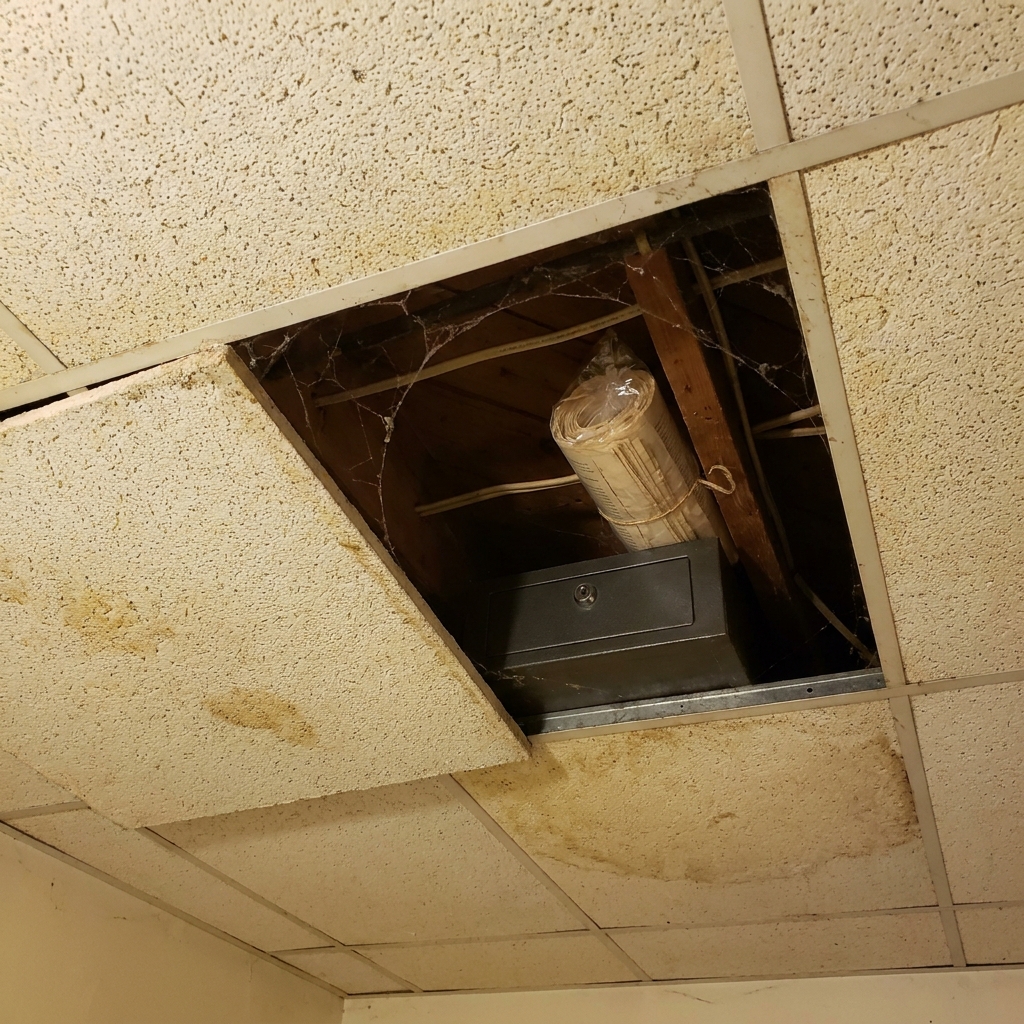
If you have a basement or utility room with a drop ceiling, there are a few inches of dead space above every tile.
Those tiles lift right out.
Some homeowners use this for hidden valuables — a small fireproof safe sitting on top of the metal grid, hidden behind a tile that looks identical to every other tile in the room.
It is also useful for storing flat items you only need once a year, like seasonal decorations or important paperwork in a sealed bin.
21. The Garage Ceiling
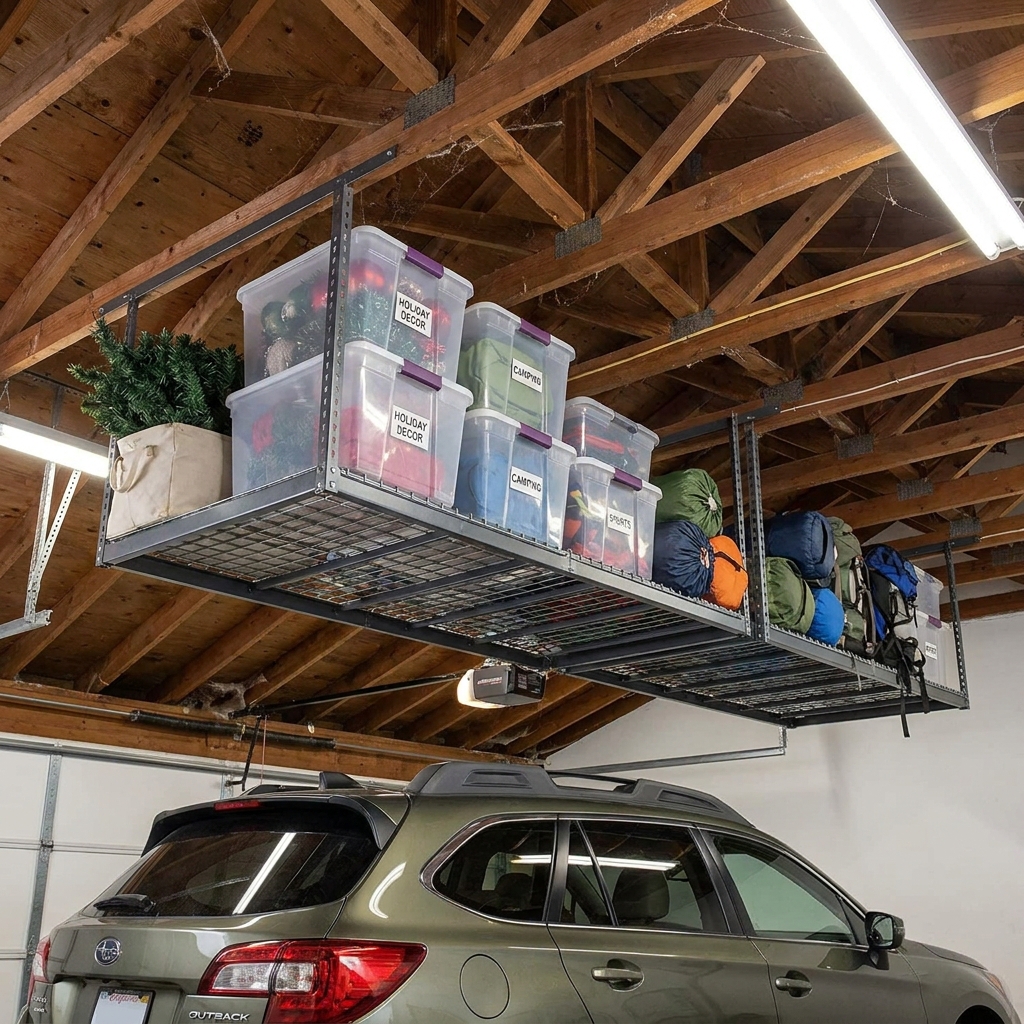
Look up in your garage. Above the garage door tracks, there is usually a huge amount of empty air.
You can install overhead racks that hang from the ceiling joists.
This is the place for the Christmas tree, the camping gear, and the plastic bins of baby clothes.
Get the clutter off the floor so you can actually park your car.
22. The Bed Risers
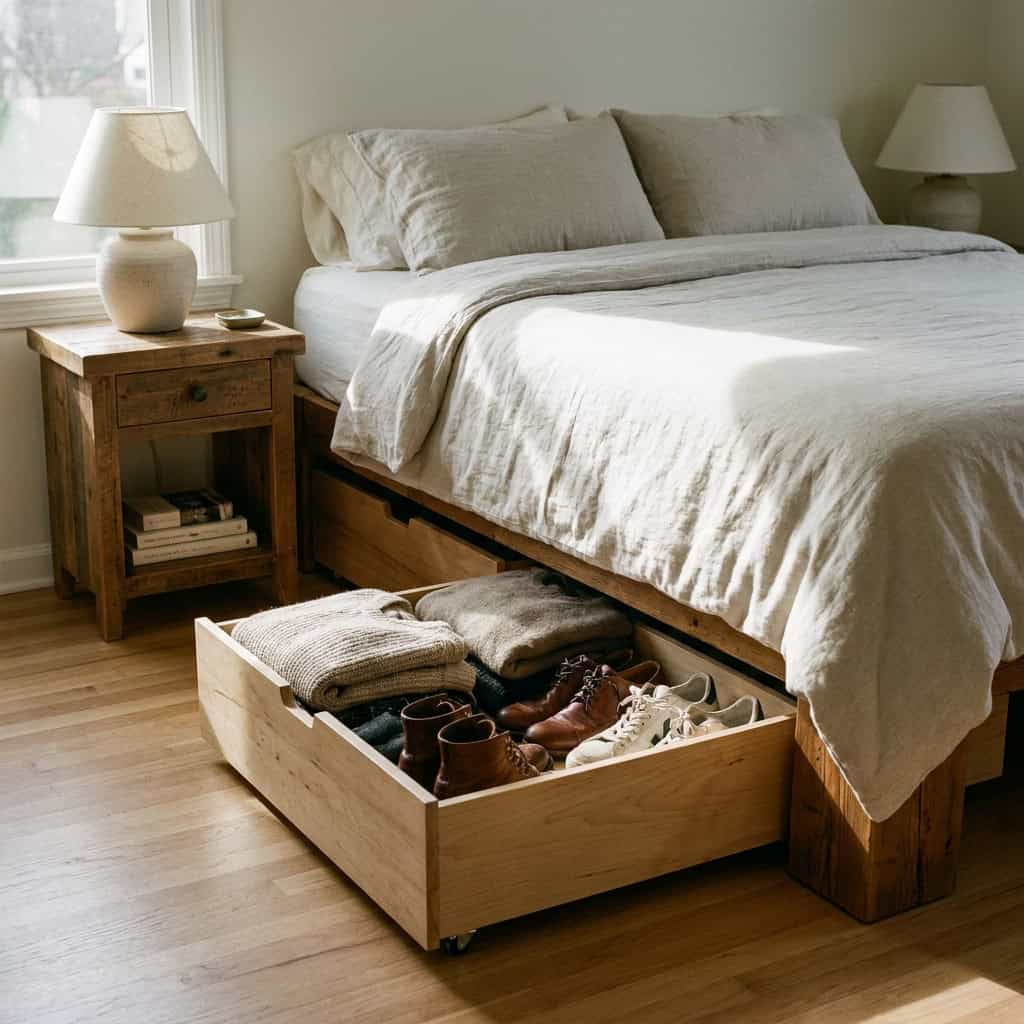
Sliding plastic bins under the bed works, but it looks messy.
A better solution is a bed frame with built-in drawers.
Or, if you love your current bed, put it on “Risers” to lift it up 6 inches, and use rolling wooden drawers that match your furniture.
It is essentially a dresser lying flat on the floor.
Conclusion
You do not need to be a carpenter to find this space. You just need to stop looking at walls as barriers.
Walk around your house today with fresh eyes.
Tap on the walls. Look under the cabinets. Look up.
Your dream storage solution is already there. It is just waiting for you to open it up.