

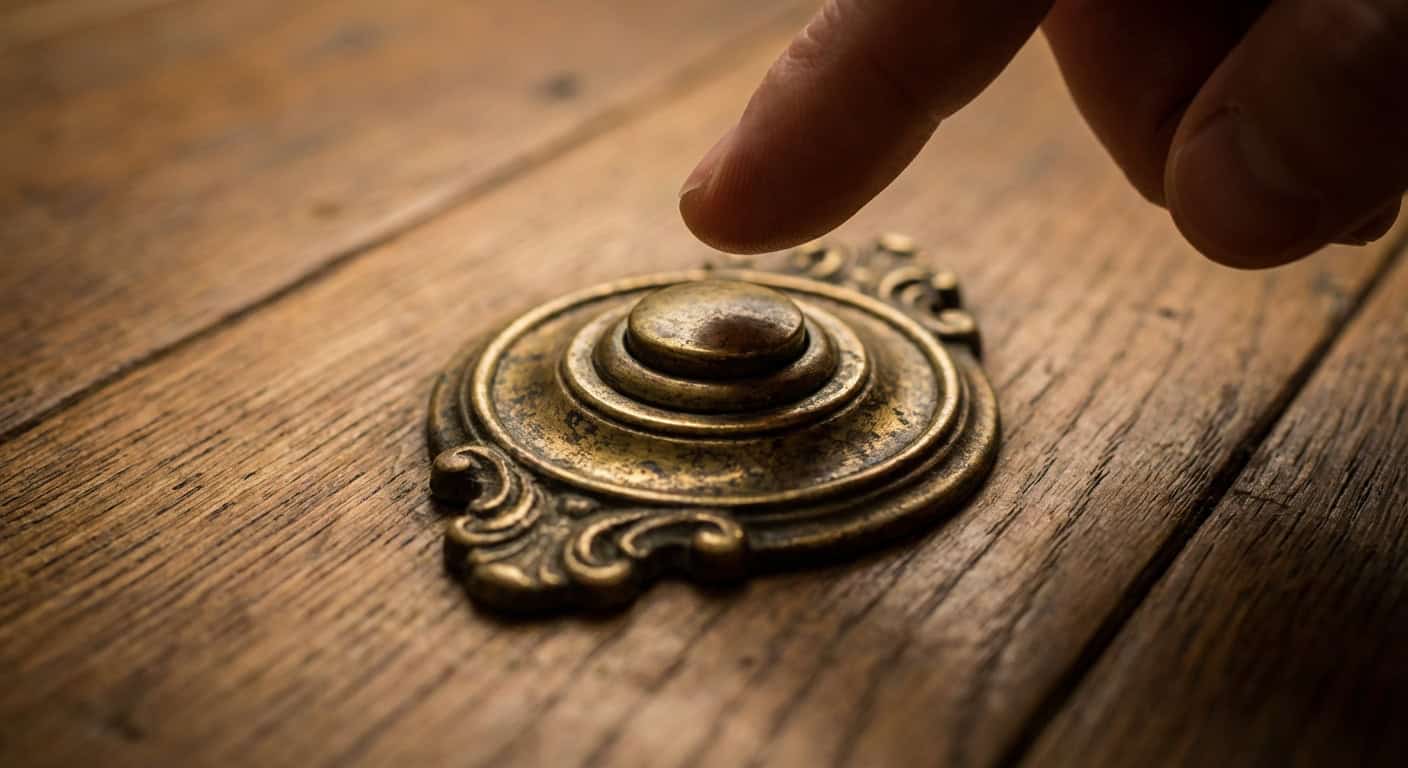
Walk through a modern house, and what you see is what you get.
Drywall. Open space. A thermostat on the wall.
But walk through a Victorian home built in 1890, and you are walking through a machine.
These houses weren’t just shelter; they were engineered for survival.
They had built-in airflow systems. They had mechanical intercoms. They had “smart home” features that worked without a single microchip.
But because we forgot how to use them, many of these features have been painted shut, carpeted over, or ripped out by flippers who didn’t know what they were looking at.
Here are 17 “hidden” secrets of Victorian architecture that prove our ancestors were smarter than we are.
1. The Dining Room Floor Button
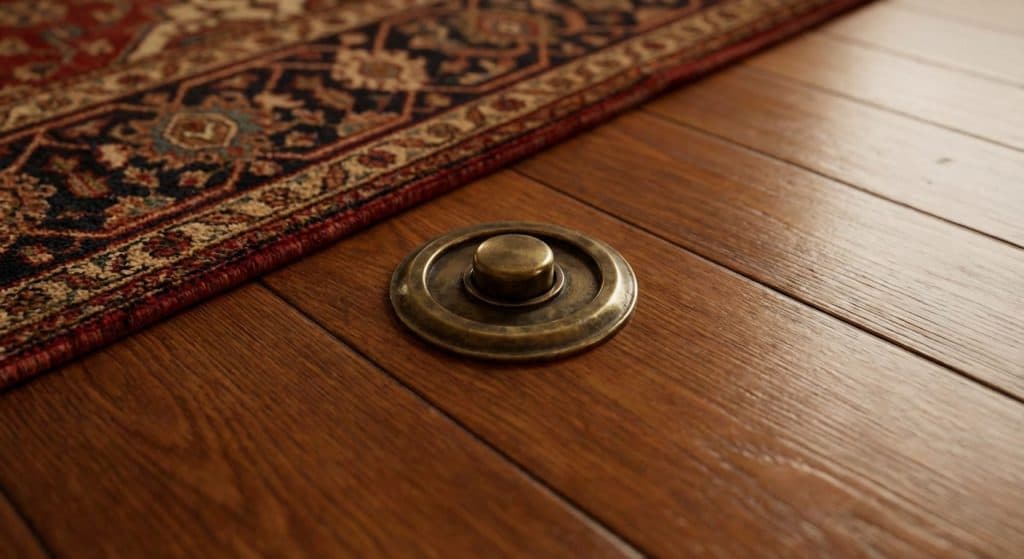
You are moving into an old house. You pull up the dining room rug and find a strange brass bump in the middle of the floor.
Is it a gas line? A door stop?
No. It’s a “Call Button.”
In the Victorian era, the dining room was a stage. You didn’t shout at the kitchen for more potatoes.
The lady of the house would discreetly tap this button with her foot.
It was wired to a buzzer in the kitchen (the “annunciator”), signaling the servants to clear the plates or bring the next course.
Today, we just text our kids to come down for dinner. But the floor button was the height of subtle, wireless communication.
2. The Coffin Corner
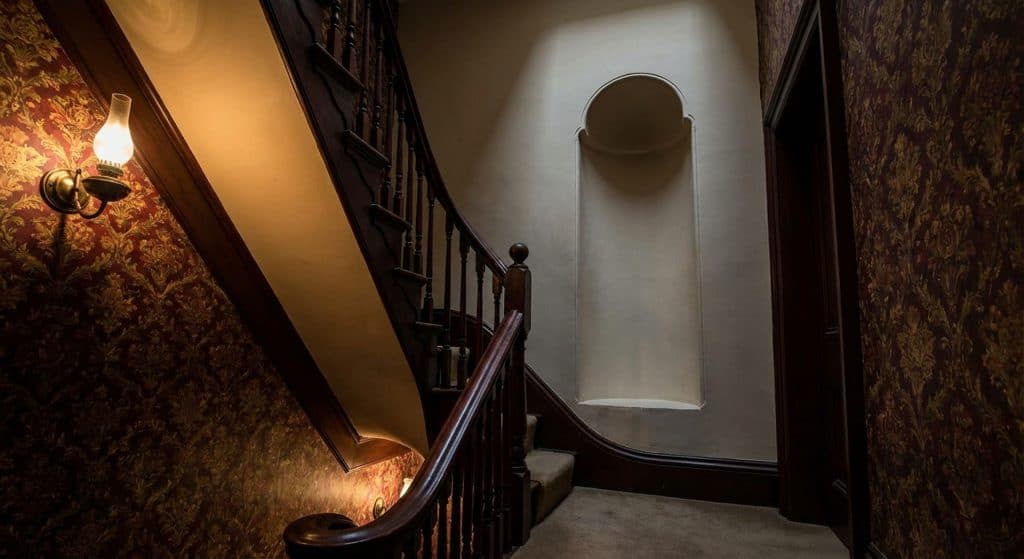
This is the most morbid feature in American architecture.
In the Victorian era, people didn’t die in hospitals. They died in the bedrooms upstairs. And the funeral was held in the parlor downstairs.
This created a logistical problem: How do you get a 6-foot casket down a narrow, winding staircase?
Builders often added a “Coffin Corner”—a curved niche cut into the wall of the staircase landing.
It wasn’t for a vase. It was purely to give the pallbearers room to pivot the casket without scraping the plaster.
3. The Witch Window
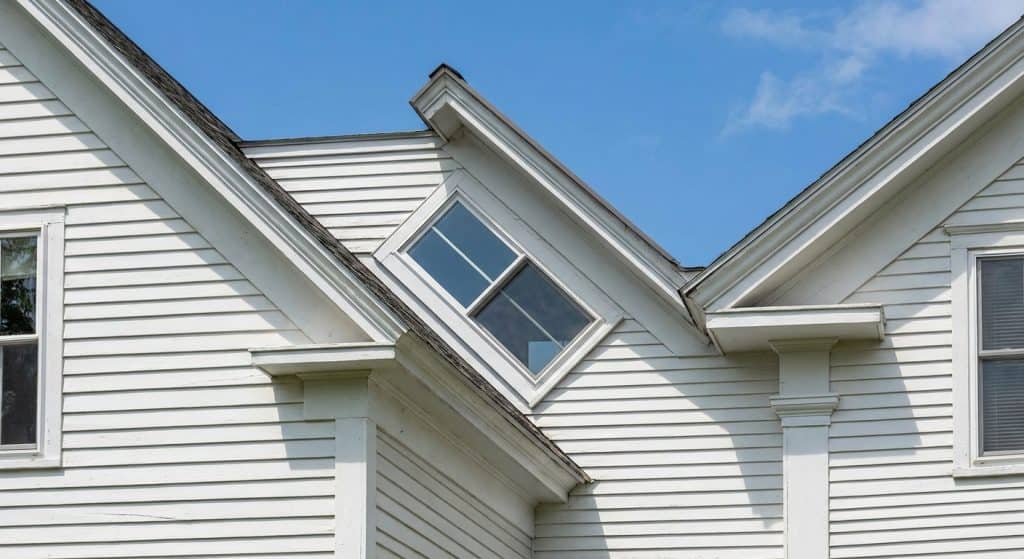
Drive through Vermont, and you will see something that looks like a construction mistake.
A window installed diagonally.
These are “Witch Windows.”
The superstition says that witches cannot fly their broomsticks through a crooked window.
The reality? It was a clever way to fit a full-sized window into the narrow wall space between the rooflines of an addition.
It looks weird, but it let the light in without requiring a custom-built small window.
4. The Hollow Newel Post
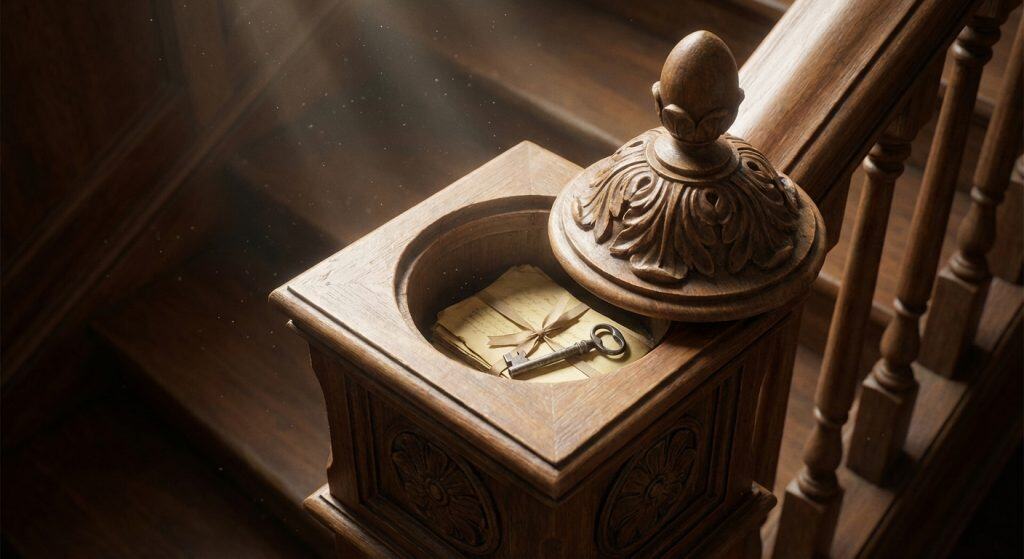
The Newel Post is the heavy anchor for the stair railing. It’s usually solid wood.
But in some custom Victorian homes, the cap of the Newel Post lifts off.
Inside, there is a small, hidden void.
This wasn’t for hiding candy. It was often where the house plans, the deed to the property, or a “time capsule” from the builder were placed.
It was the home’s “cornerstone,” hidden in plain sight.
5. The Milk Door
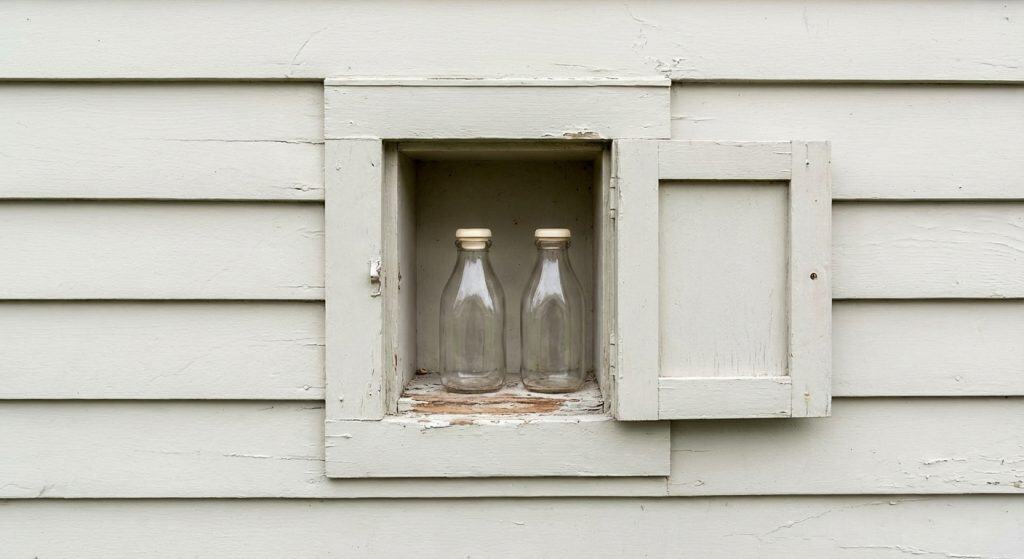
Long before Amazon lockers, we had the Milk Door.
It is a small cupboard built into the side of the house. It has a door on the outside and a door on the inside.
The milkman would open the outer door, place the glass bottles inside, and lock it. You would open the inner door and grab your milk.
It kept the milk cool, kept the animals out, and meant you didn’t have to get dressed to get your delivery.
Today, we just let packages get stolen off the porch.
6. The Speaking Tube
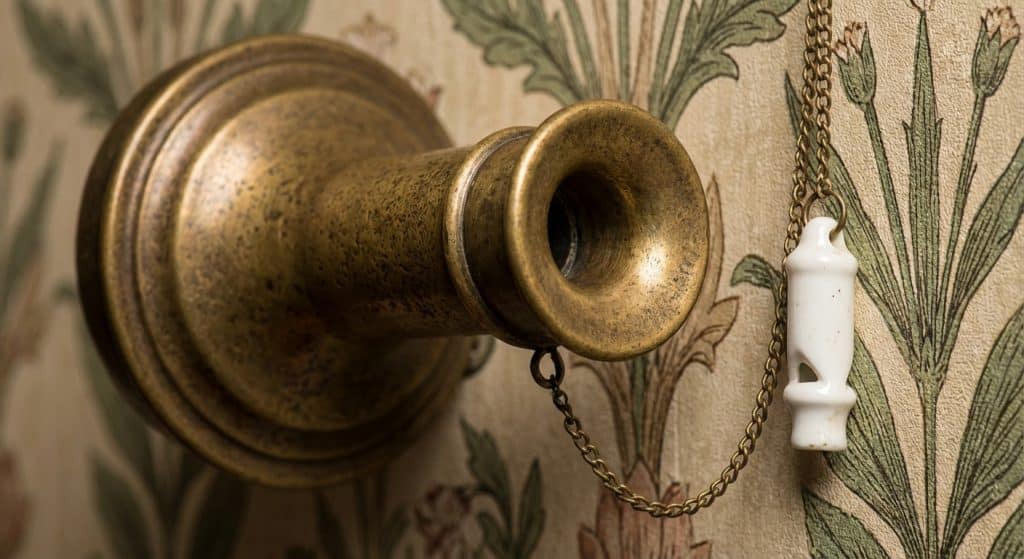
Before the telephone, you didn’t walk up three flights of stairs to tell the nurse the baby was crying.
You used the Speaking Tube.
This was a literal pipe running through the walls. It had a whistle at each end.
You blew into the tube, the whistle screamed in the kitchen, and you could have a clear conversation through the acoustics of the pipe.
They were reliable, clear, and required zero electricity.
7. The Ceiling Medallion Vent
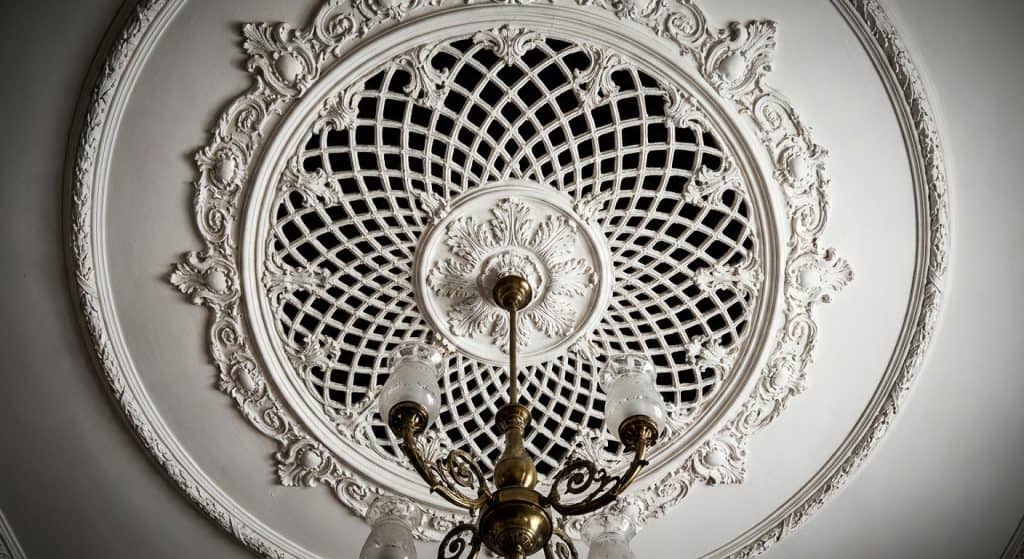
We think of ceiling medallions as pretty plaster decorations that go around a chandelier.
But originally, they saved lives.
Gas lighting was dirty. It produced heat, soot, and carbon monoxide.
In many high-end homes, the ceiling medallion wasn’t solid plaster—it was a grille.
It vented the hot, toxic fumes from the gas chandelier up into a duct between the floor joists and out of the house.
When we switched to electricity, we painted them shut and forgot they were actually chimneys.
8. The Servant Stairs (Back Stairs)
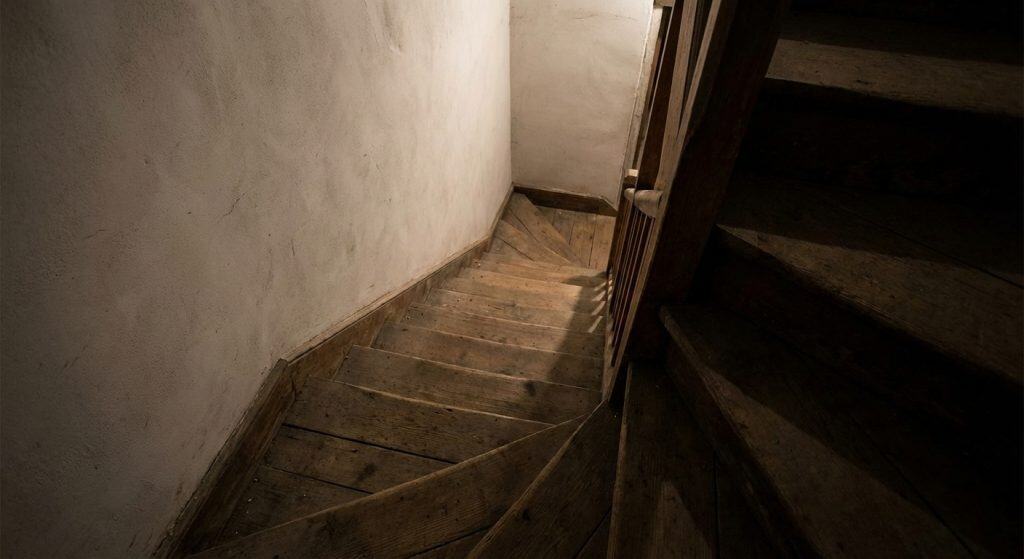
The main staircase in a Victorian home is a showpiece. Wide, carved, and grand.
But find the door in the kitchen that looks like a pantry. Open it.
You might find a second staircase. It is steep. It turns sharply. It is terrifyingly narrow.
These were the Servant Stairs.
They allowed staff to move between the kitchen and the bedrooms to change linens or empty chamber pots without ever being seen by the guests in the main hall.
Today, families fight over who gets to use the “secret” stairs.
9. The Coal Chute
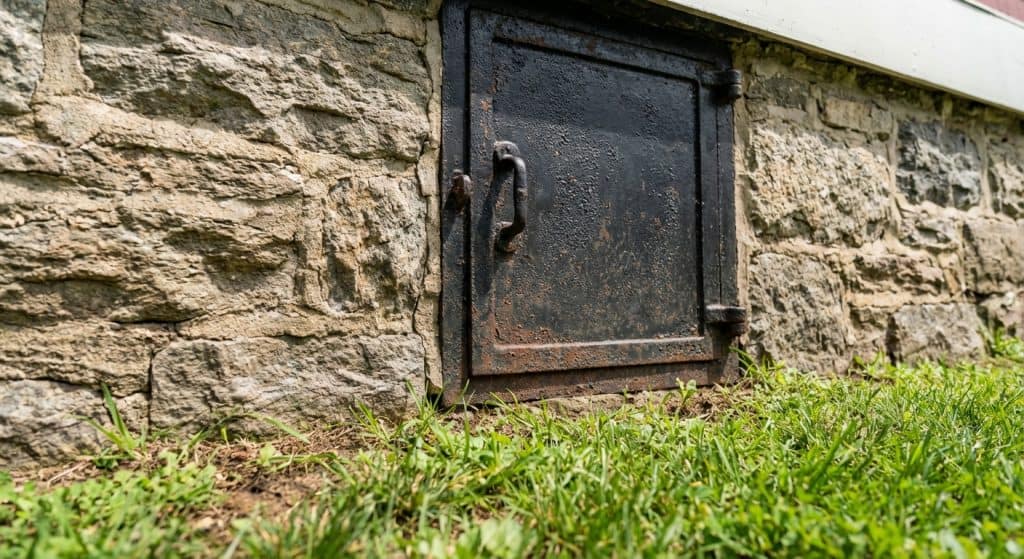
Walk around the exterior foundation. You might see a small, heavy iron door about two feet wide.
This is the Coal Chute.
Before natural gas pipes, a truck would pull up to your house and dump a ton of anthracite coal directly through this door.
It slid down a chute into a dedicated “Coal Room” in the basement, right next to the furnace.
Today, they are often sealed shut or converted into quirky little windows, but they are a reminder of when heating a home was a dirty, physical job.
10. Pocket Shutters
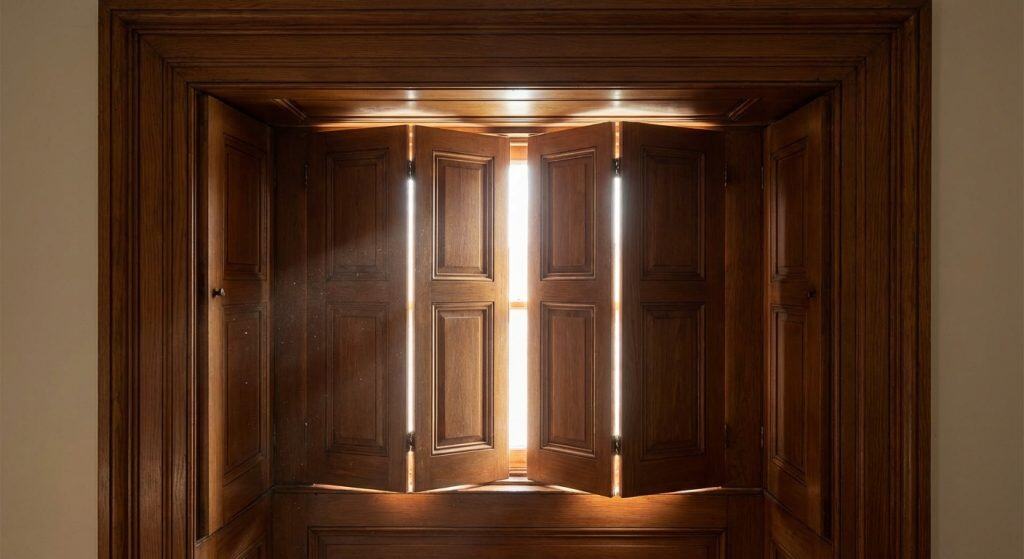
You might think your house has no blinds. Look closer at the window casing.
In many high-end Victorian homes, the “blinds” were built directly into the wall.
“Pocket Shutters” (or embrasured shutters) were hinged wooden panels that folded neatly into a recessed box in the window jamb.
When open, they looked like decorative trim. When closed, they provided total blackout darkness and security.
We stopped building them because thick walls are expensive. But unlike plastic mini-blinds, these never bent, broke, or gathered dust.
11. Transom Windows
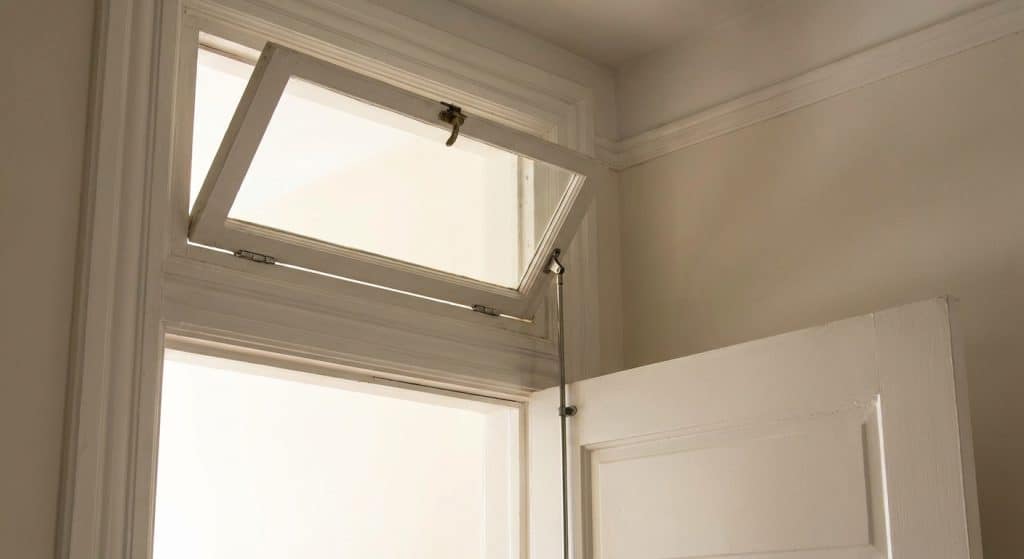
Look above the bedroom doors in an old house. See that rectangle of glass?
That is a Transom Window. And it wasn’t just for light.
It was the Victorian air conditioner.
It is hinged on the bottom and operates with a long metal rod (a transom lift).
In the summer, you kept your bedroom door closed for privacy, but opened the transom.
Heat rose out of the room, and cross-breezes could flow through the house without anyone seeing you in your pajamas.
12. The California Cooler
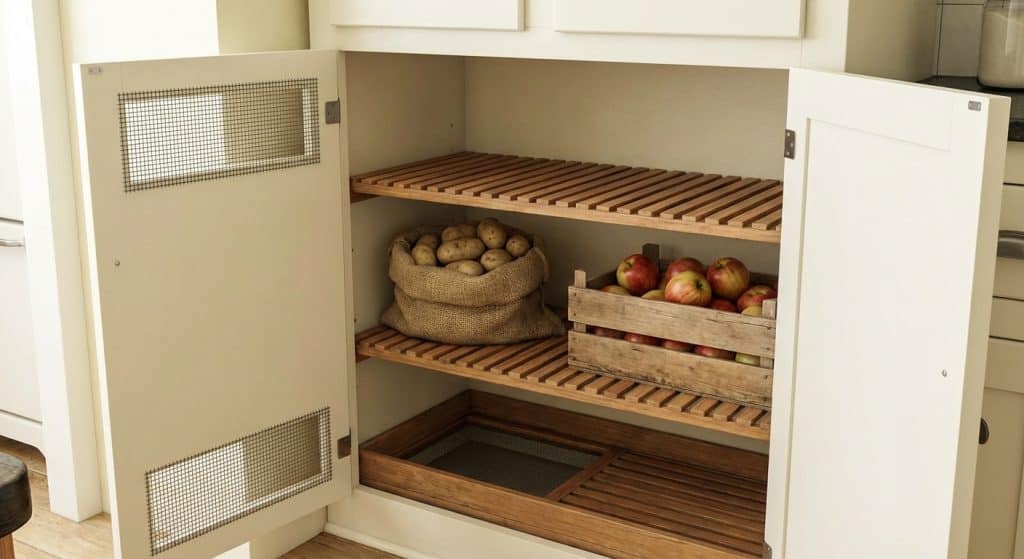
In the kitchen, you might find a cabinet that looks normal but feels freezing when you open it.
Look inside. The shelves are slats, not solid wood. And there are vents at the top and bottom leading outside.
This is a “California Cooler.”
It used passive airflow to draw cool air from the basement or outside up through the cabinet.
It was perfect for storing root vegetables, cheese, and pies. It was “green energy” before the term existed.
13. Dust Corners
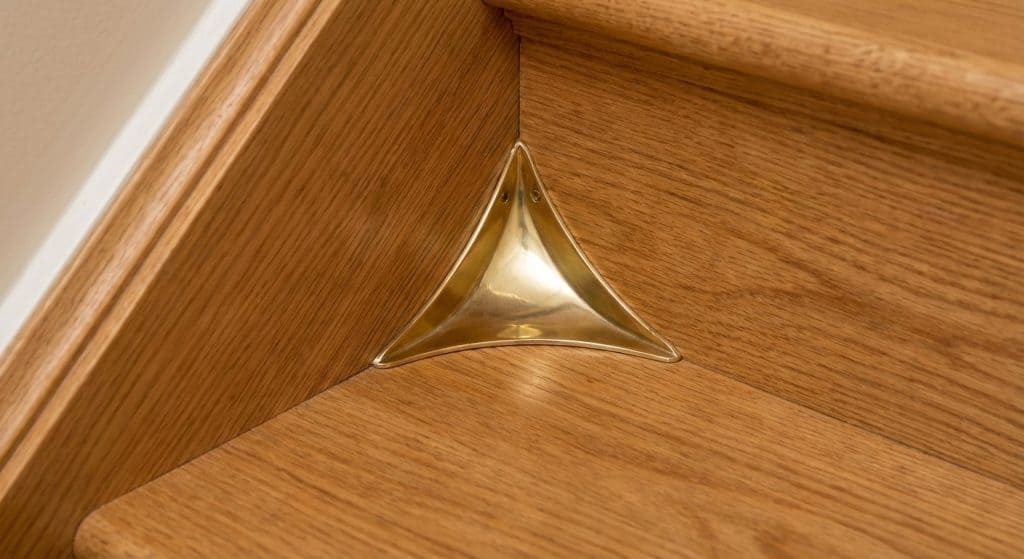
Cleaning a Victorian house was hard work. Brooms can’t reach into the sharp 90-degree corners of a staircase.
Dust accumulates there. It gets sticky. It’s a nightmare.
Enter the Dust Corner.
These were small, concave triangles made of brass or nickel. You nailed them into the corners of the stairs.
They turned the sharp corner into a smooth curve, allowing the broom to sweep the dust right out.
It was a tiny detail that saved hours of labor.
14. Match Strikers
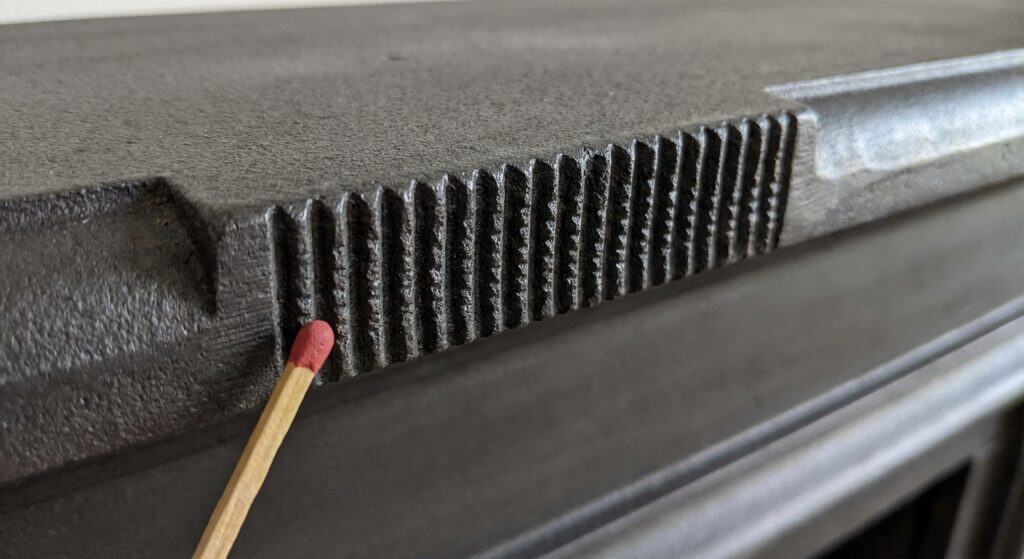
Look closely at the cast-iron fireplace surround or the gas light fixtures.
You might see a small area that is intentionally rough, ribbed, or textured.
This isn’t a casting defect. It’s a Match Striker.
Old “strike-anywhere” matches needed a rough surface to ignite.
Instead of scratching up the paint or looking for a rock, the architects built a sandpaper-like surface directly into the furniture.
15. The Boot Scraper
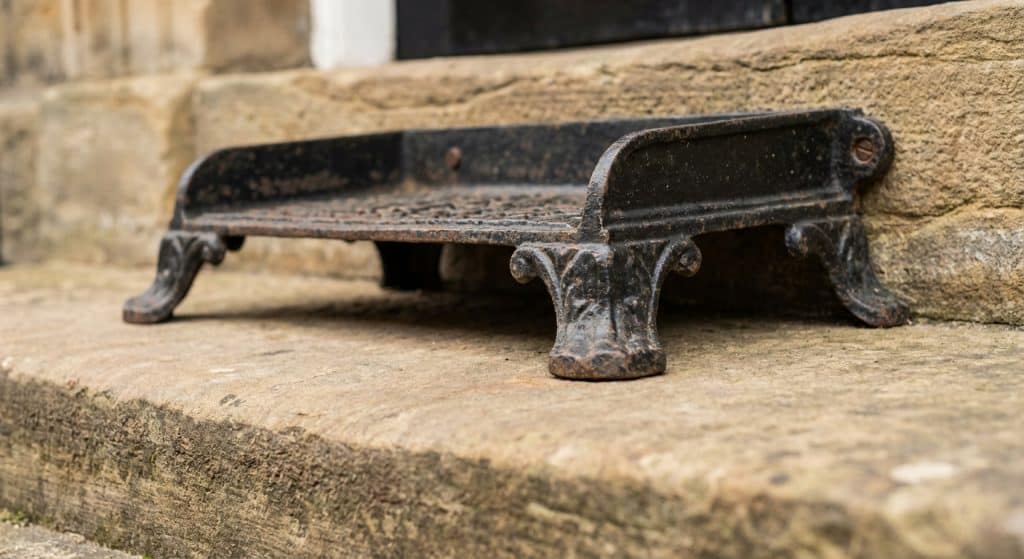
Look down before you enter a historic townhouse.
Embedded in the stone steps or the iron railing, you will see a strange blade of metal.
This is a Boot Scraper (or “decrotter”).
Victorian streets weren’t paved. They were mud, dirt, and horse manure.
You didn’t dare walk onto a Persian rug with that on your soles.
Every guest was expected to scrape their boots on this iron blade before knocking on the door.
16. Sash Weights and Pulleys
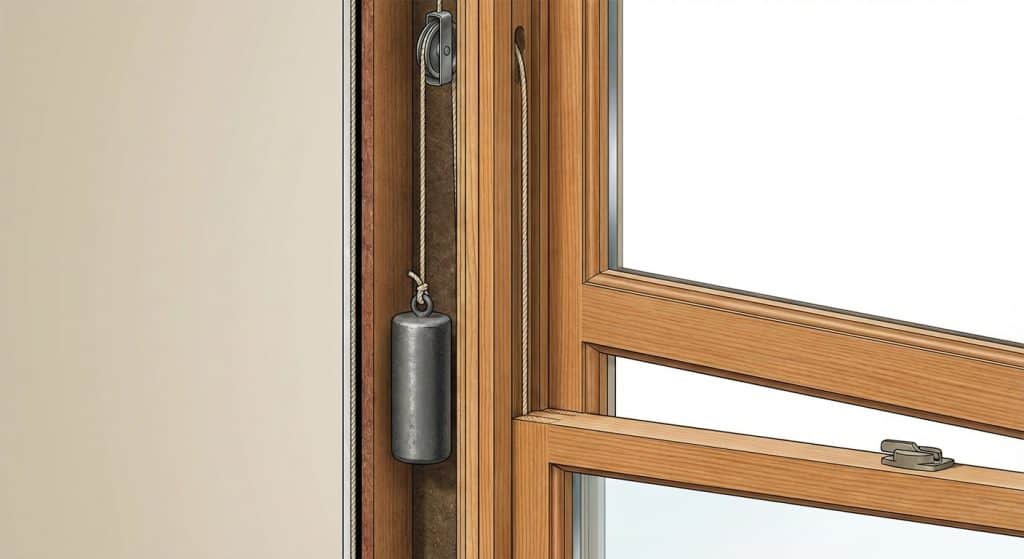
Have you ever opened a modern vinyl window? It feels stiff and springy.
Now open a restored 1900s wood window. It glides like it’s on ice.
That’s because hidden inside the wall, on either side of the window, are massive cast-iron weights.
They are connected to the window by a cotton sash cord running over a pulley.
The weights are exactly balanced to the weight of the window. You can lift a 50-pound window with one finger, and it stays exactly where you leave it.
No springs to break. Just gravity.
17. Picture Rails
If you try to hammer a nail into a 100-year-old plaster wall, two things happen:
- You hit a lath and the nail bounces off.
- The plaster cracks and a chunk of your wall falls off.
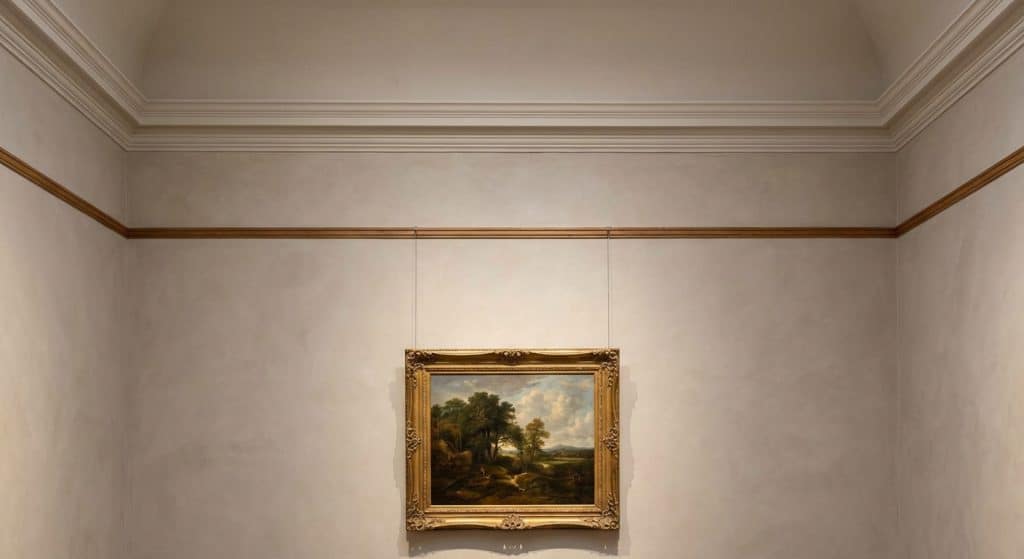
Victorians knew this. That’s why they installed Picture Rails.
It looks like decorative molding running around the room, usually 12 inches below the ceiling.
It has a curved lip on top. You bought special hooks that gripped the molding, and you hung your art on wires from those hooks.
You could move your pictures every day without ever putting a hole in the wall.
Conclusion
When we renovate these houses, the temptation is to “clean them up.”
We remove the rails. We drywall over the shutters. We paint the brass.
But these aren’t imperfections. They are solutions to problems we forgot we had.
If you find a weird button on your floor or a niche in your staircase, keep it.
It’s the only thing in the house that truly makes it unique.