

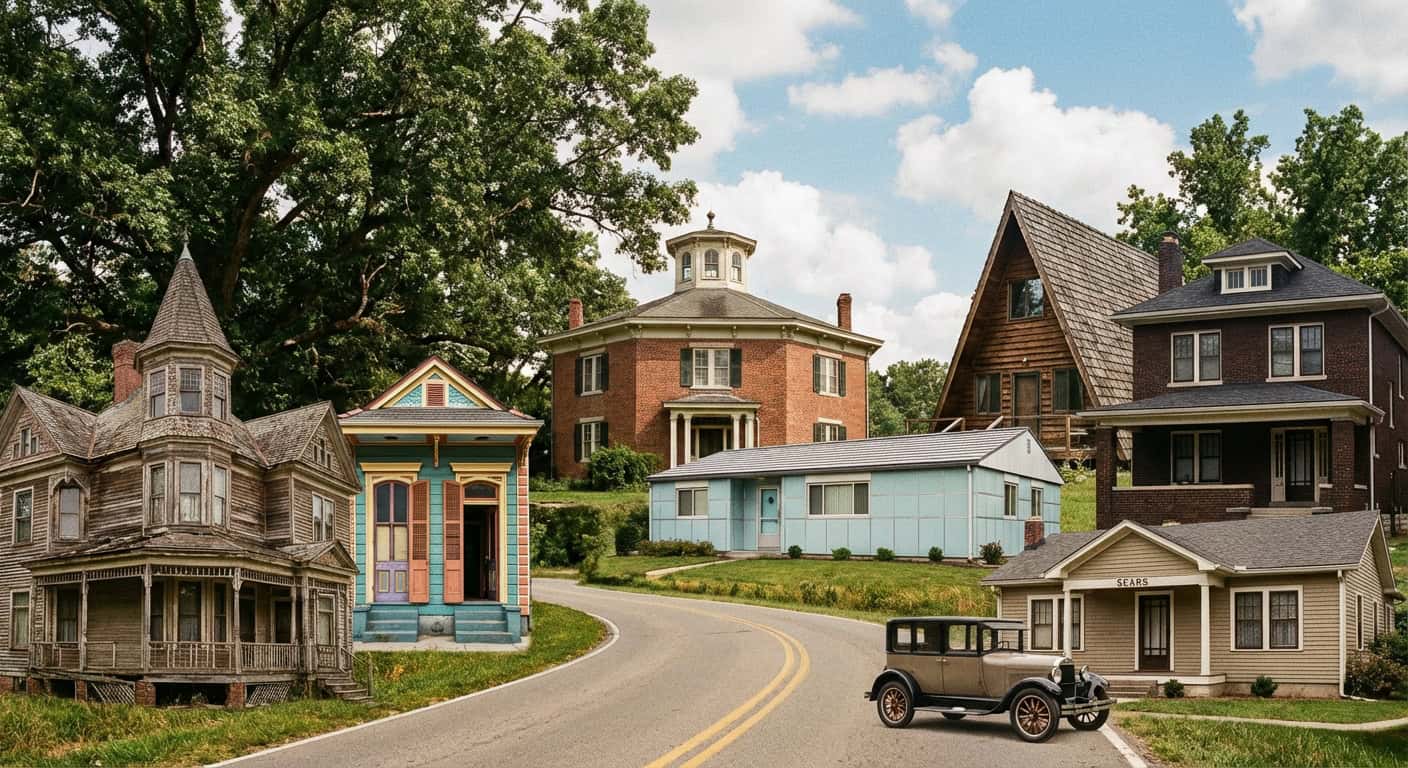
Walk into a new housing development today, and you see the same house repeated 500 times.
They are beige. They are vinyl. They are “safe.”
Now, drive through a town built 100 years ago.
You see personality. You see geometry that makes you stop and stare.
Before efficiency and cookie-cutter blueprints took over, American architecture was experimental.
Builders weren’t afraid to put eight sides on a house. They weren’t afraid to use steel for walls. They built for the climate, for the lifestyle, and sometimes, just to show off.
We stopped building these homes because they were too hard, too expensive, or too weird for modern tastes.
But when you step inside one, you realize we lost something along the way.
Here are 15 forgotten American house styles that prove our ancestors had more imagination than we do.
1. The Sears Mail-Order Home
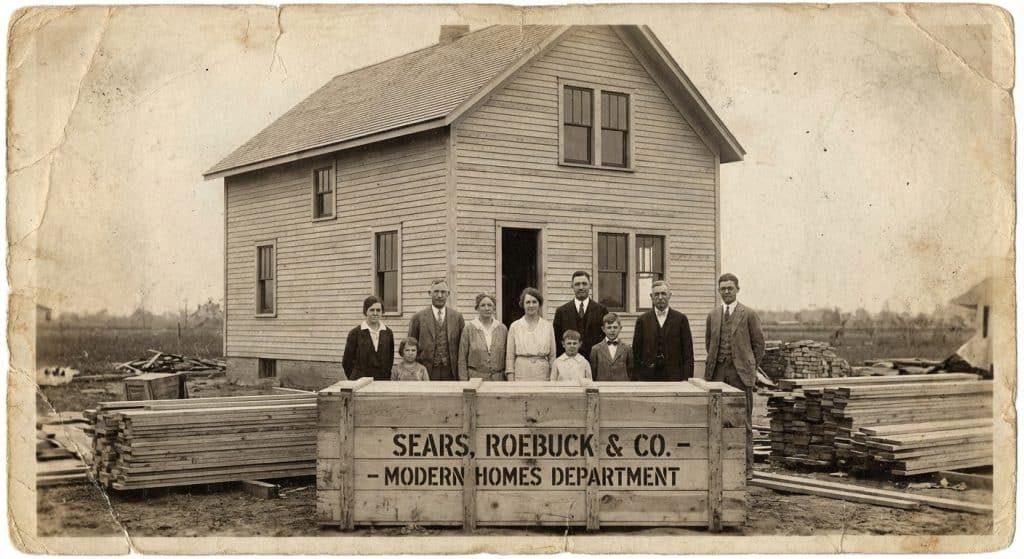
Imagine buying your house from a magazine.
Between 1908 and 1940, you could order a 30,000-piece house kit from the Sears catalog.
It arrived by train. It came with 750 pounds of nails, 27 gallons of paint, and an instruction manual.
Every board was numbered. You and your neighbors assembled it like giant LEGOs.
These weren’t flimsy shacks. They were built with old-growth lumber that is superior to anything you can buy at Home Depot today.
We stopped because building codes got complicated and mortgage rules changed. But thousands are still standing, defying age.
2. The Shotgun House
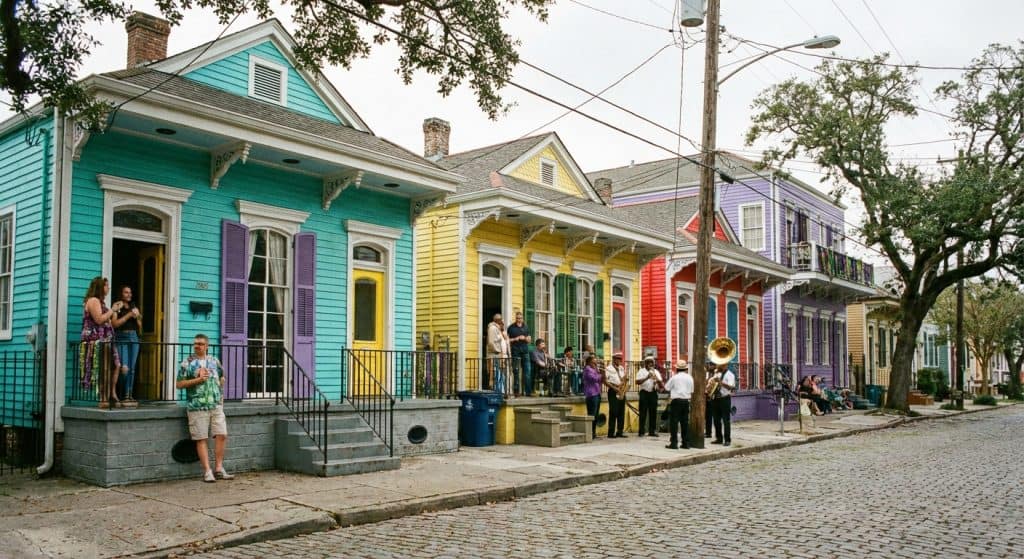
In the crowded streets of New Orleans, space was money.
The Shotgun house was the solution.
It is typically only 12 feet wide. One room leads directly into the next, with no hallway.
Open the front door and the back door, and a breeze shoots straight through the house—hence the name.
It was a brilliant, low-cost cooling system for the humid South.
We replaced them with sprawling ranch houses and AC units, trading community porches for privacy fences.
3. The Craftsman Bungalow
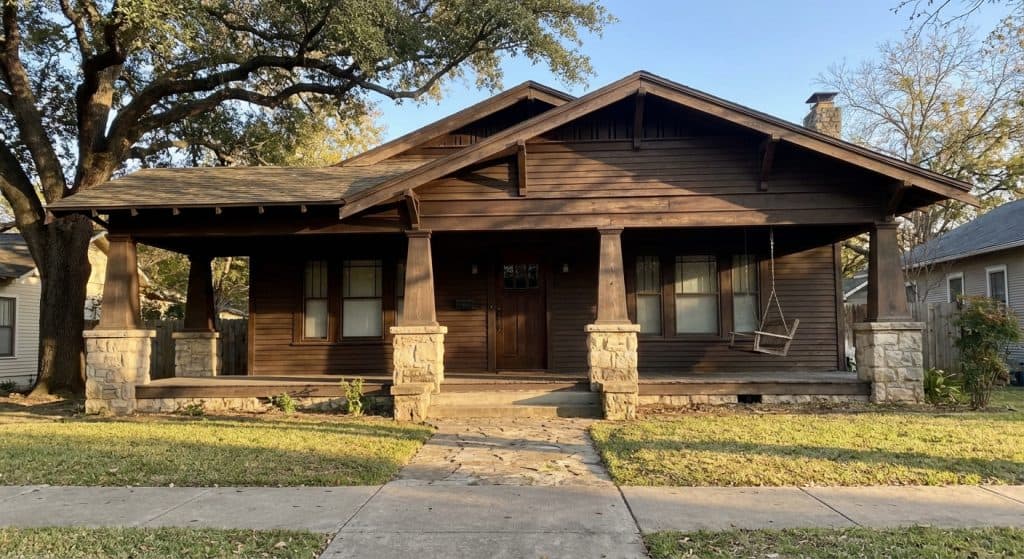
The Craftsman was a rebellion against Victorian excess.
Low-pitched roof. Wide overhanging eaves. Tapered porch columns on stone pedestals. A front porch you could actually live on.
Inside, the woodwork was the decoration. Built-in bookshelves, plate rails, window seats, thick oak baseboards — all handmade, all visible.
We stopped building them because that level of craftsmanship requires hands and hours that modern builders cannot afford.
The people who own one will never sell it willingly.
4. The Octagon House
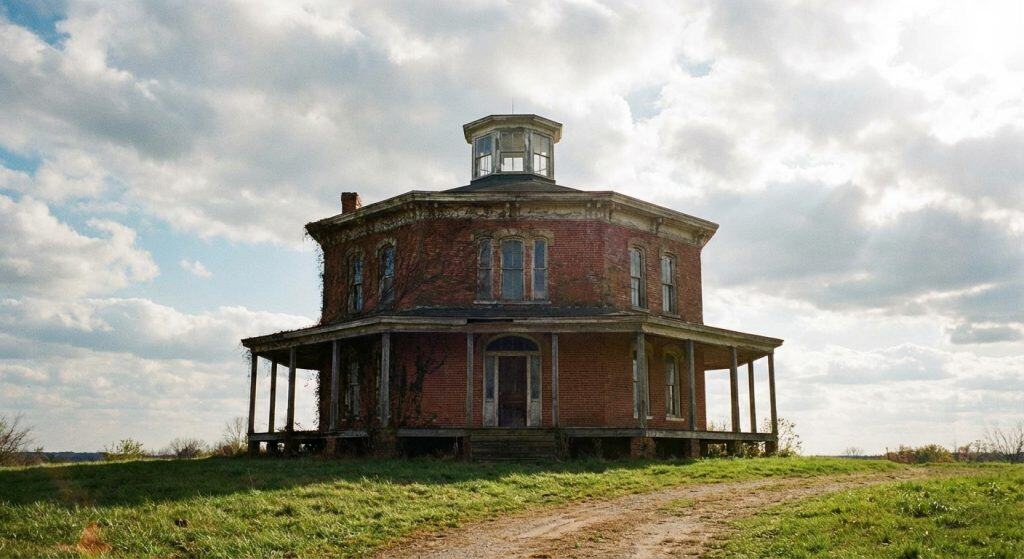
If you see a house with eight sides, you are looking at a radical 1850s health craze.
Orson Fowler, a phrenologist, claimed that squares were “unnatural.”
He believed the octagon shape allowed for more sunlight, better airflow, and no dark, dusty corners where disease could hide.
It was a nightmare to frame. It was impossible to furnish.
But for a brief moment, it was the future of healthy living.
5. The Lustron Home
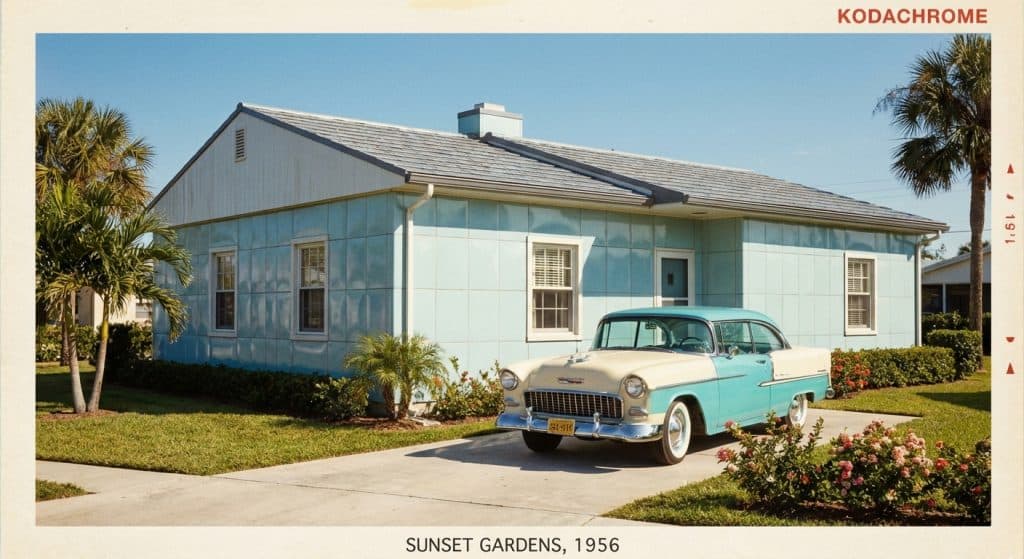
After WWII, we needed houses fast. The answer was steel.
The Lustron was a prefabricated house made of enameled steel panels.
It was delivered on a truck. You could clean the walls with a garden hose. You hung pictures with magnets.
They were rust-proof and termite-proof. But they were too expensive to manufacture, and the company went bust.
Today, finding one is like spotting a classic car in the wild.
6. The Italianate
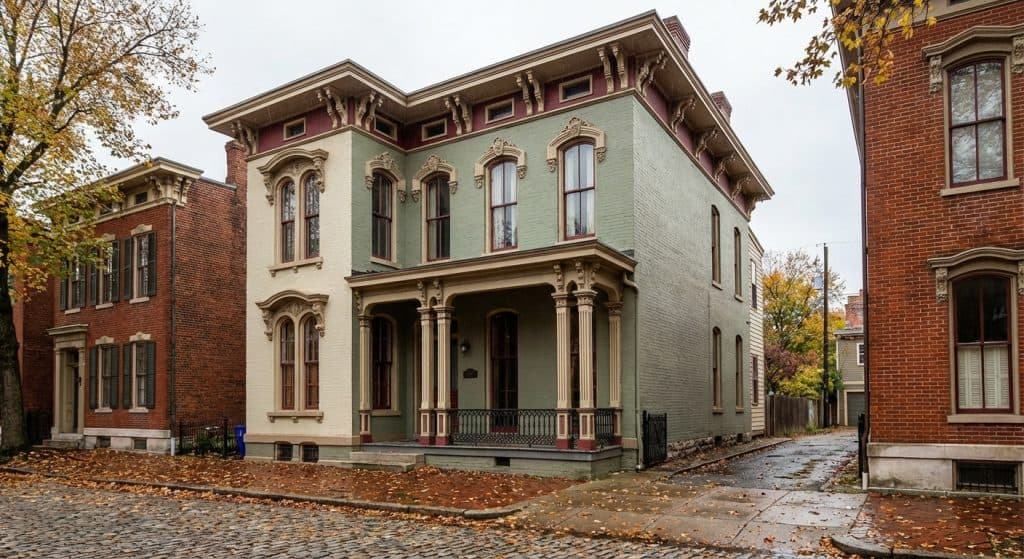
This is the tall, narrow Victorian that most people cannot name but recognize immediately.
Two or three stories. Low-pitched roof. Wide overhanging eaves. And the giveaway — ornamental brackets lined up under the roofline like a row of carved wooden teeth.
The windows are tall and narrow, often with ornate hoods above them.
Popular between 1840 and 1885, the Midwest is full of them. Cincinnati, Chicago, and dozens of smaller cities built entire downtown blocks in this style.
We stopped because the ornate brackets required skilled carpenters who no longer exist in numbers.
7. The Queen Anne
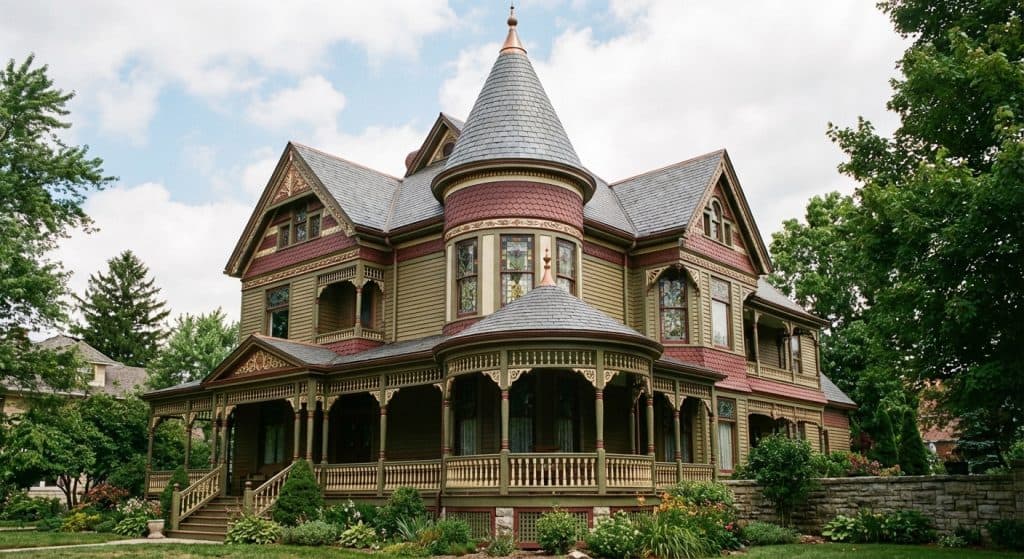
Modern minimalism hates the Queen Anne.
Built between 1880 and 1910, these houses were a riot of excess.
They didn’t just have a roof; they had five different rooflines. They had towers, turrets, and stained glass.
They were built to show off the newfound wealth of the Industrial Revolution.
Today, we can’t afford the carpenters to build them.
8. The American Foursquare
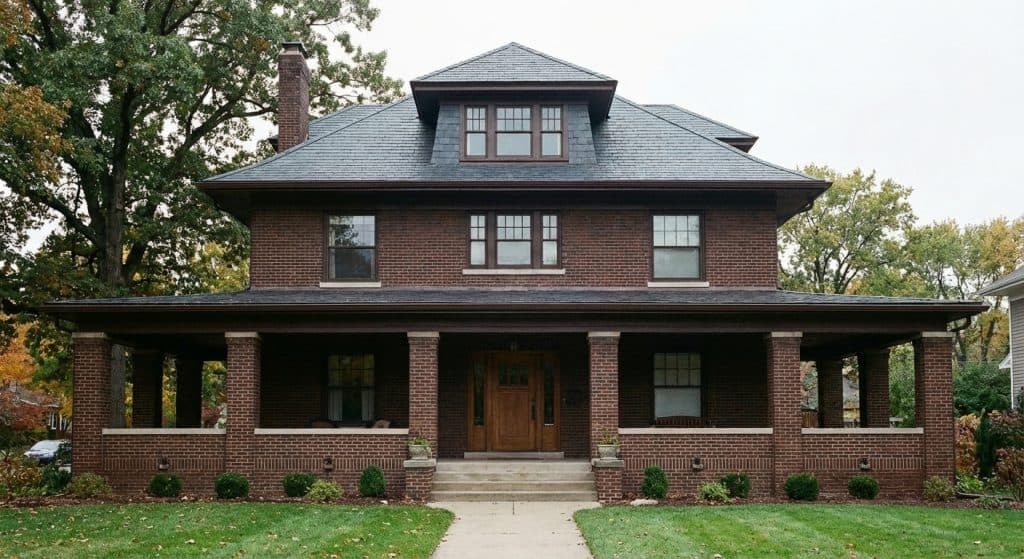
If the Queen Anne was a show-off, the Foursquare was a soldier.
Appearing around 1890, this was the ultimate efficient family machine.
It was a perfect cube. It maximized every inch of interior space on a small city lot.
Four rooms downstairs. Four rooms upstairs. No wasted hallways.
It was the Honda Civic of housing: reliable, unpretentious, and indestructible.
9. The Chicago Bungalow
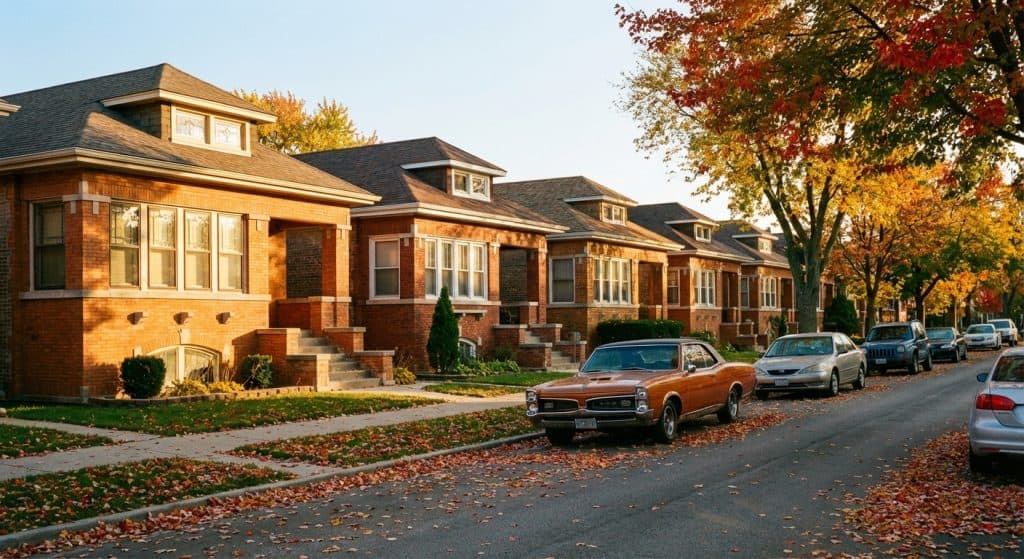
Between 1910 and 1940, over 80,000 of these were built in Chicago. It is not just a house style. It is a city’s identity in brick.
One-and-a-half stories. Always brick — orange or dark red. Low hip roof. Art glass windows at the front.
They sit on narrow 25-foot lots, packed tight, block after block.
These were working-class homes built with materials usually reserved for expensive houses.
Entire neighborhoods are nothing but bungalows. It is one of the most distinctive streetscapes in America.
10. The Spanish Revival
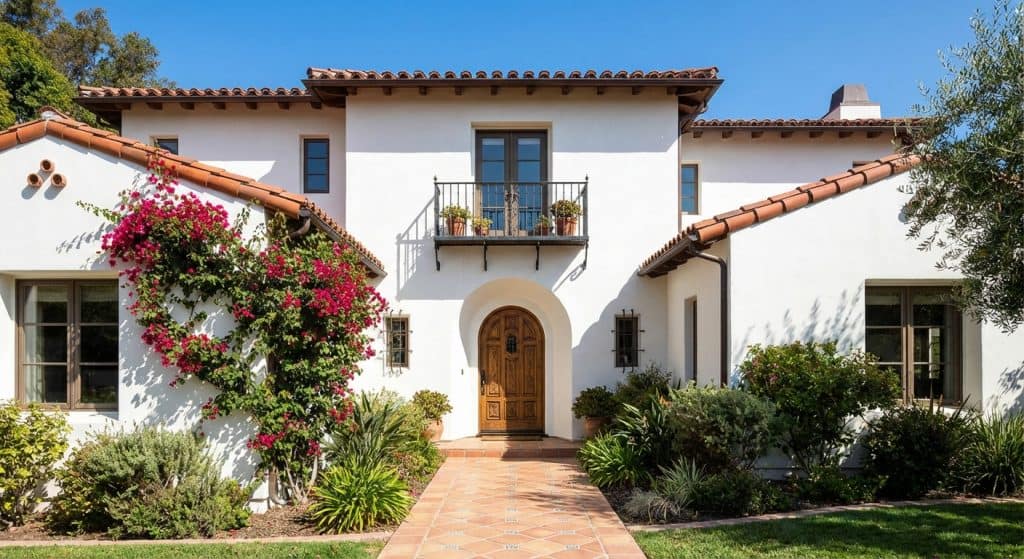
This is the house that made Southern California look like Southern California.
White stucco walls. Red clay tile roof. Arched doorways. Wrought iron details. Interior courtyards.
It was Hollywood’s idea of what Spanish architecture should look like. It was not historically accurate.
And it was gorgeous.
The thick walls kept interiors cool. The tile roofs shed heat. The courtyards created shade. The whole design was about living with the sun, not hiding from it.
The originals were built by craftsmen who understood these materials. Modern reproductions usually miss the warmth.
11. The A-Frame
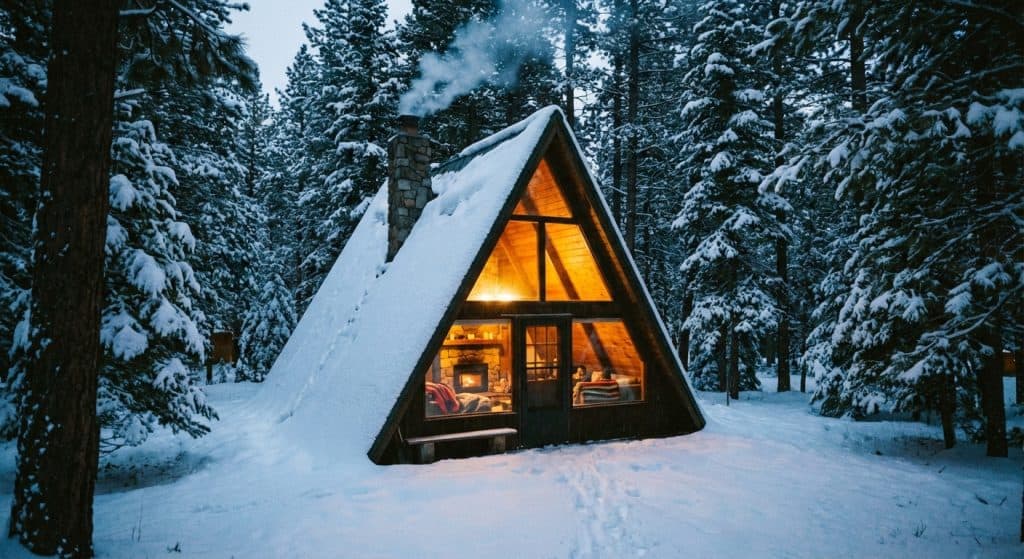
In the 1960s, Americans wanted escape.
The A-Frame was the ultimate vacation machine.
It is exactly what it sounds like: a giant triangle.
The roof goes all the way to the ground. Snow slides right off. It is cheap to build and impossibly strong.
So why did we stop?
Try hanging a picture on a slanted wall. Try finding a kitchen cabinet that fits in a triangle.
They were great for a weekend, but terrible for a life.
12. The Atomic Ranch
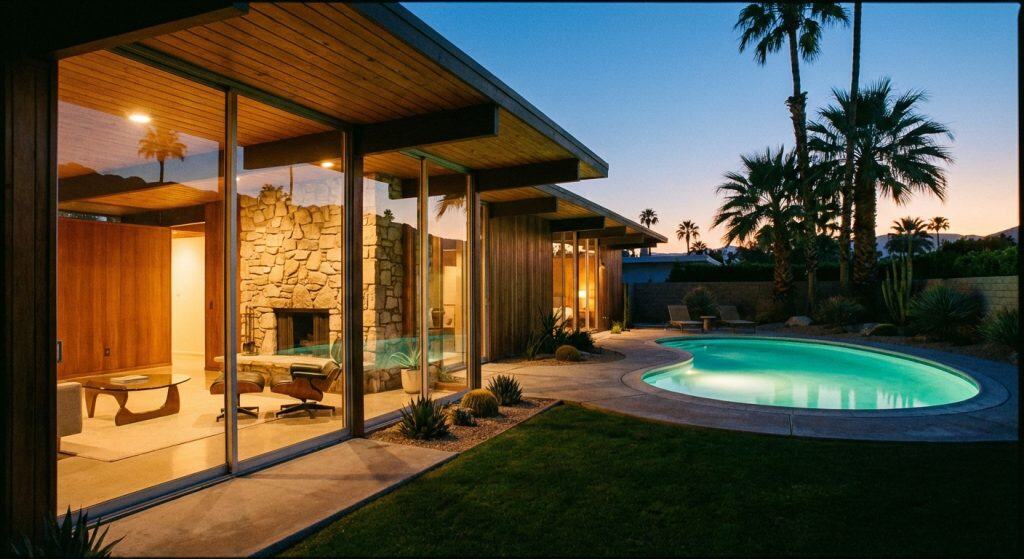
In the 1950s, the future was bright.
The Atomic Ranch reflected the Space Age.
It turned its back to the street and opened up to the backyard with walls of glass.
It wasn’t about shelter. It was about “indoor-outdoor living” and cocktail parties by the kidney-bean-shaped pool.
It fell out of favor when energy prices spiked and those giant glass walls became giant heating bills.
13. The Second Empire
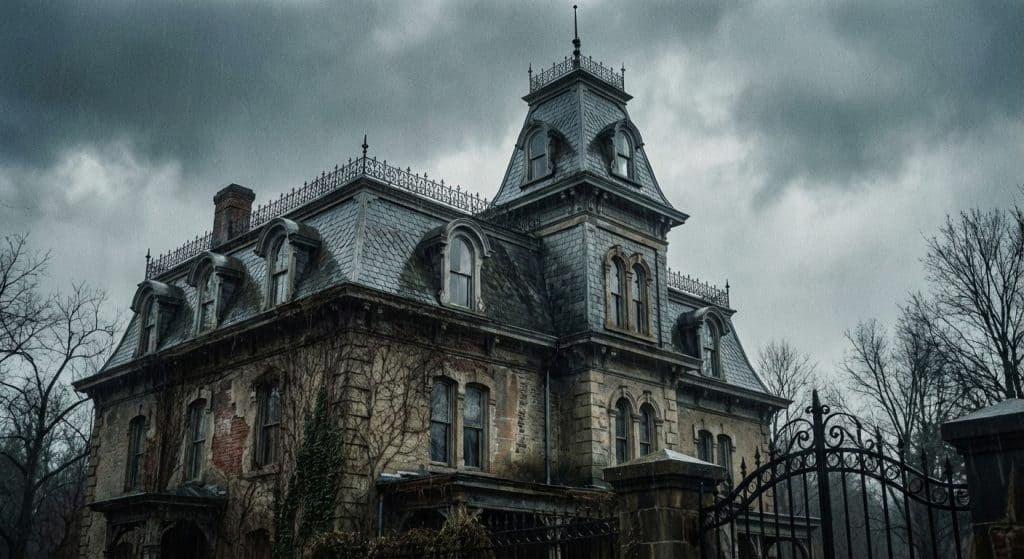
If a house looks like the Addams Family lives there, it’s probably Second Empire.
Popular during the Civil War era, these homes were built to intimidate.
The defining feature is the “Mansard” roof. It’s a roof that goes practically vertical.
This wasn’t just a style choice. It was a loophole.
By making the roof almost vertical, you created a full third story of living space that was technically an “attic.”
It was a tax-dodging mansion.
14. The Gothic Revival
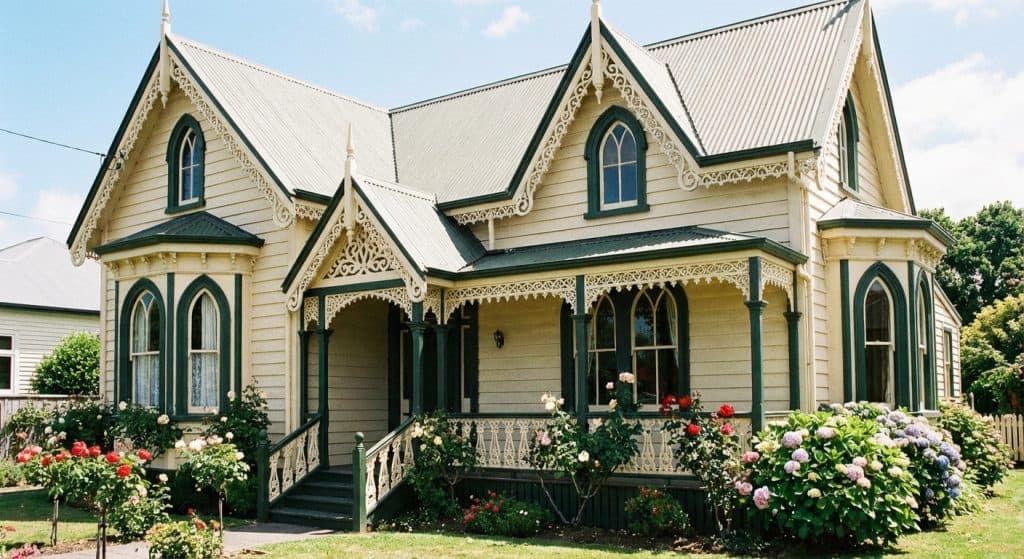
Before we had suburbs, we had “Carpenter Gothic.”
In the mid-1800s, builders wanted wooden houses to look like stone European cathedrals.
They added pointed arched windows, steep gables, and incredibly intricate “gingerbread” trim cut with the newly invented scroll saw.
It was dramatic. It was moody.
It died out because painting all that intricate wooden trim every five years is a homeowner’s worst nightmare.
15. The Dutch Colonial
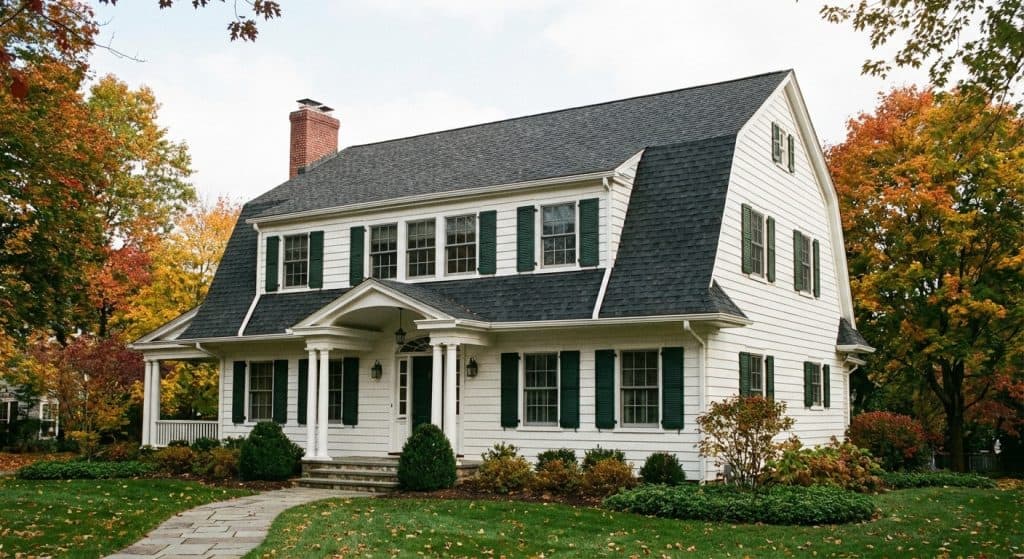
You know this house by its roof.
It looks like a barn. That “gambrel” roof wasn’t just for style.
It was a tax dodge.
In some areas, you were taxed on the number of stories. The gambrel roof allowed you to fit a full second floor of living space while legally calling it an “attic.”
16. The Tudor Revival
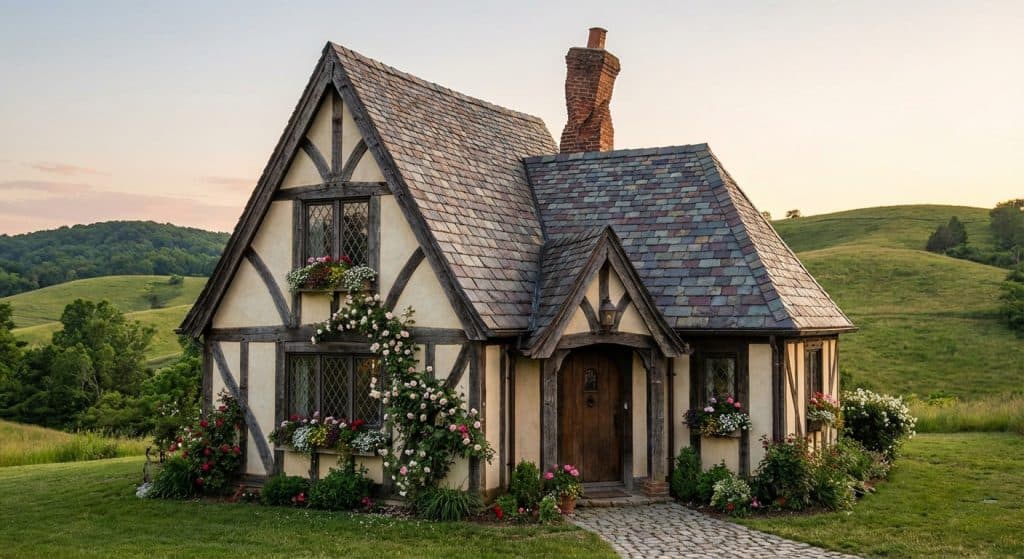
In the 1920s, stock market millionaires wanted to pretend they were English lords.
So they built “Stockbroker Tudors.”
These houses mimicked medieval cottages with steep roofs, massive chimneys, and decorative “half-timbering.”
They were drafty and expensive, but they sold a fantasy of old-world stability.
17. The California Bungalow
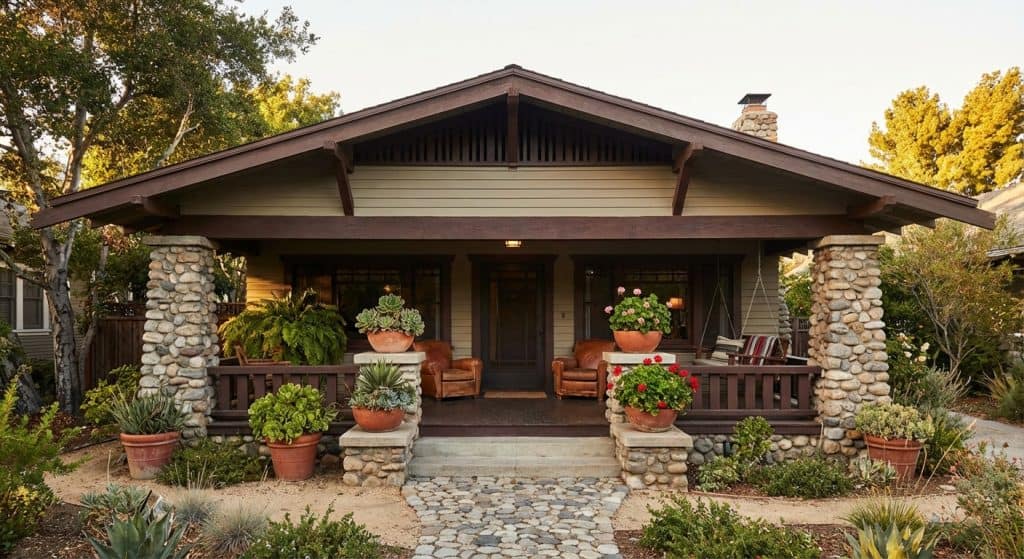
Before air conditioning, we had the Bungalow.
With its low rooflines and massive front porches, it was designed to merge the indoors with the outdoors.
You didn’t hide inside; you sat on the porch.
The exposed beams and natural wood weren’t unfinished. They were a rebellion against the stuffy Victorian parlors of the past.
18. The Prairie Style
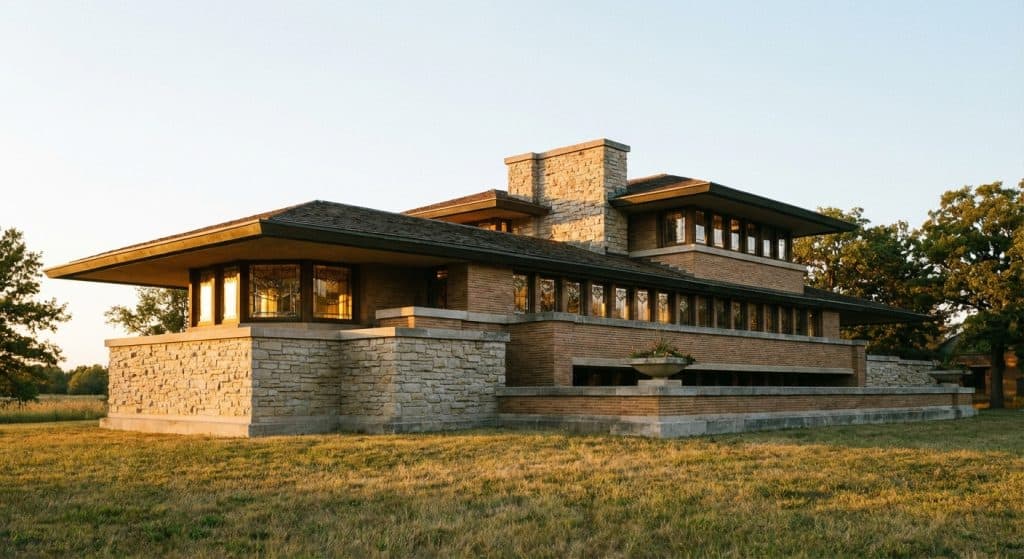
Frank Lloyd Wright hated Victorian boxes.
He thought tall, skinny houses looked anxious. He wanted a house that looked calm.
So he created the Prairie Style.
These houses hug the ground. They have massive overhanging eaves and endless horizontal lines.
They were designed to blend into the flat Midwestern landscape.
They disappeared because they demanded craftsmanship we can no longer afford. Every brick and window was custom.
19. The Brutalist Residential
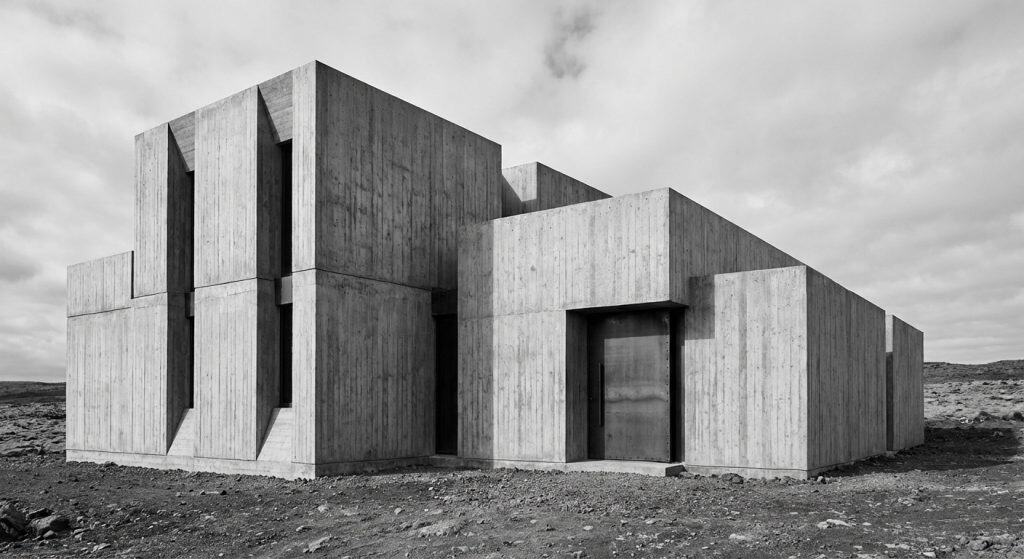
Concrete isn’t just for parking garages.
For a brief period in the 70s, architects fell in love with “raw concrete” (Béton brut).
These homes were fortresses. They were cold, imposing, and virtually indestructible.
People hated them. They looked like bunkers.
But they remain the purest expression of strength in American architecture.
20. The Farmhouse
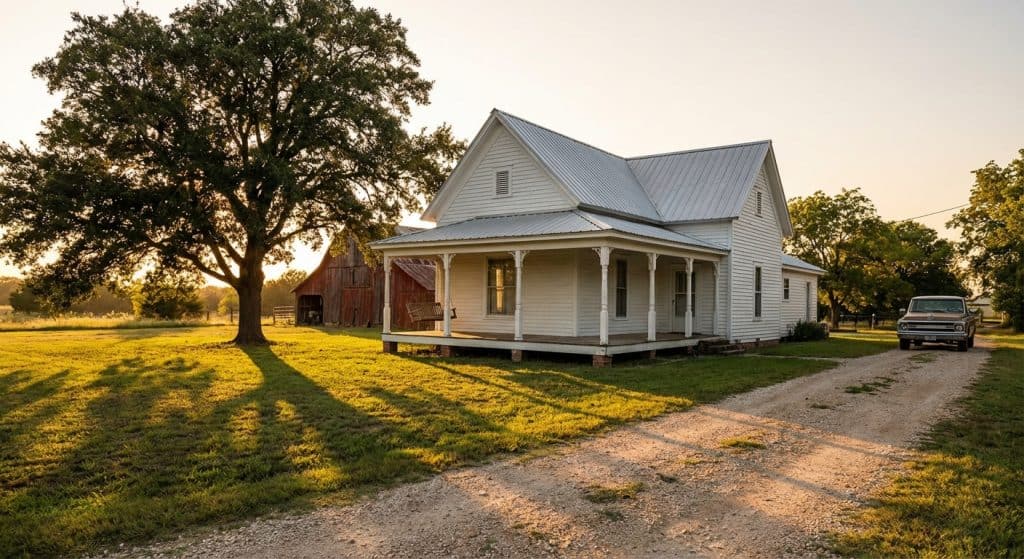
Everyone thinks they know what a Farmhouse is. Most people are thinking of shiplap and barn doors.
The real American Farmhouse is an architectural style, not an HGTV trend.
Simple gabled roof. Clapboard siding. A wide porch that wraps around one or two sides. A floor plan built for function, not for showing off.
The kitchen was large because the family lived in it. The porch was wide because it was a workspace and a cooling system.
The modern “farmhouse trend” borrows the look but misses the substance entirely.
21. The Cape Cod
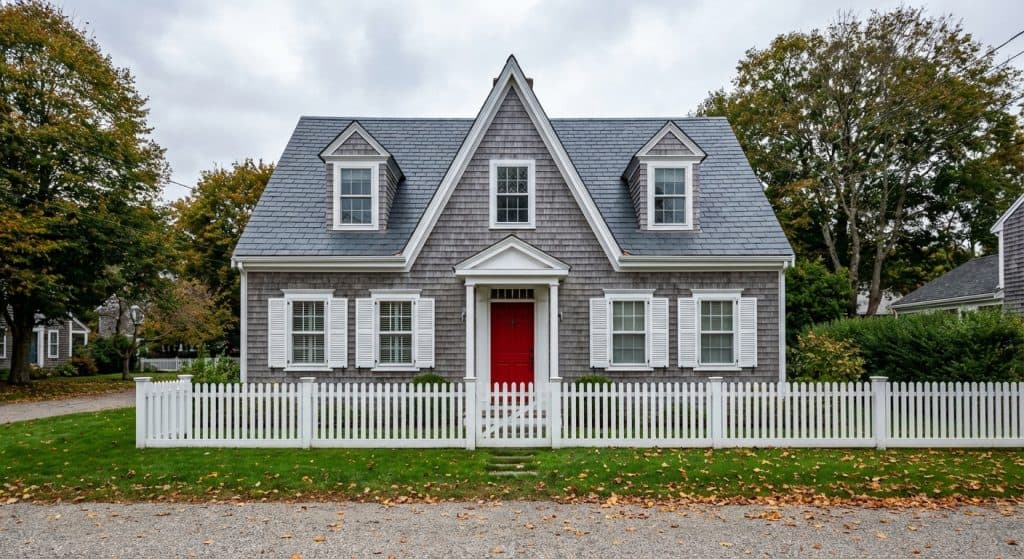
This is America’s starter home. It has been since the 1600s.
Small, symmetrical, one-and-a-half stories. Steep gabled roof. Central door. Dormers upstairs.
It was built to survive New England winters. Low roofline to shed snow. Central chimney to heat the whole house. Compact footprint to hold the warmth in.
After WWII, the Levitt Brothers used it as the template for thousands of affordable suburban homes.
A Cape Cod does not impress anyone from the outside. But inside, it is cozy in a way that bigger houses never figure out.
22. The Colonial Revival
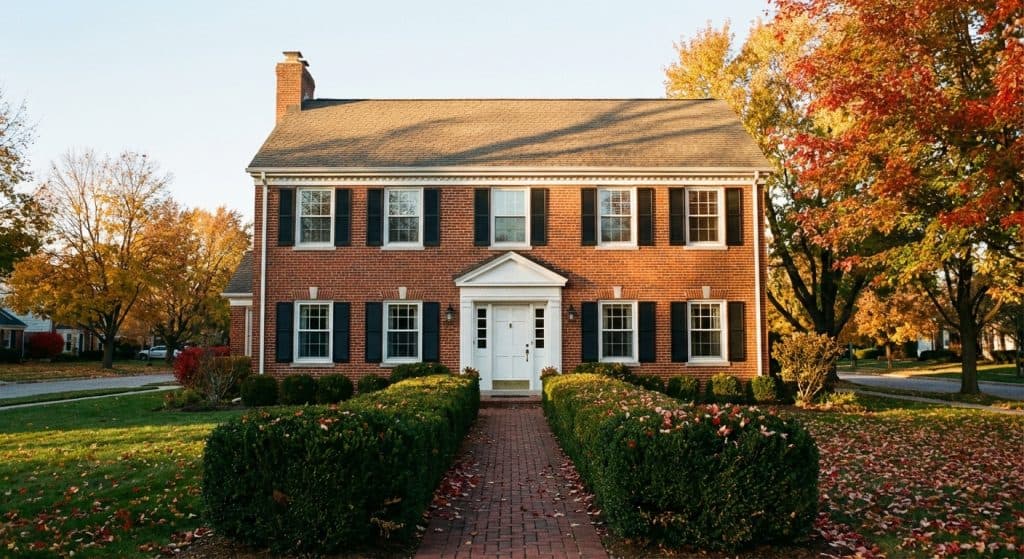
This is the house most Americans call “traditional” without knowing it has an actual name.
Symmetrical two-story. Center front door. Evenly spaced windows with shutters. Side-gabled roof.
It was inspired by 1700s Colonial houses but updated for modern life. Bigger, more comfortable, more decorative.
If you asked a child to draw a house — two stories, center door, windows on either side, chimney on top — they would draw a Colonial Revival.
It has no expiration date because it was never trendy. It was just well-proportioned.
Conclusion
We don’t build these anymore.
Codes are too strict. Labor is too high. Tastes have flattened.
But if you are lucky enough to own one, don’t update it to look like a modern flip.
Don’t paint the brick. Don’t cover the beams.
You are the custodian of an endangered species.
Keep it weird.