

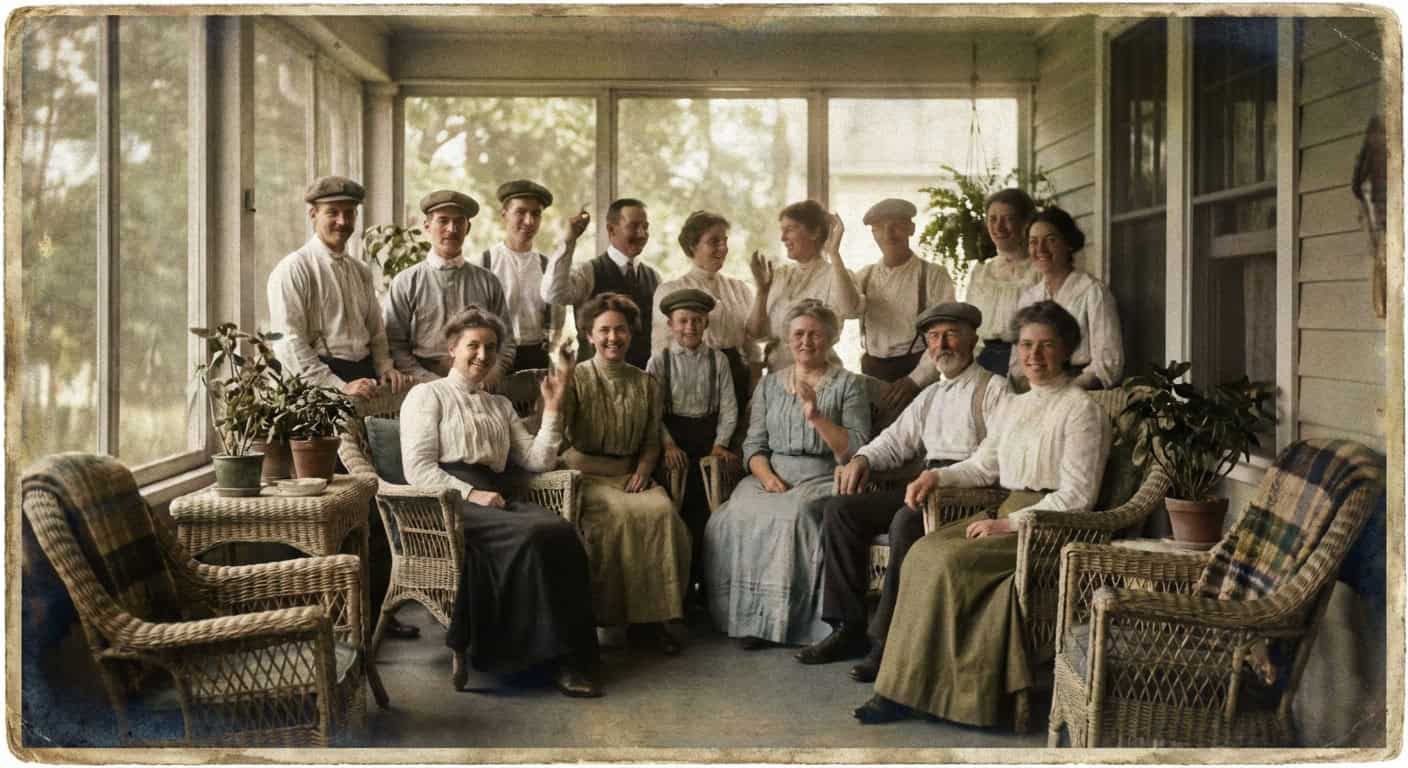
Walk into a modern subdivision, and you might see a porch.
But look closer. It’s usually just a shallow 4-foot concrete slab for an Amazon package.
It’s a decoration, not a room.
Drive through a town built 100 years ago, and you see the street’s living room.
For 200 years, the front porch was the social network of America.
It was where you cooled off. It was where you courted your spouse. It was where you watched the neighborhood.
If you sat on the porch, you were “online.”
Builders didn’t just slap a deck on the front. They built architectural masterpieces.
They required massive columns, rot-resistant flooring, and complex rooflines.
We stopped building porches like this because AC moved us inside and TV kept us there.
Here are 15 classic porch styles that define the golden age of American architecture.
1. The Wrap-Around
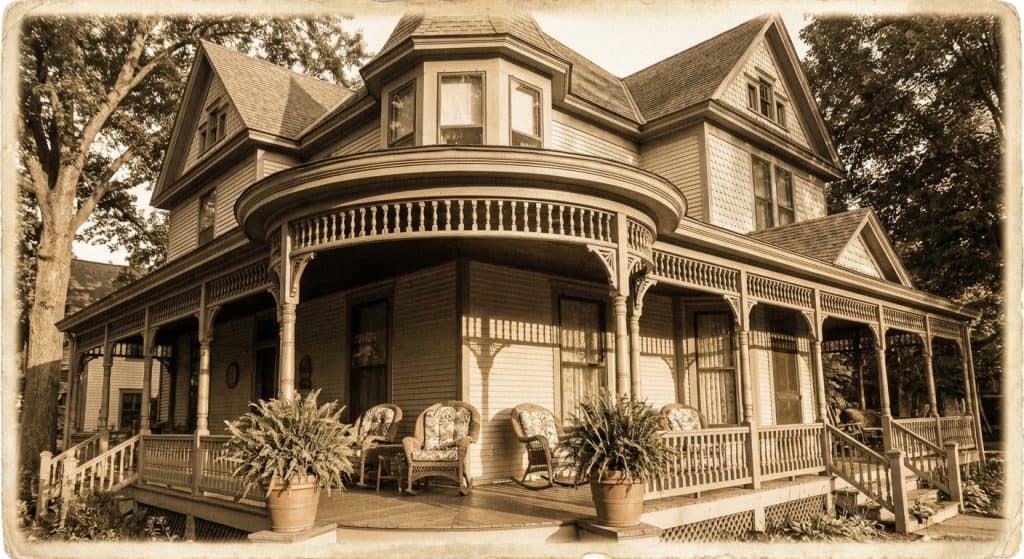
This is the undisputed King of Porches.
Found mostly on Queen Anne Victorians, this porch doesn’t just sit on the front. It hugs the house.
It starts at the front door and wraps around one or both sides.
It allowed you to follow the sun (or hide from it) throughout the day.
For a carpenter, this was a geometry challenge. Mitered corners on the decking and curved railing sections required a master’s touch.
It screams “lemonade” and “rocking chair.”
2. The Craftsman Bungalow
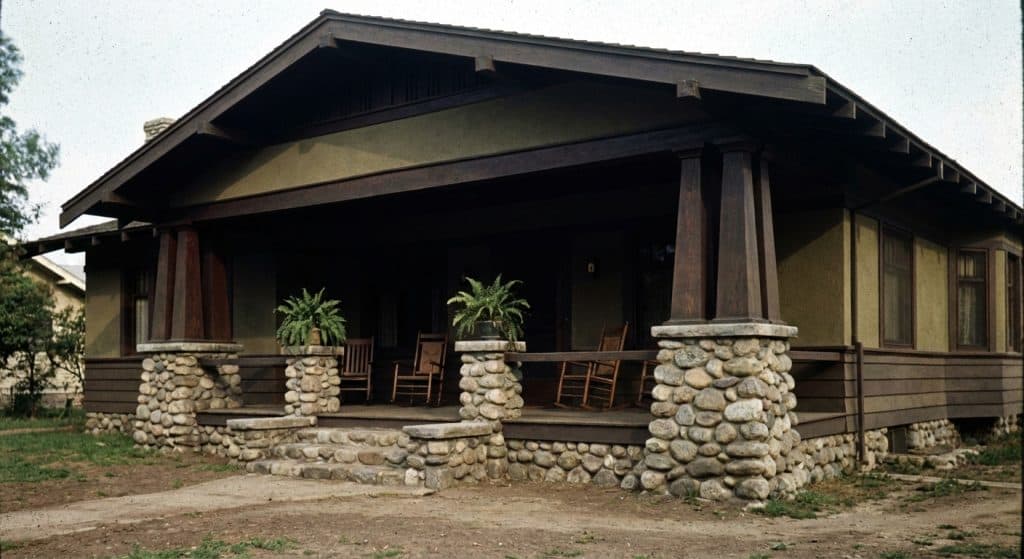
When the Victorian era ended, things got heavy.
The Craftsman porch is defined by weight.
It features thick, tapered columns (often square) resting on massive stone or brick pedestals.
The roofline is low and deep, creating a permanent shadow that kept the living room cool.
The woodwork here was often left natural or stained, not painted, to show off the grain of the Douglas Fir or Oak.
3. The Porte-Cochère
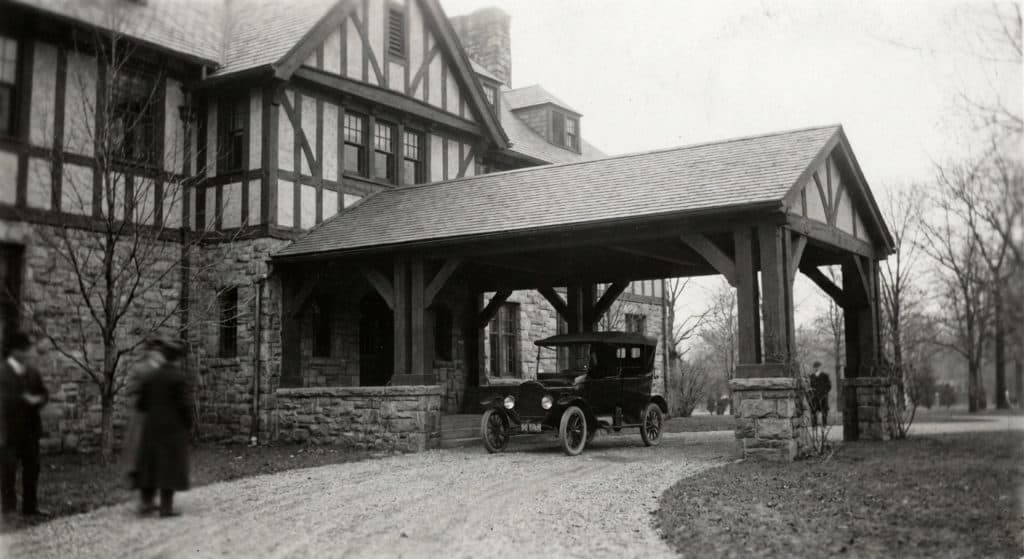
This is the “Drive-Thru” porch.
Originally built for horse-drawn carriages, it is a roofed structure extending from the side or front of the house over the driveway.
It allowed guests to step out of their carriage (or Model T) without getting wet in the rain.
It required massive structural beams to span the width of a vehicle without center support.
Today, we have attached garages. We stay dry, but our houses look like warehouses.
4. The Rain Porch
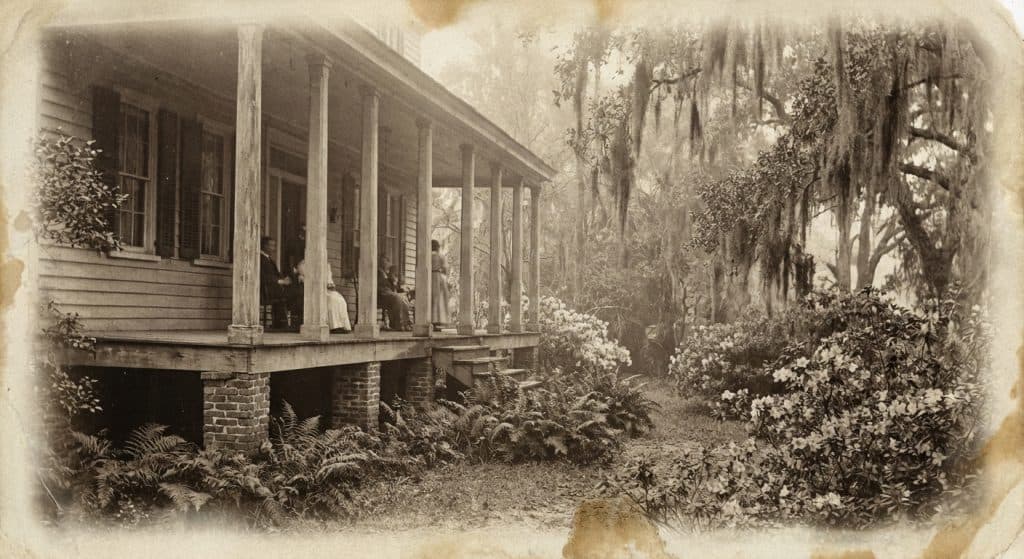
In the Carolina Lowcountry, humidity is the enemy.
The Rain Porch (or Carolina Porch) has a very specific design feature: the columns don’t touch the ground floor.
Instead, they sit on small brick piers. The floor of the porch is extended past the columns.
Why? So wind-blown rain hits the extended floor and drains off, keeping the actual sitting area dry and protecting the wood columns from rot.
It is a brilliant example of engineering for the climate.
5. The Double Gallery
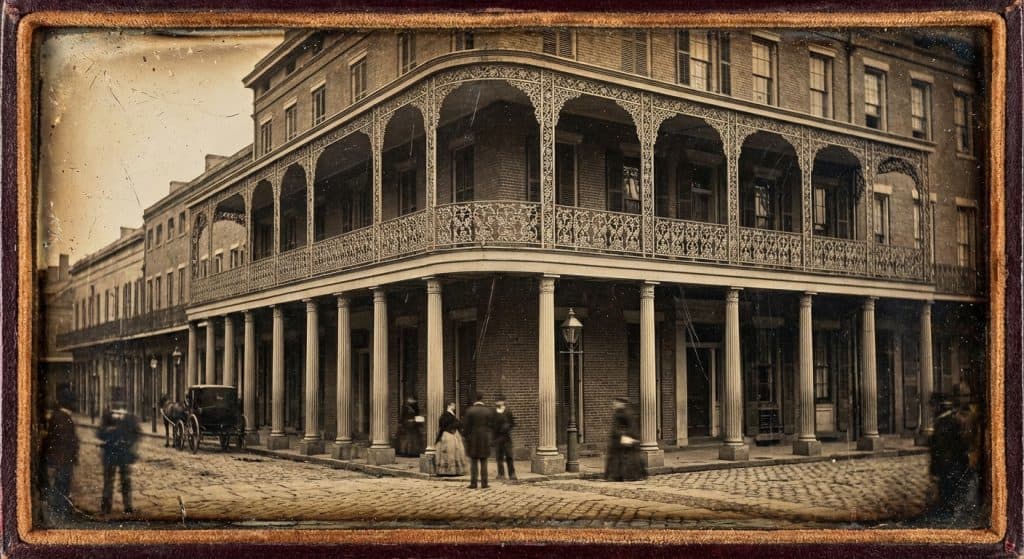
If one porch is good, two are better.
Popular in New Orleans and Charleston, the Double Gallery features stacked porches on the first and second floors.
They are usually supported by a single set of tall columns stretching the full height of the house.
The upstairs porch wasn’t just for looks—it shaded the downstairs porch, creating a deep tunnel of cool air.
6. The Sleeping Porch
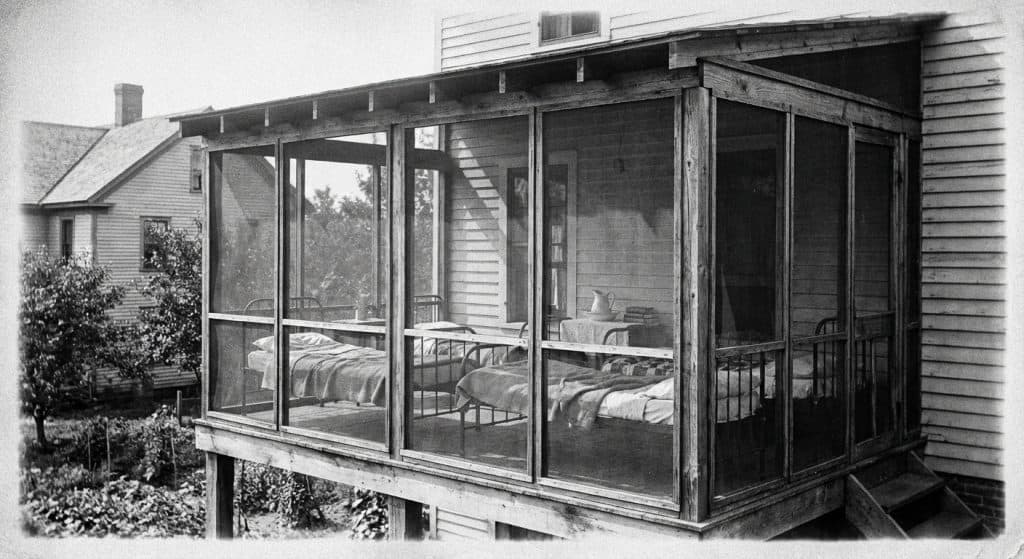
Before AC, summer nights were suffocating.
The Sleeping Porch was usually located on the second floor, directly off the bedrooms.
It was screened in on three sides to maximize cross-ventilation.
Families would drag cots out there to sleep under the sound of crickets.
The millwork had to be durable—flooring was often painted with marine-grade paint because rain would inevitably blow in.
7. The Dogtrot
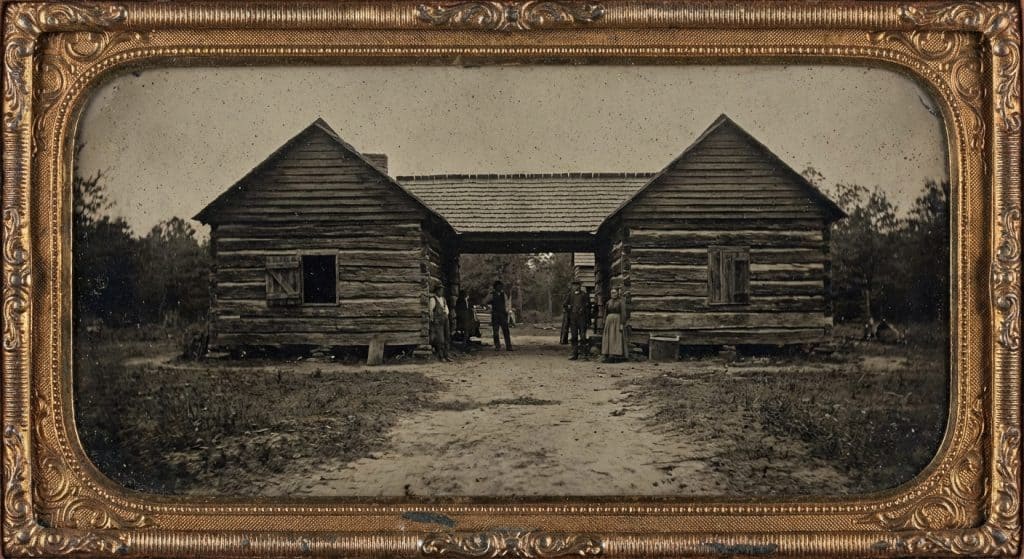
This is a frontier classic.
A Dogtrot cabin consists of two separate log cabins connected by one long, open-air breezeway under a common roof.
The “porch” runs right through the center of the house.
The design created a wind tunnel. Even on a still day, the pressure difference would pull a breeze through the “dogtrot.”
It was the original passive cooling system.
8. The Classical Portico
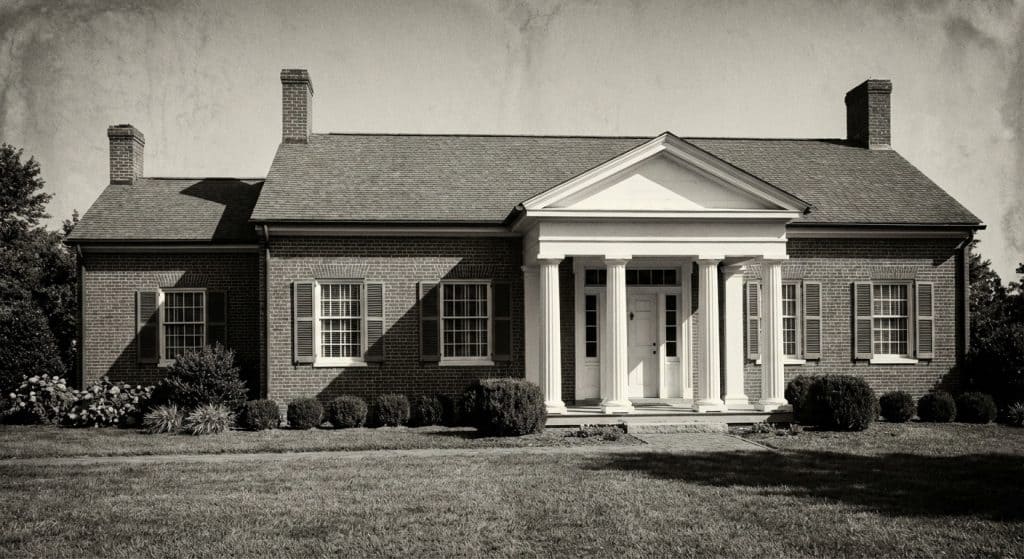
This is the “White House” look.
A Portico is a small, formal porch protecting the front entrance, supported by classical columns (Ionic, Doric, or Corinthian).
It isn’t meant for sitting. It is meant to impress.
It signals that the owner is educated, wealthy, and serious.
The pediment (triangle roof) above the door required intricate molding and copper flashing to keep it watertight.
9. The Screened-In Porch
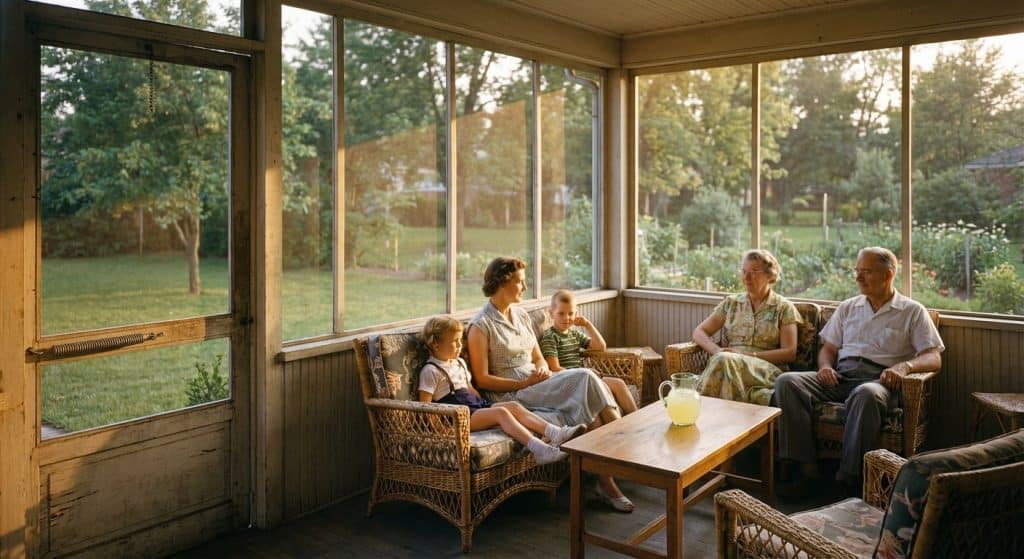
The American South has a state bird: the mosquito.
The Screened-In porch was the fortress against nature.
The defining sound of an American summer is the thwack-squeak of a wooden screen door slamming shut.
Building these required a delicate touch—the wooden frames had to be thin enough to see through, but strong enough to hold tension on the wire mesh.
10. The Farmhouse Porch
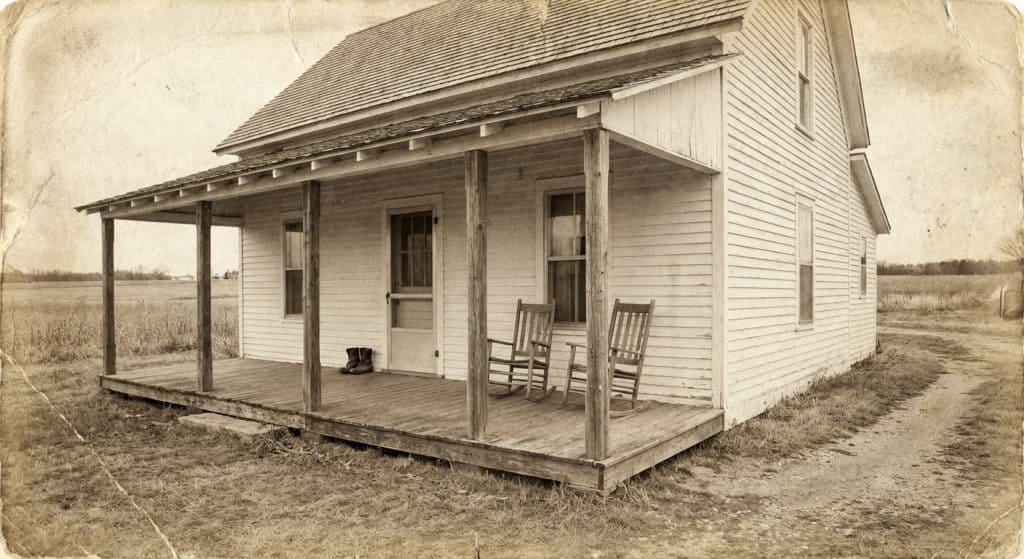
This is the working man’s porch.
It runs the full width of the front of the house, but it is shallow and simple.
The columns are usually simple square 4×4 or 6×6 posts. The floor is simple tongue-and-groove pine.
It wasn’t for showing off. It was a mudroom, a workspace for shelling peas, and a place to wash up before dinner.
11. The Gazebo Porch
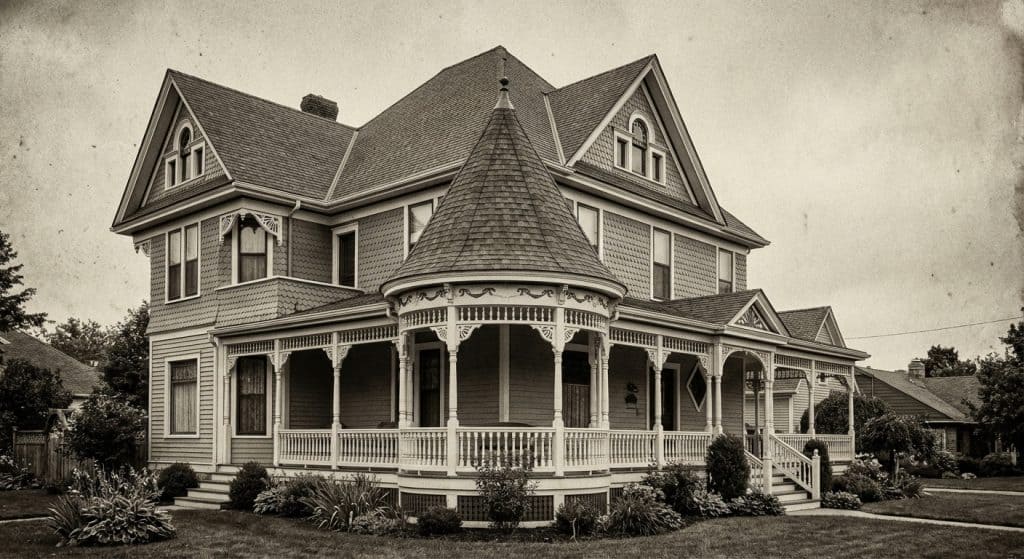
On high-end Victorians, builders loved to show off.
The Gazebo Porch is a round or octagonal pavilion built into the corner of a wrap-around porch.
It usually has its own steep, conical roof.
Framing a round floor into a square house frame is a nightmare for a novice carpenter. It required advanced joinery skills.
It was the perfect spot for a small table and tea service.
12. The Sun Porch (Florida Room)
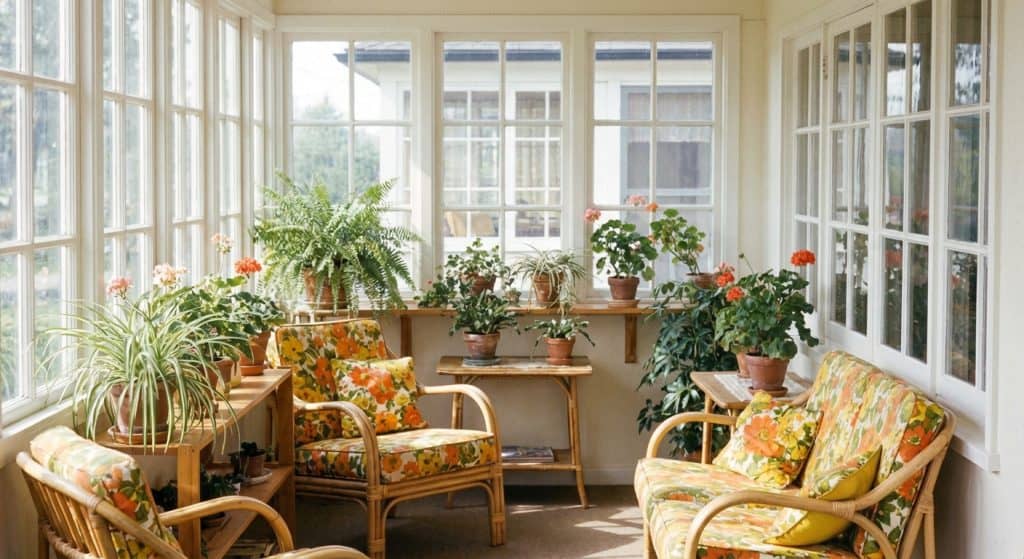
As glass manufacturing got cheaper, we started enclosing our porches.
The Sun Porch features walls made almost entirely of windows.
In northern climates, it acted as a thermal buffer. The sun heated the room, and that warm air insulated the rest of the house.
It allowed you to feel like you were outside in February without freezing to death.
13. The Stoop
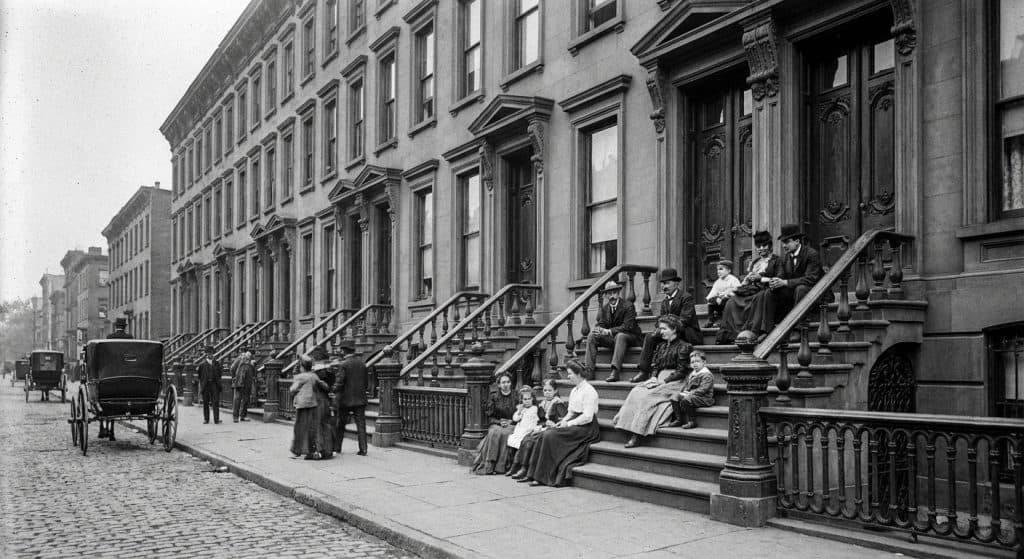
In cities like New York and Philadelphia, there was no room for a yard.
The “porch” became the Stoop.
It is a set of high stone or concrete steps leading to a raised parlor floor.
While the steps were stone, the railings and entry doors were often elaborate masterpieces of carved wood or wrought iron.
It was the vertical version of a front porch—the place where the whole block gathered to talk.
14. The Recessed Porch (Loggia)
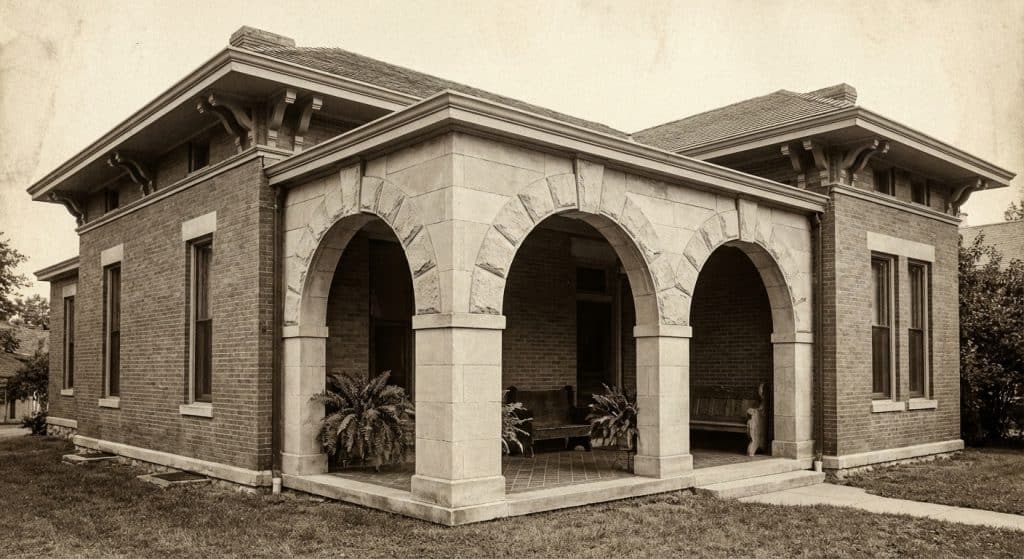
Most porches stick out from the house. This one is carved into it.
The Recessed Porch is set back inside the main roofline of the house.
It feels more like an outdoor room than an attachment.
Because it is protected on three sides by the house itself, it stays warmer in the fall and cooler in the summer.
It is an expensive way to build, as you sacrifice interior square footage for outdoor space.
15. The Breezeway
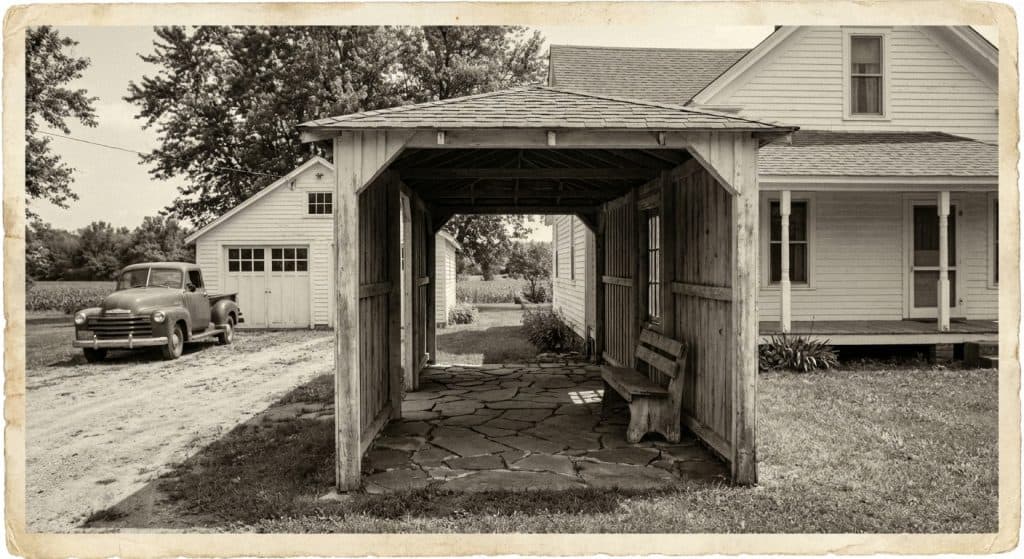
The Breezeway is the connecting tissue of country architecture.
It is a roofed, open-sided porch that connects the main house to a garage, barn, or summer kitchen.
It gave you a dry path to do your chores in the rain.
But it also became a wind tunnel—a perfect shady spot to set up a rocking chair and catch the draft between the two buildings.
Conclusion
The front porch didn’t die because we ran out of wood.
It died because we got busy.
We traded the rocking chair for the recliner. We traded the neighborhood wave for the privacy fence.
But if you have an old house with a rotting porch floor, don’t tear it down.
Fix the rot. Paint the columns. Buy a rocking chair.
Sit down and watch the world go by. It’s good for the soul.