

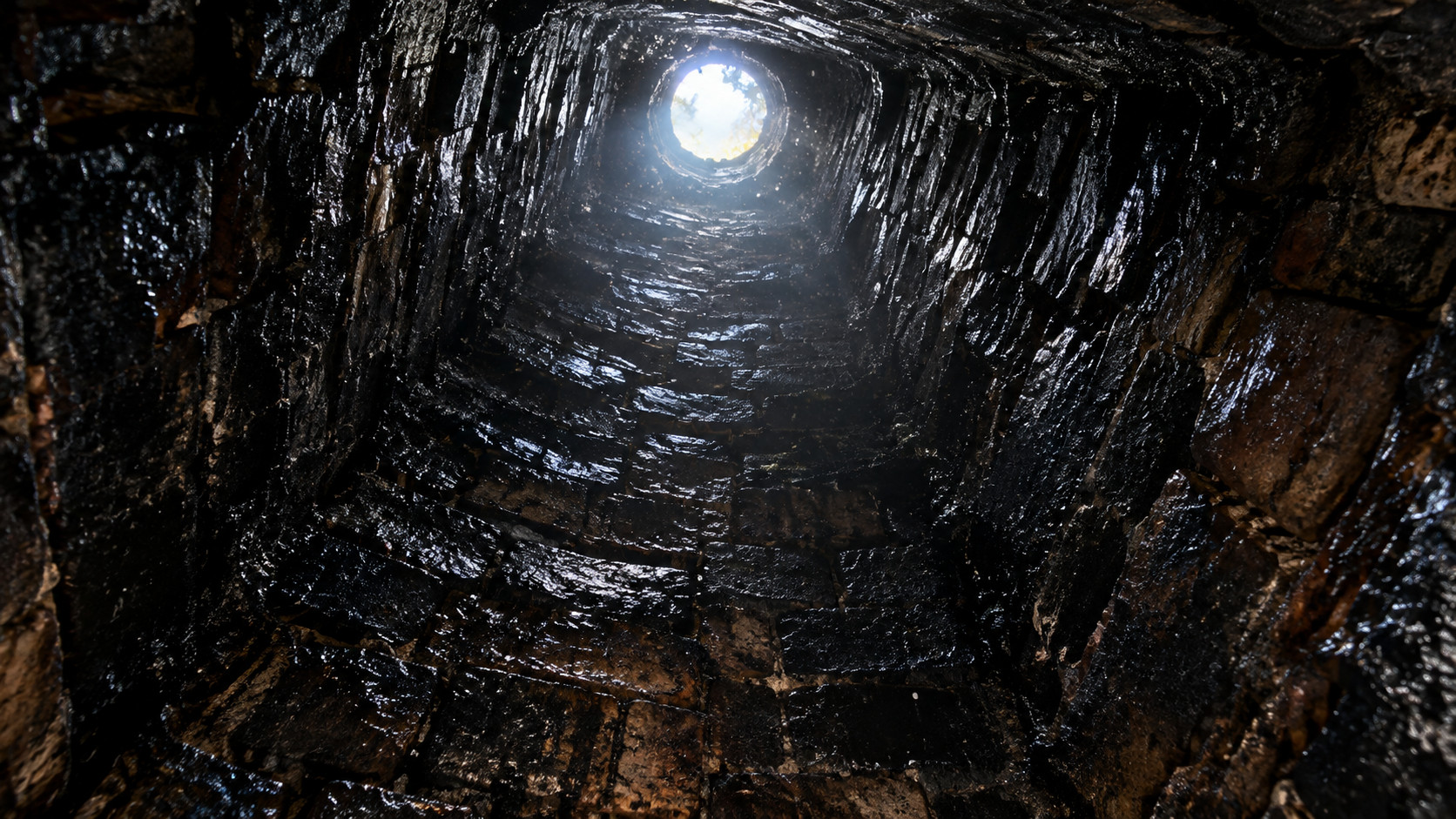
There’s a smell that belongs to a certain kind of house in February. Woodsmoke, cold ash, the faint sweetness of bark drying on the hearth.
It’s a good smell. It’s also the smell of a system that punishes carelessness.
Most chimney fires don’t start because somebody burned the wrong tree. They start because of water, air, and habits — the little shortcuts that seem harmless on a Tuesday night in January and show up three years later as a black, glassy crust inside the flue.
The people who heated with wood their whole lives knew this. They cut a year ahead. They split everything. They swept in the fall and banked coals instead of strangling the fire. None of it was mystical. It was just what you did if you wanted the house still standing in April.
Here are 34 firewood mistakes that quietly wreck a chimney — and what the old-timers did instead.
1. Green Wood Cut This Fall and Burned This Winter
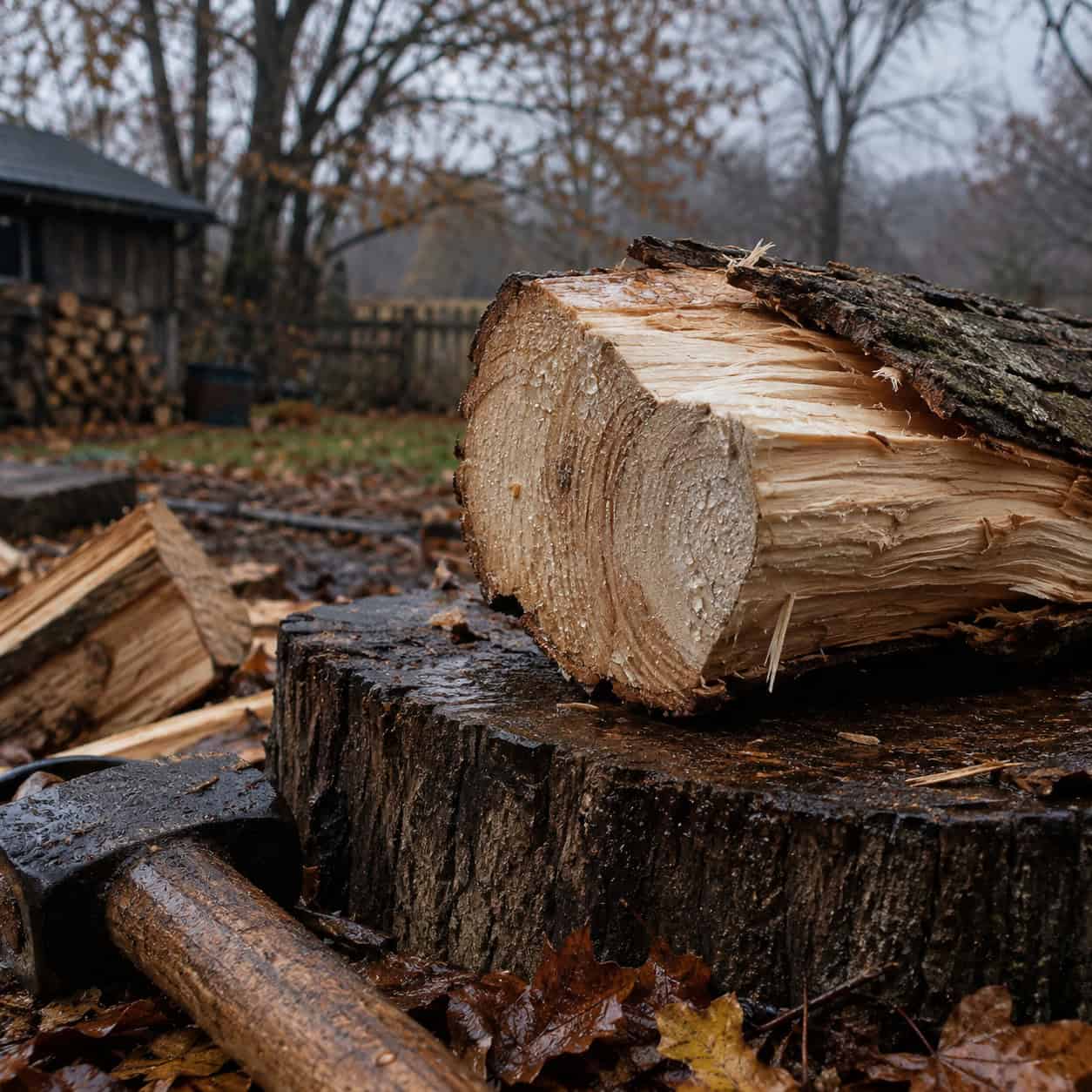
Start here, because almost everything else is a footnote to this one.
Freshly cut wood can run 50 to 100 percent moisture by dry weight. Put it in a firebox and the fire spends its first energy boiling that water off instead of burning the smoke. Cooler fire, cooler flue, and the unburned gases condense on the way up as tar.
That tar is creosote. It’s fuel sitting in the one place you never want fuel. The University of Illinois Extension puts the target around 20 percent moisture or below, which for oak means a year and a half to two years in the open air.
Old-timers didn’t know the percentage. They knew the rhythm — you cut this year’s wood for next year, and you burn the pile your past self left you. Two rows in the yard at all times, one working and one resting.
2. Damping the Stove Down to Hold a Fire Overnight
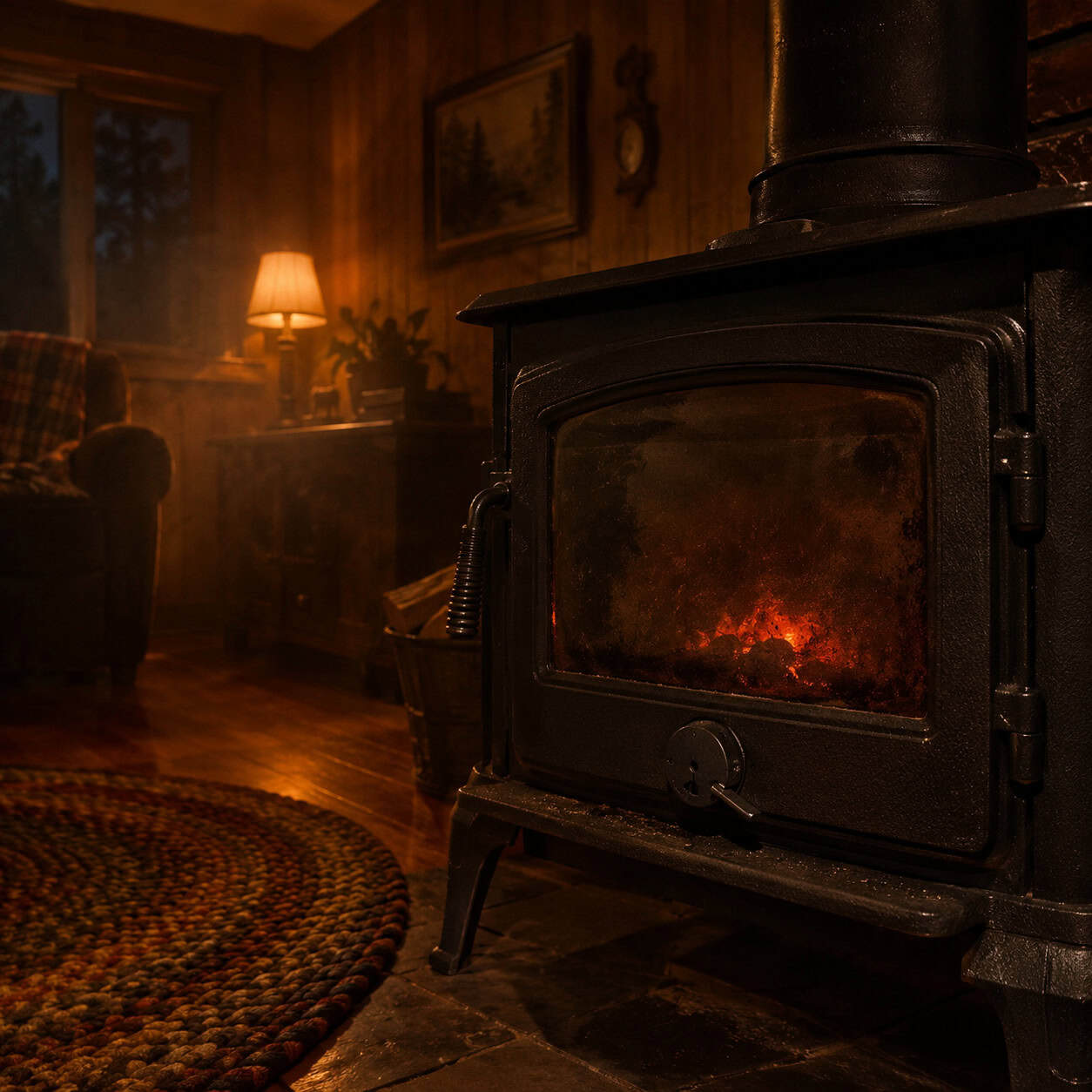
Everybody did it during the 1970s wood-heat boom. Load the stove at eleven, crank the air control shut, wake up to a warm house.
What you actually created was eight hours of oxygen-starved smolder. Cool, smoky, incomplete combustion — the exact lab conditions for plating tar onto a flue.
The old approach was less comfortable and far smarter. Burn the load hot, let it fall to a deep bed of coals, and accept that the house drops five degrees by dawn. You rake the coals forward, lay on kindling, and it catches in ninety seconds.
3. The Christmas Tree Stuffed Into the Fireplace
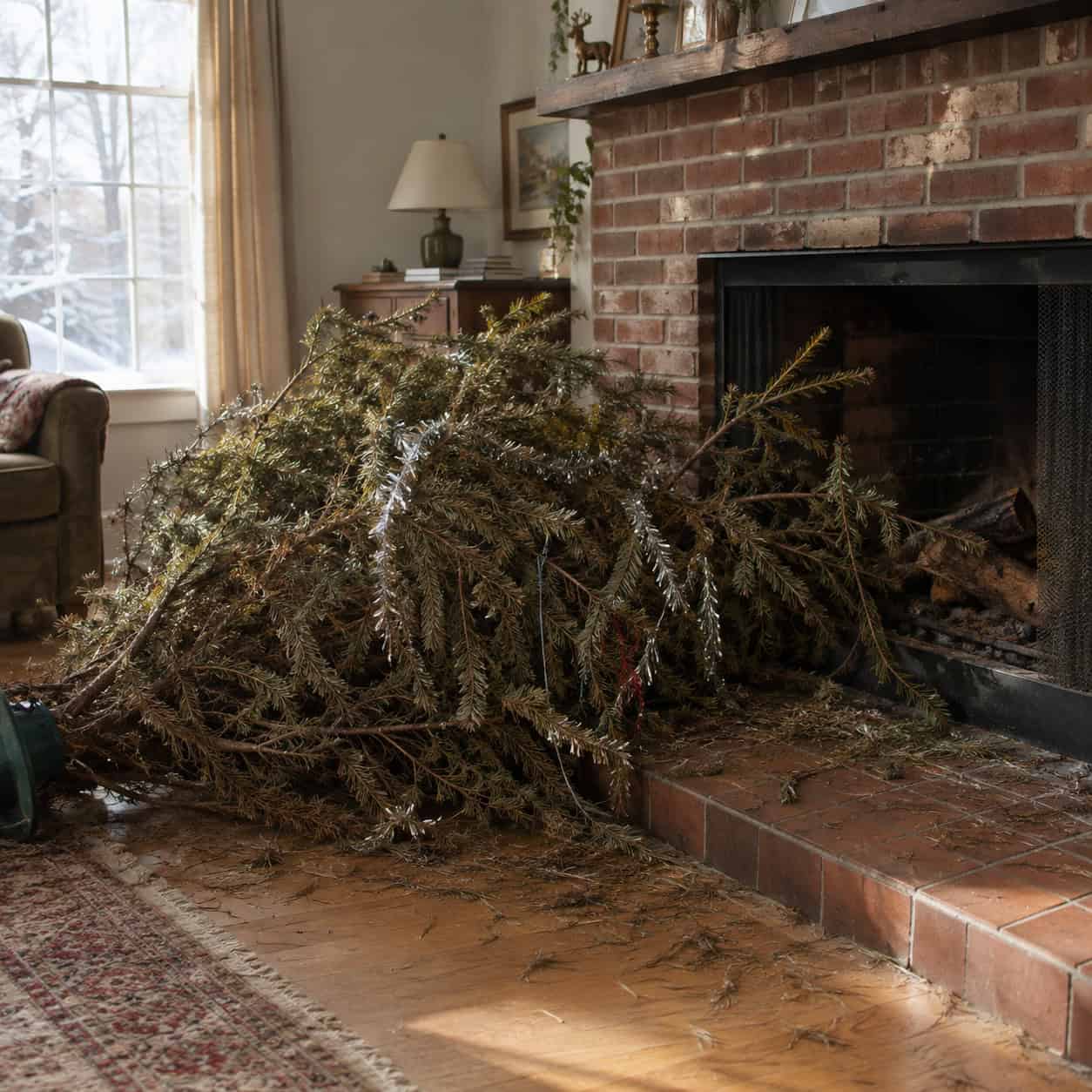
A dried balsam that’s been in a warm living room for three weeks is essentially a bundle of resinous tinder.
Shove a few branches in and the needles flash over in seconds. A column of flame and sparks goes straight up a flue that hasn’t been swept since spring. January is the busiest month on most chimney sweeps’ emergency calendar for a reason.
Plenty of readers over forty watched a father do this on New Year’s Day and remember the whoosh. Curb the tree instead. Chip it, or leave it in the back corner of the yard for the birds.
4. Pressure-Treated Deck Boards and Fence Scraps
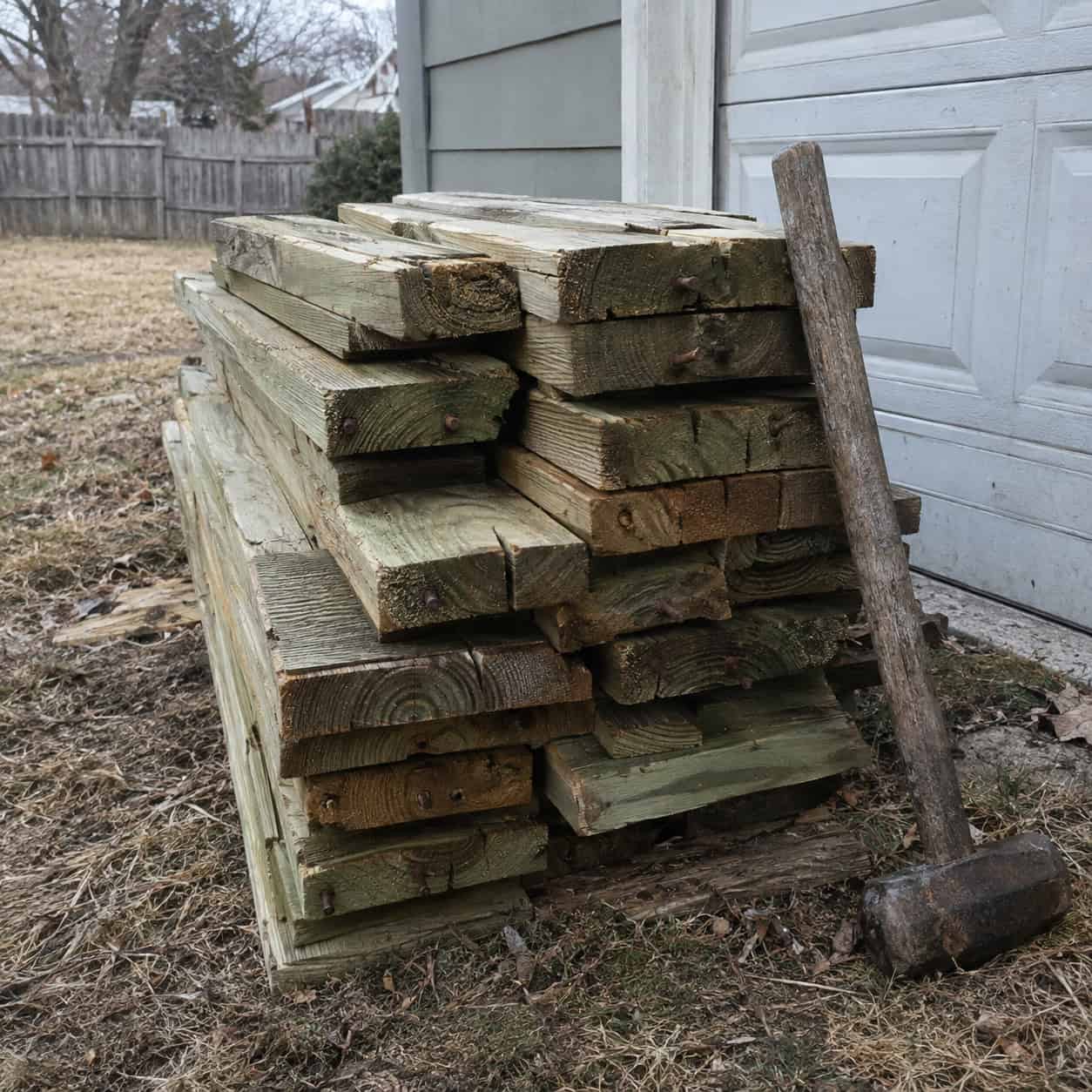
The old deck comes down and suddenly there’s a free cord of dry lumber stacked by the garage.
Anything treated before 2004 was almost certainly loaded with chromated copper arsenate. Burning it releases arsenic into the smoke and concentrates the rest into the ash — the same ash people cheerfully scatter on the vegetable garden.
Newer copper-based treatments aren’t a free pass either. Never burn it. Green tint, staple-sized incisions in the surface, a stamped end tag — any one of those and it goes to the dump.
5. Leaving the Woodpile Uncovered All Winter
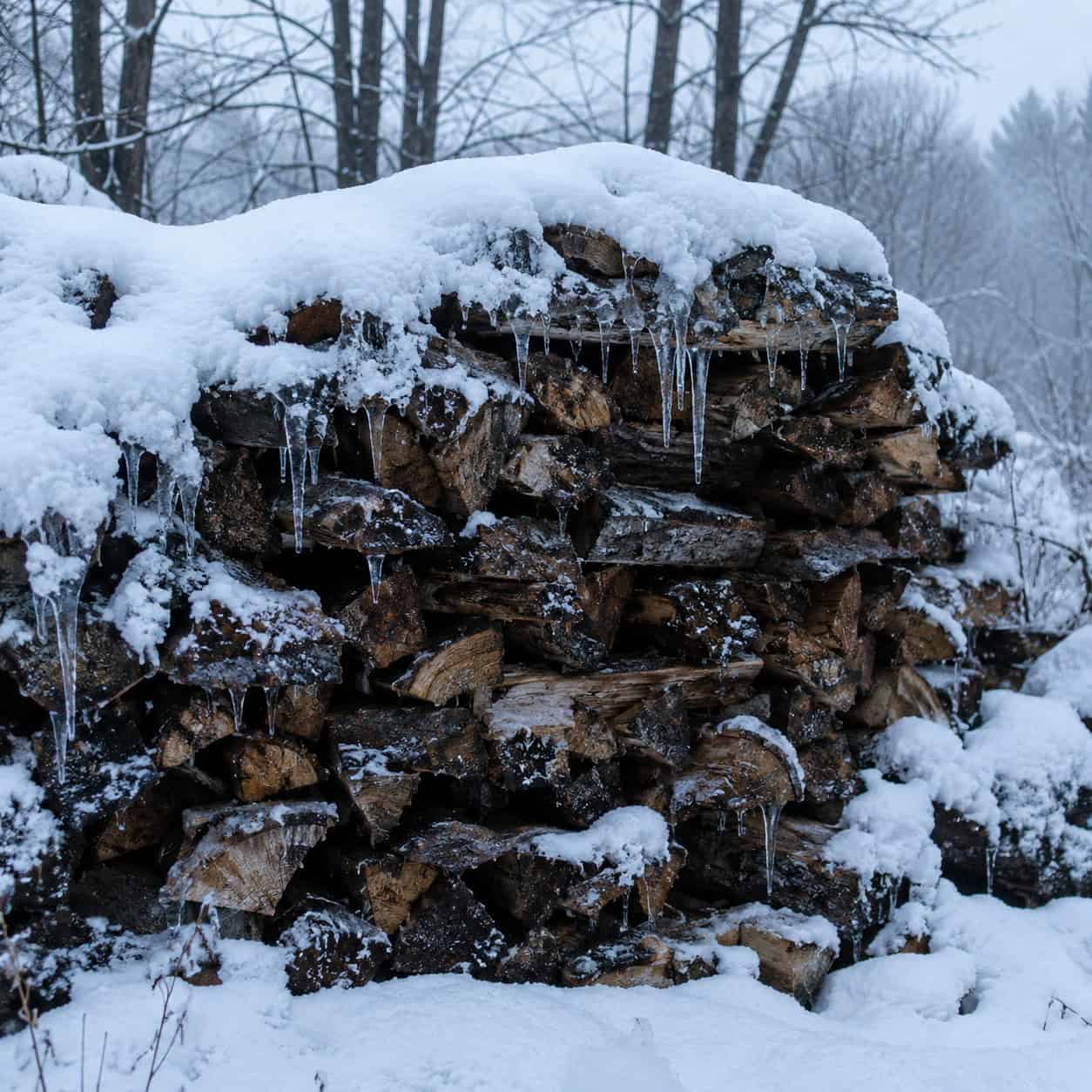
Wood that hit a perfect 18 percent in October can be back near 30 percent by February. Rain, snowmelt, and a few thaw cycles undo an entire summer of seasoning.
You’ll hear it. Hissing ends, a sizzle at the split face, and a fire that never quite settles into a steady burn.
The rule was always cover the top, leave the sides open. A scrap of roofing tin weighted with a couple of rounds. Air has to move through the stack or nothing dries.
6. Wrapping Paper, Glossy Catalogs, and Magazine Stacks
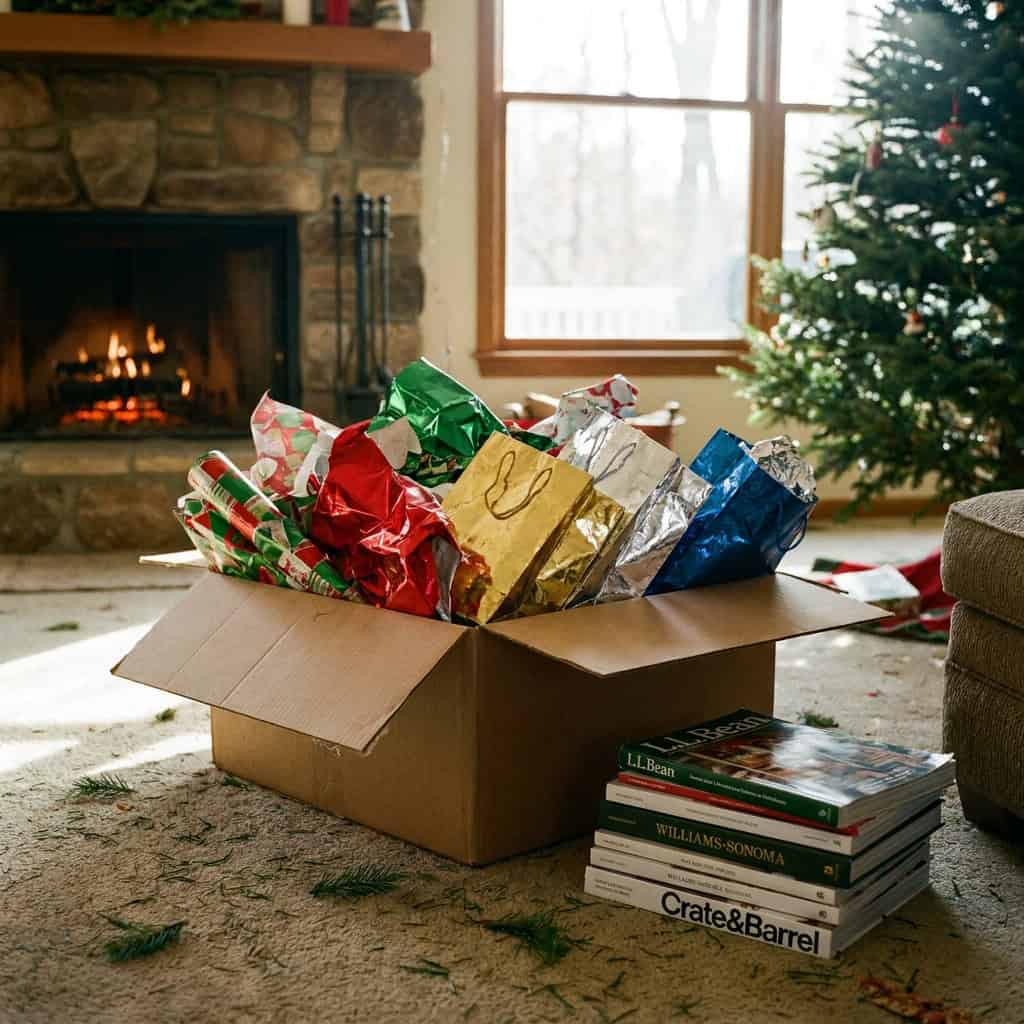
December 25th, every year, in a few million living rooms.
Coated stock and foil-printed paper burn fast and light — flaming flakes catch the draft and ride up into the flue, where they can ignite creosote that’s been sitting quietly for two seasons. The inks and coatings add metals to the smoke on the way.
Plain newsprint twisted into knots. Birch bark. A fatwood splinter. That was the whole kindling arsenal, and it worked.
7. Burning Hot in an Unlined 1800s Masonry Chimney
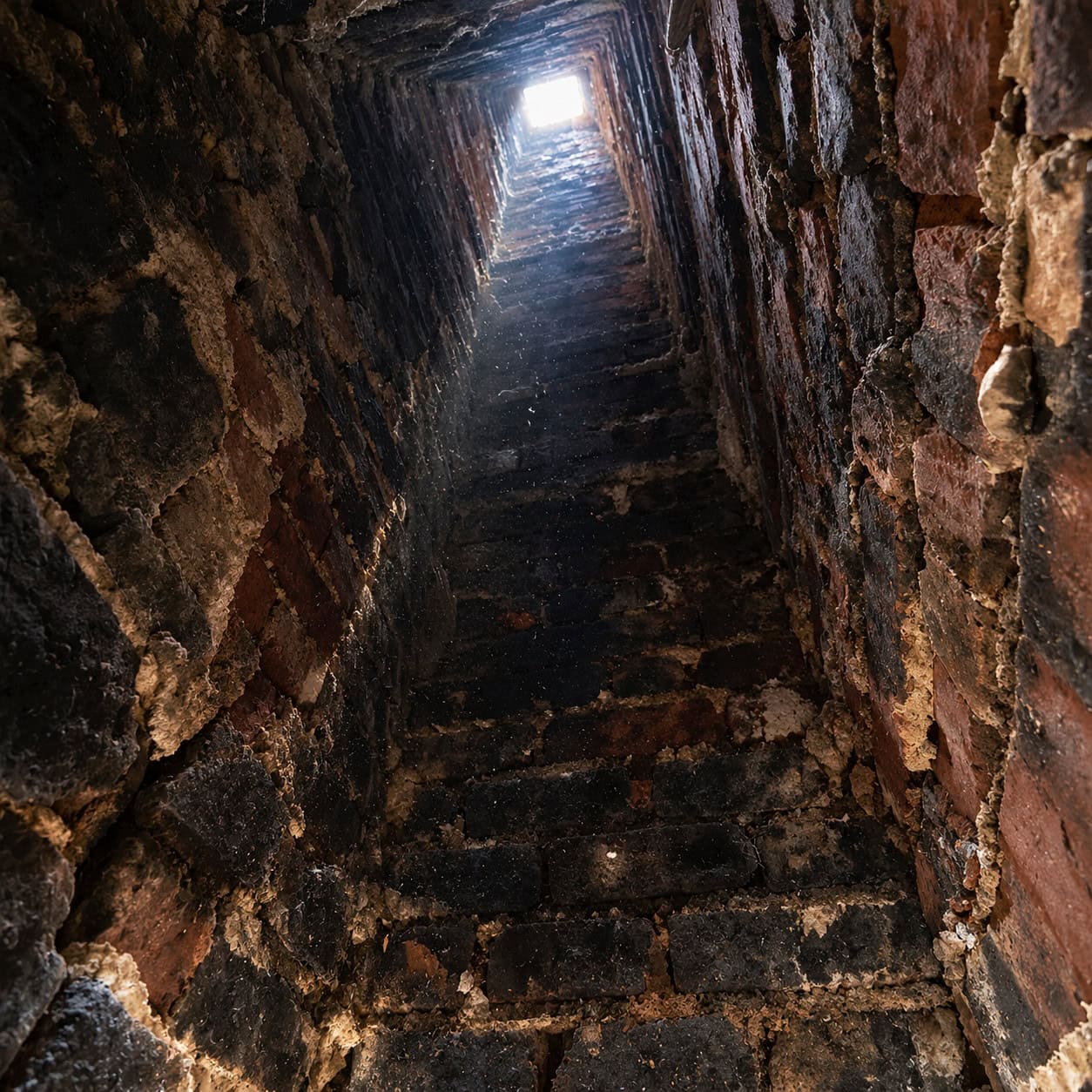
Here’s where the fuel stops being half the story.
Most chimneys built before the 1920s have no clay tile liner at all. They’re brick laid against brick with soft lime mortar, and after a century of freeze-thaw and acidic flue gases, those joints erode. Some of them you can see daylight through from inside the smoke chamber.
That matters because a chimney’s only real job is keeping heat and combustion gases away from the wood framing packed around it. Open joints hand both straight to a floor joist. Fires in old houses often start inside a wall, hours after the hearth has gone cold.
If you own a pre-1920 house with an original flue, get a camera scan before you light another fire. A Level 2 inspection runs a camera the full height and tells you what you’re working with.
Relining options, roughly cheapest to most involved:
- Flexible stainless liner — common for stove and insert hookups, typically $2,500–$5,000 installed
- Rigid stainless liner — straighter flues, longer service life
- Cast-in-place masonry liner — pumped around an inflated form, reinforces the whole stack
- Full clay tile rebuild — the historically correct route, and the most expensive
Insulating the liner matters as much as installing one. An uninsulated stainless pipe in a cold masonry chase still runs cool enough to condense creosote — you’ve solved the safety problem and kept the tar problem.
And if the chimney’s purely decorative at this point, there’s no shame in it. People build handsome non-working fireplaces for exactly this reason.
8. The Poison Ivy Vine Still Clinging to the Log
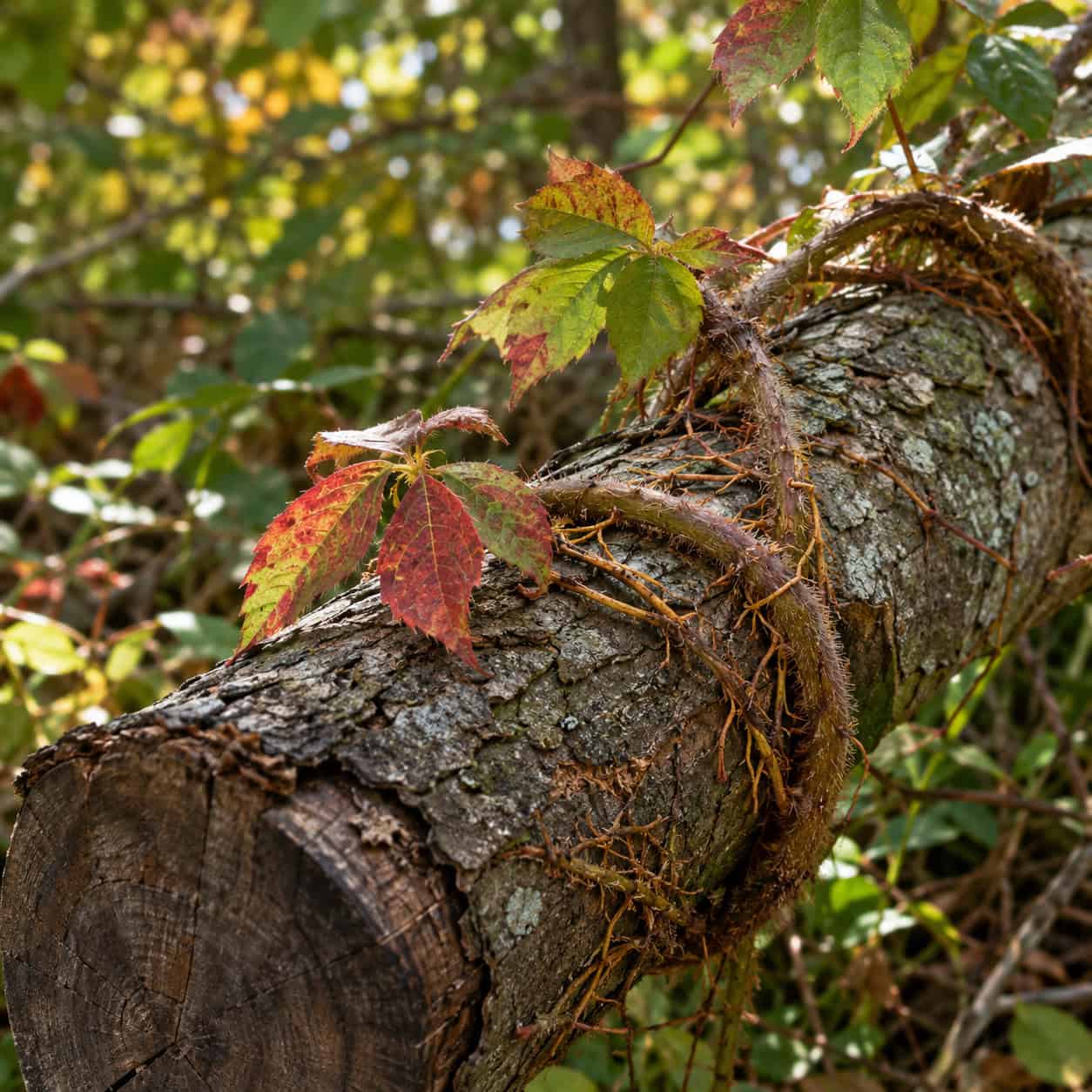
That hairy, rope-like vine wrapped around a hedgerow trunk isn’t decoration.
Urushiol doesn’t burn off. It rides the smoke, and inhaling it produces a rash in the airway and lungs — a genuine emergency room visit, not a campfire legend. The reaction can be severe enough to close an airway.
Old woodcutters stripped the vines off a trunk at the stump, before the log ever reached the splitting block. If you can’t tell what the vine was, don’t burn the bark.
9. Painted and Varnished Trim From a Demo Pile
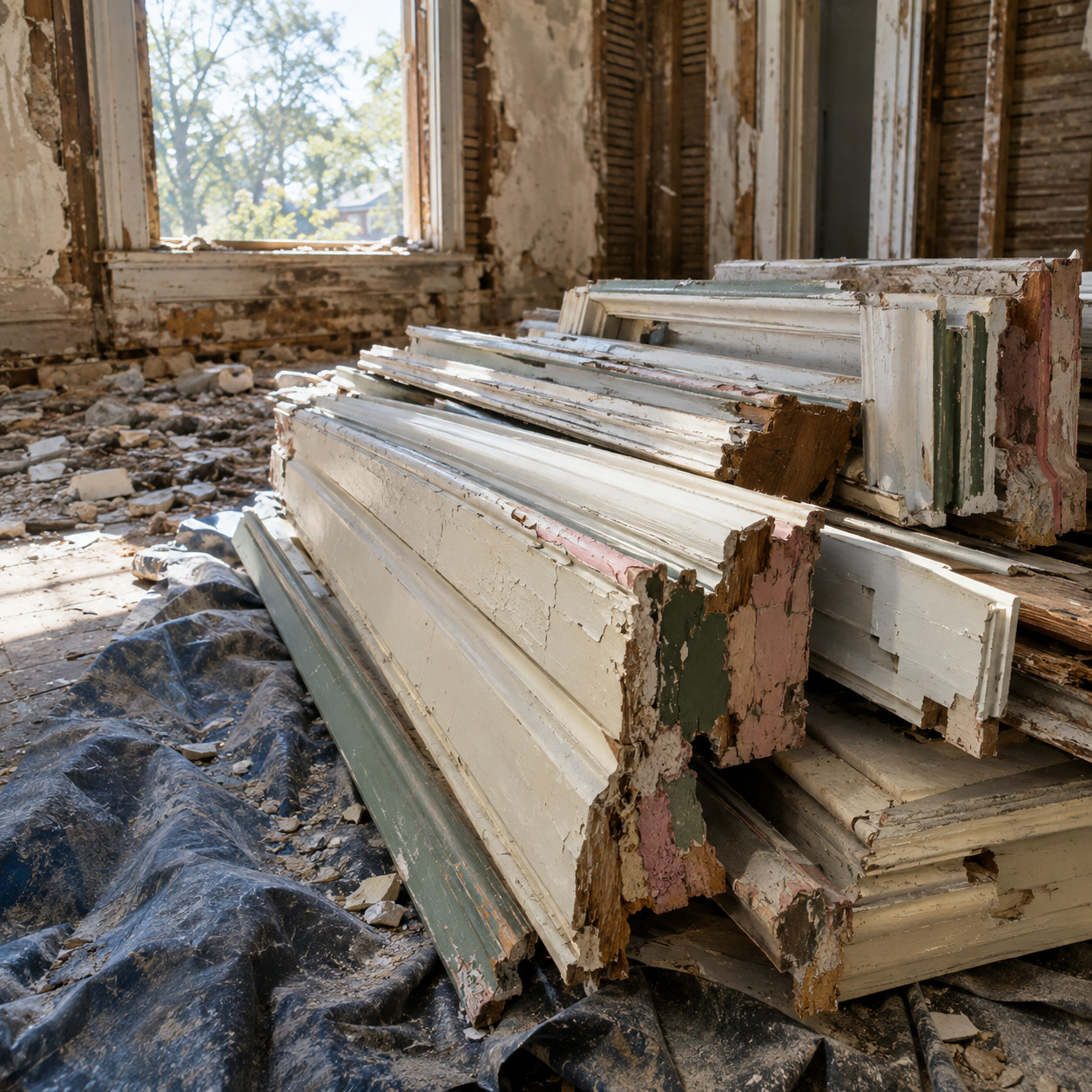
A remodel produces a pickup bed full of baseboard, casing, and old window stop. It’s bone dry. It splits into stove lengths with a hatchet. It feels like a gift.
Assume every paint layer applied before 1978 contains lead. That’s the year residential lead paint was banned in the U.S., and in an old house you’re rarely looking at one layer — you’re looking at eight, with the oldest and leadiest at the bottom.
Burning it volatilizes the lead. Some goes up the flue, some settles in the firebox, and a lot of it stays in the ash you later scoop into a bucket and carry through the house. Lead ash on a hearth rug in a home with small children is about as bad as it gets.
Varnish and shellac bring their own problem. Those resins don’t combust cleanly, and they add a sticky layer to whatever’s already coating the flue.
A $12 swab test from the hardware store gives you an answer in thirty seconds. And honestly — hesitate before you burn any of it. Old-growth pine casing with a bead profile nobody mills anymore is worth real money as salvage. Strip it, sell it, reuse it. Burning hundred-year-old molding for an hour of heat is a bad trade twice over.
10. Throwing Unsplit Rounds on the Fire
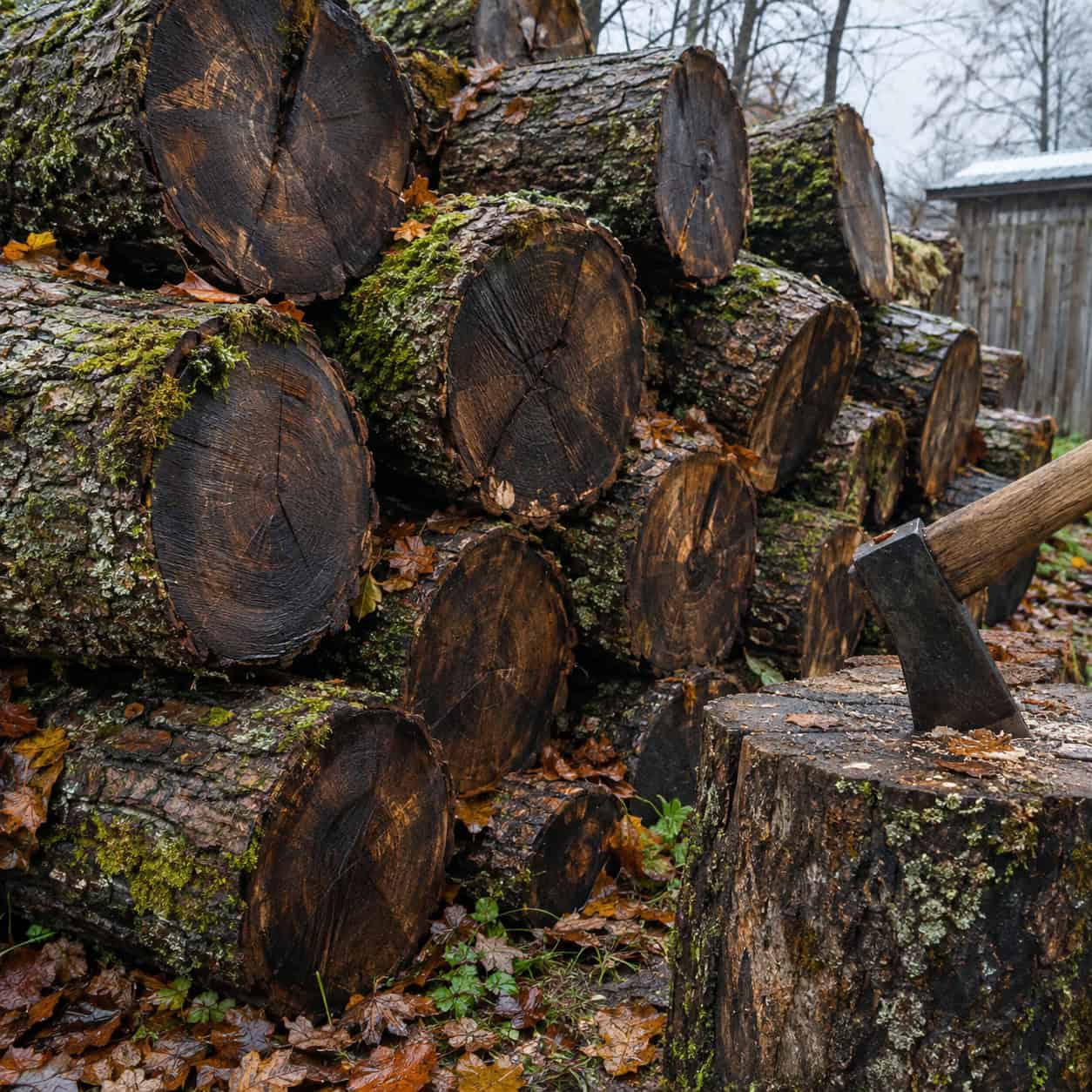
Bark is a raincoat. That’s its entire evolutionary job.
Moisture leaves a log through the exposed split face and the end grain, not through intact bark — which is why a round can sit in the yard for three years and still be soaked at the core. UNH Cooperative Extension is blunt about splitting being the step that actually makes seasoning happen.
Split anything thicker than your wrist. Stack it off the ground, bark side up so it sheds rain, with a gap between rows.
A decent firewood rack keeps the bottom course out of the mud, which is where half a cord usually goes punky.
11. Believing Pine Will Burn Your House Down
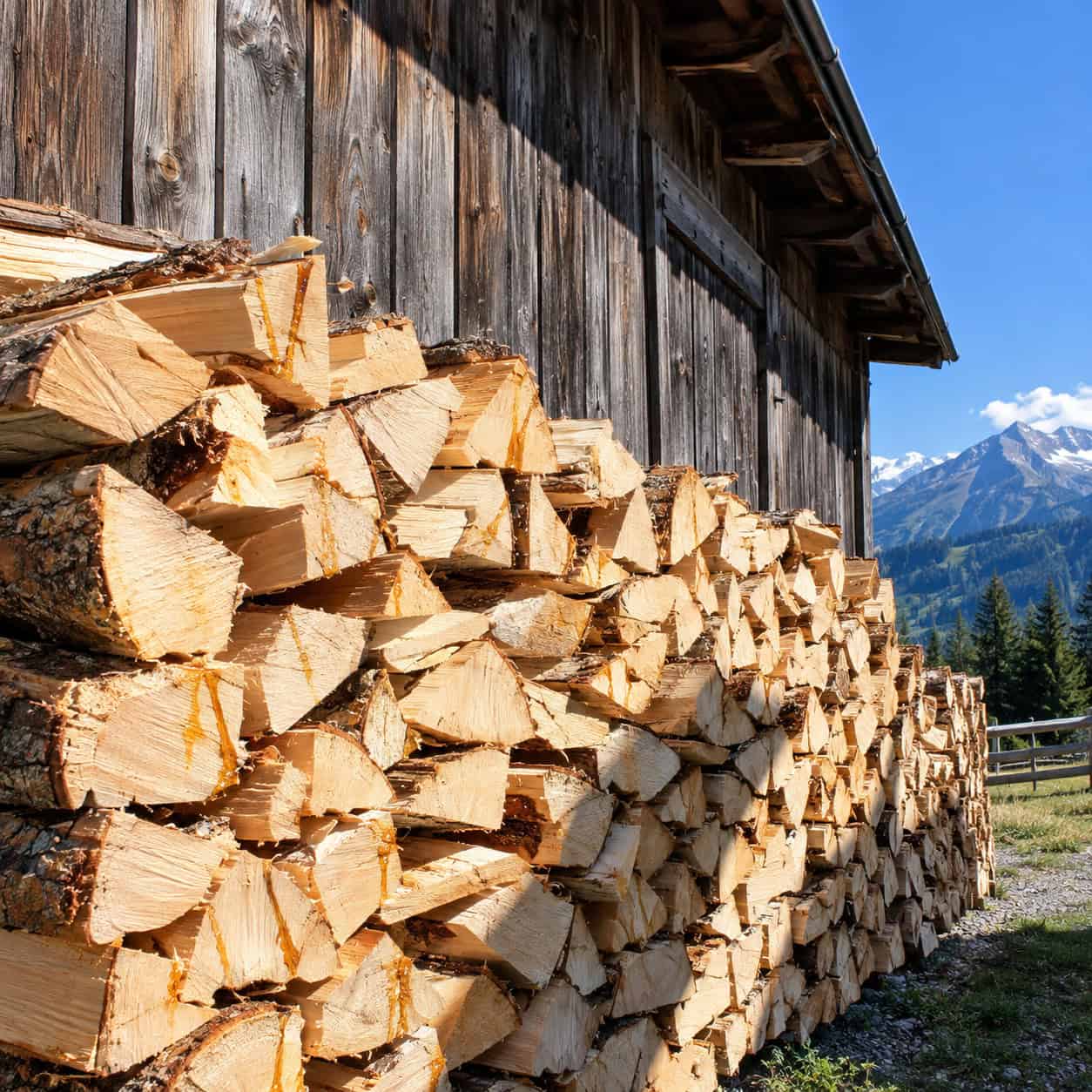
This myth has outlived the stoves that created it.
Entire regions — the Rockies, the Pacific Northwest, Scandinavia — have heated with pine, fir, and alder for generations without unusual chimney fire rates. Sweep-industry burn testing has repeatedly found well-seasoned softwood produces no more creosote than hardwood, and often less than wet oak.
The original stories were about wet wood and damped-down fires, not resin. Softwood seasons faster, too — pine can be ready in six months where oak needs two years.
It burns quicker and gives you fewer overnight coals. That’s the actual tradeoff. Not danger.
12. Plywood, Particleboard, OSB, and MDF Offcuts
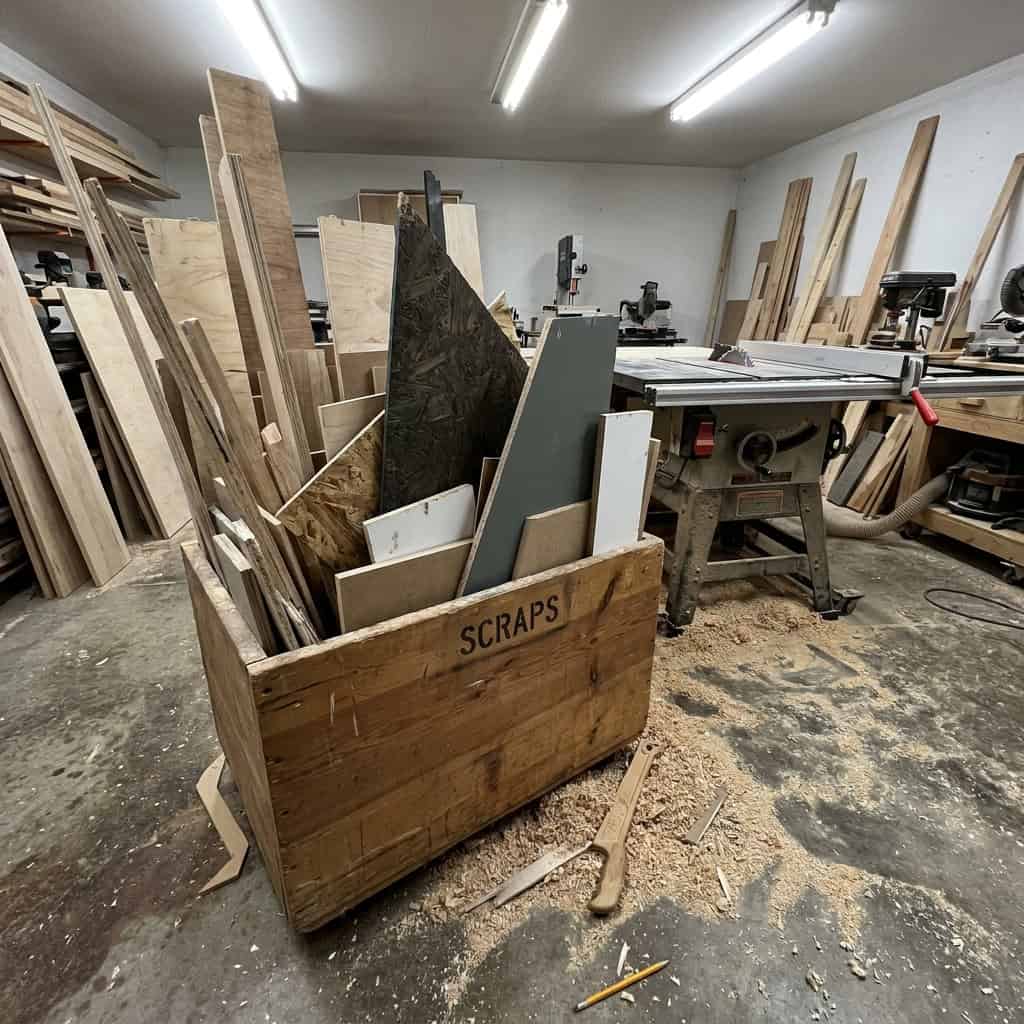
Every woodworker eyes the scrap bin in December and does the math.
Don’t. Sheet goods are held together with urea- and phenol-formaldehyde resins plus paraffin wax, and none of it burns clean. You get sticky deposits in the flue and formaldehyde in the room on every puff-back.
MDF is the worst of the bunch in a small stove — dense, resin-heavy, and capable of running a firebox well past its rated temperature before you notice.
Solid offcuts with no glue and no finish are fine. Everything else goes in the dumpster.
13. Skipping the Annual Sweep Because ‘I Burn Hot’
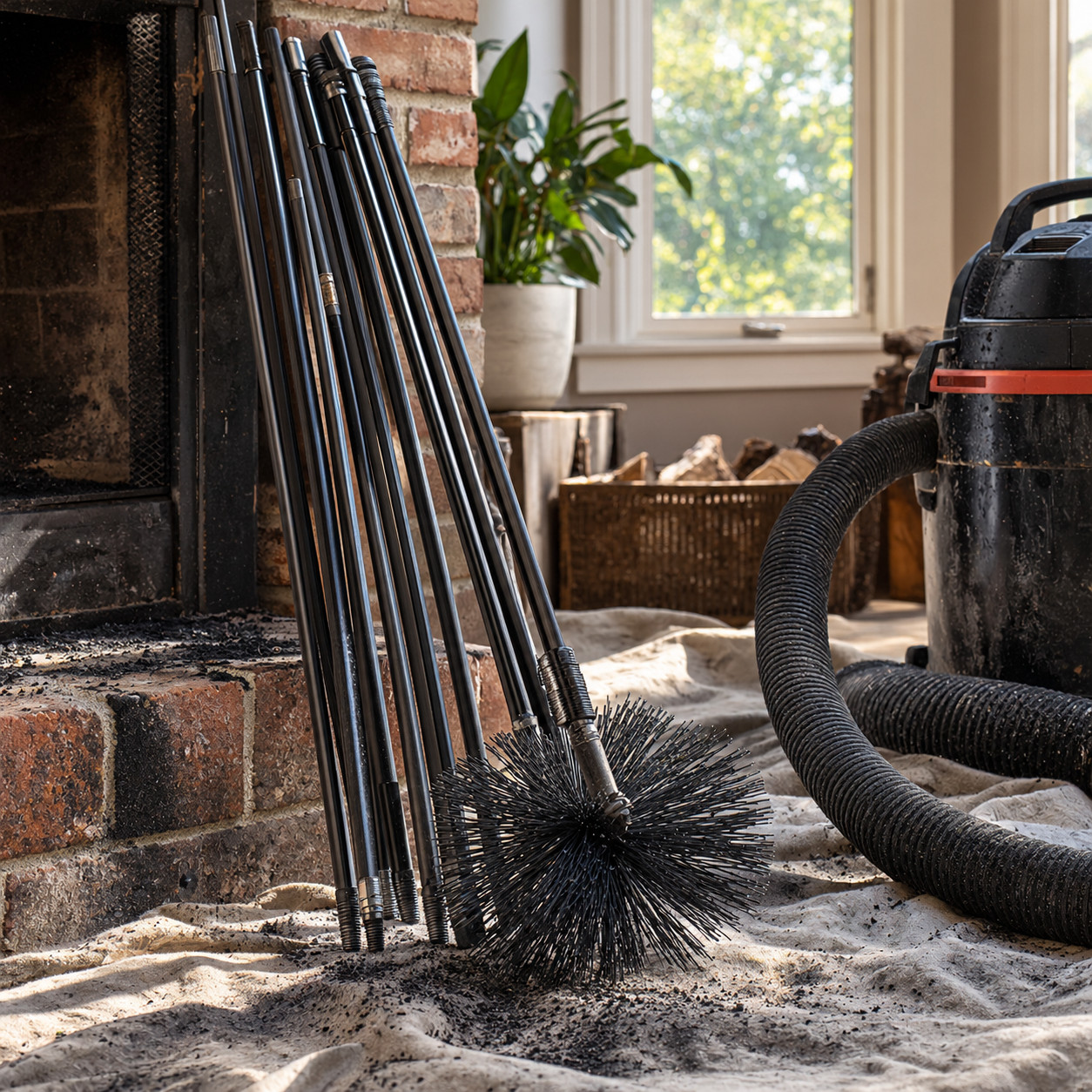
Burning hot is good practice. It is not a cleaning method.
What a hot fire actually does to existing soft, flaky creosote is bake it — driving off the volatiles and leaving behind hardened, shiny glaze. That’s third-stage creosote, and it’s the stuff that no brush will touch and no chimney log will dissolve.
The National Fire Protection Association’s standard is an inspection every year, regardless of use. Sweeping frequency depends on how much you burn: a cord or more a season generally means an annual sweep, and a stove run hard all winter sometimes needs two.
Know the inspection levels before you call, so you’re not upsold or undersold:
- Level 1 — visual check of accessible areas, the normal annual service
- Level 2 — camera scan of the full flue; required when you buy a house, change appliances, or after a chimney fire
- Level 3 — opening up masonry or walls, only when a serious hazard is suspected
Expect $150 to $350 for a standard sweep and Level 1 in most markets. Keep the receipts — after a fire, insurers ask for maintenance records, and a folder of annual invoices has settled more than a few claims.
Book it in late summer. By October every sweep within forty miles is three weeks out.
14. Starting the Fire With Gasoline or Charcoal Lighter
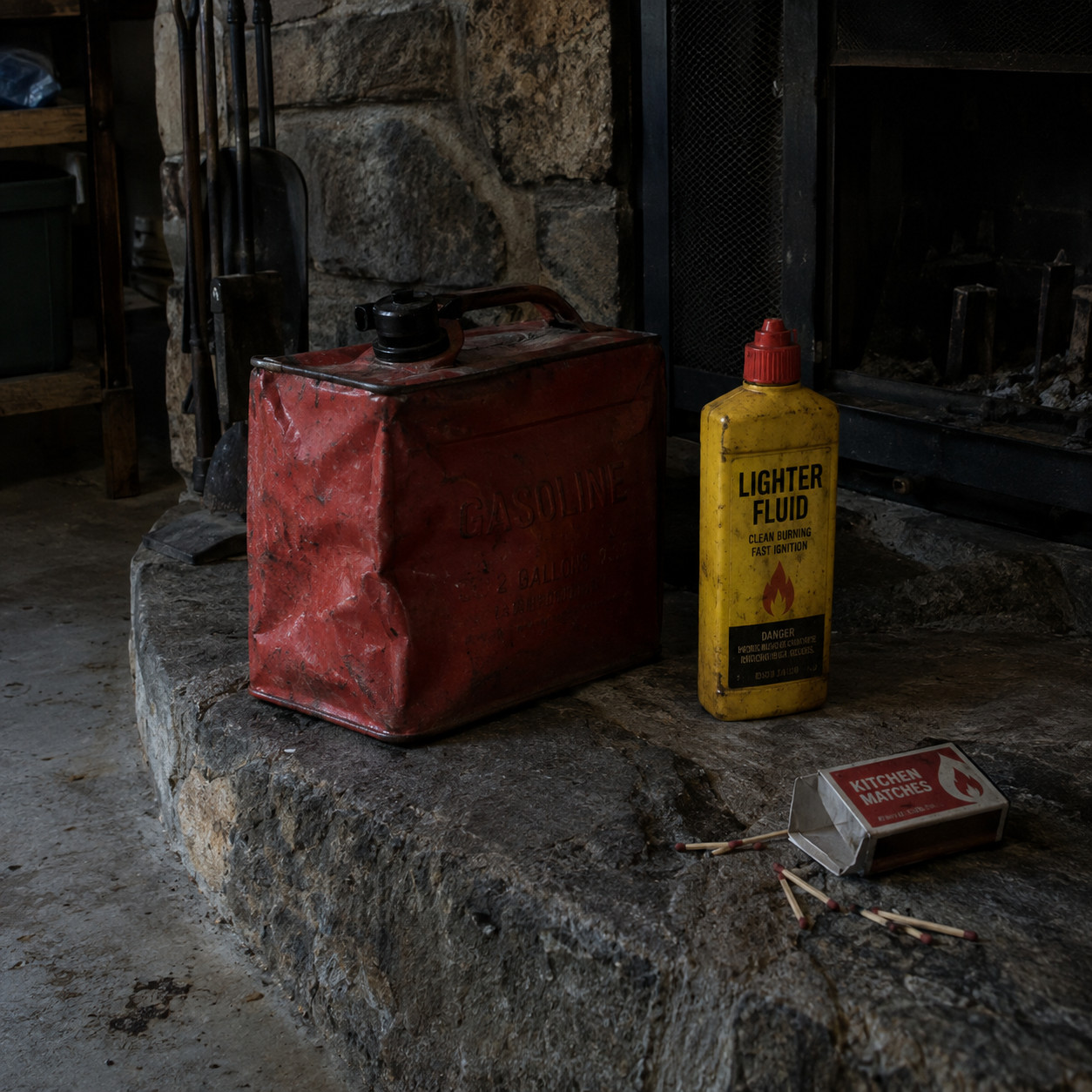
Liquid gasoline doesn’t ignite. The vapor does, and in an enclosed firebox that vapor has been pooling and spreading while you fumble with the match.
The result is a pressure flash that shoves flame out the door and up a dirty flue simultaneously. People lose eyebrows. People lose houses.
Grandpa used a fatwood knot and one match, mostly because he had nothing else. Resin-soaked heart pine lights wet, lights cold, and costs almost nothing.
15. Beach Driftwood on the Hearth
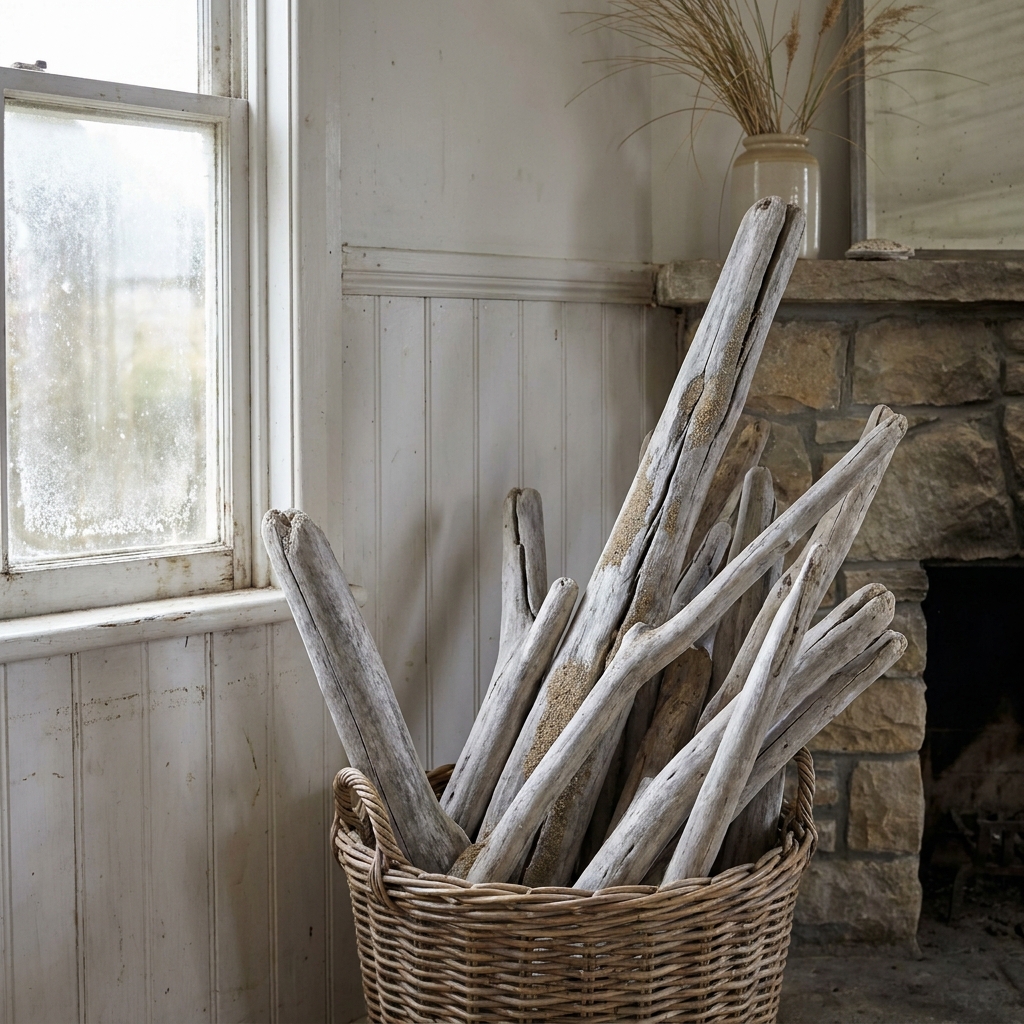
It looks wonderful. Silver-gray, wind-sculpted, free for the carrying.
Salt-saturated wood produces chlorine compounds as it burns, and those gases chew through stainless liners, chimney caps, dampers, and stove internals. The gorgeous blue and green flames everybody photographs are the chemistry announcing itself.
A coastal cottage with a corroded liner at year eight instead of year thirty usually has a driftwood habit behind it. Save the pretty pieces for the mantel.
16. Running a Roaring Fire to ‘Burn the Creosote Out’
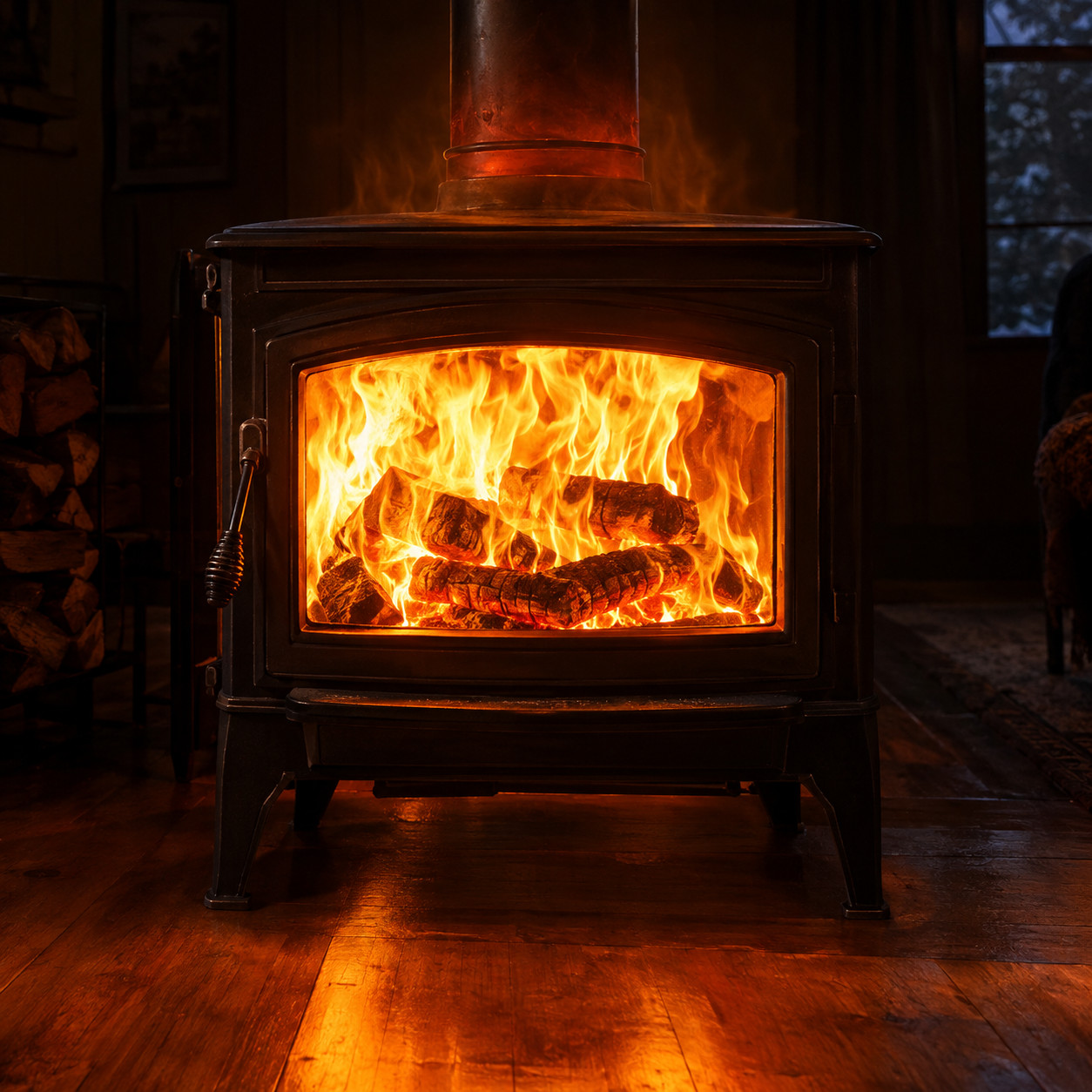
This advice has been passed down since the sweep-and-ladder era, and it’s dangerous.
A deliberate overfire is a controlled chimney fire, and the control part is wishful. Flue temperatures can exceed 2,000°F, which cracks clay tile, warps stove plate, and opens gaps right where heat can find framing.
The real old habit was a brisk fire twice a day — morning and evening — hot enough to keep the flue above condensing temperature, then allowed to coal down. Not one continuous inferno.
17. Old Railroad Ties and Cut-Up Utility Poles
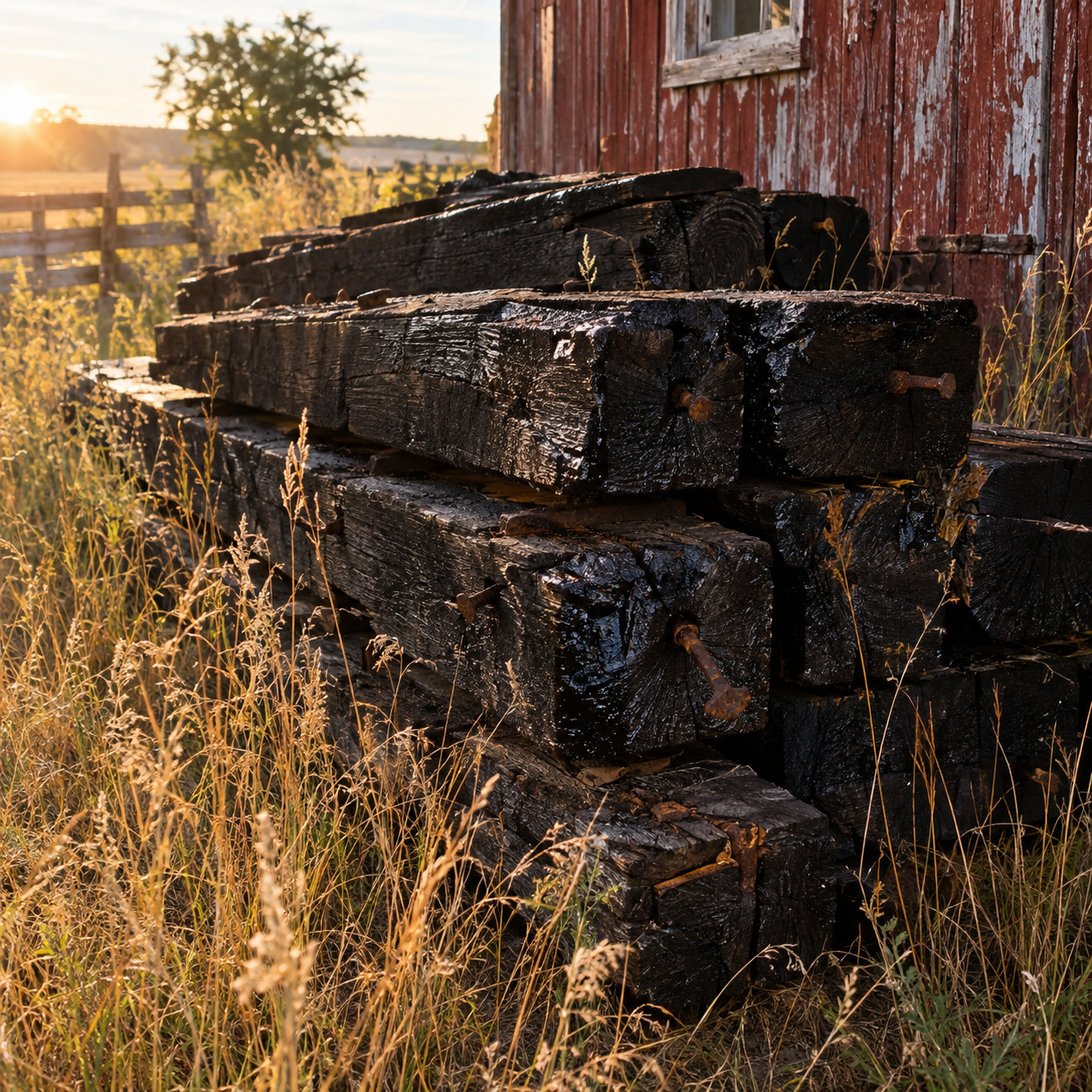
The irony is almost too neat. Those timbers were pressure-treated with coal-tar creosote or pentachlorophenol — so burning them coats your flue with the exact compound you spend every other season trying to avoid.
They also throw dioxins over the whole neighborhood, which is why burning them is flatly illegal in a lot of states.
Rural lots are full of them, stacked behind barns since the forties, black and oily and still smelling like a rail yard in July. Use them for retaining walls if you must. Not fuel.
18. Hedge and Red Cedar in an Open Fireplace
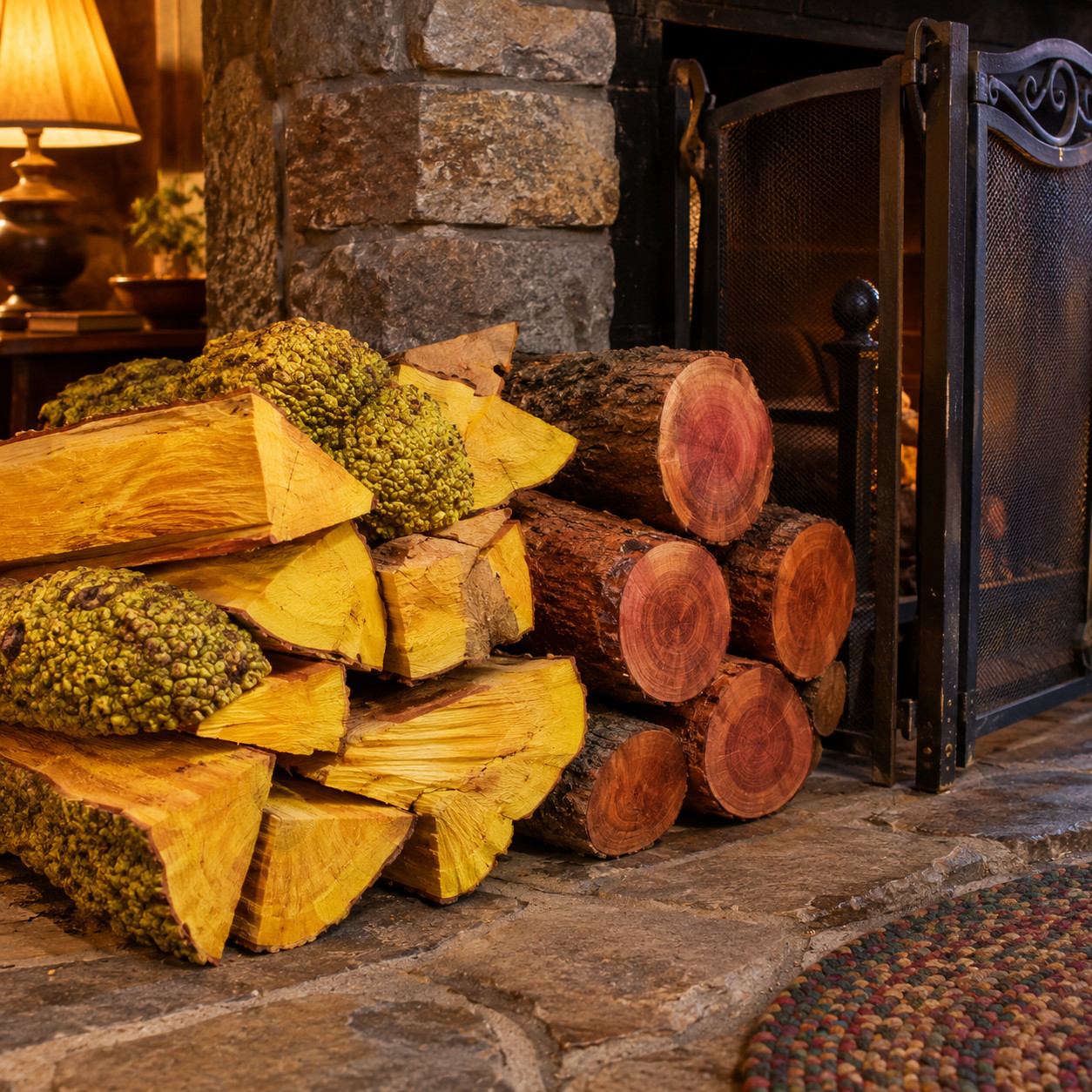
Osage orange — hedge, to anybody from Kansas — was the fencerow tree of the prairie before barbed wire, and it burns hotter than almost anything on the continent.
It also pops. So does red cedar. Both send embers two or three feet out onto a rug with no warning.
Old-timers burned hedge in a closed stove where it belonged, and saved apple, ash, and seasoned oak for the open hearth where people sat. If you want hedge on an open fire, get a proper screen and stay in the room.
19. Trusting a Creosote-Sweeping Log to Do a Sweep’s Job
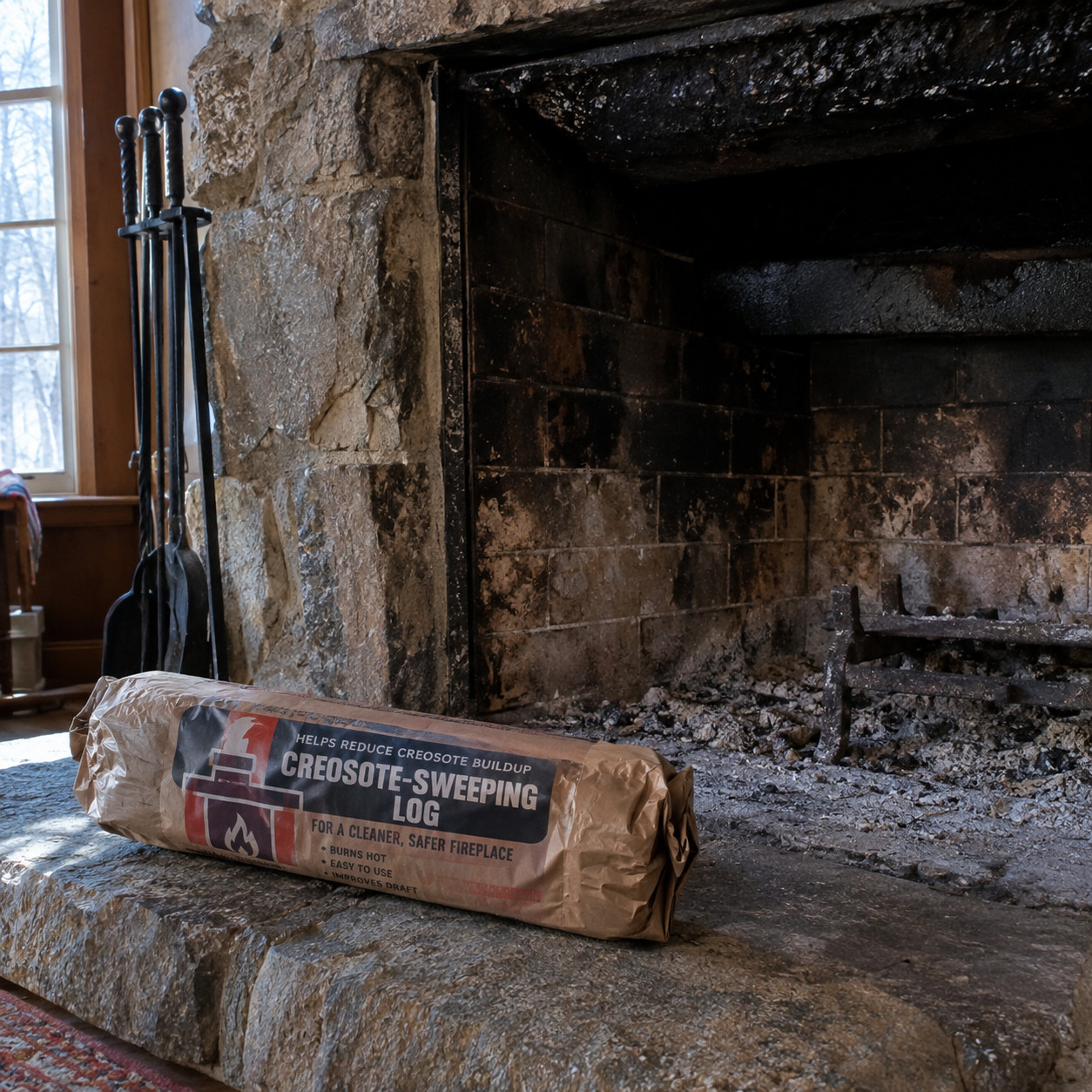
Those logs aren’t a scam, exactly. The catalytic additives can dry out and loosen first-stage flaky deposit so it falls to the smoke shelf.
But third-stage glazed creosote is a hardened, tar-like coating fused to the flue wall. It comes off with rotary chain whips, specialized chemical treatment, or not at all. A log on a Sunday night does nothing to it.
Use one between sweeps if you like. Just don’t let it replace the appointment.
20. Punky, Rotten Wood From the Bottom of the Pile
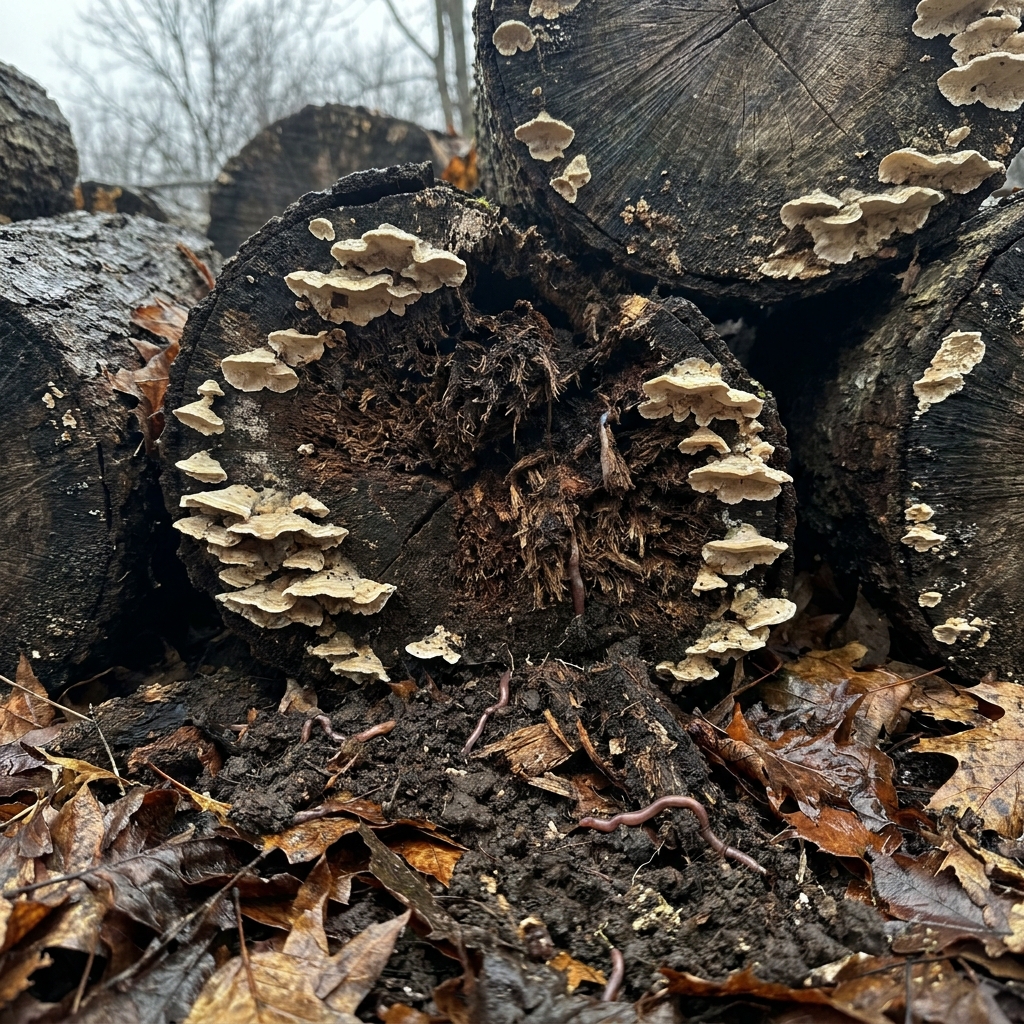
You know it by the weight. Light, spongy, fingernail sinks right in.
Decay has already eaten the energy content, but the remaining cell structure holds water like a sponge. So you get the worst combination available: low heat, high moisture, lots of smoke, and a flue that never warms up.
Cull it to the brush pile. It makes fine path mulch and terrible fuel.
21. Charcoal Briquettes in the Fireplace or Stove
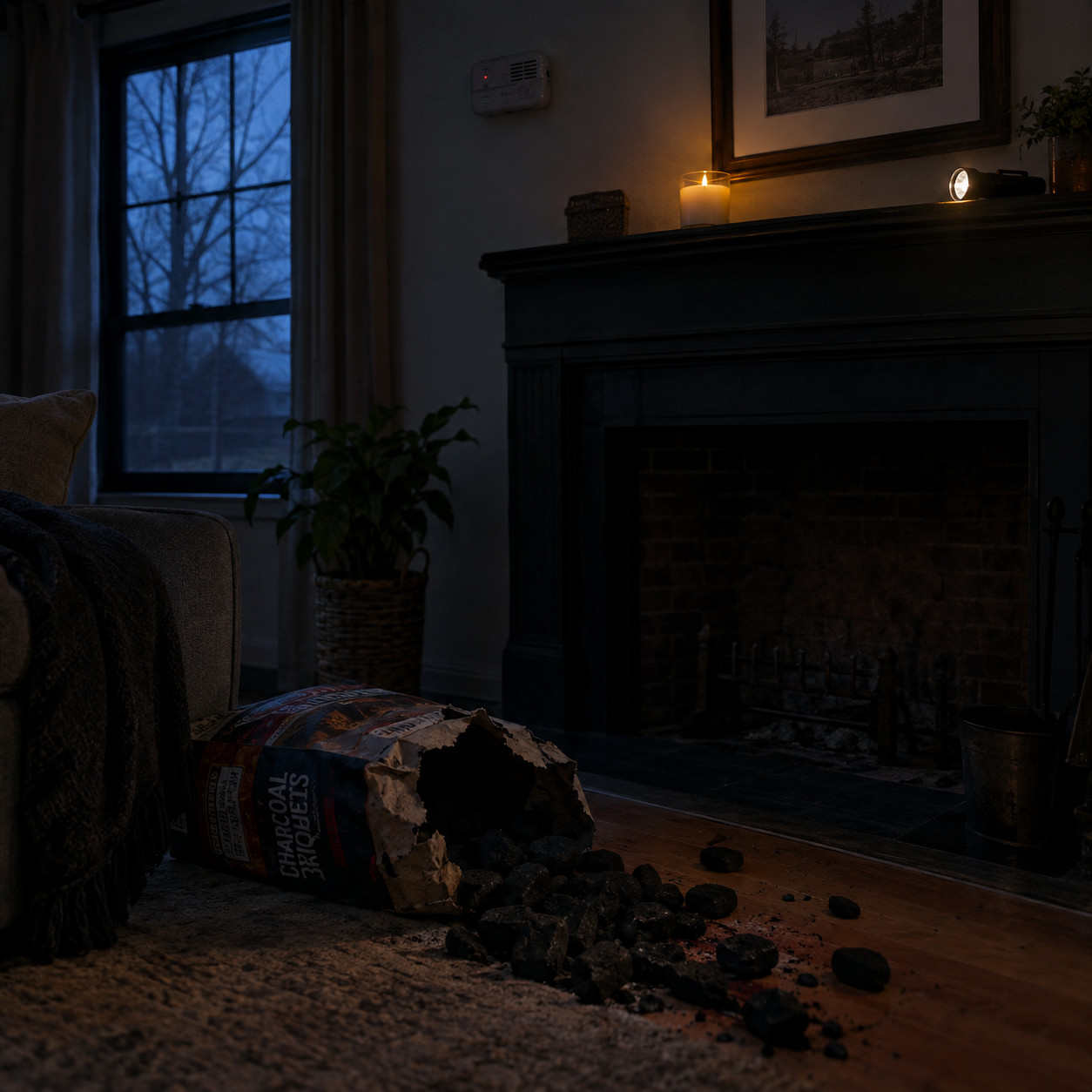
This is the one that kills people, and it happens every single winter.
The power goes out. The house gets cold. There’s a bag of Kingsford in the garage and a perfectly good fireplace in the living room, and the logic feels airtight.
Charcoal burns with almost no visible flame and produces carbon monoxide at a rate that dwarfs wood. Worse, it produces very little heat energy going up the flue — so a cold chimney never develops the draft needed to carry those gases out. The CO comes back into the room instead.
Carbon monoxide has no smell, no color, and no taste. The early symptoms — headache, nausea, confusion, sleepiness — read exactly like coming down with something, and people lie down. That’s how whole families are lost in a single night.
Never burn charcoal indoors. Not in a fireplace, not in a woodstove, not in a garage, not in a tent. Same goes for a camp stove or a grill of any kind.
And put a CO alarm on every level of the house, especially outside the bedrooms. Test them every fall when you test the smoke detectors, and replace the units themselves every five to seven years — the electrochemical sensors wear out even though the device still chirps and lights up.
If an alarm sounds, you don’t investigate. You go outside and call the fire department from the yard.
22. Shipping Pallets With the MB Stamp
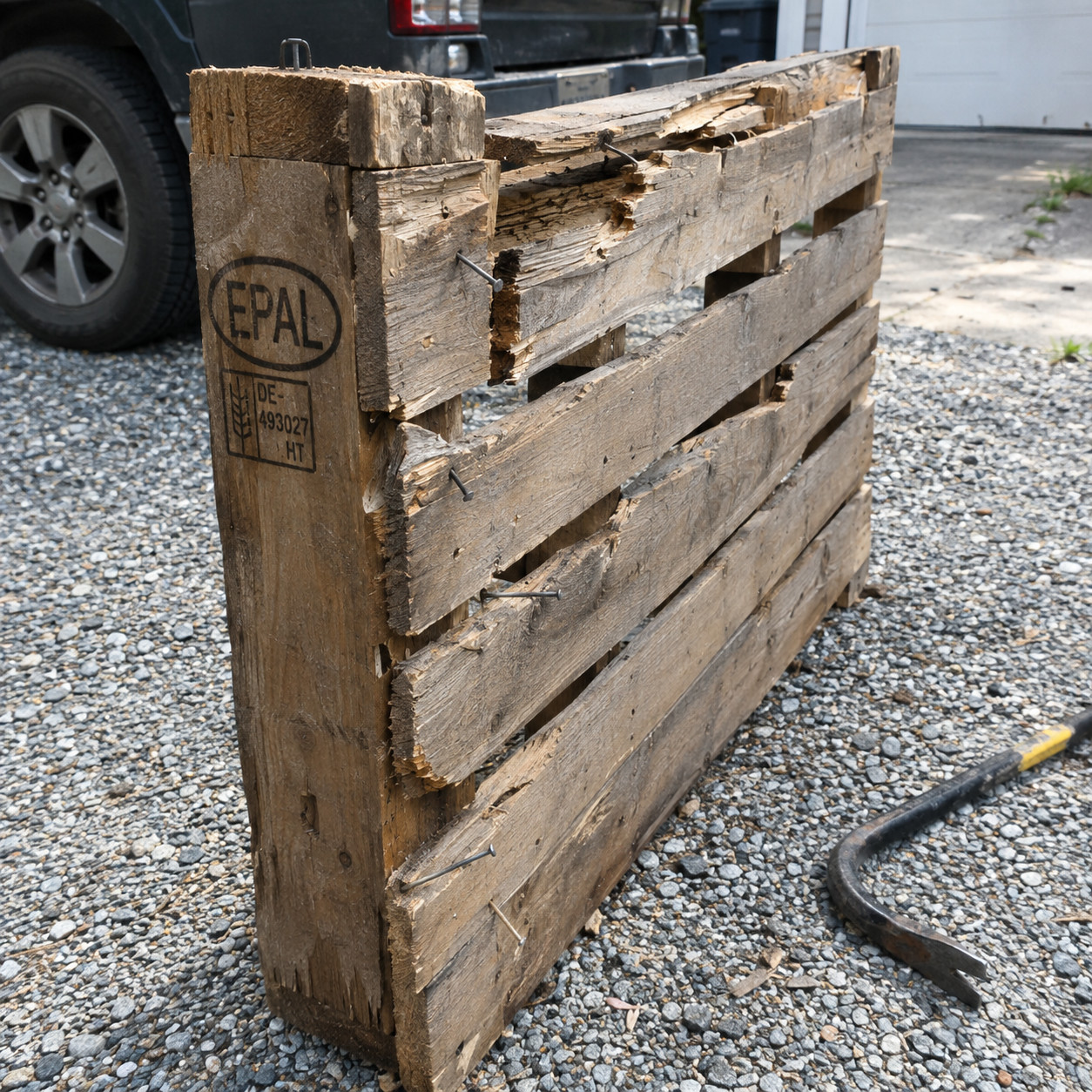
Pallets are the great free-fuel temptation, and there’s a simple test.
Look for the stamp on the stringer. HT means heat-treated — kiln-dried for pest control, nothing added, generally fine to burn. MB means fumigated with methyl bromide, and it should never go in a firebox.
No stamp at all means domestic and untreated, usually okay, but you’ve got no way to know what was spilled on it in a warehouse.
Either way, pull the nails or accept that they’ll end up embedded in your grate and raking across your stove bottom for the next decade.
23. Small Smoky Fires in a Giant Open Hearth
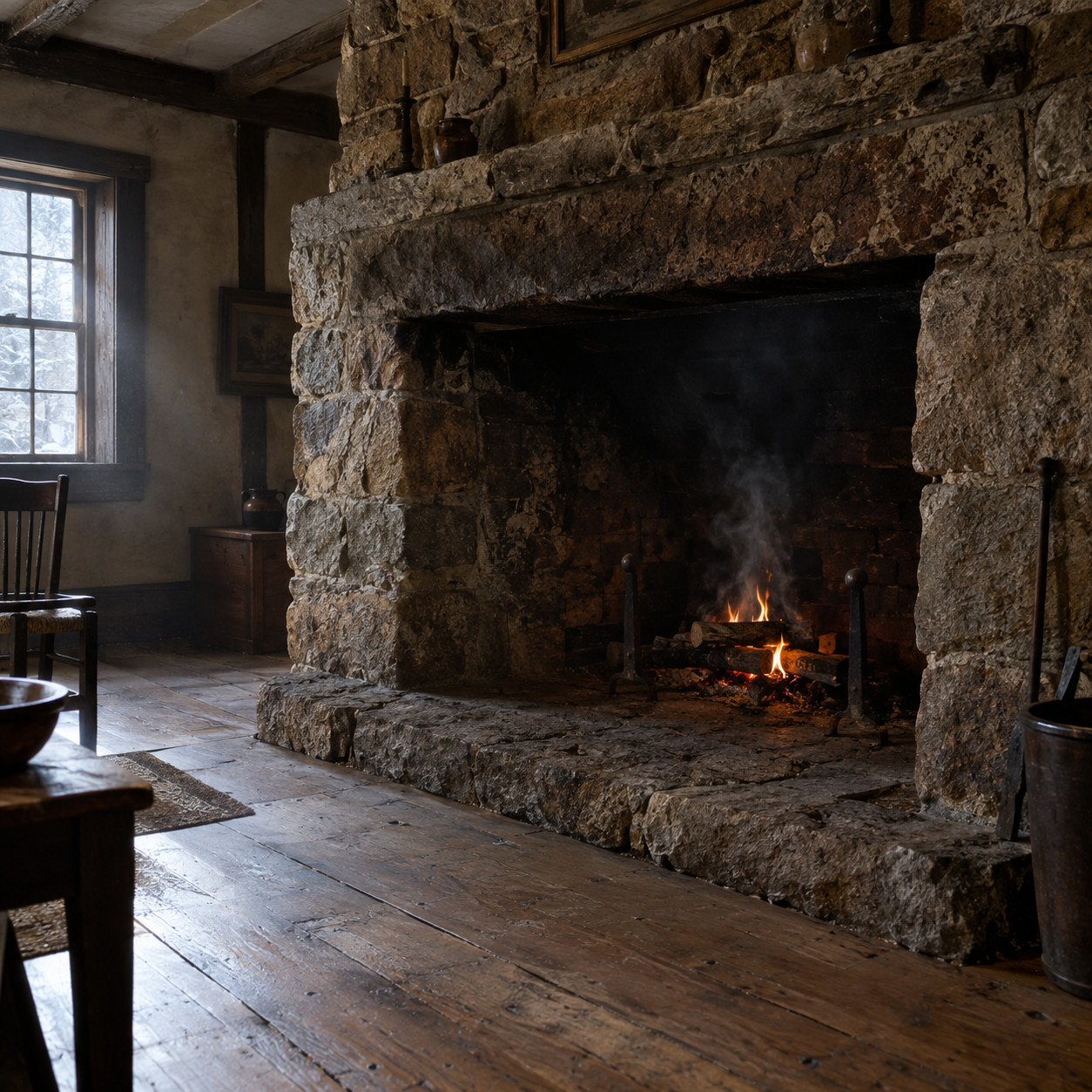
Colonial and Victorian houses came with enormous fireplaces and flues to match — some of them 20 by 20 inches or bigger, sized for a fire you could roast a goose in.
Build a modest three-log fire in one of those and the flue never reaches temperature. Gases cool, condense, and settle on the walls long before they reach daylight. It’s the slow, invisible version of the problem, and it builds for years without a single dramatic moment.
The historical fix was a cast iron fireback and a fire built forward on the hearth, closer to the room. The modern fix is a properly sized liner or an insert.
24. Household Trash, Milk Jugs, and Plastic Wrap
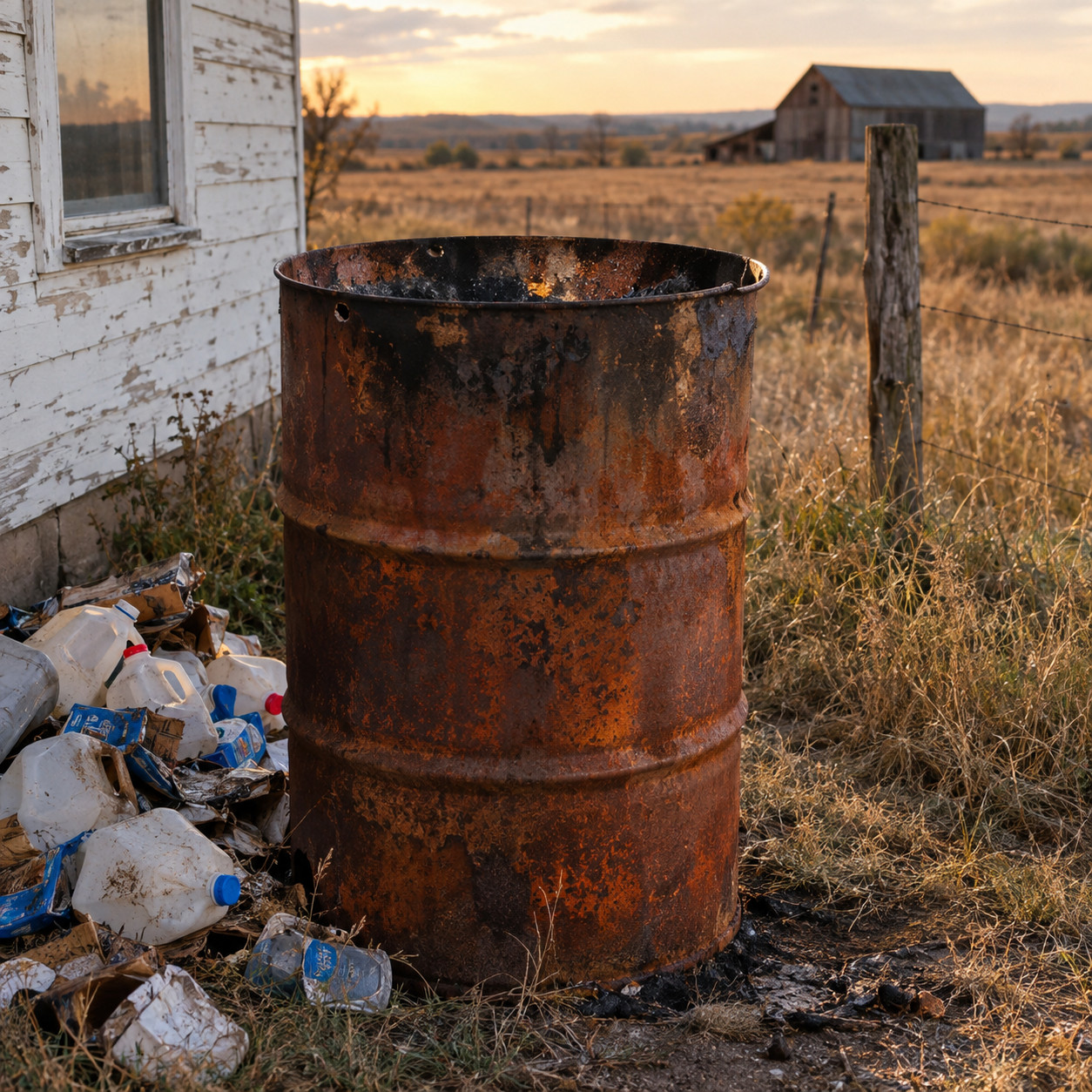
Before curbside pickup reached rural America, the stove was the trash can. A lot of readers grew up with that burn barrel out back, or a mother who fed cereal boxes and bread bags into the kitchen range without a second thought.
Chlorinated plastics — PVC, vinyl, a lot of packaging film — produce hydrochloric acid gas as they burn. That acid attacks liners and mortar from the inside, and what doesn’t stay behind leaves as dioxins.
Nobody meant any harm. They just weren’t told.
25. Shoveling Coal Into a Wood Stove
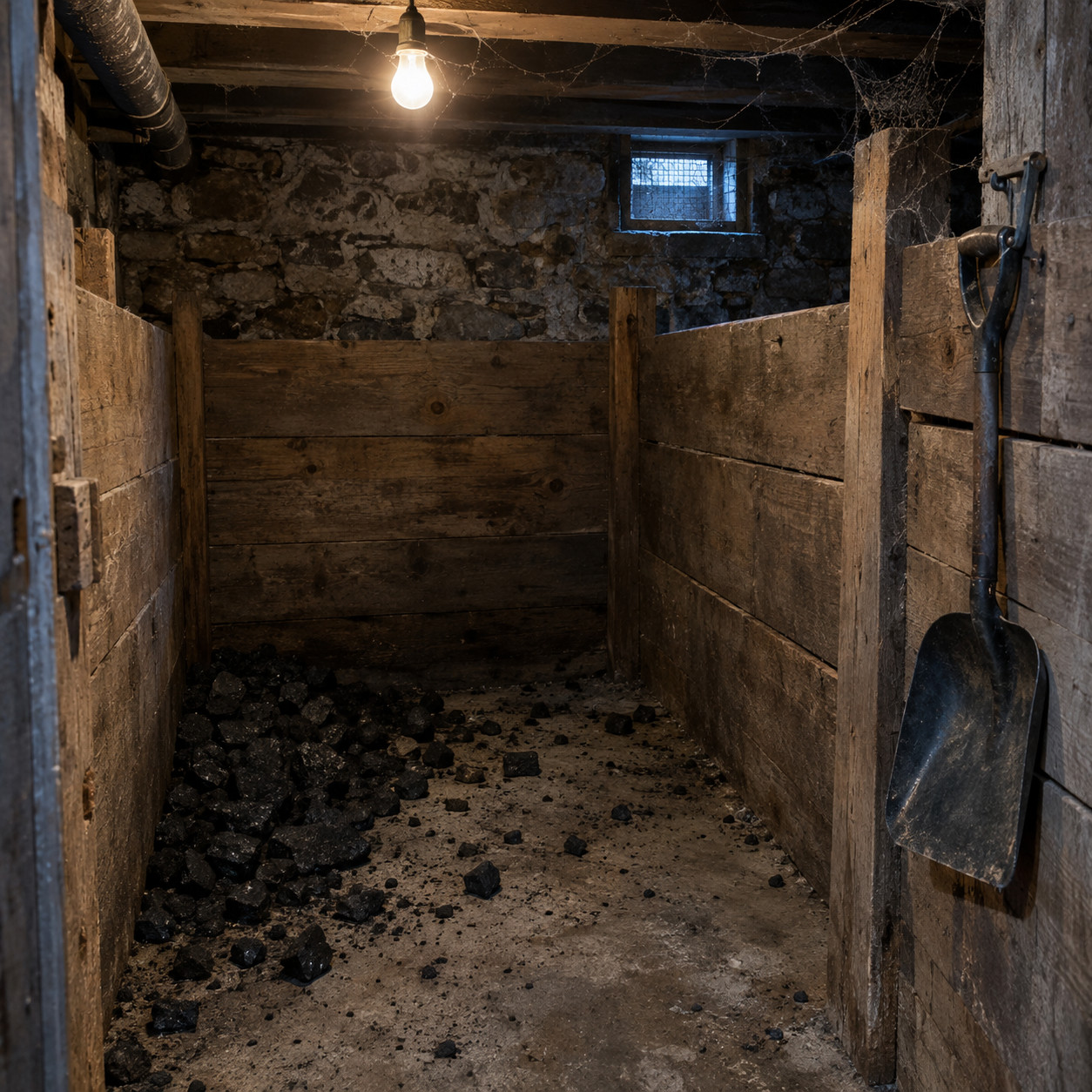
Walk through enough old basements and you’ll find them: the coal bin framed in the corner, the chute door rusted shut, a shovel still hanging on its nail.
Coal needs air coming up from underneath through a proper shaker grate. A wood stove feeds air over the top, so coal in a wood firebox just sits there, sullen and half-burning.
It also releases sulfur compounds that combine with flue moisture into sulfuric acid, which eats mortar and steel built for wood gases. Different fuel, different appliance. Always was.
26. Tarping the Whole Pile Down to the Ground
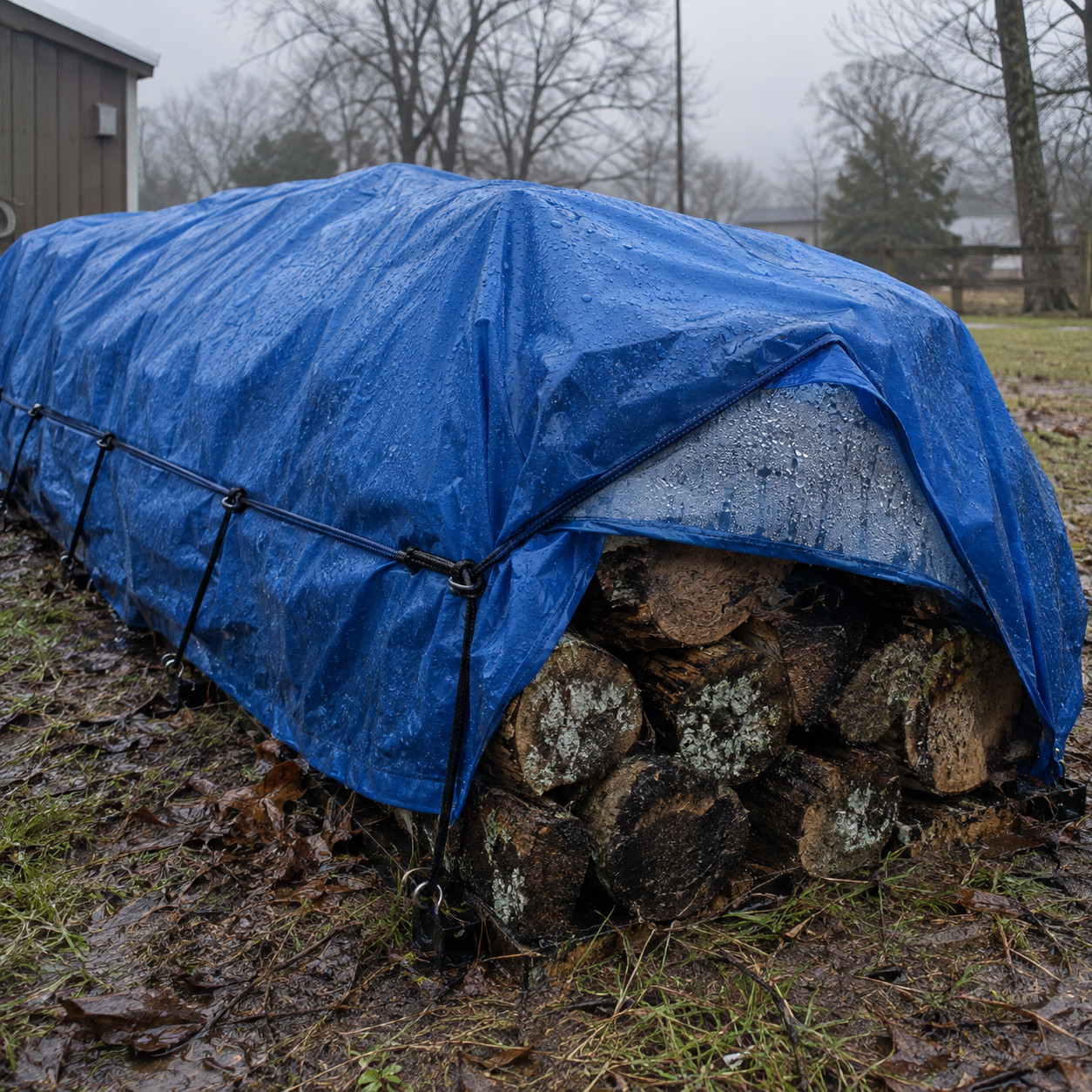
It looks responsible. Blue poly pulled down over the sides, bungeed tight, pile protected.
What you’ve built is a sweat lodge. Ground moisture rises into the stack, nothing evaporates, and by December you’ve got mold on the end grain and wood that’s wetter than when you stacked it in May.
Single row, off the ground on rails or pallets, long side facing south, capped over the top only. That pattern is a hundred years old because it works.
27. Manufactured Wax Logs in a Wood Stove
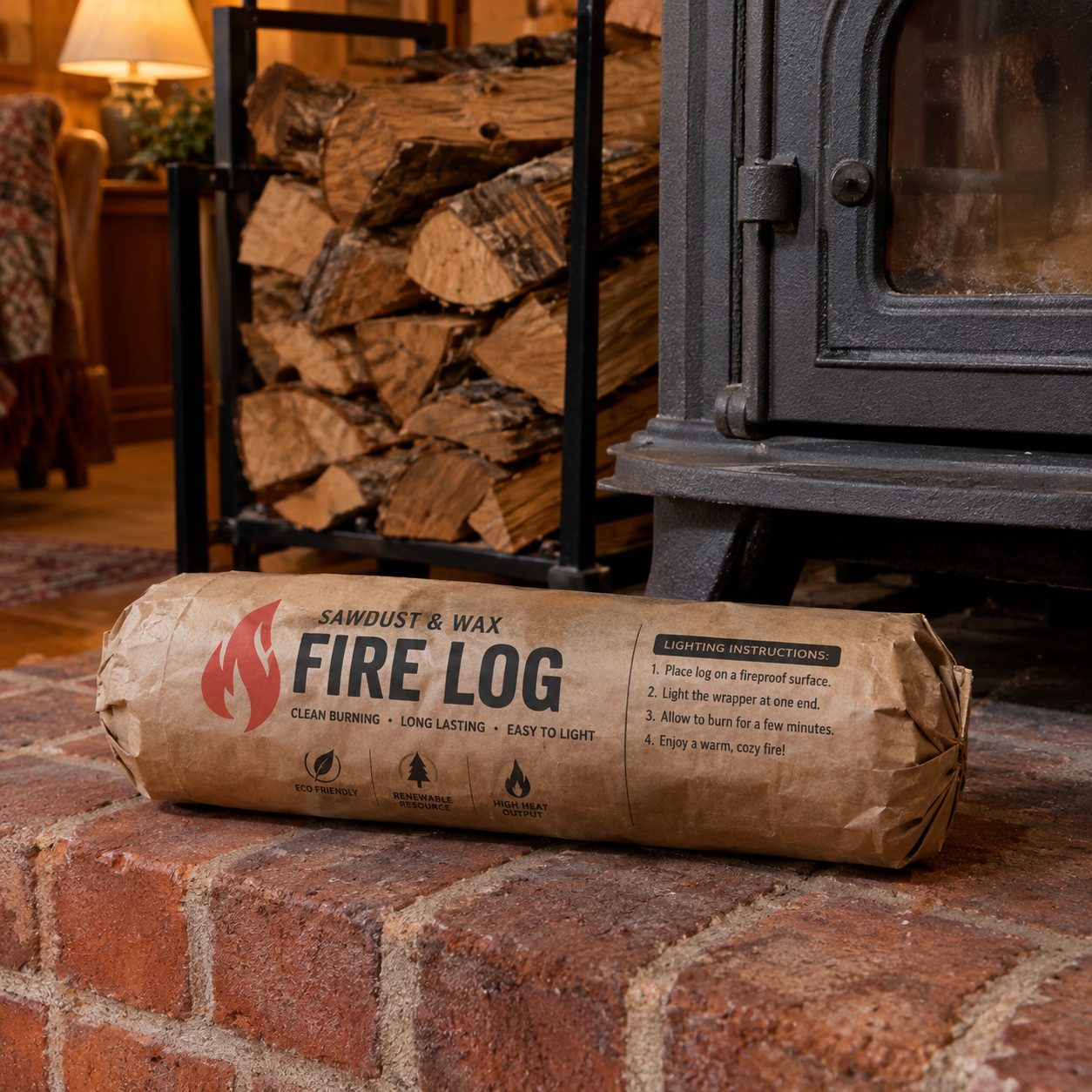
Read the wrapper sometime. Most say open fireplace only, and they mean it.
Sawdust-and-wax logs are engineered around the generous airflow of an open hearth. Put one in a closed firebox with a controlled air supply and the burn goes unpredictable — sometimes overfiring, sometimes sending raw wax vapor up a flue that’s already coated.
Don’t poke them, don’t stack two, don’t add wood on top. One log, one fire, open hearth. That’s the whole instruction set, and almost nobody follows it.
28. No Chimney Cap — and a Nest Nobody Looked For
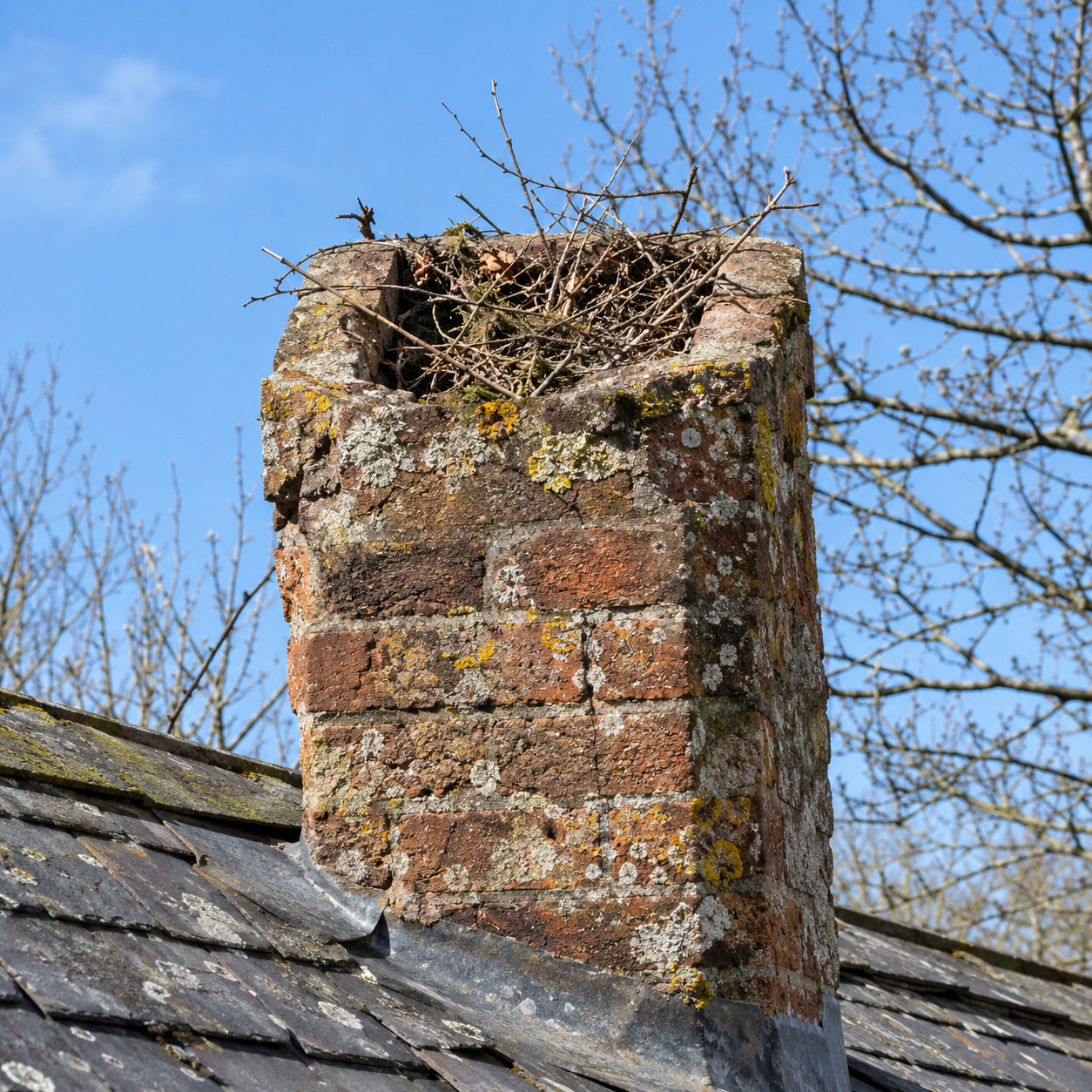
An uncapped flue is an open pipe pointed at the sky, and the sky sends things down it.
Rain first. Water accelerates liner deterioration, rusts dampers shut, and combines with soot to form acids that eat mortar joints from the inside. A chimney that takes direct rainfall for twenty years ages like one that took sixty.
Then the wildlife. Chimney swifts nest in flues every spring and are federally protected under the Migratory Bird Treaty Act — once eggs are in there, you legally wait until the young fledge. Starlings pack a flue with grass and twigs. Raccoons den in smoke chambers and raise kits there. Squirrels fall in and die, and you find out by smell in July.
Any of it blocks the draft. A partially obstructed flue won’t carry smoke or carbon monoxide out, and it forces the fire to burn cool and smoky — which lays down creosote on top of the blockage. Two problems stacking on each other.
Look up the flue with a flashlight before the first fire every fall. Daylight at the top is what you want to see. If you see a mass of sticks, stop and call someone.
A stainless cap with mesh sides runs $150 to $400 installed and solves rain, animals, and most downdraft problems at once. Historic chimneys often had clay pots or carved stone caps doing the same job a century ago — look at photographs of your neighborhood from the 1910s and you’ll see them on every roofline. Most were knocked off during a reroof in 1970 and never replaced.
Get the spring inspection on the calendar too. Nesting season and sweep season don’t overlap, which is exactly why people miss it.
29. Cottonwood, Willow, and Box Elder
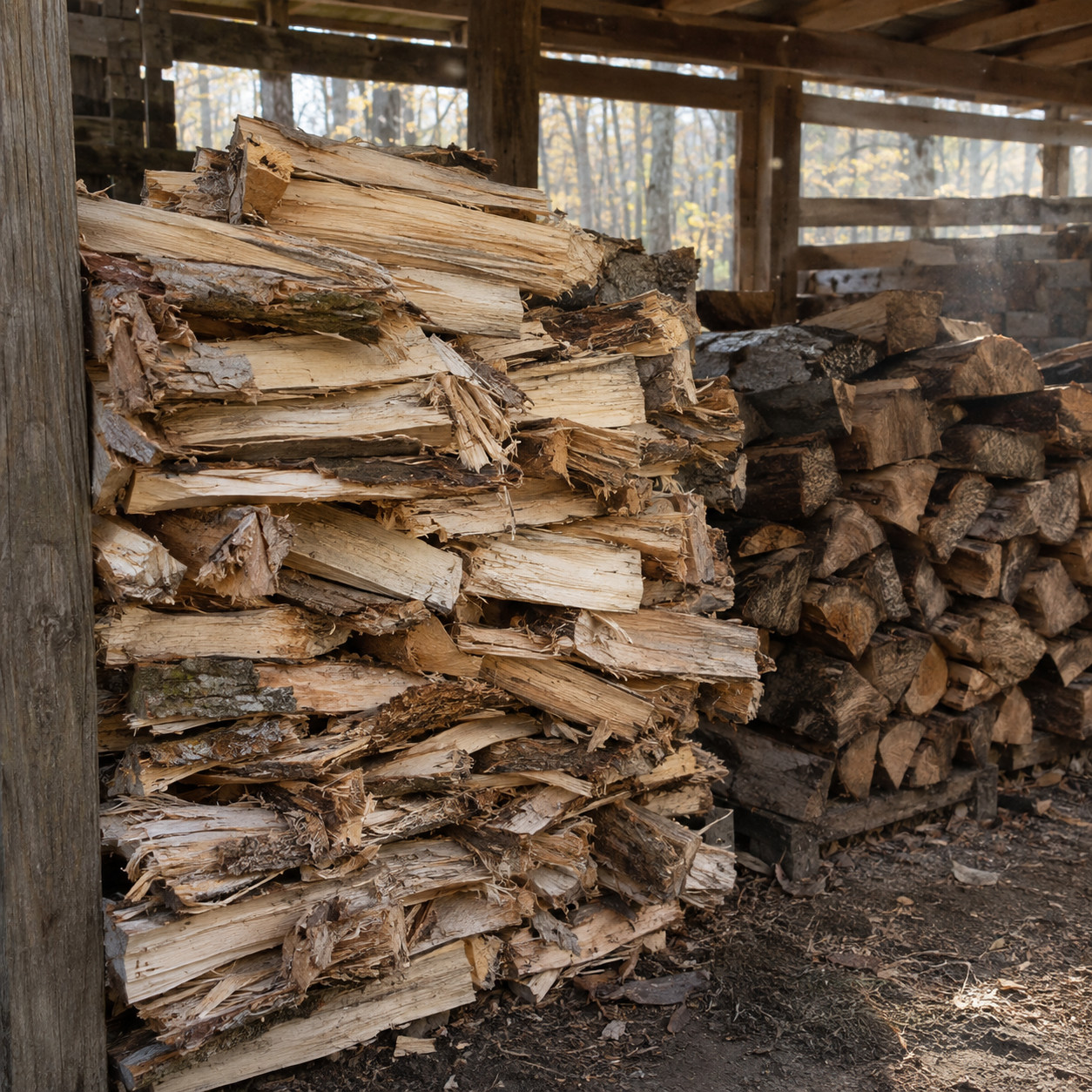
Somebody offers you a free load. You take it, because free.
These species are light, low-density, and low in BTU per cord — cottonwood delivers roughly half the heat of white oak. So you burn twice as much, feed the stove twice as often, and run the whole house at a lower temperature just to keep up. Cool firebox, cool flue, more creosote.
It has a use. Shoulder-season cooking fires in September, a quick blaze to take the chill off. The oak, hickory, ash, and locust stayed stacked for January, when it mattered.
30. Burning Construction Scrap 2x4s
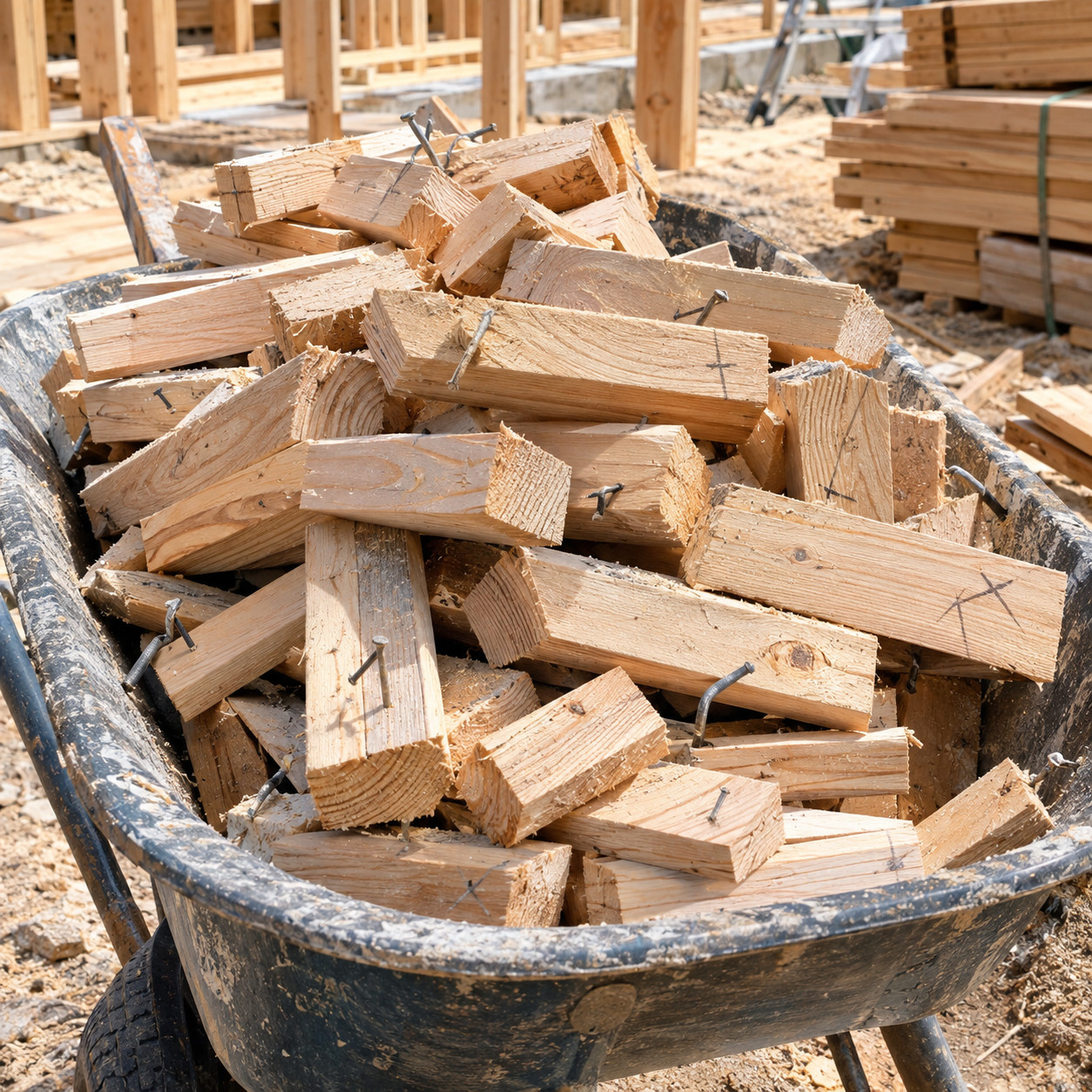
Counterintuitive one. Kiln-dried dimensional lumber comes in under 15 percent moisture, which sounds ideal.
It’s too ideal. All that energy releases at once, and a firebox packed with 2×4 cutoffs can spike well past the temperature a stove or liner is rated for. Warped baffles and cracked flue tiles come from overfiring just as surely as from a chimney fire.
Burn it a few pieces at a time, mixed with proper cordwood. And pull the nails first, or spend next spring fishing them out of the ash pan.
31. Lighting a Big Load Into a Dead-Cold Exterior Chimney
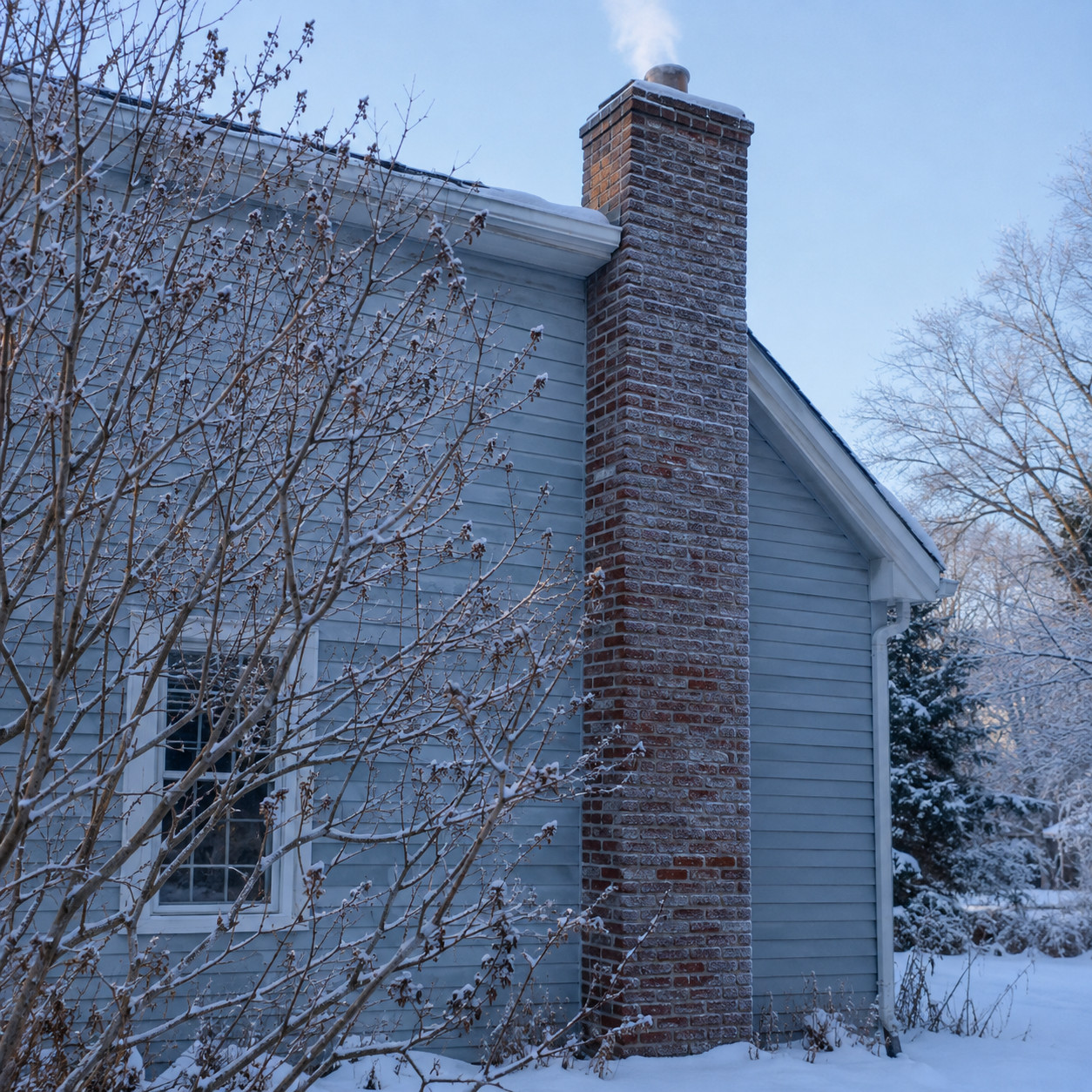
A masonry chimney running up an outside north wall can sit at 20°F in the morning. There’s no draft in that pipe — there’s a column of cold air actively pushing down.
Load it full and light the bottom, and for the first twenty minutes you’ve got a smoldering, backdrafting fire condensing everything it produces onto frigid flue walls. Those twenty minutes, repeated 120 times a winter, do a wildly disproportionate share of the season’s damage.
Build small and hot first. A handful of kindling and one split, flame going straight up, until you feel the draft establish and reverse.
Or build it top-down: big splits on the bottom, medium above, kindling and tinder on top. It feels backward, and it lights a cold flue better than anything.
32. Shoveling the Firebox Clean Down to Bare Metal
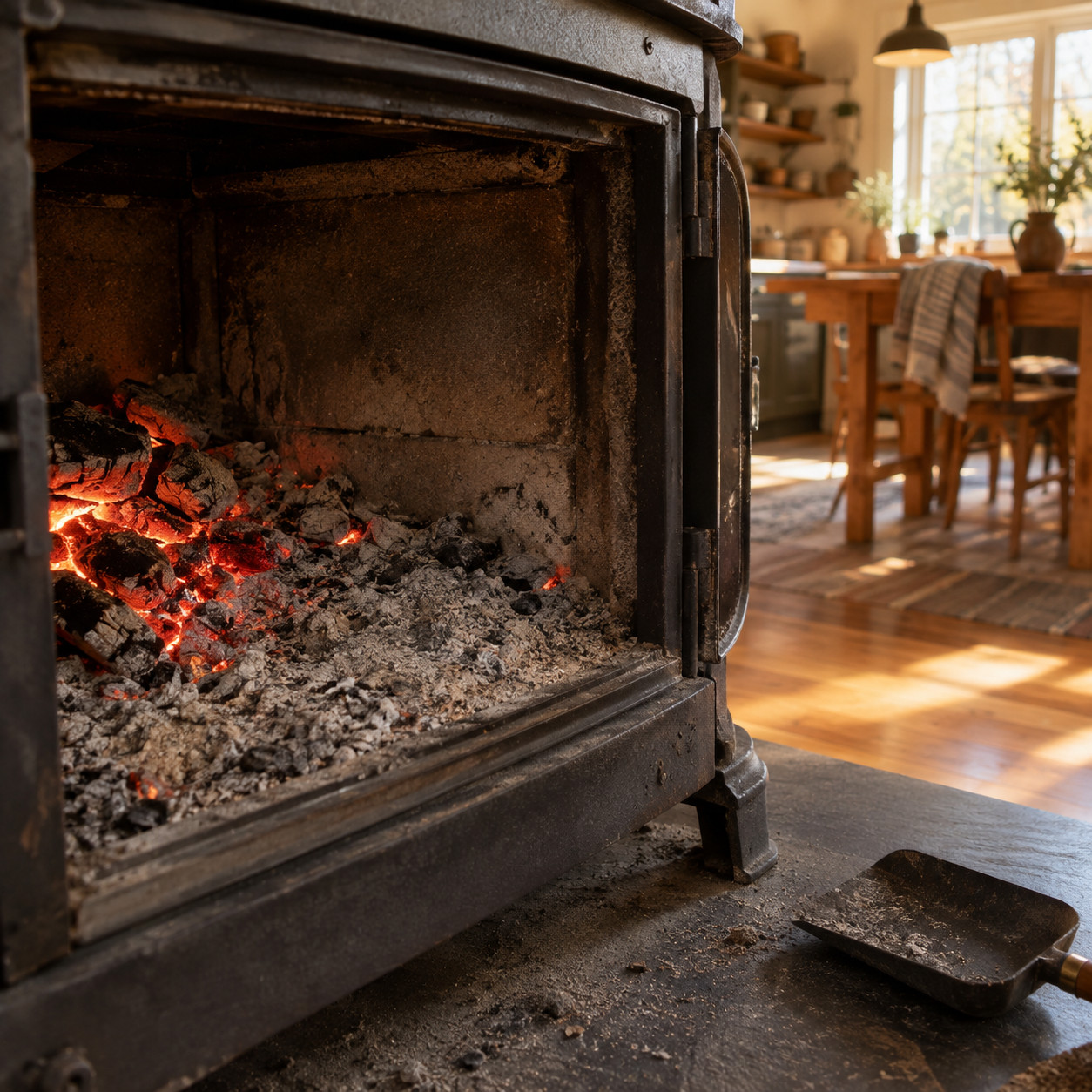
It looks tidy. It fights the way a fire actually works.
An inch of ash insulates the firebox floor, reflects heat back into the fuel, and holds live coals through the night. Scrape it bare and every morning starts from nothing.
Farm kitchens never let the fire go out. You raked the coals to one side, banked ash over them, and in the morning there was a red eye waiting under the gray. Three sticks of kindling and the kitchen was warm before the coffee was on.
Shovel it out when it reaches the bottom of the door. Leave the inch. The goal was never a clean stove.
33. Oleander and Other Toxic Yard Clippings
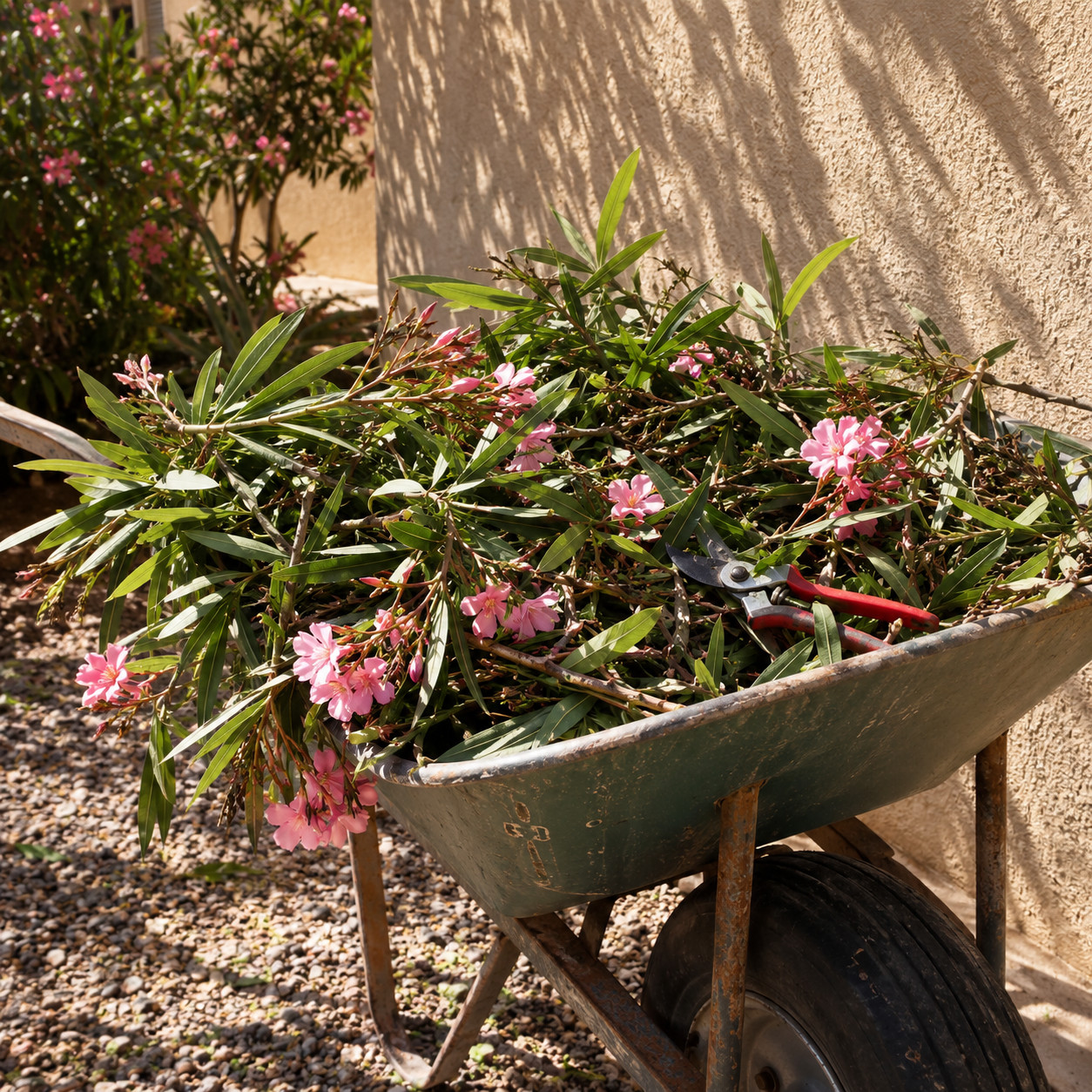
Mostly a Sun Belt problem, and a real one.
Oleander’s cardiac glycosides survive combustion and ride the smoke. Breathing it has sickened people at backyard fires, and the ash stays toxic. Yew is similar. So is rhododendron and laurel.
Hedge trimmings generally aren’t firewood anyway — too thin, too green, too much smoke. But if you’re going to burn ornamental clippings, know the plant first. The pretty ones in the front yard are disproportionately the dangerous ones.
34. Taking the Firewood Dealer’s Word That It’s ‘Seasoned’
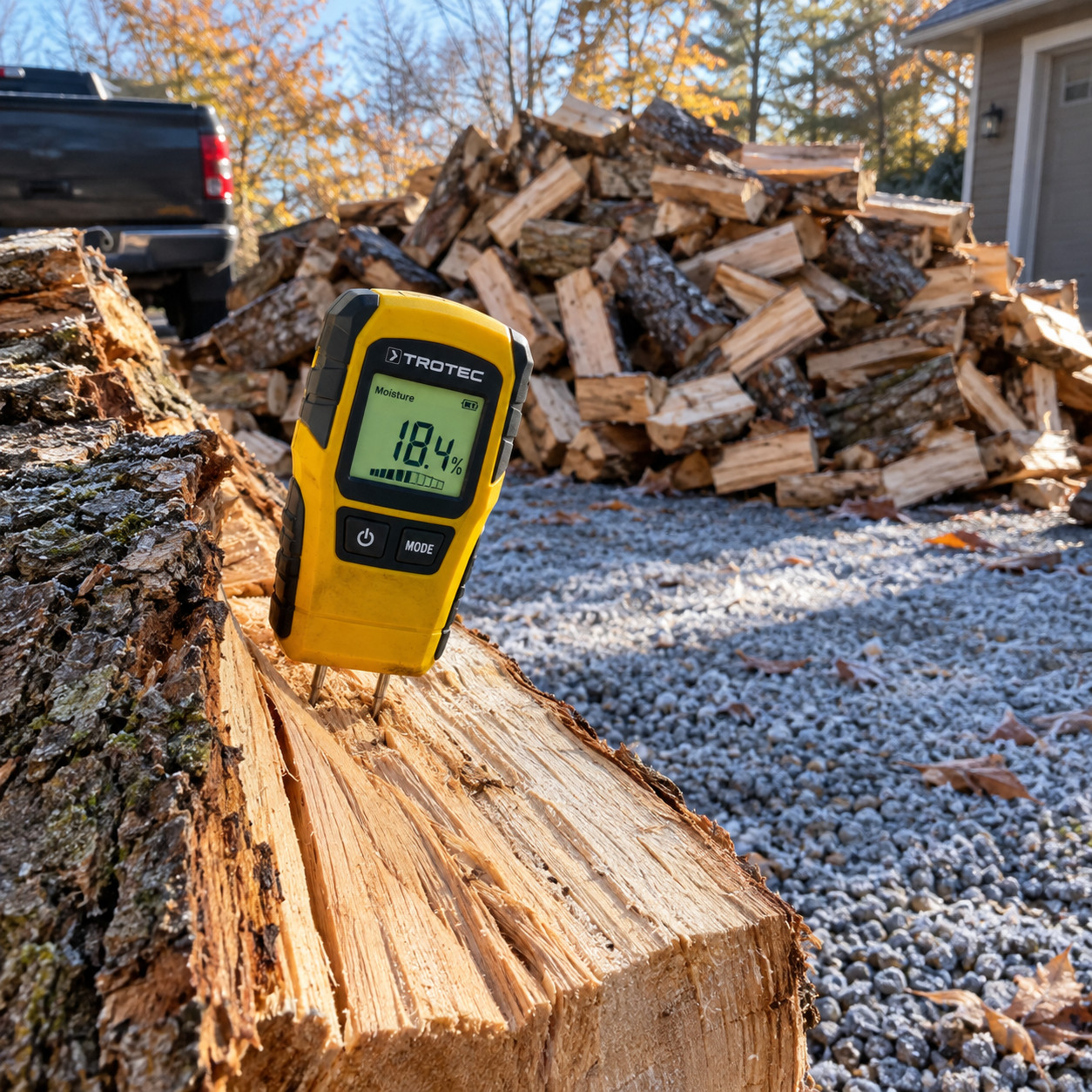
In most states, “seasoned” has no legal definition whatsoever. It means whatever the person selling it wants it to mean — sometimes two years air-dried, sometimes cut last month.
Check it yourself. Seasoned wood is lighter than it looks, has checked cracks radiating from the center of the end grain, has gray or dulled ends rather than bright ones, and knocks with a sharp ring instead of a dull thud. UNH Extension walks through the full set of tells.
A pin-type moisture meter costs about $25. Split a piece from the middle of the load and test the fresh inside face, not the weathered outside — anything over 20 percent isn’t ready.
Buy in spring, stack it through summer, burn it the following winter. You’ll never have to trust anybody’s word again.
Most of this list isn’t about fire at all. It’s about patience — the willingness to cut wood for a winter you can’t feel yet.
That’s what’s actually been lost. Not the knowledge, which is all still here. The habit of working a year ahead, because the alternative was a cold house or a burning one.
Stack a row this spring and leave it alone. Next February, when it catches on the first match and burns clean and blue-tipped, you’ll understand why they bothered.