


Walk into any demo job and you’ll see the same pile by the curb.
Doors leaning against a fence. A radiator tipped on its side. A bathtub with dirt still in it from somebody’s flower garden. All of it headed for a 30-yard dumpster at $600 a pull.
And a salvage dealer two towns over would have written a check for most of it.
The stuff that looks like junk in an old house is usually the only part of the house nobody can make anymore. The dies are gone. The trees are gone. The guys who knew how are gone. That’s the whole market in one sentence.
Here are 37 things people throw away that dealers buy — and what makes each one worth the phone call.
1. Old-Growth Framing Lumber Behind the Walls
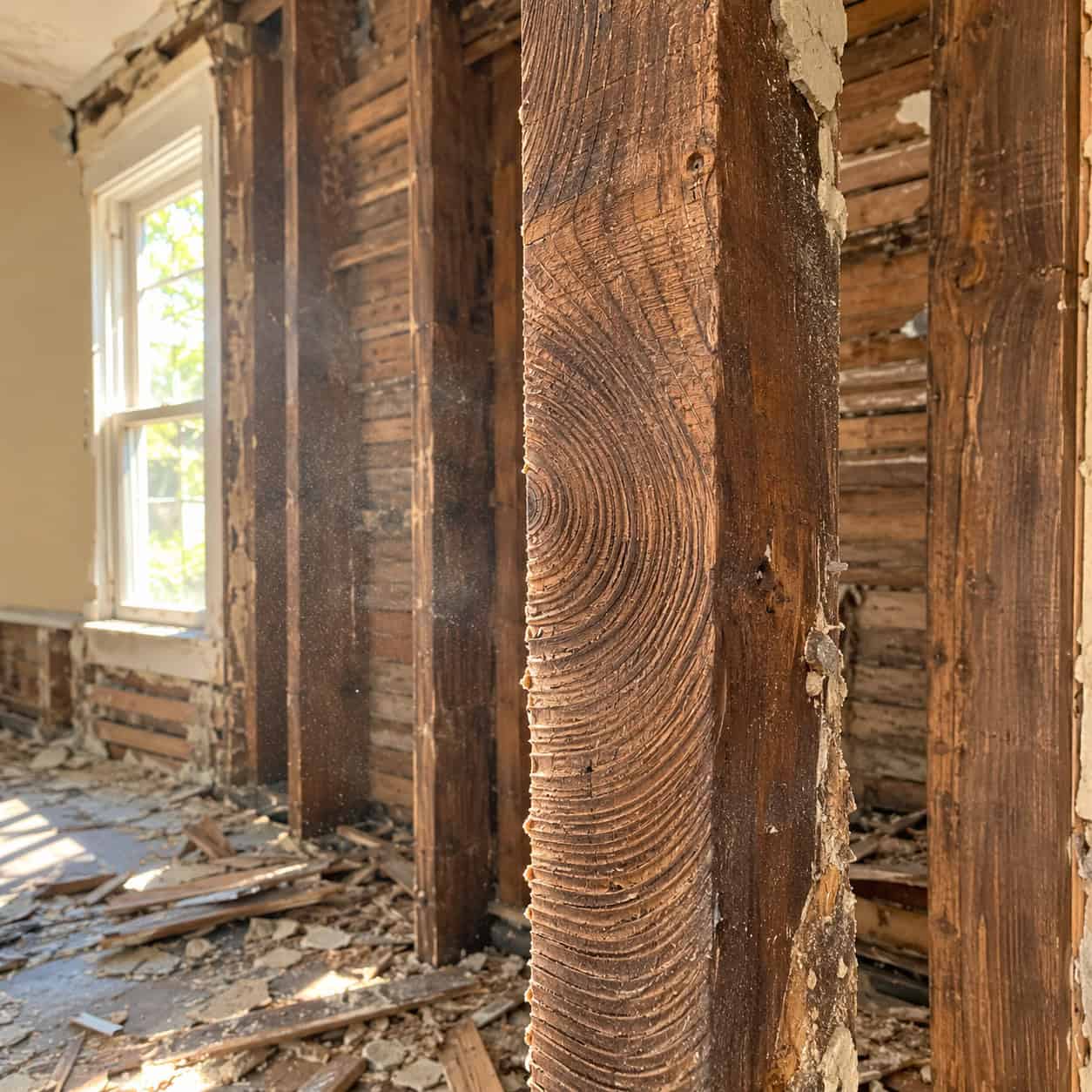
Pull the plaster off a pre-1920 wall and you’re looking at a 2×4 that actually measures two inches by four inches.
Count the rings. Slow-grown virgin timber packs 20 to 30 growth rings per inch. The stud at the lumberyard today might have four, cut from a plantation tree that was in the ground 25 years.
That density is why old framing doesn’t twist, doesn’t crush under a nail, and still holds a screw after a century. Reclaimers buy it by the truckload before the excavator shows up, then remill it into flooring and beams that sell for multiples of new lumber.
Call a deconstruction outfit before you call the demo guy. The U.S. Department of Housing and Urban Development has covered how deconstruction routinely beats demolition once material value and landfill fees get counted together.
2. Glass and Porcelain Doorknobs With Their Mortise Locks
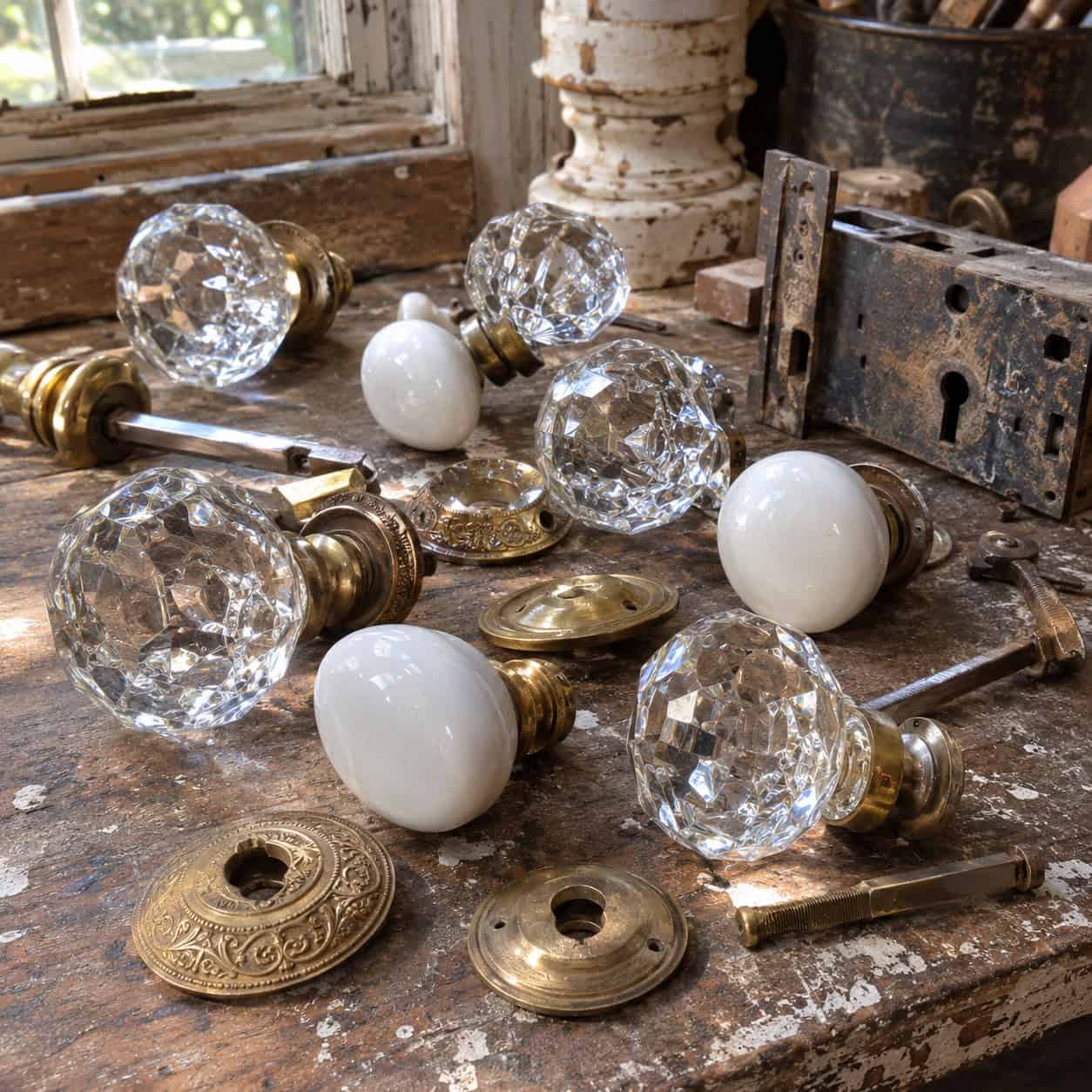
These end up in a five-gallon bucket in the garage. Every single time.
A faceted 12-point crystal knob with its brass rosette and the original mortise lock body behind it sells as a restored set in the $50 to $65 range. A chipped single knob with no hardware brings a few bucks.
The gap between those two numbers is the lesson. Keep the pair, the spindle, the rosettes, the lock body, and the strike plate together — tape them in a bag, label the room.
3. The Cast Iron Clawfoot Tub in the Basement

You’ve seen one in a pasture full of cattle. You’ve seen one planted with petunias.
Values swing wildly, and most homeowners guess wrong in both directions. A small early-1900s roll-rim tub with rough porcelain might bring $50 at a salvage yard. A large French double-ended tub with intact feet can hit four figures, and a professionally restored example sells in the low thousands.
Size drives it first. Anything over 60 inches is worth more, and a 66-inch slipper or double-ended tub is the real prize. Feet matter next — ball-and-claw, lion’s paw and imperial feet all carry a premium over plain pedestal feet, and original matching feet beat replacements every time.
Here’s how you tell cast iron from the pressed steel knockoffs that came later: tap the side with a knuckle. Cast iron gives a dull thud and barely moves. Pressed steel rings and flexes. Then grab the rim — if two people can carry it, it isn’t cast iron. A standard 5-foot cast tub runs 250 to 350 pounds empty.
Refinishing runs roughly $500 to $1,200 for a professional reglaze in place, and full strip-and-porcelain re-enameling at a shop can run $2,000 and up. Which means a rough tub is worth selling, not saving, unless you love it.
4. Pressed Tin Ceiling Panels
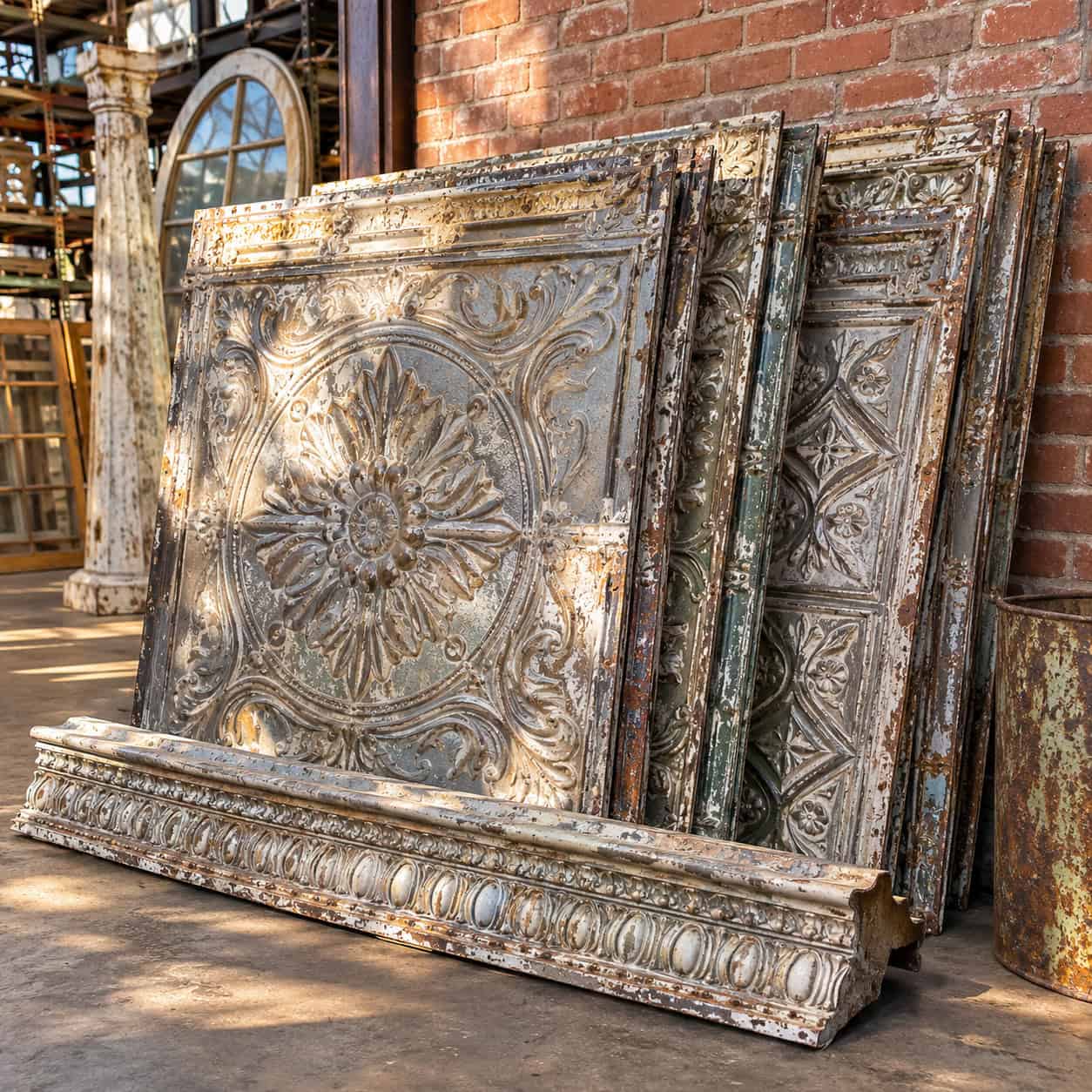
Most of these are hiding above a 1970s drop ceiling right now, doing nothing.
Contractors pull them down and sell them as scrap sheet metal for pennies. Restorers and restaurant designers pay by the panel, because the original stamping dies were scrapped generations ago and modern reproductions don’t match the depth of the pattern.
Intact 2×2 field panels are the baseline. The cornice runs, the filler plates and the corner pieces are what dealers actually hunt for, since those are the parts that always got cut up first.
Stack them flat. Bent tin is scrap again.
5. Heart Pine Floorboards Under the Carpet
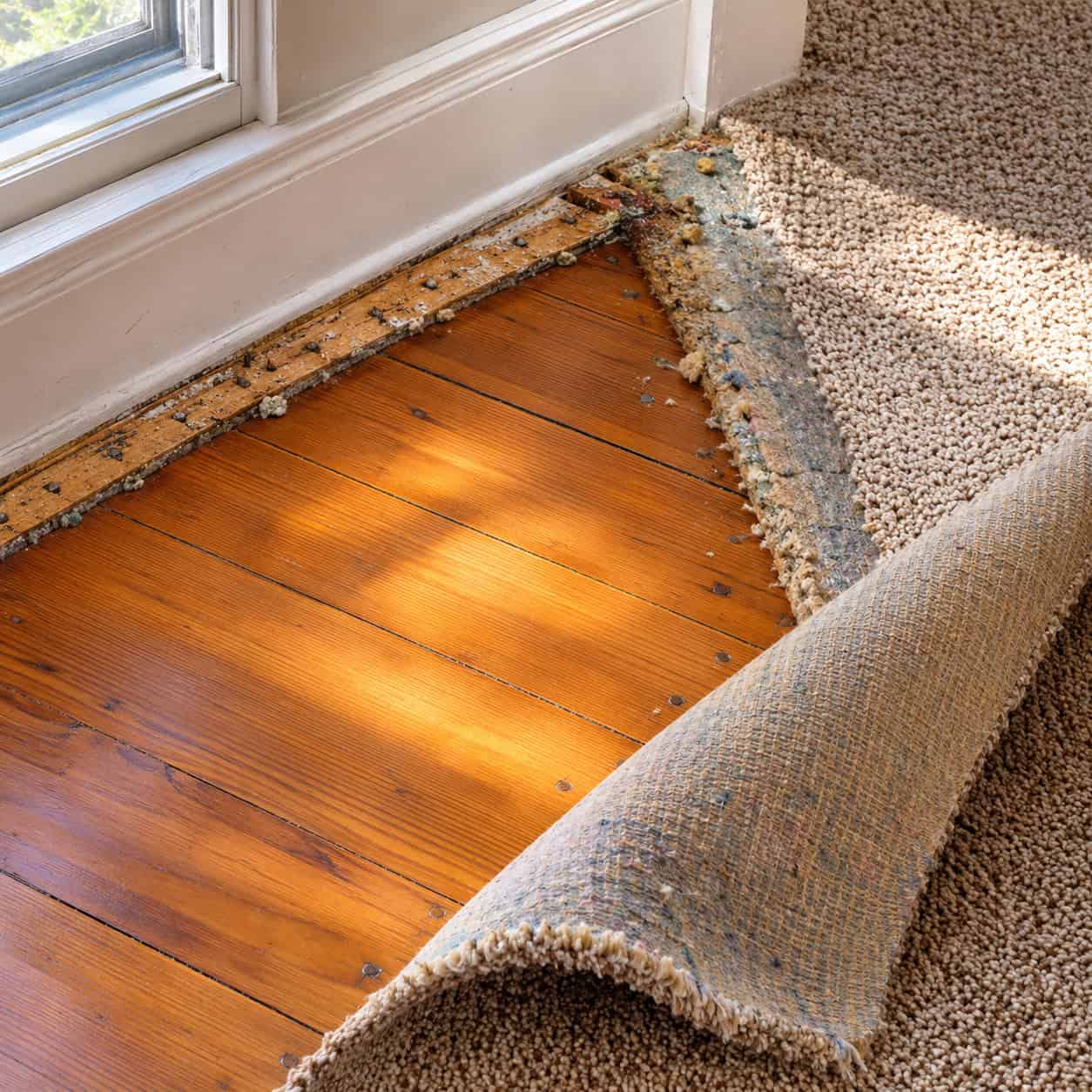
Longleaf pine hasn’t been commercially harvested in any real volume since the early 1900s. The old-growth stands were cut out, and a tree needs a century-plus to grow that tight.
So every square foot of true heart pine on the market came out of a building. Reclaimed heart pine flooring runs roughly $4 to $18 per square foot depending on grade and board width, and clear river-recovered stock can hit $40 per board foot.
You’ll know it by the color — amber to deep orange-red, with grain so tight it looks drawn on. It’s dense enough to dull a saw blade and hard enough that nails bend.
Before you rip up carpet and toss the boards underneath, pull one up and look at the end grain.
6. Stained and Leaded Glass Transoms

The headline item on any salvage yard floor. Dealers put these in the window to pull people in off the street.
Price tracks size, color complexity, and whether the lead came is still tight. Buckled came can be rebuilt, but it costs, so sound panels bring more.
Most people think of the big stair-landing window. The money nobody notices is the little painted-shut transom over a bedroom door — small, shippable, and usually sold for a song because the owner never saw it as glass worth anything.
7. Cast Iron Radiators

People pay a scrapper to haul these away. That’s the part that hurts.
Salvage yards price plain column radiators in tiers — roughly $150 for a small one, $250 for a medium, $350 for a large. Ornate Victorian radiators with cast rosettes and fluted columns, professionally stripped and powder-coated, sell well north of $1,000.
Weight is the whole reason they get scrapped. A 6-column, 38-inch radiator runs about 500 pounds. Nobody wants to wrestle that down a staircase, so it gets cut up in place with a sawzall — which destroys it.
The right way: drain the system first, break the nipples with a radiator spud wrench, and separate it into sections. A 10-section radiator comes apart into ten 40-pound pieces one person can carry. Dealers will tell you which of their yards has someone who does this.
Know what you’ve got before you call. Steam radiators have one pipe and an air vent on the side; hot water units have two pipes, supply and return. Both resell, but hot water systems are what most conversions run now, and dealers pay attention to the tapping sizes.
8. Solid Five-Panel Fir and Two-Panel Doors
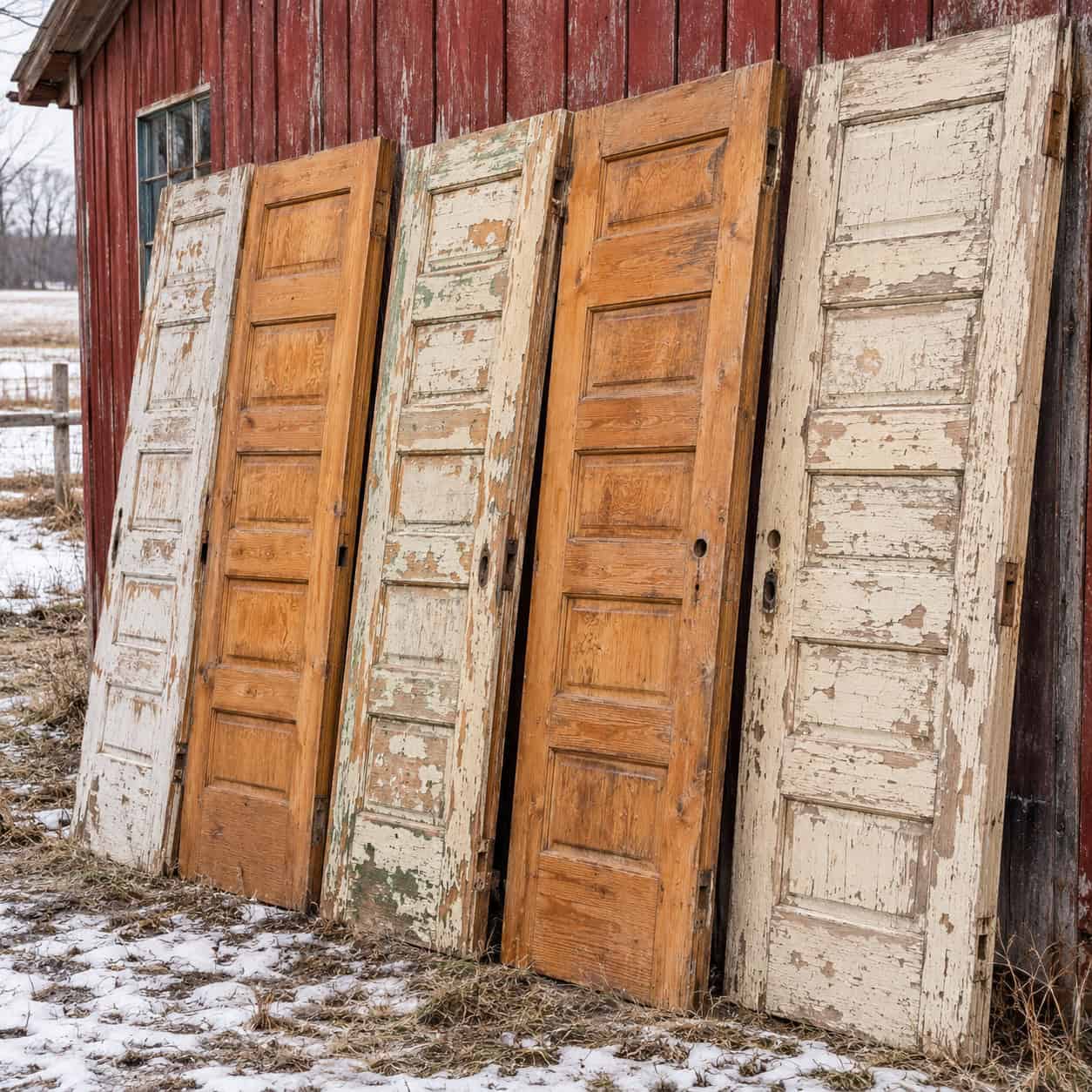
A vertical-grain fir door from 1915 weighs 60 pounds and costs a demo crew nothing to throw away.
Stripped down to bare wood, those same doors are a designer staple. Dealers want original hinge mortises intact and the stiles unbutchered by later lockset drilling.
And the weird sizes? The 30-by-78 and 32-by-80-and-a-half doors that drive builders crazy are exactly what old-house owners are hunting for. Nobody stocks them.
Check the back of the top rail for a penciled room name. Carpenters labeled them during hanging, and that detail adds to the story a dealer sells.
9. Decorative Cast Iron Floor and Wall Registers
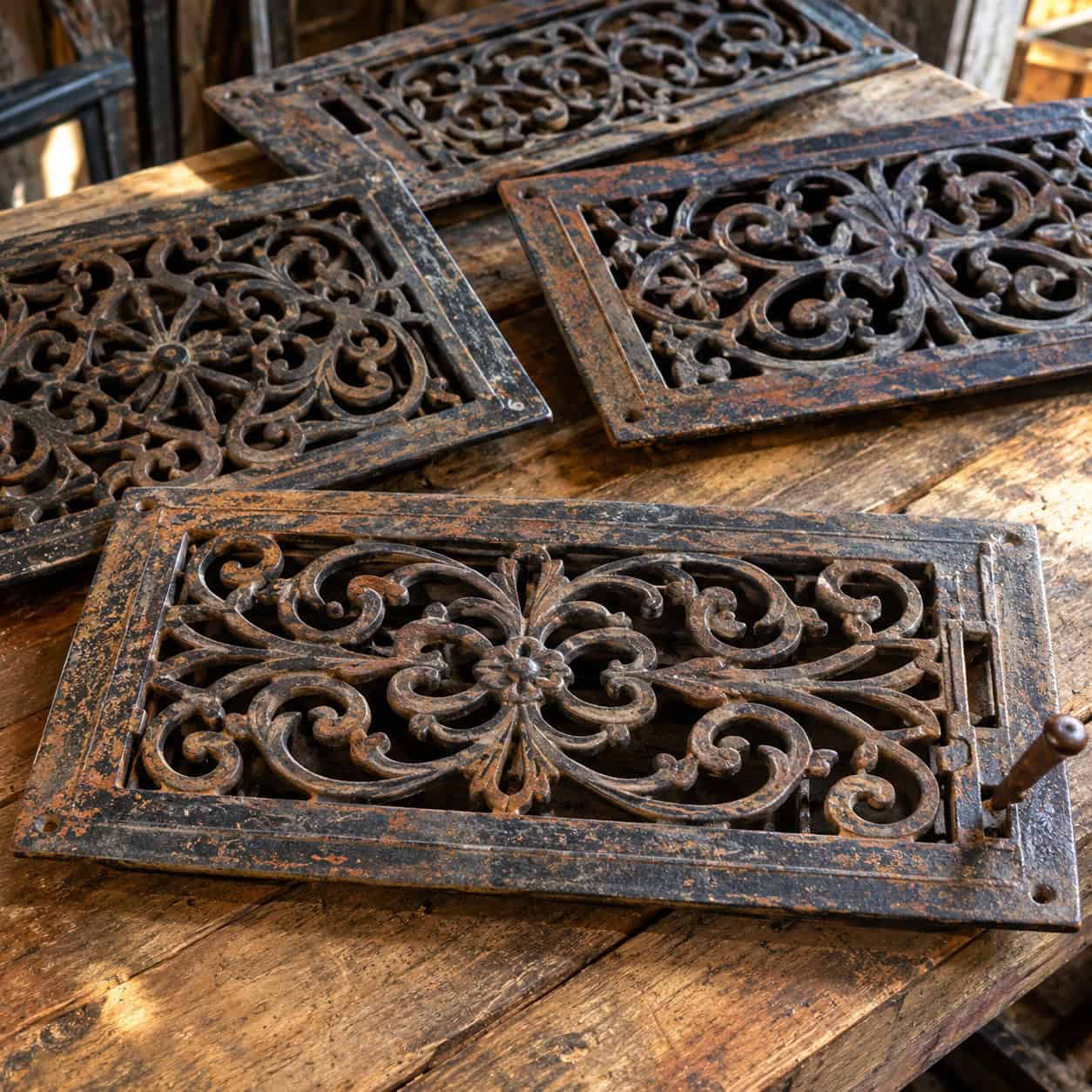
Gravity furnace grates. Heavy, ornate, usually rusted into a crawlspace floor.
They’re small, they ship in a flat-rate box, and the collectible ones list for $60 to $90 apiece online. A working damper lever doubles the interest.
Scrollwork and floral patterns outperform plain louvered grilles. So does an unusual size — anything bigger than 10 by 12 is harder to find.
10. Salvaged Slate Roof Tiles
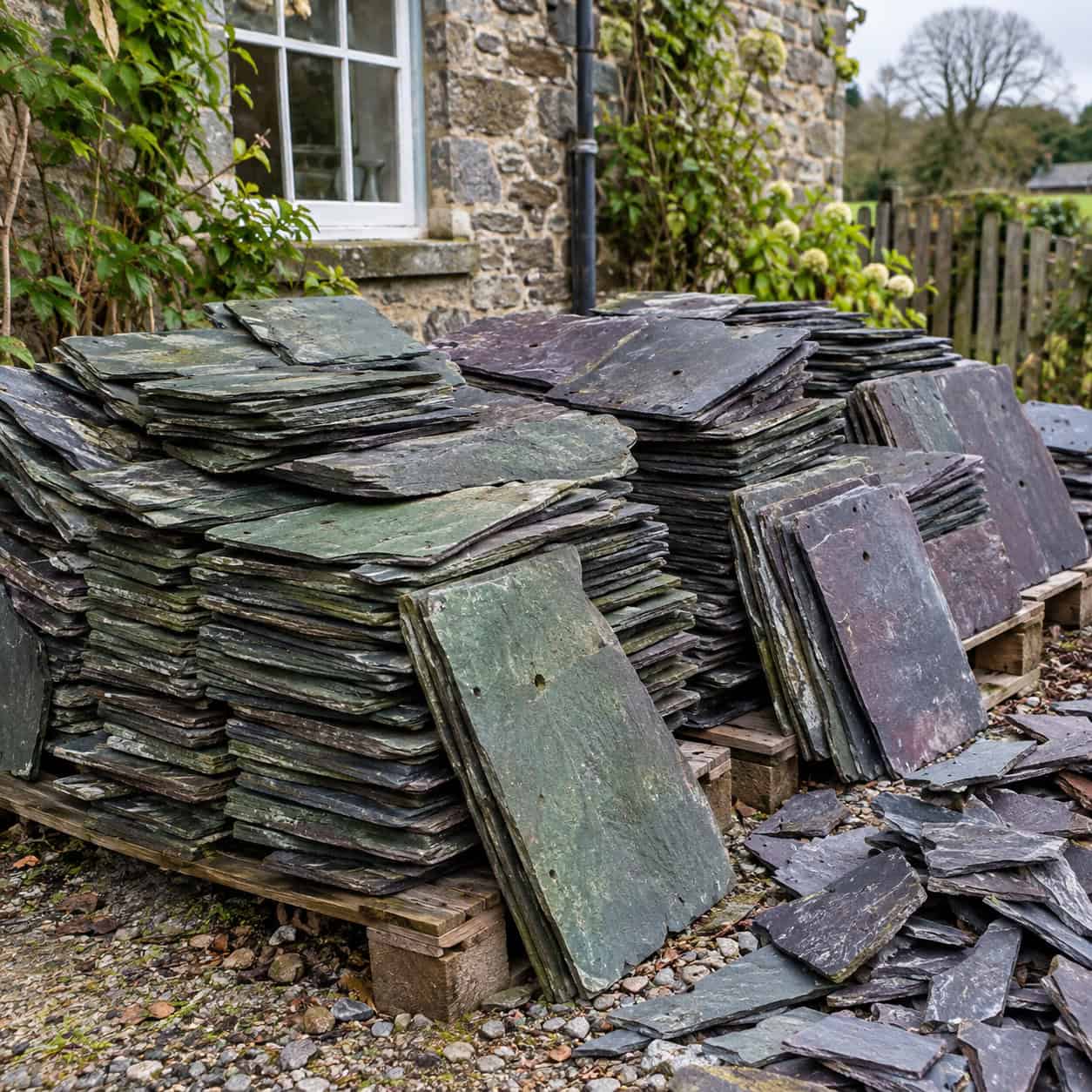
A slate roof doesn’t usually fail because the slate failed. It fails because the nails rusted out from under it.
That distinction is worth real money. Vermont, Pennsylvania and Virginia slate has a service life of 75 to 200 years depending on the quarry, while the iron or steel nails holding it on give up in 60 to 90. Pull the slate off a “failed” roof and a huge share of it is still structurally sound.
Roofers restoring historic buildings need matching stock, and matching means three things at once: color, size, and thickness. Vermont unfading green is not the same as Pennsylvania Peach Bottom black, and a quarter-inch slate won’t lay right in a course of three-eighths. Many of the original quarries closed decades ago, so new material in the right shade flat-out doesn’t exist.
Sort as you strip. Sound slate rings like a plate when you tap it and resists a fingernail; delaminating slate sounds dead and flakes at the edges. Stack sorted pallets by size and color, and a restoration roofer will come buy them off the ground.
Even broken pieces move — they get cut down for valleys, starter courses and repair patches.
11. Pocket Doors and Their Track Hardware

Open a wall during a remodel and there they are — two heavy slabs sealed inside the pocket, painted shut forty years ago by someone who decided the doorway worked better empty.
Dealers want them. But the hardware above the door is often worth as much as the door itself.
The cast track, the hangers and the grooved steel rollers were made by companies like Grant and Lane that stopped producing those patterns a century ago. A homeowner restoring a pocket door can buy a reproduction slab. They cannot buy the mechanism.
Unscrew the track and take it with you. All of it.
12. Push-Button Light Switches and Brass Switch Plates
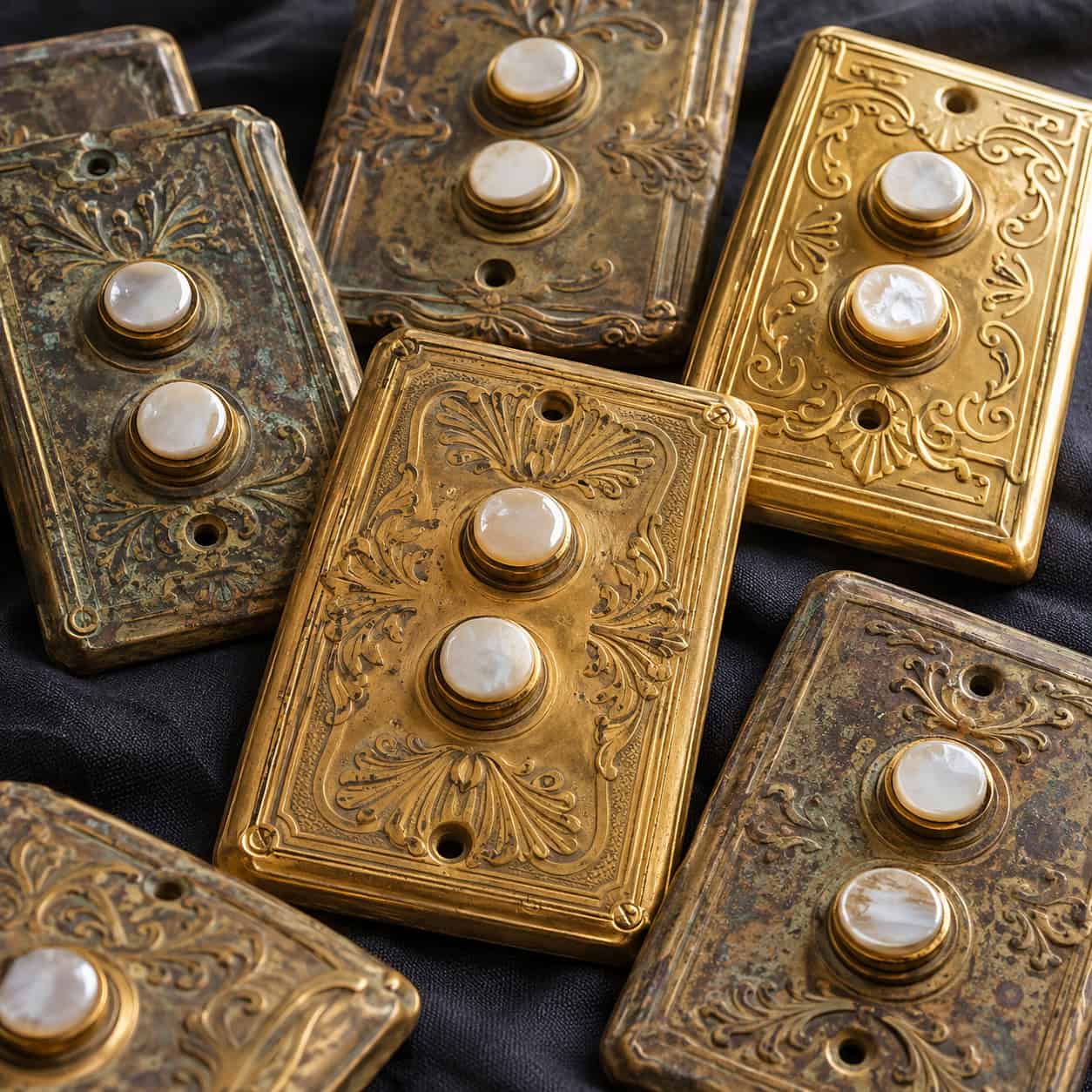
Electricians fill a bucket with these on every rewire and set it by the curb.
Working push-button switches with mother-of-pearl buttons sell individually, and heavy cast brass cover plates — the real stamped-brass ones, not the thin plated kind — go for more than reproduction plates cost new.
A matched set pulled from one house is the premium item, because period-correct restorers want every switch in a room to look the same.
13. The Newel Post, Balusters and Stair Brackets

A carved walnut newel is furniture that happens to be attached to a staircase.
Dealers sell them standing alone as sculptural objects — lamp bases, pedestal ends, hall table supports. Quartersawn oak with original finish does best.
Balusters move in lots. So do the applied scrollwork brackets on the open stringer side, which almost always get knocked off and swept up with the debris during a stair replacement.
Count your balusters before the crew arrives. A set of 24 matching turned spindles is a sale; six is a curiosity.
14. Copper Gutters, Downspouts and Leader Heads
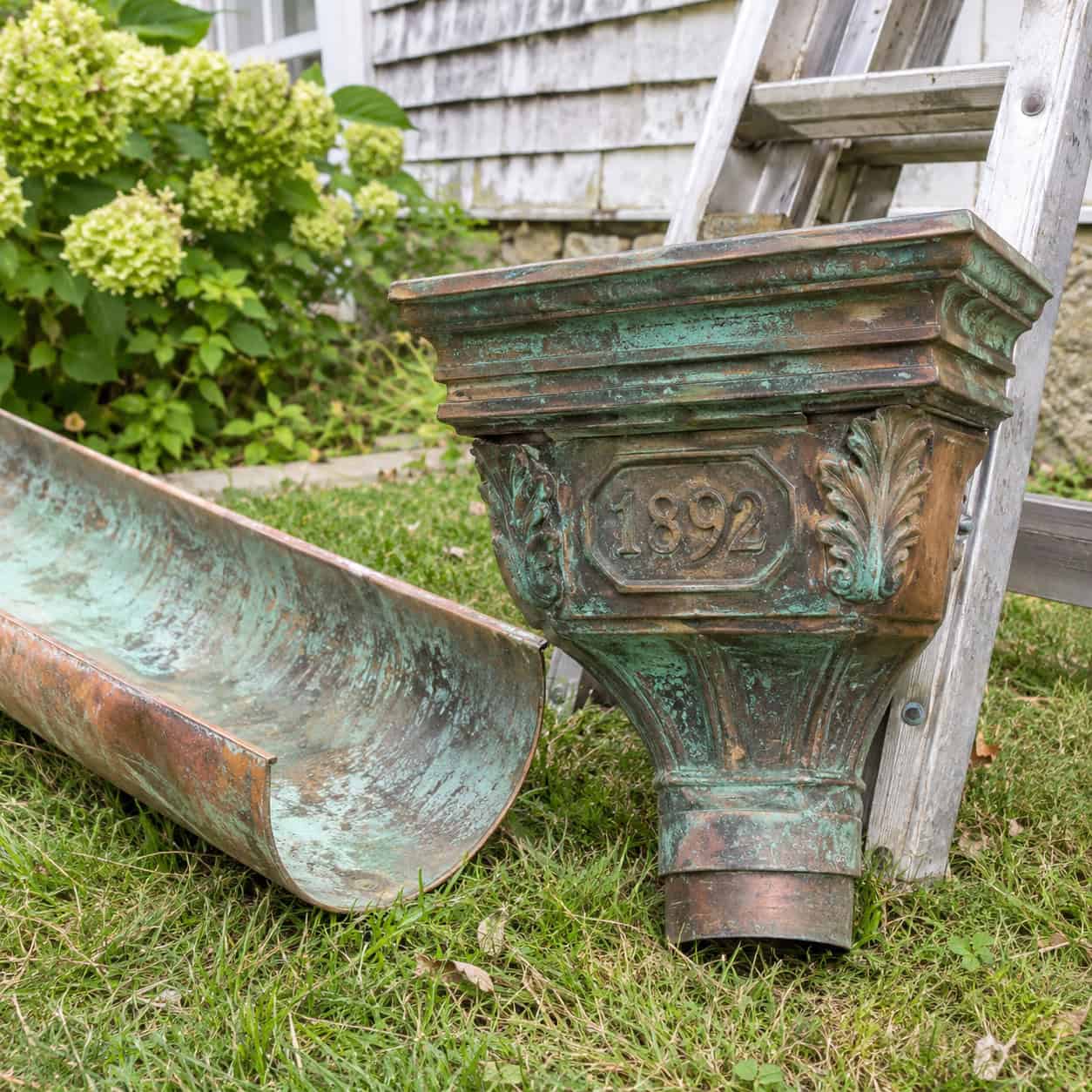
Copper is the one item on this list with two separate prices, and the wrong one is what most people take.
Scrap copper has run somewhere in the $3 to $4 per pound range in recent years. A hundred feet of half-round 16-ounce copper gutter weighs roughly 110 pounds, so the scrapyard check is around $350.
That same run, pulled down carefully and sold intact to an architectural dealer or a restoration contractor, is worth considerably more — because new half-round copper gutter installs at $25 to $40 per linear foot, and the salvaged stuff already has the patina people pay extra to fake.
The pieces dealers grab first are the cast leader heads and conductor boxes — the decorative collector boxes where the gutter dumps into the downspout. Ornate ones with dates or initials cast into the face are collector items on their own, and plenty of them end up as planters and garden ornaments.
Unsolder the joints rather than cutting. Crushed copper is scrap copper, and that’s a $350 decision instead of a $2,000 one.
15. The Fireplace Mantel

Routinely the highest-ticket item on the floor of any salvage yard.
Carved overmantels with beveled mirrors, slate mantels hand-painted to mimic marble veining, true marble surrounds from the 1880s — these are the pieces dealers build their showroom around.
The faux-painted slate ones fool people constantly. Victorian painters were good enough at imitating Siena and Egyptian marble that homeowners scrap them thinking they’re common stone. Run your hand across it; slate is cooler and smoother than paint has any right to be.
Worth knowing if you’re on the buying side instead: a salvaged period mantel is a better-looking anchor for a room than most of what gets built new, and far cheaper than a custom build. It’s the same instinct behind a simple DIY fireplace that looks completely real — the surround does all the work.
16. White Hex and Subway Tile
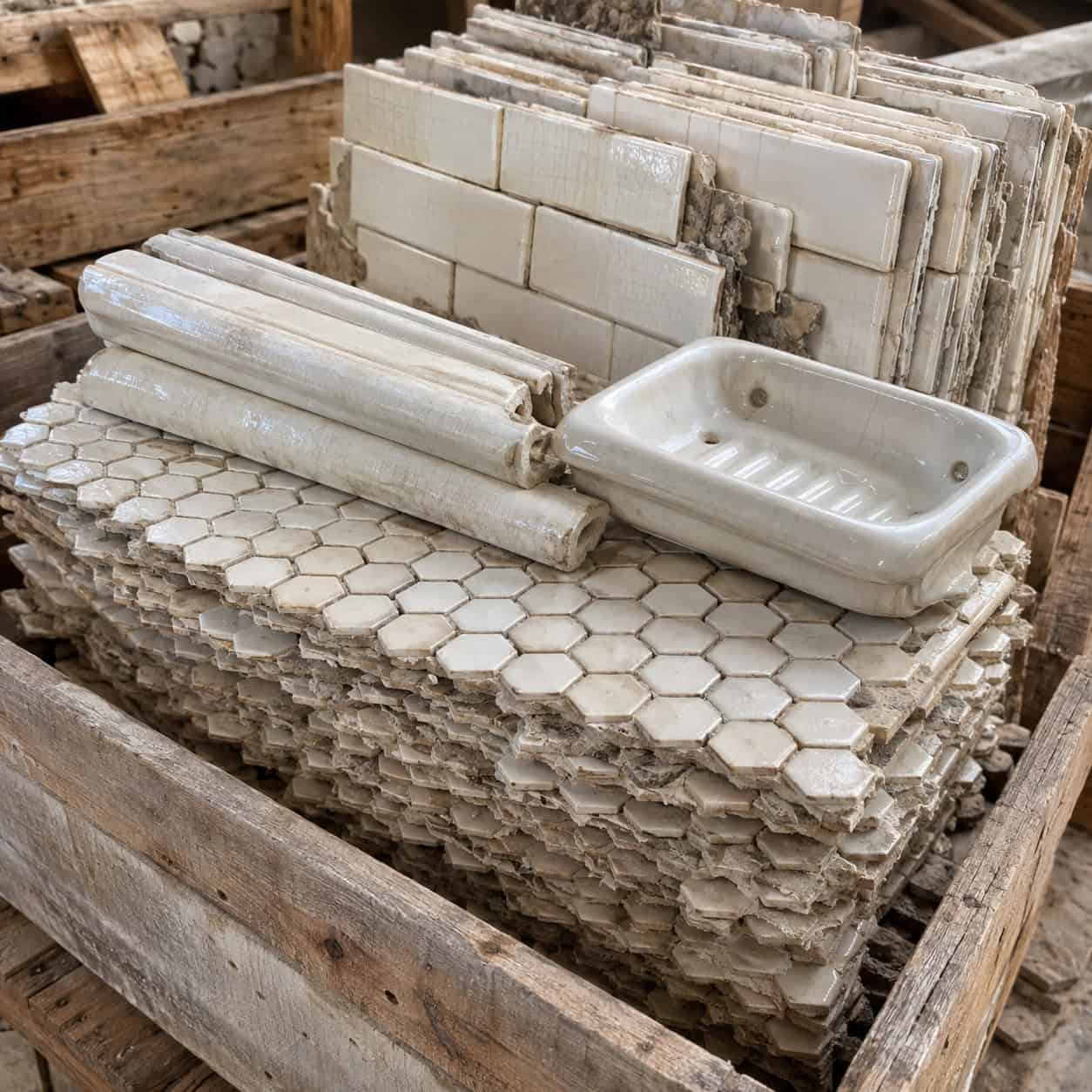
Reproduction subway tile is everywhere and it never quite looks right.
Period glaze crazes into a fine web over 90 years, and the color sits slightly off-white in a way no factory replicates. Salvagers chip out hex floor mosaics and field tile specifically because of that.
The trim pieces are the real score. Bullnose, cove base, corner beads and the little bathroom accessories — soap dishes, toothbrush holders, towel bar brackets that mortared into the wall — are nearly impossible to source and sell for far more than field tile.
Take it off with a stiff putty knife and a mallet, working from a broken edge. You’ll lose a third of it. The rest is money.
17. Wavy Cylinder Glass Window Sash
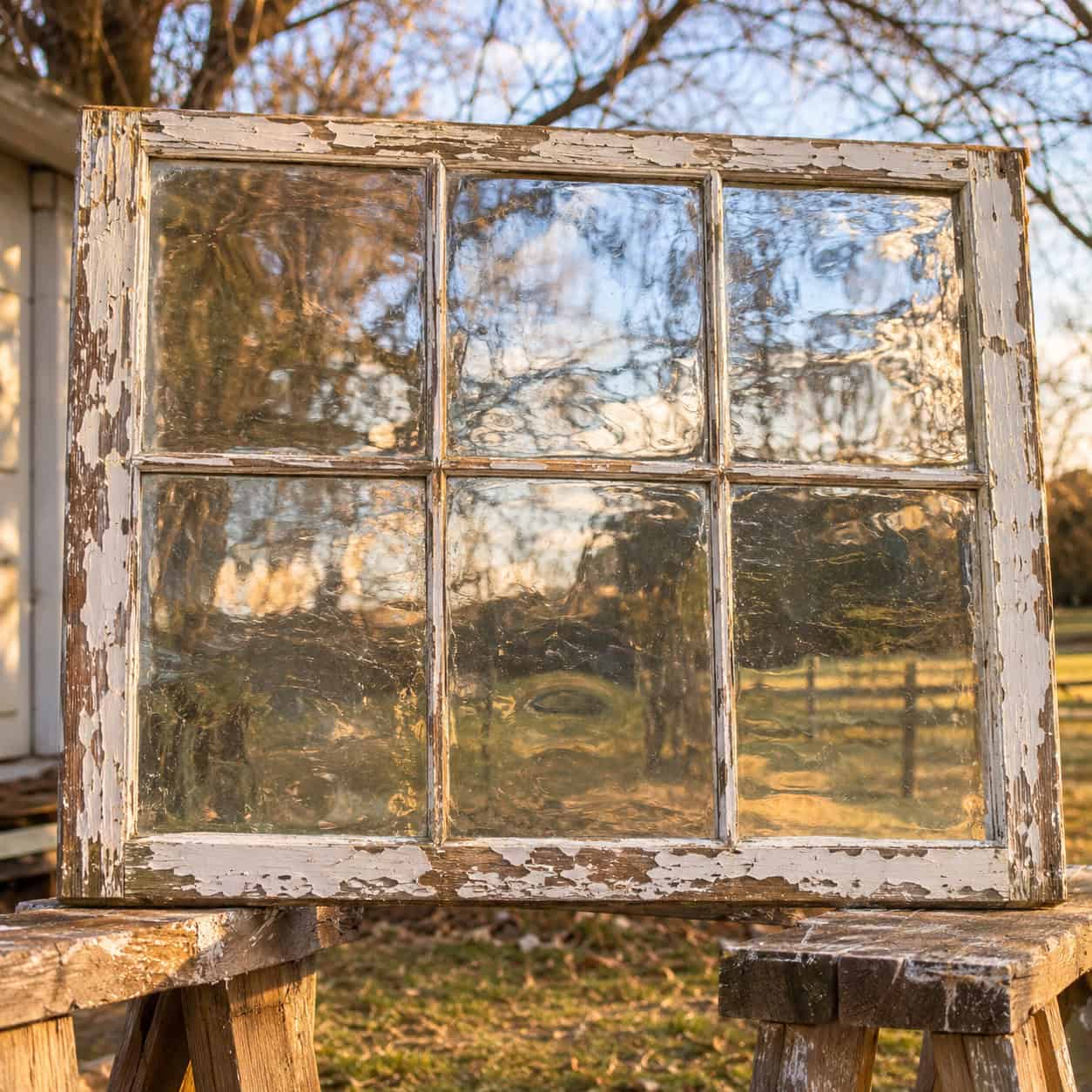
Replacement window crews landfill this stuff by the pickup load every week of the year.
True cylinder glass — blown into a cylinder, split, and flattened — carries ripples, seed bubbles and faint draw lines that show up when light rakes across it. Nobody makes it. The restoration glass sold today is an expensive imitation.
Restorers buy loose panes for repair work. Picture framers buy it for antique prints. And six-over-six sash with the wavy lights intact get resold as mirrors, cabinet fronts and tabletops.
Set a sash on sawhorses outside and look at it against the sky. If the clouds bend, don’t throw it away.
18. Clay Chimney Pots and Terra Cotta Ornament
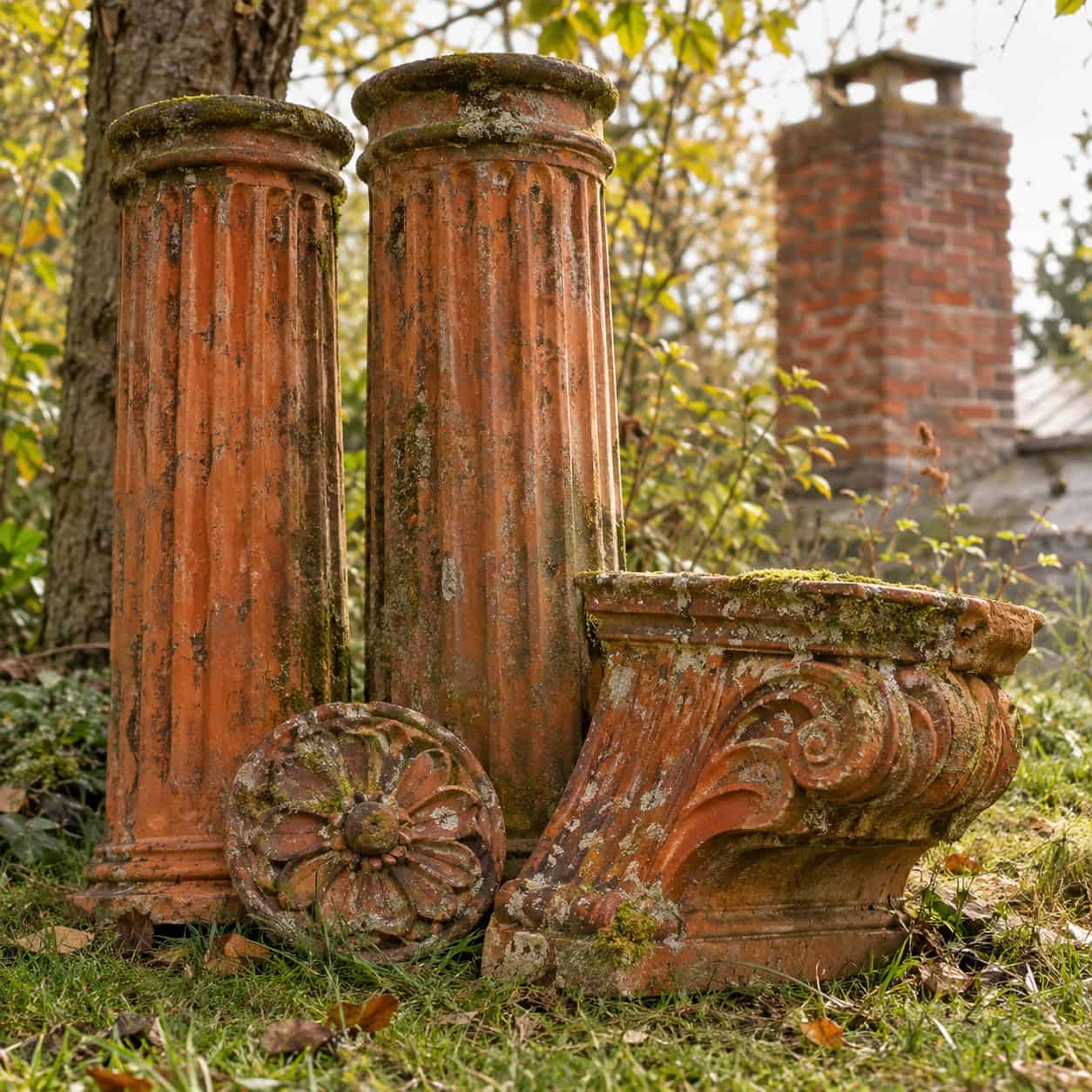
A chimney pot is a clay extension that sits on top of the flue to improve draft and keep rain out. Victorian builders turned them into sculpture — fluted, crowned, octagonal, some three feet tall.
They command serious money, and most of them end up in gardens as planters and urn bases rather than back on a roof.
Getting one down intact is the whole trick. The mortar bed at the base is usually crumbling, which is why so many pots crack when someone wrestles them off. Work the joint loose with a cold chisel first, lift straight up, never lever sideways.
While you’re up there, look at everything else. A deteriorated crown, a cracked or missing clay flue liner, and spalling brick all point to a chimney that’s taking water — and if the pot’s loose, the crown is usually why. Salvaging the ornament and ignoring the masonry just moves the problem indoors.
Glazed terra cotta brackets, rosettes and cornice blocks pulled from commercial facades get collected like statuary. Buff and cream-glazed pieces from the 1890s turn up in architecture collections.
19. Schoolhouse Globes and Gas-Electric Combination Fixtures

A combination fixture has gas arms curving up and electric sockets pointing down, on the same body.
Those exist because for about 20 years nobody trusted the new electric service to stay on. The fixture is a dated artifact — it tells you almost to the year when a house got wired.
Collectors pay accordingly. Even stripped of shades, the body is the item.
Milk glass schoolhouse shades and ribbed holophane globes sell individually too, and the holophanes — with their prismatic ribs cast to throw light downward — bring the most.
20. Porch Columns, Brackets and Gingerbread Trim
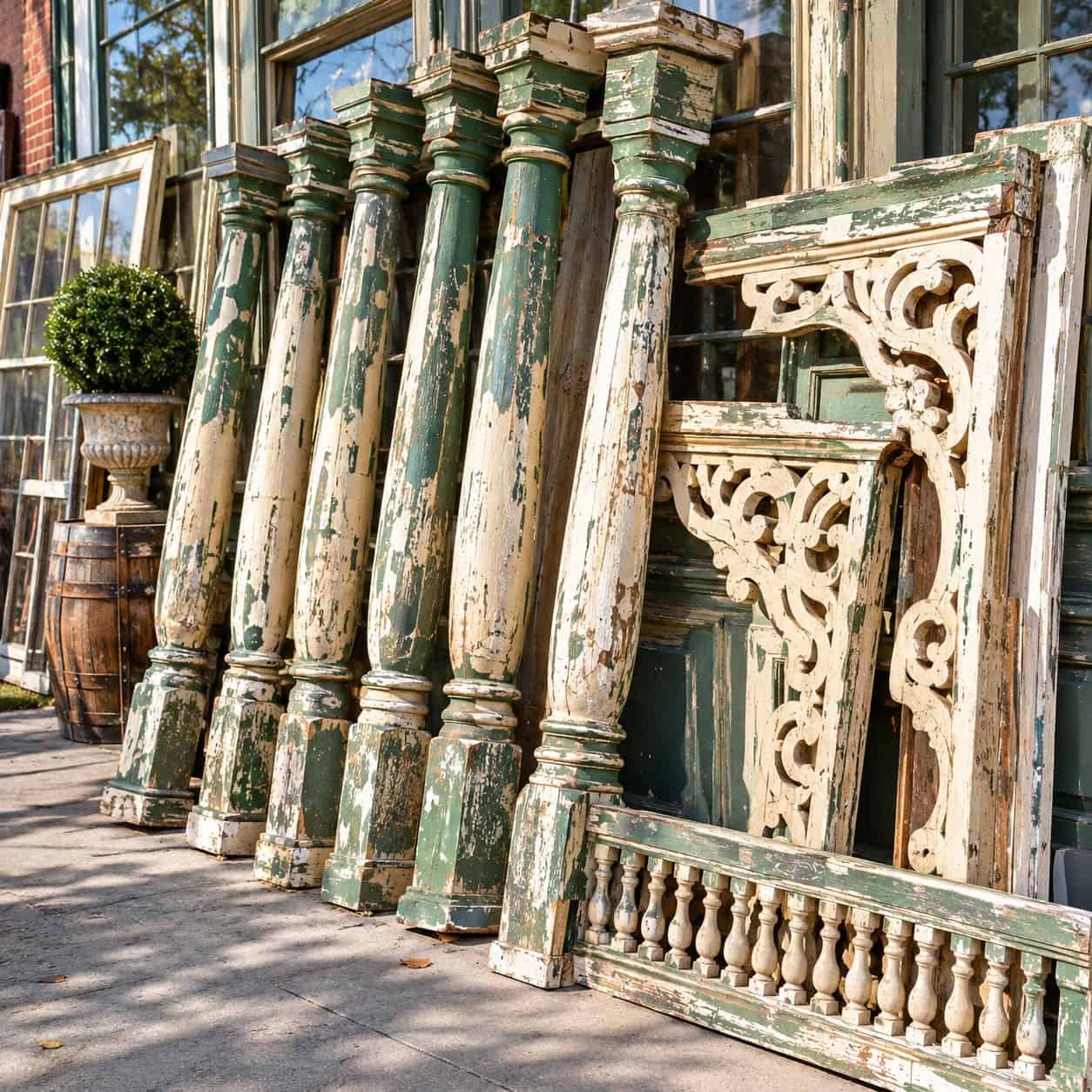
Turned porch posts are the first casualty of any porch rebuild and the first thing a dealer stands up on the sidewalk out front.
Sawn spandrels, scrollwork brackets and spindle friezes all move. The patterns were cut on scroll saws from regional pattern books, so they vary house to house — which is exactly what makes a matching set valuable.
Four columns of the same profile beat eight mismatched ones. Keep them together.
Much of what makes a classic porch read as period-correct is this trim, not the roofline.
21. Soapstone and Cast Iron Drainboard Sinks

The 300-pound laundry sink in the basement that nobody wants to move.
Soapstone slabs get cut down into countertops and sell by the square foot. The stone is nonporous, heat-proof and takes a mineral-oil finish that darkens to near-black, and it’s quarried in a fraction of the volume it once was.
The cast iron single-drainboard farmhouse sink is the other prize. Sound porcelain with no chips around the drain, original faucet holes, apron front — that’s a kitchen remodel grail, and people hunt for them for years.
Check the underside for the foundry mark. Standard, Kohler and Crane stamped their castings.
22. Hand-Hewn Barn Beams and Attic Timbers
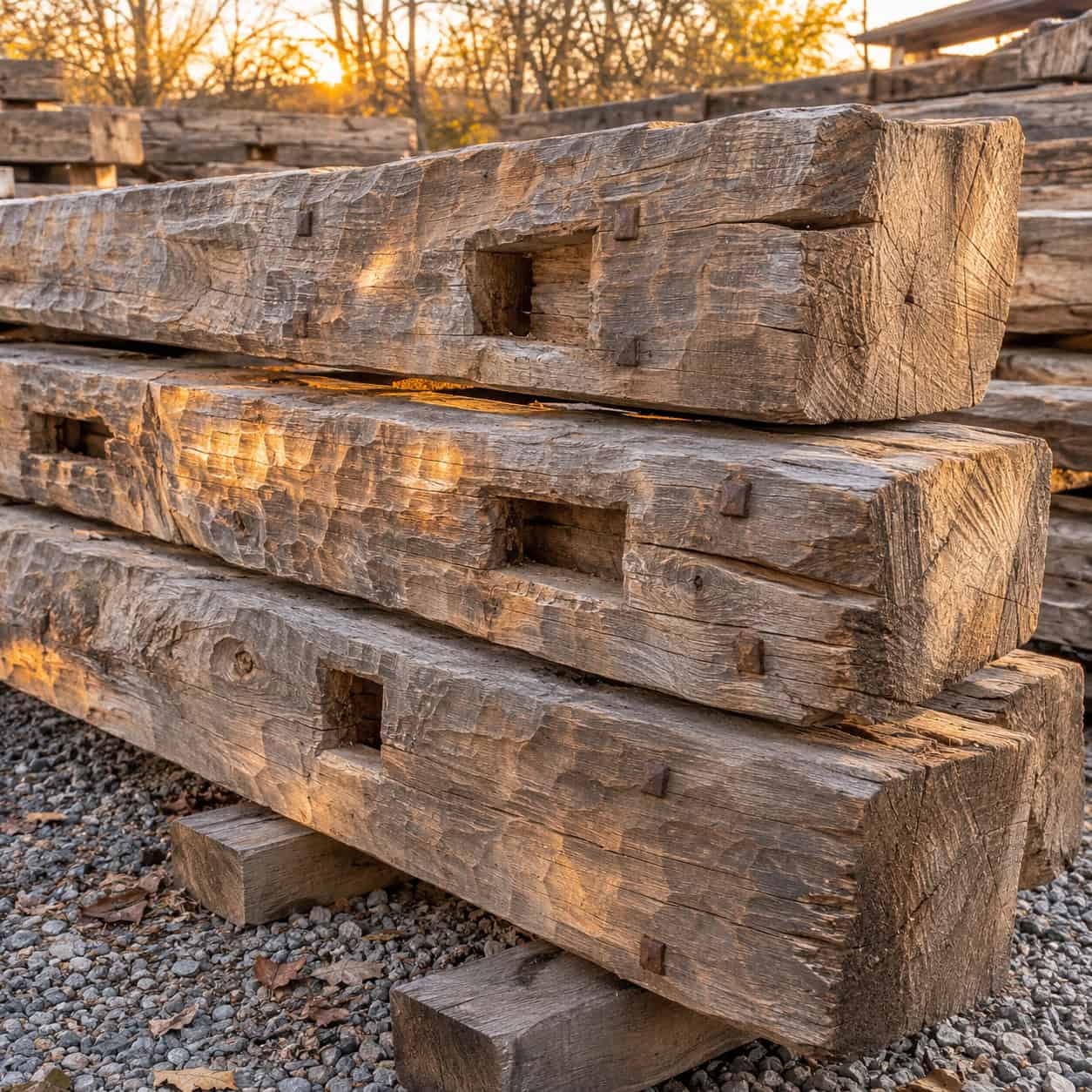
Look for the broad-axe marks — shallow scalloped cuts running across the face where someone squared a round log by hand.
Those marks and the empty mortise pockets are the value signal. They prove the timber was worked before sawmills took over, which puts it before roughly 1880 in most of the country.
Reclaimers pay by the linear foot for sound oak and chestnut. The beams become mantels, benches, island tops and exposed structural accents.
Metal is the enemy. Every old nail and spike buried in a beam destroys bandsaw blades, so timbers that have been run through a metal detector and marked bring more.
23. Lightning Rods With Glass Balls and Weathervanes

The colored glass ball on a lightning rod had a purpose — if it shattered, you knew the house had taken a strike and should check the system.
Collectors chase them by color and maker. Cobalt, amber, milk glass, mercury-silvered. Ornate twisted copper rods and arrow-style directionals have their own following.
Early hand-made weathervanes are a different league entirely. Gilded copper horses, cows and roosters from nineteenth-century makers cross from salvage into American folk art, and the good ones sell at auction houses rather than yards.
If there’s one on your barn, photograph it before you climb up. Provenance adds value.
24. Steel Kitchen Cabinets

In the 1980s, these went to the dump by the thousands. People thought they were cheap. They were the opposite.
Youngstown Kitchens, St. Charles, Geneva, Morton and Beauty Queen built steel cabinetry in postwar factories that had just stopped making aircraft and ordnance. The boxes are welded steel with baked enamel finishes, and a 70-year-old cabinet door still closes with a solid thunk no particleboard box matches.
Complete runs now sell to mid-century restorers for more than new stock cabinetry costs. The Youngstown sink unit — the one with the integrated drainboard and the Jet-Tower dishwasher option — is the most wanted single piece in the whole category.
Grade honestly when you sell. Surface rust at the toe kick is normal and fixable. Rust-through at the base, dented corners, and missing chrome pulls knock the price hard. Original enamel in good condition beats a repaint every time, and buyers can tell.
Refinishing is straightforward if you want to keep them: strip, treat the rust, and have them sprayed with automotive-grade enamel by a body shop. It runs $100 to $200 per cabinet and the finish is better than factory.
25. Plaster Ceiling Medallions, Corbels and Run Cornice
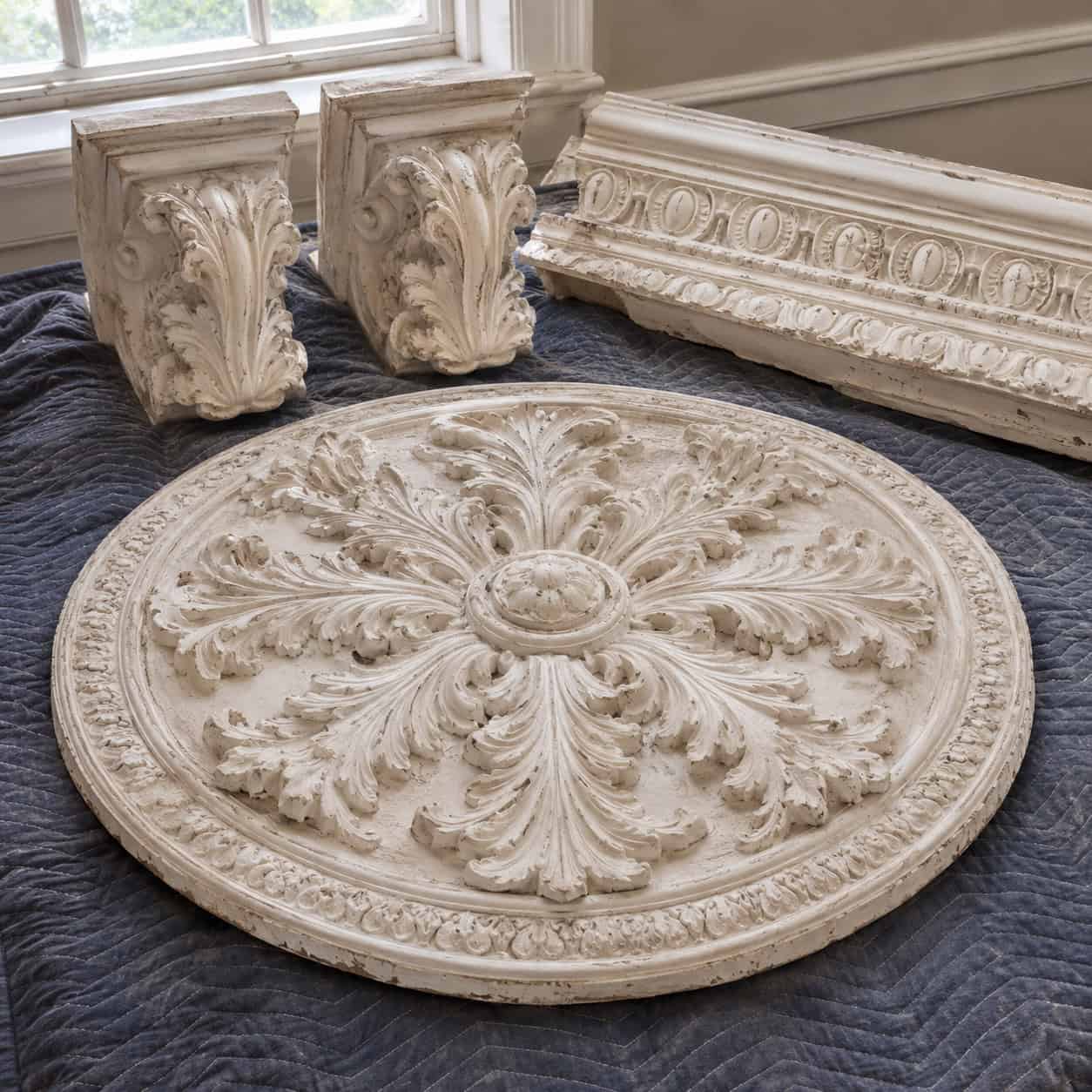
Fragile. Heavy. Attached to the ceiling with horsehair plaster and hope.
Which is why almost all of them get smashed during demo, and why an intact one is scarce enough to sell well. A deep-relief acanthus medallion three feet across is a serious object.
Dealers do something clever with these: they sell the original, then pull a rubber mold off it first and sell reproductions alongside for years. If a dealer offers you less than you expected, that’s partly why — they’re buying a mold, not just a medallion.
Cut the ceiling around it and bring it down with the lath attached. Trying to pry a medallion off clean is how they break.
26. High-Tank Pull-Chain Toilets

Oak tank up near the ceiling, brass chain hanging down, embossed porcelain bowl with the maker’s name cast into the foot.
A complete assembly with unbroken porcelain, sound tank, original brass flush ell and the chain pull is genuinely rare and prices accordingly.
A bowl by itself is worth almost nothing.
That gap is the entire story of architectural salvage in one fixture. Completeness is the product.
27. Wormy American Chestnut Boards
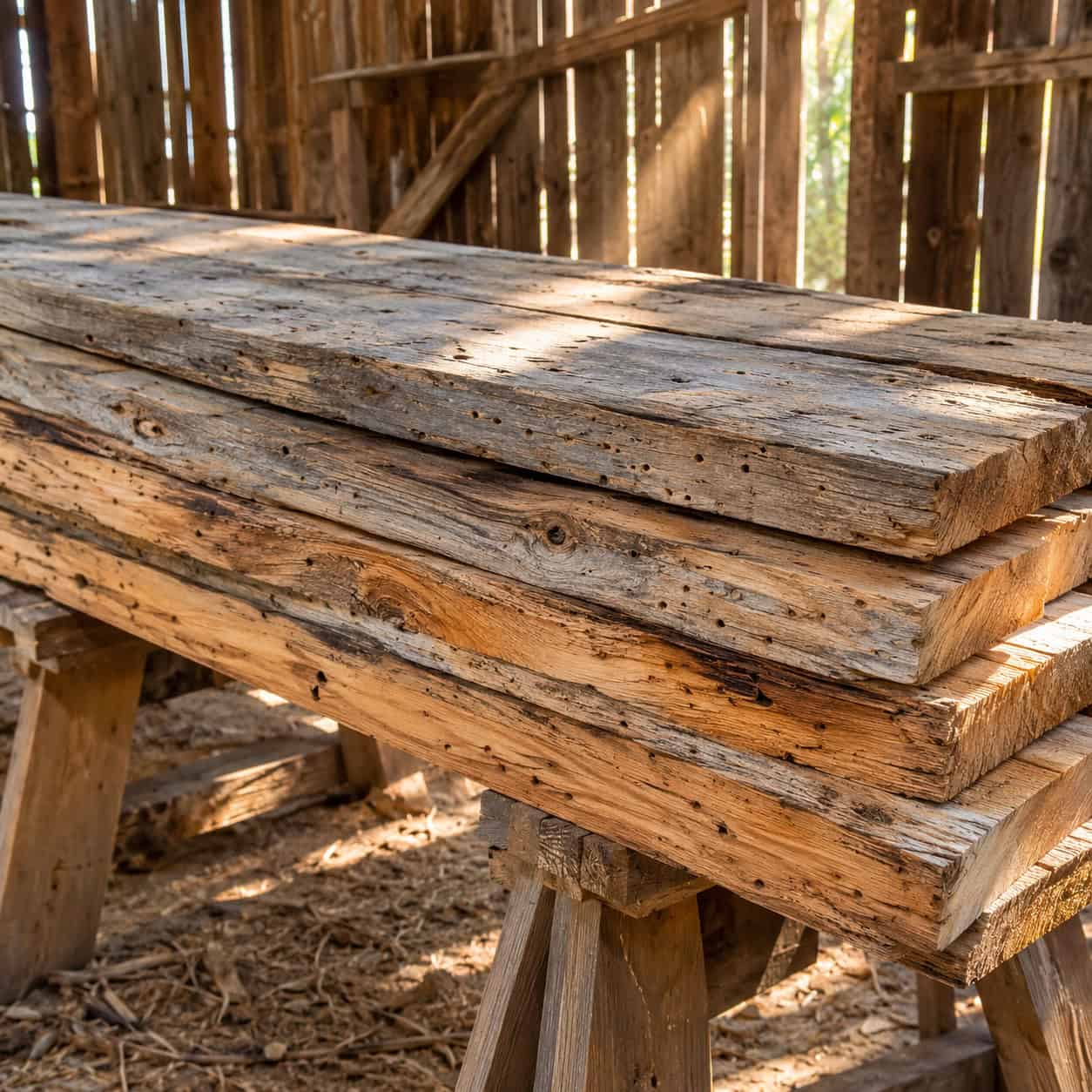
The blight that arrived around 1904 killed an estimated four billion American chestnut trees in forty years. It’s the largest ecological loss in the history of North American forests.
So there is no chestnut lumber being produced. None. Every board that exists came out of a building, which means attic sheathing, barn siding and plain old baseboard trim are the entire remaining supply.
Identify it by the wide, open pores, the warm light brown that silvers with age, and the wormholes from the beetles that came in after the trees died standing.
People burn it in woodstoves every winter without knowing.
28. Steeple-Tip Hinges, Mail Slots and Skeleton Keys
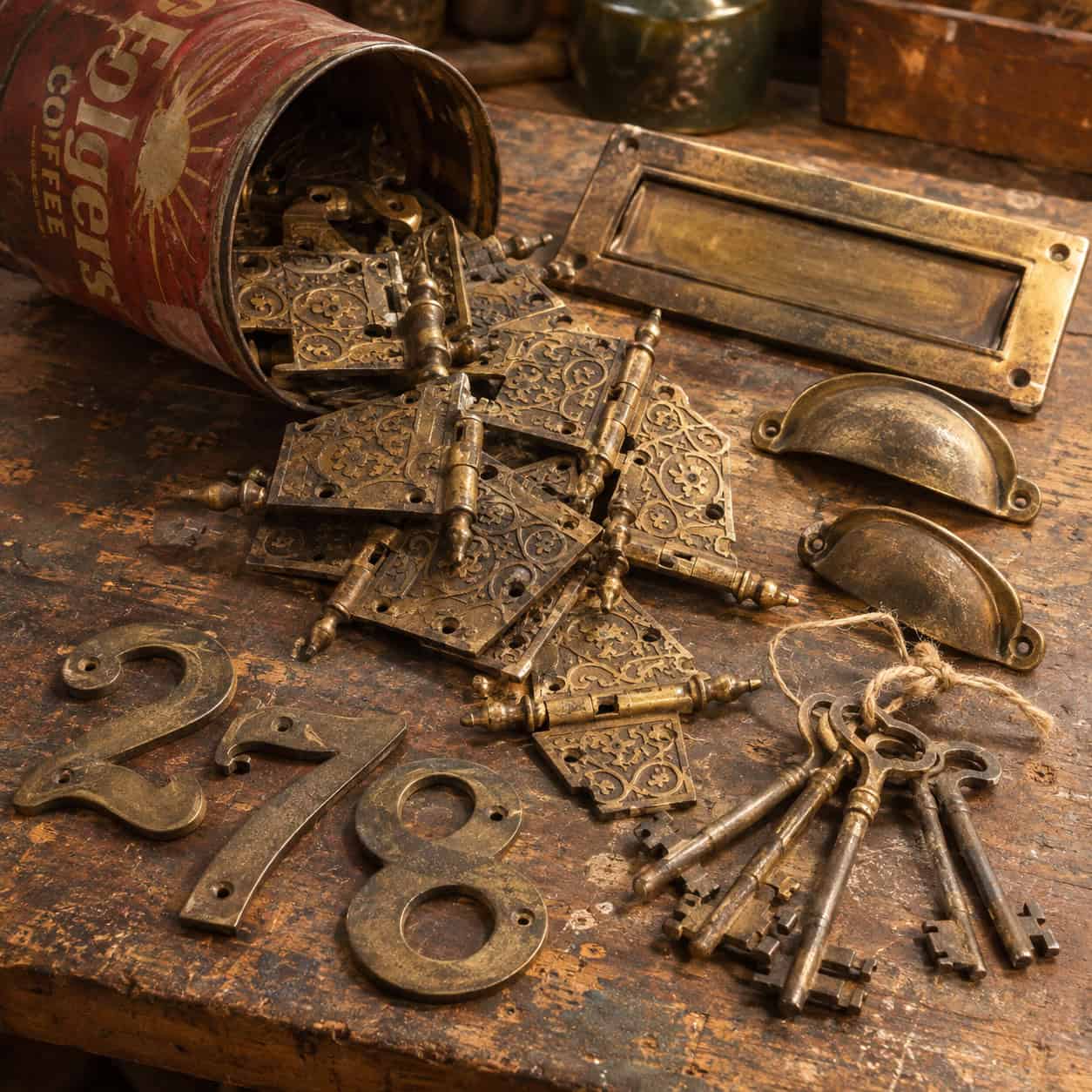
The coffee can on the workbench shelf. That one.
Eastlake-pattern cast hinges with incised geometric designs, steeple-tip finials, brass mail slots with spring flaps, bin pulls, cast house numbers, and the labeled skeleton keys somebody tied together with string in 1952.
All of it sells. Some by the piece, some by the pound.
Decorative cast hinges in matched pairs with their original pins are the standout — most got painted over so many times the pattern disappeared, so clean examples are scarce. Soak, don’t grind.
29. Antique Brick and Lettered Street Pavers
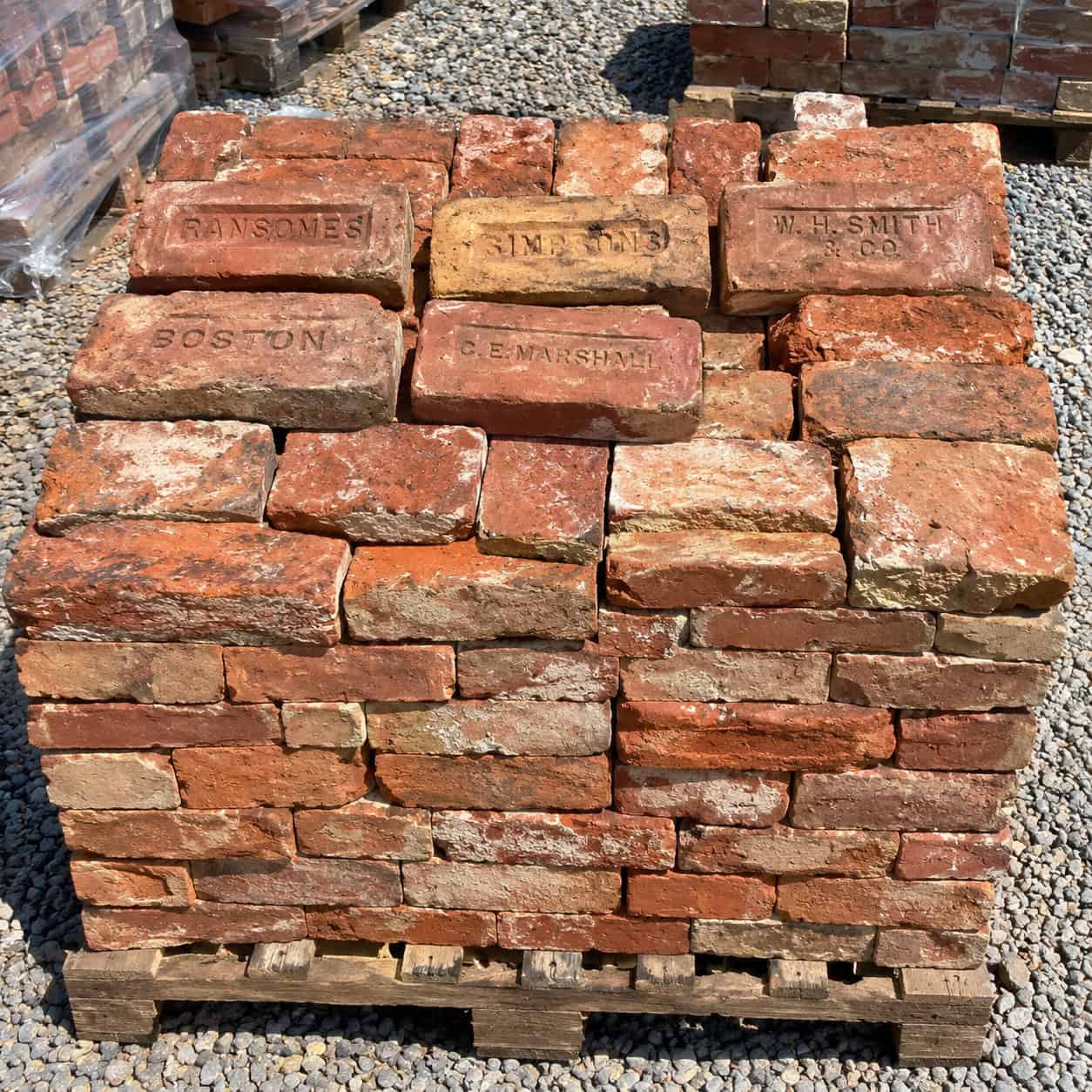
Soft-fired common brick from the 1800s has a worn, irregular face and crumbly lime mortar that chips off with a trowel instead of fighting you.
That combination is why it sells by the pallet. Clean it, stack it, and it goes into patios, fireplace surrounds and interior veneer at prices that embarrass new thin-brick products.
Lettered street pavers are a collecting category of their own. When a city tears up a brick street, the pavers come up stamped with the maker and town — Metropolitan Block, Nelsonville, Canton — and collectors chase specific marks.
Lime mortar is the tell. If it scrapes off with a putty knife, the brick is reusable. Portland cement mortar means the brick breaks before the joint does.
30. Cast Iron Sash Weights, Pulleys and Lifts

Every double-hung window in the house has two of them hanging in the wall pocket, and they’ve been there since the day it was built.
Weights sell for bulk scrap by the pound, which is fine. But matched pairs stamped with their weight, original cast bronze pulleys, and the cast sash locks and finger lifts that belong with them bring considerably more from restorers.
Window restoration is a real trade again, and those shops need parts. They’d rather buy original hardware than cast new.
Open the pocket cover before the windows get replaced. The weights are already in there and they’re already yours.
31. Wrought Iron Fencing, Gates and Boot Scrapers
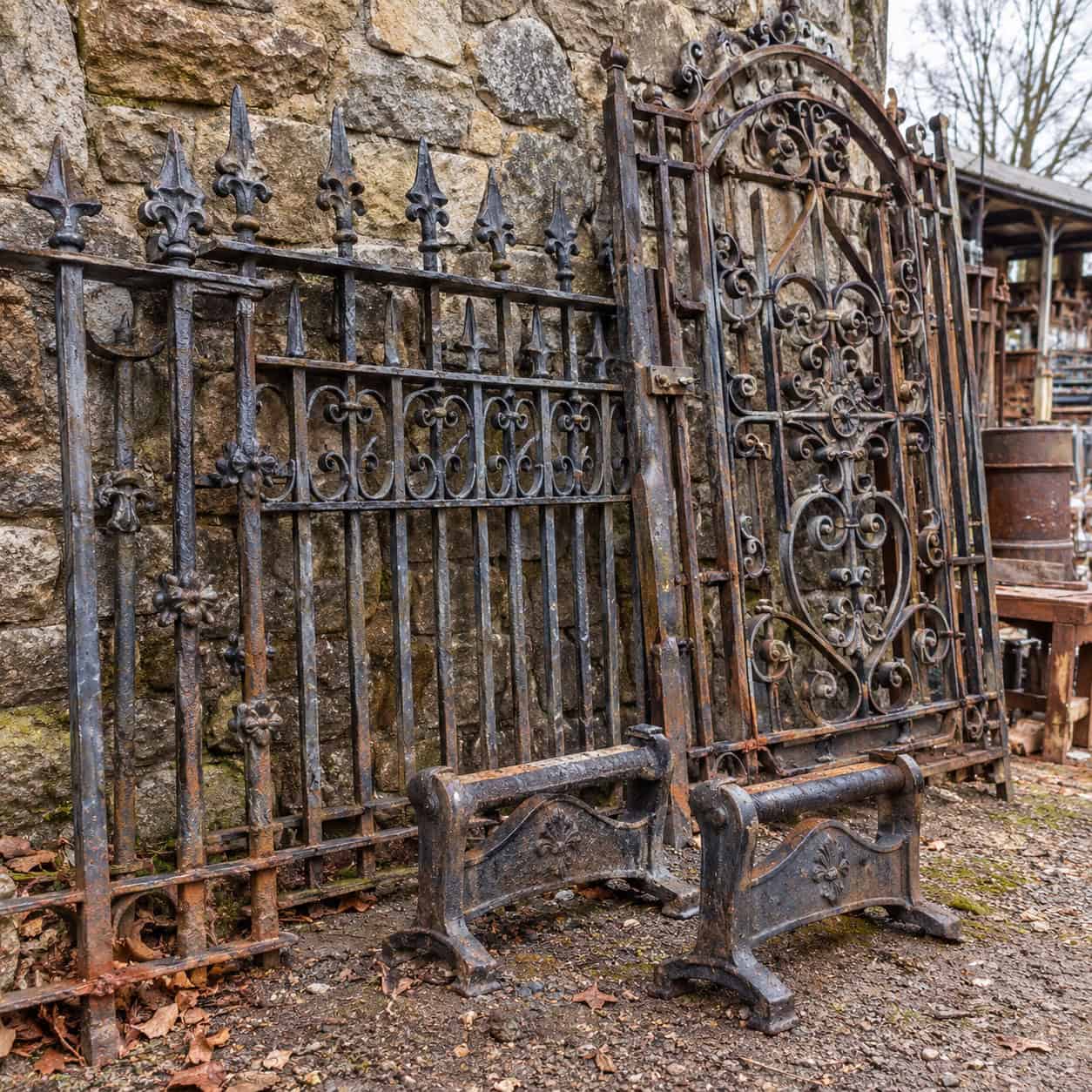
Hand-forged iron is heavy, impossible to fake convincingly, and instantly resellable.
Look for hammer marks, slight asymmetry between pickets, and collars or rivets instead of welds. Forge welds show a faint seam line that modern arc welding doesn’t leave.
Supply got permanently thinned by the WWII scrap drives — enormous amounts of the country’s ornamental fencing, gates and railings went into collection piles between 1942 and 1945. Entire neighborhoods lost their iron in a weekend.
Boot scrapers mounted beside front steps are the small, cheap, charming end of the category, and they fly out of dealer booths.
32. Butler’s Pantry Cabinetry and Built-In China Cupboards

When a kitchen gets gutted, these sometimes come out as whole units. Face frame, glass-front uppers, bin drawers, nickel-plated cupboard latches, counter and all.
Dealers love them because they go two ways: reinstalled in another old house, or converted into freestanding furniture with a new base and a finished back.
Wavy glass in the upper doors adds real money. So do the original latches — the little nickel elbow catches and cupboard turns that nobody reproduces correctly.
Score the paint line where the unit meets the wall before you pry. Half the value is the face frame staying square.
The same logic shows up in built-in storage ideas from 100-year-old houses — those builders used every inch, and the casework was furniture-grade.
33. Pink, Mint and Yellow Bathroom Fixtures

People still laugh at these. The people hunting for them are not laughing.
Between 1946 and the mid-1960s, American manufacturers shipped bathrooms in Ming Green, Dusty Rose, Tang Yellow, Fawn Beige and a dozen other shades. Crane, Kohler, American Standard and Briggs all had full color lines. Then the 1980s happened and almost all of it went to the landfill.
Nobody makes those colors now. Not one manufacturer. Which is why a color-matched trio — tub, toilet and sink in the same shade from the same maker — is a genuine payday to a mid-century restorer who’s been searching for two years.
Check the underside of the tank lid and the back of the sink for the maker’s stamp and a date code. A matched set with matching codes is worth meaningfully more than three pieces that merely look similar, because the glaze shifted between production runs.
Handle the room around them carefully, though. Mid-century bathrooms commonly hide asbestos in sheet flooring, the mastic under it, and old pipe wrap, and painted surfaces from before 1978 should be assumed to contain lead. Don’t sand, don’t dry-scrape, and get a test before demo if anything looks like 9-inch floor tile.
Pull the fixtures intact and you’ve got salvage value plus a cleaner, safer demo than smashing everything into a dumpster.
34. Milk Doors, Ice Doors and Ironing Board Cabinets

A little hinged door in the kitchen wall, maybe 12 inches square, with a matching door on the outside.
That’s a milk door. The dairy delivered into it at dawn so you never had to answer the door in a bathrobe. Ice doors did the same job for the iceman, opening straight into the top of the icebox.
And the fold-out ironing board cabinet — a shallow built-in with a hinged board that swings down and locks level — is the one that stops people in a salvage yard every time.
None of these are expensive. All of them sell fast, because they’re small, charming, and they come from a way of running a household that simply ended.
35. Original Wood Shutters With Iron Shutter Dogs
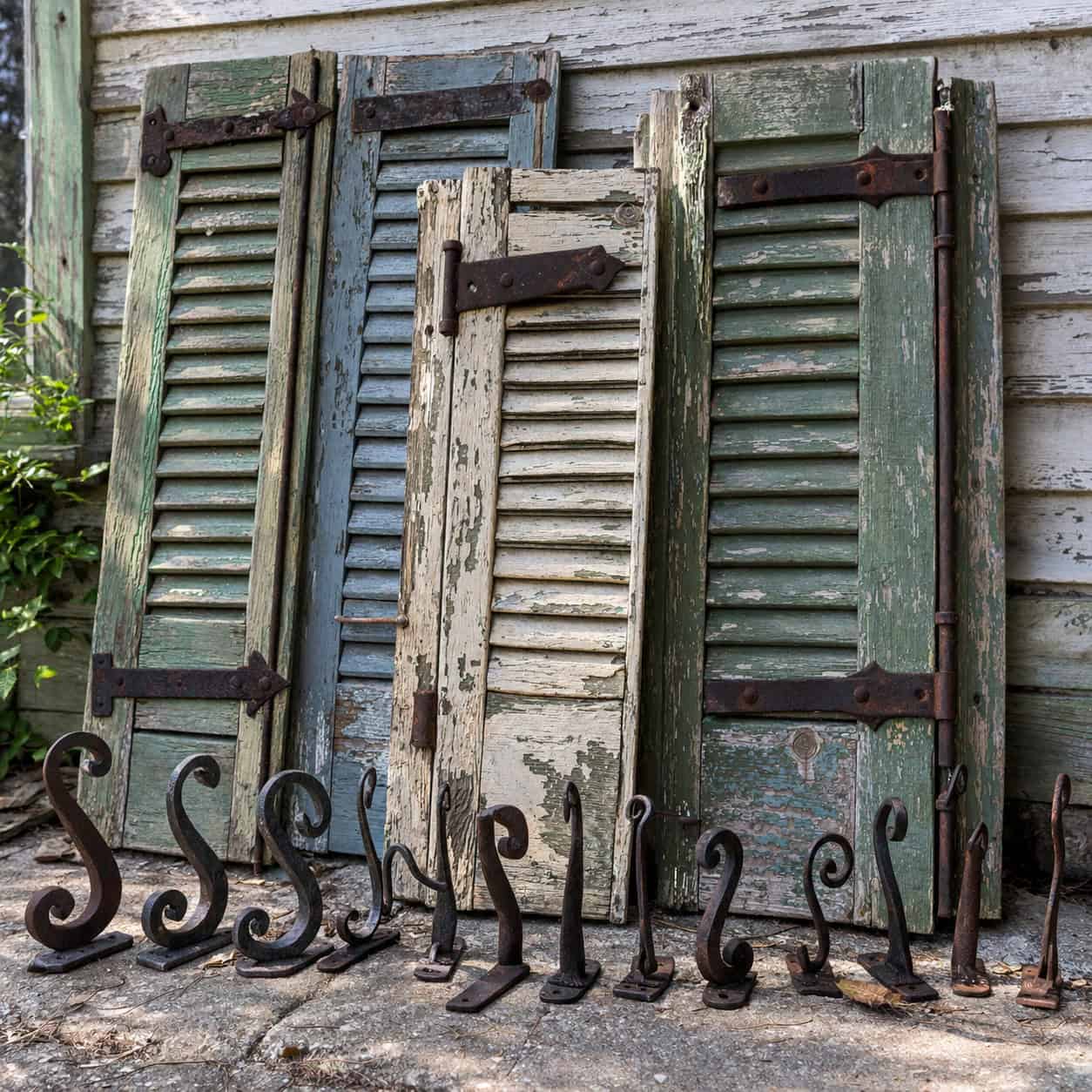
The louvered panels sell, but not for much. They’re usually paint-failed, the pins are rotted, and reproductions are cheap.
The hardware is where the money sits.
Hand-forged shutter dogs — the S-curls, rat-tails and little cast human figures that hold a shutter flat against the wall — are collected individually. So are the strap hinges and pintles.
Unscrew the hardware even if the shutters go in the burn pile.
36. Recessed Medicine Cabinets With Beveled Mirrors

A steel box set between the studs, with a heavy beveled mirror on a piano hinge and three glass shelves inside.
The bevel is the giveaway. Period mirrors carry a wide, hand-ground bevel — three-quarters of an inch or more — where modern ones get a thin machine edge if they get one at all.
Chrome or nickel surrounds, original glass shelves, and a functioning latch all add up. So does the little slot in the back for used razor blades, which dropped them into the wall cavity, where they’re probably still piled up right now.
37. Dumbwaiter and Laundry Chute Hardware

The dollars here are thin. The pull is enormous.
A dumbwaiter car, its rope-and-pulley gear, the cast counterweight and the little paneled doors on each floor — these don’t bring what a mantel brings. But they sell to the right buyer immediately, because almost nobody has ever seen a complete one.
Laundry chute doors with their spring-loaded brass latches do the same thing. They’re the artifacts of a house designed around servants, coal, and carrying things up three flights.
If your old house has one sealed behind drywall, open it up before you rip it out. You might keep it instead.
The pattern across all 37 is the same. Value lives in completeness, in materials that no longer exist, and in the parts nobody can manufacture anymore.
Before the dumpster shows up, make two calls — one to a local architectural salvage dealer, one to a deconstruction nonprofit. The Institute for Local Self-Reliance has documented how much of a building’s material value gets recovered when somebody takes it apart instead of knocking it down. Often the deduction alone beats the haul-away bill.
Walk the house with a flashlight first. Attic, basement, crawlspace, the back of every closet.
Somebody built those pieces by hand, and they’ve outlasted everyone who ever touched them. Throwing them in a dumpster is the only way they finally lose.
Old house stuff worth $
I gave about 35 -40 window sash weights to a gardener friend who used them to weight down plastic used for weed control. I’ve heard of fishermen using them for boat anchors. I had no idea they were of any dollar value.