

You’ve seen it on a drive through farm country. A squat little stone building tucked behind the barn, or a windowless shack half-swallowed by weeds, or a tiny roofed structure that looks like a gazebo somebody forgot.
Nobody around can tell you what it was for.
The farm used to be a machine made of buildings. Before electricity, before the grocery store, before the hardware aisle, a family fed and clothed and warmed itself off its own land. Each chore got its own structure, sized to its job, placed exactly where it needed to be.
Then the grid arrived. The fridge, the freezer, the indoor toilet, the combine. One by one these little buildings lost their reason to exist, and most fell quietly into the weeds.
Here are 27 of them — and the clever, forgotten jobs they actually did.
1. The Springhouse

This is the original refrigerator. No motor, no wires.
Farmers built it straddling a flowing spring so the cold groundwater — a steady 55 degrees year-round — ran right across the floor in a stone trough. Crocks of milk, butter, and eggs sat in that trough, half-submerged in moving water.
The water never stopped, so the cooling never stopped. In July it kept cream from souring. In January it kept the same crocks from freezing solid.
By the 1940s the electric fridge had made them pointless. Most that survive are damp, mossy little stone boxes that hum with the sound of water still running underneath.
2. The Smokehouse

Small. Windowless. No chimney.
Salted hams and slabs of bacon hung from iron hooks in the rafters while a slow fire smoldered on the dirt floor below. The trick was that smoke cured the meat — not heat. A roaring fire would have cooked it; a cool, days-long smolder preserved it for months.
Open the door of a surviving one and the inside is still black, the walls glazed with decades of creosote and rendered fat.
Log-built versions stood on Eastern farms well into the late 1800s. The smell never fully leaves the wood.
3. The Icehouse

In January, neighbors gathered at the pond with saws and tongs.
They’d cut blocks of ice a foot thick, haul them up by horse, and pack them into the icehouse under deep layers of sawdust and straw. Insulated that well, pond ice could last until the following autumn.
Many were dug halfway into a hillside, with a pit several feet deep to hold the cold. The winter ice harvest was an all-day community job, complete with someone falling in.
The electric refrigerator killed the whole tradition by the 1930s. A generation later, nobody remembered the pond ever froze for a reason.
4. The Summer Kitchen

Cooking in August used to mean a wood stove roaring inside a closed house. Unbearable.
So Pennsylvania German farms built a second kitchen, detached from the home, used only in the hot months. The heat stayed outside. So did the fire risk.
It pulled double duty as a canning room, a butchering station, and a laundry. For generations of farm women, the summer kitchen was where most of the day’s work actually happened.
The name itself comes straight out of the Pennsylvania Dutch country where it was most common.
5. The Root Cellar
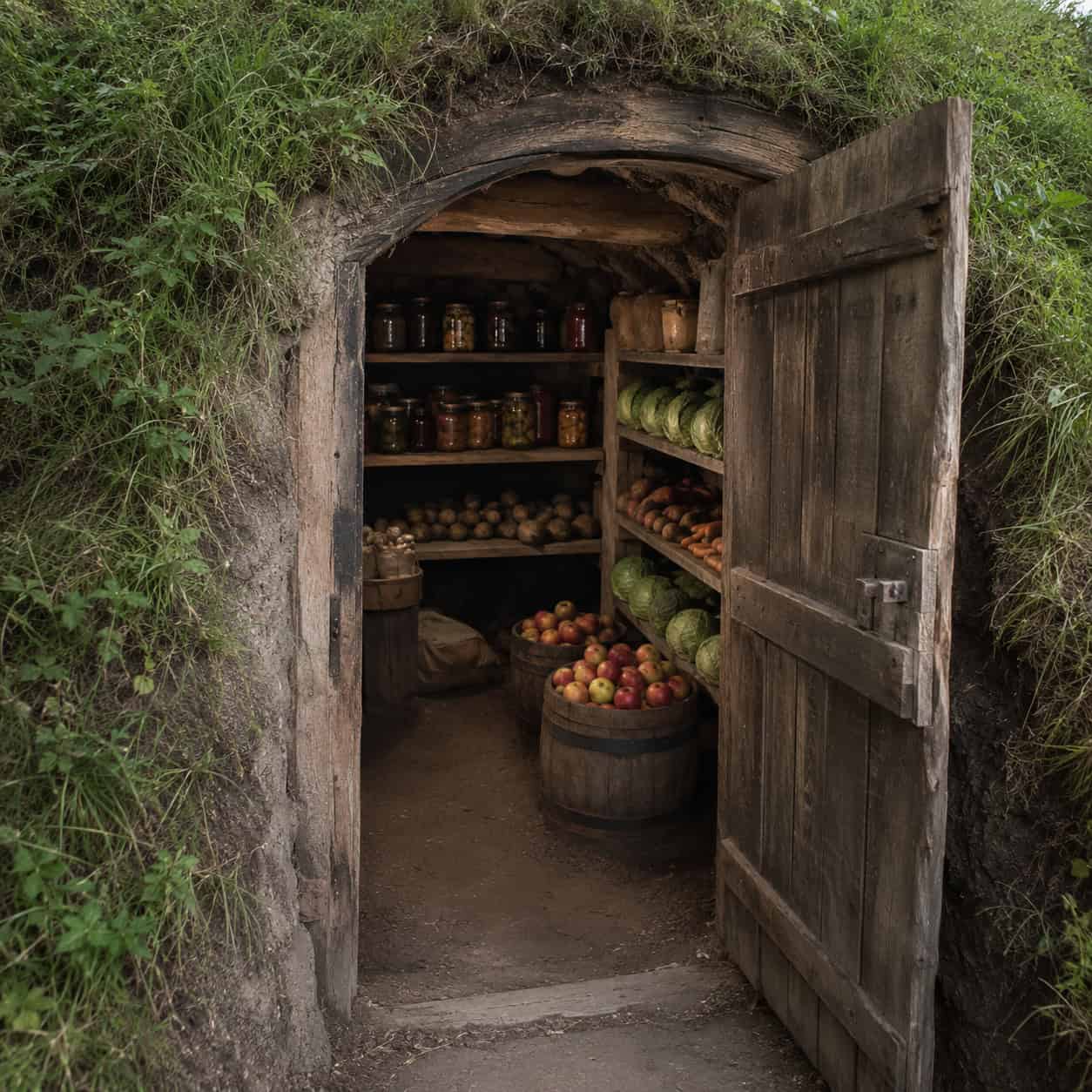
Dig below the frost line and the ground holds a steady 50 to 55 degrees, all year, for free.
That’s the whole engineering trick. A pit dug into a bank, lined with stone, roofed with earth — and suddenly you had a place to store potatoes, carrots, cabbages, and barrels of apples straight through winter.
In Appalachia people called it a cellar house, or a warmhouse, because it kept food from freezing as much as from rotting.
Plenty still survive, mounded into hillsides like little earthen igloos. Most people walk right past them.
6. The Milk House (Dairy)

Often built of stone, often paired right with the springhouse, the milk house cooled fresh milk fast and turned it into butter and cheese.
Speed mattered. Milk that sat warm went off, so the building sat over running water or held shallow cooling tanks to drop the temperature quickly.
Then the sanitation laws arrived in the early 1900s. Dairy inspectors demanded smooth, washable surfaces and separation from the barn, and the milk house got rebuilt in concrete and tile.
You can read the whole history of dairy regulation in the difference between the old stone version and the clinical white one that replaced it.
7. The Corn Crib

Notice the gaps. The walls of a corn crib were built from spaced slats on purpose.
Ear corn needed air to dry, so the crib was narrow and slatted, letting wind pass right through the pile. Raising it on stone or wooden piers kept rats and damp out from underneath.
The fancy versions were double cribs with a drive-through center aisle, so a loaded wagon could pull in and unload out of the rain.
The combine ended all of it. Once machines could pick and shell corn in the field and blow it into a steel bin, the slatted crib had nothing left to do.
8. The Granary

Don’t confuse it with the corn crib. The granary had solid walls.
Threshed grain — wheat, rye, oats — was loose and fine and would have poured straight through any gap, so this building was built tight. Inside were wooden bins, often raised off the floor to keep mice and moisture away from the harvest.
It needed to keep weather and vermin out completely, where the crib needed to let air in. Opposite jobs, opposite designs.
The grain elevator and the modern steel bin absorbed the granary’s work and left the wooden one to rot.
9. The Dry House (Fruit & Apple Drying)

Before home canning took over, drying was how you kept fruit through winter.
And on bigger Pennsylvania and Carolina farms, drying got its own little building — the dryhouse, or fruit house. Apples and peaches were sliced thin and spread on stacked racks while a low, gentle heat pulled the moisture out over a day or two.
Get it too hot and the fruit scorched. Too cool and it molded. The dedicated building made the temperature easier to hold.
Almost nobody today realizes dried apples once justified a whole structure.
10. The Bake Oven (Bake House)

A domed beehive of brick and stone, sometimes sheltered under its own little roof, set well away from the house.
The distance was the point. A bake oven held a roaring fire to soak the masonry with heat, then the coals were raked out and a week’s worth of bread baked in the stored warmth. You did not want that fire attached to your home.
One firing, then loaf after loaf as the oven slowly gave its heat back.
Pennsylvania German farms loved them. Many sat just outside the summer kitchen, the two buildings working as a team.
11. The Butcher House

People mix this one up with the smokehouse. They’re two different steps.
The butcher house was where the cold-weather hog killing actually happened — the scalding, the cutting, the rendering of lard, the grinding of sausage and the cooking of scrapple. The smokehouse came after, when the hams went up to cure.
Butchering waited for cold weather on purpose, so the meat stayed safe while you worked it.
This building fed the smokehouse. One did the messy work; the other did the slow keeping.
12. The Ash House

Here’s one almost nobody can name anymore.
A small, dry shelter where the family hoarded hardwood ashes from every fireplace and stove. Pour water slowly through those ashes and the runoff is lye — the caustic stuff you needed to make soap.
That same leached product, dried down, became potash, and farms sold it for cash. Chemistry on the homestead, running quietly out of a shed nobody would look at twice.
It faded by the late 1800s, once you could just buy soap and washing powder at the store.
13. The Maple Sugar House
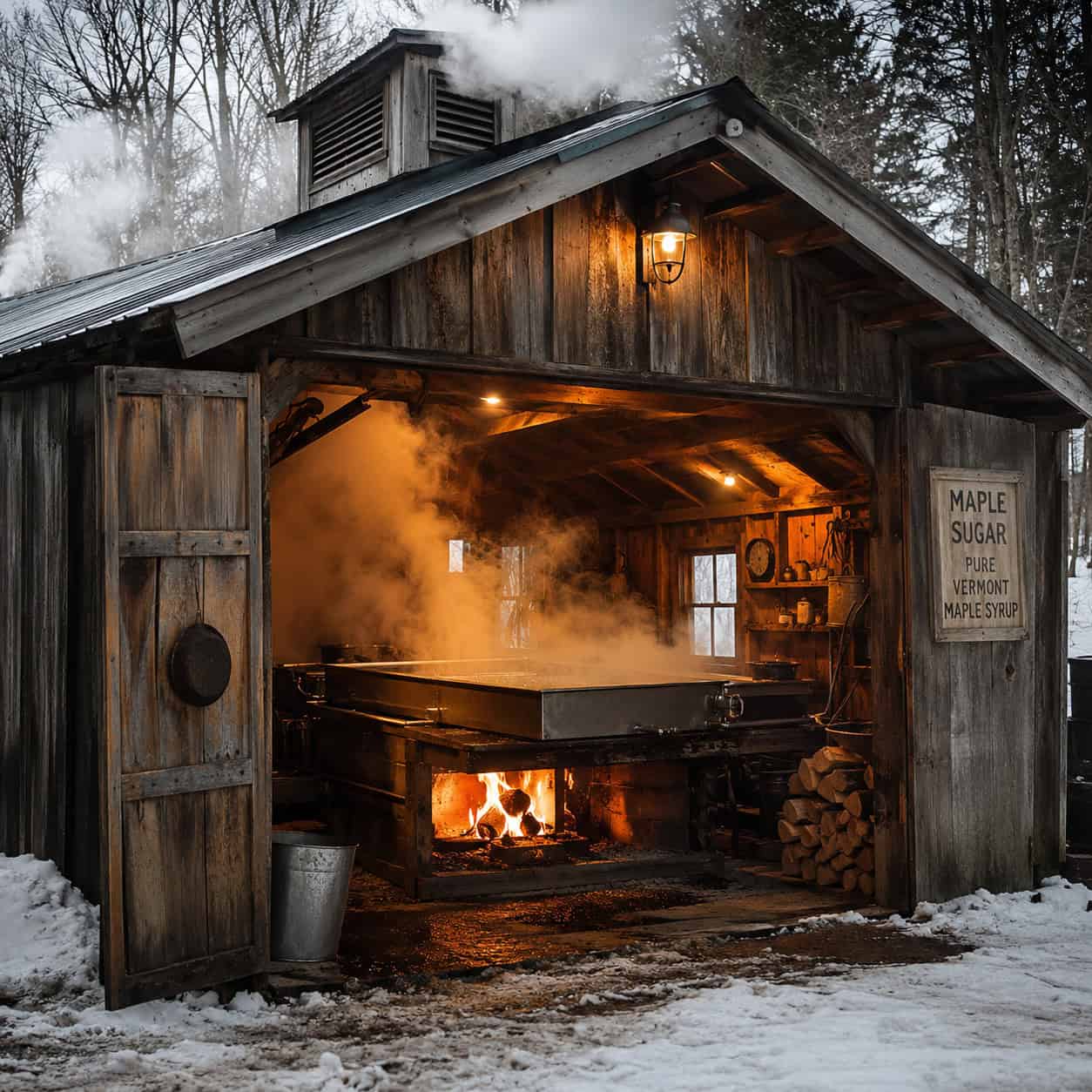
Late winter in the North meant the sap was running.
So the sugar house came alive — a vented shack with a roaring fire under a long, flat pan of boiling sap. A cupola on the roof let great clouds of sweet steam pour out, because it takes roughly 40 gallons of sap to make a single gallon of syrup.
The smell of that boil is one a lot of people never forget.
Commercial sugarhouses still run every spring. But the little one on the family farm, fired up by the household for its own pantry, mostly disappeared.
14. The Syrup Shed (Sorghum Mill)
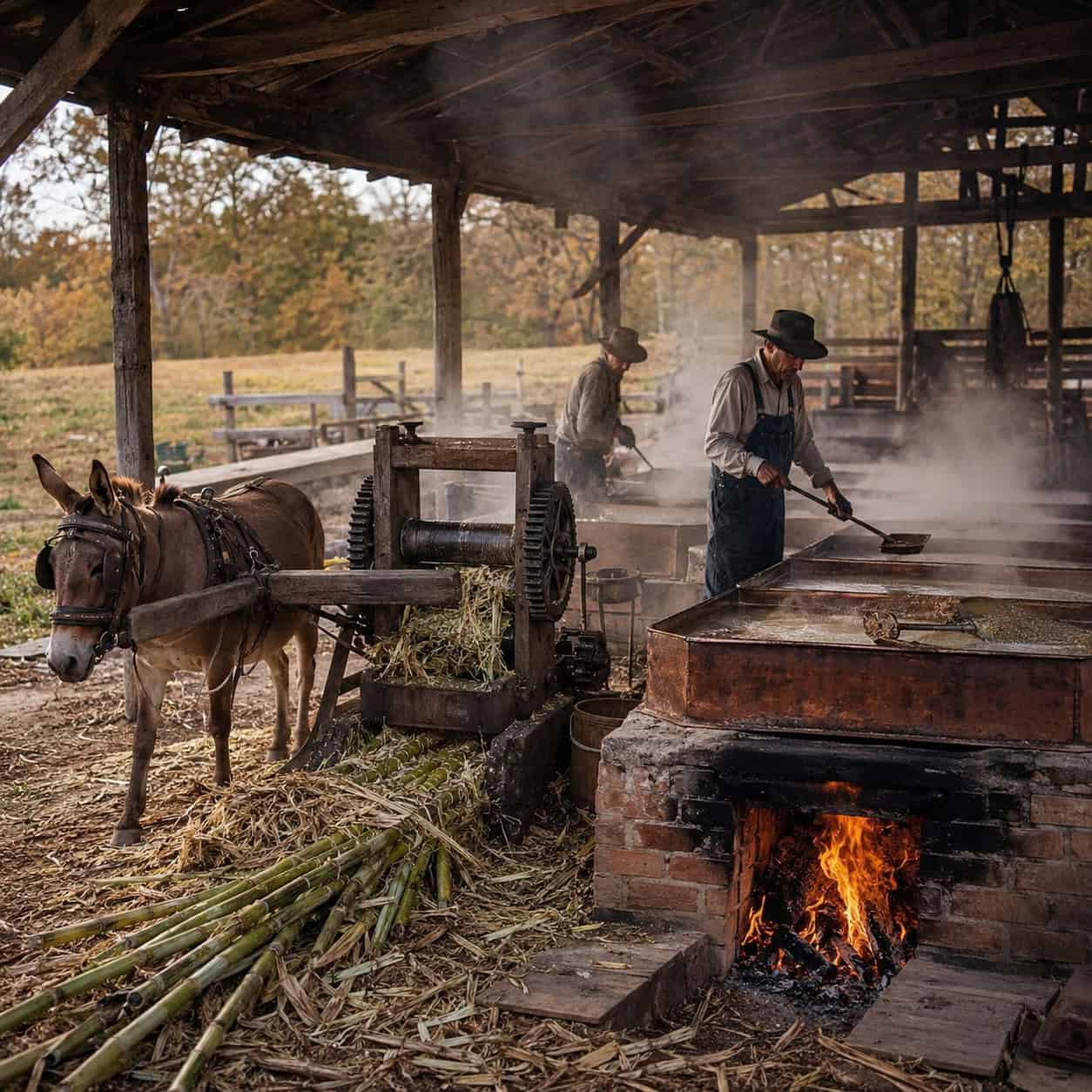
The Southern answer to the sugar house, and a louder, smellier affair.
A mule walked in slow circles turning a cane mill that crushed sorghum stalks, while the green juice ran into long copper boilers set over a brick furnace. Skim, boil, skim again, until it thickened into dark syrup.
It was a community event. The fall sorghum boil pulled in the neighbors, and everyone went home with jars.
Brick-kettle syrup sheds still sit and crumble on old Georgia and Carolina farms, the copper long since carried off.
15. The Dovecote (Pigeon House)

An elevated tower, or a wall honeycombed with little nesting holes. People rarely guess this one.
It raised pigeons — specifically squab, the young birds, which were tender table meat year-round. And the droppings that piled up underneath were a powerful fertilizer, collected and spread on the fields.
In Europe a dovecote was a lordly status symbol. In America it was a quiet, practical machine that made meat and manure at the same time.
Most stood in the South and mid-Atlantic. Almost none get recognized today.
16. The Poultry House & Brooder

A coop holds grown hens. A brooder house is something more.
This was a heated building for raising chicks — kept warm by a stove or a coal-fired brooder lamp so the babies survived the cold weeks before they could keep themselves warm. It was real, purpose-built infrastructure, not just a shed with a roost.
Brooder houses peaked in the early 1900s, when small farms raised their own flocks for eggs and meat.
Industrial poultry barns swallowed the job whole. The little brooder now reads as just another nameless outbuilding.
17. The Hog House (Pig Pen)

Low, simple, and central to the whole operation.
The hog house sheltered and fed the pigs — the very animals the butcher house and smokehouse depended on. Without the hogs, half the farmyard had no purpose.
Sows with new litters got a specialized cousin, the farrowing house, designed to keep piglets from being crushed.
Then hog raising moved indoors into giant confinement operations, and the open farmstead pen vanished along with the smell of slop buckets at dawn.
18. The Privy (Necessary)
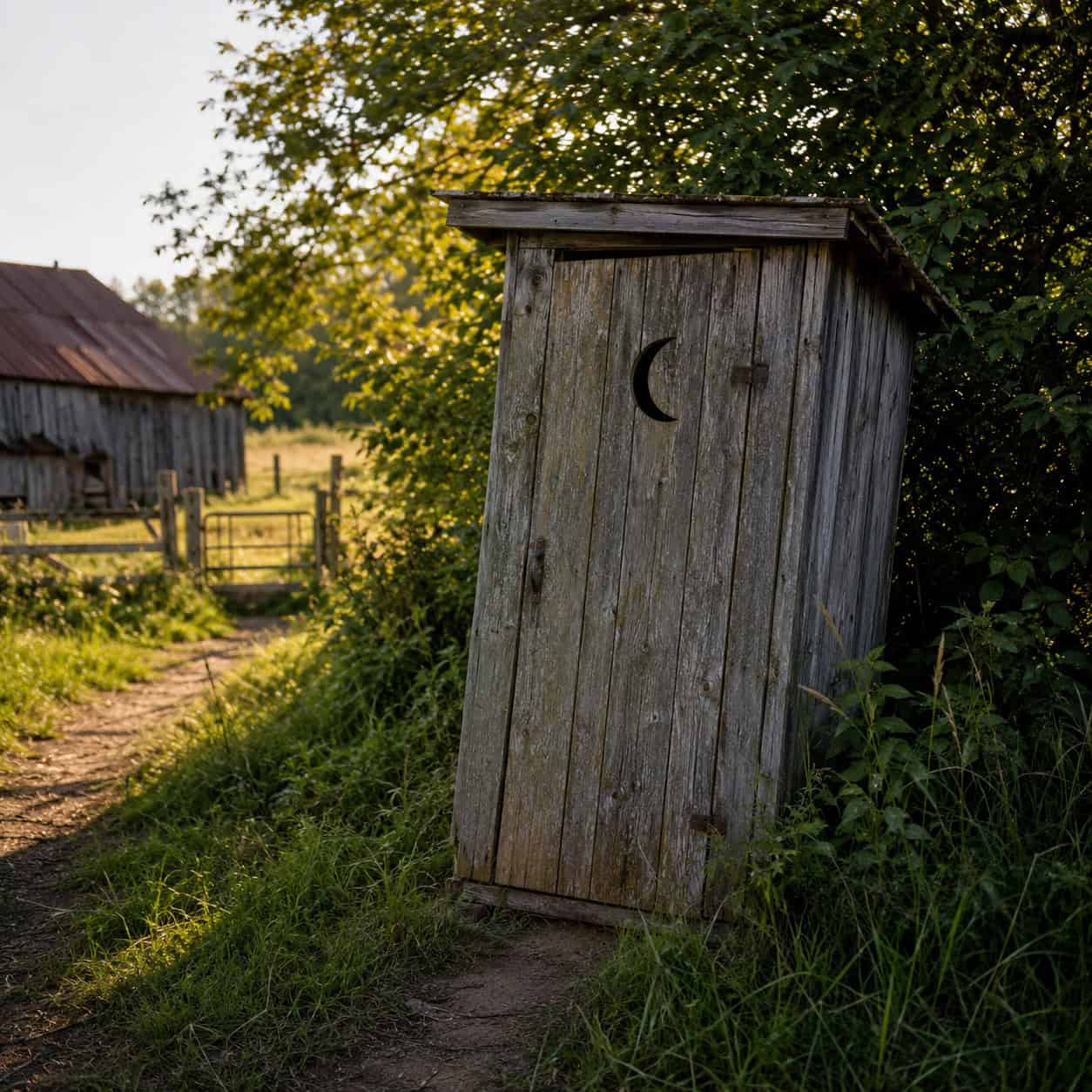
The one little building everybody half-remembers.
The outhouse — or, politely, the necessary — sat at a careful distance from both the house and the well, downhill if you’d thought it through. A one-holer for a small family, a two-holer if you were doing well.
Its placement in the farmyard was its own quiet science. Too close and it fouled the water. Too far and you regretted it in February.
Indoor plumbing reached most of rural America between 1900 and the 1940s, and the necessary became unnecessary. A few still lean in backyards, doors creaking.
19. The Wash House

Laundry used to be an all-day battle, and some farms gave it a building of its own.
Inside you boiled water in a big copper kettle, scrubbed each piece by hand on a board, wrung it out, then heated heavy flat irons on a stove to press it. One load could eat an entire Monday.
Sometimes the wash house and the summer kitchen were the same room, both built to keep heat and steam and chaos out of the home.
Step inside one and you understand exactly why the washing machine sold itself.
20. The Well House (Pump House)
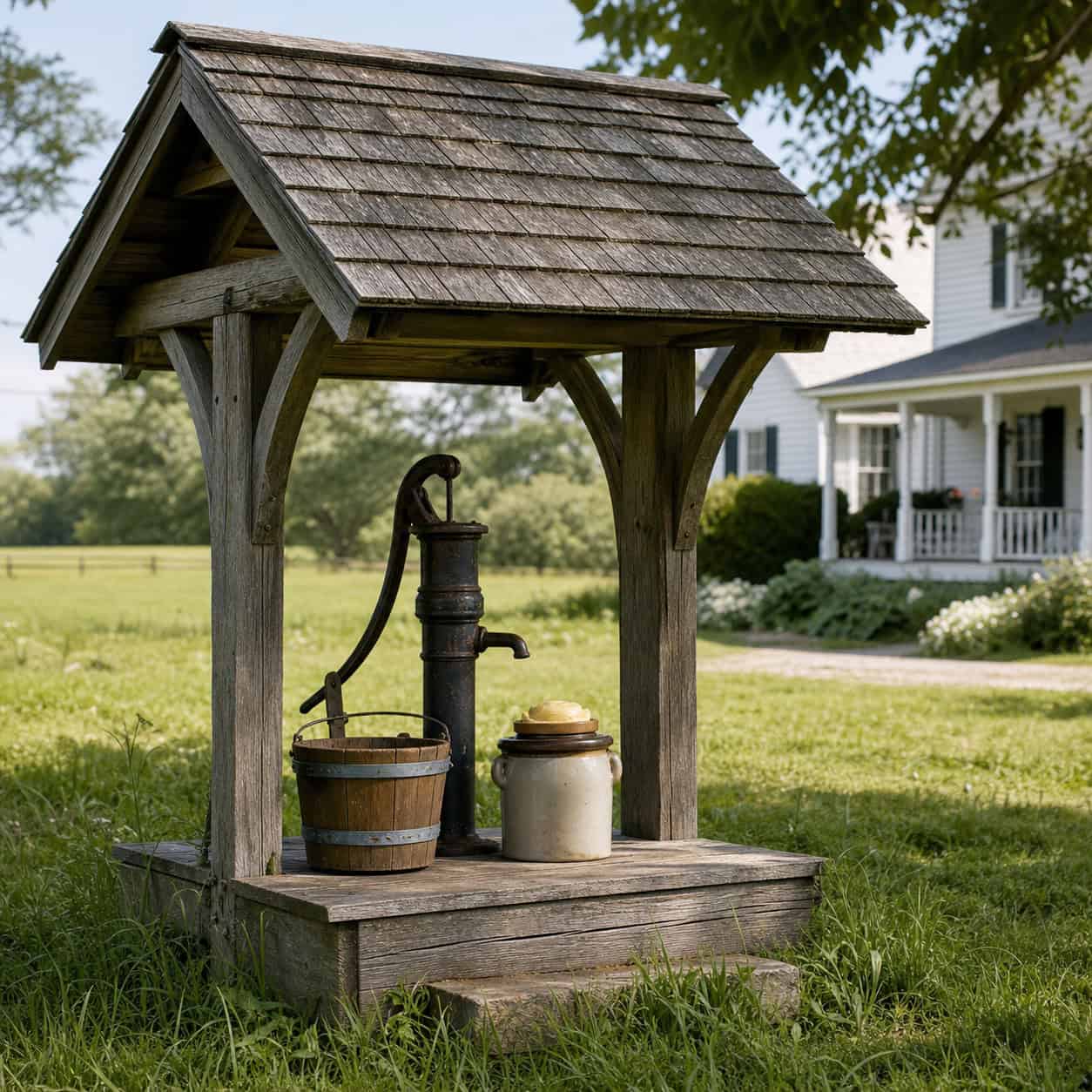
That little roofed structure people keep mistaking for a garden gazebo — this is usually it.
It sheltered the well or the hand pump, keeping the water source from freezing in winter and from getting fouled by rain, leaves, and animals. Many also did duty as cool storage, the spot to set a crock of butter or a pail of milk for the afternoon.
The water was the most important thing on the place. It earned a roof.
Plenty still stand long after the pump went dry, the purpose forgotten by everyone who walks past.
21. The Woodshed

Easy to dismiss as a pile of logs under a roof. It was the engine room.
Every other building’s fire came from here — the bake oven, the summer kitchen, the syrup furnace, the smokehouse, the wash kettle. Dry, split, seasoned firewood was the fuel the entire farm ran on, and it had to stay out of the weather.
Run out of dry wood and half the homestead shut down.
This is also where the phrase “taken out behind the woodshed” was born, since it stood out of sight of the house. Make of that what you will.
22. The Wagon Shed (Carriage House)
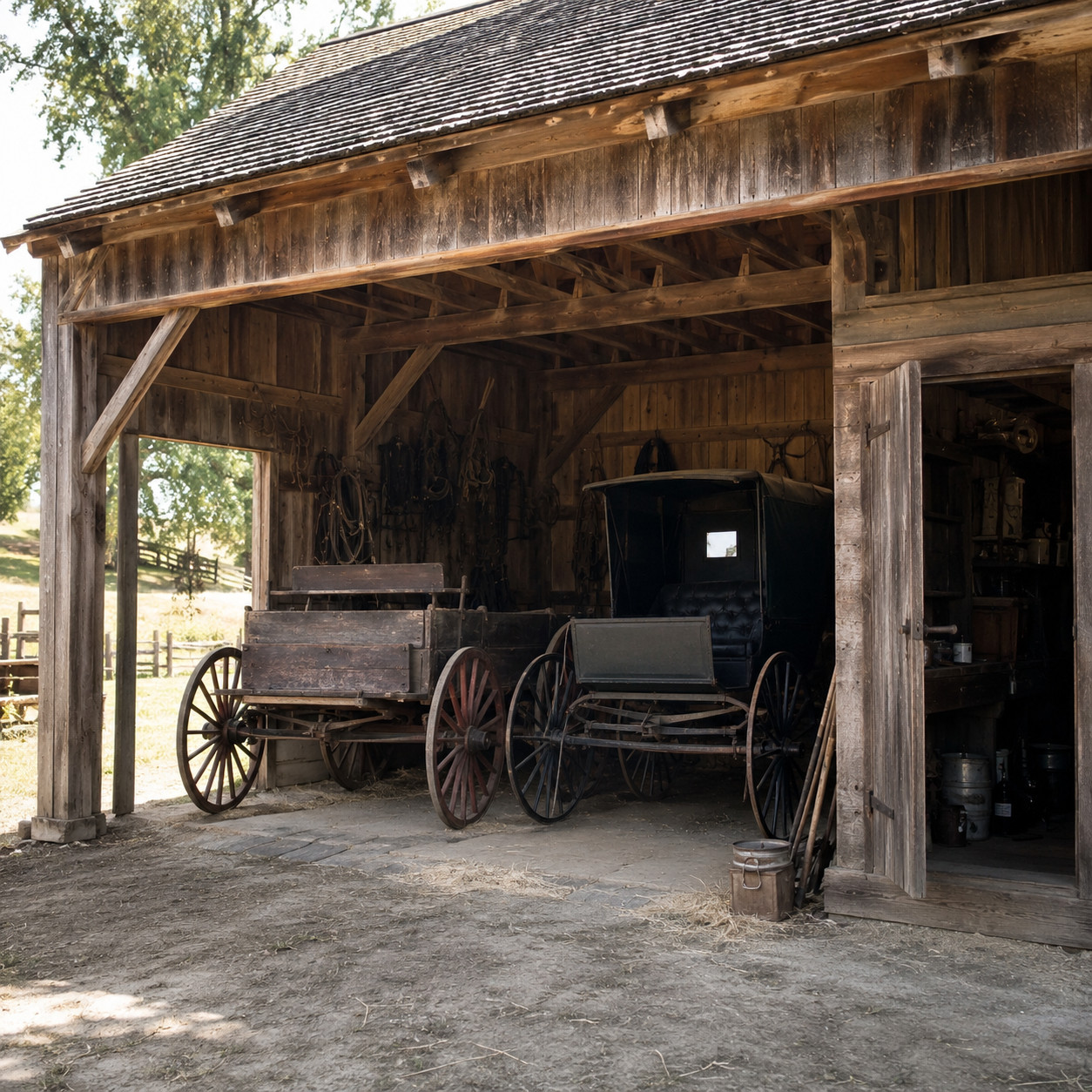
Open across the front, deep enough to back a wagon into.
It sheltered the buggies, wagons, and implements from sun and rain, with a tool room often tucked off to one side. Wooden wheels and leather harness rotted fast if left exposed, so the wagon shed protected the family’s transportation.
Then the automobile arrived. And in a generation, a great many wagon sheds simply became the farm garage, the buggy traded for a Model T parked in the same spot.
23. The Smithy (Blacksmith Shop)

A bigger farmstead kept its own forge, and its own dying trade with it.
Inside was a coal forge, an anvil, and a barrel of water for quenching, where the farmer or a hired smith shaped tools, mended broken implements, and shod the horses. This was self-sufficiency before the hardware store and the tractor dealership existed.
You made what you needed, or you fixed what you had.
Cheap manufactured hardware and the gas engine ended the home forge. The skill went with it, and now barely anyone alive can swing a hammer at glowing iron.
24. The Tobacco Barn

Tall, narrow, and built full of gaps on purpose.
Slatted or vented sides let air move through bundles of hanging tobacco leaves, slowly curing them — sometimes helped along by small, carefully tended fires below. The whole structure was a curing machine you could walk inside.
The numbers tell the rest. North Carolina alone once had something like half a million tobacco barns.
Today maybe 50,000 still stand, and they’re collapsing fast — a roof caving in here, a wall folding there, every season fewer. The vanishing made literal.
25. The Apiary (Bee House)
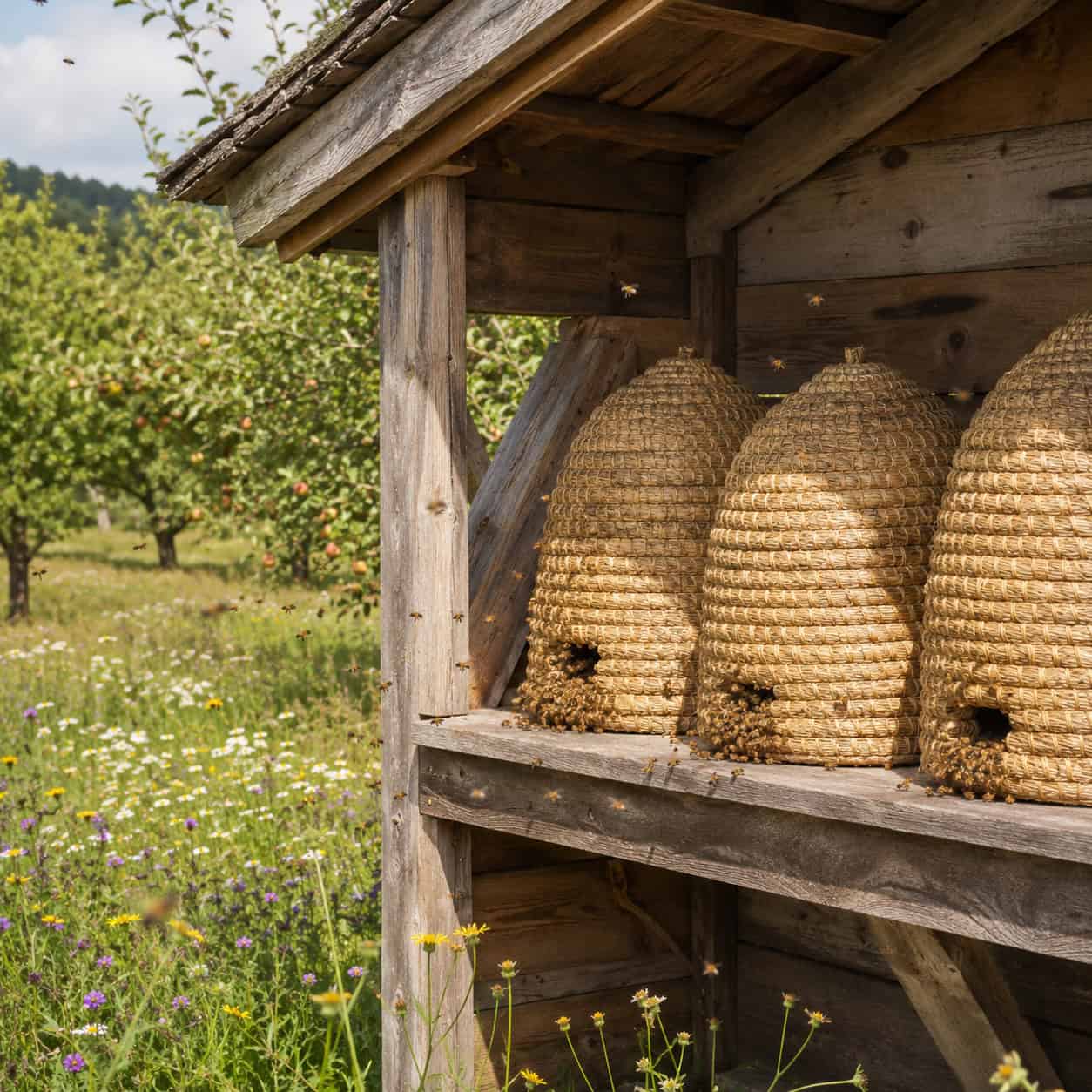
Often it was barely a building at all — a sheltered shelf, a little roofed stand, a niche in a wall.
It protected the straw bee skeps, those domed coiled hives, from rain and wind. The bees inside made the farm’s only sweetener before refined sugar was cheap, plus the beeswax for candles and sealing.
This was before the modern movable-frame hive, so harvesting honey often meant destroying the skep.
Small, charming, and nearly invisible in the historical record. Most have left no trace at all.
26. The Cider House

Apple country ran on cider, and the cider house held the works.
A heavy press squeezed the orchard’s apples into juice, and rows of barrels lined the walls to let it ferment into hard cider — then, eventually, into vinegar for the kitchen and pantry. An orchard produced far more fruit than a family could eat fresh, so most of it went through this building.
The press was the heart of it, all oak beams and a great wooden screw.
Prohibition and the decline of the farm orchard quietly emptied the cider house out.
27. The Loom House (Weaving House)

Before you could buy a bolt of cloth, you grew it, spun it, and wove it yourself.
The loom house was a detached room built around a big floor loom, where flax raised in the field and wool sheared off the sheep became homespun cloth for the whole family. A loom that size took up real space and ran for hours, so it earned its own quiet corner of the farmyard.
Cheap mill cloth from the textile factories ended home weaving by the early 1800s.
The loom went to the attic, then to the fire, then to memory.
The Last Word
Walk an old farmstead and you’re walking through a checklist of solved problems. Keep the milk cold. Cure the ham. Dry the corn. Boil the sap. Each building was an answer somebody built with their hands.
The grid solved all of it at once, and the little buildings lost their jobs in a single generation. We didn’t tear most of them down. We just stopped needing them, and the weeds did the rest.
So the next time you spot a windowless stone box behind a barn, you’ll know it had a name and a purpose — and somebody once depended on it to get through the winter.