

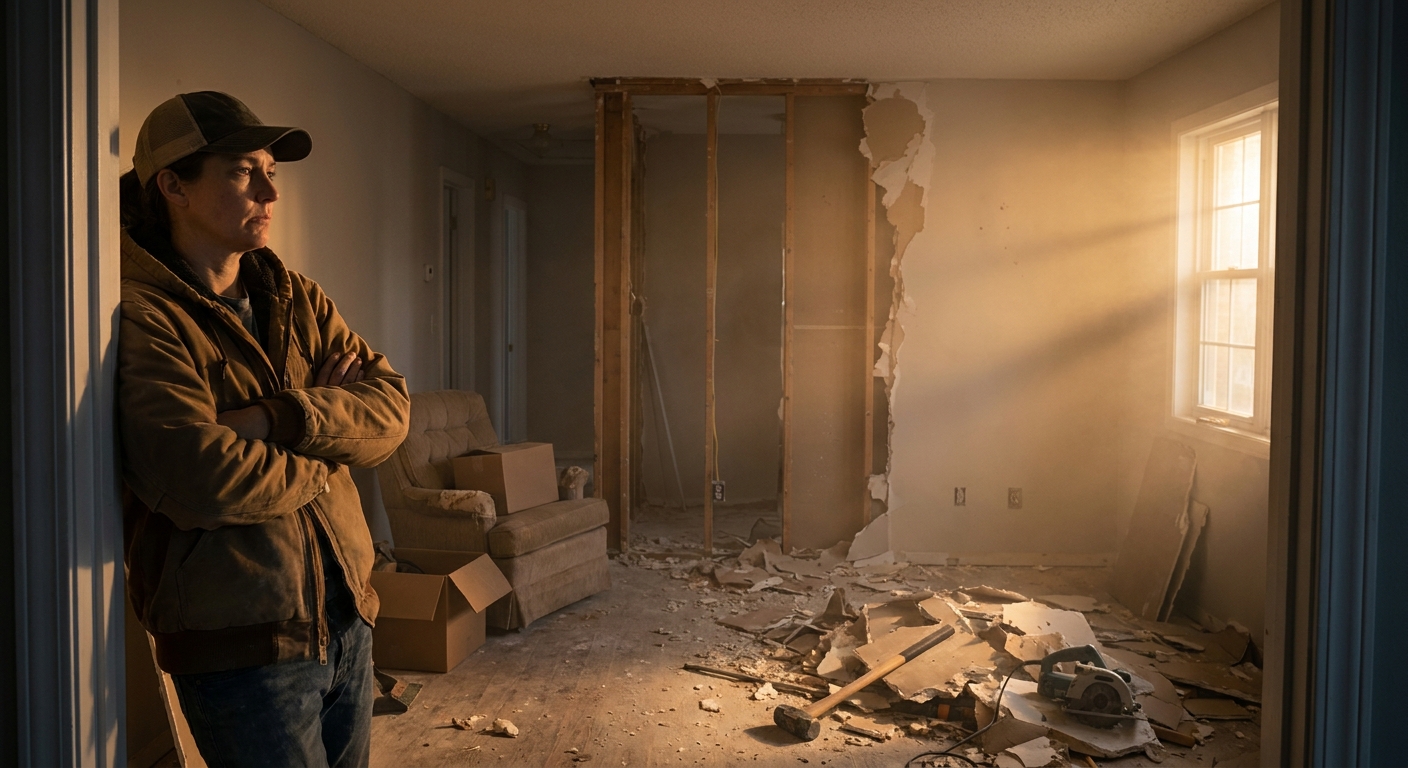
You found the guy. He showed up to the estimate on time, he talked a good game, the number worked, and you shook hands feeling like the hard part was finally behind you.
That’s the part nobody warns you about. Hiring a contractor isn’t the hard part. Hiring the wrong one and not realizing it until your kitchen is a pile of studs and your deposit is gone — that’s the hard part.
A bad contractor almost never announces himself. He looks exactly like a good one standing in your driveway with a clipboard. The difference shows up later, buried in the small things you waved past because you wanted the project to start.
Some of these signs you can catch before you sign anything, while walking away still costs you nothing but a wasted afternoon. Some you only notice once the crew is inside and the leverage has quietly shifted to him. And a few you don’t see at all until the trucks stop coming and you’re standing in a half-finished room wondering what just happened.
Here are 25 signs you hired the wrong contractor — roughly in the order you’ll run into them, because the earlier you catch it, the more it’s still in your power to stop.
1. The Bid That Came in Thousands Under Everyone Else
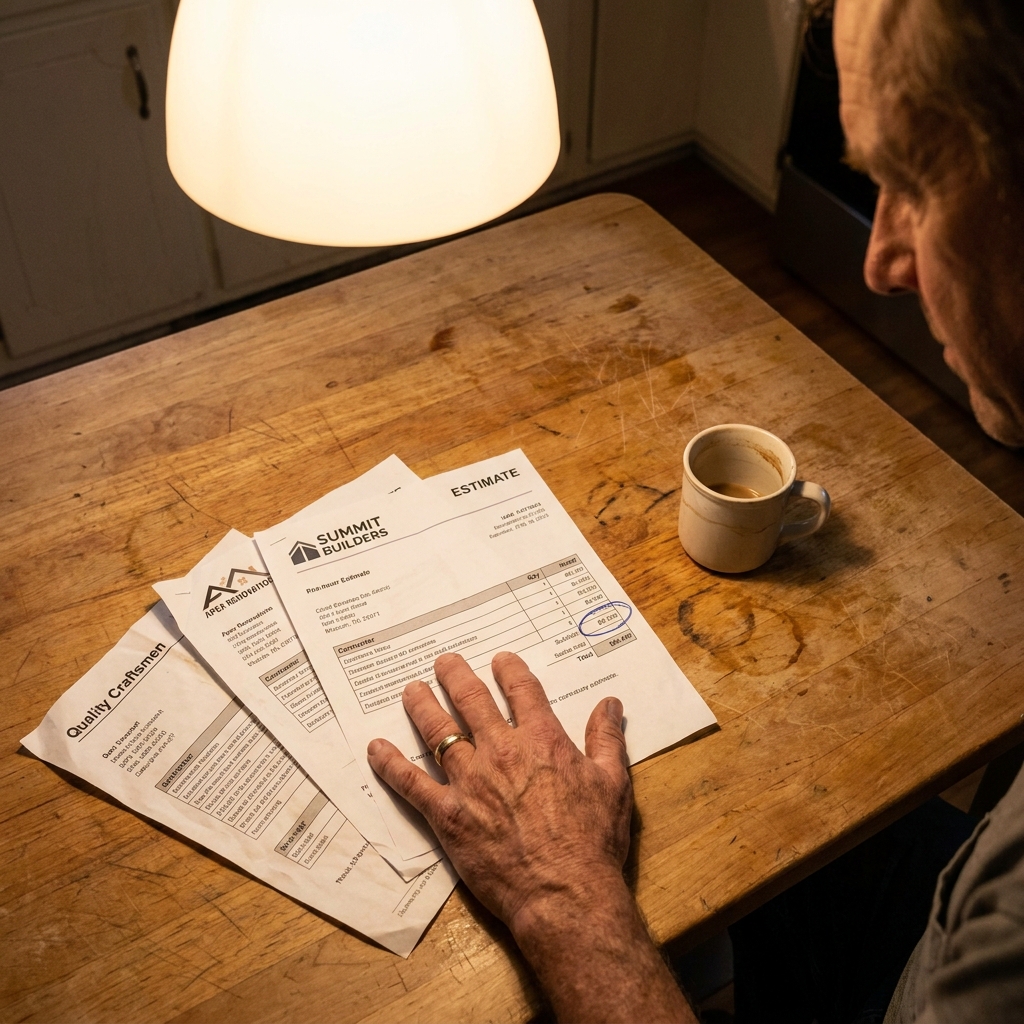
You got three quotes. Two of them landed within a few hundred dollars of each other. The third came in thousands lower, and that’s the one you want to believe.
Here’s what’s actually happening most of the time. The lowest bidder isn’t more efficient or hungrier for the work. He left things out, lowballed on purpose to win the job, and is counting on “unexpected issues” to make up the difference once your house is already torn apart.
By the time the change orders start, you’re emotionally and financially committed. You’ve already paid a deposit. The old kitchen is gone. Backing out now means starting over, so you keep writing checks. That’s not an accident — it’s the entire business model.
A bid that’s a little lower is competition. A bid that’s wildly lower is a warning. Ask the cheap one to walk you through exactly why, line by line. If he can’t, you have your answer.
2. He Can Start Tomorrow
A genuinely good contractor in a normal market is booked out for weeks, sometimes months. People who do excellent work get recommended, and people who get recommended have a waiting list. That’s just how it works.
So when someone tells you he can have a crew at your house first thing tomorrow, the question isn’t “isn’t that great.” The question is why a skilled, in-demand professional has a completely empty schedule.
Sometimes there’s an innocent reason — a job fell through, there was a cancellation. But more often, an open calendar means the people who’ve worked with him before are not calling him back, and the people he’s worked for are not sending their friends.
Availability that sounds too convenient usually is.
3. He Can’t Give You a License Number You Can Verify

Most states and many municipalities require contractors to be licensed for work over a certain dollar amount. A legitimate one will hand you that number without flinching, because he knows you can look it up and it’s clean.
The bad signs come in layers. He doesn’t have a number. He has one but gets vague when you ask for it. He gives you one, but the name on the license doesn’t match the name on the truck, the contract, or the bank account he wants the check made out to.
Every state has a free online license lookup. It takes about ninety seconds. It will tell you if the license is active, who actually holds it, and whether there are complaints or disciplinary actions attached to it.
If he gets defensive when you mention you’re going to check, you’ve already learned the most important thing about him.
4. He Waves Off the Insurance Question

You ask if he’s insured. He says “oh yeah, don’t worry about it, my guys are covered” and changes the subject. He does not produce a certificate. He does not offer to have his insurer send you one.
This is not a small thing. If a worker falls off your roof and there’s no workers’ comp policy behind him, that injury can become your problem and your homeowner’s policy’s problem. If his crew puts a saw through a water line and floods the house next door, his liability coverage is the only thing standing between you and that bill.
A real contractor carries general liability and workers’ compensation, and he is used to proving it. The correct answer to “are you insured” is not a reassuring sentence. It’s a document, sent directly from the insurance company, with current dates on it.
“Trust me” is not an insurance policy.
5. The “Estimate” Is One Line With a Single Number

A real estimate is a document. It lists the scope of work, the materials, the rough timeline, the payment schedule, and what is specifically not included. It’s boring to read, and that’s the point.
What you do not want is a number scrawled on the back of a business card, or a one-line text that just says the total. Not because the number is necessarily wrong, but because a single number gives you nothing to hold him to later.
When the work doesn’t match what you thought you agreed to, the itemized estimate is your evidence. Without it, every dispute becomes your word against his, and he does this for a living. You do not.
Vague pricing at the beginning is a preview of vague everything for the rest of the project.
6. He Wants 40 to 50 Percent Up Front
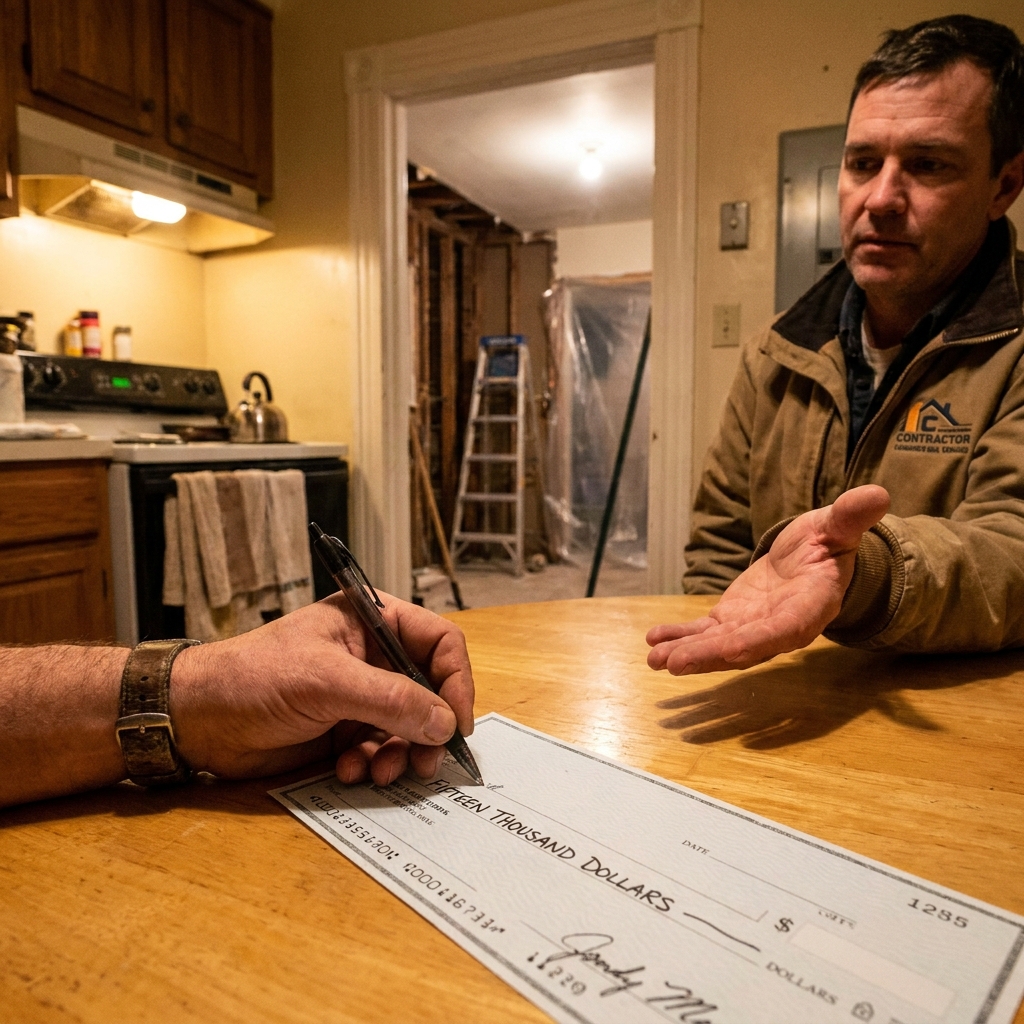
A deposit is normal. A reasonable one secures your spot on the schedule and covers initial materials. In a lot of states, the legal maximum a contractor can require up front is surprisingly small — often something like ten percent of the job, or a flat amount like a thousand dollars, whichever is less.
So when someone asks for half the total before a single tool comes off the truck, two things should go through your mind. The first is that he may be violating the law in your state. The second, and more important, is what that demand says about his finances.
A contractor who needs your money to start your job is a contractor who is using your money to finish someone else’s. That’s not a stable business. That’s a person running one job ahead of collapse, and you’re funding the gap.
The size of the deposit is one of the clearest early reads on whether this ends well.
7. Cash Only, or a Discount for Cash
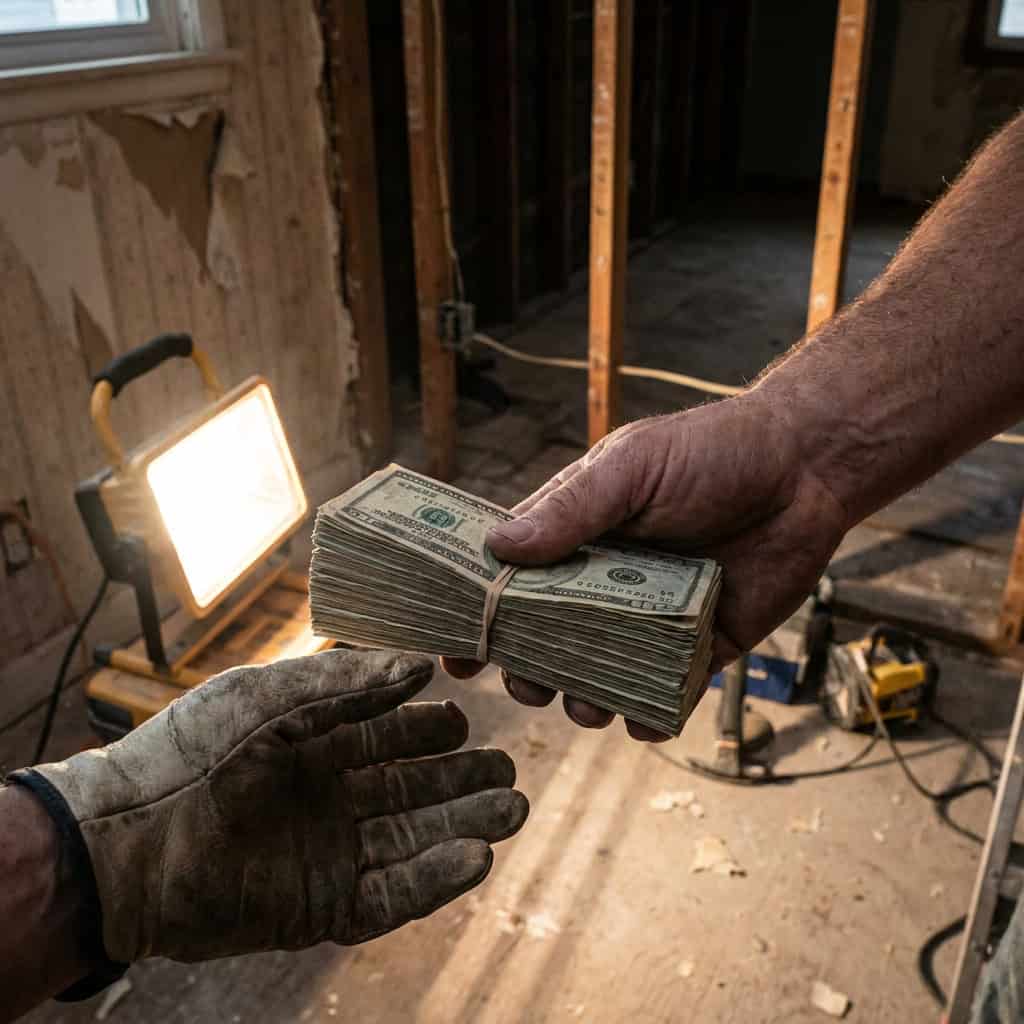
“I can knock a little off if you pay cash” sounds like he’s doing you a favor. He’s not. He’s asking you to give up every protection you have.
Cash means no paper trail. It means no credit card company you can call to dispute a charge if he disappears. It very often means the work is off the books, which tends to travel with no license, no insurance, and no intention of reporting any of it.
When a job goes bad, the people who paid by check or card have options. The people with a fistful of cash receipts and a half-finished bathroom have a story nobody official can do much about.
A discount that costs you all your leverage is not a discount.
8. “You Don’t Need a Permit for That”
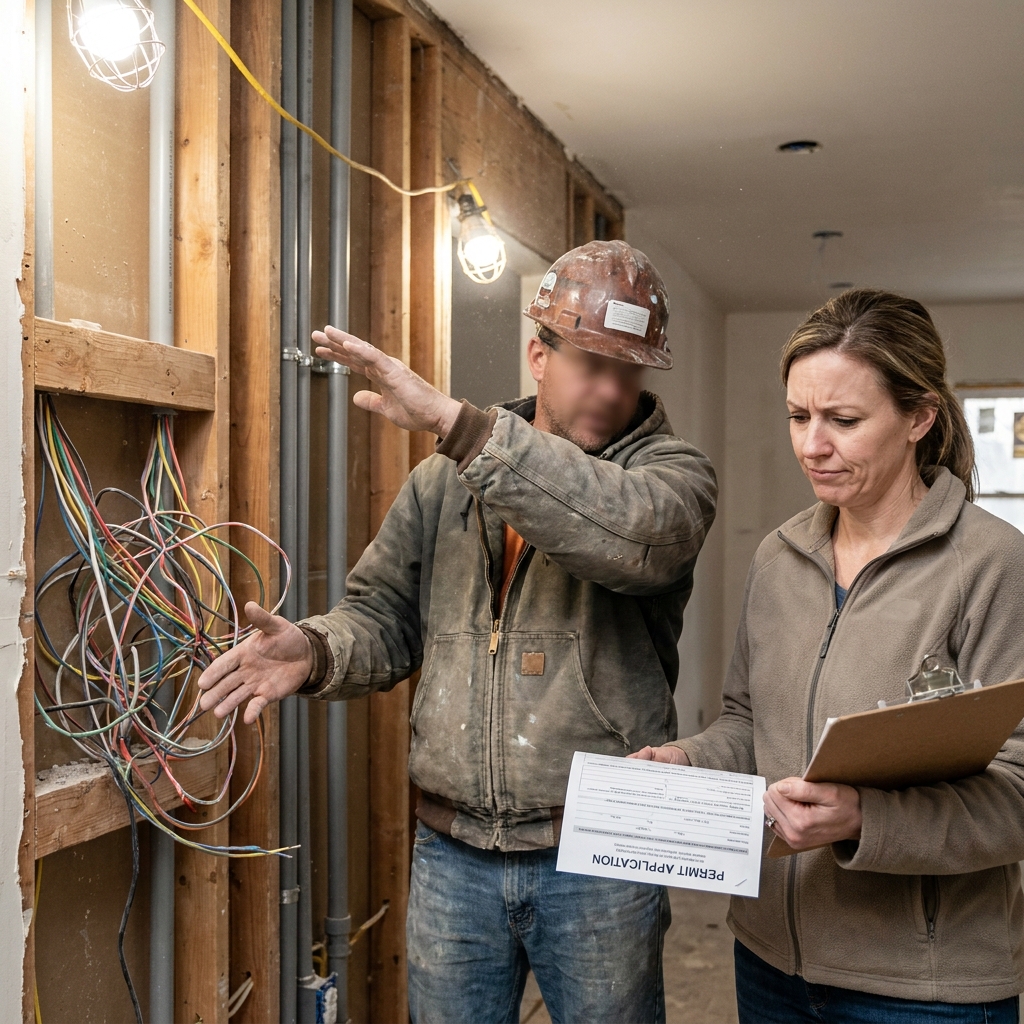
You bring up permits. He tells you not to worry about it — permits just slow everything down, cost money, invite the town to nose around, and your job is too small to bother.
Sometimes a job genuinely doesn’t need one. But a contractor who reflexively steers you away from permits on work that clearly requires them is telling you something. Usually it’s that he can’t pull one, because his license is suspended or nonexistent, or that he doesn’t want a building inspector looking at how he actually works.
Skipping the permit doesn’t just risk a fine. Unpermitted work doesn’t exist on the record of your house. It can blow up an insurance claim later. It can force you to rip open finished walls to get it inspected before you can sell. The shortcut he’s offering becomes your liability the day he drives away.
The permit isn’t the obstacle. It’s the only outside set of eyes on the work besides yours.
9. He Asks You to Pull the Permit in Your Name
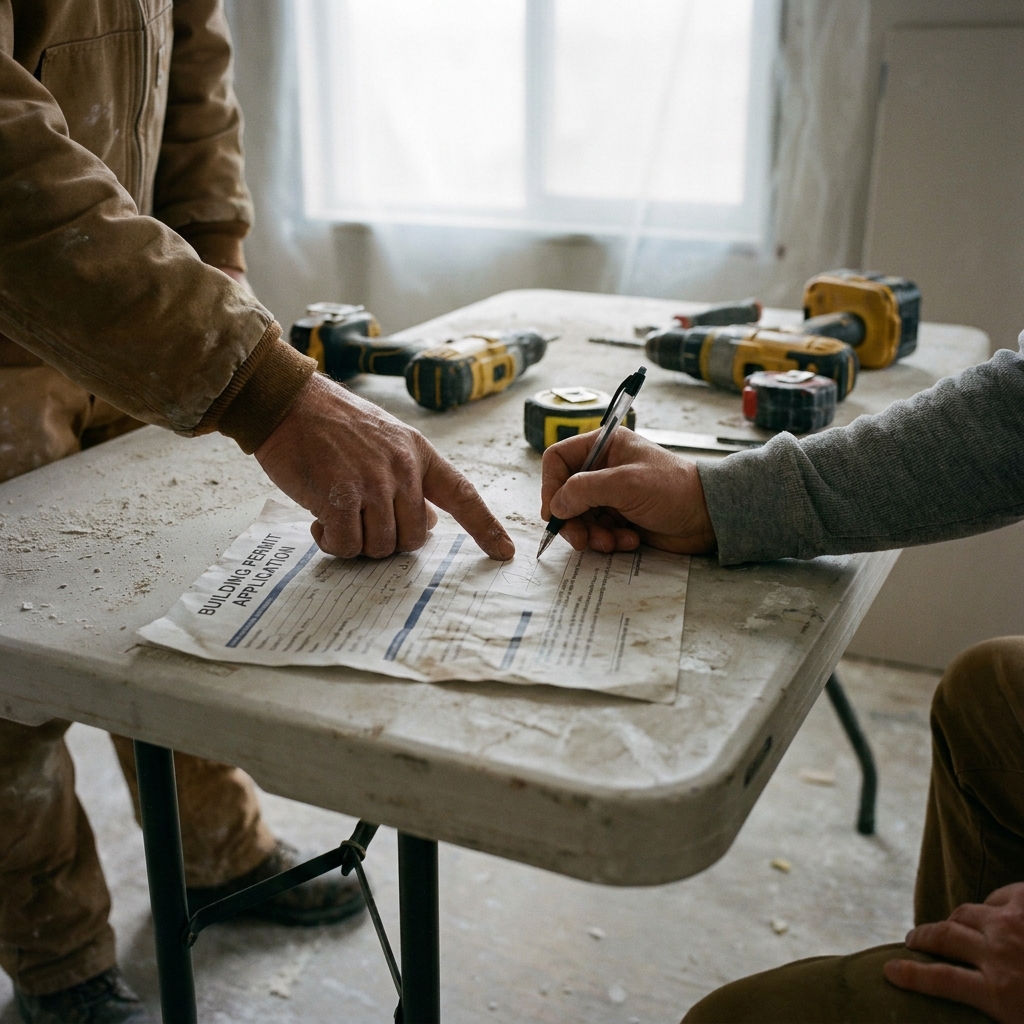
This one looks like a small favor and it’s actually one of the biggest tells on this list.
When a contractor pulls the permit, he’s the responsible party. The building department holds him accountable for the work passing inspection. When he asks you to pull it as a “homeowner permit,” he’s quietly transferring all of that responsibility onto you.
There’s almost always only one reason he can’t pull it himself: he isn’t licensed to, or his license can’t survive the building department looking at it. So he’s asking you to be the name on the paperwork for work you’re not qualified to vouch for and didn’t perform.
If he can’t put his own name on the permit for his own work, ask yourself why you’d put yours there instead.
10. Every Reference Sounds Exactly the Same

You ask for references. You get three names. You call them, and something feels off. The reviews are glowing but oddly vague. Nobody can describe a specific problem and how he handled it. Everyone sounds a little rehearsed, a little too available to take your call.
Then you look him up online and the pattern repeats. A small number of five-star reviews, all short, none with any real detail, several posted within days of each other.
Real customers tell you specific things. They remember the day the wrong tile showed up and how he made it right. They mention the thing that annoyed them and why they’d still hire him anyway. That texture is hard to fake, which is exactly why fake references don’t have it.
Ask a reference for a detail only a real client would know. The silence tells you everything.
11. The Hard Close
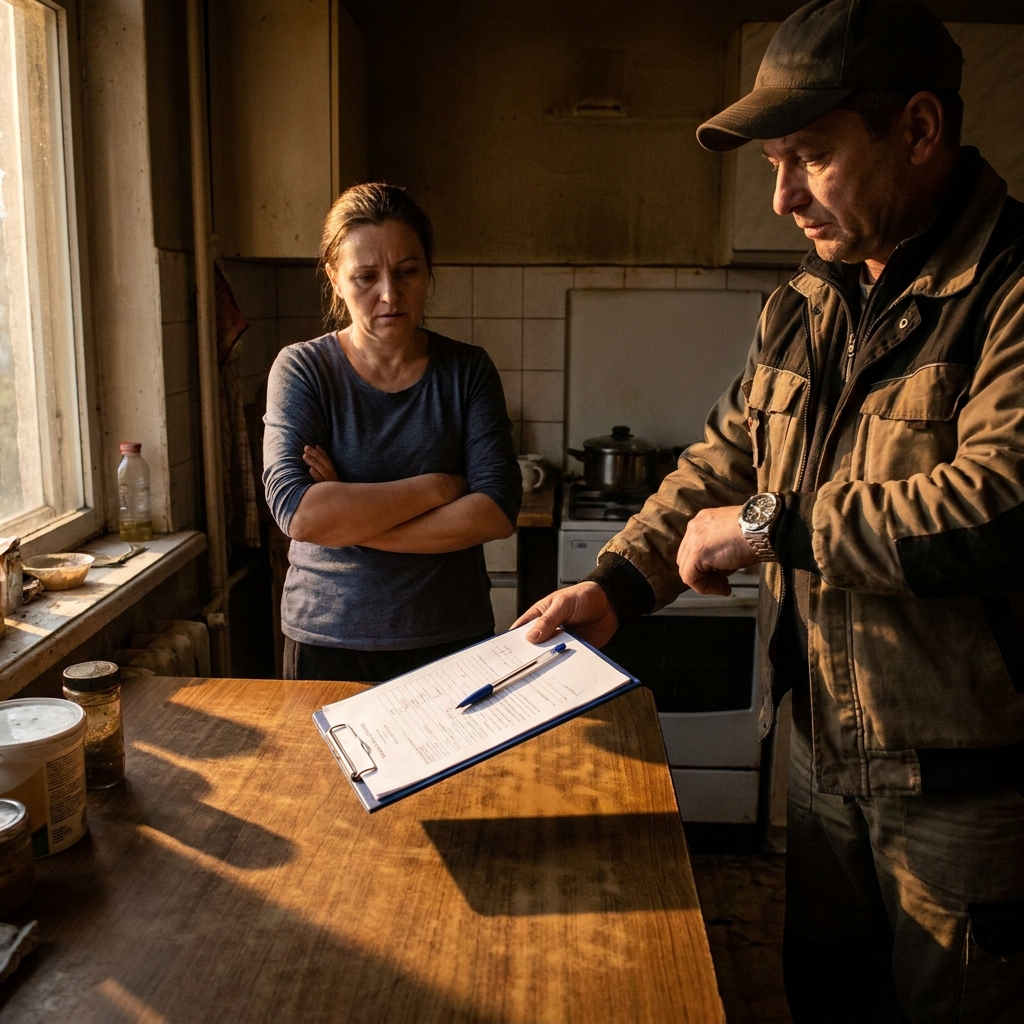
“I’ve got an opening right now, but I need a decision today. This price is only good if you sign before I leave.”
You’ve heard that script before, just not from someone doing a forty-thousand-dollar job on the place you live. High-pressure urgency is a sales tactic, and good contractors don’t need it. Their work and their schedule do the selling. They’re fine with you taking a few days, getting other quotes, and sleeping on it, because they expect to win on merit.
The pressure exists for one reason: to get your signature before you’ve had time to check anything. Anyone who needs you to decide right now is counting on you not looking too closely.
The biggest purchase decisions of your life should never have a countdown clock attached by the person being paid.
12. He Showed Up Uninvited
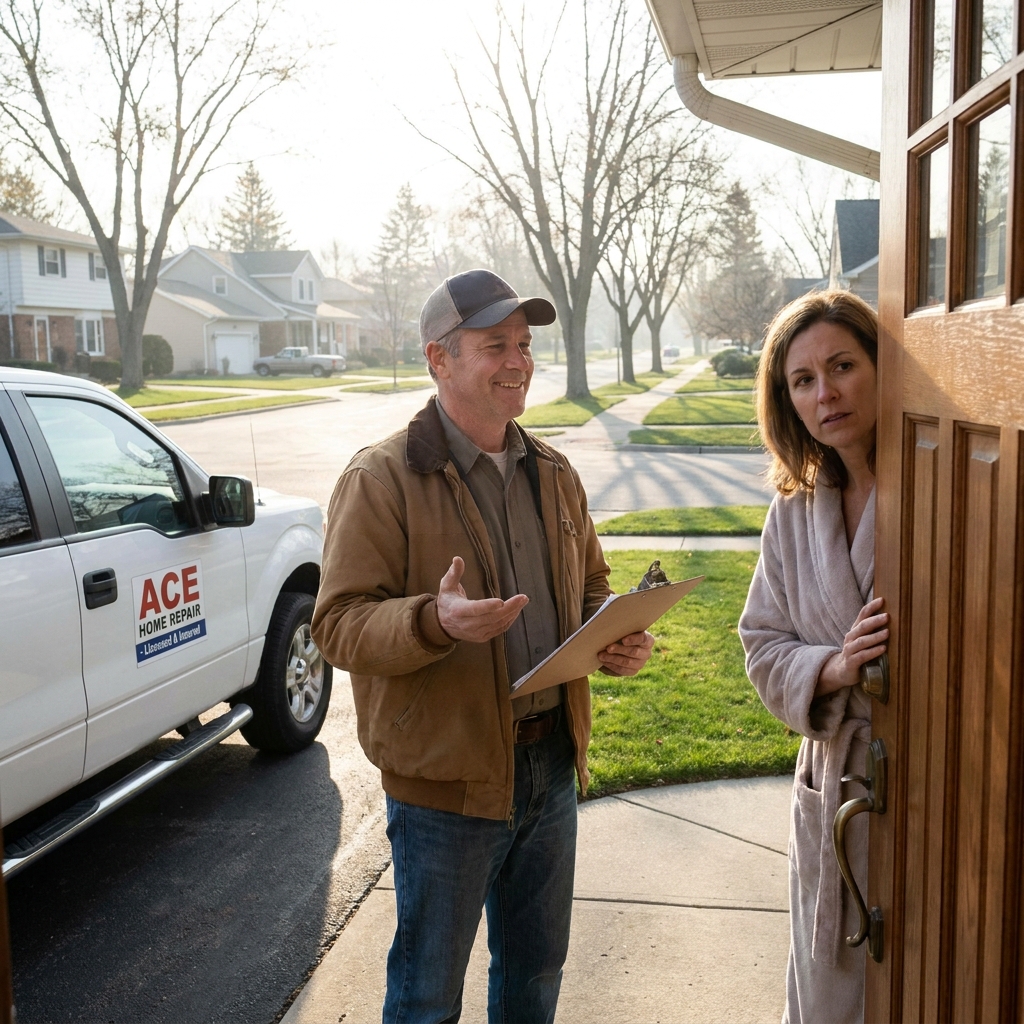
You didn’t go looking for him. He knocked on your door, or left a flyer, or flagged you down in the yard. “We’re doing a job down the street and noticed your roof. We’ve got leftover materials and could give you a deal while we’re already here.”
Almost nobody who does good work finds customers this way. They don’t have to. The door-knock, the storm-chaser, the “we just happened to be in the neighborhood with extra asphalt” — these are the openings of a script, not the start of a craftsman relationship.
The leftover-materials line is especially worth knowing. Legitimate contractors order materials for the job they’re contracted to do. They are not driving around with a surplus of shingles looking for a driveway to pull into.
If the relationship started with him finding you instead of you finding him, slow all the way down.
13. No Real Address, No History, an LLC That’s Six Months Old

You try to look him up. There’s no physical business address, just a cell number. The company name returns almost nothing online. And when you check the state business registry, the LLC was formed a few months ago.
Everyone starts somewhere, and a new business isn’t automatically a bad one. But there’s a specific pattern worth understanding: contractors who rack up complaints, judgments, and bad reviews sometimes dissolve the company and reopen under a new name. The bad history stays behind with the dead LLC. The fresh one has a clean slate by design.
Ask how long he’s been in business, then ask how long this company has existed. If those two answers don’t match, ask why. The explanation, or the lack of one, is the information.
A business with no past is sometimes just new. Sometimes it’s a past somebody buried on purpose.
14. He Won’t Sign an Actual Contract

This is different from a vague estimate. This is no contract at all — just a handshake, a verbal understanding, “we don’t need to make this complicated.”
A contract is not bureaucracy. It is the single document that says what you’re paying, what he’s building, when, and what happens if he doesn’t. Without it, he is free to skip parts of the scope, swap in cheaper materials, cover weak work with a clean finish, and leave you with less than you started with and no way to prove what was promised.
Most states actually require a written contract for home improvement work over a fairly low dollar amount. A contractor who resists putting it in writing is resisting the one thing that would hold him accountable. That resistance is the entire answer.
If he won’t sign something before the work, he certainly won’t stand behind anything after it.
15. He Won’t Put the Warranty in Writing

You ask what happens if something fails in six months. He says “my work speaks for itself” or “I always take care of my customers” and moves on without writing down a single specific.
A workmanship warranty in writing is what turns “I take care of my customers” into something you can actually enforce. Without it, the day a tile pops or a seam opens or the new roof leaks in the first hard rain, you’re entirely dependent on his mood and his memory — and his phone number still working.
Good contractors put their callback policy in writing because they intend to honor it and it costs them nothing to say so. The ones who keep it vague are keeping a door open to walk through later.
A promise you can’t point to on paper is a promise that conveniently disappears the moment you need it.
16. He Badmouths Every Other Contractor and Blames the Last Guy for Everything
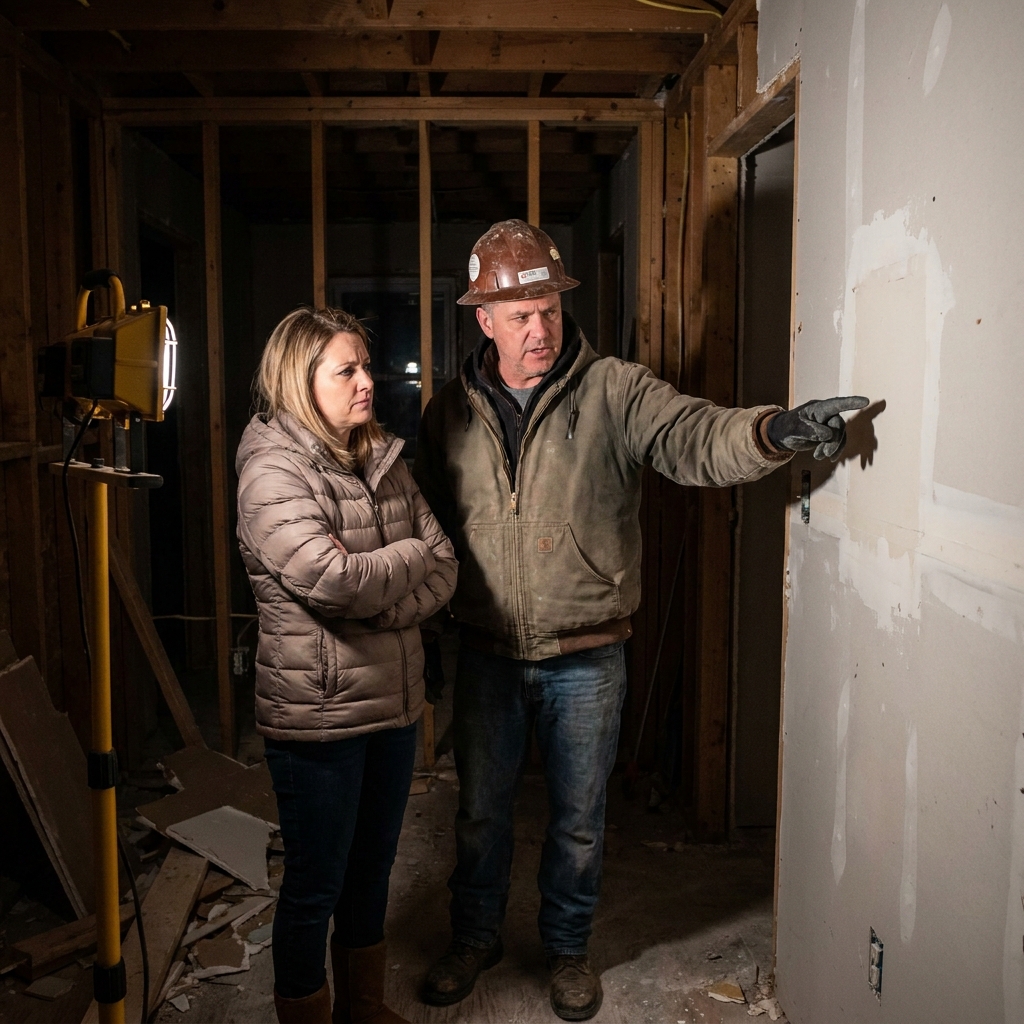
Listen to how he talks about other people in the trade. A confident professional will tell you another contractor’s approach is different from his, and leave it there. The one to worry about has a disaster story about everyone — every previous contractor on your job was an idiot, every competitor is a hack, every problem he’s ever had was somebody else’s fault.
It’s worth noticing the common thread. If every job he’s ever touched was ruined by the last person, the homeowner, the supplier, the inspector, or the weather, there’s exactly one constant in all those stories. It’s him.
People who take responsibility for their work tend to take responsibility in how they talk, too. People who never do are showing you, before they’ve driven a single nail, exactly how the conversation will go when something on your job goes wrong.
The way he talks about the last homeowner is a preview of how he’ll talk about you.
17. A Different Crew Every Day and Nobody’s in Charge
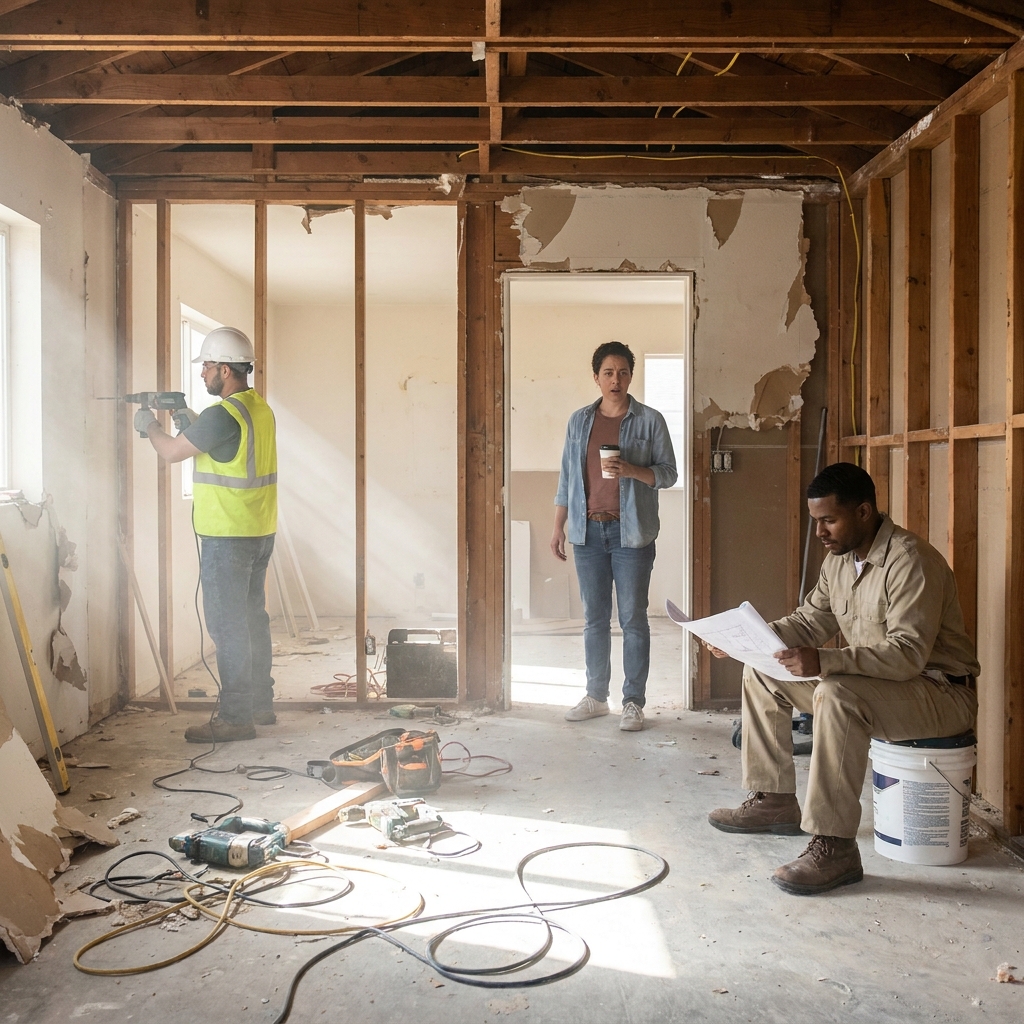
The work has started, which means the early warning signs are behind you and the leverage has shifted. Now you’re reading the job itself.
The first thing to watch is who actually shows up. A well-run job has continuity — the same people, or at least someone clearly running it who’s there enough to answer for what’s happening. A badly run one has a rotating cast of subs you’ve never met, nobody who can tell you what was done yesterday, and a contractor who’s somewhere else entirely.
When there’s no consistent supervision, mistakes don’t get caught and nobody owns them. The tile guy blames the framer, the framer blames the plumber, and all of them point at a contractor who isn’t there. You end up being the only person on site every day who remembers what was supposed to happen.
If you can never figure out who’s actually in charge of your project, the honest answer is that nobody is.
18. He’s Always Asking for the Next Payment, and the Money’s Ahead of the Work
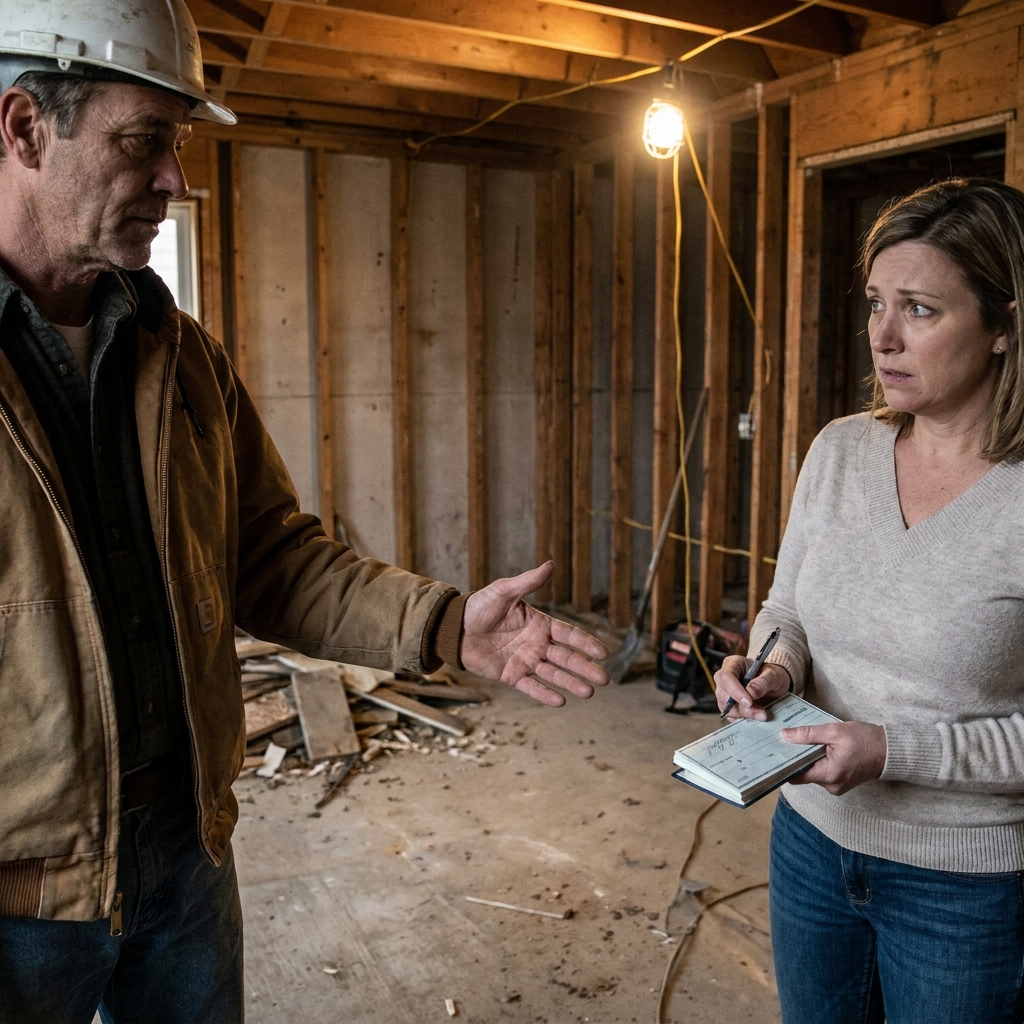
A sane payment schedule tracks the work. Money is released as real milestones are completed, and the amount paid roughly matches the amount done.
The pattern to fear is the reverse. He’s asking for the next draw constantly, and when you look around, the money is way out ahead of the progress. You’ve paid half and maybe ten percent of the work is actually finished. He always seems strapped, always needs the next check to “order materials” or “make payroll.”
That’s the tell that your money isn’t funding your job. It’s funding the last job he’s behind on, and the next homeowner’s deposit will fund yours. It’s a chain, and chains like that break. They always break on whoever’s holding it when the music stops.
Never let the dollars paid get ahead of the work standing in front of you. Once they do, the only leverage you had is gone.
19. Demolition Happens Fast, Then Everything Stalls
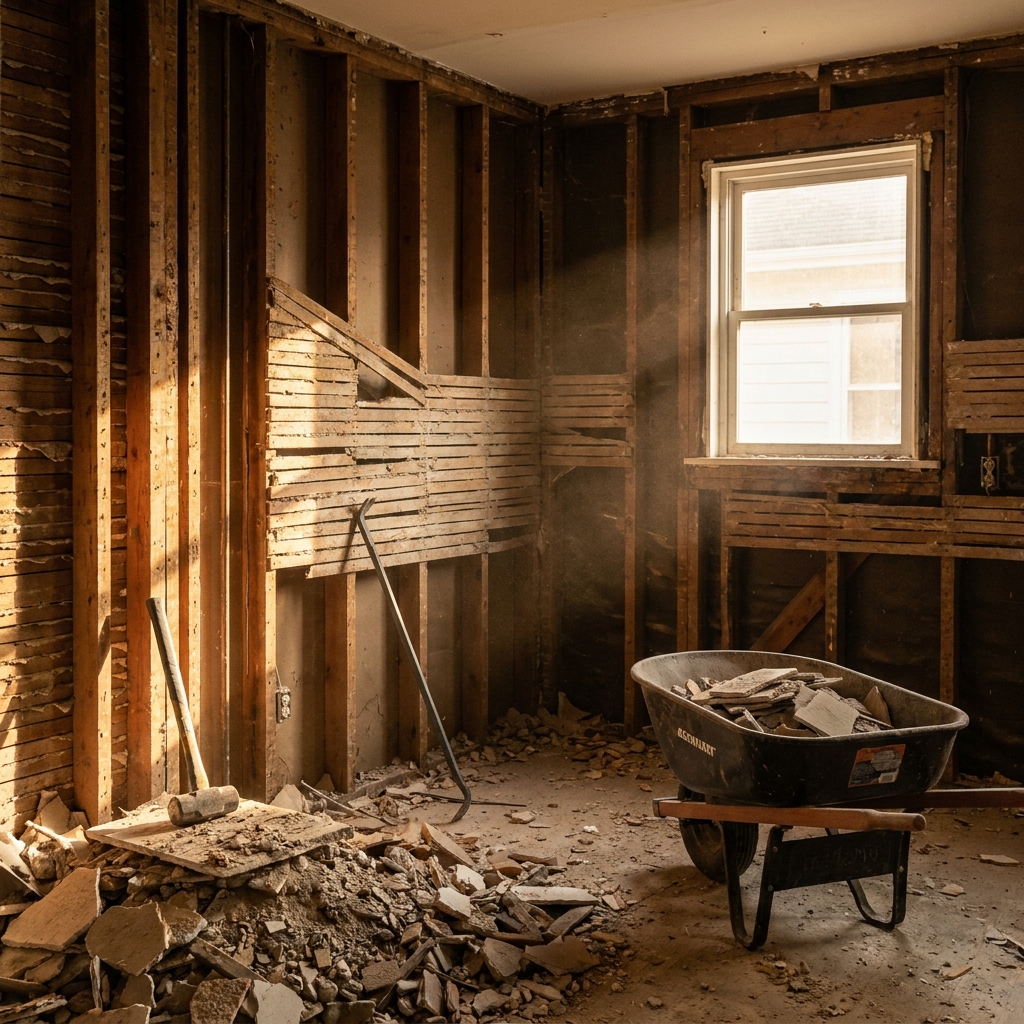
Notice how eager he is to start tearing things out. Demo is quick, cheap, and dramatic. It also does something very useful for a bad contractor: it makes your house unlivable and impossible to walk away from.
The kitchen is studs and dust. The bathroom is a hole. Then the pace falls off a cliff. Days go by with nobody there. Calls get shorter. The momentum that existed during demolition never comes back for the part that actually takes skill.
This isn’t always disorganization. Sometimes it’s deliberate. Once your home is torn open, you can’t fire him without eating the cost of the demo plus whatever it takes to get someone else to finish a job they didn’t start. He knows that. The torn-open house is the leverage.
A contractor who rushes the destruction and slow-walks the construction has the incentives exactly backwards from yours.
20. The Materials Don’t Match the Contract
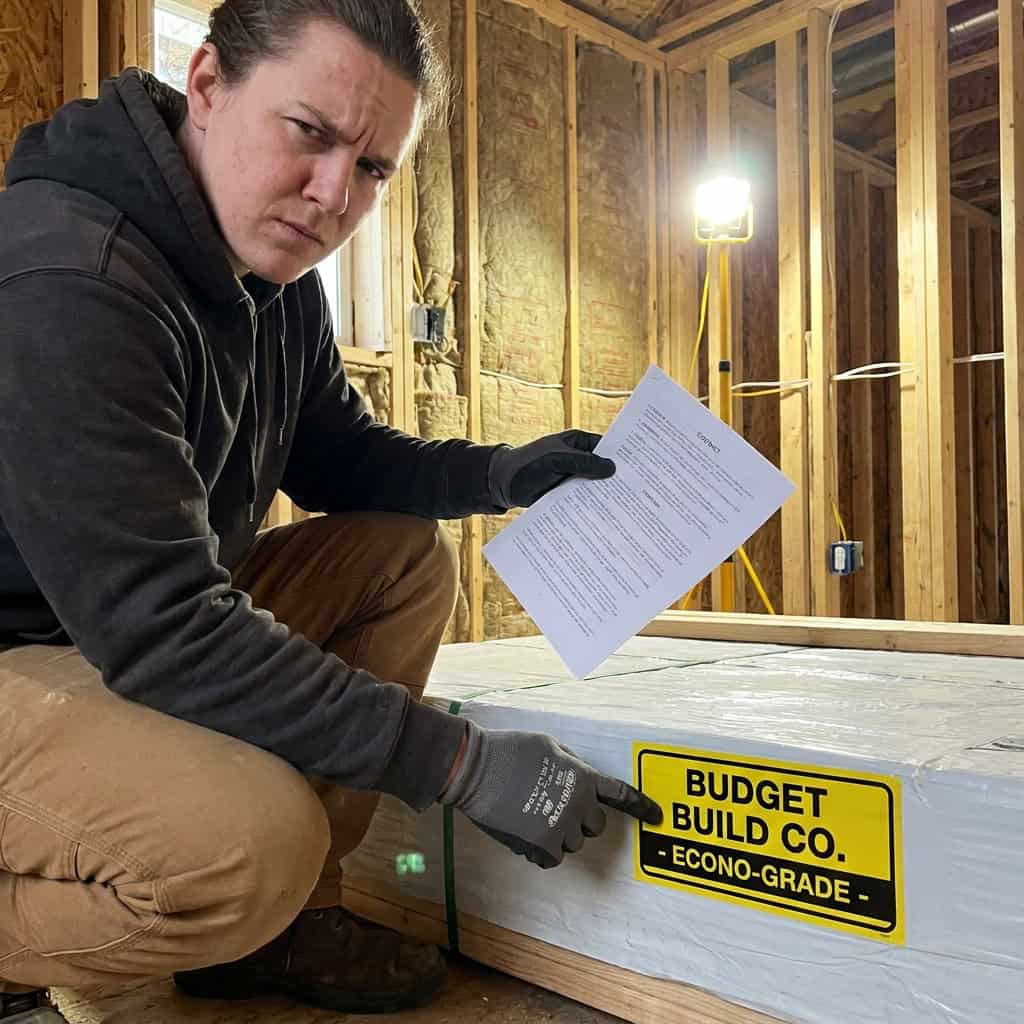
You specced a particular product. You walk the site and what’s going in is not it. Different brand, lighter gauge, a grade down from what you agreed to and paid for. When you ask, you get “it’s basically the same thing, you won’t be able to tell the difference.”
Maybe you can’t tell from across the room on day one. You’ll tell in five years when the cheaper version fails and the better one would still have a decade left.
The real problem isn’t only the substitution — it’s that it happened with no written change order, no conversation, no choice offered to you. A contractor who quietly swaps materials to pocket the difference is making decisions about your house based on his margin, and he’s counting on you not checking the labels.
If the materials don’t match the paper, stop and get it in writing before another box is opened.
21. Every Conversation Adds a Cost That Never Makes It Onto Paper
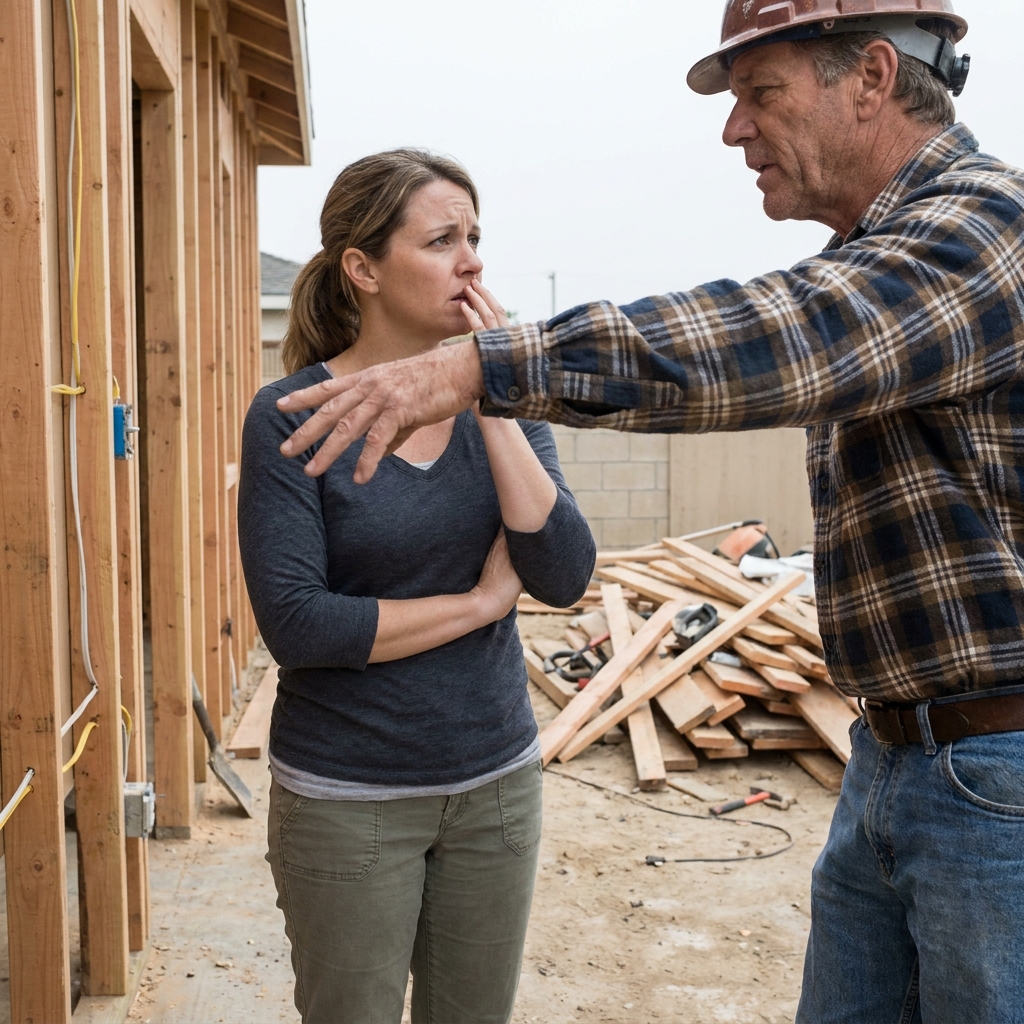
The job is moving and so is the price, always in one direction. Every site visit produces a new “we ran into something” or “you’re going to want to upgrade this while we’re in here.” Each one comes with a number. None of them ever gets written down as a formal change order.
Real change orders happen — surprises hide behind old walls. But a real one is documented: what changed, why, what it costs, signed before the work proceeds. The version to fear is the running verbal tab, the price creeping up through conversations you’ll never be able to reconstruct.
By the end, the fixed price you signed up for has quietly doubled, and there’s no paper trail showing how. That’s not chaos. For some contractors, that’s the plan, because a number nobody wrote down is a number nobody can dispute.
If a change isn’t worth writing down before the work, it isn’t a change you should be paying for after it.
22. The Work You Can Actually See Is Sloppy
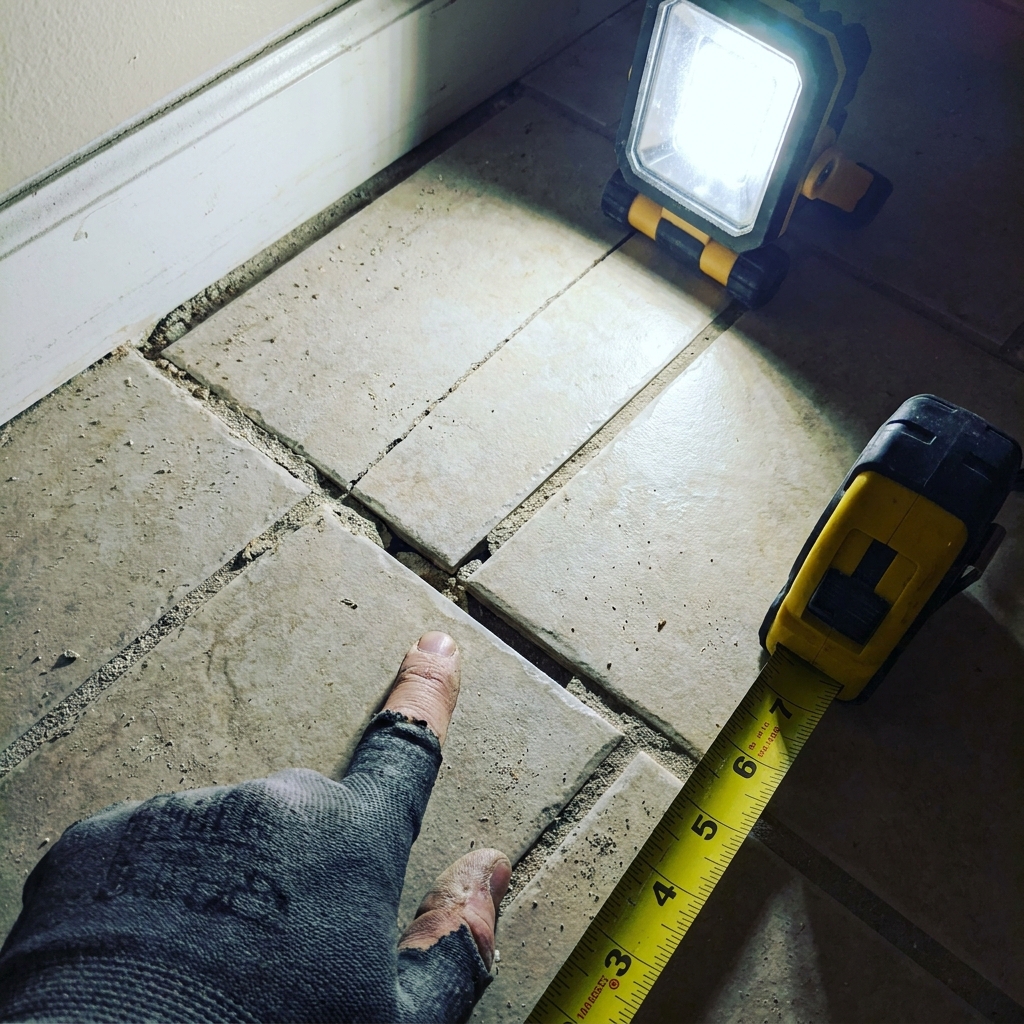
You don’t need to be a tradesman to read finish quality. Tile lines that wander. Gaps where there shouldn’t be gaps. Trim that doesn’t meet. Things that should be level and obviously aren’t.
Here’s why that matters more than it looks. The visible finish is the part he knows you’re going to inspect. It’s the work he’s doing his best on, because he expects you to look. If that’s the part coming out crooked and rushed, you have to think hard about the part you’ll never see again — the framing, the waterproofing, the connections now sealed behind drywall forever.
Sloppy where it shows is a window into careless where it’s hidden. And the hidden parts are the ones that flood basements and start fires years later, long after he’s unreachable.
What you can see is the best-case sample of the work. Judge accordingly.
23. He Gets Hostile When You Ask a Normal Question
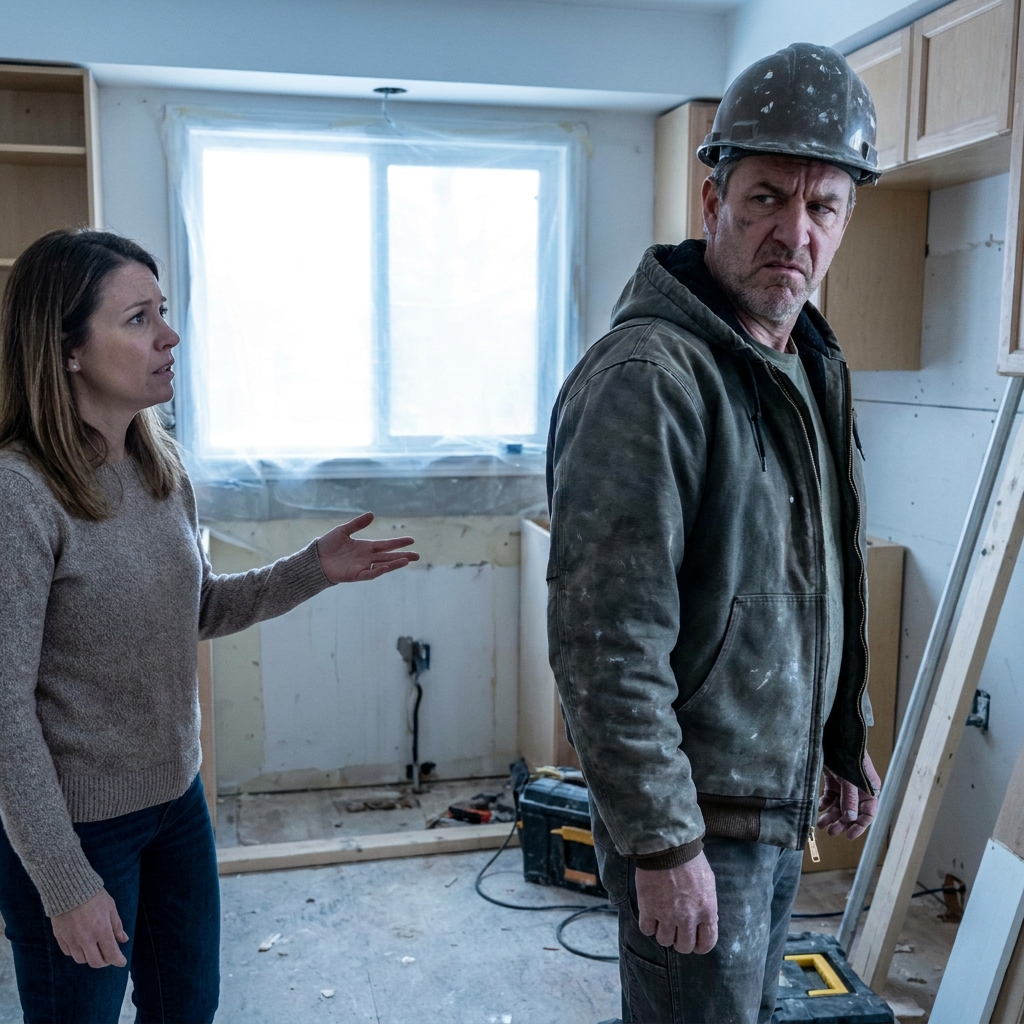
You ask a reasonable question. Why is it being done this way. What’s the timeline now. Can you walk me through this charge. And instead of an answer, you get irritation, condescension, or a flash of anger that makes you feel like you’ve done something wrong by asking.
A good contractor expects questions and answers them, because he has nothing to hide and he’d rather you understand the work than worry about it. Defensiveness is information. People get hostile about questions when the honest answer is one they don’t want to give.
Watch what that anger does to you over time. You start softening your questions. You stop bringing things up. You tell yourself you’ll mention it later. That’s the point of the hostility — it’s training you to stop looking, on the single largest project happening in your life.
The day you feel like a nuisance for asking about your own house is the day the relationship is already broken.
24. An Unpaid Subcontractor Can Lien Your House Even After You Paid in Full

This is the one almost nobody sees coming, and it can happen to people who did everything right.
You hired a contractor. You paid him, in full, on time, exactly as agreed. What you may not know is that he was supposed to pay his subcontractors and material suppliers out of that money — and sometimes he doesn’t. When that happens, those unpaid subs and suppliers can, in many states, file a mechanic’s lien against your property. Not his. Yours.
A lien clouds your title. You can’t cleanly sell or refinance until it’s resolved, and resolving it can mean paying for the same work twice — once to the contractor who kept the money, and again to the sub he stiffed. You did nothing wrong and you’re the one holding it.
This is why lien waivers exist. Before you release payments, you can require signed waivers from the subs and suppliers confirming they’ve been paid. A contractor who balks at providing them is showing you exactly where this is heading.
25. The Trucks Just Stop Coming
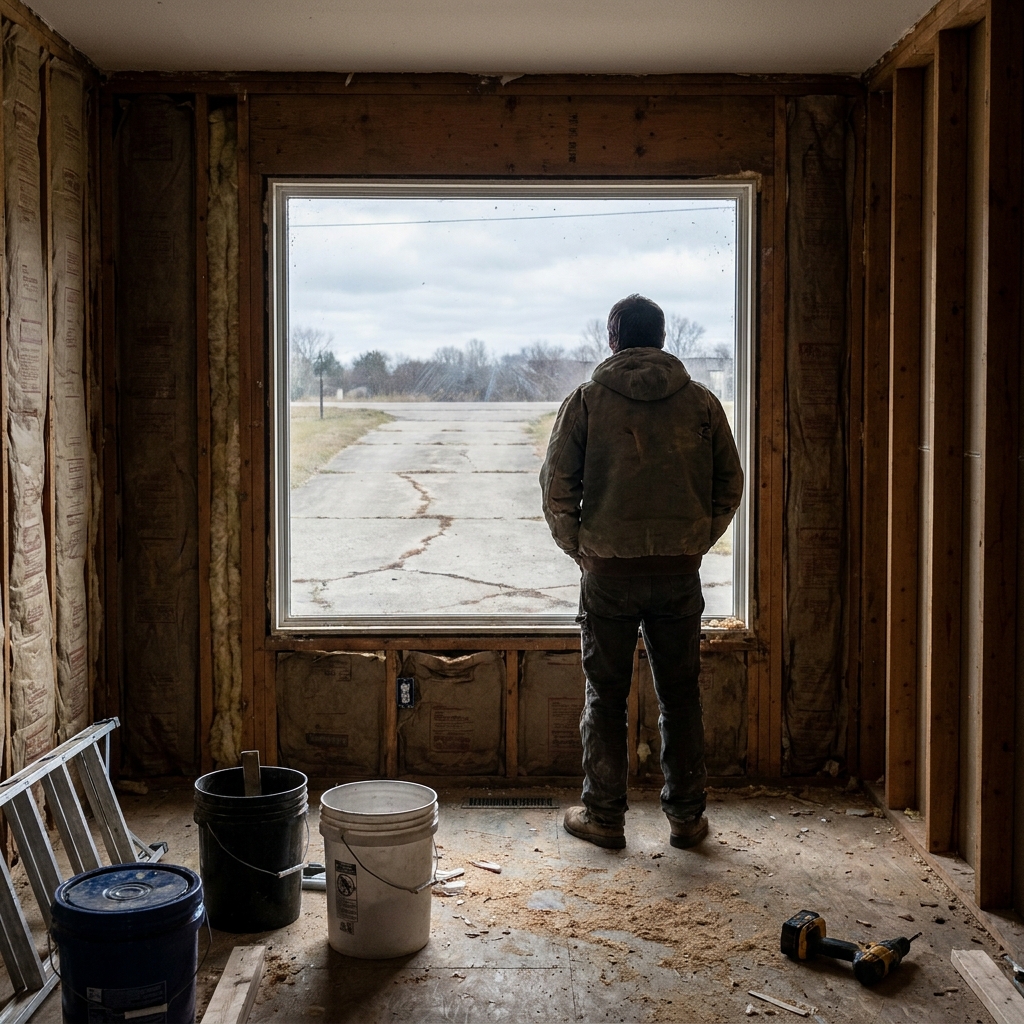
This is the one this whole list was trying to help you avoid, and if you’re here, it’s already late. The calls go unreturned. The no-shows stack up. A week becomes two. You’re standing in a half-finished house realizing he’s not coming back.
If this is where you are, the priority shifts from prevention to damage control, and speed matters. Stop releasing any further money immediately. Document everything — photos of the unfinished state with dates, every text, every voicemail, the contract, every payment. If you paid by credit card, you may be able to dispute the charges, but there are tight federal deadlines, often around sixty days, so don’t wait.
File a complaint with your state contractor licensing board and your state attorney general’s office; a contractor who took your money and vanished is exactly the pattern they look for, and many states run a recovery fund that can compensate homeowners for fraud by a licensed contractor. Verify his actual legal business name through the secretary of state before you file anything, because the name on the truck often isn’t the entity you need to name.
And don’t be paralyzed by a threat of a retaliatory lien. A contractor who abandoned the job and didn’t pay his subs is on weak ground filing one, and a frivolous lien can expose him to damages. The thing he’s counting on is that you’ll be too overwhelmed and embarrassed to fight back. Plenty of homeowners have. So can you.
The Paperwork Was Never the Annoying Part
Here’s the thread running through all twenty-five. Almost every one of them is a contractor steering you away from something written down — a verified license, a real contract, an itemized estimate, a documented change order, a signed lien waiver.
That’s not a coincidence. The paperwork isn’t the bureaucratic part of a renovation that gets in the way of the real work. The paperwork is the protection. It’s the only thing that survives a charming handshake and a confident pitch and turns a promise into something you can stand on when the promise breaks.
The good ones know this. They hand you the license number, send the insurance certificate, write the contract, document the changes, and provide the waivers — not because they’re forced to, but because they have nothing to fear from any of it. The willingness to put it in writing is, in the end, the single most reliable sign you hired the right person.
Trust your contractor. Then get all of it in writing anyway. The good ones won’t mind, and the bad ones just told you everything you needed to know.