

This project was built and designed by Tom from Alley Picked.
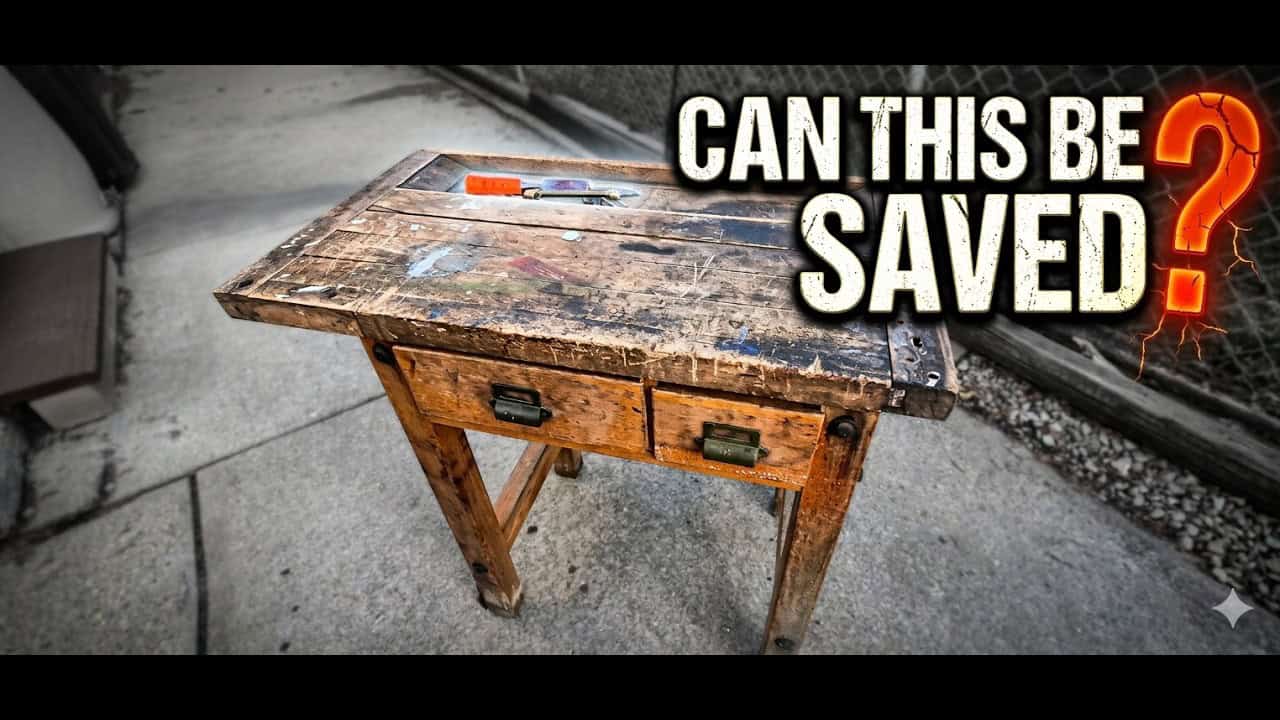
Tom discovered an old, weathered workbench at a ReStore location and saw potential beneath its battle-scarred surface. Despite extensive damage including water stains, cracks, paint splatters, and random holes, he recognized the sturdy construction and unique vintage features that made it worth saving.
Watch the full video and subscribe to Alley Picked:


A Unique Vintage Feature
The workbench had one standout characteristic rarely seen on modern benches. A recessed storage area along the back edge provided convenient access to tools and hardware during projects.
This thoughtful design element highlighted the craftsmanship of earlier woodworking furniture, when builders incorporated practical solutions directly into their work surfaces.
Disassembly and Assessment
Tom began by removing the heavily damaged top, which showed the most severe wear. Water damage had warped the surface and created large gaps between boards, while years of use had left random holes throughout.
Some rusted bolts required creative removal techniques using locking pliers and screwdrivers when traditional methods failed. Once disassembled, the extent of needed repairs became clear.
Top Restoration Strategy
Rather than completely rebuilding the top by ripping and rejoining each board, Tom chose a more efficient approach. He cut wooden wedges to fill the large gaps between warped pieces, preserving the original width while creating stronger repairs than wood filler alone.
The wedges were carefully fitted and glued in place. Random holes throughout the surface were filled with dowels, then trimmed and sanded flush.
Drawer Rehabilitation
The single drawer required attention to both its broken front corner and deteriorated bottom. Tom replaced the bottom with salvaged plywood that showed interesting circular saw marks, indicating its vintage character.
The broken corner was repaired by sanding flat and attaching a replacement piece of wood. While not a perfect match, the repair restored functionality while maintaining the workbench’s honest, well-used appearance.
Base and Hardware Cleanup
The sturdy base needed minimal work beyond cleaning and maintenance. Tom removed one side for easier sanding access, focusing on preserving the character marks while removing dirt and rust.
All hardware received thorough cleaning on a wire wheel, followed by lubrication to prevent future corrosion and ensure smooth operation.
Finishing Process
Tom applied golden oak stain throughout, choosing oil-based products for durability and consistent appearance. The staining extended to all surfaces, including the back and interior areas, providing complete protection.
Multiple coats of polyurethane sealed the restoration, protecting the renewed surface while allowing the wood’s natural character to show through.
Embracing Imperfection
The completed workbench retained its honest character while gaining renewed functionality. Tom appreciated that the restoration preserved evidence of previous craftsmen’s work, creating a bridge between past and future users.
This approach to restoration demonstrates how damaged pieces can find new life without losing their history. The workbench now serves as both a functional tool and a connection to generations of woodworkers who came before.
Watch the full video and subscribe to Alley Picked:

Matt’s Take
These are my personal thoughts and tips based on my own experience in the shop. This section is not written, reviewed, or endorsed by the original creator of this project.
Workbench restorations like this are some of my favorite projects to see. There’s something special about giving new life to a piece that’s already proven its worth through decades of honest work. That recessed tool storage area Tom found is pure gold — you just don’t see thoughtful details like that on modern benches.
The wedge technique for filling those gaps is brilliant and way more durable than relying on wood filler for structural repairs. When you’re dealing with water damage and warped boards, sometimes working with what you have beats starting from scratch. Those dowel plugs for the random holes are a classic repair method that’ll outlast the surrounding wood.
One thing I always keep in mind with vintage hardware cleanup is taking photos before disassembly. Those old mechanisms can be tricky to reassemble, and drawer slides from that era often have specific orientations that aren’t obvious. Wire wheel cleaning works great for hardware, just remember to go easy — you want to clean off the crud while preserving any original plating that’s still intact.
The golden oak stain choice makes perfect sense here. It bridges the gap between preservation and protection while letting all that character show through. This kind of restoration proves that sometimes the best workbench is one that’s already been broken in by generations of makers.