

These projects were built and designed by Tom from Alley Picked.
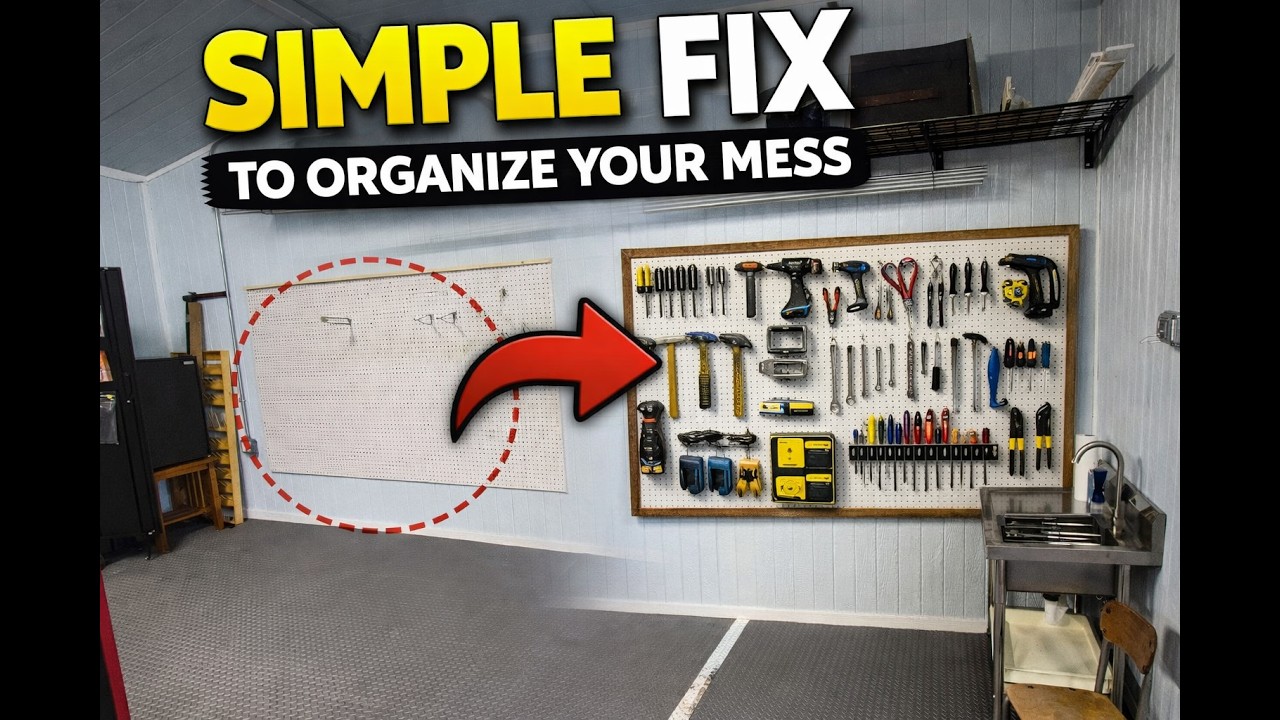
Tom tackles the challenge of workshop organization by creating a large wall-mounted pegboard storage system. He also explores the Euro slot design found on retail packaging and demonstrates how pegboard hooks can maximize storage potential in any workspace.
Watch the full video and subscribe to Alley Picked:


Understanding Euro Slots and Pegboard Standards
Tom begins by explaining the Euro slot, that distinctive opening found at the top of many retail packages. This slot follows European retail packaging standards and allows products to hang on pegboard hooks in stores.
The same principle applies perfectly to workshop organization. Pegboard systems can accommodate countless tools and supplies, turning vertical wall space into valuable storage real estate.
Pegboard Construction and Frame Assembly
Tom opts for quarter-inch pegboard holes over the smaller eighth-inch version due to their superior weight-bearing capacity. The frame consists of lumber strips that provide structure and create the necessary gap between the pegboard and wall for hook insertion.
The frame includes perimeter support plus a central backing strip for added stability. Tom uses sharp-point screws with wide heads, eliminating the need for washers while securing the pegboard to its wooden frame at regular intervals.
Adding Storage Features
A shelf across the top doubles the storage capacity by providing space for containers, spray cans, and boxed supplies. Tom drills pilot holes and creates countersink recesses to ensure screws sit flush and prevent wood splitting.
When the completed assembly shows some flex in the middle sections, Tom addresses this by adding additional spacers for extra support. This attention to structural integrity ensures the system can handle substantial weight loads.
Hook Selection and Quality Considerations
Tom demonstrates the significant difference between eighth-inch and quarter-inch pegboard hooks. While both technically fit quarter-inch holes, the thicker hooks provide much greater strength and stability for heavier tools.
He warns about misleading product descriptions when ordering online, emphasizing the importance of getting genuine quarter-inch thick hooks rather than thinner versions marketed for quarter-inch holes. The most versatile hook lengths prove to be the double hooks and single hooks in longer sizes.
Installation and Real-World Performance
With help from his grandson and friend, Tom mounts the completed pegboard system to the wall. He starts with a center screw for initial positioning, then levels the assembly before adding the remaining fasteners.
Tom showcases an existing pegboard installation that has served his workshop for years, demonstrating how these systems can accommodate an impressive variety of tools from hammers and saws to wrenches and supplies. The longevity and functionality of his previous installation validates the effectiveness of this storage approach.
Pegboard storage systems offer exceptional versatility for organizing workshops and garages. The combination of vertical storage, adjustable hook positioning, and visual accessibility makes this solution ideal for keeping tools organized and easily accessible. Tom’s approach proves that with proper construction and quality hardware, these systems can handle substantial weight while maintaining their usefulness for years.
Watch the full video and subscribe to Alley Picked:

Matt’s Take
These are my personal thoughts and tips based on my own experience in the shop. This section is not written, reviewed, or endorsed by the original creator of this project.
Pegboard systems are one of those shop upgrades that seem simple until you start getting into the details. The difference between quarter-inch and eighth-inch holes really does matter — I’ve seen too many lightweight pegboard setups sag or fail when loaded with heavier tools. That extra thickness in both the board and the hooks makes a huge difference in long-term durability.
One thing I always stress is taking time with the frame construction. That backing structure isn’t just about creating clearance for the hooks — it’s what keeps your entire system from flexing and potentially pulling away from the wall. Using sharp-point screws with those wide heads is a smart move since washers can work loose over time with the constant loading and unloading of tools.
The hook quality issue is real, and it’s frustrating when online descriptions don’t match what shows up at your door. I’ve found it’s worth spending a bit more upfront for genuine quarter-inch hooks rather than dealing with bent or failed hardware later. Those double hooks are workhorses — they’re perfect for larger tools and give you flexibility in how you arrange everything.
Safety-wise, make sure you’re hitting solid backing when mounting these systems. A loaded pegboard can get surprisingly heavy, and drywall anchors alone won’t cut it for a system this size. Find those studs and use appropriate fasteners for the load you’re planning to carry.