

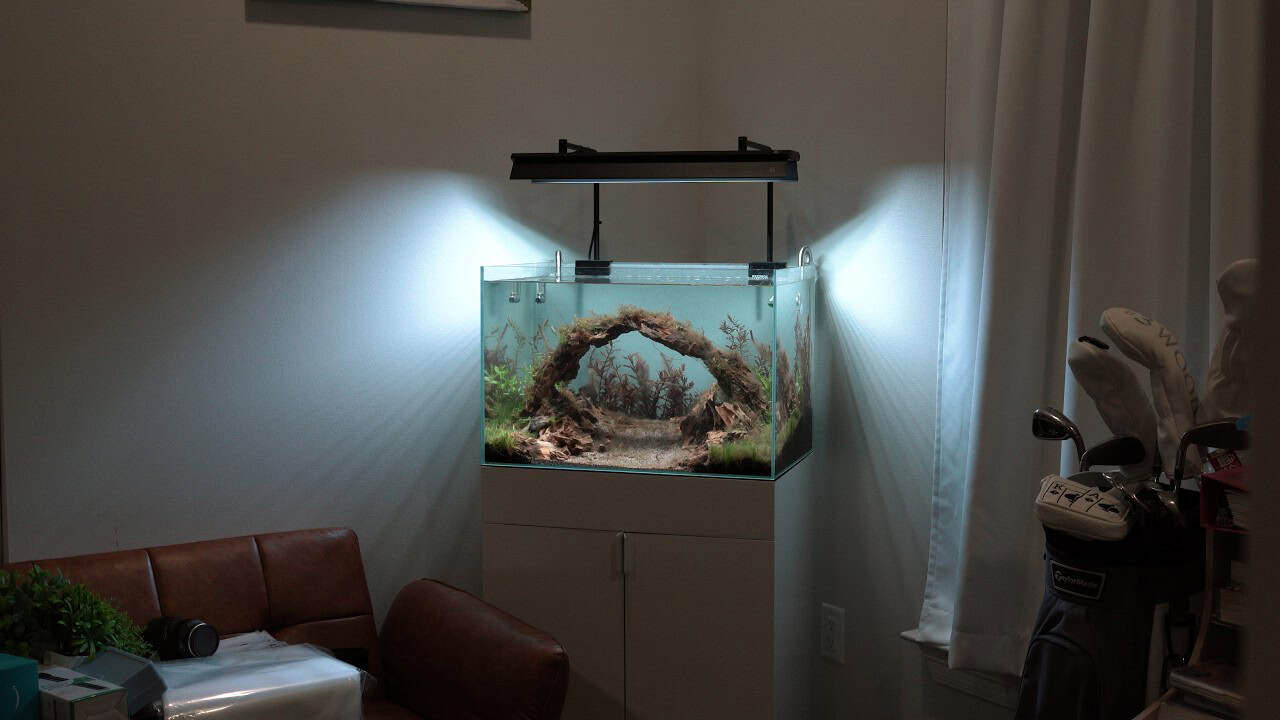
This project was built and designed by Marcus from Salty Woodworking.
Marcus decided to make a custom aquarium cabinet rather than purchasing one from a store. His goal was to create a cabinet that would perfectly match his new freshwater aquarium while saving money on what could have been an expensive purchase.
Watch the full video and subscribe to Salty Woodworking:
Design and Planning
Marcus designed the cabinet to fit perfectly around his aquarium with a flush fit appearance. He planned the entire cabinet to be cut from a single sheet of plywood, creating an efficient layout that minimized waste.
The cabinet features a simple design with doors that would provide storage space for aquarium equipment like filters and CO2 bottles. He used Fusion 360 to create the layout and determine which edges would need edge banding before assembly.
Material Preparation
Despite planning for one sheet of plywood, Marcus had to work with two smaller pieces and adjust his cut list accordingly. He used a track saw to create clean edges before moving to the table saw for final cuts.
Marcus kept all pieces slightly oversized until the final cuts to allow room for error correction. He applied edge banding to all exposed edges using an iron and Amazon-purchased edge banding material, even though the cabinet would ultimately be painted.
Assembly Challenges
The assembly process revealed several issues that required problem-solving. Marcus chose pocket holes over dominoes for joining, prioritizing simplicity since the interior wouldn’t be visible to others.
One panel wasn’t cut perfectly square, creating a gap in the assembled cabinet. However, since Marcus planned to silicone the interior anyway for water resistance, this gap wouldn’t affect functionality. He also accidentally placed pocket holes where the doors would mount, though this didn’t interfere with the hinge placement.
Finishing Process
Marcus used Bondo wood filler extensively to address gaps and imperfections before sanding everything smooth. He emphasized the importance of proper ventilation when using Bondo due to its strong odor.
The painting process involved using a Fuji SemiPro 2 airless sprayer with primer and cabinet paint. Cold workshop conditions made paint dilution challenging, affecting the spray consistency.
Paint Problems and Solutions
A significant finishing mistake occurred when Marcus applied polyacrylic clear coat too soon after the base coat. This created an alligator skin texture across the entire cabinet surface rather than the intended high-gloss finish.
Rather than sanding back to bare wood and starting over, Marcus decided to embrace the textured appearance. The pattern was consistent across both the cabinet and doors, creating an unintended but acceptable aesthetic.
Hardware Installation
Marcus discovered he had purchased the wrong hinges after painting was complete. He had bought inset hinges instead of full overlay hinges needed for his door design. This required ordering new hardware and waiting for delivery.
He installed leveling feet designed specifically for cabinet applications, providing stability and adjustability for the aquarium weight. Marcus shared a helpful tip about using playing cards for consistent door spacing during installation.
This project demonstrates that woodworking doesn’t always go according to plan, but mistakes can often be worked around or even embraced. Marcus created a functional aquarium cabinet at a fraction of retail cost while learning valuable lessons about planning, timing, and problem-solving in the workshop.
Watch the full video and subscribe to Salty Woodworking:

Matt’s Take
These are my personal thoughts and tips based on my own experience in the shop. This section is not written, reviewed, or endorsed by the original creator of this project.
Aquarium cabinets come with some unique challenges that don’t apply to typical furniture builds. The biggest consideration is moisture protection — even freshwater setups can create condensation and the occasional spill. Marcus’s decision to silicone the interior was smart, and painting rather than staining gives you that extra barrier against water damage. I’ve found that primer is especially critical in these situations since it really locks down the wood fibers.
The Bondo approach for filling gaps is actually pretty common in painted projects, though Marcus is absolutely right about ventilation. That stuff will clear out a shop fast. For anyone considering this route, automotive body filler like Bondo cures much harder than wood filler, which makes it ideal when you need something that won’t shrink or crack under the weight of a full aquarium.
That polyacrylic mishap is a perfect example of why timing matters so much in finishing. Most base coats need proper cure time before topcoats, especially with water-based products. But honestly, embracing the textured look was probably the smartest move — sometimes what feels like a disaster turns into a unique feature that you’d never plan for.
The hinge mix-up reminds me why I always double-check hardware specs before finishing. Nothing worse than realizing you need different mounting points after the paint’s already on. Those leveling feet are a great touch too — they’re essential when you’re dealing with aquarium weight on potentially uneven floors.