

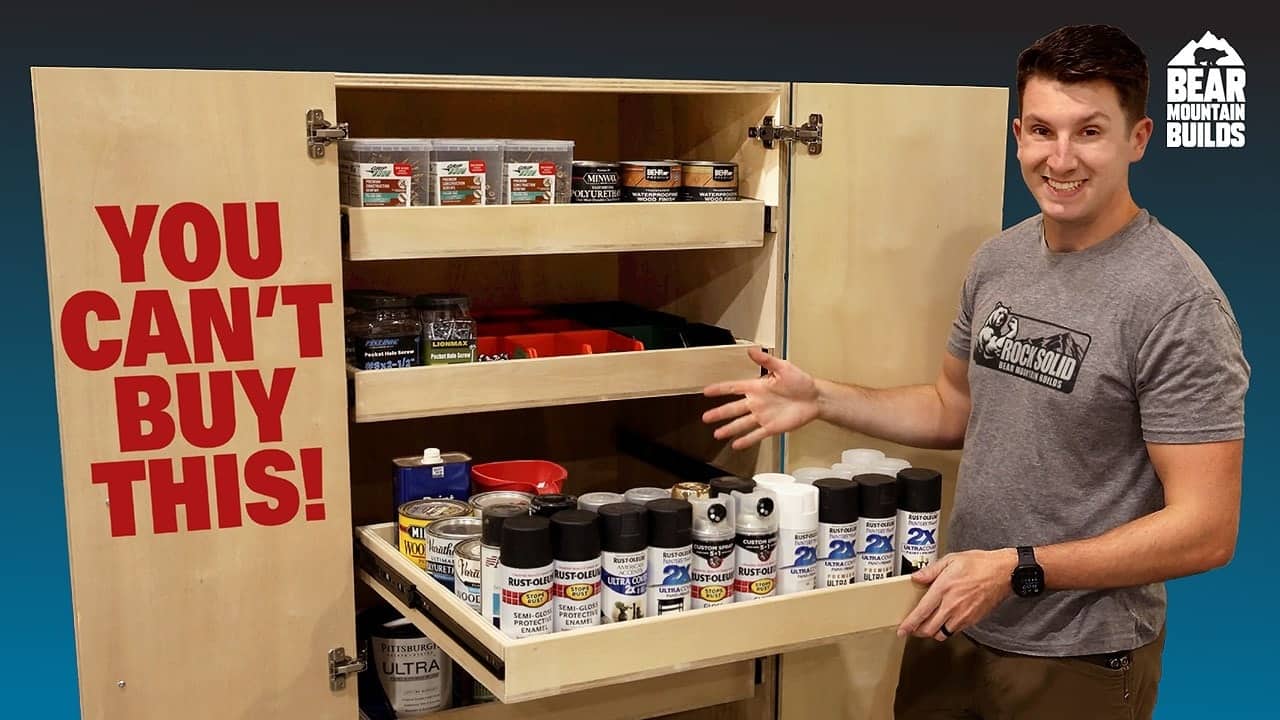
Zach from Bear Mountain Builds shared the woodworking project featured in this video.
Traditional garage and workshop cabinets hide the back row of storage behind fixed shelves, which makes small items disappear and turns routine searching into a messy routine.
This project replaces that frustration with a pull-out, direct-access system that keeps every shelf viewable and reachable.
Watch the full video and subscribe to Zach’s channel:
Design Goal: Access Everything, Every Time
The core idea is straightforward: if the contents of the cabinet can’t be seen, they will eventually become forgotten. The pull-out shelf layout solves that by turning storage into a “grab it instantly” experience, including the items normally buried in the far corners.
Instead of chasing for lost hardware or digging through the front of a shelf, the cabinet’s shelves slide out smoothly so the entire storage surface is visible. That one design decision changes how the cabinet behaves day-to-day, making it practical as a shop organizer, garage storage unit, or even a pantry-style cabinet.
Smart Cabinet Layout: Simple Carcass, Built-In Flexibility
The outer frame is built for strength and straightforward assembly, using sheet plywood and standard cabinet joinery principles. The result is a rigid carcass that’s easy to square up and support while adding the moving shelf system.
Inside, the shelving design provides varied heights so different types of items can share the same cabinet. That matters because tools, paint supplies, and hardware don’t all fit the same way, and fixed spacing wastes volume.
Lumber Prep and Cutting: Handling Oversized Parts
Large cabinet parts often exceed what a compact setup can comfortably cut in one pass. The approach here emphasizes breaking material into manageable pieces first, then taking final cuts to precision.
Where a standard table saw has limited cut capacity, the solution is to safely extend the effective fence using temporary setup material. That lets a jobsite saw perform like a wider-capacity station while keeping cuts accurate and repeatable.
Joinery Strategy: Pocket Holes Plus Reinforcement
The carcass assembly relies on pocket holes for speed and consistency, especially on sheet goods projects. Pocket screws help parts register quickly, but glue and clamping are still used to make joints feel “solid” rather than merely fast.
To keep alignment from shifting, the back panel and internal platforms are positioned using simple corner references and clamps. The key lesson is that moving pieces require staging and support during assembly, not just fasteners.
Platforms and Toe Kick: Keeping the Cabinet Comfortable
Once the frame is assembled, internal platforms create the structural “skeleton” that the pull-out system rides on. The design includes a toe kick, which makes the unit easier to use and helps it visually land like a normal built-in cabinet.
Rather than forcing everything to sit at a single rigid height, the platform spacing is treated as part of the usability plan. That keeps the pull-out shelves moving through a practical range for items stored on different tiers.
Drawer-Slider Logic: The “Stacking Method” for Parallel Slides
Installing multiple moving shelves is only as good as the alignment of the slides. If the rails aren’t parallel, drawers can bind, and the smooth action that makes pull-out storage worthwhile is lost.
Zach’s solution is a stacking method that creates a reliable reference baseline as each slide is installed. Instead of measuring every slide directly from the carcass, each next component becomes parallel to the previous one, which reduces cumulative alignment error.
How the Method Reduces Errors
This approach uses spacer stacks to control slide placement during installation. Gravity and careful positioning help keep the work consistent, especially when installing several rails at once.
Because the shelf slides become the “new reference surface,” later installations stay locked into the same alignment plane. That makes the final pull action smoother and helps avoid the common “it works, but it drags” problem.
Shelf Construction: Using Robust Plywood and Clean Edges
The pull-out shelves are made strong enough for shop use, using thicker plywood bottoms and side structures that won’t flex too much under load. The design also includes offset components so the shelf movement can pass through the opening without rubbing.
After assembly, the edges are rounded and sanded to feel professional and safe to handle. That finishing step is easy to overlook on functional storage, but it makes the cabinet feel intentional instead of homemade.
Rails for Intermediate Support: Preventing Twist and Sag
For higher shelves, additional internal support elements help the shelf stay flat as it pulls out. These rails provide a controlled resting surface, reducing the chance of the shelf twisting slightly under movement.
The technique also makes alignment more forgiving during installation. When parts are positioned flush against the cabinet’s back reference, the assembly “locks itself in” during mounting and reduces guesswork.
Doors and Hardware: Match-Grain Look and Smooth Adjustments
The doors use a coordinated layout to keep the appearance consistent and clean, including hinge placement for proper swing and even gaps. By focusing on accurate hinge mortises and repeatable drilling, the doors install quickly without frustration.
After the hinges are mounted, minor adjustments align the doors so they close cleanly and don’t interfere with shelf travel. The cabinet’s usability depends on this fit just as much as the slide alignment does.
Finishing Touch: Stabilizing the Cabinet Under Full Pull-Out Load
Pull-out shelves change the weight distribution when multiple shelves are extended, which can introduce a tipping tendency. The fix is simple: anchoring the cabinet securely through the back into the wall framing.
This step makes the storage feel truly “finished,” because stability matters when the cabinet is fully loaded and shelves are extended during regular use. It’s a smart reminder that the best storage designs also account for real-world forces.
Overall Takeaways for Better Storage
The biggest win is philosophical: storage only works if it’s accessible. A pull-out shelf design eliminates the hidden-back problem that causes clutter, misplacement, and messy cleanup loops.
Just as important, the project shows how careful alignment practices—especially the parallel-slide approach—make the mechanism reliable. Those lessons adapt easily to other sliding storage builds, from shop organizers to pantry cabinets.
Zach from Bear Mountain Builds demonstrated a practical, alignment-first method for pull-out cabinet storage.
Get Zach’s plans here: https://www.bearmountainbuilds.com/products/pullout-shelf-cabinet.

Matt’s Take
These are my personal thoughts and tips based on my own experience in the shop. This section is not written, reviewed, or endorsed by the original creator of this project.
The parallel slide installation method Zach demonstrates here is one of those techniques that separates functional storage from truly great storage. I’ve seen too many pull-out shelves that bind or feel wobbly because the slides weren’t aligned properly during installation. Using that stacking reference system eliminates the guesswork and cumulative errors that plague drawer slide projects.
One thing worth emphasizing for safety — when you’re working with those large plywood panels, take your time with the cuts and make sure your outfeed is properly supported. Sheet goods can bind or kick back if they’re not handled right, especially when you’re pushing the limits of your saw’s capacity. A couple of roller stands or even a simple plywood table can make those cuts much safer.
The toe kick detail might seem minor, but it’s one of those finishing touches that makes shop storage feel intentional rather than cobbled together. Plus, it actually makes the cabinet more comfortable to use — you can get closer without stubbing your toes, which matters when you’re reaching for items on the upper shelves.
Wall anchoring is absolutely critical with pull-out storage like this. When multiple loaded shelves are extended, the center of gravity shifts dramatically. I’ve seen cabinets tip forward unexpectedly, which is dangerous and can dump everything onto the floor. A few screws into solid framing makes all the difference in how stable and confidence-inspiring the finished cabinet feels in daily use.