

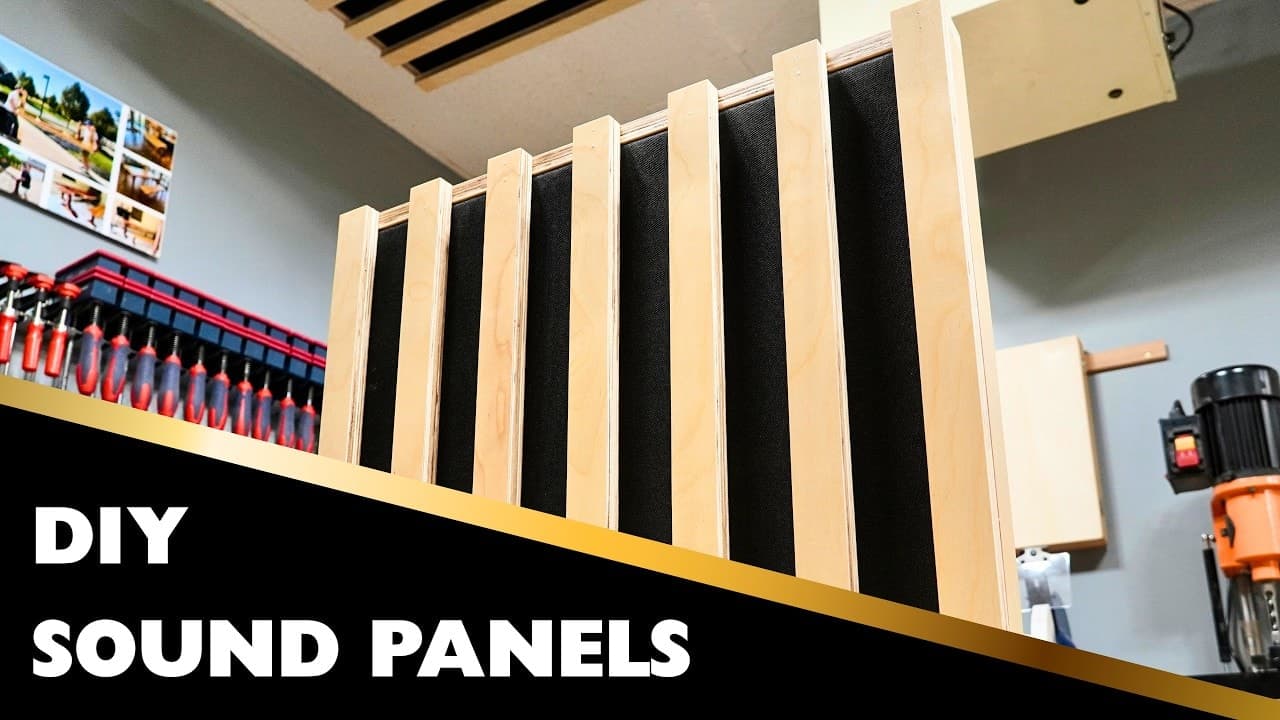
Connor from Shopfix shared the woodworking project featured in this video.
Bad room acoustics can make every tool sound harsher and every voice recording harder to manage, and this project tackles that problem with a clean, architectural ceiling panel design that still uses straightforward shop techniques.
Watch the full video and subscribe to Connor’s channel:


Design That Balances Performance and Looks
The core idea is simple: create a panel that lets sound enter, then trap that energy inside a sound-absorbing core. The design also avoids a purely “utility” look by using a slatted front pattern that breaks up the surface visually.
Instead of treating absorption as an afterthought, the panel structure is planned so the materials work together. A partially breathable back and an engineered air space behind the panel help control reflections and improve clarity in the space.
Panel Construction: Lightweight Where It Matters
The panel starts with a thin back to keep weight down, which matters when multiple panels have to be lifted and mounted overhead. Even though the back does not carry major structural load, it still provides a stable foundation for the rest of the assembly.
The sides form a rigid frame that holds the absorbing insulation core in a consistent shape. That consistency is important because uneven insulation or gaps can reduce absorption and make performance feel unpredictable from panel to panel.
Prepping Edges for Fabric Wrapping
Before any fabric goes on, all contact edges are softened and refined. This is not just cosmetic—sharp corners can shorten fabric life by promoting tears when tension is applied.
After assembly, the box is cleaned up thoroughly and lightly sanded so the wrapping surface is uniform. A smooth perimeter makes it easier to stretch fabric evenly and keeps the finished panels looking crisp.
Letting Sound Enter: Perforation and Air Space
To make the panel absorb sound, it includes openings in the back so sound waves can pass into the interior where the insulation can do the absorbing. The goal is to open up enough airflow and path for sound without turning the panel into a flimsy sieve.
Mounting includes a deliberate gap between the panel and the ceiling. That air space works like part of the acoustic system, helping absorption reach a broader range of frequencies than a panel mounted directly to the surface.
Working With Mineral Wool Without Making It Worse
The insulation core is cut so it fits snugly, but without being compressed. Compression might feel like “getting a perfect fit,” yet it can reduce acoustic effectiveness by altering how the material traps and dissipates sound.
Safety and comfort matter here as well, because handling insulation can irritate skin. Long sleeves, gloves, and careful cutting technique keep the process clean and prevents the material from getting unnecessary debris everywhere.
Fabric Wrapping: The Satisfying Part That Determines the Final Quality
The visual finish comes from fabric tension. The wrapping process is approached like packaging: secure one side, pull tight across to the opposite side, then work the remaining corners so the surface stays smooth.
Even stretch matters, since a loose wrap leads to sagging over time and an uneven wrap can create distracting waves. When tension is consistent, the panel face reads as professional and intentional from any viewing angle.
Slatted Face Frames: A Repeatable Grid Look
For the front aesthetic, a frame is installed around the perimeter and then slats are added with consistent spacing. Prefinishing these slats before mounting avoids finishing marks and protects the already-wrapped fabric from accidental splatter or sanding dust.
Spacing is treated like a layout math problem rather than an eyeballing exercise. When slat gaps are calculated and spacers are used, every panel ends up visually consistent, which is crucial when installing a full ceiling grid.
Hanging Strategy: Matching Ceiling Structure for Consistent Results
Mounting reliability starts with finding where the ceiling structure can actually support the load. Hooks are then installed to match that structure so the panel grid stays level and secure.
To maintain the designed air gap, each hook depth is marked and verified before installation. That small discipline prevents the common problem of having some panels sit closer to the ceiling, which can subtly change acoustic performance and also looks inconsistent.
Overall Takeaways: Why This Approach Works
This ceiling panel concept succeeds because it combines acoustic intent with woodworking clarity. Lightweight construction, softened edges, controlled fabric tension, and a consistent mounting gap all work together so the panels perform the way they’re designed.
It also scales well, since the same logic can be applied to different sizes and patterns depending on the room. For workshops, studios, and content spaces, the payoff is not just “less echo,” but a more controlled, easier-to-work-in sound profile that makes everything feel cleaner.
Conclusion: Better Sound, Cleaner Ceiling, Repeatable Method
Connor’s approach is a strong example of using shop skills to solve a practical acoustic problem without sacrificing design. The end result is a ceiling that looks architectural while reducing echo and tightening the overall sound in the workspace.
Watch the full video and subscribe to Connor’s channel:

Matt’s Take
These are my personal thoughts and tips based on my own experience in the shop. This section is not written, reviewed, or endorsed by the original creator of this project.
Working with acoustic panels always reminds me how much shop acoustics affect the overall experience. A space with harsh reflections makes every cut and conversation feel more aggressive, while proper absorption creates a noticeably more comfortable working environment. The combination of functional design and clean aesthetics here really nails what makes a project worth the effort.
One thing I appreciate about this approach is how the mounting gap becomes part of the acoustic system rather than just installation clearance. That air space behind the panel extends the frequency range where absorption happens, which is why you’ll often see commercial acoustic treatments designed with similar principles. It’s also worth noting that mineral wool insulation works best when it can move air freely through its fibers—compression really does hurt performance, even though it might seem like you’re getting better coverage.
The fabric wrapping technique translates well to other upholstery projects too. Getting consistent tension across a surface is one of those skills that shows up everywhere from shop seating to cabinet door panels. Starting with properly softened edges makes a huge difference in how the fabric lays and how long it holds that clean look over time.
For anyone considering a similar project, the scalability factor is huge. Once you dial in the construction sequence and mounting system, adding panels becomes straightforward production work rather than custom problem-solving each time. That consistency pays off both in installation speed and final appearance when you’re covering significant ceiling area.