

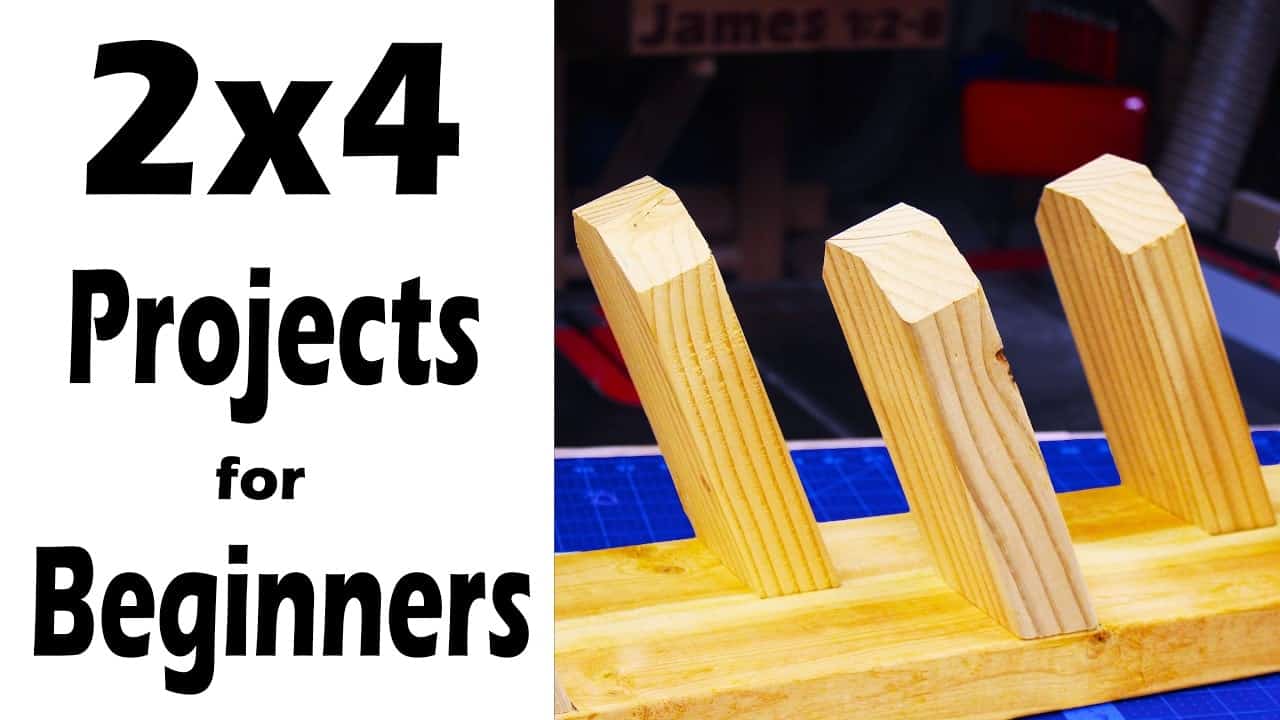
Clinton from Specific Love Creations made the projects in this video.
These beginner-friendly builds show how turning basic 2×4 scraps and full boards into useful projects can also teach solid layout habits, consistent angles, and simple assembly methods.
Watch the full video and learn from the same core approach—choose good-looking faces, keep measurements readable, and use pocket-hole joinery (plus smart alignment) to avoid headaches during assembly.
Watch the full video and subscribe to Specific Love Creations:

Project 1: Simple Standalone Display Shelf
This first build focuses on straightforward repeatable assembly and presentation—choosing which faces look best and treating them as the “front.” It also demonstrates how to think in components so the overall shelf ends up square and aligned.
After cutting the core pieces, pocket holes are used on the underside so fasteners stay hidden from view. The wood is oriented so cleaner grain faces become the top and outer surfaces, with sanding done before final assembly for a smoother look.
Assembly is about staying consistent: reference lines help position inner structure members, and the pocket screws pull boards together tightly in hard-to-reach areas. When joining two similar units to thicken the structure, alignment matters more than perfection—small tweaks keep everything looking intentional.
The finished shelf works as a display surface for plants, decor, or small items. A helpful takeaway is that this design can be scaled up (or modified with sturdier spanning boards) if a more substantial feel is desired.
Project 2: Wall Storage Rack for Collapsible Yard Chairs
The second project shifts toward angled cut planning and “storage geometry.” Instead of focusing on prettiness, the design’s main goal is to keep bulky, easily-tipped items visible, organized, and out of the way.
Consistency is achieved through repeatable corner cutting and using a speed square to generate clean angle lines. Each smaller piece gets the same stepped profile, which matters because the rack relies on those angles to support the chair shape properly.
Once the parts match, the build uses a long base and several evenly spaced shorter supports. Wood glue plus screws secure the first support tightly, and then the spacing is repeated until all supports are in place.
The practical test is how it performs when stood against a wall: the chair storage becomes easier to access while staying stable. If the fit feels slightly off, minor spacing or orientation adjustments are usually enough to dial it in.
Project 3: Outdoor Bottle or Can Holder Stake
The third build is designed for outdoor use, which means starting with pressure-treated wood and thinking about stability. The structure includes a bottom spike so it can be anchored in the ground, making it feel solid instead of top-heavy.
This project introduces shaping that’s driven by simple layout logic: a center point is established, then symmetric angle cuts create a small “point” feature at the bottom. For the middle board, rounded cutouts (from a hole saw or a slower alternative) create openings that make it easier to store bottles or cans.
Top-to-side fastening shows why technique changes by orientation. Instead of forcing screws into end grain, pocket-hole style attachment is used where strength and alignment benefit from better screw paths.
Assembled, the holder is meant for casual outdoor relaxation—bottles or cans stay reachable while the unit remains upright. If ground mounting is not desired, the same concept can be repurposed with shortened length and simple legs to create a countertop or patio-standing version.
Overall Takeaways: Techniques That Carry Across All Three Builds
Across all three projects, the strongest learning thread is repeatable layout and orientation. Picking the nicest faces up front (then sanding before final assembly) prevents the common beginner problem of “pretty on paper, messy in reality.”
Pocket-hole joinery also shows its value as a beginner workflow: it speeds assembly, hides hardware, and creates clean-looking corners when alignment lines are drawn clearly. For angled parts, using a speed square to generate consistent lines helps ensure everything fits without forcing it into place.
Finally, each build demonstrates that usefulness matters as much as aesthetics. The display shelf is about tidy presentation, the wall rack is about stable storage geometry, and the outdoor bottle holder is about anchoring and durable assembly choices.
Conclusion
These three 2×4 projects are a fast way to build confidence while practicing fundamentals like layout, face selection, angle cutting, and pocket-hole assembly. They also show how small design choices—hidden fasteners, consistent spacing, and smart fastening directions—make the difference between “okay” and “finished.”
Watch the full video and subscribe to Specific Love Creations:

Matt’s Take
These are my personal thoughts and tips based on my own experience in the shop. This section is not written, reviewed, or endorsed by the original creator of this project.
These three builds really highlight how much you can accomplish with basic 2×4s and a few solid techniques. What I appreciate most about Clinton’s approach is the emphasis on face selection early in the process — it’s one of those habits that separates beginner work from more polished results. Taking the time to identify your best-looking surfaces before you start cutting saves a lot of frustration later.
The pocket-hole joinery throughout these projects is spot-on for beginners. It’s forgiving, creates strong joints, and keeps hardware hidden where it counts. Just remember to drill your pocket holes on the surfaces that won’t be seen — sounds obvious, but it’s easy to get turned around when you’re focused on measurements and cuts.
Safety-wise, that pressure-treated lumber for the outdoor bottle holder is the right call, but make sure you’re wearing a dust mask when cutting PT wood and wash your hands afterward. The chemicals that make it weather-resistant aren’t something you want to breathe or ingest. Also, when you’re making those angled cuts, take your time with the setup — rushing through layout is where mistakes happen.
These projects prove that useful doesn’t have to mean complicated. Sometimes the best builds are the ones that solve simple problems well, and 2×4 construction lumber is perfect for getting those fundamentals down without breaking the bank.