

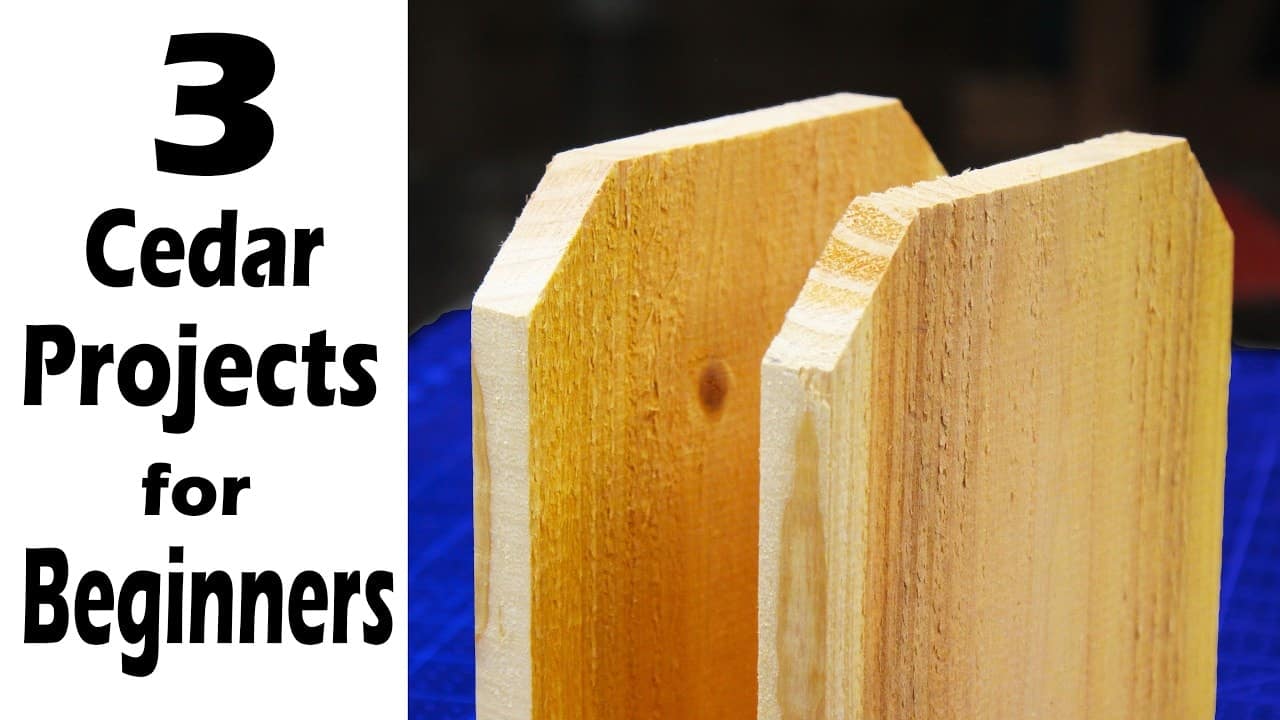
These projects were built and designed by Clinton from Specific Love Creations.
Three small, approachable builds show how to repurpose cedar fence pickets into useful household items without complex joinery or expensive lumber.
The projects lean on simple cuts, basic glue-and-fastener assemblies, and a little sanding to get a clean, rustic result.
Watch the full video and subscribe to Specific Love Creations:
Project 1 — Toilet Paper Holder
This design turns a full-length picket and a handful of small offcuts into a compact toilet paper dispenser with storage for spare rolls. The aesthetic is straightforward and functional, using the picket’s natural grain and a small lip to keep the roll in place.
Construction relies on glue plus mechanical fasteners to create a tiered front and a back support that keeps everything aligned. A few small glued stacks of offcuts form the internal stops, and light sanding removes splinters for a pleasant, rustic finish that can be left natural or sealed.
Project 2 — Napkin Holder (with Dog-Ear Detail)
This napkin holder uses the picket’s factory dog-ear as a decorative edge, so minimal cutting and material are required to make a matching pair of sides. The build is intentionally simple: two outer pieces and a short spacer create a freestanding holder that shows off the cedar’s grain.
Clinton highlights a useful trick of embracing slight warps in the pickets by sandwiching a curved spacer between two faces so the warp disappears visually while adding rigidity. A quick sanding smooths rough surfaces, and glue plus nails or screws lock the assembly together for everyday use.
Project 3 — Mountain Coat Rack
The coat rack is the most decorative of the three, arranging narrow strips cut at angles into a stylized mountain scene mounted to a backboard. The design plays with depth and silhouette, creating an attractive focal point that doubles as a practical entryway organizer.
Assembly uses angled cuts and simple edge joins, with the shaped pieces glued and lightly fastened before attaching coat hooks evenly across the lower edge. A final sanding and optional finish will protect the wood and make the colored or metal hooks pop against the cedar backdrop.
Why These Builds Matter
Repurposing cedar fence pickets is a cost-effective way to get attractive, weather-resistant wood for small projects without heavy milling or large boards. The thin, light pickets are forgiving for beginners and let makers practice layout, angled cuts, and clean glue-ups on a small scale.
Each project emphasizes practical choices—use of glue with mechanical fasteners, working with imperfect stock, and simple shaping—so builders can adapt the ideas to their own dimensions, finishes, and hardware. These small builds also make thoughtful, handmade gifts that showcase the warm look of cedar.
Watch the full video and subscribe to Specific Love Creations:

Matt’s Take
These are my personal thoughts and tips based on my own experience in the shop. This section is not written, reviewed, or endorsed by the original creator of this project.
Cedar fence pickets are one of the best-kept secrets in the lumber yard for small projects. They’re typically around $2-4 each, already dimensioned, and give you that beautiful cedar character without the premium price of select boards. The natural oils in cedar also mean these pieces will hold up well even in humid bathroom environments like that toilet paper holder.
One thing I really appreciate about these builds is how they embrace the imperfections in the wood. Cedar pickets often have knots, slight warps, and varying grain patterns — but that’s exactly what gives these projects their charm. The key is working with those characteristics rather than fighting them, like Clinton’s approach of using a curved spacer to straighten out warped pieces.
For anyone trying these projects, remember that cedar is a softwood, so it’s easy to dent with aggressive clamping or over-driving fasteners. Pre-drilling for screws is your friend here, especially near the ends where splitting is more likely. Also, cedar dust can be irritating for some folks, so good dust collection or at least a dust mask is worth having on hand during the sanding steps.