

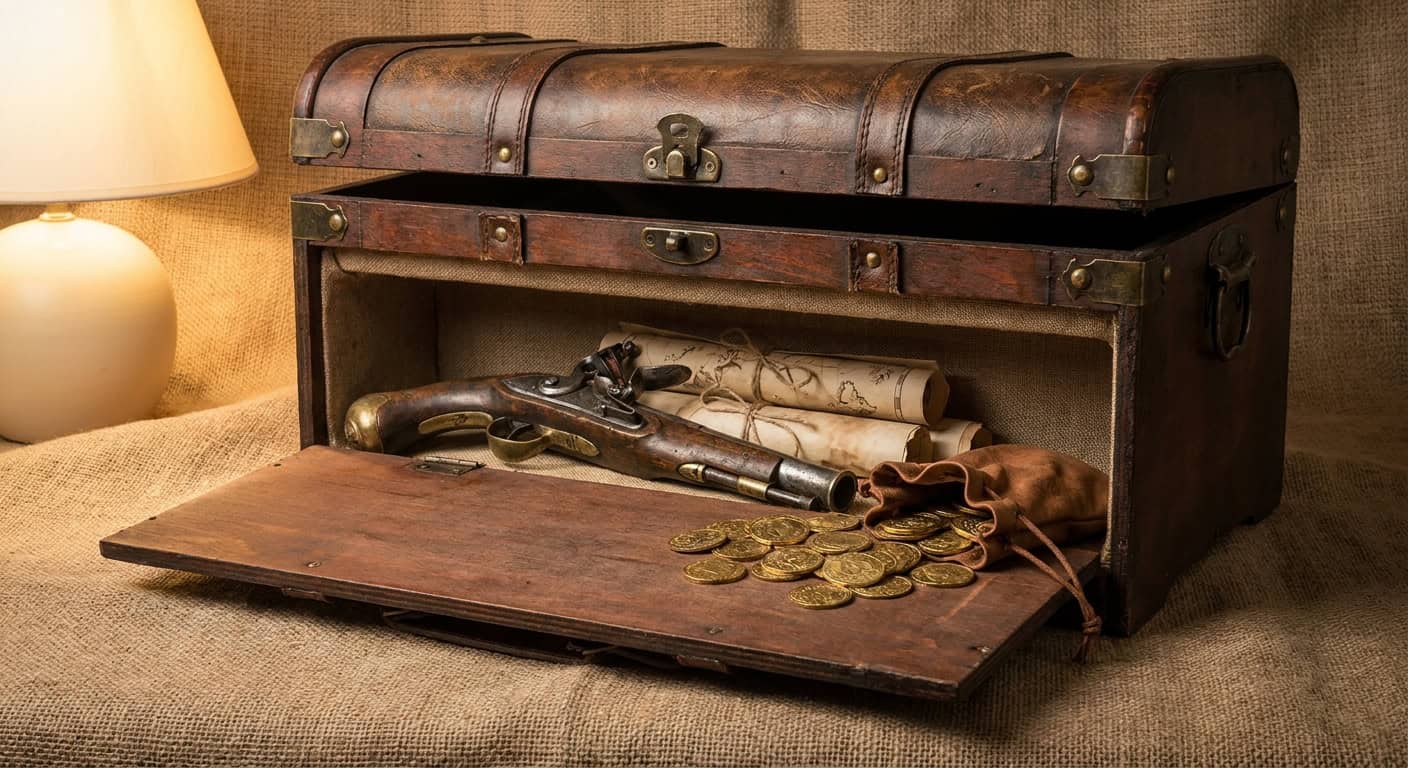
We have all seen it in the movies.
The hero presses a hidden button on a dusty old desk, and a drawer pops open to reveal a map or a diamond necklace.
It feels like Hollywood fiction. But for 300 years, it was a reality.
Before safe deposit boxes and home security systems, the safest place to keep your gold, your will, or your scandalous love letters was inside your furniture.
Cabinetmakers were part engineer, part magician. They built false bottoms, sliding panels, and hollow legs into everyday objects to fool thieves.
Many of these hiding spots are so clever that modern owners possess these antiques for decades without ever realizing they are sitting on a secret.
Here are 23 legendary hiding spots found in antique furniture — and how to check if you have one.
1. The “Prospect Door” (Secretary Desks)
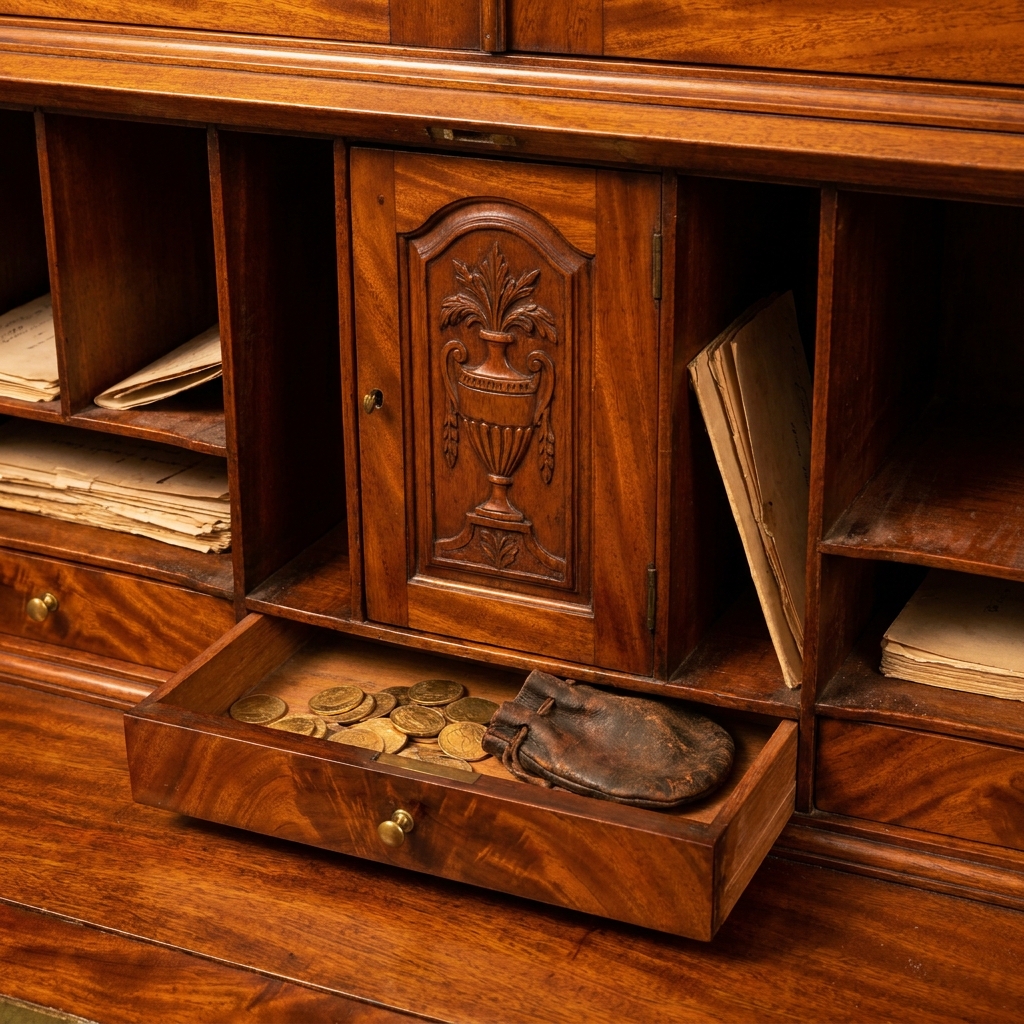
If you own an antique slant-front desk or secretary, look at the “pigeonholes” (the little mail slots) in the center.
Is there a small, locking door right in the middle? That is the “Prospect Door.”
It looks like a simple cupboard. But often, the entire box inside that door slides out.
Behind that box? Tiny, flat drawers for gold coins.
And sometimes, the little decorative columns on either side of the door are hollow document tubes that pull out like a telescope.
2. The Quaker Lock Column
Stay with that secretary desk for a minute.
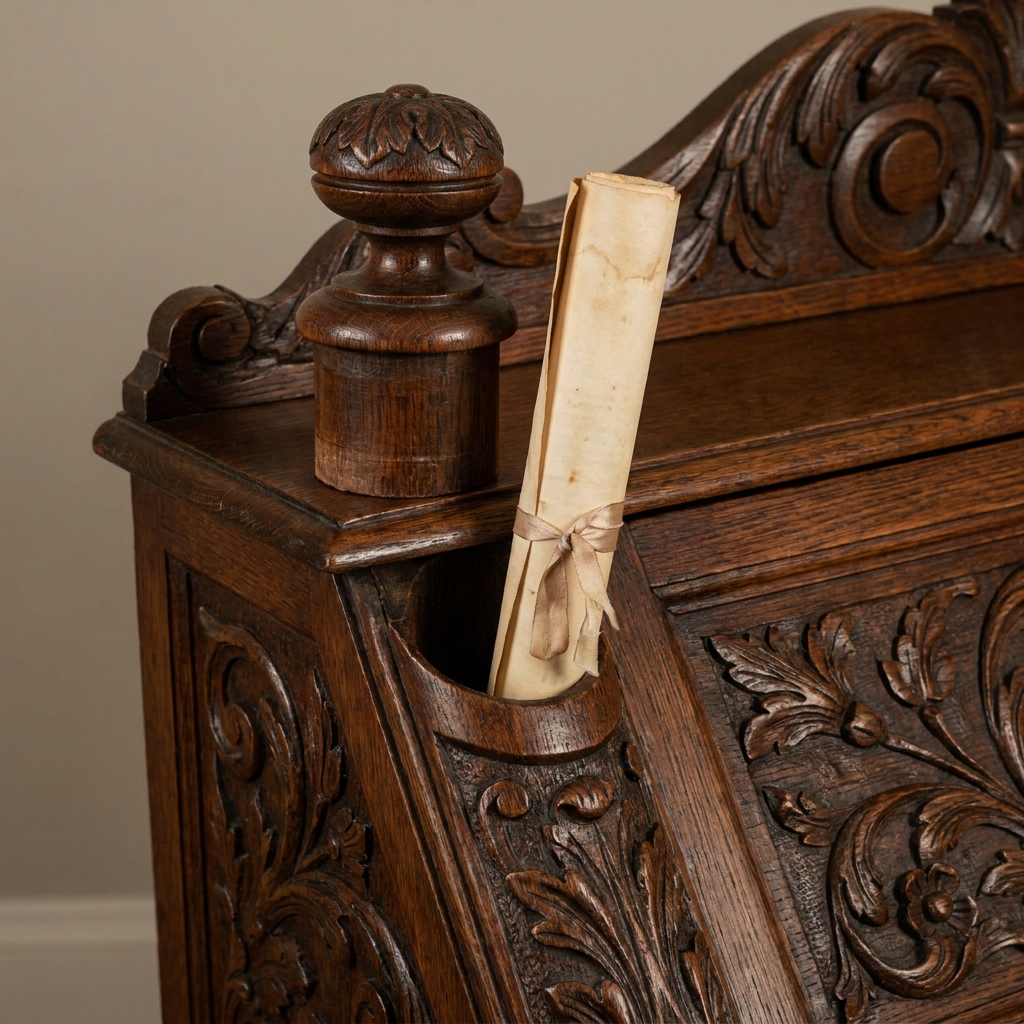
Those decorative fluted columns flanking the Prospect Door? On the finest 18th-century pieces, one of them was not just decoration.
It was a document tube, locked by an ingenious mechanism called a “Quaker Lock” — a spring-loaded wooden catch hidden inside the column itself.
You could not open it with a key or a handle. You had to know the secret.
The trick was to insert a thin rod (like a pen nib or a hatpin) into a nearly invisible pinhole on the side of the column and press. The spring would release, and the entire column would slide out like a telescope, revealing a hollow tube stuffed with rolled deeds and family papers.
3. The “Crown” Drawer (Highboys)
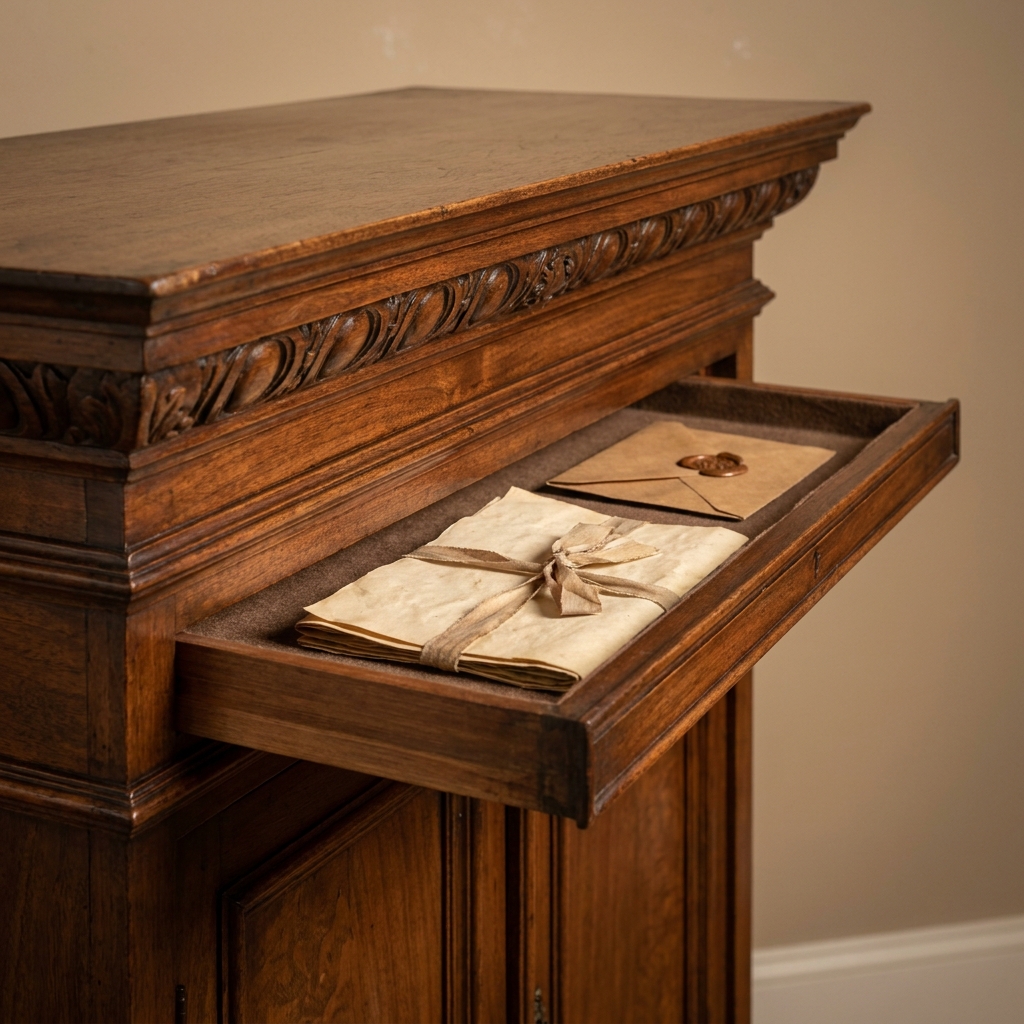
The Highboy is a tall chest of drawers on legs. The top is usually decorated with elaborate “crown molding.”
In the finest 18th-century pieces, that molding was not just decoration.
It was a drawer.
Because it was located 7 feet in the air and looked like solid wood trim, thieves rarely looked there. It was the perfect spot for long-term storage of wills and deeds.
To open it, you often had to reach inside the drawer below it and release a hidden wooden spring.
4. The False Bottom (Traveling Chests)
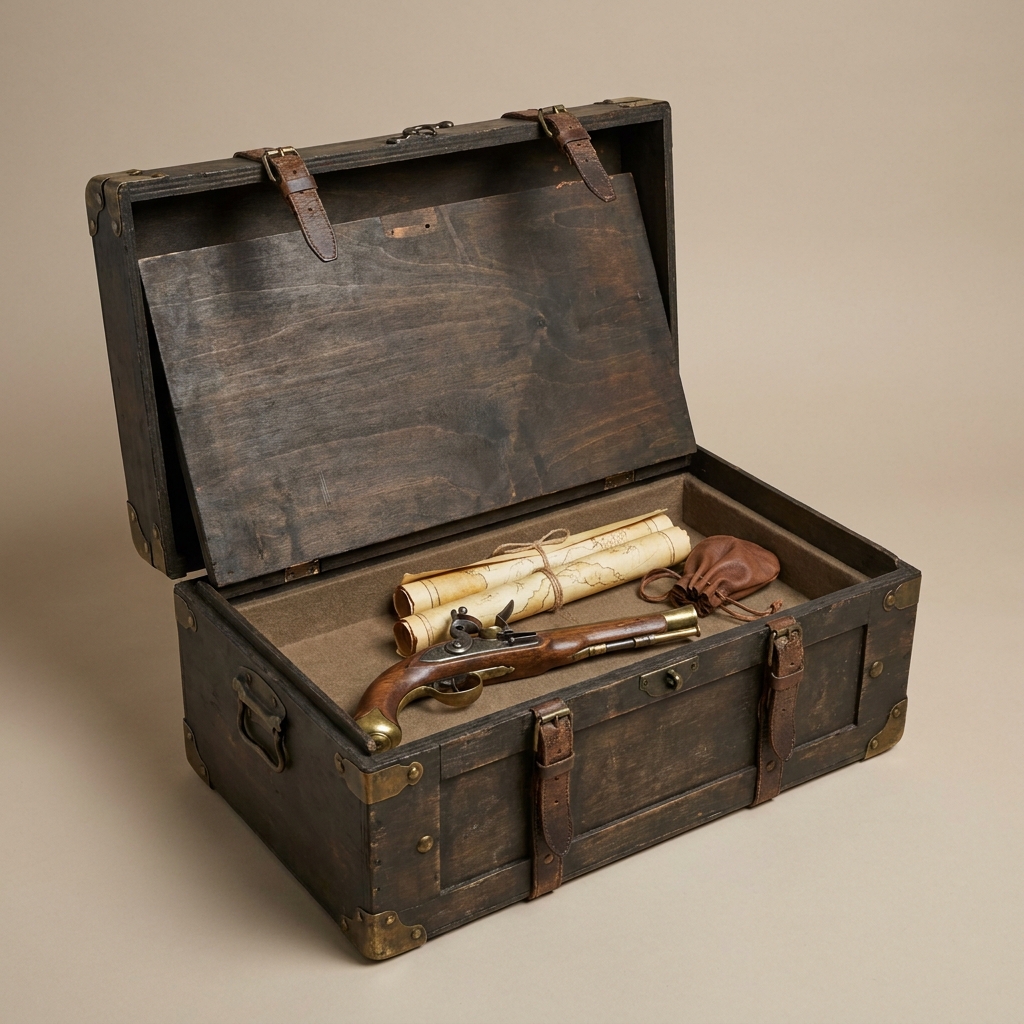
Travel in the 1800s was dangerous. Highwaymen and pirates were real threats.
A “Captain’s Chest” or traveling trunk often featured a false bottom.
The chest would appear full of clothes and linens. But if you emptied it and pressed on a specific knot in the wood or lifted a slat, the entire floor of the chest would pop up.
Underneath was a shallow compartment for pistols, currency, and maps.
5. The “Blind” Fretwork Drawer
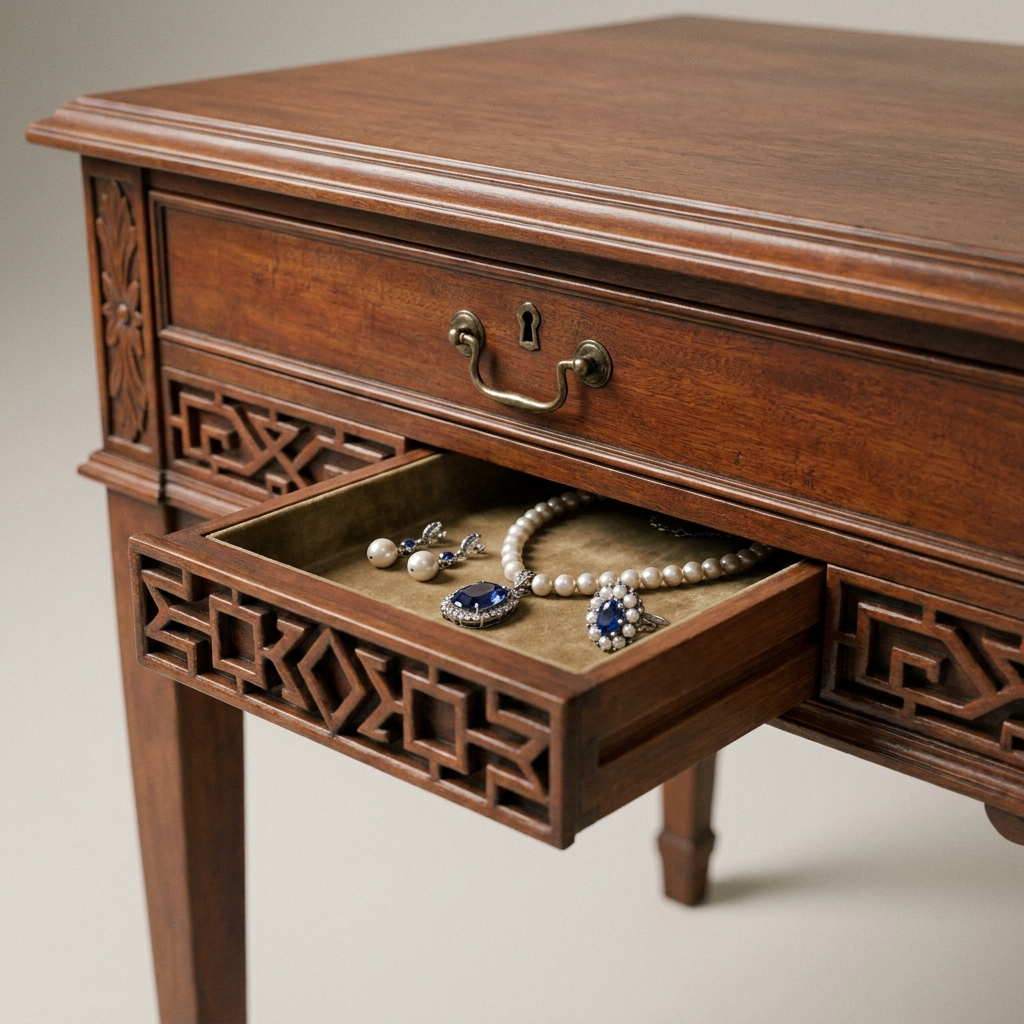
Chippendale furniture is famous for “fretwork” — intricate, carved geometric patterns used as trim.
On many desks and tables, this trim looks like it is glued solidly to the frame.
But on a “Blind Fret” drawer, the trim is the drawer front.
There is no knob. There is no keyhole. You have to know exactly where to press or pull (often from underneath) to slide the “trim” out.
It was the perfect camouflage for jewelry.
6. The Writing Slope “Screw” Compartment
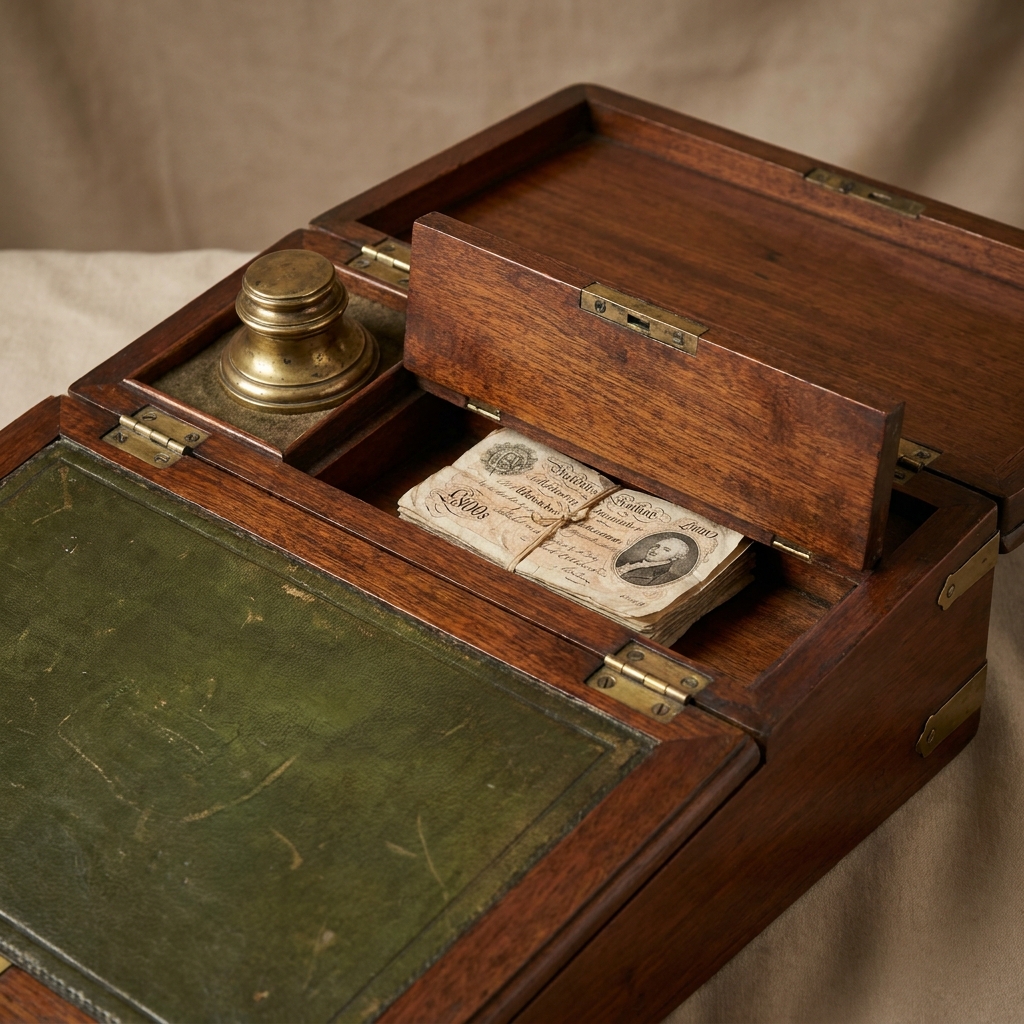
A “Writing Slope” was the laptop of the 19th century — a portable wooden box that unfolded into a slanted desk.
They were used by soldiers and travelers.
If you lift the writing surface, there is usually open storage for paper. But if you remove the inkwell?
Underneath the inkwell, there might be a hidden mechanism. Sometimes, if you inserted a pen nib into a tiny hole and pressed, a spring-loaded board would fly up, revealing a hidden layer for cash.
7. The “Rent Table” Drum
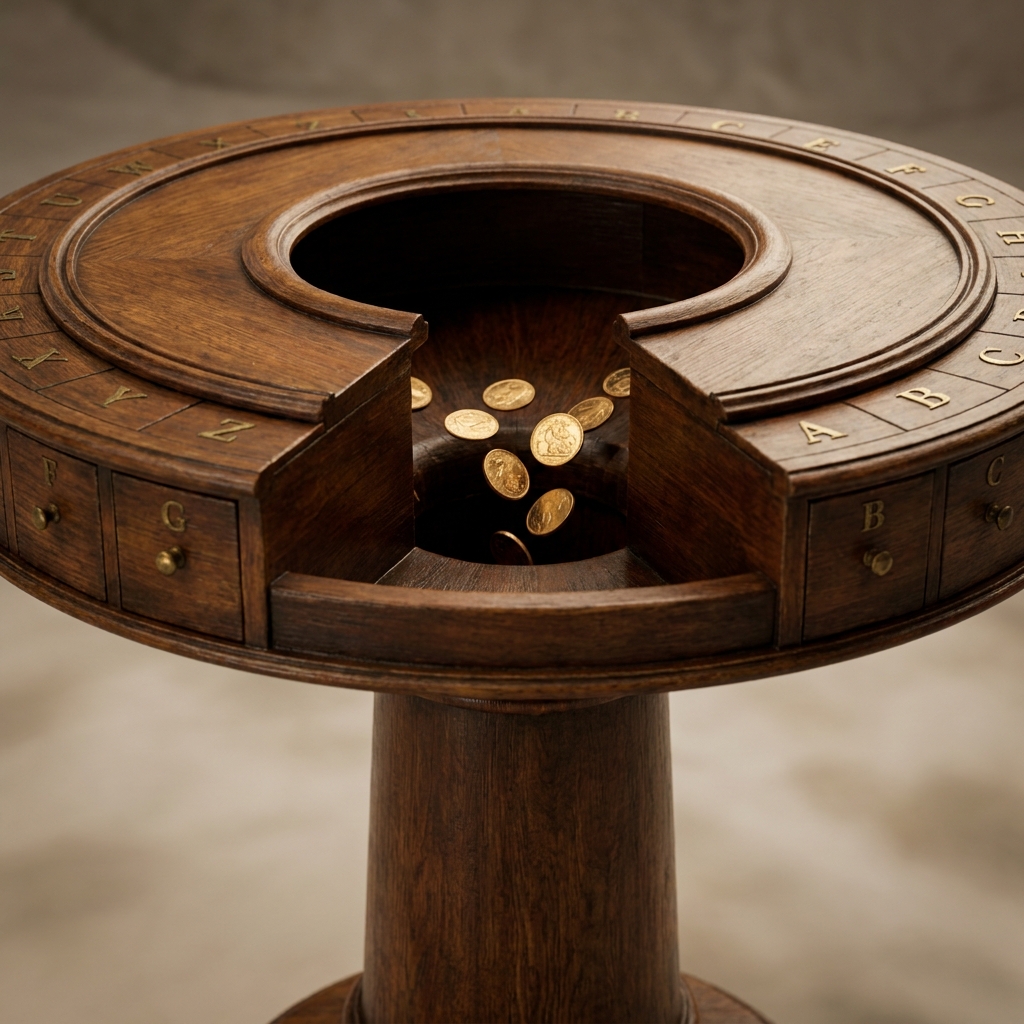
In massive English manor houses, the landlord would sit at a round table to collect rent from tenants.
These “Rent Tables” had a circular top that spun around.
The edge of the table had drawers labeled A-Z for filing records. But the center of the table — the “drum” — was often hollow.
A specialized coin chute allowed the landlord to sweep gold coins directly into the hollow center leg, where they dropped into a locked iron box bolted to the floor.
8. The Hollow Bedpost
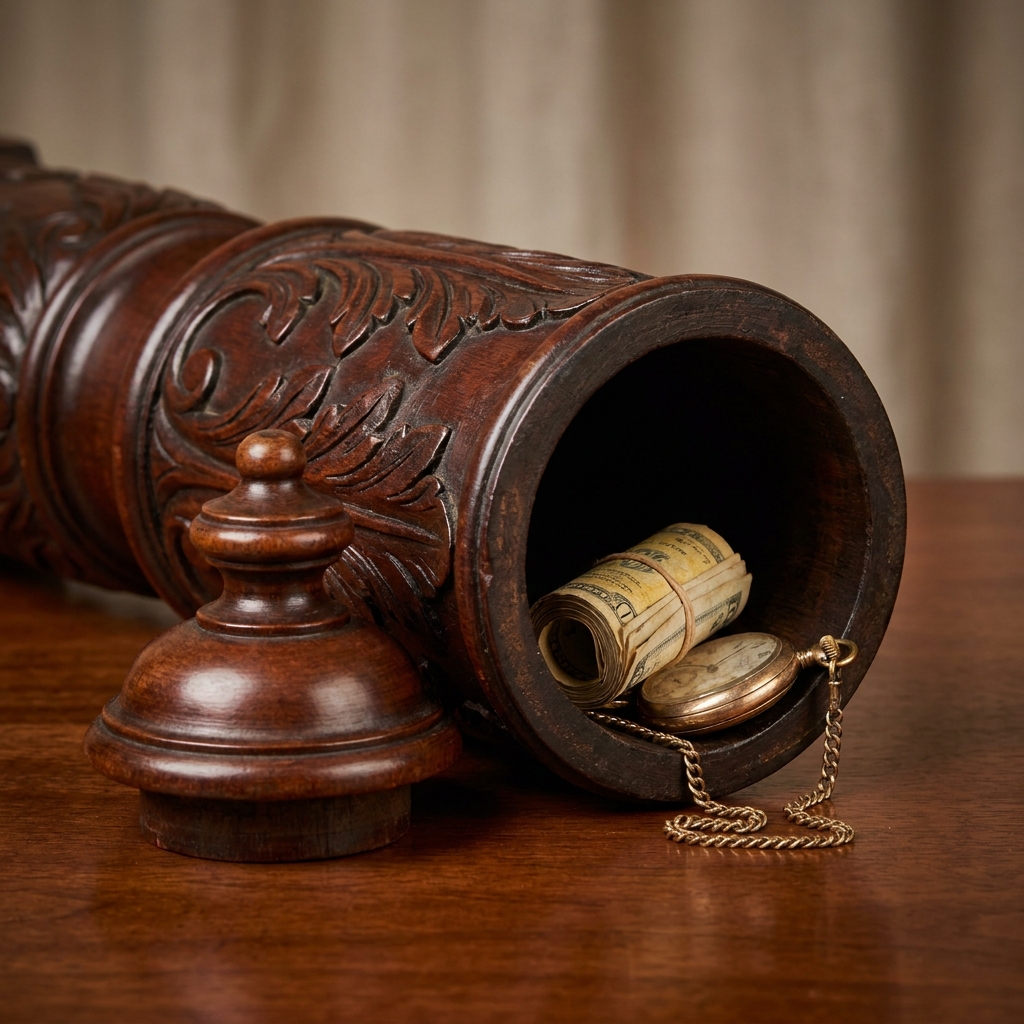
The “Tester Bed” (or four-poster bed) was a symbol of wealth.
But the massive, thick wooden posts were not just for support.
In the days before banks, some wealthy homeowners would have the top of the bedpost hollowed out.
A finial (the decorative cap) on top would unscrew, revealing a deep cylindrical tube.
It was a primitive safe. You literally slept with your money protecting it.
9. The Wardrobe’s Sliding Panel
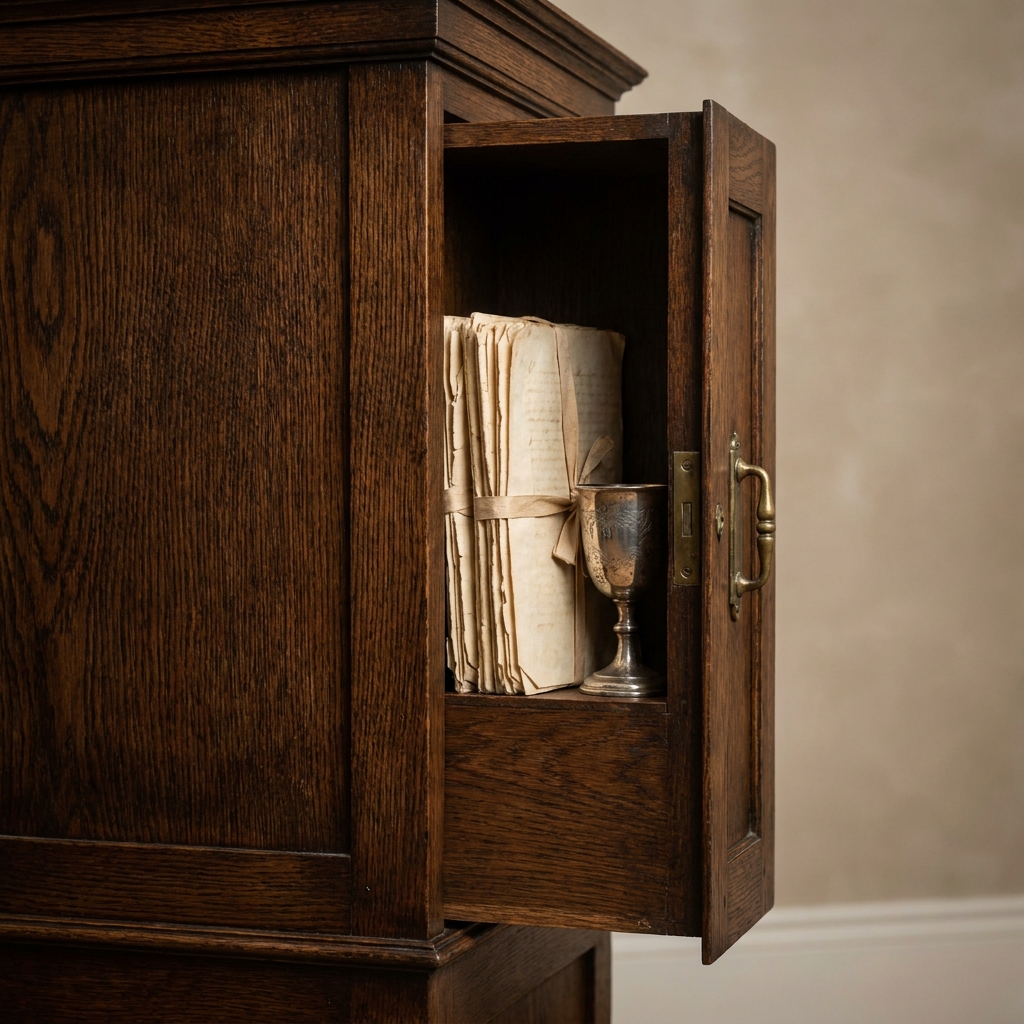
Large Victorian wardrobes are massive pieces of furniture. A grown man can stand up inside one.
That scale made them a natural place to hide things — and cabinetmakers took full advantage.
In some of the oldest English wardrobes, one of the vertical side panels was actually a sliding door. From the inside it looked like solid oak. From the outside, the wood grain matched perfectly with the rest of the case.
But if you pressed on a specific spot and pushed upward, the whole panel would slide up on tracks, revealing a narrow standing compartment.
These “priest holes” were originally designed to hide Catholic clergy during the religious purges of the 1500s and 1600s. In later centuries, they became hiding spots for family silver and sensitive correspondence.
10. The “Pochade” Box (Artist’s Secrets)
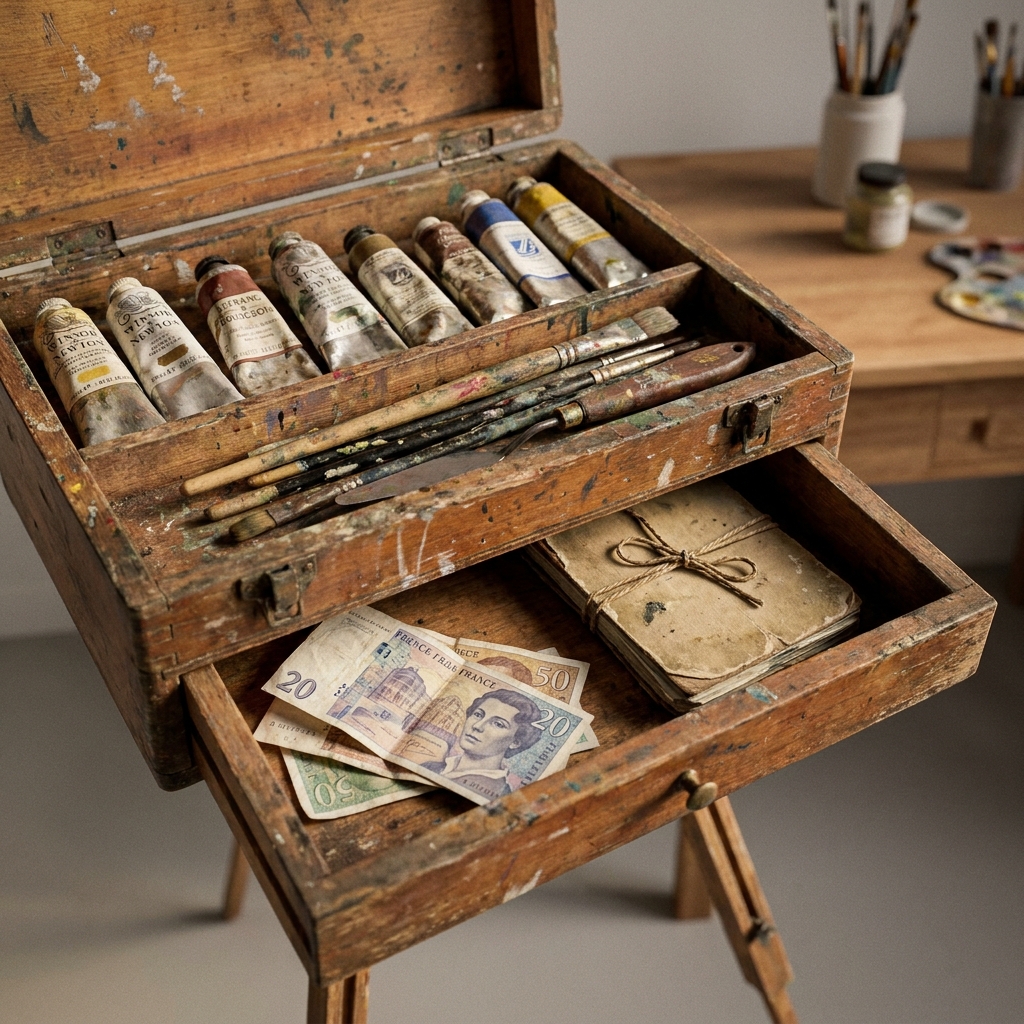
Artists have always been a little secretive.
“Pochade boxes” were portable painting kits. Because artists often traveled through rough country to paint landscapes, their boxes were designed to hide their earnings.
Many have sliding panels behind the palette storage or false bottoms under the paint tubes to hide cash from bandits.
11. The Sewing Table “Bag” Drawer
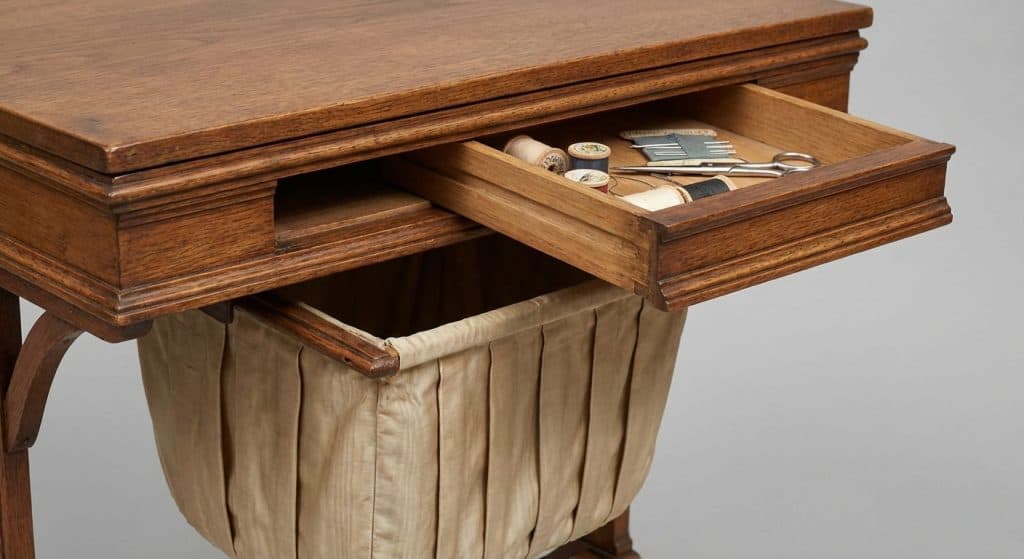
Antique sewing tables often have a fabric bag hanging underneath them to hold yarn.
But the wooden table itself often holds a secret.
Because sewing tools (like silver scissors and needles) were expensive, the top drawer often had a false back.
If you pull the drawer out all the way and feel behind the back panel, there is often a void space designed to hide expensive silver thimbles or lace.
12. The Card Table “Guinea Pits”
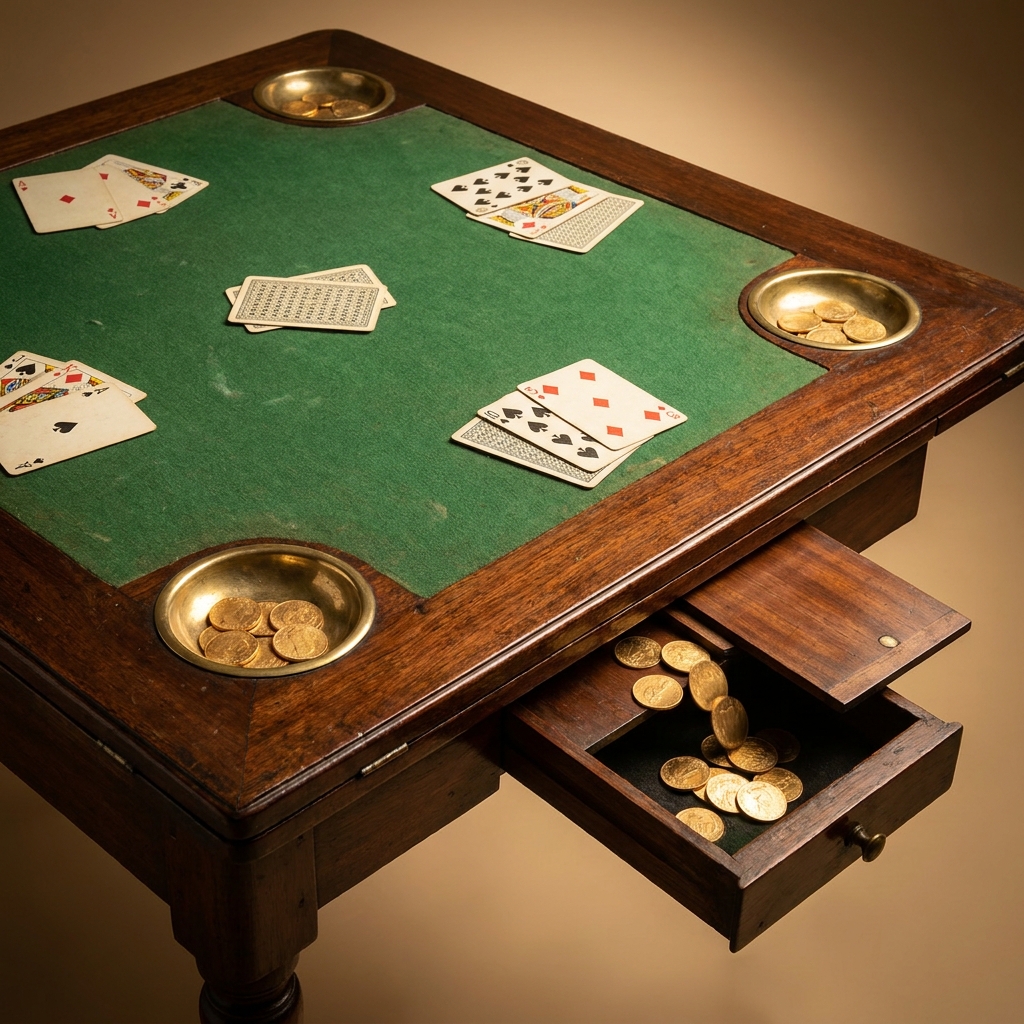
Gambling was the favorite pastime of the 18th-century gentleman.
Antique card tables often folded in half. When opened, the corners sometimes featured scooped-out circular holes.
These were “Guinea Pits” (named after the gold Guinea coin).
They were used to hold your betting money. But in some tables, these pits had false bottoms that could slide open to dump the coins into a hidden drawer below — a feature sometimes used by “sharps” (cheaters) to hide their winnings quickly.
13. The Piano Bench “Music Box”
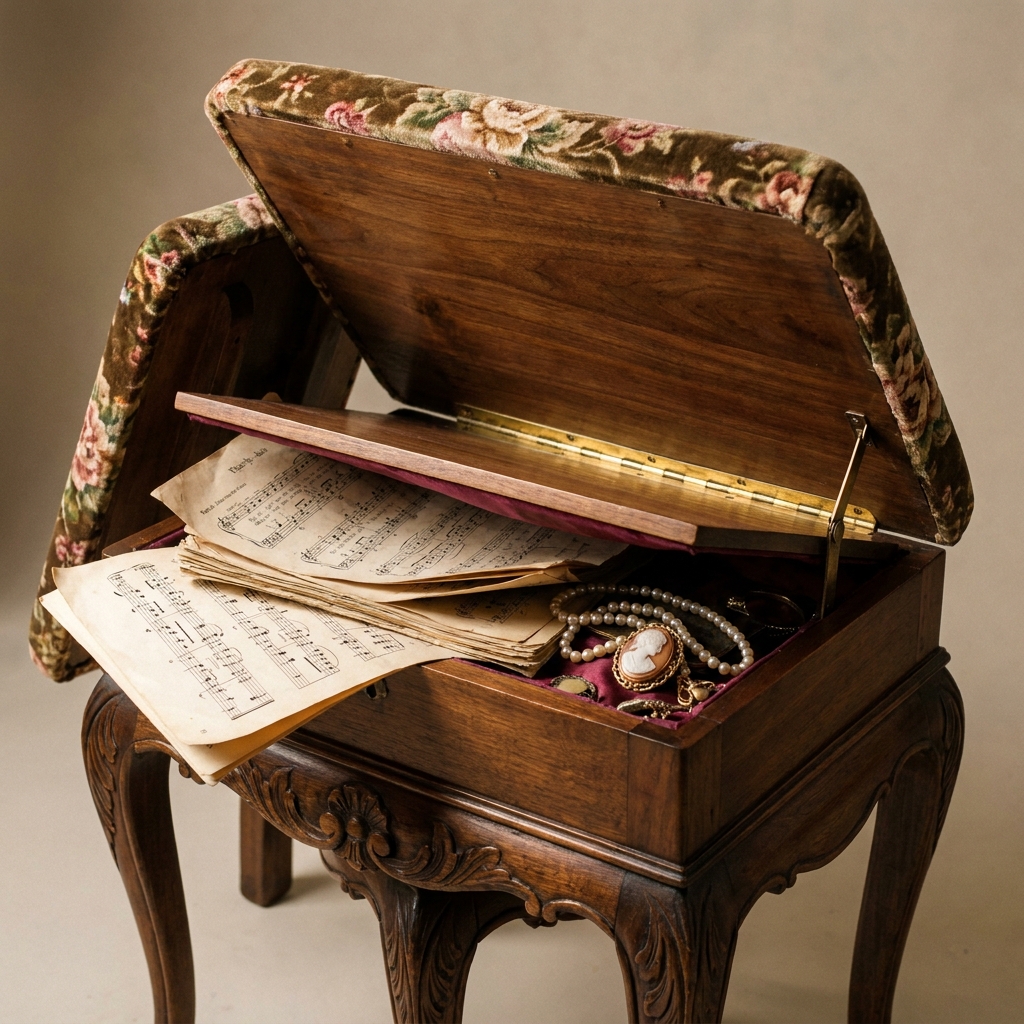
Every Victorian parlor had a piano, and every piano had a matching bench.
The bench was used to store sheet music. You would lift the padded seat on its hinges, and inside was a felt-lined cavity for your Chopin and your Mozart.
But on the finest benches, that cavity was not as deep as it looked.
If you pressed on a small wooden button hidden under the inside lip of the bench, the entire floor of the music compartment would spring upward on a hinge.
Beneath it was a second, hidden layer. This was the ideal place to hide jewelry during a dinner party — because the lady of the house would be sitting on it all night.
14. The Music Cabinet’s False Spine
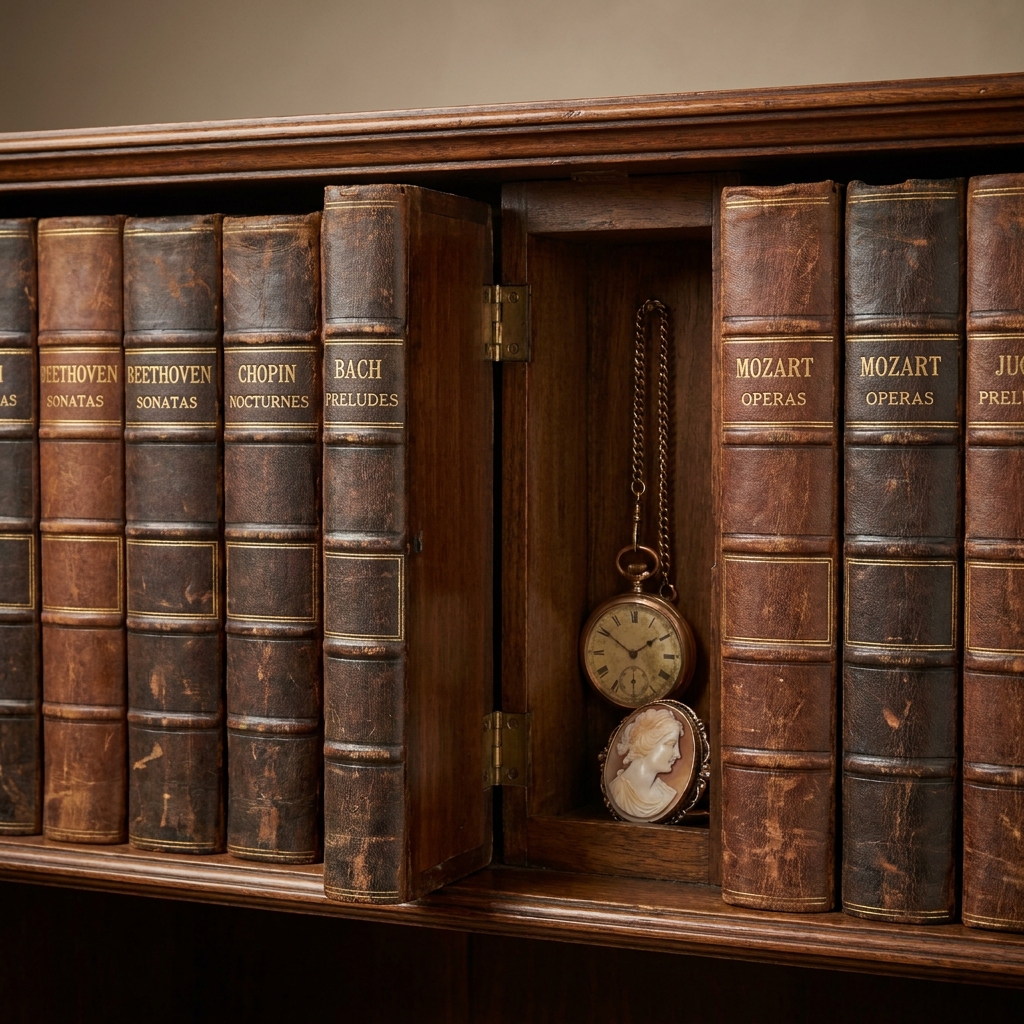
Victorian music cabinets stored sheet music vertically, like books on a library shelf.
Each “spine” you could see was actually the edge of a folder or portfolio containing music for a specific composer.
But sometimes, one of those spines was a fake.
It was painted and tooled to look exactly like a leather-bound volume of Beethoven or Liszt. But it was hinged at the side, and if you pulled the spine forward, the whole false “book” swung out like a door.
Behind it was a narrow vertical compartment for hiding pocket watches, cameos, or anything small and expensive.
15. The Bible Box
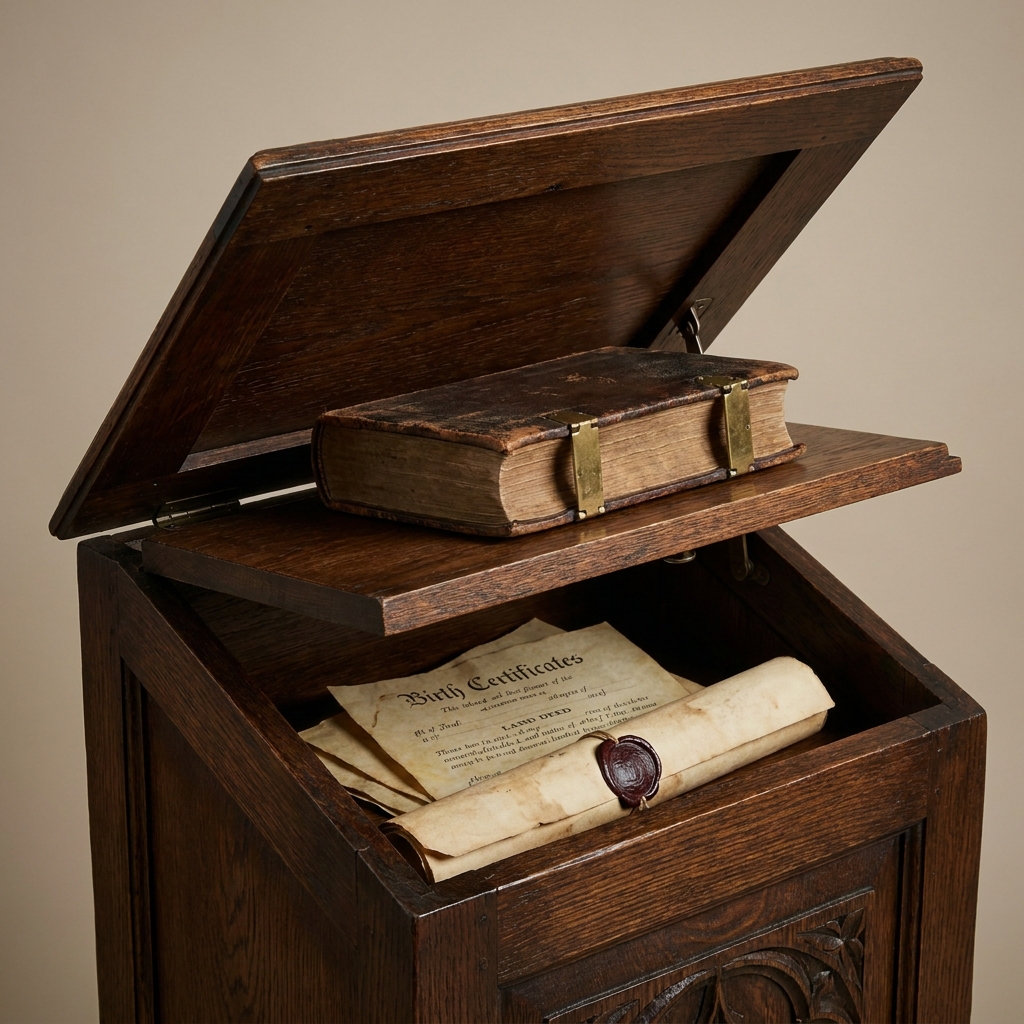
In the 1600s, the Bible was often the most expensive thing a family owned.
“Bible Boxes” were locking wooden boxes with a slanted top for reading.
But because the Bible was where families recorded births, deaths, and marriages, it was also the most legally important document in the house.
Many Bible Boxes had a “shelf” inside that lifted up to reveal a hidden layer for birth certificates and land grants.
16. The “Skirt” Drawer
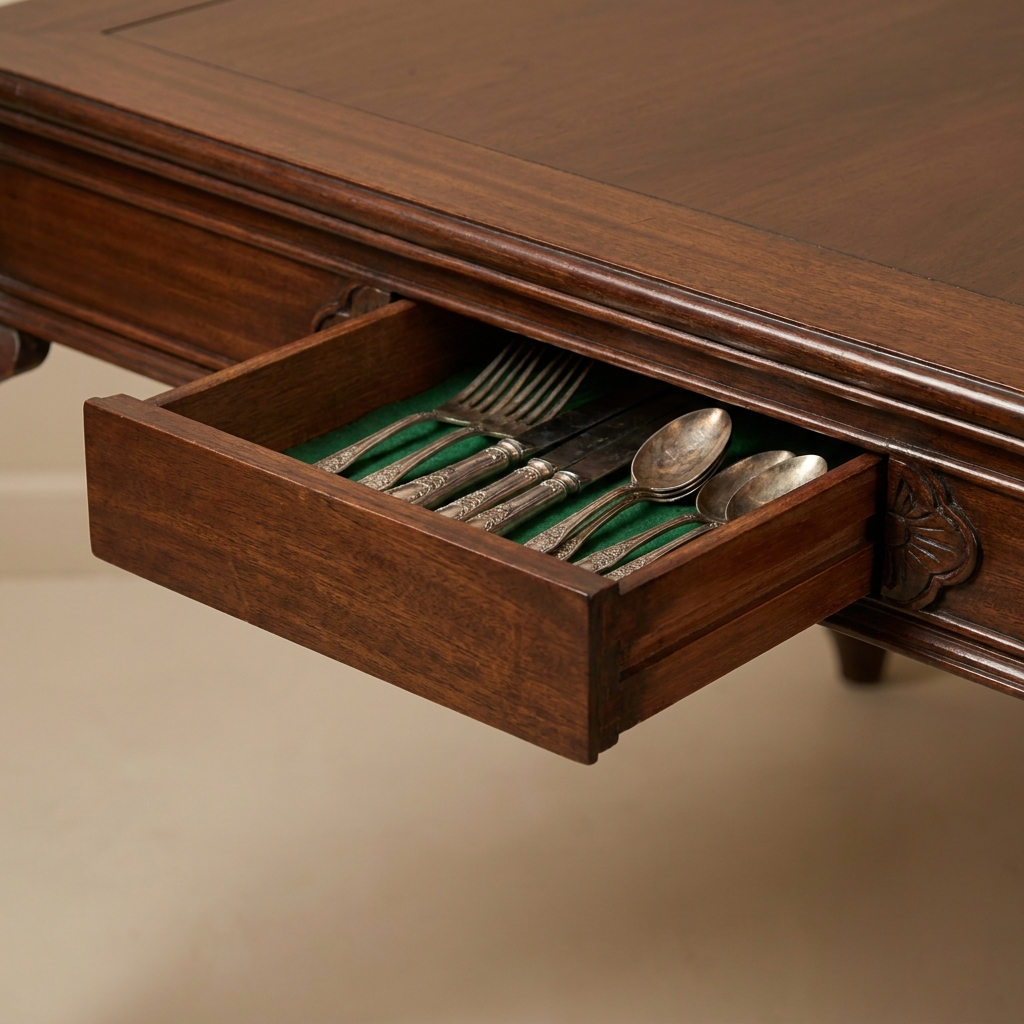
Look at the “apron” or “skirt” of an antique table — the piece of wood that connects the legs just below the top.
Usually, it is decorative.
But in some dining tables, a section of the skirt is actually a drawer.
It has no handle. It is cut so perfectly that the wood grain matches the surrounding skirt. You open it by gripping the bottom edge and pulling.
It was used to store silverware (which was made of real silver and highly stealable).
17. The Sideboard’s Spring-Release Panel
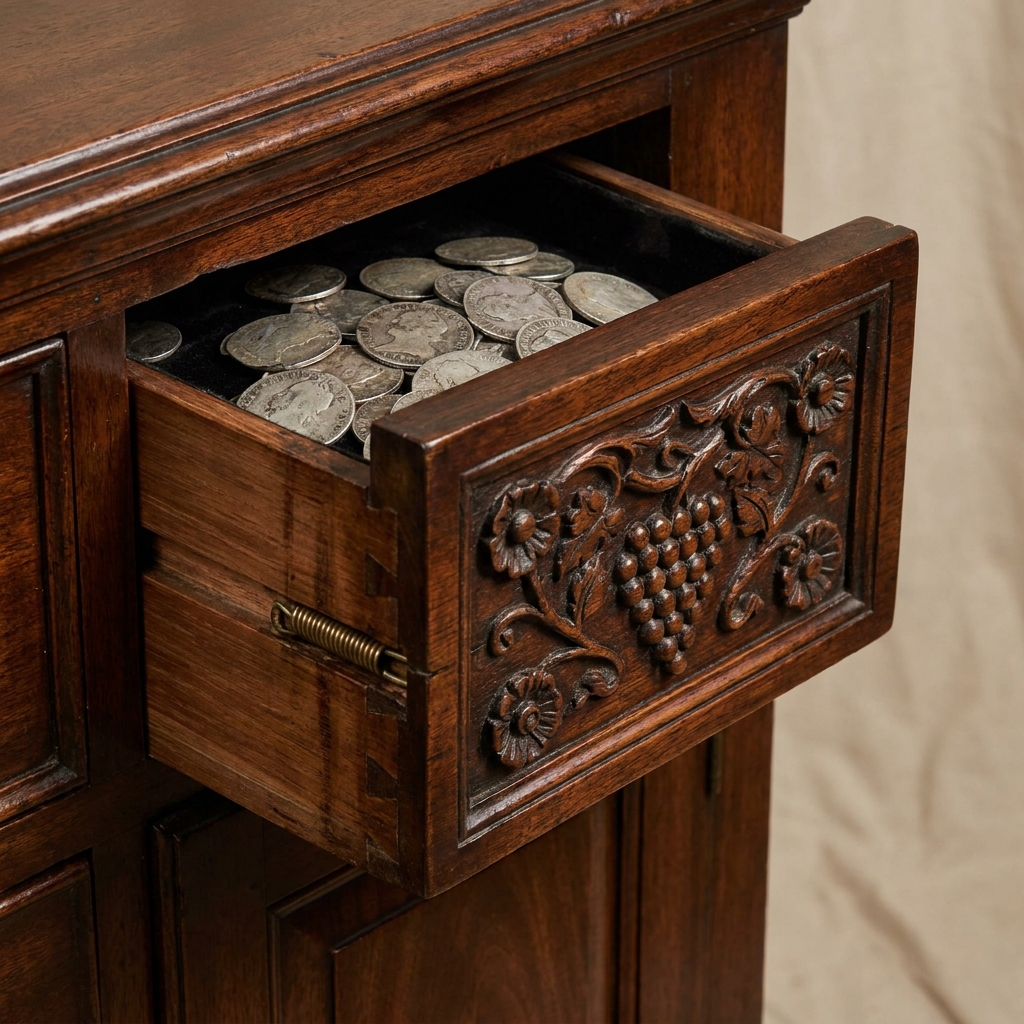
A sideboard was the centerpiece of the Georgian dining room. It stored the family silver, the linens, and the serving pieces.
The fronts of these sideboards were covered in elaborate carved panels — rosettes, grape clusters, floral medallions.
Most of that carving was purely decorative.
But on certain pieces, one of those carved panels was a spring-loaded drawer front. There was no handle, no keyhole, and no visible seam.
If you pressed on the correct carved rosette with just the right amount of pressure, the panel would pop forward by about an inch. From there, you could pull out a shallow hidden drawer — usually filled with silver coins or small valuables the butler was not supposed to see.
18. The Metamorphic Library Chair
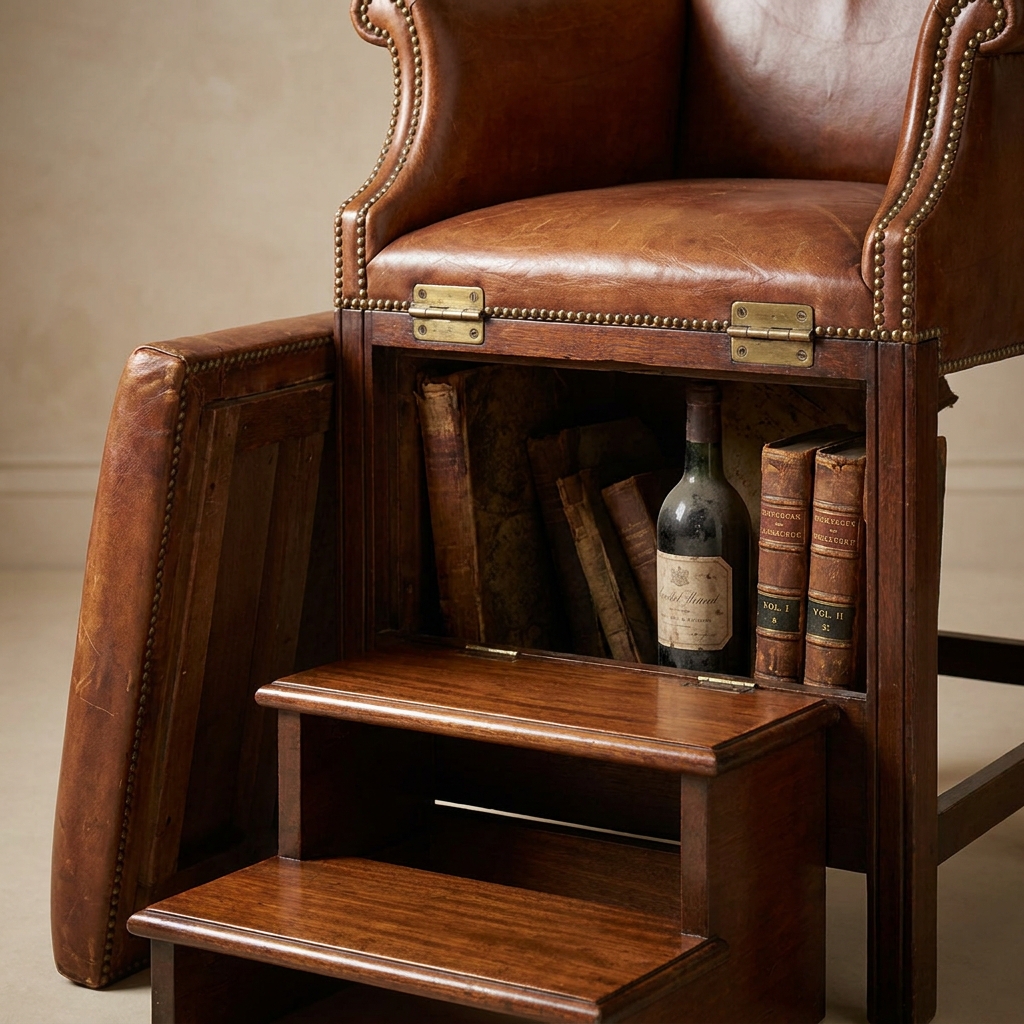
The Georgians loved gadgets.
A “Metamorphic” chair looks like a grand, upholstered library armchair.
But if you release a brass latch, the entire seat flips forward, and the chair transforms into a set of library stairs.
While not a “compartment,” the hollow space inside the seat frame was often used to hide liquor bottles or scandalous books.
19. The Mantel Clock’s False Back
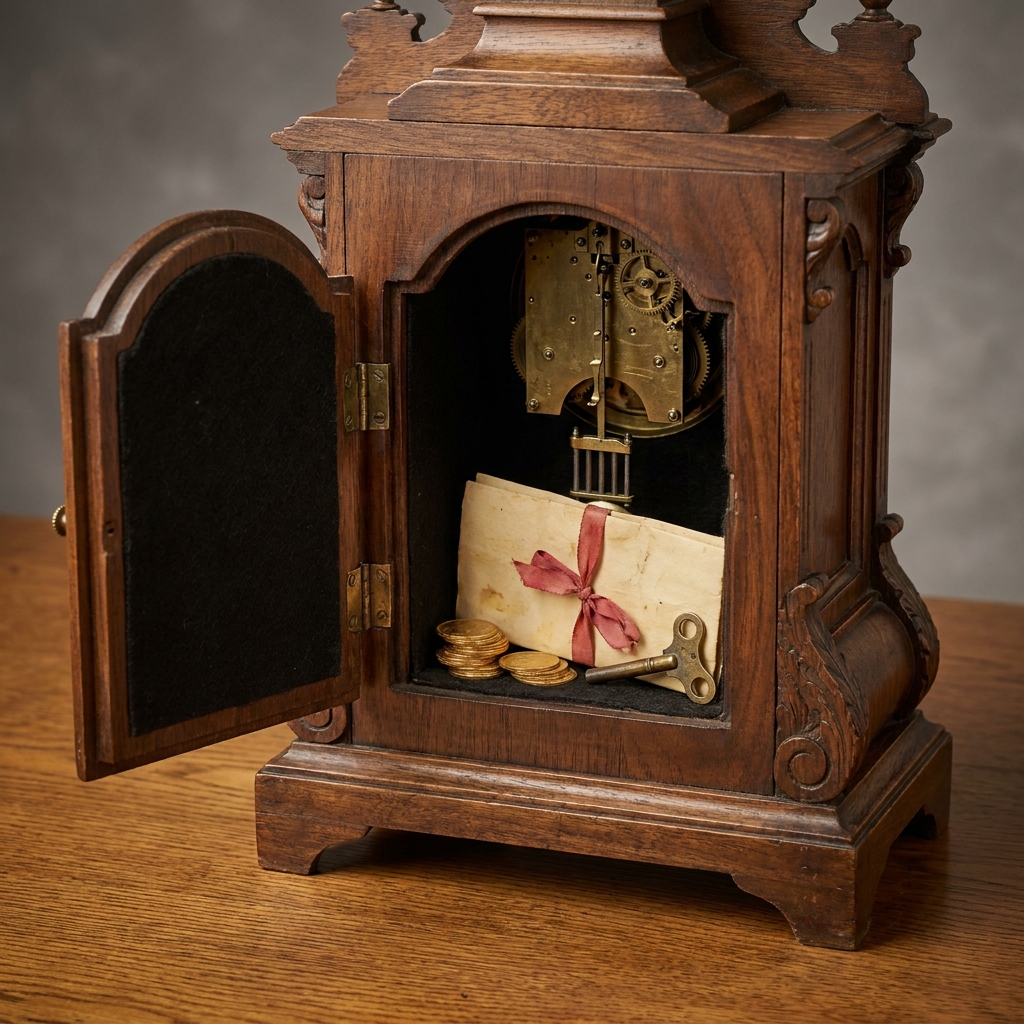
Mantel clocks were perfect hiding spots because nobody ever moved them.
They sat in the same place on the same mantel for generations, winding up once a week and chiming on the hour.
But on many ornate Victorian mantel clocks, the decorative wooden back case had a secret.
If you lifted the clock down and looked carefully, a tiny brass latch disguised as a decorative element would release the entire rear panel. It would swing open like a small door.
Inside was a felt-lined cavity big enough for gold coins, love letters, or a roll of currency. Because the clock was heavy and awkward to move, and because it was always visibly ticking away, nobody ever thought to investigate it.
20. The Grandfather Clock’s Weight Chamber
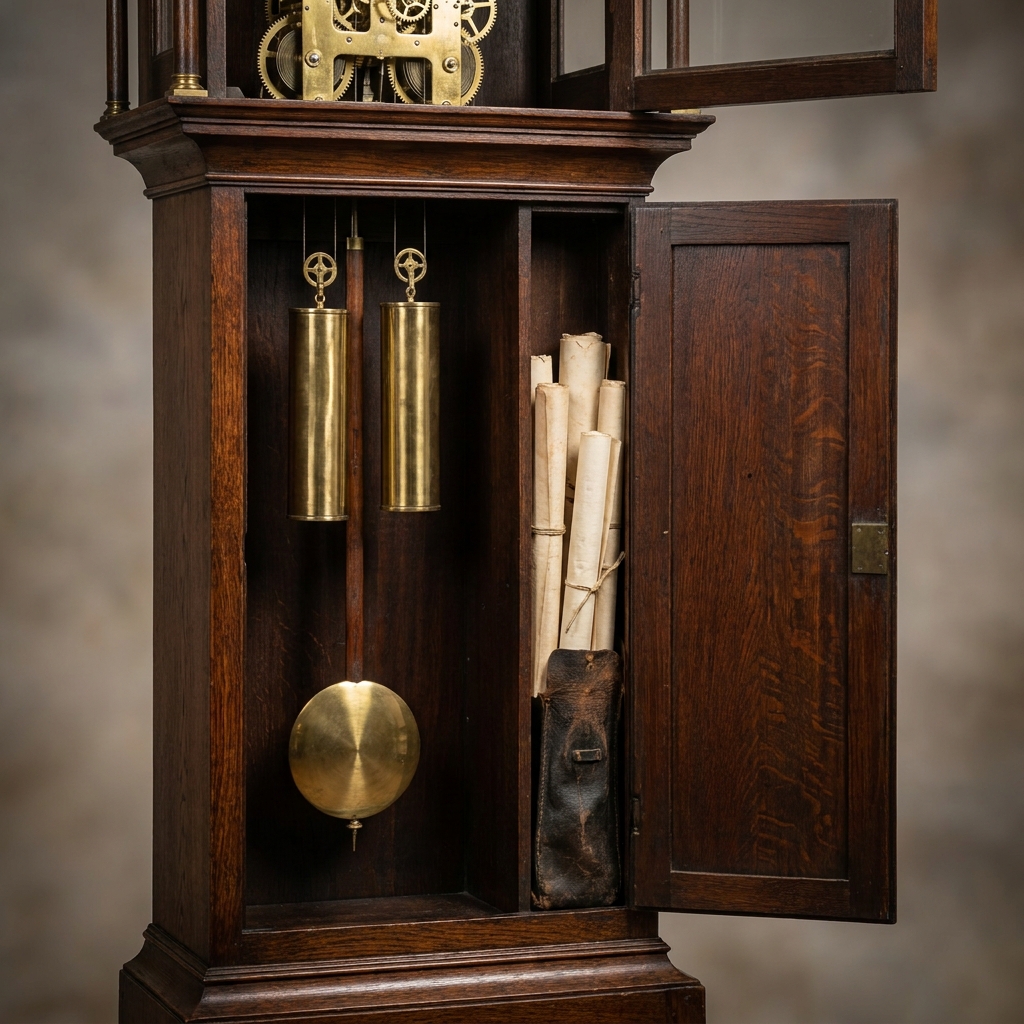
The tall wooden case of a grandfather clock (or “longcase clock”) is mostly hollow. You open the front door to access the pendulum and the heavy brass weights that drive the mechanism.
But the mechanism does not use all that space.
In some 18th-century longcase clocks, one side of the interior case had a concealed vertical drawer that ran nearly the full height of the cabinet. It opened with a small wooden latch at the base, or by pressing on a nearly invisible seam in the side panel.
Smugglers used these during the Napoleonic Wars to transport documents across borders. Customs agents would open the clock, see the working pendulum and weights, and never think to check if the cabinet itself had a hollow wall.
21. The Mirror Back
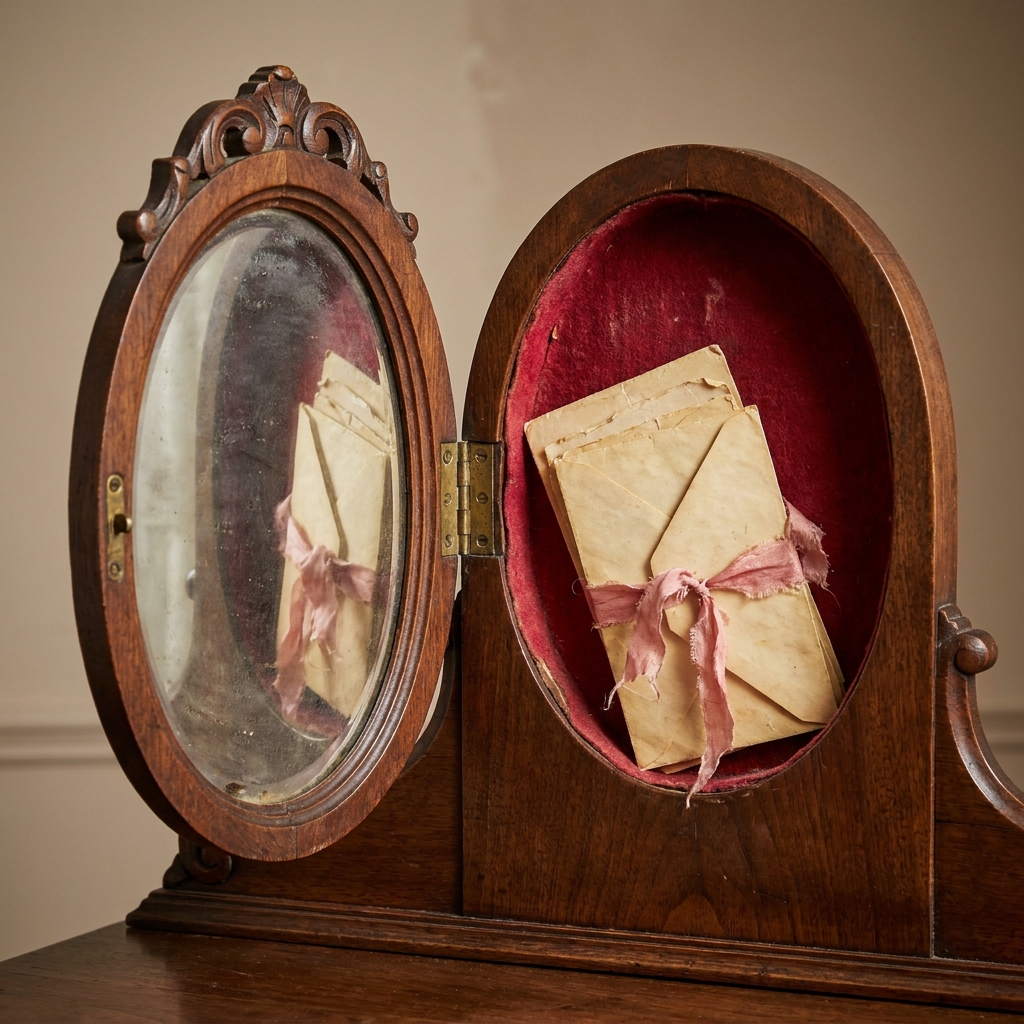
Vanity mirrors on dressers were common.
But in the Victorian era, some mirrors were hinged like doors.
If you knew which screw to turn or which latch to press, the entire glass mirror would swing outward.
Behind it was a shallow felt-lined recess carved into the wood backing. It was the standard hiding place for love letters that you did not want your spouse to see.
22. The Shoe Last Decoy
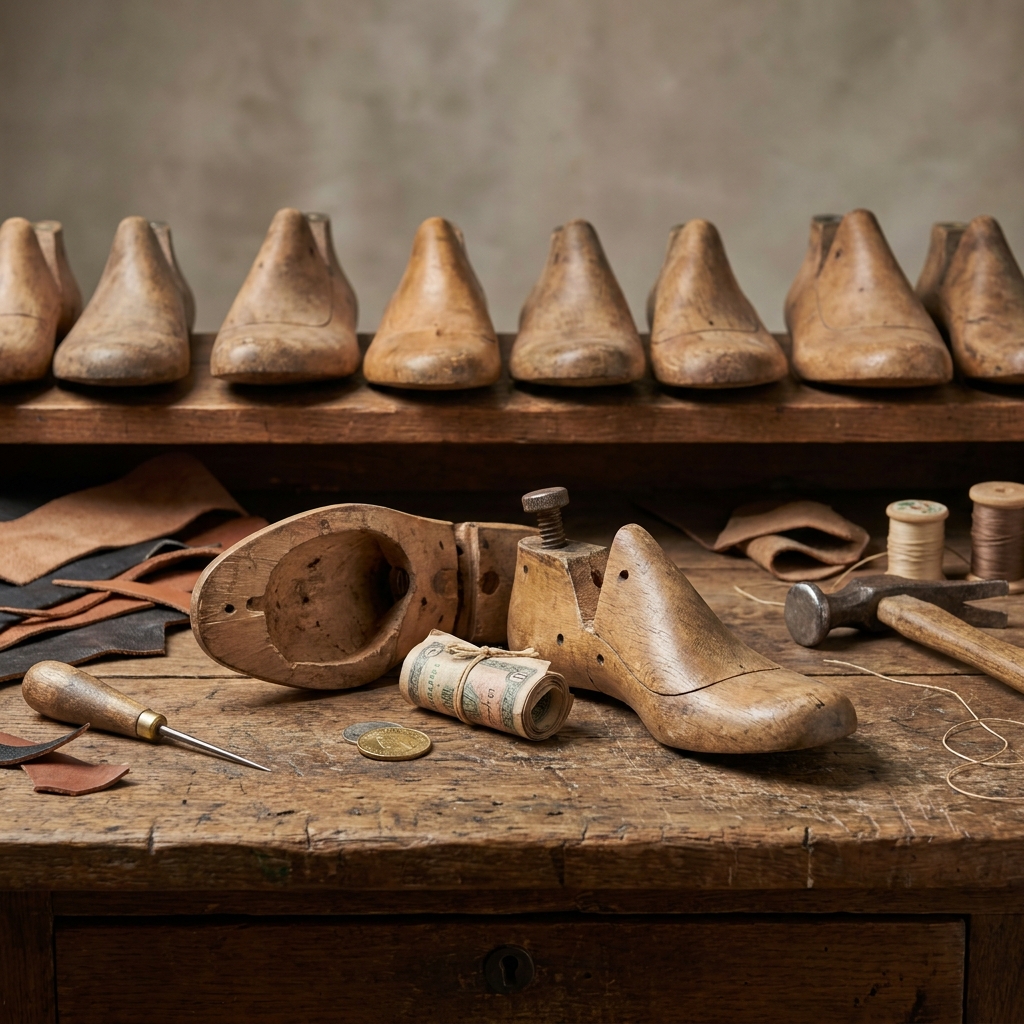
Wealthy Victorian households often had a dedicated cobbler’s bench or a shoe repair station tucked into a back hallway or service room.
On the bench sat a row of wooden “shoe lasts” — the foot-shaped forms used to stretch and shape leather shoes.
They looked like nothing. Old, worn, dusty tools of a trade.
But one of them was a lie.
A specific last on the bench was hollow. It would unscrew at the ankle, splitting into two halves to reveal a cavity inside the wooden foot.
It was the perfect decoy. Thieves would ransack the parlor and the bedroom looking for jewelry. They would never think to examine a dirty shoe last sitting in the servant’s workroom — and even if they did, finding the fake one among a dozen real ones was nearly impossible.
23. The “Book” Safe
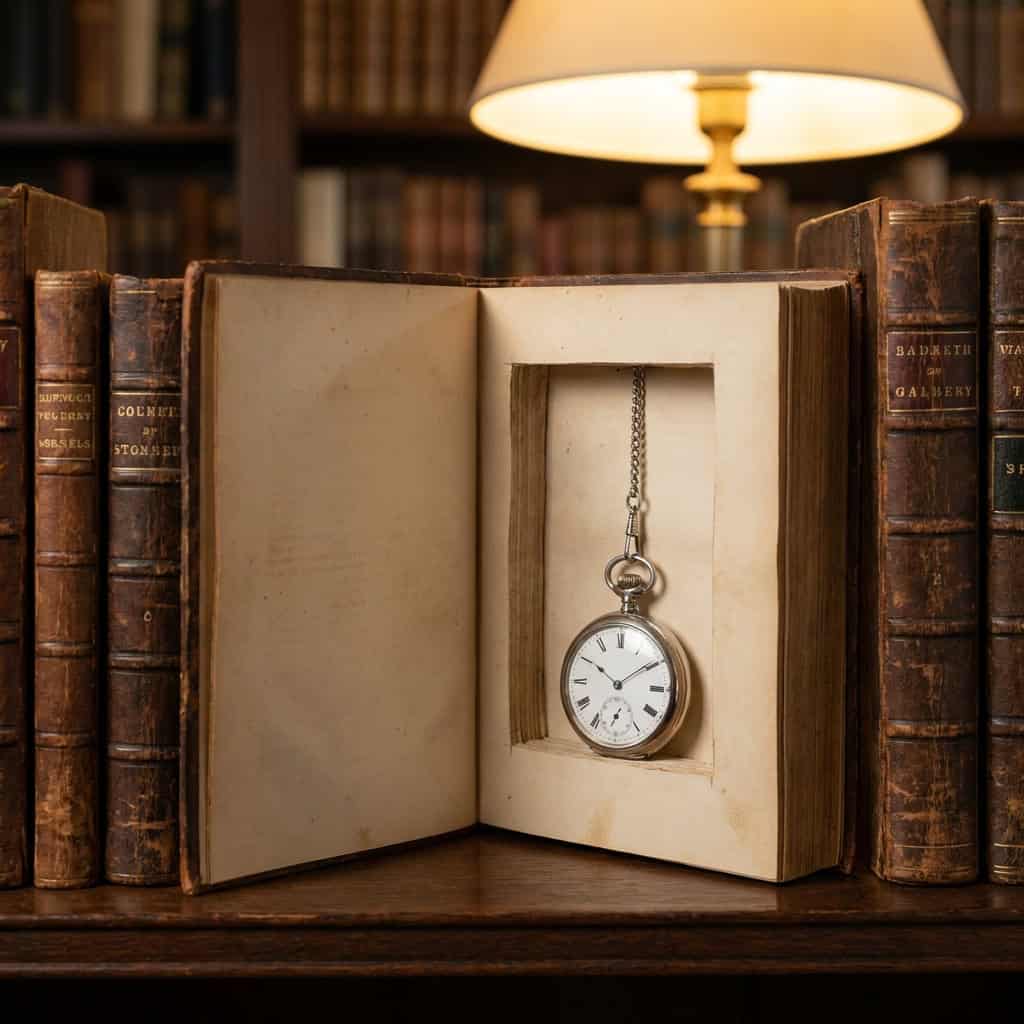
This is the classic cliché, but it exists for a reason.
Before Amazon sold metal safes disguised as dictionaries, craftsmen would take real, leather-bound books, glue the pages together, and hollow out the center.
These were then placed on the shelf of a massive breakfront bookcase, blending in perfectly with hundreds of other volumes.
It was “security through obscurity” at its finest.
Conclusion
The next time you are at an antique shop or estate sale, do not just look at the furniture.
Touch it.
Feel for a latch under the drawer. Look for a crack in the molding. Wiggle the inkwell.
You might not just find a beautiful piece of history. You might find what the last owner left behind.