
Look at a modern American backyard, and you see a lawn, a fence, and maybe a patio set.
It is a place for leisure.
But look at a backyard from 1850, and you see a factory.
Before electricity and supermarkets, the backyard was where the work happened. It was crowded with outbuildings, each with a specific survival function.
There were towers for birds, dungeons for ice, and specialized rooms just for doing laundry.
We tore them down when technology made them obsolete, replacing them with empty grass.
Here are 23 forgotten backyard structures that prove our ancestors were self-sufficient in ways we can barely imagine.
1. The “Ha-Ha” Wall
This has the weirdest name in landscaping history, but it served a genius purpose.
Wealthy estates wanted an unbroken view of the rolling hills, but they also had livestock that would wander up to the front door and eat the garden.
A fence would block the view.
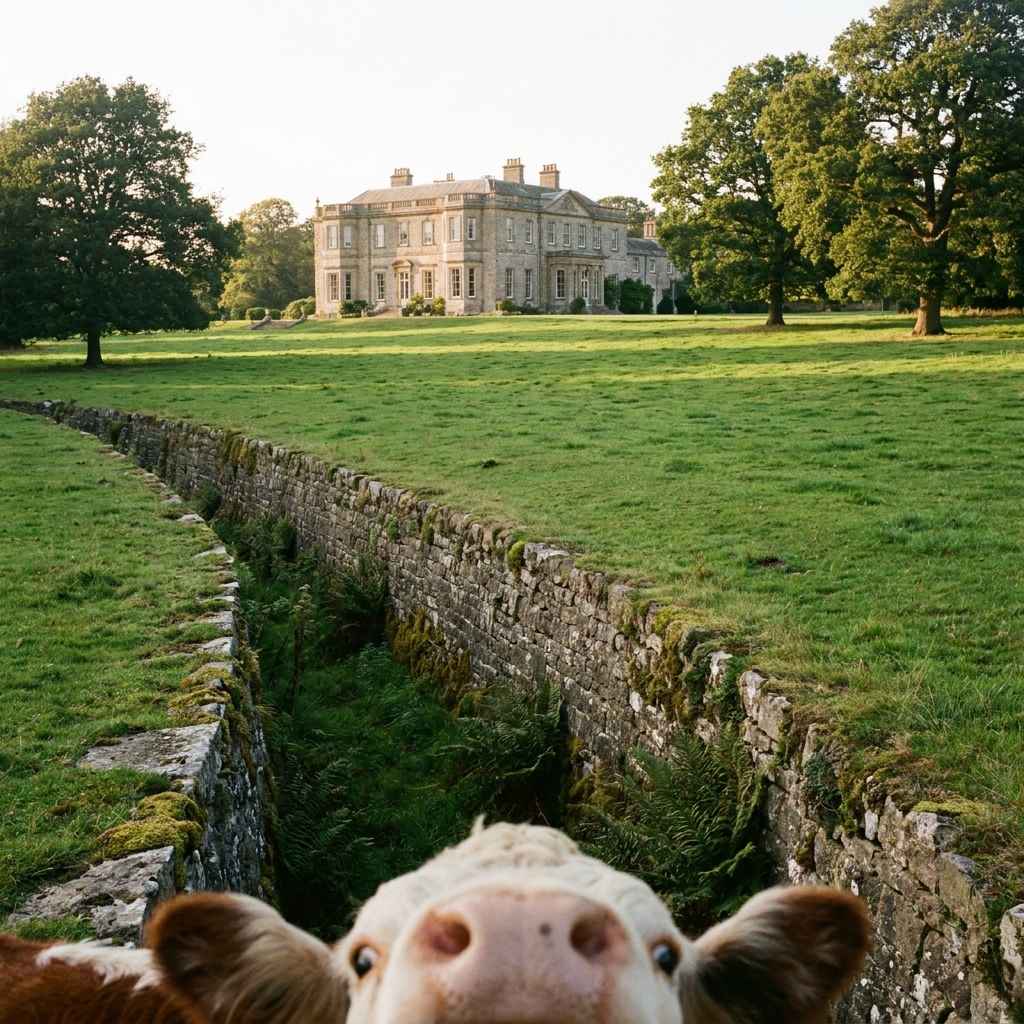
The solution was the “Ha-Ha.” It is a sunken stone wall set into a ditch.
From the house, the lawn looks continuous. But if a cow tries to walk toward the house, it falls into the ditch and is stopped by the wall.
It was an invisible fence before electricity. We stopped building them because digging a massive trench is a lot harder than buying a roll of barbed wire.
2. The Ice House

Imagine having ice in your drink in August… in 1840.
It wasn’t magic. It was the Ice House.
These were deep, stone-lined pits dug into the ground, usually covered by a small, windowless wooden shed.
In the dead of winter, workers would cut massive blocks of ice from the frozen river and pack them into the pit, insulated with sawdust and straw.
The insulation was so effective that the ice would stay frozen all summer long.
The electric refrigerator killed the ice house, turning these deep pits into dangerous holes that most homeowners filled in.
3. The Dovecote
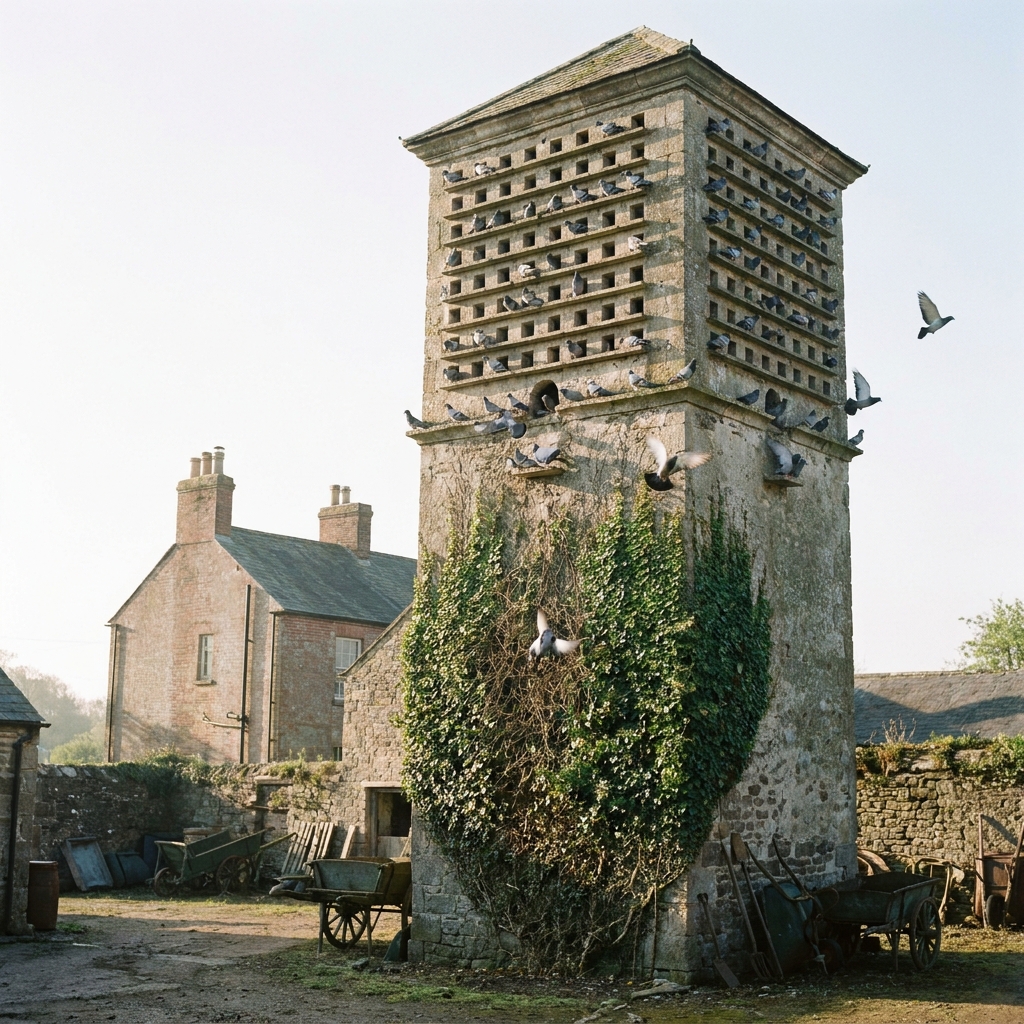
If you see a tower in an old backyard with hundreds of tiny holes near the top, it isn’t a decorative birdhouse.
It’s a Dovecote.
In the 1700s and 1800s, pigeons (squab) were a critical food source. They were easy to raise and tasted like chicken.
The Dovecote was a factory for meat and eggs. But it had a second purpose: fertilizer.
Pigeon guano was considered the best fertilizer for the garden. These towers were designed to make collecting the “gold” easy.
We stopped building them when chicken became cheap and we decided we did not want to eat pigeons anymore.
4. The Summer Kitchen

In the days of wood-fired stoves, cooking dinner meant lighting a massive fire inside your house.
In December, this was cozy. In July, it was torture.
To avoid turning the main house into an oven, families built a Summer Kitchen — a small, separate building just a few yards from the back door.
All the cooking, canning, and heavy cleaning happened here during the hot months.
It also kept the risk of fire away from the main house.
Gas stoves and air conditioning made the Summer Kitchen obsolete, but many still stand as guest cottages or sheds.
5. The Bake Oven

The Summer Kitchen handled the daily cooking, but bread was a different animal.
Bread required a hot, stable, brick-domed oven that took hours to heat properly. So most farms had a separate, free-standing Bake Oven near the kitchen.
It was fired up once a week, usually on Saturday, and a dozen loaves of bread, pies, and roasts were baked in succession as the oven cooled.
The cast-iron range with a built-in oven made the detached bake oven obsolete in a single generation.
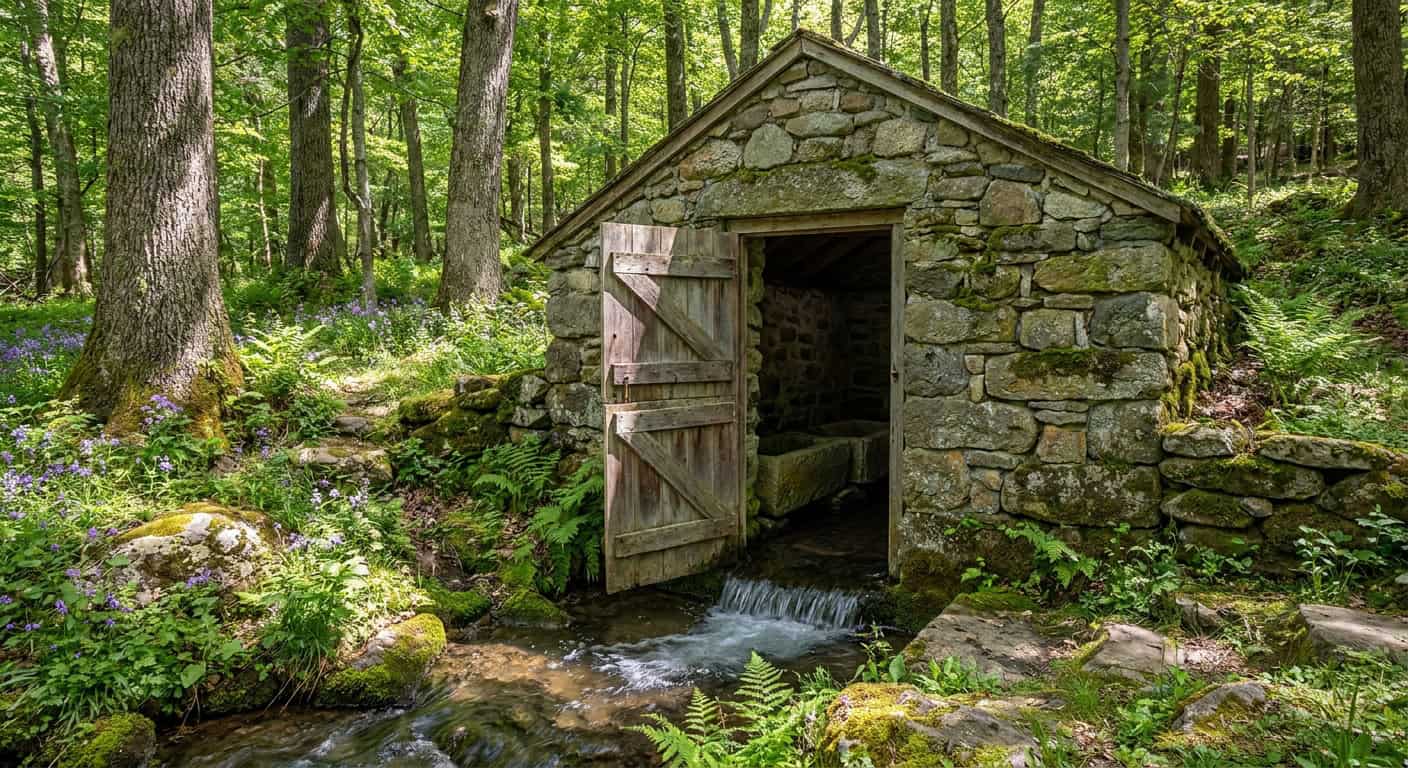
6. The Spring House
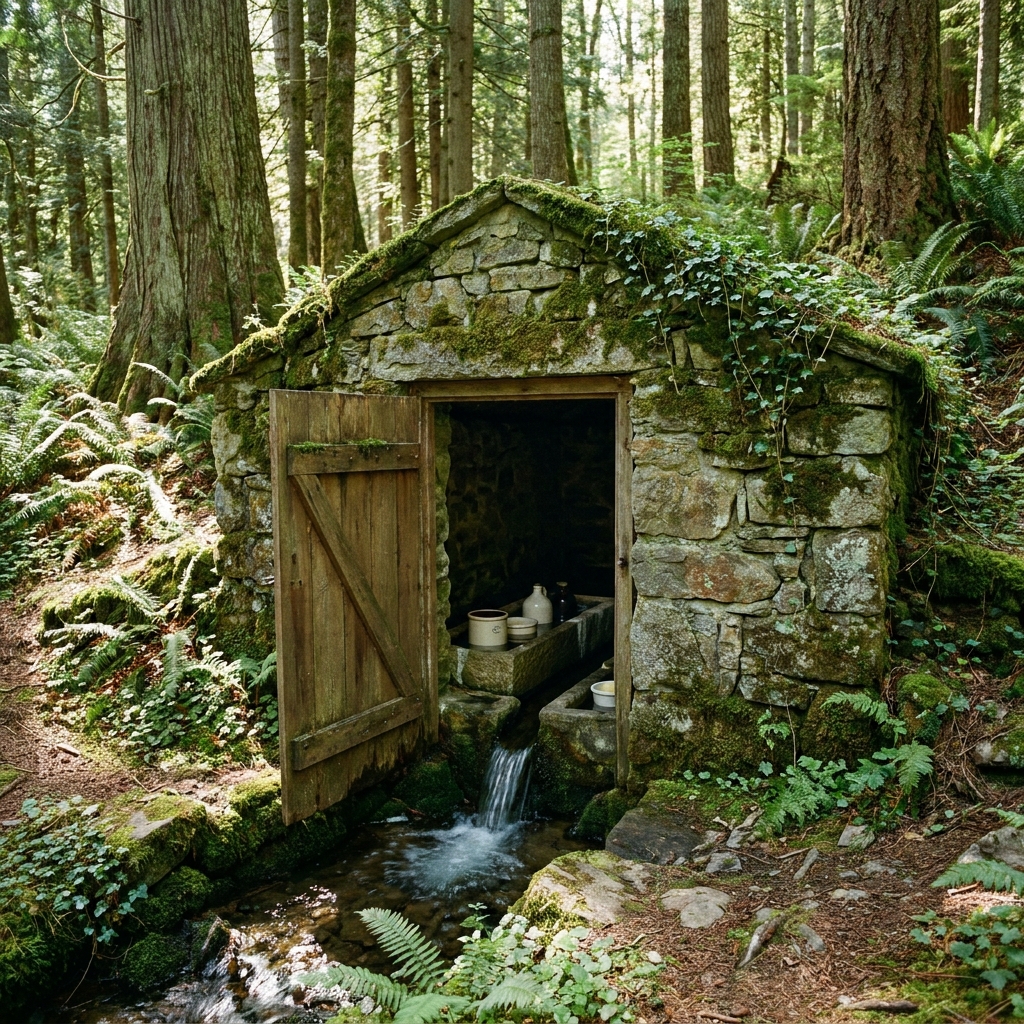
Before we had refrigerators, we had spring water.
A Spring House was a small masonry building constructed directly over a natural running spring.
The cold water (usually around 55 degrees year-round) would flow through troughs carved into the floor.
Farmers would place crocks of milk, butter, and cheese directly into the water to keep them from spoiling.
It was nature’s refrigerator. If you find a small stone shed with a stream running out from under the door, you’ve found one.
7. The Smokehouse
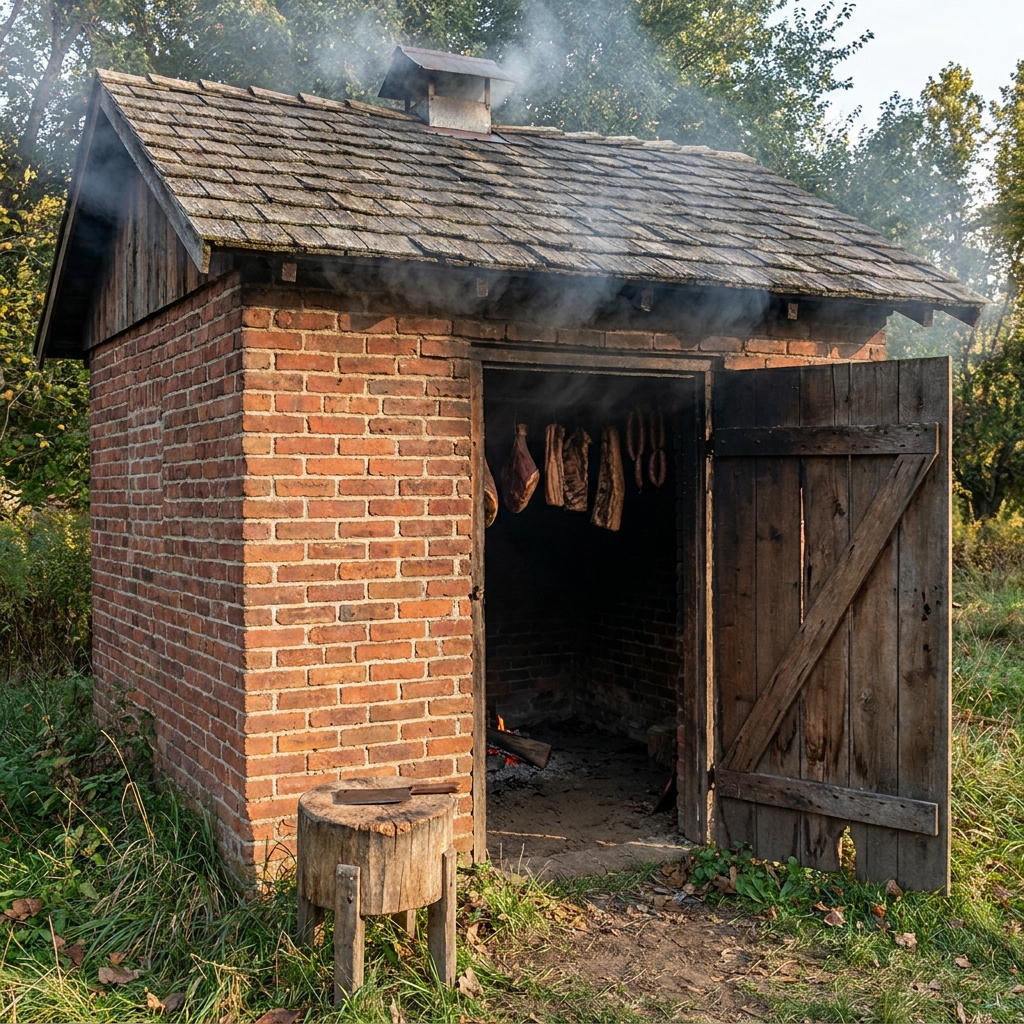
Preserving meat wasn’t a hobby; it was survival.
The Smokehouse was a small, windowless brick or stone shack.
After the autumn hog slaughter, hams and bacon were hung from the rafters. A slow, smoldering fire was lit in a pit in the floor.
The smoke cured the meat, preserving it for the winter and keeping insects away.
These buildings are often mistaken for outhouses, but if you step inside, the walls are still black with 100 years of soot and smell faintly of hickory.
8. The Pigsty
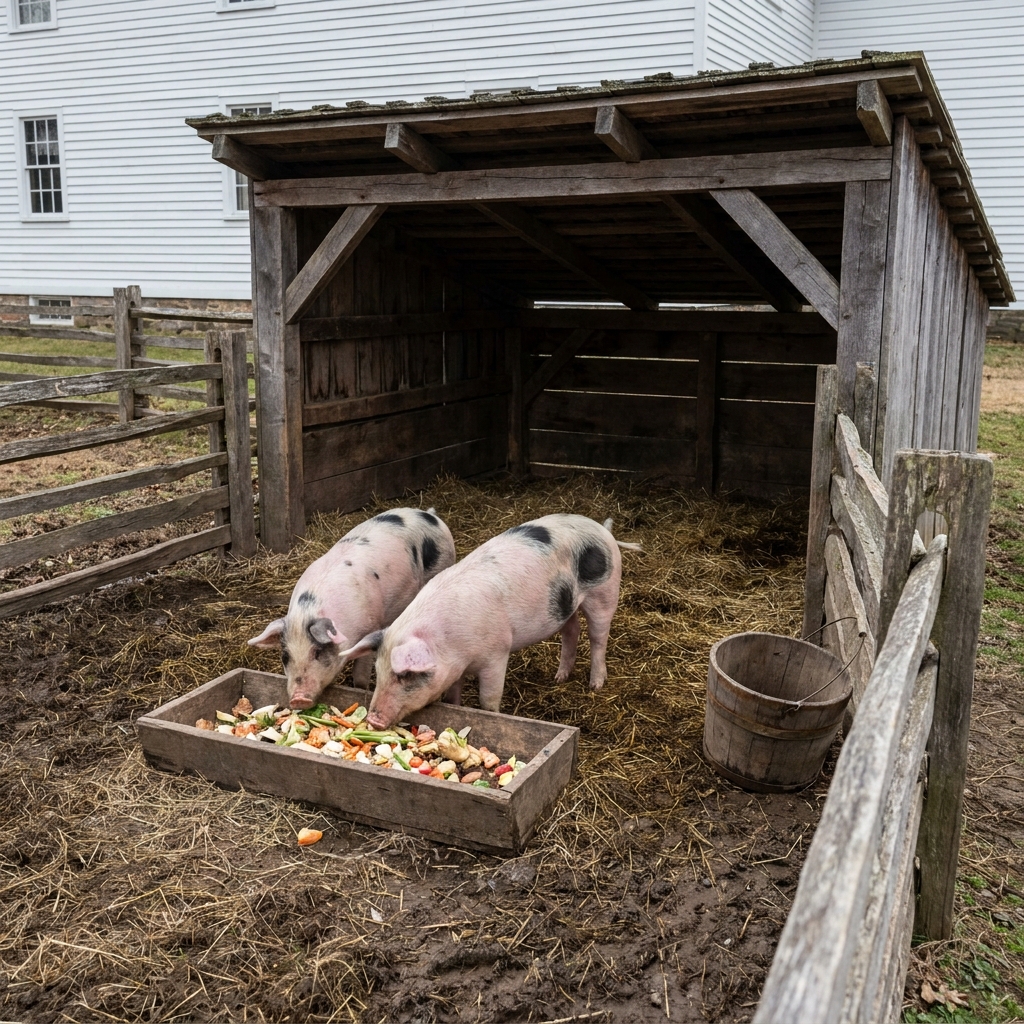
Nearly every household, even in town, kept a pig.
The pigsty was a small enclosed pen tucked into the back corner of the yard, usually with a low wooden shelter and a feeding trough.
The pig ate every scrap from the kitchen — peels, rinds, bones, sour milk — and turned it into next winter’s ham and bacon.
In November, the pig became the smokehouse’s main tenant.
Zoning laws, the supermarket, and our changing relationship with what we eat killed the backyard pig.
9. The Carriage House

This was the garage before the car.
But unlike a modern garage, the Carriage House had to house a living animal.
The ground floor was for the carriage and the horses, with stalls and a tack room. The second floor was usually the Hayloft, where feed was stored (and where the groom or driver often slept).
They were often beautiful, featuring large barn doors and cupolas for ventilation.
When the Model T arrived, the horses left. Many were converted into garages, but the smell of hay and horse leather is long gone.
10. The Garden Folly
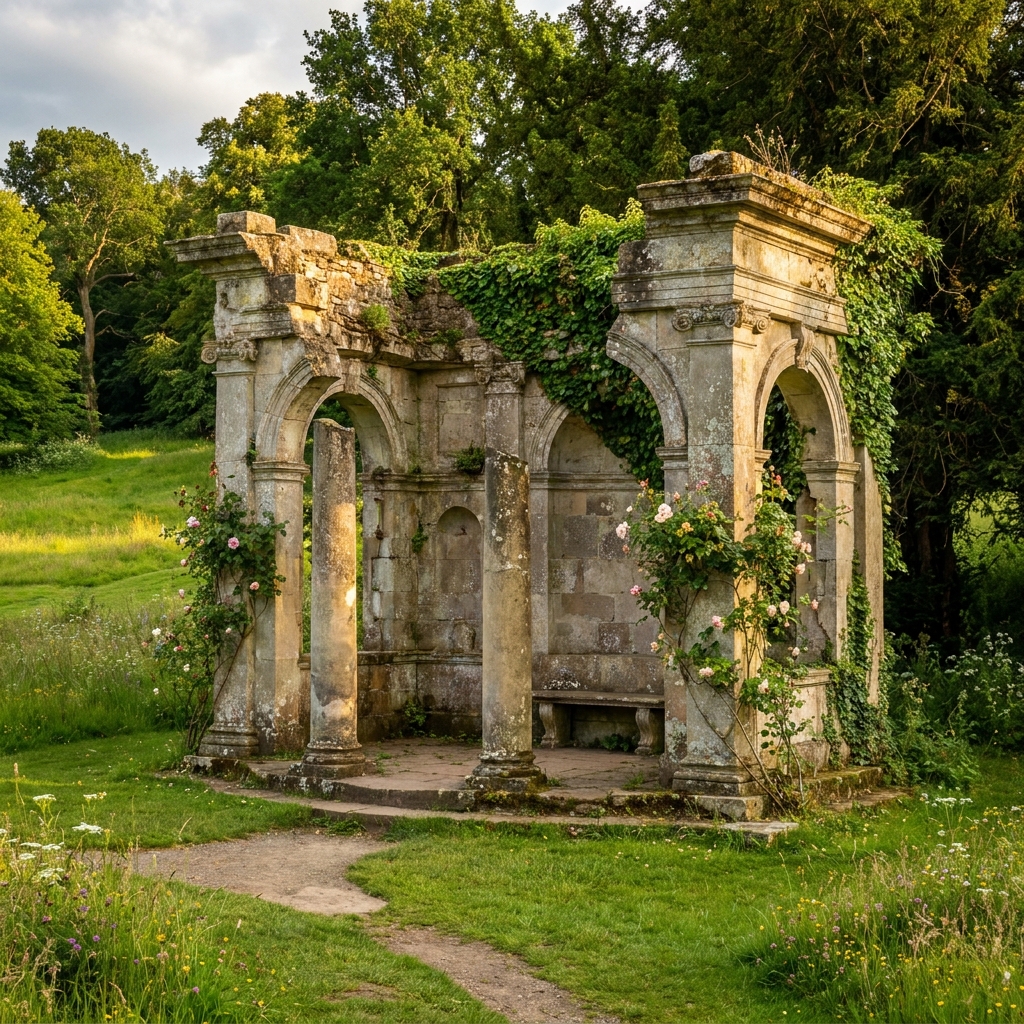
Sometimes, rich people built things just to be weird.
A “Folly” is a decorative building that serves absolutely no purpose other than to look interesting.
Popular in the 18th and 19th centuries, these often looked like fake Roman ruins, miniature castles, or Chinese pagodas sitting in the middle of a Pennsylvania field.
They were conversation starters for garden parties.
We stopped building them because modern zoning laws generally frown upon building a fake crumbling castle in the suburbs.
11. The Beehive Skep Wall
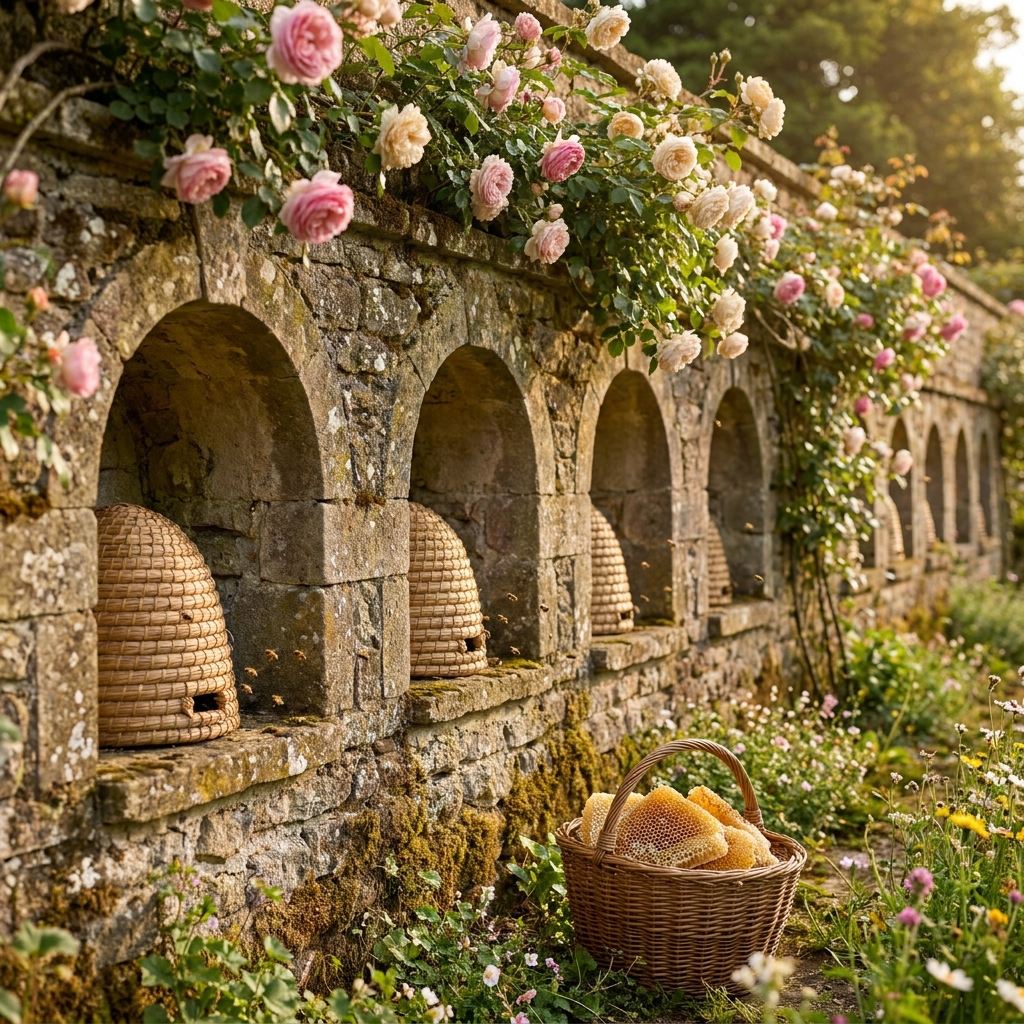
Before sugar was cheap, honey was the only sweetener most families had.
Wealthy gardens had stone walls built with arched niches called “bee boles” — small alcoves that sheltered straw beehives called skeps from the rain.
Each niche held one colony, and a single estate might have a dozen built right into the garden wall.
Honey sweetened everything, and the beeswax made candles that did not stink like tallow.
Cheap white sugar and the rectangular wooden hive made the bee bole obsolete.
12. The “Luxury” Privy

Everyone knows what an outhouse is. But we often forget that wealthy estates had “Fancy Privies.”
These were not rickety shacks. They were plastered, painted, and sometimes featured multiple seats (a horrifying thought for modern privacy standards) including smaller, lower seats for children.
Some even had lattice screens for ventilation and walkways covered by trellises so you did not get wet in the rain.
Indoor plumbing is the single greatest invention in history, but these structures remain as a reminder of how we used to live.
13. The Wash House

Laundry used to be a three-day, back-breaking event.
You needed giant vats of boiling water, lye soap, and washboards. It was wet, steamy, and messy work that would ruin the interior of a nice house.
The Wash House was a dedicated outbuilding with a large fireplace for boiling water and stone floors for drainage.
Monday was wash day. Tuesday was drying. Wednesday was ironing.
The electric washing machine gave us our week back and deleted this building from the backyard.
14. The Ash House
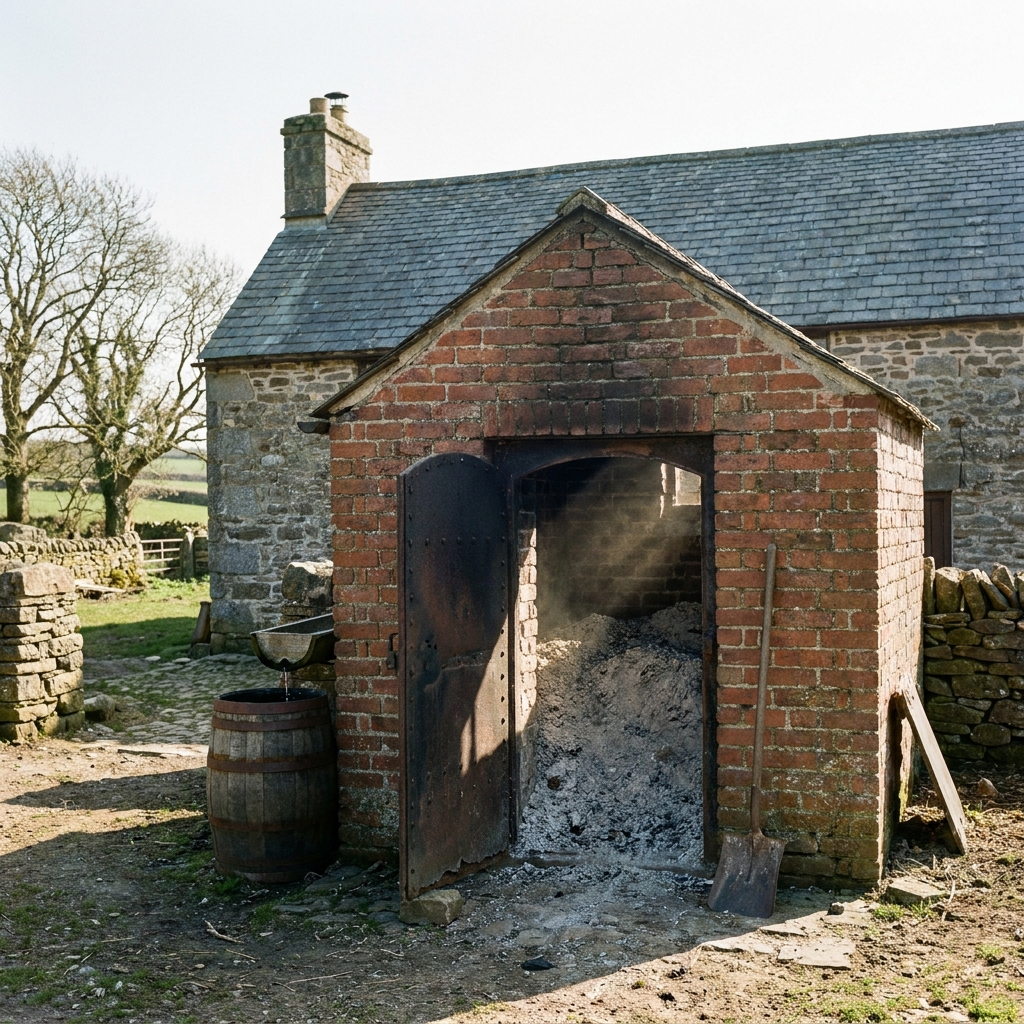
If you had a wood stove, you had ashes. A lot of ashes.
The Ash House was a small fireproof shed, usually brick, where ashes from the stove and fireplace were stored.
But ashes were not garbage. Water was poured slowly through them to make lye, the key ingredient in homemade soap.
Soap-making was a yearly chore that produced enough bars to last twelve months.
Store-bought soap and the modern septic system turned the Ash House into one of the first outbuildings to vanish.
15. The Root Cellar (Mound Style)
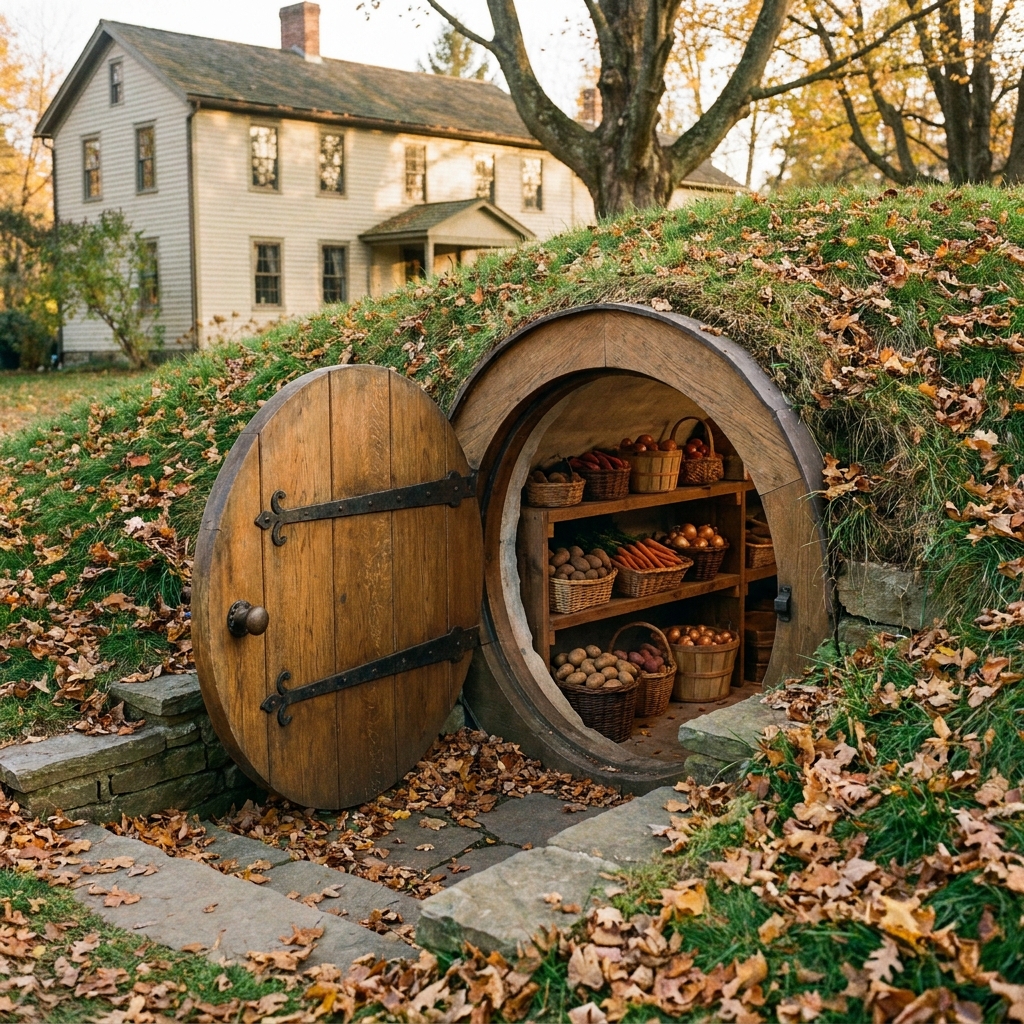
While some root cellars were in the basement, many were built into hillsides in the backyard.
They look like a door leading straight into a hobbit hole.
Constructed of stone or brick and covered with several feet of earth, they maintained a humid, cool temperature that kept potatoes, carrots, and turnips from rotting or freezing.
In tornado-prone areas, they doubled as “Storm Cellars.”
Today, we just buy old produce from the supermarket, but the root cellar allowed a family to eat fresh vegetables in February.
16. The Hotbed
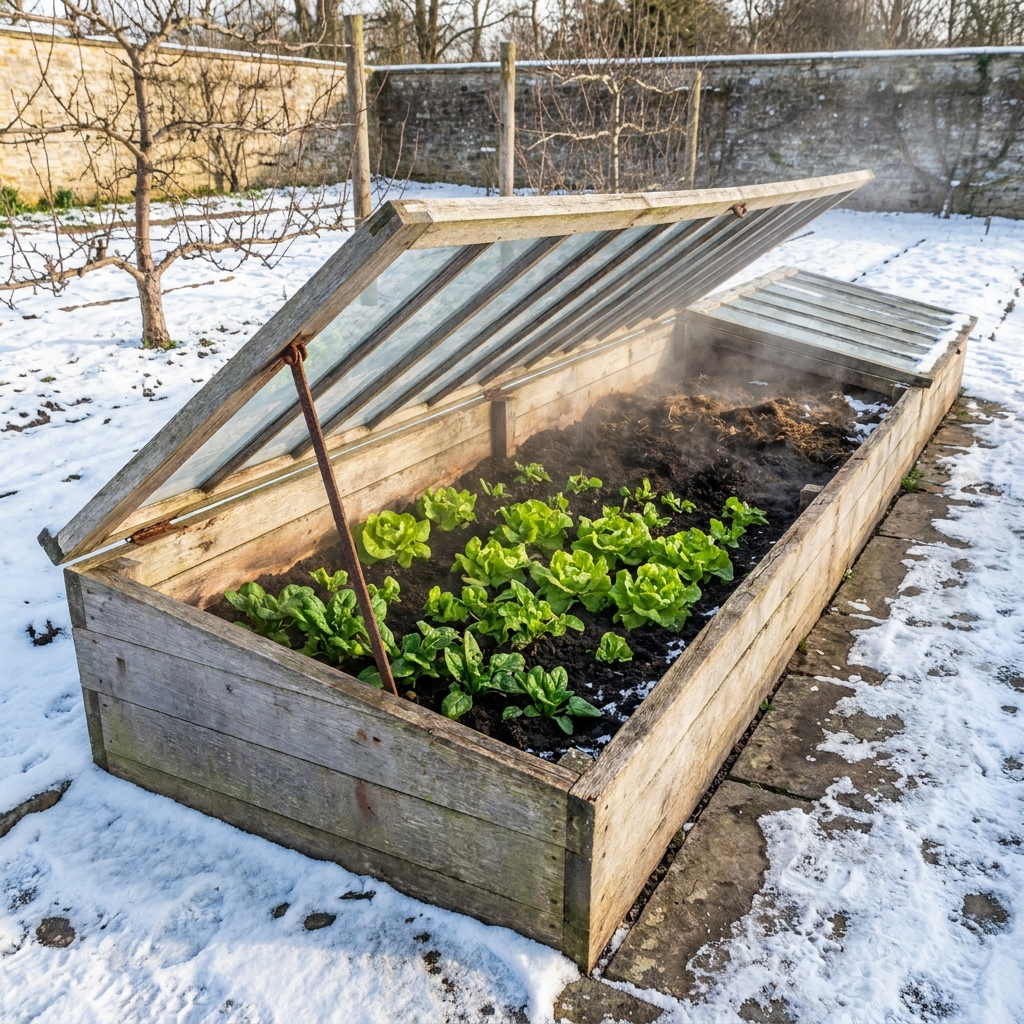
A Hotbed looked like a long wooden box with a glass lid, tilted toward the sun.
Underneath the soil was a deep layer of fresh horse manure.
As the manure decomposed, it generated steady heat from below — sometimes 80 degrees in February.
This let families grow lettuce, spinach, and seedlings months before the last frost.
Refrigerated produce trucks made the Hotbed unnecessary, and the loss of backyard horses meant the free heat source disappeared right along with it.
17. The Coal Shed

If you heated your home with coal, you needed a place to put 3 tons of black rocks.
While city homes had chutes into the basement, country homes often had a Coal Shed near the back door.
It was a dirty, dusty, spider-filled shed that was essential for winter survival.
One of the most hated chores of the early 20th century was being sent out to the coal shed in the snow to fill the scuttle for the stove.
18. The Cistern

Before city water pipes reached the suburbs, water was precious.
The Cistern was a massive underground tank, usually built of brick and waterproof cement, located near the house.
Gutters from the roof would channel rainwater directly into this tank.
A hand pump in the kitchen or the backyard would draw this “soft water” up for washing clothes and bathing (since it had fewer minerals than well water).
Many of these giant tanks are still hidden under the lawns of historic homes, waiting to be discovered.
19. The Pump House

The well was the most important thing on the property, and it needed protection.
The Pump House was a small wooden structure built directly over the well or hand pump.
It kept the pump from freezing in winter, kept leaves and animals out of the well, and often housed the windmill mechanism that drew water automatically.
Some had a small bench inside for resting with a cool drink.
Municipal water pipes made the Pump House irrelevant, and most were torn down once indoor plumbing arrived.
20. The Milk House

On a farm, milk is a ticking time bomb. It spoils fast.
The Milk House was a small, clean, whitewashed building separate from the dirty barn.
It was here that the milk was separated into cream and skim, and butter was churned.
Sanitation was key, so these buildings often had concrete floors and screened windows long before the main house did.
21. The Tool House

Before the attached garage existed, hand tools needed somewhere to live.
The Tool House was a dedicated shed for the plows, scythes, axes, hoes, rakes, and saws that ran the household.
Inside, you would find a workbench, a sharpening wheel, and pegboards holding tools in a precise order known only to the man of the house.
It smelled like linseed oil, rust, and pipe smoke.
The garage absorbed all these tools, and most of them got replaced by a single gas-powered machine anyway.
22. The Woodshed
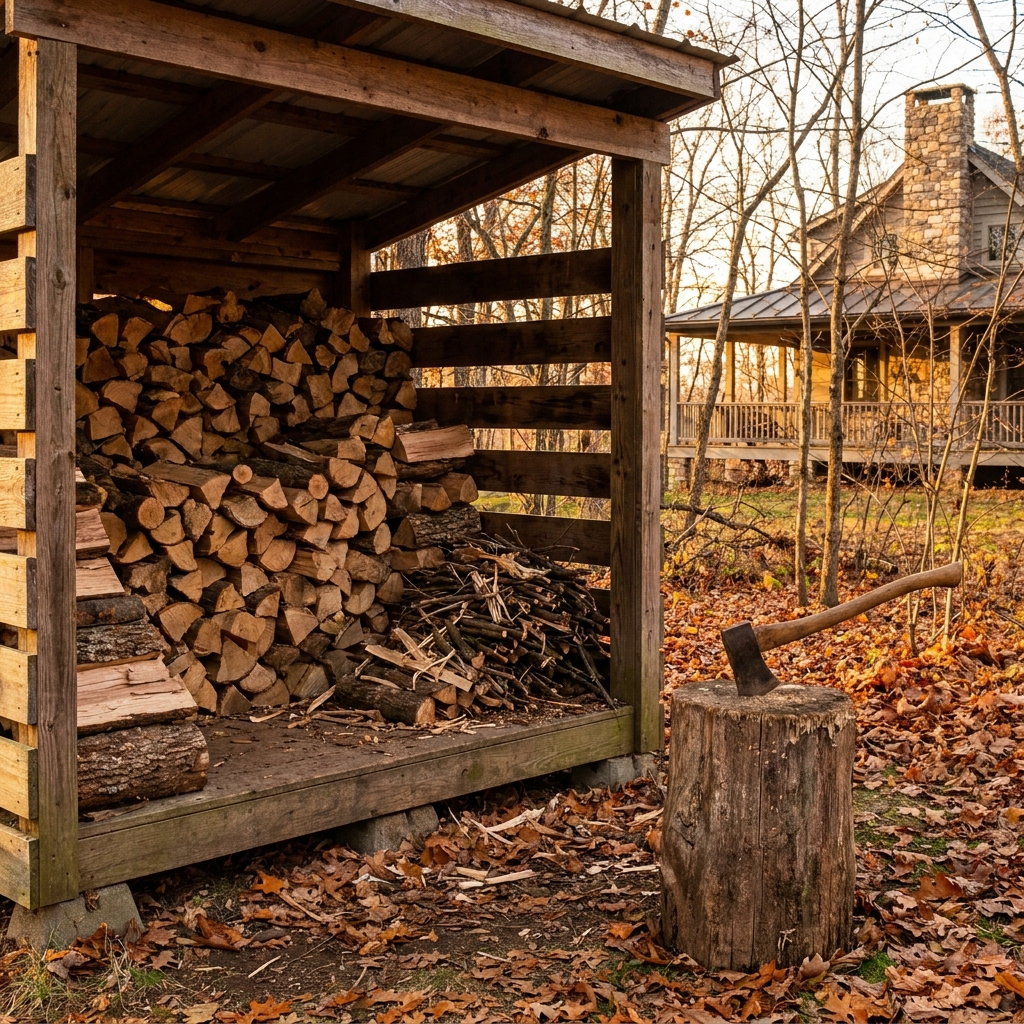
The Woodshed was not just a stack of logs under a tarp.
It was a real structure — three walls, a roof, a dirt floor, and a chopping block out front.
Split firewood was stacked inside in tight rows, with kindling and shavings kept separate. A full woodshed in October meant a warm winter.
The phrase “took him out behind the woodshed” came from this being the most private, out-of-sight spot on the entire property.
Central heating made the whole thing into a quaint memory.
23. The Victory Garden
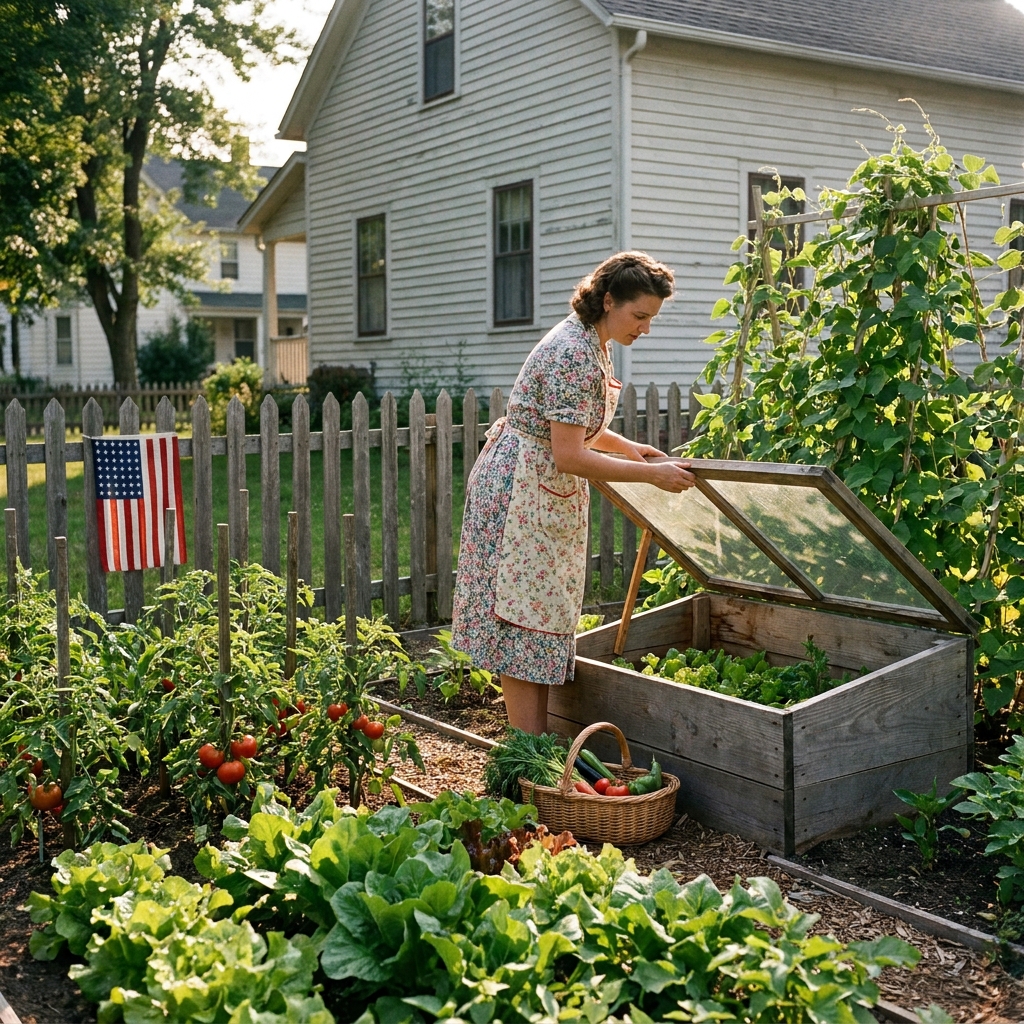
This isn’t a building, but it was a structural part of the American backyard that vanished.
During WWI and WWII, the government encouraged citizens to plant “Victory Gardens” to support the war effort.
Lawns were ripped up. Backyards became mini-farms with neat rows of tomatoes, beans, and rigid “cold frames” (mini glass greenhouses) to extend the growing season.
In 1943, 40% of all vegetables consumed in the US came from these backyards.
After the war, convenience culture took over. We leveled the gardens, rolled out the sod, and went to the grocery store instead.
Conclusion
We look at our backyards today and see a place to relax.
But when we tore down the Summer Kitchens and filled in the Ice Houses, we lost a connection to how the world works.
These structures remind us that comfort used to take work.
If you have a crumbling shed or a weird stone pit in your backyard, do not bulldoze it.
It is a monument to the days when the home was the most important factory on earth.