

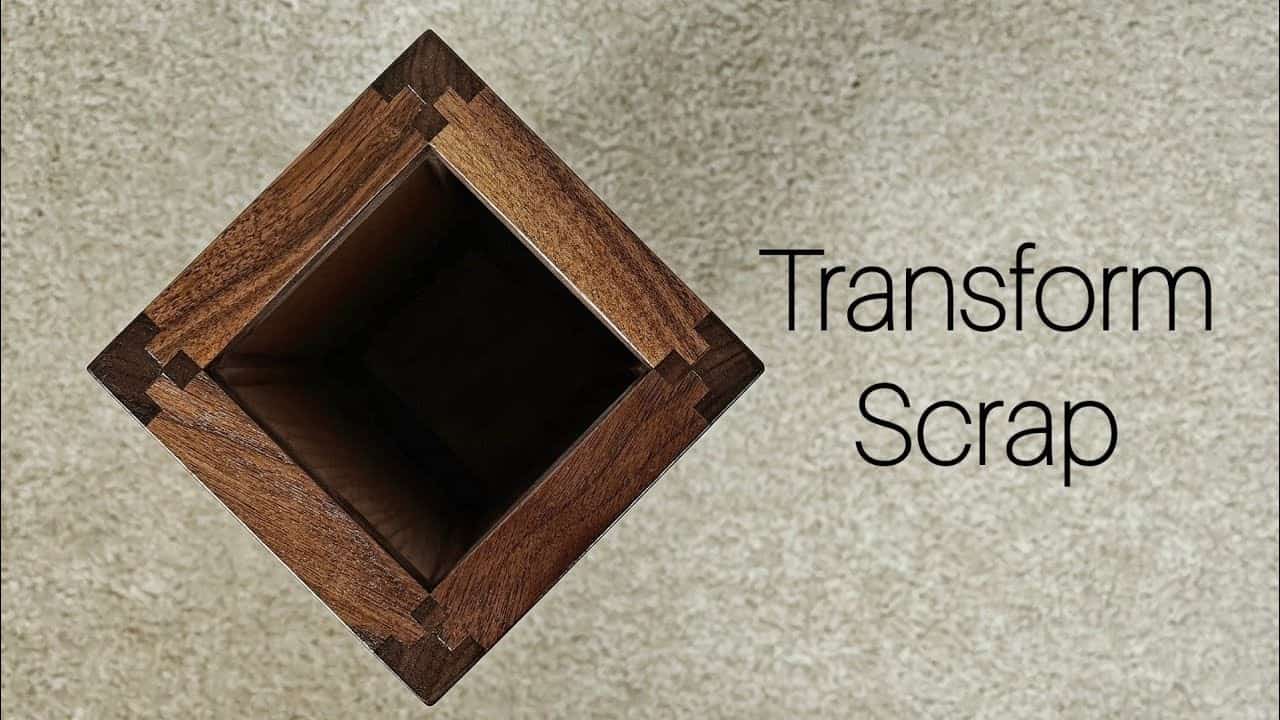
This project was built and designed by Keaton Beyer.
This short project turns leftover shop material into a small frame-and-panel vase that balances precise joinery with a conservation-minded approach to using wood scraps.
Watch the full video and subscribe to Keaton Beyer Woodworking:
Design
The vase is a compact rail-and-stile frame with inset panels that reads simple but demands tight tolerances because each part is small.
Keaton uses the design to showcase grain and contrast by pairing salvaged panels with a nicer walnut offcut.
Lumber Prep
Prep focuses on accuracy and repeatability rather than complex layout work, which is critical when parts measure only an inch or two and cannot hide variation.
Keaton shares practical shop tricks for finding centers and setting fences quickly so multiple parts can be cut with the same setup.
Joinery
Frame-and-panel joinery is kept straightforward, but Keaton emphasizes hand-fitting tenons and using consistent setups to create tight, clean joints. Small projects magnify small errors, so repeating the same process for each piece reduces surprises during assembly.
Cutting and Panel Work
Panels come from salvaged cabinet doors and are cleaned up to remove old stain before being fitted into the frame; this keeps waste to a minimum and gives the piece character.
Walnut plywood was used as a thin cover in places to hide contrasting substrates and to make use of leftover veneer material.
Consistency and Shop Tricks
Keaton relies on stop blocks and repeated setups to produce parts that match, which is more important than fancy jigs for small projects.
When every dimension matters, making identical cuts with the same fence and stops is the best defense against fit issues.
Finishing
The finish is the highlight: Keaton uses shellac applied with a rubber for a French-polish–like sheen, explaining that application method matters more than exotic products. He contrasts shellac with hard wax oils and suggests choosing finishes that show the wood while protecting the surface.
Lessons and Philosophy
Beyond technique, the build is about resourcefulness—using offcuts and rescued panels reduces waste and honors the material rather than letting it end up in a landfill.
Keaton also frames the project as a creativity exercise: limits force inventive solutions and strengthen woodworking instincts.
Overall Takeaways
Small projects are excellent practice because they require consistent execution and honest problem-solving that translate to larger work.
Repurposing scrap into a purposeful object is both practical and satisfying, and the techniques shown are adaptable to many quick shop projects.
Please support Keaton, but visiting his website: https://www.keatonbeyerwoodworking.com/.

Matt’s Take
These are my personal thoughts and tips based on my own experience in the shop. This section is not written, reviewed, or endorsed by the original creator of this project.
Small projects like this vase are fantastic skill builders because there’s nowhere to hide sloppy work. When you’re dealing with parts that are just an inch or two wide, a gap that might be acceptable on a cabinet door becomes glaringly obvious. The precision required here actually makes you a better woodworker on larger projects.
I love the conservation angle Keaton brings to this build. We all have those walnut offcuts and salvaged panels sitting around the shop, and turning them into something functional feels way better than watching them collect dust or hit the scrap bin. The key is being flexible with your design to work with what you have, rather than forcing materials into a predetermined plan.
That shellac finish is a great choice for showing off wood grain without a lot of fuss. French polishing gets intimidating for beginners, but shellac with a rubber is forgiving and builds up nicely with practice. The beauty is that even if your first coats aren’t perfect, shellac dissolves into itself so you can always add more.
The stop block approach Keaton uses is absolutely the right call for repetitive cuts on small parts. Setting up your fence once and cutting all similar pieces in sequence beats trying to measure each cut individually. It’s one of those shop habits that pays dividends on every project, not just the small ones.