

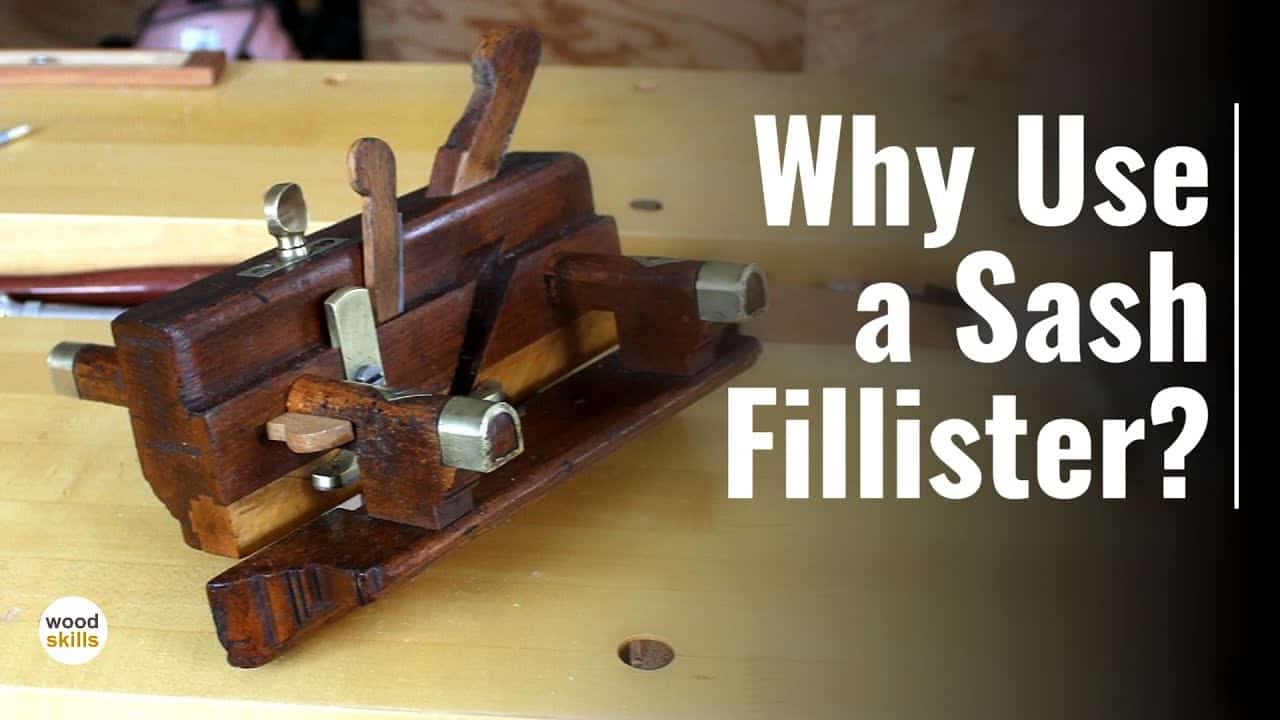
Norman Pirollo from WoodSkills shared the woodworking tip featured in this video.
Norman demonstrates the sash fillister, a specialized hand plane historically used to cut rabbets and profiles for sash windows, and contrasts it with the more common plow plane.
The video covers setup, operation, the reasons this plane was developed, and practical uses for restoration and small-shop production.
Watch the full video and subscribe to Norman’s channel:


What is a sash fillister?
The sash fillister is a niche molding plane developed to cut a rabbet from the back of a profiled sash member while referencing the finished face.
It combines a fence and a skewed iron so the rabbet is cut in the same direction as the front profile, minimizing tear-out on the visible surface.
Typical features include a left- or right-hand fence, a skewed blade with a nicker for cross-grain work, a depth stop, and often a small boxwood wear strip where the plane runs against the work.
These characteristics distinguish it from plow planes that are optimized for grooves rather than rabbets referenced to a profile.
Why this plane was developed
In the 18th–early 20th centuries, sash windows were made from softwoods and required a clean profiled face with a rabbet on the reverse to hold glass and glazing. Craftsmen needed a way to produce those parts quickly and consistently without flipping stock and risking tear-out on the finished side.
The sash fillister addressed that production need by allowing makers to clamp a board, plane the decorative profile with molding planes, then reference that profile to cut the rabbet in the same grain direction. This avoided flipping the workpiece and sped up repetitive production in small shops building many sashes.
Setting up and using a sash fillister
Setup focuses on keeping the fence tight to the profiled edge and adjusting the skewed iron for a consistent rabbet depth and clean cut.
The iron advances or retracts with light taps on the toe or heel of the plane, and fine shavings are achieved by slight adjustments to the wedge and iron seating.
Practical tips include waxing the sole for smoother glides, ensuring the fence is accurately seated against the profile, and using the plane with the grain direction that rises toward the cutting motion to avoid tear-out. The plane’s nicker helps when crossing short grain, and the boxwood insert reduces wear in the contact area.
Sash fillister vs plow plane: key differences
At a glance they can look similar, but the functional differences are clear: plow planes have skates fore and aft to guide a cutter for grooves, whereas sash fillisters use a skewed iron and fence to cut a rabbet referenced to a profile.
Plow planes are more common and are intended for continuous grooves, not profile-referenced rabbets.
The sash fillister comes in left- and right-hand versions to match layout needs, and it was designed specifically to keep all cuts running with the grain direction of the profiled face. A moving fillister or standard plow would require flipping stock or working against the grain, which slows production and risks tear-out on the visible surface.
How molding planes work with the fillister
Creating a sash component is usually a two-step process: establish the decorative profile with hollows, rounds, beaders or other molding planes; then use the sash fillister to cut the rabbet using that profile as the reference face.
Multiple molding planes can be combined to form complex profiles without a single dedicated mold plane for that shape.
This approach also allows a maker to rip the profiled member into lengths and use them as continuous moldings for furniture or picture frames, extending the fillister’s usefulness beyond window restoration. It’s a flexible workflow that favors reproducibility and historical accuracy in restoration work.
Practical applications and when to use it
The sash fillister shines in restoration work, period furniture reproduction, and small-batch shops where matching historical profiles is essential.
It’s particularly valuable when the visible profile must be immaculate and tear-out is unacceptable, such as interior-facing sash members or decorative moldings.
Contemporary shops may prefer routers and shapers for volume, but hand techniques remain relevant for authentic restoration, quieter shops, and situations where material or small runs justify hand methods. Picture frame makers, restoration shops, and traditional furniture makers can all adapt these methods to suit their needs.
Simple tips and adaptations
Use straight-grained, soft woods like pine for smoother results with traditional planes, and consider waxing soles to reduce friction during long runs.
If a single dedicated molding plane for a historical profile isn’t available, combine hollows, rounds, and beaders to approximate the shape and then reference it with the sash fillister.
Finally, restoring and setting up vintage planes—replacing wedges, cleaning parts, and checking blade geometry—will make a big difference in performance and repeatability when cutting multiple identical sash components.
Skilled handwork remains a practical solution for small runs and faithful restoration.
Conclusion
Understanding the sash fillister clarifies why so many historical shops used it: it enables clean, repeatable rabbets cut from a profiled face while preserving the grain direction and avoiding tear-out.
The plane remains a useful tool for restoration and small-scale makers who value historical accuracy and quiet, dust-free work.
Support Norman by visiting his website: https://www.woodskills.com/

Matt’s Take
These are my personal thoughts and tips based on my own experience in the shop. This section is not written, reviewed, or endorsed by the original creator of this project.
Norman’s demonstration really highlights how specialized these old planes were. The sash fillister is one of those tools that shows how thoughtfully 18th and 19th-century craftsmen approached production challenges. When you’re making dozens of window sashes, having a plane that lets you work with the grain in both operations — profiling and rabbeting — makes a huge difference in both speed and quality.
The key insight here is understanding grain direction and how it affects tear-out. Modern woodworkers using routers can sometimes forget this fundamental principle because router bits cut so aggressively they power through most tear-out issues. But with hand planes, working against the grain on a visible surface is asking for trouble. The sash fillister’s design elegantly solves this by keeping everything moving in the same direction.
If you’re thinking about trying this approach, start with clear, straight-grained pine or poplar. These planes work best on softer woods, and any knots or wild grain will fight you. Also, take time to properly tune any vintage plane you pick up — a sharp iron and well-fitted wedge make all the difference between smooth shavings and a frustrating wrestling match.
For modern shops, this technique is particularly valuable for restoration work or when you need just a few pieces of custom molding. Sometimes the quiet, controlled approach of hand tools is exactly what a project calls for.