

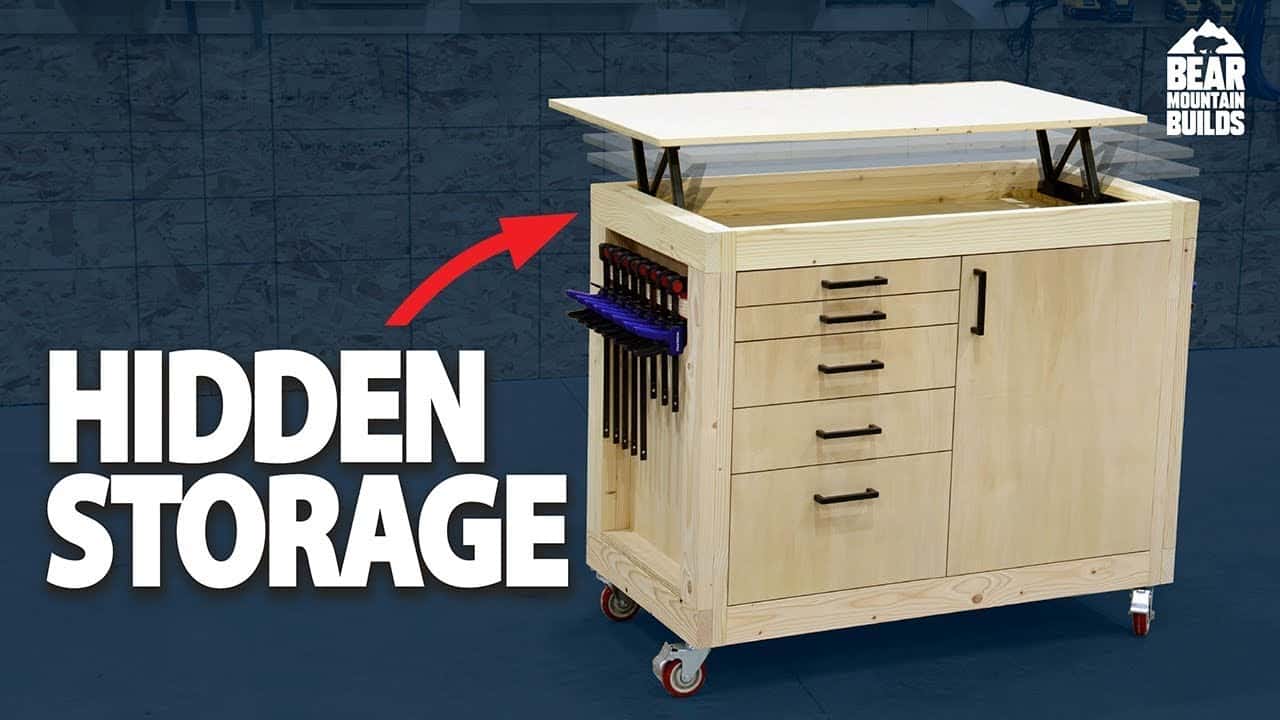
This project was built and designed by Zach from Bear Mountain Builds.
This lift-top tool cabinet pairs a standing-height work surface with concealed storage, a bank of drawers, and an adjustable-shelf cabinet for flexible shop use.
Watch the full video and subscribe to Bear Mountain Builds:

Design
The cabinet was conceived as a modular piece that stacks storage and a work surface at standing height for tasks like laptop work and drawing plans.
The layout balances accessibility and concealment with a lift-top shelf for hidden storage, a drawer bank for hand tools, and a cabinet side with adjustable shelving for larger items.
Frame & Platform Prep
The structure relies on a robust timber frame that keeps the cabinet rigid and aligns with other shop furniture for consistent work height.
Top and bottom platforms are cut from plywood and notched to seat inside the frame, which simplifies alignment and provides clean edges for drawer faces and doors.
Joinery & Assembly
Simplified lap joints and pocket screws provide a repeatable, self-supporting connection that transfers loads through wood rather than hardware for long-term durability.
Using jigs and spacers during assembly keeps parts square and speeds up construction, while glued and brad-nailed panels brace thin platforms without complicating future disassembly.
Drawer System & Sliders
Drawers are built with lap-style corners and pinned bottoms for fast, accurate assemblies that stay square without elaborate joinery or expensive hardware.
A practical “stacking” spacer method is used to mount side-mounted sliders in parallel and to set consistent vertical gaps between drawer faces, which reduces binding and makes installation repeatable.
Hardware & Lift Top Mechanism
The lift-top uses spring-assisted pop-top brackets that keep the work surface level whether closed or open, allowing items to remain on the top during operation.
Full-overlay hinges, caster wheels, and well-placed handles finish the cabinet for mobility and ergonomic access, while removable back panels simplify later adjustments or repairs.
Finishing Touches & Storage Options
Adjustable shelf pins allow the cabinet side to adapt to changing storage needs, and simple clamp holders added to the sides make grab-and-go clamping convenient.
The design is intentionally modular: either side can be converted to drawers or shelves without changing the overall frame, so the same stock and layout work in multiple configurations.
Overall Takeaways
This project demonstrates how straightforward joinery and thoughtful hardware choices produce a highly functional piece that suits both small and larger shops.
Techniques like spacer-based alignment, lap joining, and brad-nailing thin panels are adaptable to many shop furniture projects and help reduce setup time while keeping results professional.
Get Zach’s plans here: https://www.bearmountainbuilds.com/products/lift-top-tool-cabinet.

Matt’s Take
These are my personal thoughts and tips based on my own experience in the shop. This section is not written, reviewed, or endorsed by the original creator of this project.
I really appreciate how Zach approached the structural design here. That timber frame concept is solid gold for shop furniture — it creates a rigid foundation that won’t rack over time, and having consistent work heights across all your shop pieces makes a huge difference in workflow. The lap joint and pocket screw combination is perfect for this type of build because it’s strong, repeatable, and doesn’t require fancy joinery skills.
The lift-top mechanism with spring-assisted brackets is a game-changer for usability. Being able to keep items on the surface while accessing storage underneath eliminates so much shuffling around. Those pop-top brackets can handle a decent amount of weight too, which is crucial when you’re using the top as an actual work surface.
That spacer method for mounting drawer slides is brilliant and something every woodworker should know. Getting slides parallel and evenly spaced can be frustrating, but using spacers eliminates the guesswork and makes installation way more consistent. The modular design philosophy here is really smart too — building flexibility into shop furniture from the start saves you from major rebuilds down the road when your storage needs inevitably change.