

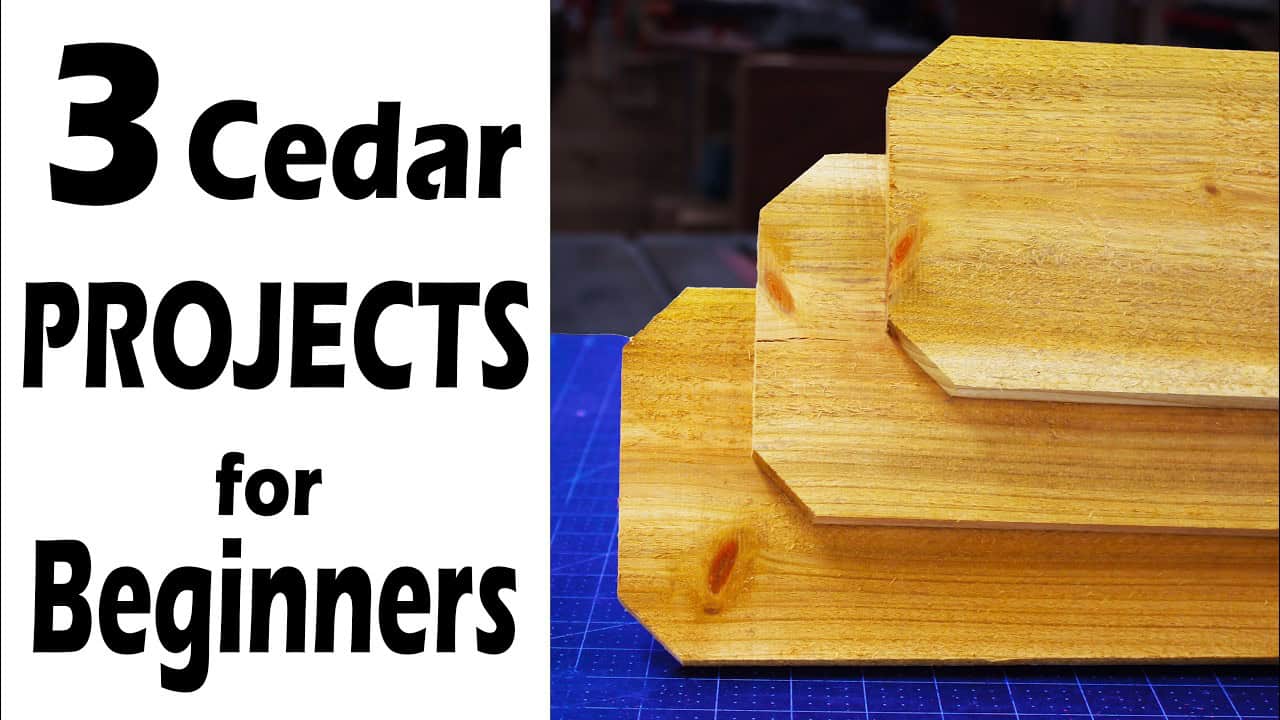
These projects were built and designed by Clinton from Specific Love Creations.
Three simple builds repurpose cedar fence pickets into a corner shelf, a bird feeder, and a decorative picket fence for planters, with an emphasis on beginner-friendly techniques and clean results.
Watch the full video and subscribe to Specific Love Creations:

Project 1 — Corner Shelf
The corner shelf is a clever way to use narrow picket boards to fill otherwise wasted wall corners while keeping a tidy, square profile.
Clinton shows efficient layout and repeat cutting techniques to produce identical boards, and he recommends using a stop block on the saw to speed up repeated cuts and improve accuracy.
Assembly relies on glue with light fastening to hold parts while the glue cures, and careful pre-assembly helps reveal fit issues such as warped boards that can be corrected by reversing pieces before final clamping.
Mounting is flexible—fasteners, trim nails, or adhesive options can be used depending on the wall and desired permanence, and the result adds usable display space without complex joinery.
Project 2 — Three-Sided Bird Feeder
The bird feeder uses the picket’s clean face to create an open, three-sided enclosure that keeps seed visible and accessible for birds while minimizing visual obstruction for the viewer.
Key shaping involves a simple angled cut to form the roofline and assembling rails and faces with glue plus mechanical fasteners for durability in outdoor conditions.
Clinton emphasizes securing parts well during cutting and assembly to avoid movement, and suggests several mounting options like hanging or mounting to a stake so the feeder can be positioned for the best viewing.
This build is adaptable to different sizes and styles of pickets and can be finished with straightforward weatherproofing for outdoor use.
Project 3 — Picket Fence Planter Sleeve
For the planter sleeve, multiple picket segments are joined into panels that wrap around a container, turning a plain bucket into a decorative mini fence that conceals and elevates potted herbs.
Clinton preserves the characteristic dog-eared tops of select pickets and cuts matching panels, then reinforces the interior with scrap strips and glue plus nails to create a sturdy shell.
Alignment of the flat bottom edges and attention to overlap where panels meet ensures a square, snug fit around the planter, and the approach works well for any round or square containers.
This decorative sleeve idea is a simple way to repurpose fence material into garden-friendly decor while disguising utilitarian pots.
Overall Takeaways
These builds highlight how affordable cedar pickets can be repurposed into polished, useful items with minimal tools and straightforward techniques.
Practical shop methods—batch cutting with a stop block, pre-assembling to check fit, and using glue with light mechanical fastening—save time and improve consistency for beginners and more experienced makers alike.
Beyond the three specific projects, the lessons translate broadly: plan cuts to preserve useful features, reinforce simple assemblies with internal supports, and choose attachment methods that suit the location and intended longevity.
Watch the full video and subscribe to Specific Love Creations:

Matt’s Take
These are my personal thoughts and tips based on my own experience in the shop. This section is not written, reviewed, or endorsed by the original creator of this project.
Cedar fence pickets are one of those materials that punch way above their weight class. They’re affordable, already dimensioned, and that natural cedar smell never gets old. What I really appreciate about these builds is how they embrace the picket’s existing profile instead of fighting it – keeping those dog-eared tops on the planter sleeve is a perfect example of working with what you’ve got.
The stop block technique Clinton uses is gold for any repetitive cutting. Once you set it up, you can fly through identical pieces without measuring each one. Just remember to check your first few cuts to make sure everything’s dialed in before you commit to the whole batch. For outdoor projects like that bird feeder, I’d definitely second the advice about mechanical fasteners alongside the glue – weather and seasonal wood movement can be tough on glue joints alone.
These projects are great confidence builders because they use forgiving joinery and materials that hide small imperfections well. Cedar’s natural texture and grain patterns are excellent at camouflaging less-than-perfect cuts. If you’re new to woodworking, starting with cedar pickets gives you a chance to focus on technique without breaking the bank on materials.