

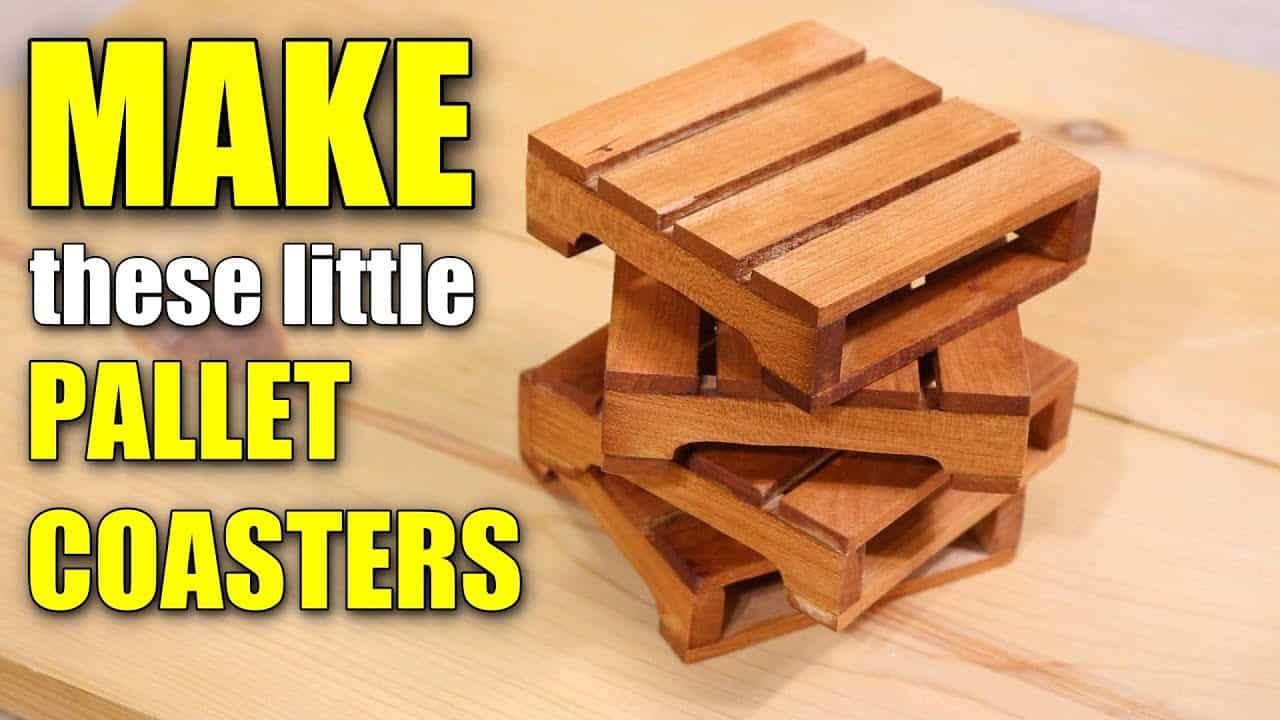
This project was built and designed by Chris from B&O Craftsman.
Chris demonstrates how to make charming wooden pallet-style coasters using a simple template, basic cutting, and a small jig that makes batch production straightforward.
Watch the full video and subscribe to B&O Craftsman:
Design
The coasters mimic the look of pallet boards with a small contoured center piece for visual interest and a rustic, handmade vibe.
The layout uses a reusable square template to keep parts consistent, and the design is intentionally forgiving so slight imperfections add character rather than looking like flaws.
Material Preparation
Chris prefers hardwoods like cherry for these coasters but notes that softer woods will also work depending on the desired look and durability.
Boards are cut to size ahead of assembly and the creator mentions a cut list is provided in the video description for anyone who wants exact sizing.
Jig and Gluing
A simple jig holds the small pieces in place while glue cures, and Chris recommends coating the template with paste wax to prevent the glue from sticking so the template can be reused.
Batch gluing is arranged by centering each piece visually in the jig, and Chris demonstrates a quick fix when a piece pops off during removal—reglue and let it cure before proceeding.
Sanding and Shaping
Sanding is treated as an important finishing step, with a progression from a coarser grit to a finer grit to smooth surfaces without removing too much detail.
The edges and small gaps between the pallet slats are worked carefully so the final feel is comfortable while preserving the pallet aesthetic.
Finishing
For finish, Chris chose beeswax applied by hand, noting it’s a good choice for hardwoods and gives a natural feel to the pieces.
He also mentions spray polyurethane as a preferred alternative for ease of application and cleaner coverage in tight cracks, but the beeswax produces an attractive, durable result when spray is not available.
Final Takeaways
The project is well suited to making multiple gifts or small batch items because the template and jig simplify repeatability and speed up workflow.
Techniques such as protecting templates with wax, careful sanding progression, and choosing finishes to match the wood make the coasters both practical and adaptable to different styles.
Please support Chris by visiting his website here: https://bo-craftsman-shop.creator-spring.com/.

Matt’s Take
These are my personal thoughts and tips based on my own experience in the shop. This section is not written, reviewed, or endorsed by the original creator of this project.
This type of project really showcases how a simple jig can transform your efficiency in the shop. When you’re making multiples of anything, spending a few minutes upfront to create a reliable setup saves tons of time and helps maintain consistency across pieces. That paste wax tip for protecting the template is pure gold — nothing worse than having your jig become a permanent part of your project.
The finish choice here is worth thinking about. Beeswax gives you that natural feel and look, but remember it’s not going to protect against water rings the way a film finish would. For coasters that’ll see real use, you might want to consider a light coat of shellac or poly first, then wax over that for the best of both worlds. Hardwoods like cherry will develop a beautiful patina over time either way.
One thing I love about pallet-style projects is how forgiving they are. Real pallets have character marks, uneven spacing, and weathered edges — so your handmade versions can have those same imperfections and they just add authenticity. It’s a great confidence builder for newer woodworkers who might stress about getting everything perfectly uniform.