

Jodee from Inspire Woodcraft demonstrated the tips featured in this video.
Jodee walks through why CA (cyanoacrylate) glue is a go-to adhesive in the shop and shows practical methods for using different viscosities, colors, and an accelerator to speed cures and solve common problems.
The video focuses on three primary workshop uses—welding small parts, combining CA with wood glue for temporary clamping, and filling voids or adding accents—and highlights tips for choosing the right product for each job.
Watch the full video and subscribe to Inspire Woodcraft:

What CA Glue Is and Why Use It
CA glue, often called super glue, is a fast-curing adhesive that bonds many materials quickly and cleanly when properly used. An accelerator can be applied to the mating surface to create near-instant bonds, which is invaluable when immediate handling strength is needed.
While accelerator is not strictly necessary for every application, it changes workflows by reducing clamp time and enabling techniques that would be awkward or impossible with slow-setting adhesives. The video demonstrates how instant cure capability can make small assemblies and repairs much more efficient.
Types, Colors, and Packaging
CA glue comes in thin, medium, and thick viscosities, each suited to different tasks: thin for penetrating tight fibers or acting as a sealer, medium for general-purpose bonding, and thick for gap-filling or pairing with wood glue. It is also available in clear, brown, and black varieties to better match or contrast wood surfaces and hide or create accents.
Packaging features can make a difference in shop use; tiny precision nozzles and spare caps help control application and prevent flooding on delicate surfaces. Selecting the right viscosity and applicator reduces waste and improves results in detailed work.
Three Favorite Workshop Uses
1. “Welding” Small Assemblies
CA glue is used like a weld to lock tiny parts together by running a bead along external seams and curing with accelerator for an immediate hard bond. This approach is handy for delicate jigs, trays, and thin parts where clamps or screws would be impractical.
2. Working with Wood Glue as a Temporary Clamp
Pairing CA glue with traditional wood glue allows the CA to act as a fast clamp while the wood glue cures for long-term strength, so parts can be handled or moved quickly. Thicker CA formulas work best here because they bridge the wood-glue film and register against the accelerator more reliably than thin variants.
3. Filling Voids and Creating Accents
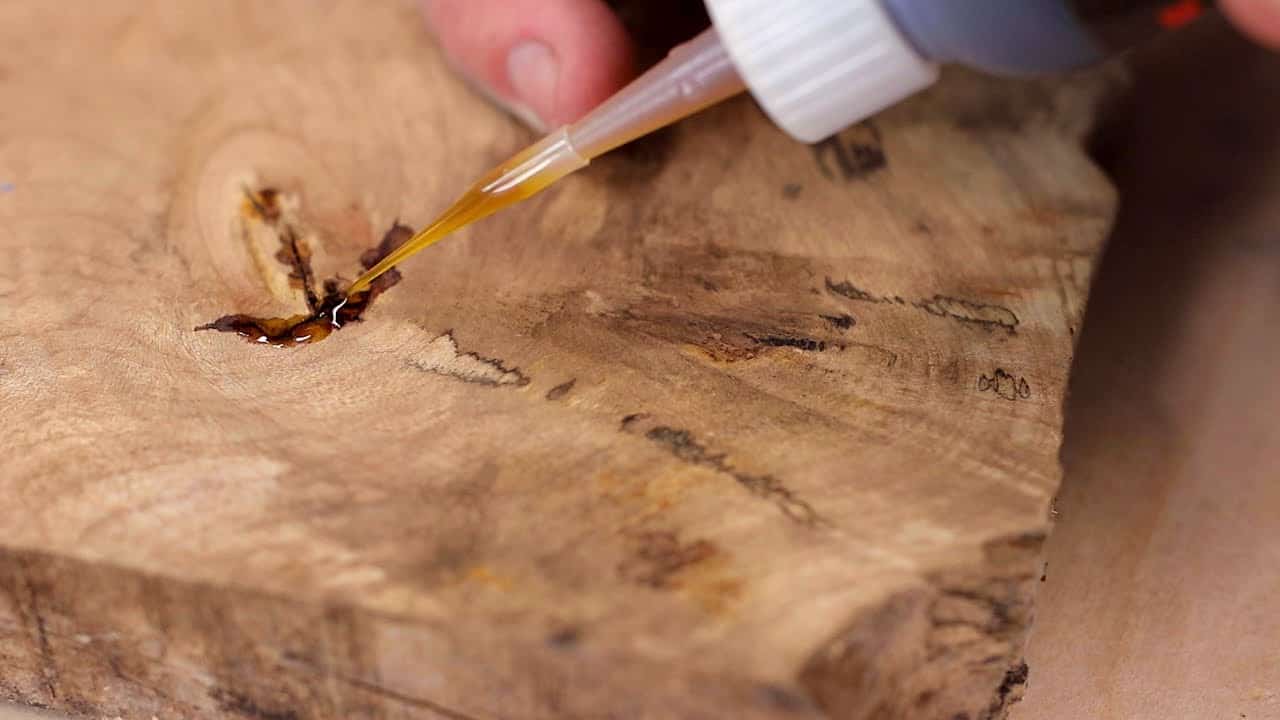
Clear or colored CA can fill small voids, stabilize loose fibers, and be mixed with additives—sawdust, mica powders, or metal shavings—to create inlay-like accents. For larger repairs or deep fills, epoxy remains a better choice because of odor and volume considerations, but CA works well for many smaller touch-ups.
Practical Tips and Safety
Use accelerator sparingly and with care, since it instantly locks surfaces and can cause brittle spots if overused; test combinations of viscosity and accelerator on scrap before committing to a project. Ventilate the workspace and avoid large-volume fills with CA because fumes can be overwhelming compared to slower-setting epoxy.
Small tricks make CA glue easier to use: tape can hold pieces closed while glue wicks into a joint, precision nozzles prevent floods, and choosing the thick or medium formula helps when bonding over a layer of wood glue. These simple adjustments help adapt CA glue to more traditional woodworking workflows.
Why These Techniques Matter
The techniques shown compress common shop steps and solve problems with fragile parts, awkward clamping, and quick repairs, making CA glue a versatile complement to conventional adhesives.
Knowing when to use thin, medium, or thick CA—and when to reach for epoxy instead—gives woodworkers practical options for speed, aesthetics, and strength.
Support Jodee by visiting his online store here: https://inspirewoodcraft.com/collections/all.

Matt’s Take
These are my personal thoughts and tips based on my own experience in the shop. This section is not written, reviewed, or endorsed by the original creator of this project.
CA glue has become one of my most-reached-for adhesives in the shop, especially for those moments when you need something to work right now. The key insight here is understanding that different viscosities really do behave differently—thin CA will wick into places you don’t expect, while thick CA stays put and gives you more working time before it sets.
The accelerator spray is a game-changer, but I’ve learned to use it sparingly. Too much can create a brittle joint that might fail under stress. A light mist on one surface is usually plenty, and always test your combination on scraps first—some wood species react differently to the chemical reaction.
Safety-wise, ventilation is crucial with CA glue. The fumes can be intense, especially when using accelerator or doing larger fills. I keep a small fan running and crack a window when I’m doing any significant CA work. Also worth noting: CA glue and cotton or wool can create an exothermic reaction, so be careful with rags and natural fiber brushes around fresh CA.
The “temporary clamp” technique is brilliant for complex glue-ups where you’d otherwise need three hands. Just remember that CA doesn’t replace proper wood glue for structural joints—it’s buying you time while the real adhesive does its work.