
Izzy Swan shared the woodworking tip featured in this video.
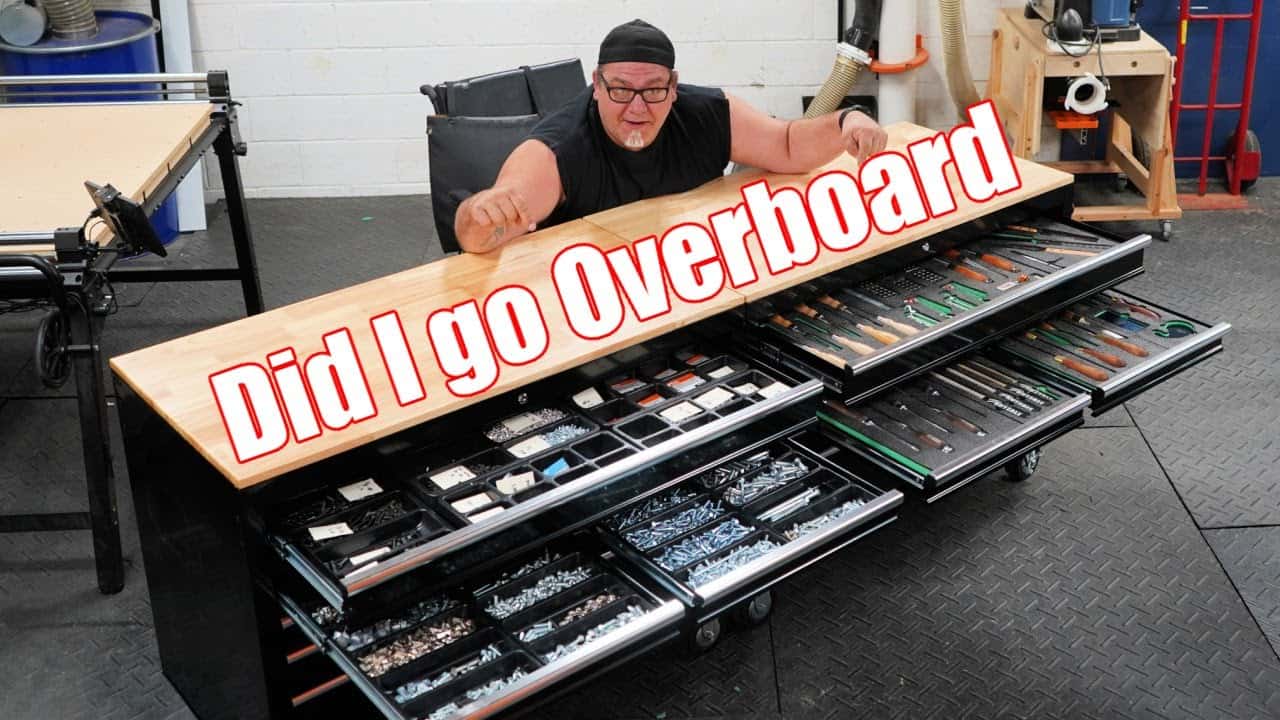
The video outlines a system of hyper organization for a shop that balances accessibility, mobility, and real-world messiness during projects.


What is hyper organization?
Hyper organization is a system designed to keep tools, fasteners, and accessories in fixed, repeatable places so they can be found instantly during work.
The approach accepts that a shop will get messy during a project, but insists that every item has a dedicated home so the mess doesn’t cost time or create duplicate purchases.
Choosing mobile toolboxes and carts
Izzy favors using rolling toolboxes and carts rather than building static cabinets because mobility matters for workflow and future flexibility.
The carts serve as work hubs: one primary cart is set up like a tool pouch with frequently used power tools, dust extraction, hose management, and scrap bins within arm’s reach.
Standardizing with Kaizen foam
Color-coded Kaizen foam is used to prioritize access—red for the most-used tools, green for frequently used but less critical items, and separate colors for task- or material-specific sets.
Standardizing the foam sizes and drawer layouts makes it easy to swap sections between carts and toolboxes, which speeds setup and reduces downtime looking for tools.
Hardware organization and trays
Small plastic trays are dedicated to fasteners so Kaizen foam isn’t wasted on tiny parts, and larger drawers hold bolts, washers, and overflow hardware.
Some trays required simple modification to fit the drawers, showing that small adjustments to off-the-shelf storage can make a big difference in usable capacity.
Cutting Kaizen foam: practical tips
Izzy demonstrates a simple, repeatable method for cutting tool profiles by laying out tools, marking with a fine marker, and cutting to the tool depth using a utility knife.
Peeling layers of Kaizen from the back produces clean depths, and adding a small finger-hole or “holster” makes removal easy; rotary rasps and grater-style tools help flatten bottoms in larger cutouts.
Why this system matters
The main benefits are time saved searching for tools, fewer accidental duplicate purchases, and a shop layout that can be moved or reconfigured quickly if needed.
Izzy notes the setup isn’t for every shop—space, budget, and the type of work all affect suitability—but elements of the approach can be adapted to most workshops.
Overall takeaways
This hyper organization method blends the advantages of a tidy, repeatable system with the reality that projects create temporary mess.
By prioritizing accessibility, standardizing storage modules, and using Kaizen foam strategically, a shop can be both productive and resilient to change.
Please support Izzy by visiting his website: https://www.izzyswan.com/.

Matt’s Take
These are my personal thoughts and tips based on my own experience in the shop. This section is not written, reviewed, or endorsed by the original creator of this project.
This kind of systematic approach to shop organization really resonates with me. The beauty of Izzy’s system is that it acknowledges something every woodworker knows — projects create chaos, but that doesn’t mean your baseline setup has to suffer. Having that dedicated home for every tool means you can work messy and still reset quickly when the project wraps up.
The mobile cart concept is brilliant for most shop sizes. I’ve found that being able to roll your most-used tools right to the work area eliminates so much walking back and forth, especially on longer projects. The color-coding with Kaizen foam takes it a step further — your brain starts to automatically associate red sections with grab-first tools, which speeds up your workflow more than you’d expect.
One thing worth noting about cutting Kaizen foam: take your time with that initial layout. It’s tempting to rush through marking the profiles, but a few extra minutes getting the spacing right pays off every time you reach for that tool. And don’t forget that foam compresses over time with heavy tools, so cutting slightly deeper than you think you need usually works out better in the long run.
The modular approach here is what makes this system scalable. You don’t need to commit to rolling toolboxes everywhere — even applying these foam organization principles to a few drawers in existing cabinets can make a noticeable difference in how efficiently your shop runs.