

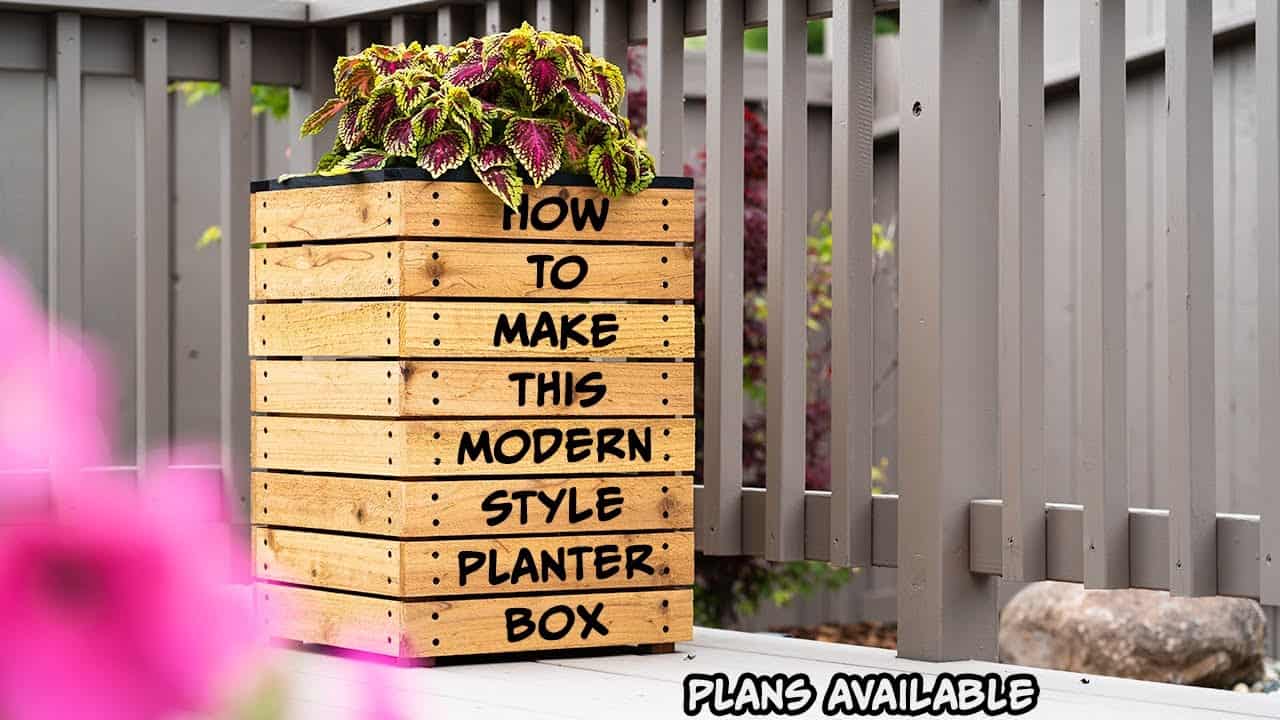
This project was built and designed by Jodee from Inspire Woodcraft.
Jodee demonstrates how to make a modern slat planter box that pairs a simple rectangular frame with closely spaced slats for a contemporary look. The build focuses on straightforward joinery, reliable layout techniques, and a clean finish that suits patios and entryways.
Watch the full video and subscribe to Inspire Woodcraft:

Design
The planter uses a minimalist slatted aesthetic with a subtle top cap to give it a finished, modern edge. Jodee balances clean lines and practical proportions so the box works with a variety of potted plants and outdoor styles.
Lumber Prep
Material prep centers on converting common fence boards into uniform slats by establishing one straight reference edge and ripping consistent widths.
Jodee emphasizes checking fit as boards are milled because variations in thickness and board size will affect final gaps and alignment.
Frame and Joinery
The frame is assembled from squared members that form legs and stretchers, with attention paid to where fasteners enter to prevent conflicts inside corners.
Thoughtful fastener positioning and predrilling keep the structure square and avoid splitting or interference when the slats go on.
Slat Layout and Fastening
Slats are laid out with consistent spacing, and pilot holes plus countersinking keep the fasteners seated cleanly in the face of the boards. Jodee uses simple templates and spacers to repeat hole placement and gap spacing across all the pieces for a uniform appearance.
Trimming and Top Cap
Because fence boards often vary, small trimming tricks are used to bring edges into alignment so that screw holes line up vertically across the slats.
The top cap is cut from the same material family and fastened with attention to screw placement so it doesn’t conflict with the slat fasteners beneath.
Finishing and Adaptation
A combination of exterior-appropriate stains is applied so the planter has a consistent tone and the top cap can offer a contrasting accent if desired. The overall approach is easy to adapt: builders can change the scale, spacing, or finish to match different materials and design preferences.
Lessons and Practical Tips
Templates, pilot holes, and consistent spacers make repetitive work go faster and yield a more professional result. Planning fastener locations and dry-fitting major assemblies before final fastening helps avoid rework and keeps the slats aligned.
Overall, the project highlights how careful layout and a few simple shop tricks can elevate common materials into a modern-looking planter that’s functional and attractive.
Jodee’s approach is flexible enough for makers to adapt the design to different sizes, finishes, and material choices.
Get Jodee’s plans here: https://inspirewoodcraft.com/products/modern-style-slat-planter-box-plans.

Matt’s Take
These are my personal thoughts and tips based on my own experience in the shop. This section is not written, reviewed, or endorsed by the original creator of this project.
This type of slatted planter is a great project for practicing consistent spacing and layout techniques. The key to getting that clean, modern look is really in the details – taking time with pilot holes and countersinking makes a huge difference in the final appearance, and those small layout tricks add up to a professional-looking result.
One thing I always remind folks about with outdoor planters is drainage. Make sure you’re either using this as a decorative outer container for potted plants, or if you’re planting directly, drill some drainage holes in the bottom. Standing water will rot out even treated lumber over time. Also, consider what’s going underneath – deck boards or concrete can get stained from drainage, so a simple saucer or tray can save you headaches later.
The fence board approach is smart from a cost perspective, and it’s satisfying to turn basic material into something that looks custom. Just budget extra time for the milling process – those boards can vary quite a bit in thickness and straightness. A good sharp blade on your table saw and taking light passes will give you the cleanest results when ripping them to width.