

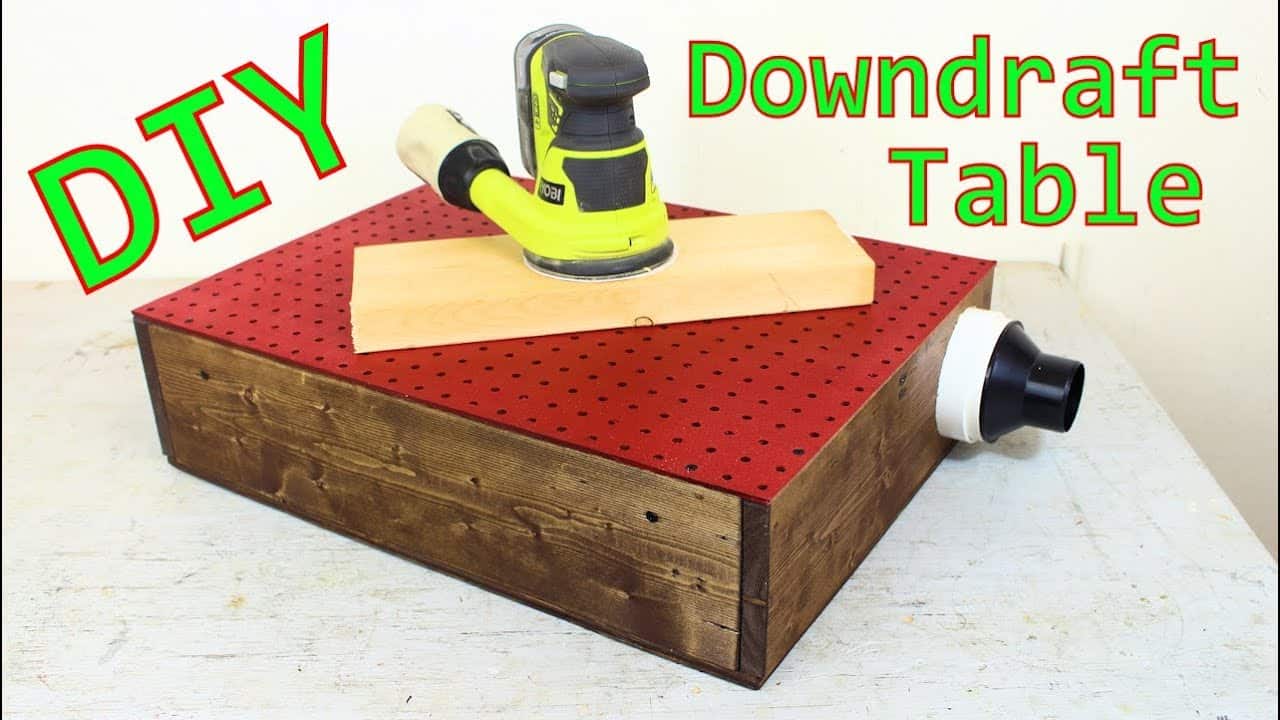
This project was built and designed by Clinton from Specific Love Creations. It’s a compact downdraft table built to reduce airborne dust while sanding—making shop cleanup easier and improving overall air quality.
Sanding can be one of the messiest parts of woodworking, with dust settling on every surface and spreading into the air. This portable downdraft table helps keep the mess under control by pulling dust down through the work surface and into a connected vacuum system.
Watch the full video and subscribe to Clinton’s channel:

A Smarter Way to Handle Dust
The idea behind a downdraft table is simple: use downward airflow to pull dust through holes in the surface as you sand. Clinton designed this build to be small enough to fit under a workbench while still being highly effective for sanding projects.
It doesn’t require expensive parts or advanced tools—just some thoughtful layout, a bit of creativity, and a basic shop vacuum to power the airflow. The result is a cleaner workspace and a more pleasant shop experience.
Building a Strong Frame
The frame forms the backbone of the table. Clinton starts by cutting down solid boards to form the sides and bottom, adjusting the size to fit his workspace. This version is compact, but the design is flexible enough to scale up or down based on your needs.
After cutting the parts to length, rough edges are sanded smooth. Pocket holes are drilled into the long sides of the frame to make assembly faster and stronger, forming a clean, box-like base for the table.
Setting Up the Dust Collection Port
One of the key elements of the build is the dust collection system. Clinton uses standard PVC components to create a connection point for his shop vacuum.
A hole is drilled into the side panel to accommodate a PVC coupling. To get a clean cut and avoid tear-out, a scrap board is clamped beneath the hole saw. Once cut, the PVC pipe is dry-fit and then secured with hot glue and screws to keep it firmly in place.
This port becomes the main suction source, pulling air through the top of the table and out through the vacuum hose.
Creating the Work Surface
The tabletop itself is made from a standard pegboard sheet. This type of material is ideal because it already has evenly spaced holes that allow dust to fall through while offering a stable sanding surface.
To strengthen the top, a furring strip is added underneath the pegboard to prevent sagging. Clinton also recommends considering a small angled panel or baffle inside the box to help direct airflow toward the vacuum port, improving overall efficiency.
Optional Upgrades for Performance
Clinton includes several thoughtful extras that elevate the design. A rubberized coating can be applied to the pegboard to keep workpieces from sliding around while sanding. This small upgrade improves both safety and accuracy.
He also suggests adding a simple airflow ramp inside the box to prevent dust from swirling around inside and redirect more of it toward the vacuum connection.
If desired, rubber feet can be attached to the bottom of the frame to keep it from sliding on a bench or floor. These upgrades aren’t essential but help improve the overall experience of using the table.
Testing and Adjusting
Once the table is assembled, Clinton connects a shop vacuum and tests its performance. The suction pulls sanding dust downward as expected, keeping debris off the surface and out of the air.
During testing, adjustments can be made—such as improving the seal around the PVC pipe or blocking airflow leaks along the frame edges. If dust escapes from the sides, small add-on panels can help contain it better.
Simple Design, Big Impact
One of the biggest advantages of this project is how easy it is to build. It uses affordable materials and can be completed with common shop tools in just a few hours. More importantly, it solves a real problem that nearly every woodworker deals with.
Clinton’s version is compact, easy to store, and works with nearly any shop vacuum setup. Whether you sand large panels or small parts, the dust is directed away from your breathing space and into a contained system.
A Clean Workspace You’ll Appreciate
This downdraft table project is a great example of how a simple shop upgrade can make a big difference. The cleaner your space, the easier it is to focus on woodworking instead of cleaning up after it.
By building a tool that actively improves your workflow and protects your shop environment, you get more enjoyment out of every project.
Watch the full video and subscribe to Clinton’s channel:

Matt’s Take
These are my personal thoughts and tips based on my own experience in the shop. This section is not written, reviewed, or endorsed by the original creator of this project.
Dust collection is one of those things that seems optional until you realize how much time you spend cleaning up after every sanding session. A downdraft table like this really does make a noticeable difference in keeping your workspace cleaner and the air more breathable. The pegboard approach is clever because you get consistent airflow across the entire surface without having to drill hundreds of holes yourself.
When working with shop vacuums for dust collection, it’s worth remembering that these systems work best when the airflow is concentrated. If you notice the suction feels weak, check for air leaks around joints and connections first. Even small gaps can significantly reduce performance. I’d also suggest keeping a spare vacuum filter handy – fine sanding dust can clog them faster than you’d expect, and a clogged filter kills your suction power.
The portable design here is really practical. You can pull it out when you need it and tuck it away when you don’t, which is perfect for smaller shops. If you’re building one, consider your typical project sizes when deciding on dimensions. A table that’s too small means constantly repositioning your work, but oversizing it can make the vacuum struggle to maintain good airflow across the surface.
Safety-wise, this kind of setup is great for reducing airborne particles, but remember it’s still important to wear appropriate dust protection. Think of the downdraft table as your first line of defense, not your only one.