

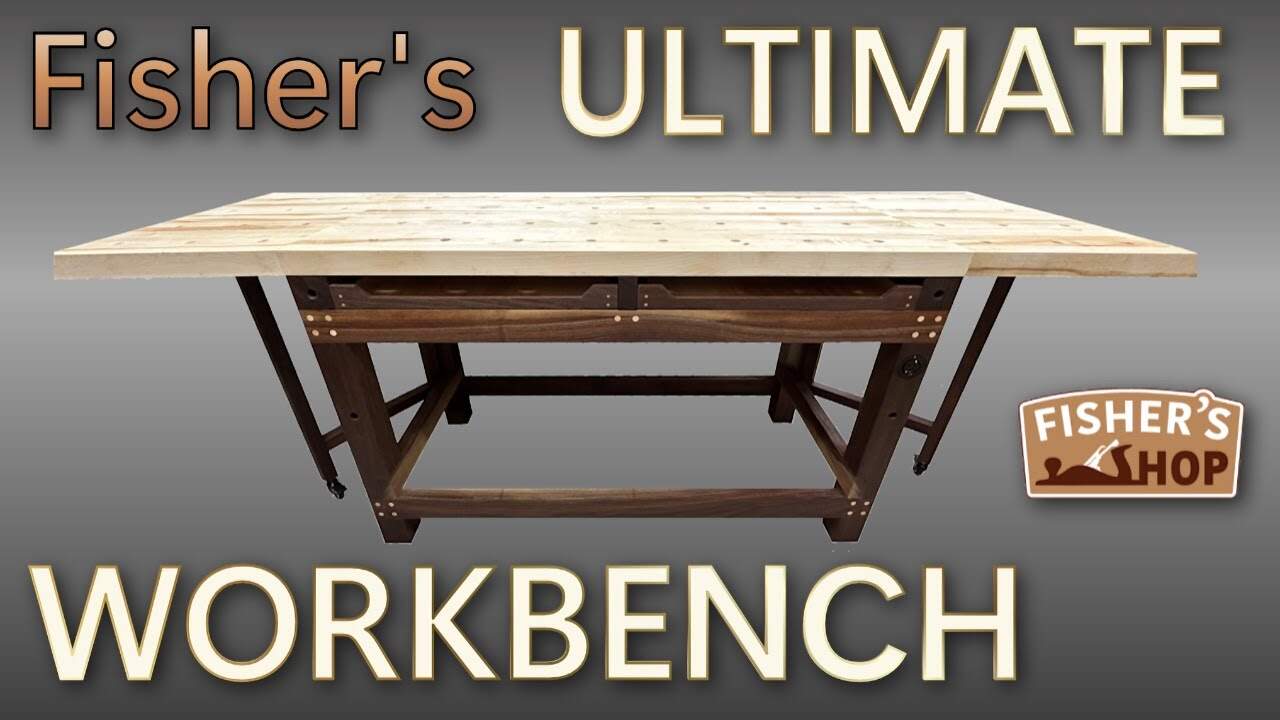
This project was built and designed by Drew Fisher from Fisher’s Shop. It’s a functional, feature-packed hybrid workbench built to solve real workspace problems while keeping a clean and attractive design.
The bench includes a foldable surface, dust collection trays, and integrated power—all designed to meet the demands of a busy workshop. If you’re looking for inspiration to upgrade your setup, this project covers a lot of ground.
Watch the full video and subscribe to Drew’s channel:

Why a New Workbench Was Needed
Drew’s previous workbench lacked storage, had limited surface area, and didn’t manage dust well. These frustrations became the driving force behind a more versatile, cleaner, and expandable work surface.
His new design adds clamping access, improved functionality, and power where it’s needed most. It’s built to support both large projects and everyday tasks with ease.
Material Selection and Prep
For this build, Drew used black walnut slabs that were originally set aside for another project. Instead of letting them go unused, he repurposed the slabs into something both practical and beautiful.
The build began by cutting down the slabs with a jigsaw, then refining the edges with a track saw and router. Each cut was carefully measured and clamped for accuracy.
The walnut faces were flattened on a jointer and run through a planer for a smooth, uniform finish. Clean and consistent prep made the rest of the build easier and more precise.
Assembling the Legs and Frame
The bench legs were glued up first to guarantee alignment before being milled to their final dimensions. Starting with the legs gave Drew better control during the early stages of the build.
Using his miter station, he cut all parts of the frame to matching lengths. After dry-fitting everything, he glued the legs to the stretchers and secured them with screws.
For a polished look, he inlaid maple plugs into the screw holes. This added both strength and visual contrast against the darker walnut frame.
Structuring and Expanding the Workspace
Cross braces were added to strengthen the frame and break the workspace into usable zones. These sections help with tool layout and clamping without compromising stability.
Fold-out panels were next, built with half-lap joints to keep the connections strong but easy to assemble. These folding parts allow the bench to expand or contract depending on your needs.
Creating Dust Trays and Storage
Drew added two large trays built from plywood with walnut edging. These sit below the work surface and function as dust catchers and clamping zones.
The trays were designed with space to allow clamps to pass through easily. This small detail increases the table’s flexibility without requiring extra accessories.
Adding Built-In Power
To make the bench even more functional, Drew installed a small power outlet in one of the legs. He drilled and routed a clean mortise to house the outlet box neatly.
This power source is great for plugging in sanders, routers, or a shop vac right at the work surface. It also helps reduce cord clutter, keeping the workspace safer and more efficient.
Constructing the Top
The benchtops were made from hard maple, a strong and stable wood ideal for high-use surfaces. Drew cut, jointed, and planed each board before gluing them up into sections.
A biscuit joiner was used to help align the boards during glue-up. Clamps were applied evenly to ensure tight, consistent seams throughout the entire top.
Once dry, the top sections were attached to the frame using screws. The entire assembly came together smoothly, showing how careful planning pays off during final installation.
Final Finish and Appearance
Drew used Danish oil to finish the bench, which brought out the grain and added water resistance. The oil worked especially well on the walnut, highlighting its depth and warmth.
The final surface was clean and uncluttered, with just enough dog holes to stay useful without overwhelming the design. It’s a shop bench built to work hard and look good doing it.
Why This Workbench Stands Out
This bench combines aesthetics with practical features, solving several common problems in one cohesive build. From fold-out surfaces to integrated power and hidden storage, it’s a full workshop solution.
If you’ve been considering an upgrade or want to build a bench around your specific needs, this design is a great reference point. It shows how to use smart joinery, good materials, and thoughtful layout to improve your workspace.
Want to See the Full Build?
Get Drew’s plans here: https://fishersshoponline.com/plans/p/workbench

Matt’s Take
These are my personal thoughts and tips based on my own experience in the shop. This section is not written, reviewed, or endorsed by the original creator of this project.
This type of multi-functional workbench design really appeals to me because it tackles the storage and workspace challenges most of us face in smaller shops. The fold-out panels are particularly clever — they give you the option to expand your work surface when needed without the bench taking up permanent floor space when folded down.
The built-in power outlet is a game-changer that I wish I’d thought of earlier in my own shop setup. Having 120V right at your workstation eliminates so many extension cord headaches and keeps your workspace cleaner. Just make sure you’re comfortable with basic electrical work or have a qualified electrician handle that part — safety first when mixing electricity and woodworking.
Those dust collection trays underneath are brilliant for keeping your shop cleaner, especially if you do a lot of sanding or routing work at the bench. The clamping access Drew built in is equally important — nothing’s more frustrating than a beautiful workbench you can’t actually clamp to effectively.
The material choice of walnut and maple creates a striking contrast while being practical. Hard maple is tough as nails for a work surface, and the walnut frame adds warmth without sacrificing durability. Danish oil is a solid finish choice here too — it’ll protect the wood while being easy to refresh when the bench inevitably takes some dings from hard use.