

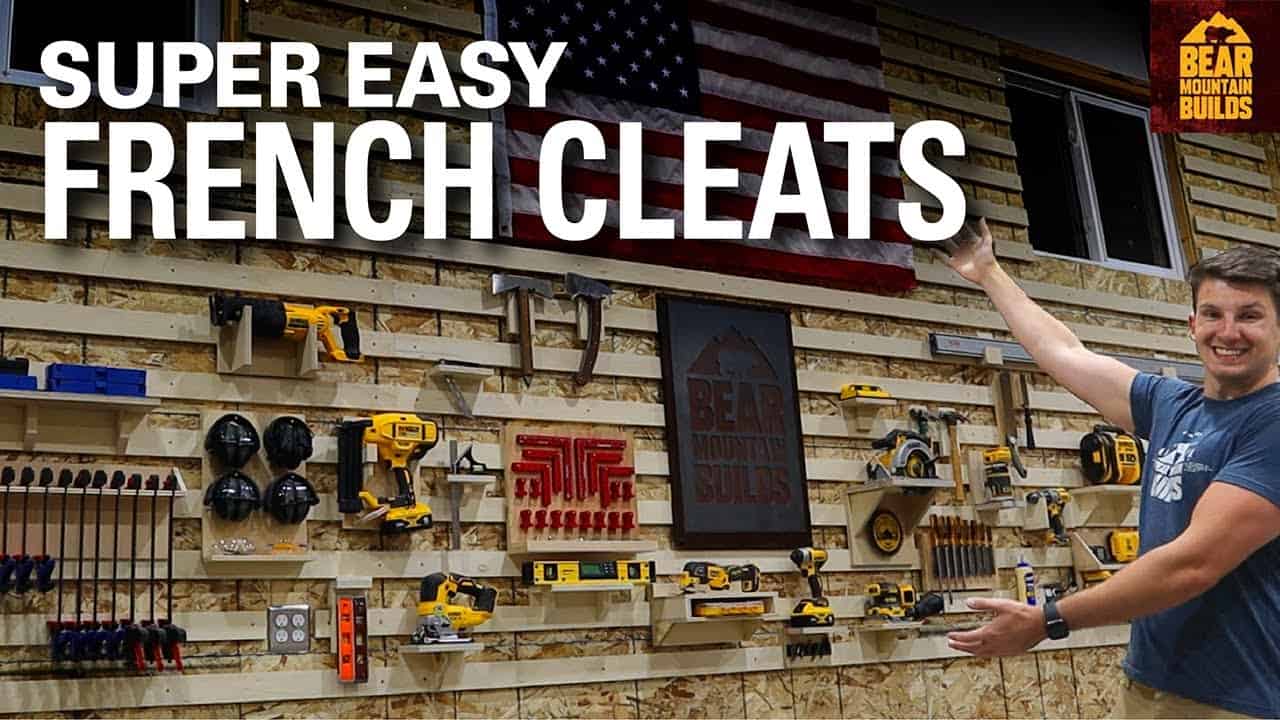
This impressive workshop storage project was built by Zach from Bear Mountain Builds. His French cleat wall system provides a modular and expandable way to organize tools efficiently. If you’re looking for a versatile storage solution for your workshop or garage, be sure to check out his YouTube channel for more great woodworking ideas.
Watch the full video and subscribe to his channel:
Why Use a French Cleat System?
French cleats are a popular storage choice because they allow for easy rearrangement and expansion. By mounting cleats onto the wall, Zach created a fully customizable system that can be adapted as tool collections grow and change over time.
How Zach Built His French Cleat Wall
To start, Zach selected sturdy plywood sheets and cut them into sections that would serve as the cleats. He adjusted the cutting angles to form a secure interlocking system, ensuring strength and stability for heavier tools. After refining the edges and preparing the pieces for mounting, he planned the layout for maximum efficiency.
When installing the cleats, he worked methodically across the wall to create a uniform and structured design. Ensuring that each cleat was secured properly allowed for long-term durability and load-bearing support.
Expanding the Storage System
As the project progressed, Zach saw the potential to extend the wall even further. With additional materials available, he expanded the system beyond its original design, maximizing the workshop’s storage capacity. This adaptability is one of the major benefits of using French cleats for tool organization.
Creating Custom Tool Holders
Once the cleats were installed, Zach designed and built custom tool holders to take full advantage of the new system. By experimenting with different configurations, he created dedicated storage solutions for various tools, including battery chargers, routers, and other frequently used equipment.
His approach emphasized flexibility and creativity, using scrap wood to repurpose materials for specific tool holders. For added functionality, he integrated grooves, hooks, and support braces to hold tools securely in place.
Personalizing the Wall
Beyond its functionality, the completed wall became a reflection of Zach’s workshop style. He incorporated an American flag as a centerpiece and invited his audience to share their own flags, making the project interactive and engaging for viewers around the world.
Final Thoughts
This French cleat wall serves as both a practical storage solution and a showcase of workshop creativity. It offers a highly adaptable way to organize tools while keeping the workspace efficient and visually appealing.
Watch Zach’s video for the complete process and support his channel!

Matt’s Take
These are my personal thoughts and tips based on my own experience in the shop. This section is not written, reviewed, or endorsed by the original creator of this project.
French cleat walls are one of those workshop upgrades that seem intimidating at first but are actually pretty straightforward once you dive in. The beauty of this system is in its flexibility — you can start small and keep adding to it as your tool collection grows. The key to a solid cleat wall is getting that first row perfectly level, because everything else builds off of it.
When cutting the cleats, a good tip is to rip one long board at your desired angle, then cut it into sections. This ensures all your cleats have identical angles for a tight fit. A 45-degree bevel works great, but some folks prefer a 30-degree angle for easier insertion and removal of holders. Either way, consistent angles are what matter most.
Safety-wise, always check your wall studs and use appropriate fasteners for the weight you’re planning to hang. French cleats can handle surprising amounts of weight when properly installed, but overloading a single cleat or missing studs can lead to disaster. I like to mark stud locations on the cleats themselves so I know exactly where the solid mounting points are.
The custom holder aspect is where this system really shines. You can build holders specifically sized for your tools using shop scraps, and they’re easy to modify or rebuild if your needs change. It’s basically modular storage that grows with your shop.