


A roof fails from the edges in. From the valleys, the flashing, the nail line, the four feet of gutter nobody looks at.
Almost none of it is visible from the driveway. That’s the problem.
Most of what goes wrong on a residential roof isn’t a bad shingle. It’s a decision made at the estimate stage to save a few hundred dollars, and it comes due somewhere between year three and year eight — usually as a stain on a bedroom ceiling or a crack in a basement wall.
Roofers know which decisions those are, because they get called back to fix them. What they install on their own houses looks different from what gets sold to homeowners who are shopping on price.
Here are 38 roof and gutter choices that come back to bite, and what the people holding the nail gun pick instead.
1. Shingling Over the Old Roof Instead of Tearing Off
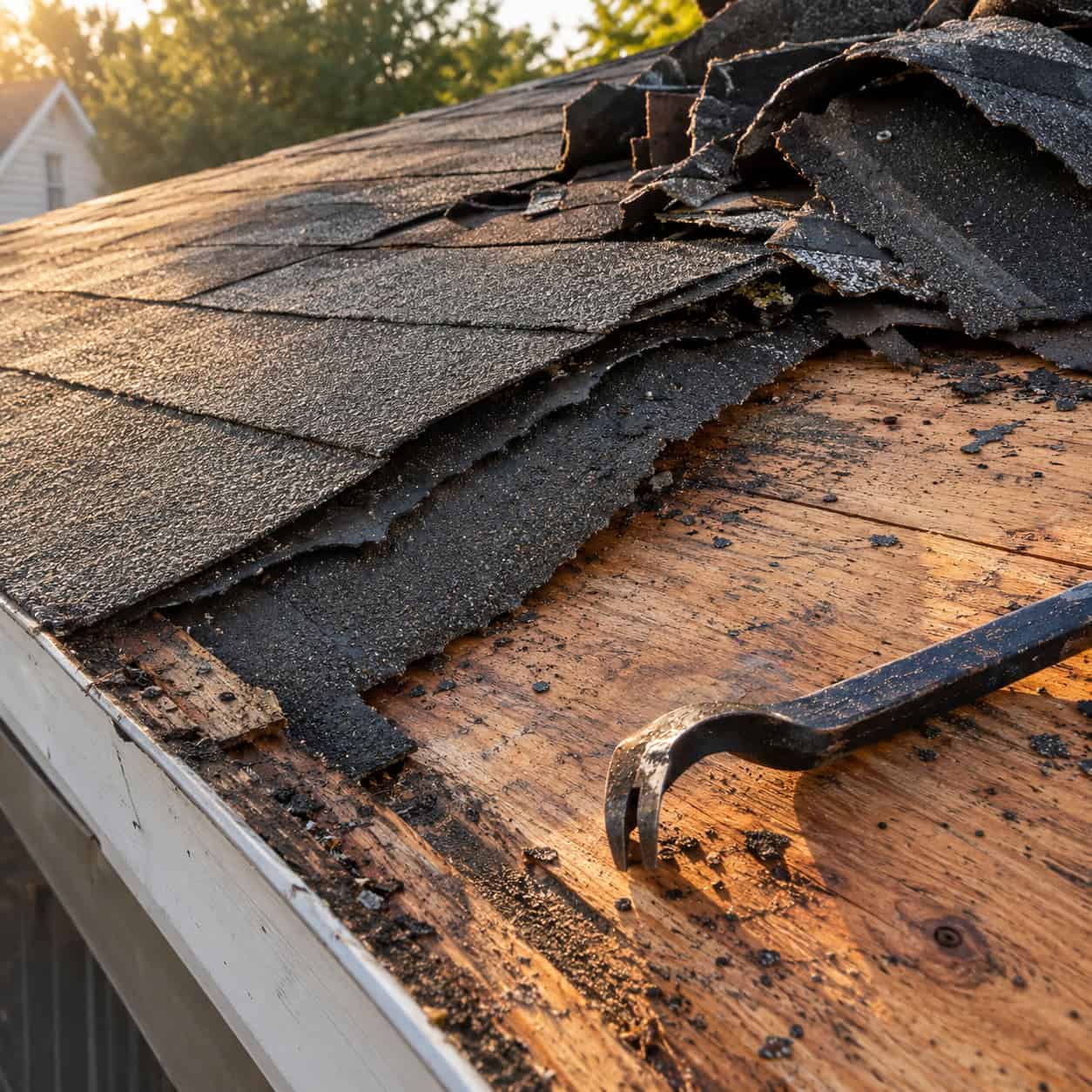
A layover saves maybe 15 to 20 percent on the bid. It costs you the back half of the roof’s life.
Each layer of asphalt adds roughly 350 to 400 pounds per 100 square feet. The new shingles telegraph every cupped, curled bump underneath. Trapped heat between the layers cooks the new mat from below, and any rotten decking stays sealed up where nobody has to deal with it.
Then there’s the part nobody mentions: the tear-off you skipped still has to happen someday, and now it’s two layers deep.
Roofers tear to bare wood on their own houses. Every time. Kapili Roofing lays out the structural math if you want the numbers.
2. Spike-and-Ferrule Gutter Hangers

You remember these. Big nail heads marching along the eave every three feet, one of them always backed out an inch.
A spike is just a long nail driven through a tube into the fascia. Every freeze-thaw cycle works it loose a hair, every gutter full of ice pulls it a little further, and eventually the hole is wallowed out so badly nothing will hold.
That smiling sag in the middle of grandma’s gutter? That’s what a failed spike looks like.
Hidden hangers screwed into the fascia every 24 inches — 16 inches where snow loads up. Nothing visible from the ground.
3. Mixing Ridge Vents With Gable Vents or a Power Fan

Air takes the easy route. Put a new ridge vent on a house that already has gable louvers, and the ridge starts pulling its air from the gable eight feet away instead of from the soffits forty feet down.
The attic short-circuits. One end moves plenty of air, the far end sits damp and grows mold on the sheathing.
Manufacturers are blunt about this: never run two types of exhaust over one attic space. Roofing Magazine covers why it keeps happening anyway.
Block the gables when the ridge vent goes on. Seal them, don’t just screen them.
4. Three-Tab Shingles on a Replacement Roof

Flat, gap-toothed, instantly dated. Three-tabs are the cheapest thing on the supply truck and they look it from the street.
Thinner mat. Lower wind rating — usually 60 mph against 110 or 130 for a laminated architectural shingle. Shorter real-world life by a decade.
The price gap narrowed years ago. Architectural now runs maybe $15 to $25 more per square installed.
Almost no roofer puts three-tabs on his own house anymore.
5. Downspouts That Dump Right at the Foundation
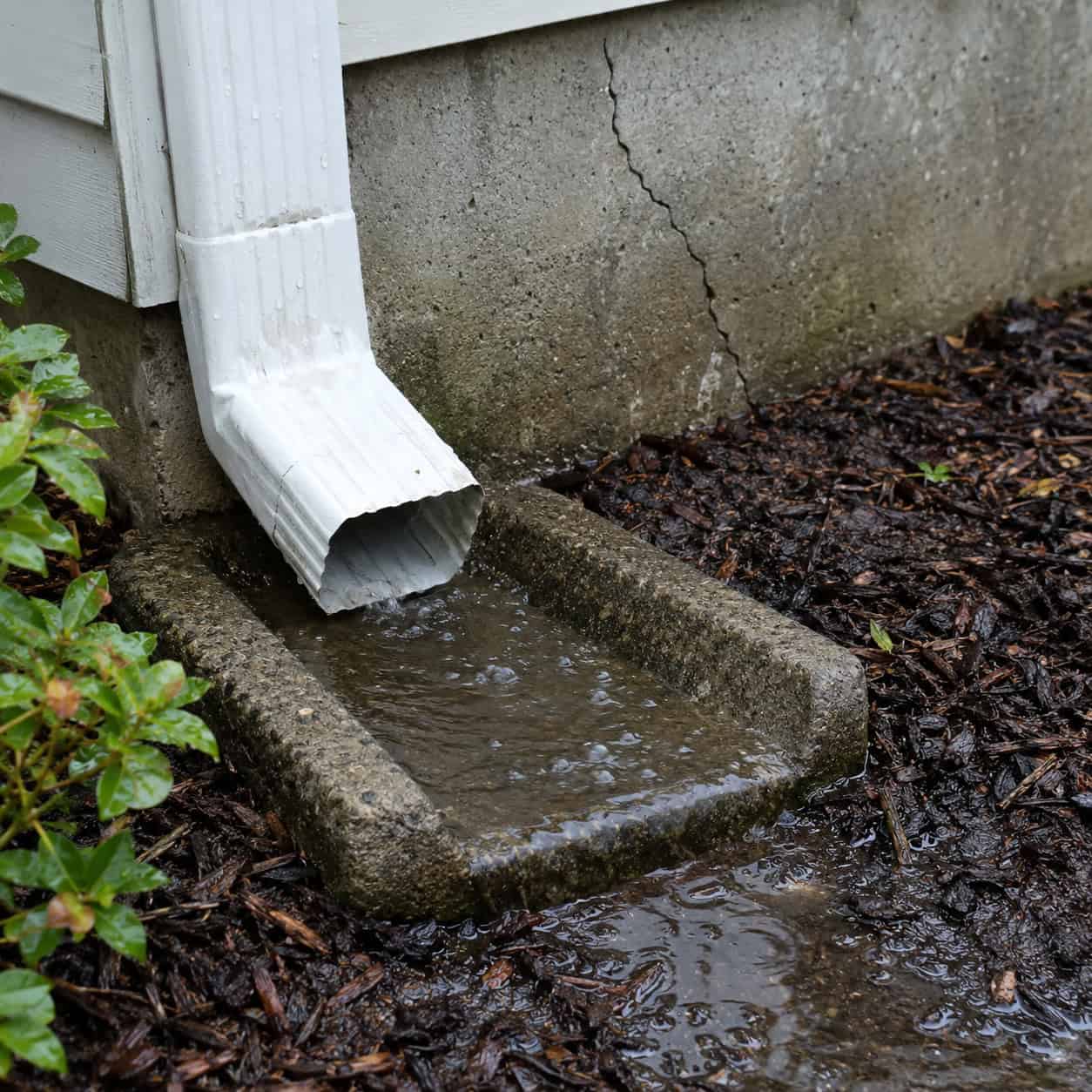
This is the single most regretted detail in residential drainage, and it costs about forty dollars to fix.
Run the math on a modest roof. A 1,500-square-foot roof plane sheds roughly 900 gallons in a one-inch rainfall. Split across four downspouts, that’s 225 gallons per outlet — released onto a concrete splash block sitting eight inches from the footing.
The soil there is backfill. It’s looser than undisturbed ground and it drinks. Saturate it a few hundred times and you get hydrostatic pressure against the wall, horizontal cracks in block, settlement at the corners, and water coming through the cold joint where the slab meets the wall.
Basement waterproofing companies make their living on this one detail.
Four feet out is the bare minimum. Six is better. Ten feet is what you want on a house with flat grade or clay soil, and the extension has to actually slope — a buried or crushed extension that holds water is worse than none.
- Downspout discharge at least 4-6 feet from the wall, 10 on flat lots
- Grade falling 6 inches over the first 10 feet
- No mulch beds built up above the siding line
- Splash block or a hard surface at the outlet so you don’t dig a crater
If a buried line isn’t practical, hinged roll-out extensions let you mow and still drain. Cheap, ugly, effective.
6. No Drip Edge or Gutter Apron at the Eave

Water doesn’t just fall off a roof. Surface tension curls it backward around the shingle edge, where it runs down the face of the deck and soaks the fascia from behind.
That’s why you see old houses with perfect-looking shingles above fascia boards that crumble when you touch them.
Drip edge is thin bent metal. It costs almost nothing, it’s now code at eaves and rakes in most jurisdictions, and it’s still missing on most homes built before the mid-1970s. Interlock Roofing has the profile details.
At the eave specifically, ask for gutter apron — the longer leg hooks over the gutter back and kills the problem completely.
7. Rubber Pipe Boots Around Plumbing Vents

The neoprene collar on a standard pipe boot is the shortest-lived component on the entire roof.
UV cracks it in 8 to 12 years. Your 30-year shingles are barely broken in.
And the failure is sneaky — water runs down the outside of the pipe, into the attic, along a rafter, and shows up as a brown ring on a bedroom ceiling six feet from the actual hole.
Lead boots last as long as the roof. Metal-collar boots with a replaceable rubber gasket are the budget answer. Either beats replacing drywall.
8. Snap-Together Sectional Vinyl Gutters

Ten-foot sections, snap connectors, a tube of sealant. Every joint is a leak with a start date.
Vinyl goes brittle below freezing and oil-cans in July heat. Expect 10 to 15 years against 20 to 30 for aluminum, per LeafFilter.
The savings over the life of the house amount to roughly one fascia repair.
Seamless aluminum, rolled on site from a coil, in one continuous piece per eave. Only the corners and outlets are joints.
9. Roof Cement Smeared Where Step Flashing Belongs
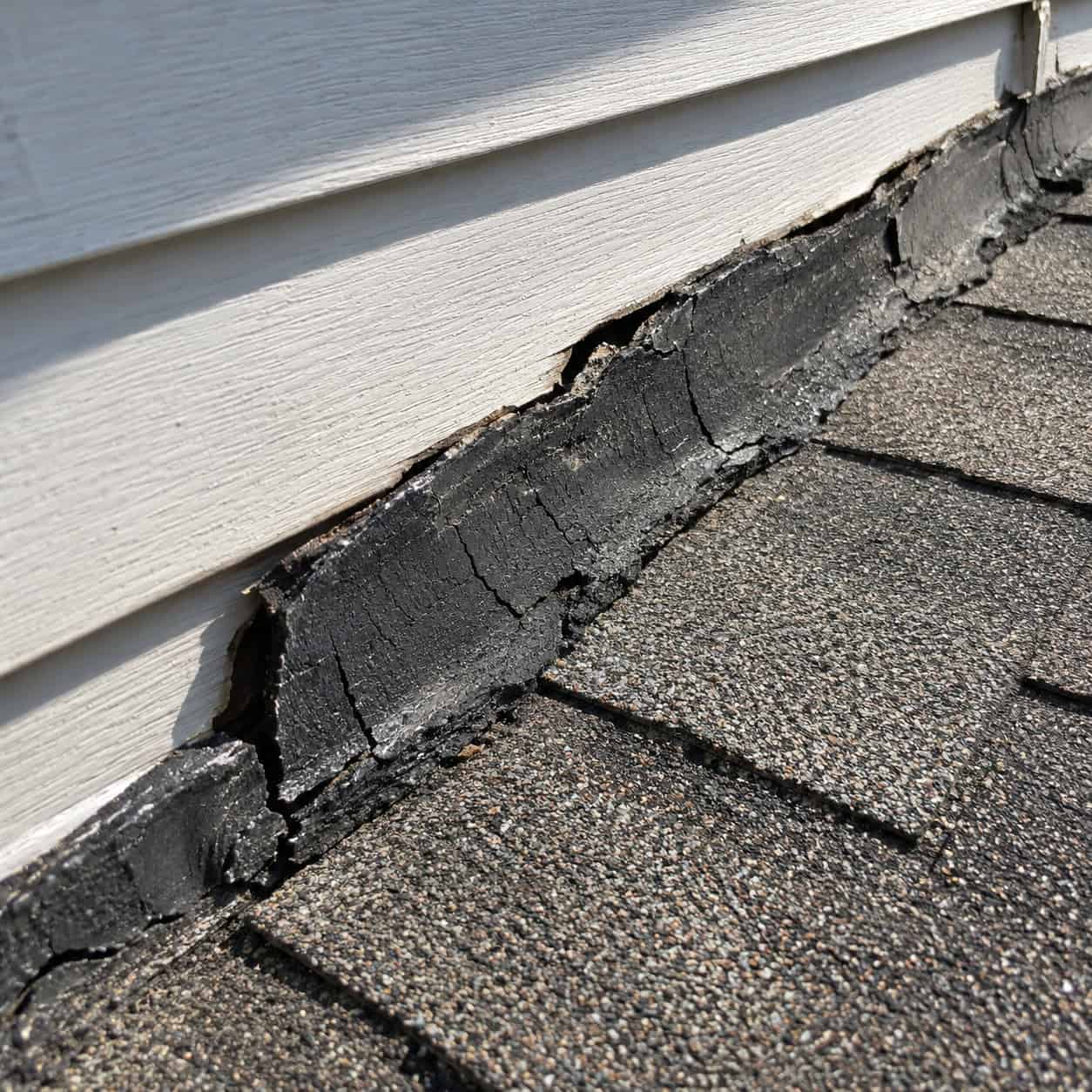
Black tar at a sidewall or chimney is a two-year fix wearing a repair costume.
It hardens. It shrinks. It cracks at the edges and then holds water against the sheathing instead of shedding it.
Worse, it hides the real problem long enough for the framing behind the wall to go soft.
Step flashing is one piece of bent metal per shingle course, woven in as the roof goes up. And old flashing never gets reused on a tear-off — it’s bent to the old shingle thickness and it’s had twenty winters.
10. Reverse-Curve and Foam Gutter Guards

The surface-tension helmet works beautifully on leaves and badly on rain. In a hard downpour water overshoots the nose entirely and lands in your flowerbed.
In winter the nose is the first thing to ice, and now you’ve built a dam with a lid.
Foam inserts are worse. They become a seed bed — maple helicopters, pine needles and shingle grit root into the foam until you’re pulling actual plants out of the gutter.
Nothing makes a gutter maintenance-free. Ned Stevens has seen enough of them to say so plainly. Roofers who bother use stainless micro-mesh — and still get on the ladder every fall.
11. A Powered Attic Fan
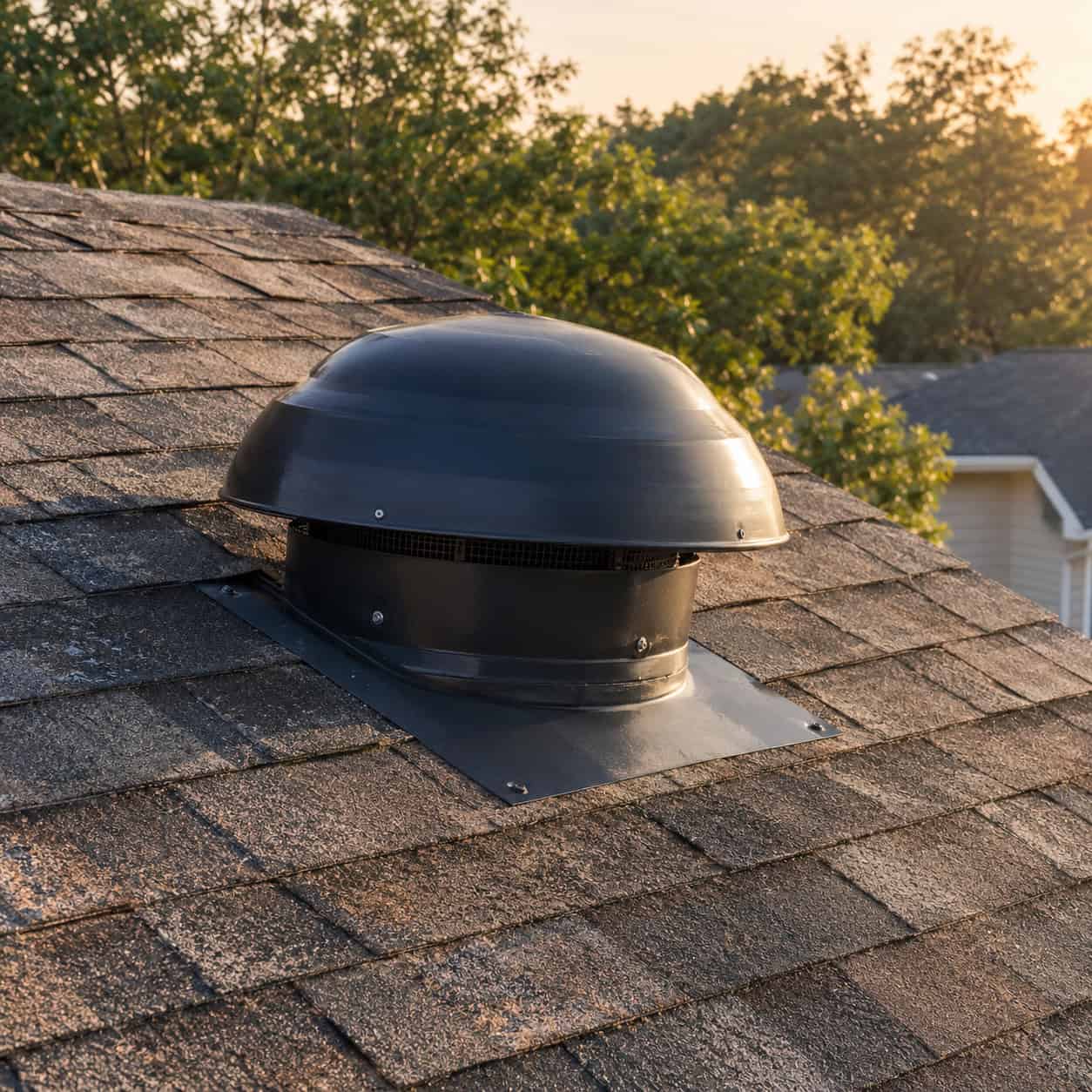
Sold hard since the 1970s energy crunch, and still a bad deal on most houses.
If your attic floor leaks air — and it does, around every can light, top plate and chase — the fan doesn’t pull from the soffits. It pulls your air-conditioned air up through the ceiling and throws it outside.
On a tight house it can do something uglier: depressurize enough to backdraft an atmospheric water heater.
Fix the intake. Go passive.
12. Closed-Cut Valleys Under Trees
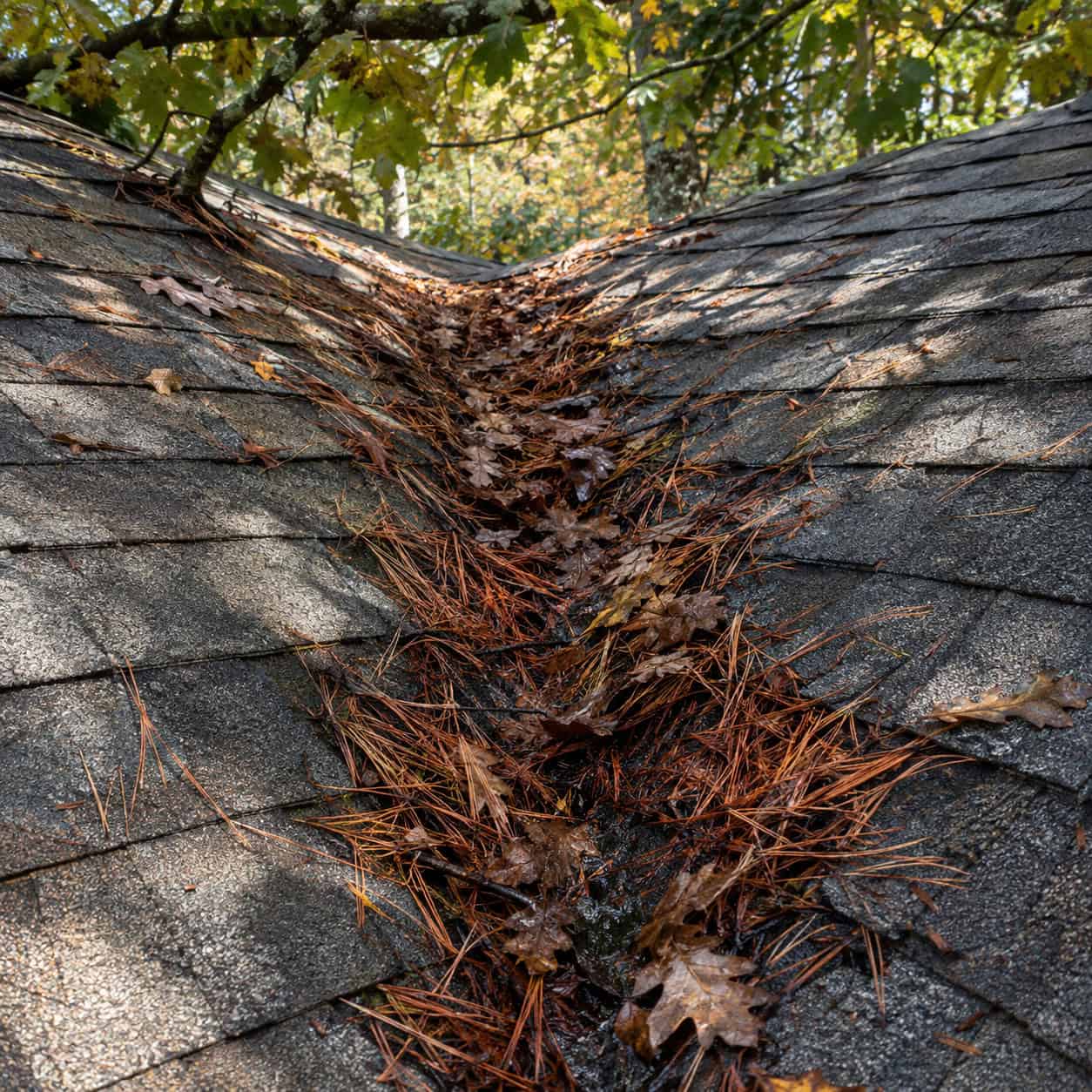
The valley moves more water than any other part of the roof and it’s the second most common leak point after flashing.
A closed-cut valley runs shingles across the trough. Under oaks or pines, that trough fills with needles and leaf mash that stays wet for weeks and grinds through the shingle mat.
Open metal valleys — W-profile aluminum or copper — cost more and drain clean. Several manufacturers rate them the better-performing detail, and IKO breaks down the comparison.
Under heavy tree cover, it’s not close.
13. Five-Inch Gutters and 2×3 Downspouts on a Big Roof

Gutters usually overflow because of capacity, not clogs. Homeowners blame leaves and buy guards, and it keeps overflowing.
A 6-inch K-style gutter carries roughly 20 percent more water than the 5-inch builder standard. A 3×4 downspout moves close to double what a skinny 2×3 does.
Steep pitch makes it worse — water hits the gutter with momentum and jumps the lip.
Long eaves, steep planes, or big roof areas feeding one run: size up.
14. Staples and Overdriven Nails in the Shingles
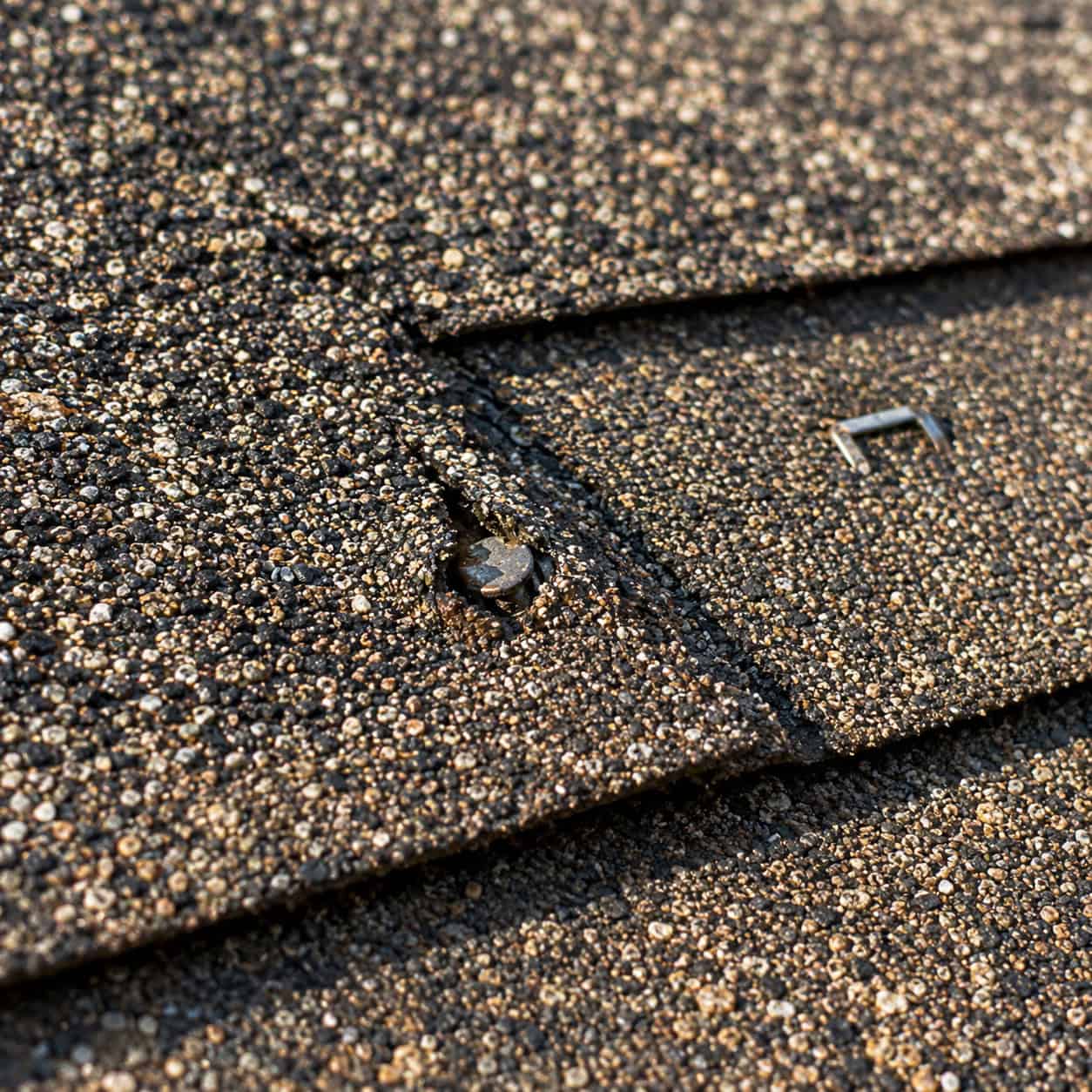
You will never see this from the ground, and it’s the difference between a roof that survives a storm and one that doesn’t.
An overdriven nail cuts through the mat and the head sinks below the surface — the shingle is now hanging on a slot, not a fastener. A staple has roughly half the holding power of a proper roofing nail.
Both void the wind warranty outright.
Good crews set gun pressure by hand on the first bundle and check it when the temperature changes. Steep sections get hand-nailed.
15. Skipping Ice-and-Water Shield at the Eaves and Valleys

In snow country, this membrane is the only thing standing between an ice dam and your living room ceiling.
Here’s the mechanism. Heat leaking into the attic melts the snowpack on the upper roof. The meltwater runs down to the cold overhang — the part with no heated space under it — and refreezes into a ridge of ice at the eave. Every subsequent melt backs up behind that ridge into a standing pond, sometimes four inches deep, that sits there for weeks and works its way under the shingle courses.
Shingles are designed to shed running water. They are not a waterproof membrane, and standing water goes right past them.
Self-adhering ice-and-water shield seals around every nail that passes through it. That’s the whole trick.
Where it belongs: from the eave edge up past the warm-wall line — measured on the slope, so a deep overhang or a shallow pitch needs a second course — and full width up every valley, around every chimney and skylight curb, and under every sidewall flashing.
On a typical 2,000-square-foot roof the material runs a few hundred dollars. An ice dam that gets into the ceiling runs five figures with the insurance deductible on top. the attic side of the ice dam problem is the other half of the fix.
It gets value-engineered out of bids constantly. Ask by name.
16. Hanging New Gutters on Soft Fascia

Screws need wood. Punky, water-stained fascia isn’t wood anymore — it’s a sponge holding its shape.
Bright new seamless aluminum over rotten fascia buys you two good years and then takes the new gutter down with it.
Push a screwdriver into the fascia behind the gutter at a few spots. If it sinks, stop.
Replace fascia and sub-fascia while the staging is already up. It’s the cheapest moment in the project’s life to do it.
17. Asphalt Shingles on a Low-Slope Porch Roof
Below about 3:12, water moves slowly enough to creep sideways and backward under the shingle tabs, especially with a wind behind it.
Below 2:12, asphalt shingles aren’t rated at all. Manufacturers won’t warranty them. Mineral-surfaced roll roofing is only slightly better and looks worse.
Porches, sunroom additions and shed dormers are where this shows up.
Single-ply membrane — TPO or EPDM — or standing seam. Nothing shallower than 3:12 gets shingles.
18. Heat Cables as the Ice Dam Fix
Every January, somebody staples a zigzag of heat cable along their eave and calls the problem solved.
It isn’t. The cable melts a narrow channel through the ice so water has somewhere to go. The dam is still there. The warm air leaking into your attic is still there. The insulation is still thin.
Meanwhile the cable draws real power — typically 5 to 8 watts per foot, running continuously through a cold snap. A 100-foot run going 24 hours a day for six weeks adds up to a noticeable number on a January bill.
The elements themselves usually fail in three to five years, often where the cable crosses the gutter lip and flexes. Clips let go. The cable ends up lying in the gutter where it does nothing at all.
And stapling a cable through the shingle courses puts new holes in the exact zone where the water pools.
The actual fix is boring: air-seal the ceiling plane — bath fans, can lights, the attic hatch, every top plate and plumbing chase — then bring insulation up to depth, then verify soffit-to-ridge airflow. A cold roof deck doesn’t make ice dams.
Heat cable has one legitimate use: a problem valley or a north-facing dormer on a house where air-sealing truly can’t reach. As a whole-house strategy it’s a bandage you pay for monthly.
19. Soffit Vents Buried in Attic Insulation
Exhaust without intake isn’t ventilation. It’s a vacuum pulling on your house.
Here’s how it happens. The insulation crew blows 14 inches of cellulose across the attic floor, the material drifts out to the eaves, and it packs solid into the narrow wedge where the rafter meets the top plate — right on top of the soffit vents.
Now the ridge vent has to get its makeup air from somewhere. It takes it through the ceiling plane: around light fixtures, up the chase behind the bathroom wall, through the attic hatch gap.
That air is warm and loaded with moisture from showers, cooking and laundry. It hits a cold underside of sheathing and condenses. Then you get frost on the nail points in January, dark staining across the north slope, and by spring a mold remediation quote.
Baffles — rigid foam or plastic chutes stapled between the rafters — hold a clear channel from the soffit up past the insulation line. They cost two or three dollars apiece.
They get skipped because nobody can see them and nobody inspects for them.
Check it yourself: go in the attic on a bright day with the lights off and look toward the eaves. You should see daylight at every rafter bay. If you see packed insulation instead, that’s your problem.
20. Downspouts Buried Into Corrugated Drain Lines
Burying the downspout looks like the responsible move. Done with the wrong pipe, it’s worse than leaving it above ground, because now the failure is invisible.
The problem is black flexible corrugated pipe. Those ridges that make it bendable also make it a silt trap — every rainfall carries grit and roof granules into the line, and the corrugations catch them. Over five or six years the pipe silts half shut.
It also crushes. A truck tire, a trailer jack, a settled trench with a rock in it. Corrugated has almost no ring stiffness.
And there’s rarely a cleanout, so nobody can snake it.
What happens next is the expensive part. The line backs up, water fills the vertical downspout, and it discharges out of the joint at the bottom — underground, directly against the footing, where you cannot see it. Homeowners run this way for years wondering why one corner of the basement is always damp.
Do it right: solid smooth-wall PVC, 4-inch, sloped at least an eighth of an inch per foot, with a cleanout tee at the downspout and a visible daylight outlet with a pop-up or animal grate you can actually inspect.
If the lot is flat and you can’t get to daylight, a dry well sized for your roof area beats a buried pipe that goes nowhere.
21. Keeping Spongy Decking Under a New Roof
Nails don’t hold in delaminated plywood. They don’t hold in OSB that’s been wet and swelled at the edges either — the material turns to oatmeal around the shank.
A crew bidding by the square has every incentive not to bring it up. Decking replacement is almost always a change order, which means an awkward conversation and a slower day.
So sheets that should come off stay on, the new shingles go down over them, and the roof fails in patches starting around year six.
The tear-off day is your one window. Once underlayment is down, the deck is sealed up for 25 years.
Walk it with the foreman after the old roof is off and before paper goes on. You’re looking for:
- Dark staining or black streaking along rafter lines
- Visible sag or springiness between rafters when you step
- Delamination — plies separating at the edges of plywood
- Swelled, crumbly OSB edges, especially at valleys and the eave
- Daylight showing through at seams
Get the per-sheet replacement price in writing before the job starts — $75 to $150 a sheet is typical — so the change order isn’t a negotiation on a roof that’s already open.
Also ask whether they’re re-nailing the field. On houses from the 1960s and 70s, the original deck was often stapled or under-nailed, and re-nailing to current spacing while it’s exposed costs almost nothing.
22. One Downspout for a Forty-Foot Gutter Run
Water has to travel the whole length of the gutter to reach a single outlet. In a hard rain it can’t get there fast enough, so the far end goes over the lip.
Then there’s the weight. A 40-foot run holding water weighs several hundred pounds, which is how hangers pull and the run develops a permanent belly.
One outlet every 30 to 40 feet, and an outlet near each end of a long eave rather than one in the middle.
Adding a second downspout to an existing run is a couple hundred dollars.
23. No Cricket Behind a Wide Chimney
The uphill side of a chimney is a dam. Anything wider than 30 inches catches a drift of snow, a mat of pine needles and a standing puddle, and holds it against the brick indefinitely.
Flashing isn’t designed for standing water. It’s designed for water in a hurry.
A cricket is a small saddle-shaped framed structure behind the chimney that splits the flow and sends it around both sides. Code requires one at 30 inches and wider.
It’s left off constantly because it’s framing work on a roofing job.
24. Exposed-Fastener Ag-Panel Metal Roofing
It’s a pole barn roof on a house, and the price reflects that.
The ribbed panels are fine. The problem is the thousands of screws going straight through the face, each one sealed by a neoprene washer that UV-degrades and compresses.
By year 10 you’re walking the roof re-torquing screws. By 15 you’re chasing leaks and oversizing holes.
Standing seam hides its fasteners under the seam with concealed clips that let the panel move with temperature. Amstill Roofing puts standing seam at 40 to 70 years. The exposed-fastener version doesn’t come close.
25. Gutter Guards Slipped Under the Shingle Course
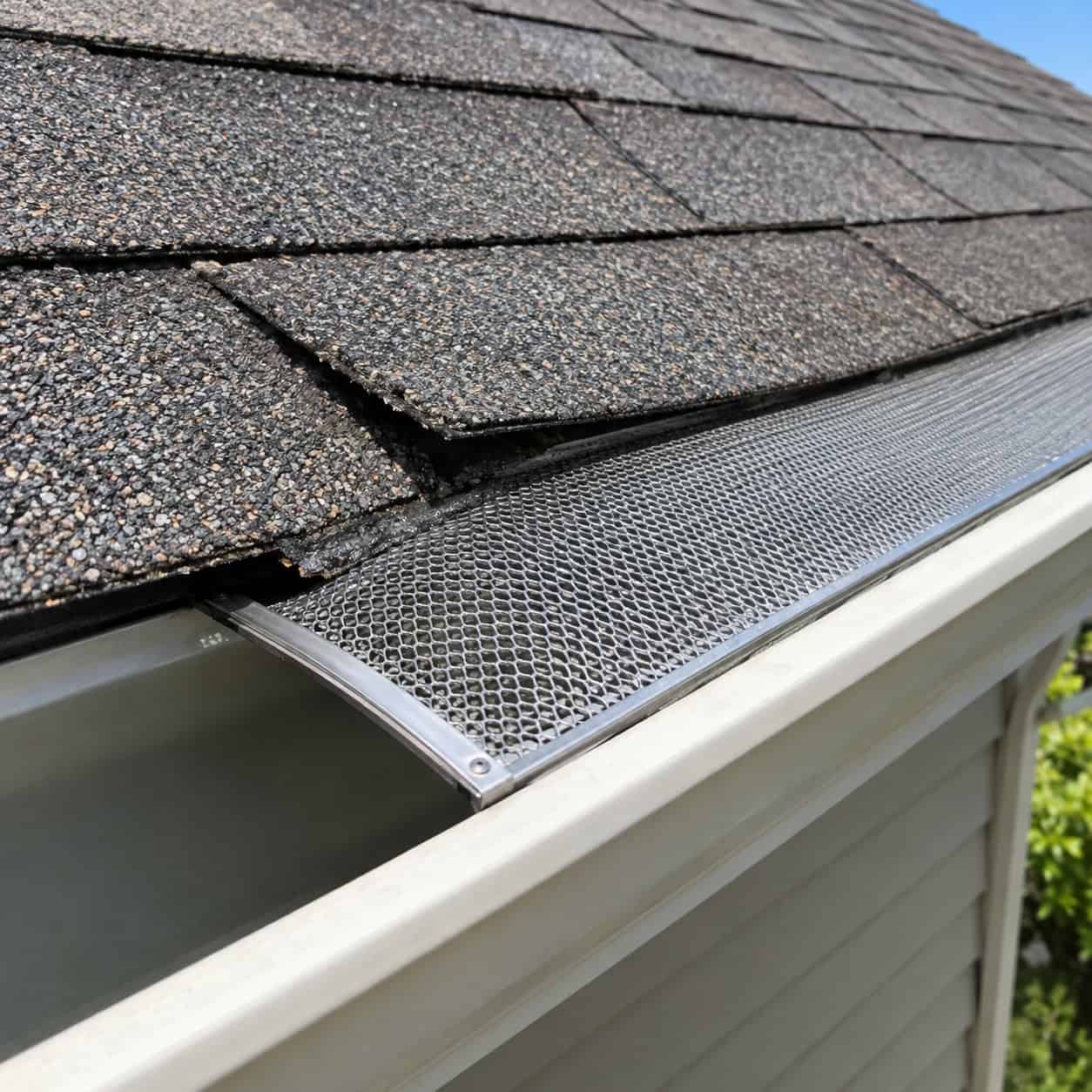
This is the gutter decision that becomes a roof problem.
Most screen and helmet systems install by sliding the back lip up under the first course of shingles. That lifts the shingle, breaks the factory seal strip underneath, and leaves the bottom edge of your roof unbonded along the entire eave.
The eave is where wind uplift is highest.
It can also void the shingle warranty outright, and the gutter company’s paperwork won’t cover the roof.
Guards that fasten to the gutter only — front lip and back lip, nothing under the roofing. Full stop.
26. Ridge Cap Cut From Leftover Three-Tab Shingles

For decades this was just how it was done: cut the tabs apart, bend each piece over the ridge, nail it down.
The bend is the problem. A field shingle isn’t formulated to fold, so below about 50 degrees the mat cracks at the crease — invisibly at first.
The ridge also sees the highest wind speeds on the house, which is why cut caps are usually the first thing to go in a storm.
Factory hip-and-ridge is thicker, pre-scored and designed to hinge. It’s a few dollars more per bundle.
27. Spray-On Roof Coating Over Old Shingles
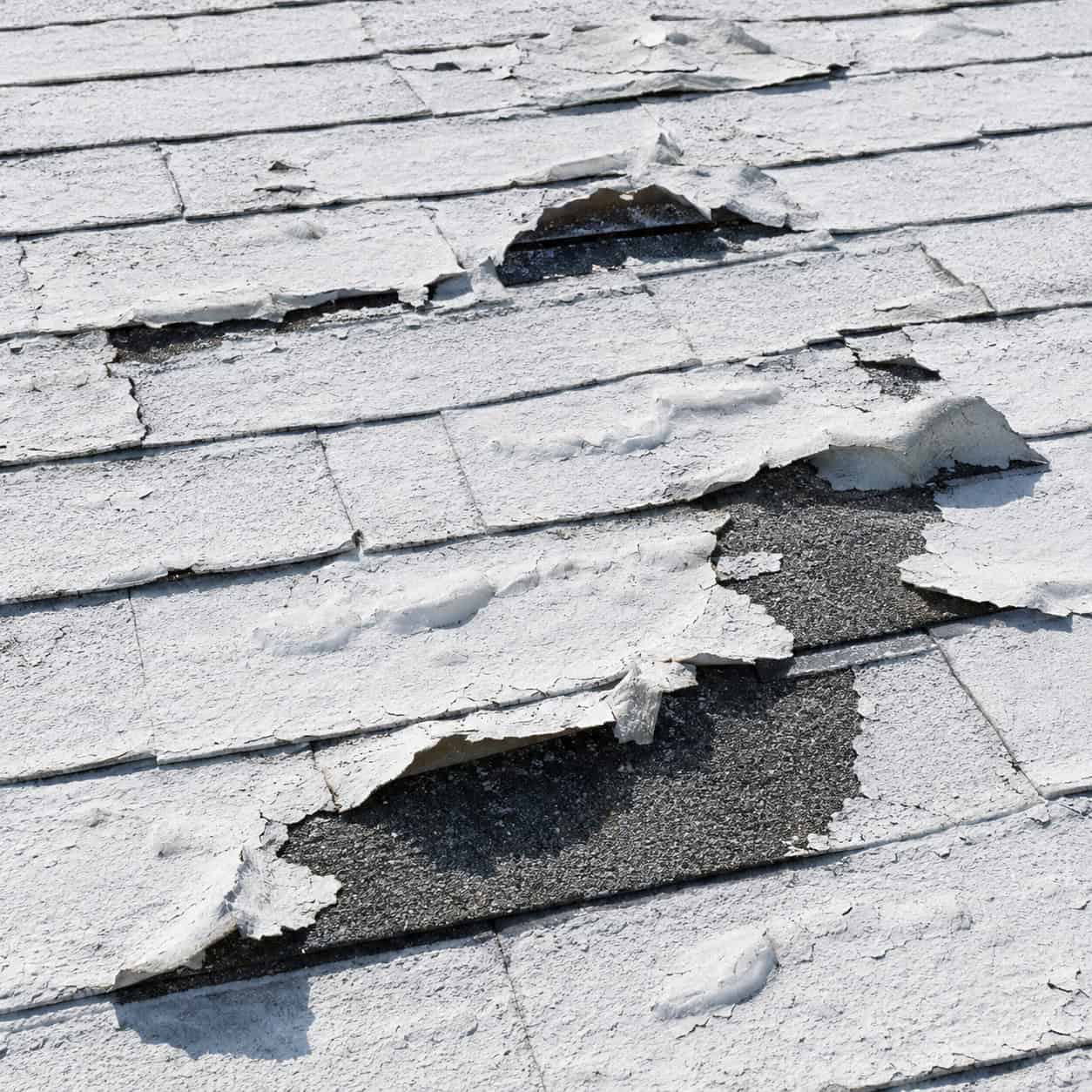
Pitched hard to older homeowners as a way to get another decade without a reroof.
Coating an asphalt roof seals the top of a mat that needs to breathe. Moisture that gets in — and it always gets in, at the flashings — can’t get out.
It voids whatever warranty remains. It makes the eventual tear-off messier, slower and more expensive, because now the shingles are glued into a sheet.
And it does nothing whatsoever about the flashing, which is where almost every leak actually originates.
Skip it.
28. A Downspout That Empties Onto a Lower Roof

Standard on split-levels, additions and two-story porches, and it kills shingles fast.
Concentrated runoff hits one strip of the lower roof over and over, scouring the granules off. Granules are the shingle’s UV protection — strip them and the asphalt underneath bakes and cracks.
You end up with a bald racing stripe that leaks a decade before the rest of the roof is tired.
The lower gutter gets overwhelmed too, since it’s now catching its own roof plus everything from above.
Carry the downspout down the wall to grade. If that’s impossible, add a splash guard, a protective pad, and a larger outlet on the lower run.
29. Fifteen-Pound Felt Underlayment
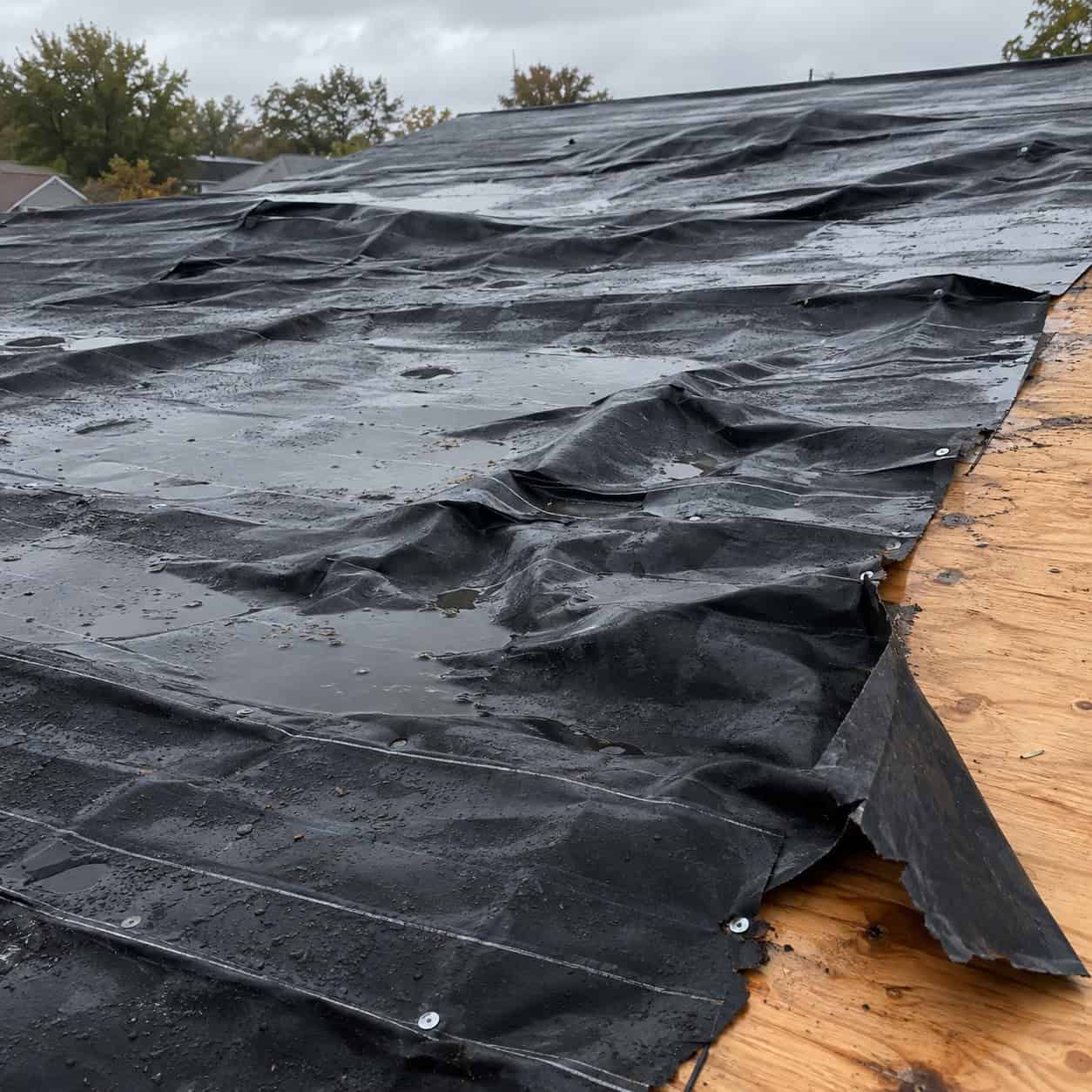
Felt was the standard for a century, and synthetics replaced it for good reasons.
Felt absorbs moisture and wrinkles. Those wrinkles telegraph through the shingles as visible ripples, and they never flatten back out.
Worse, felt tears. If a storm hits mid-job — which happens, because roofs get opened up on days that don’t end the way the forecast promised — 15-pound felt shreds off the deck in a gust and your house is bare.
Synthetic underlayment weighs less, resists tearing, walks safer when wet, and holds up for months of UV exposure. The upcharge is small.
30. Pressure Washing Moss and Black Streaks Off Shingles

Those black streaks are algae. They’re cosmetic. The cure is routinely worse than the disease.
A pressure washer blasts off the granule layer — the shingle’s sunscreen — and drives water up under the courses where it has no business being. Homeowners take five years off a roof to fix a stain.
Soft-wash instead: low pressure, a roof-safe cleaning solution, rinse.
Better yet, install a zinc or copper strip under the ridge cap. Every rain carries a trace of metal ions down the roof and the algae never establishes. Old houses with copper flashing have clean stripes below it for exactly this reason.
31. A Metal Roof With No Snow Guards

A metal roof doesn’t shed snow gradually. It holds the whole pack until the sun warms the panel underneath, and then the entire winter’s accumulation releases at once.
That slab rips gutters off the fascia, flattens foundation plantings, buries walkways and crushes whatever car is parked below.
It also lands on people. This is a real injury mechanism, not a theoretical one.
Snow retention — pad-style guards, bar systems on clamps — gets laid out before the panels go on, above every entry door, walkway, gutter run and parking area.
Retrofitting it afterward is possible but never as clean.
32. The Plastic Bubble Skylight

Thousands of 1970s ranches still have them. Acrylic domes yellow, craze into a spiderweb of fine cracks, and eventually go brittle enough to crack under a hailstone.
The dome isn’t even the real issue. It’s the curb flashing, which on most of these is original and has been working for forty-odd years.
Skylights get replaced with the roof, not between roofs. The flashing kit is the entire ballgame, and installing it means pulling shingles anyway.
A modern curb-mount unit with a factory flashing kit and laminated glass is a different product entirely.
33. Mounting Solar Panels or a Dish on a Roof With Five Years Left
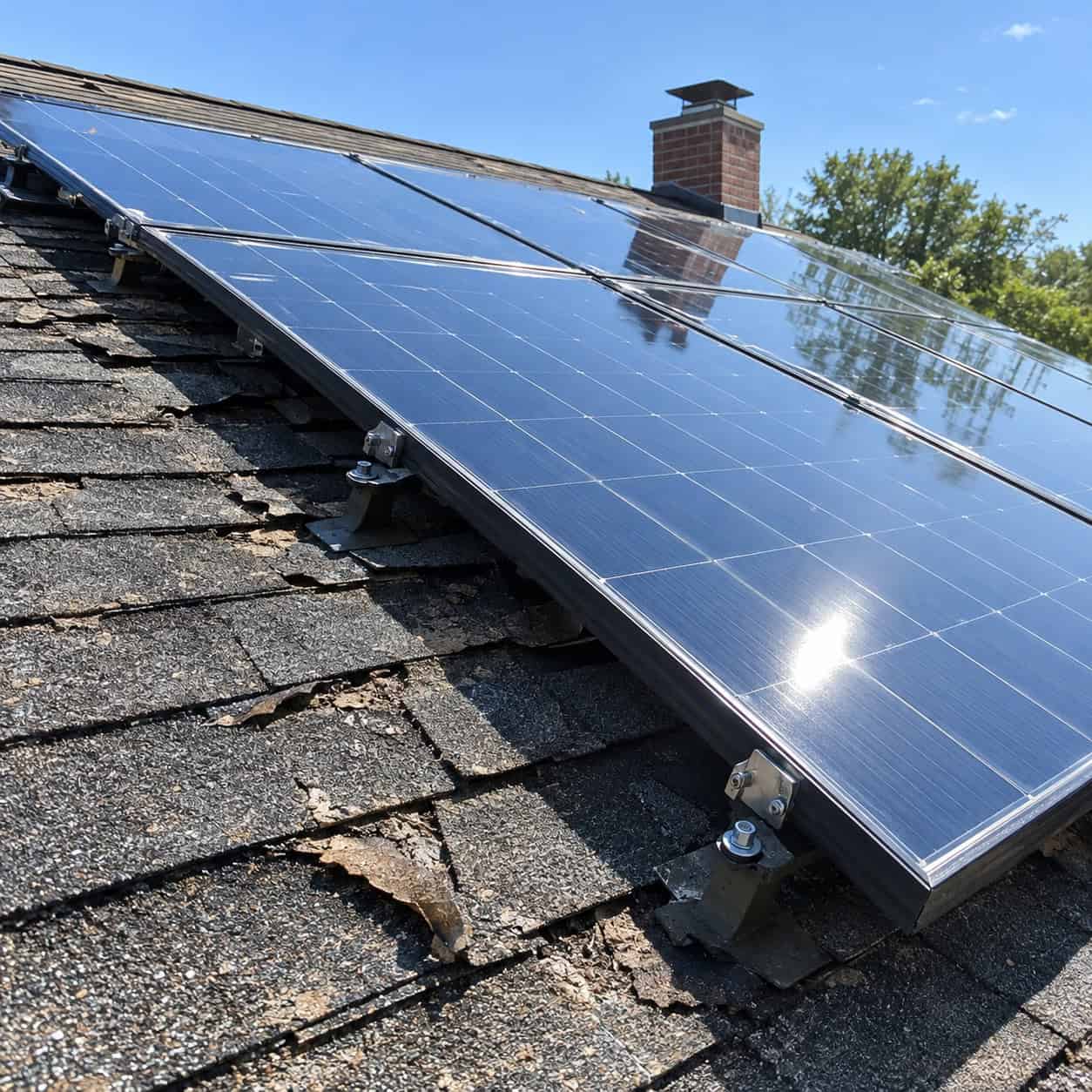
Every mount is a hole in your roof. A typical residential array puts 40 to 60 of them through the deck.
That’s manageable on a new roof with proper flashed standoffs. It’s a mistake on a roof that’s 20 years old.
Removing and resetting an array for a reroof runs $3,000 to $6,000 and up, plus coordination between two trades who don’t work for each other.
Reroof first. Then panels. The sequencing is the expensive part, not the panels.
34. The Storm-Chaser With the ‘Lifetime’ Warranty

After every major hail event, the trucks show up. Out-of-state plates, magnetic door signs, a clipboard and a free inspection.
The pitch is always some version of the same thing: we’ll handle your insurance claim, we’ll cover your deductible, and you get a lifetime warranty.
A warranty is worth exactly as much as the entity standing behind it. A workmanship warranty from a crew that will be in another state by April is a piece of paper. Covering your deductible is insurance fraud in most states, and the homeowner is a party to it.
What roofers actually evaluate in a bid:
- Tear-off scope stated in writing — full tear to deck, or layover
- Named flashing details: step flashing replaced, new drip edge, valley type
- Ice-and-water shield coverage, by location
- Manufacturer certification (GAF Master Elite, Owens Corning Preferred) verified on the manufacturer’s own site, not the contractor’s
- Local physical address and a state license number you can look up
Deposit practice tells you plenty too. A reputable contractor on a residential reroof typically takes little or nothing up front, bills on material delivery, and collects the balance at completion. A demand for 50% before anyone touches the roof is a signal.
Read the warranty transfer clause. Most manufacturer warranties are prorated after year ten and transfer only once, usually within 60 days of a sale. The word “lifetime” is doing very little work in that document.
And get the bid in person, in daylight, with the contractor on the roof — not from a drone photo and a knock on the door.
35. Stamped White K-Style Gutters on a Victorian

Half-round gutters hung on decorative brackets weren’t an accessory on an 1890s house. They were part of the design — the shadow line at the eave, the bracket spacing, the way the fascia read from the street.
Swap in flat white K-style and the whole eave goes dead. It’s the same instinct that wraps original trim in vinyl.
Half-round costs more. It also sheds debris far better, because there’s no flat bottom and no inside corner for sludge to pack into.
Galvanized, copper, or painted aluminum half-round on exposed brackets. Nobody who’s done it has ever regretted it, which is more than you can say for most upgrades made to old houses with good intentions.
36. Copper Gutters Hung With Steel or Aluminum Fasteners

Beautiful copper gutter, wrong hardware, dead in a decade.
Dissimilar metals in contact with water running between them set up a galvanic cell. The less noble metal corrodes — the steel hanger, the aluminum bracket, the galvanized screw — while the copper sits there fine.
You get rust bleeding down the gutter face and green-black streaks on the siding below.
Copper gutters get copper or brass hangers, copper nails, and copper downspouts. All of it or none of it.
37. Gutters Hung Dead Level

A gutter that looks perfectly straight is a gutter that doesn’t drain.
Standing water in a level run means sediment settles out and hardens, mosquitoes breed in it, and the dead weight slowly pulls the hangers until the run develops a sag that holds even more water.
Pitch is about a quarter inch of fall per 10 feet toward the outlet. On a 30-foot run that’s three-quarters of an inch — nobody will ever notice it from the ground.
Hold a garden hose at the far end after an install. If the water doesn’t move, the job isn’t done.
38. Wind Turbine Vents (Whirlybirds)
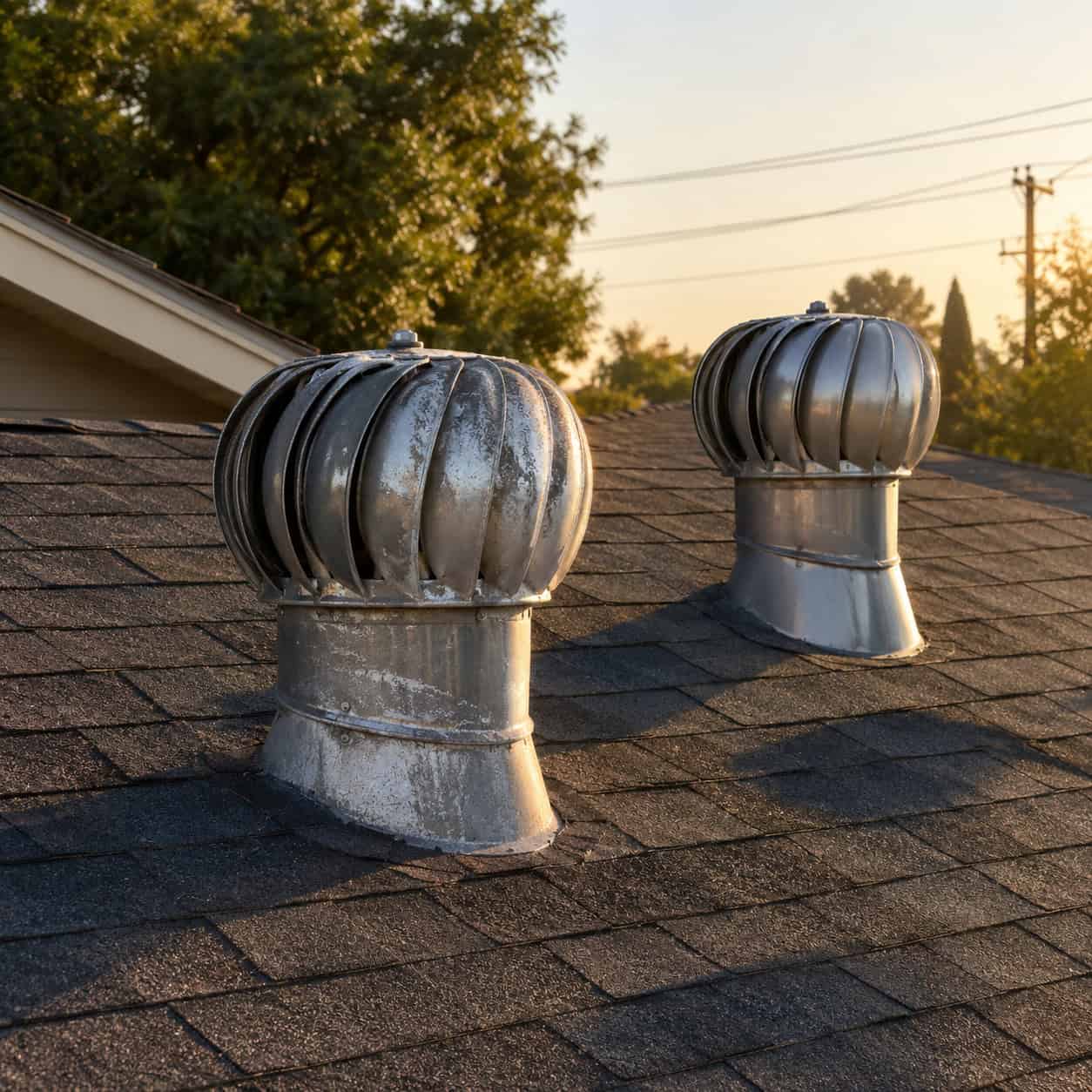
Spinning aluminum mushrooms on the back slope of every ranch house from 1955 to 1985. Pure rooftop nostalgia.
They do move some air when the wind blows. They also seize up — the bearings dry out, and a dead whirlybird is just a hole in your roof with a hat on it.
And they’re an exhaust vent, so the mixing rule applies: a turbine plus a ridge vent plus gable louvers means none of them work as intended.
Pick one exhaust strategy, feed it with real soffit intake, and let the stack effect do the work for free.
Almost every item on this list costs between forty dollars and a few hundred to do correctly on the day the work is happening. Every one of them costs thousands to fix later.
That’s the whole pattern. The roof isn’t where houses fail — the edges are. The flashing, the fasteners, the four feet of pipe at the bottom of the downspout.
Next time you’re standing in the driveway looking at a bid, don’t ask what shingle they’re using. Ask what happens at the eave.