


A flooring sample is about the size of a dinner plate, lit by showroom bulbs and judged in a few minutes. The floor that comes from it gets walked on, mopped, spilled on and slept beside for the next twenty years.
That mismatch explains most flooring regret. The trouble rarely shows at install. It surfaces slowly: seams that open every winter, a finish worn thin by the back door, a color that looked current and now dates the whole house.
Most of these problems are predictable. They trace back to a number on a spec sheet, a room the material was never meant for, or a subfloor no one bothered to check.
Below are 32 flooring choices that tend to disappoint within a few years, each with the detail worth checking before the order goes in.
1. Gray-Washed and Greige Oak Floors

Between roughly 2014 and 2020, gray-toned oak, gray laminate and gray vinyl went into millions of new builds and flips. Listing photos from those years are now easy to date at a glance, mostly by the floor.
The trouble runs deeper than fashion. Gray stains lean cool, often with a blue, green or violet cast that clashes with walnut furniture, brass hardware and warm white walls. Solid hardwood can be sanded and restained for about $3 to $5 a square foot. Gray laminate and vinyl cannot, so the color stays until the floor goes.
For a tone with staying power, natural white oak or a light honey finish has held up through several design cycles.
2. Laminate in a Laundry Room or Mudroom

Most laminate is a printed image over a core of high-density fiberboard, which is wood fiber and resin pressed into a sheet. The surface shrugs off scuffs. The edges do not shrug off water.
A slow drip from a washer valve, a tray of melting boots or a dog bowl that sloshes daily will wick into the click joints. Fiberboard that swells stays swollen, leaving raised, peaked seams that no amount of drying reverses.
Some newer laminates carry waterproof ratings with sealed edges, but read the warranty for standing-water limits. For a laundry room, porcelain tile or rigid-core vinyl is the safer call, along with a $15 drip pan under the washer.
3. Budget Vinyl Plank With a Thin Wear Layer

Luxury vinyl plank is only as durable as the clear layer on top. That layer is listed in mils, each a thousandth of an inch, and entry-level products often carry 6 to 8 mil.
Thin wear layers hold up fine in a guest bedroom. In front of a sink, at a back door or under a rolling desk chair, they scratch, haze and eventually wear through to the printed design, which cannot be repaired in place.
Look for 12 mil as a minimum for busy family spaces and 20 mil for near-commercial durability. The jump usually adds $0.50 to $1.50 per square foot, which is cheap compared to replacing a hallway.
4. Cabinets Set on Top of a Floating Floor

Floating floors, from laminate to click vinyl to engineered wood, need to shift slightly with temperature and humidity. Pinning them under a 600-pound run of base cabinets or an island takes that freedom away.
The floor then expands against a fixed point with nowhere to go. Results include peaked seams, gaps opening across the room and planks that buckle near the dishwasher. A future floor replacement also means pulling the cabinets.
Most install guides say the same thing: cabinets go in first, and the floating floor runs up to the toe kick with a 1/4 to 3/8 inch gap hidden behind trim. Confirm the installer’s sequence before the boxes arrive.
5. High-Gloss Porcelain on a Bathroom Floor

Shiny porcelain looks like polished stone and wipes clean easily, which is why it lands in so many bathrooms. Wet, it can be one of the slickest surfaces in the house.
Slip resistance on tile is measured as DCOF. The ANSI A326.3 standard calls for 0.42 or higher on level interior floors expected to get wet. Many polished porcelains test under that, and the box may quietly label them for walls or dry areas only.
Matte or lightly textured finishes give bare feet more grip, and smaller tiles add grout joints that help too. A 2-inch hex or 3×6 on the floor, with the glossy tile saved for shower walls, keeps the look without the fall risk.
6. Tearing Out an Original Old-Growth Wood Floor

Houses built before about 1940 often have floors milled from virgin timber: heart pine, quartersawn oak, vertical-grain fir. Those trees grew slowly in dense forest, producing tight rings and hard, stable boards that farmed lumber rarely matches.
A floor that looks gray, gapped and tired usually has decades left. Standard 3/4-inch tongue-and-groove strip has roughly 1/4 inch of wear surface above the tongue, enough for several sandings over its life.
Before calling a demolition crew, get a refinishing quote. A full sand and three coats generally runs $3 to $6 a square foot, and damaged boards can often be replaced with matching stock pulled from a closet. New wood rarely equals what was there.
7. Micro-Beveled Prefinished Strip in a Kitchen

Factory-finished hardwood arrives with a hard aluminum oxide coating and goes down without the dust and odor of site finishing. To hide small height differences between boards, most of it has a small V-groove milled along every edge.
In a bedroom, that groove barely registers. In a kitchen, it collects crumbs, grease and mop water in long dark lines, and a wet mop pushes moisture into seams the factory finish never sealed.
Site-finished hardwood gets polyurethane over the whole surface, bridging every joint with one continuous film. For kitchens, ask for square-edge boards finished in place, or plan on running a stiff brush down the bevels now and then.
8. Solid Hardwood Directly Over a Basement Slab

Below-grade concrete constantly releases moisture from the soil beneath it, even when the slab looks and feels dry. Solid wood absorbs that moisture through its underside faster than the top can release it.
The usual sign is cupping, where board edges rise above the centers. Left long enough, fasteners loosen, the finish cracks and mold can grow on the plywood or sleepers underneath.
A calcium chloride test or in-slab relative humidity probe costs about $20 to $50 and tells the real story. Most solid hardwood makers do not support below-grade installs at all. Engineered wood over a proper vapor barrier, rigid-core vinyl or porcelain tile are the materials built for a basement slab.
9. Bright White Grout on Floor Tile

White grout looks crisp the day the haze is wiped off. On a floor, especially in a kitchen or entry, the lines tend to look dingy beside the tile within a year.
Standard cement-based grout is porous. Sealer slows the absorption of dirt and spills, but foot traffic wears it away and it needs reapplying about once a year. The joints along the main walking path discolor first, leaving the room patchy.
A medium gray, warm taupe or a shade close to the tile hides wear far better. If light grout is a must, use urethane or epoxy grout, which costs more per bag but resists staining without regular sealing.
10. Extra-Wide Solid Planks Over Radiant Heat

Wood expands and shrinks across the grain as humidity changes. Wider boards move more per board, and the gap at each seam grows to match.
Radiant heat dries the wood from below while dry winter air works on it from above. A 10-inch solid oak plank can open seams wide enough to slide a credit card into by February, then cup when summer humidity returns.
The National Wood Flooring Association generally favors engineered flooring over radiant systems, and many solid products are not warrantied for it. Pair engineered planks with a whole-house humidifier holding 35 to 45 percent, and keep the floor surface at or below about 80 degrees.
11. Oil-Based Polyurethane on Pale Wood

Traditional oil-modified polyurethane is tough and forgiving to apply. It also yellows, starting with a warm tint on day one and deepening to amber over the following decade.
On red oak or a dark stain, that shift barely registers. On white oak, maple or a whitewashed finish, it turns a cool Scandinavian look into something closer to a school gym floor, with lighter patches wherever rugs shielded it from the sun.
Water-based finishes stay much clearer, dry faster and smell less. A two-component water-based finish, often $100 to $150 a gallon, rivals oil-based durability. Ask the refinisher which product is going down before sanding starts.
12. Builder-Grade Plush Carpet in the Family Room

The standard carpet in many new houses is a low face weight polyester, often around 30 to 40 ounces, over a thin 6-pound rebond pad. It feels soft in an empty model home.
Polyester fibers flatten under repeated pressure and recover poorly. Main walking paths turn matted and shiny within a couple of years, and pet or coffee stains can linger even after professional cleaning.
Nylon in the 45-ounce range or more, over an 8-pound pad at least 7/16 inch thick, lasts much longer. The upgrade often costs $1 to $2 more per square foot, far less than recarpeting a living room in year four.
13. Large-Format Tile on a Bouncy Floor

Oversized porcelain, 24 by 48 inches or larger, makes a room look calm and continuous. It also needs a stiff, very flat base, because a rigid tile that size cannot flex with a floor that moves.
Wood-framed floors, especially older ones with undersized joists or long spans, deflect as people walk. Over time that movement cracks grout, loosens tiles and can split a big tile corner to corner.
Tile standards call for framing that meets L/360 for ceramic and porcelain and L/720 for natural stone. A contractor can check joist size, spacing and span against a span table. Fixes include sistering joists, adding a mid-span beam or blocking, and a second layer of plywood.
14. Rigid-Core Vinyl in a Sunroom
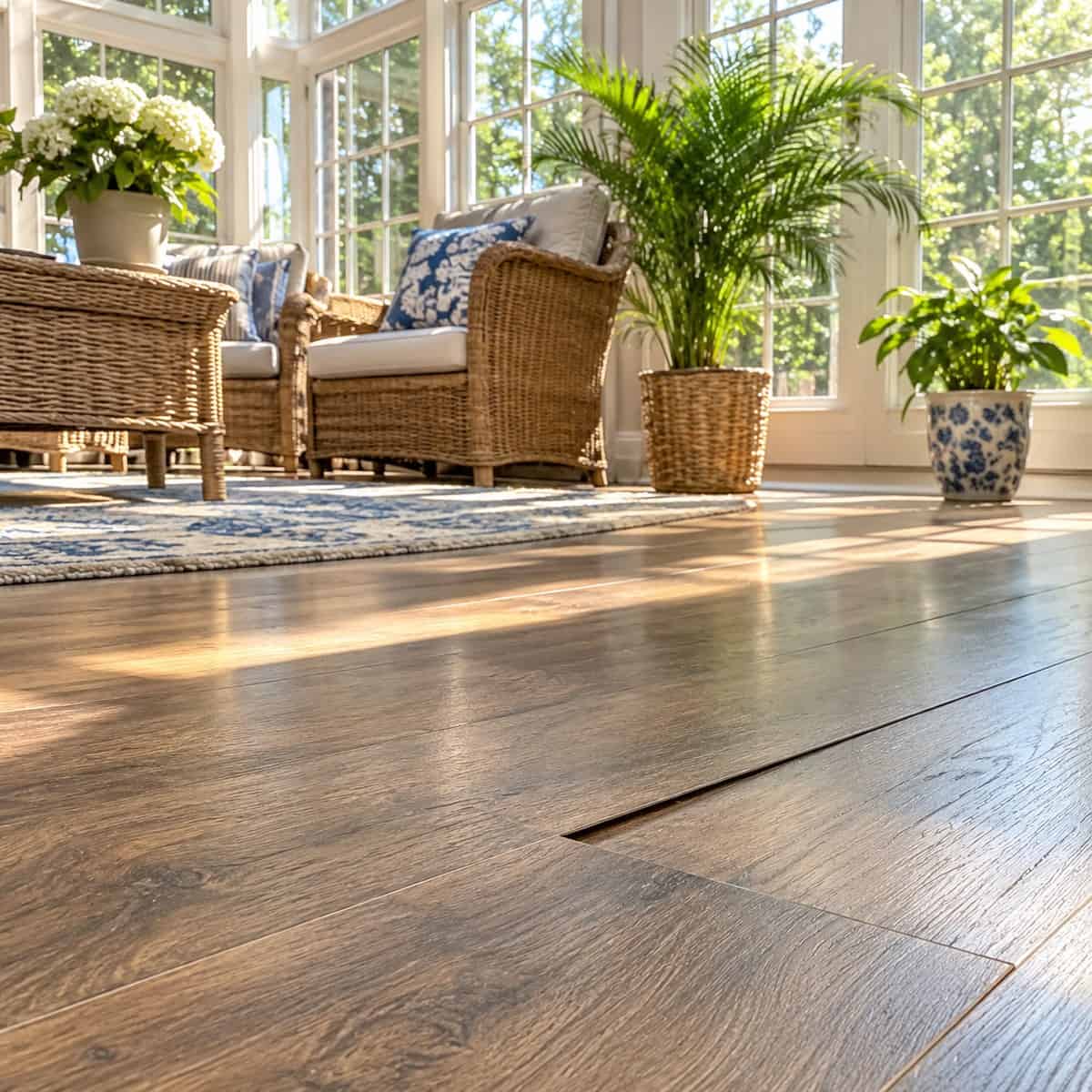
Rigid-core vinyl, sold as SPC or WPC, is marketed as waterproof and stable, so it often ends up in sunrooms and four-season porches. Direct sun through large glass can push its surface well past 100 degrees.
Heat makes vinyl expand. In front of a south-facing slider, planks can press against walls, separate at the ends or peak along a seam. Some manufacturers exclude rooms with intense direct sun or no climate control.
Read the install guide for temperature limits and leave the full expansion gap at every wall. Solar shades or low-e window film help. For a room that bakes all afternoon, porcelain tile is the steadier choice.
15. Polished Marble in a Working Kitchen

Carrara and other polished marbles make a kitchen feel like a European bakery. Most marble is calcite, a soft mineral that reacts with acid.
Orange juice, tomato sauce, wine and many household sprays leave dull marks called etches, which are physical damage to the surface rather than stains. Sealers keep liquids from soaking in but do nothing to stop etching. Grit tracked in from outside scratches the polish too.
Honed marble hides etches far better than polished. Many owners still bring in a stone restoration pro every few years at roughly $3 to $8 a square foot. A veined marble-look porcelain carries the pattern without the upkeep.
16. A Patchwork of Floors From Room to Room

Many houses collect flooring the way closets collect clothes: a remodel here, a clearance sale there. After 20 years, the main level can hold three kinds of tile, two woods and a strip of vinyl.
Each change needs a transition piece, and every threshold adds a small trip edge and a visual break. Rooms feel smaller, and the house reads as a series of patches rather than a planned whole.
Buyers and appraisers notice. For the main living level, pick one durable floor and run it through kitchen, dining, living room and halls. Bedrooms and baths can differ, as long as the tones relate to each other.
17. Engineered Hardwood With a Paper-Thin Top Layer

Engineered hardwood stacks a layer of real wood over plywood or a composite core. Its value depends on how thick that top layer is, and bargain products may carry as little as 0.6 to 2 millimeters.
Below about 2 millimeters, there is not enough wood to sand. Deep pet scratches or water stains mean replacing boards, and a full refinish is off the table.
A 3 to 4 millimeter wear layer can usually be sanded once or twice, and 6 millimeter products behave much like solid. Ask for the exact figure in writing, since some labels only mention a real wood surface. A few hundred dollars more at purchase can add decades.
18. Tiny Mosaic Tile Across a Whole Bathroom

Penny rounds and 1-inch hexes recall early 1900s bathrooms and suit old houses well. They also put a lot of grout underfoot, often 30 percent of the floor surface or more.
That grout absorbs soap scum, splashes around the toilet and dirty mop water. Regular mopping moves grime across the joints without lifting it, and the floor slowly darkens in uneven patches.
Epoxy or high-performance urethane grout resists stains and skips the sealing schedule, though it costs more and takes more skill to install. A mid-gray color hides more. For a family bathroom that needs to stay easy, larger tile with fewer joints is simpler to keep clean.
19. Plank Tile Laid at a Half Offset
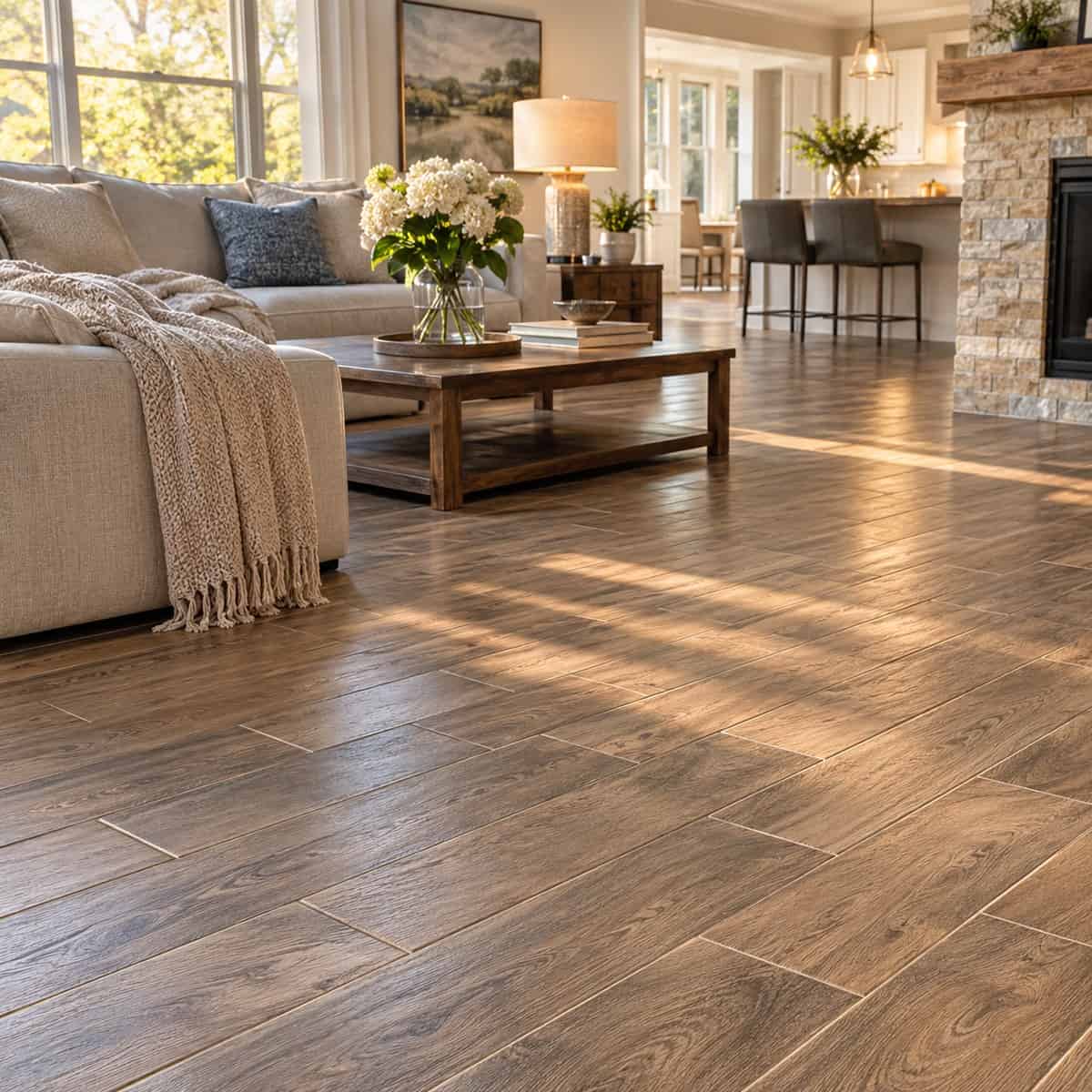
The classic brick pattern, with each row shifted halfway, is what most people picture. With long porcelain planks, it is often the wrong layout.
Rectangular tiles are rarely perfectly flat. Many have a slight crown or bow from the kiln. Shift them by half, and the high center of one tile lands beside the low ends of its neighbors, creating uneven edges called lippage that catch socks and collect dirt.
Industry guidance for tiles with any side longer than 18 inches calls for an offset of no more than 33 percent unless the manufacturer says otherwise. A clip-style leveling system also helps. Ask which offset the setter plans to use before the first tile goes down.
20. Espresso-Stained Hardwood
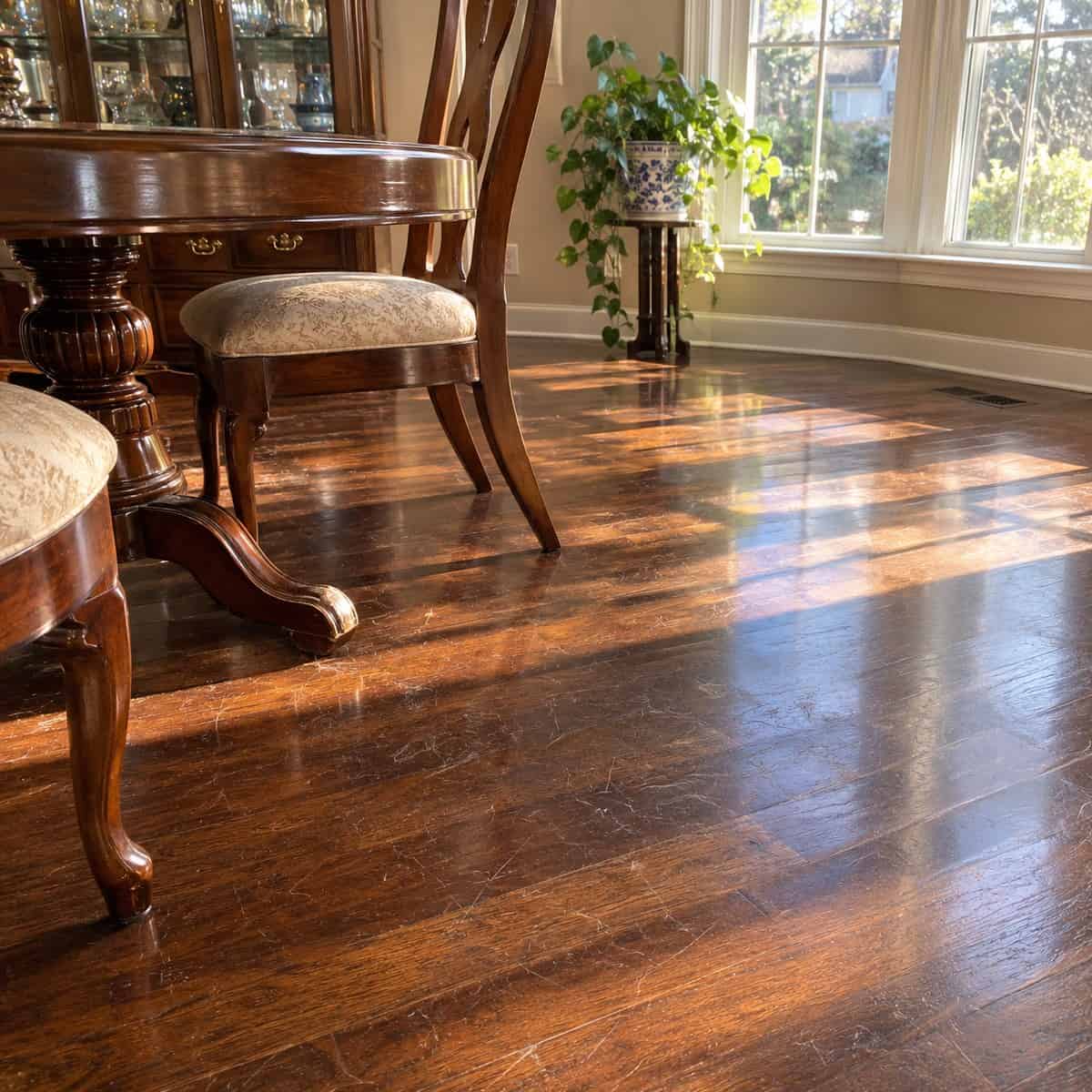
Very dark stains like ebony and espresso were the upscale look of the 2000s. On a sample board under showroom lights, they read as rich and formal.
In a house with sunlight, pets and kids, they show everything. Pale dust, crumbs and dog hair stand out, and any scratch through the stain exposes light wood beneath. Sun through large windows also fades dark stain unevenly near the glass.
Mid-tone browns hide daily wear far better. If an existing dark floor is due for work, a refinisher can sand to raw wood and apply a lighter stain, but that takes a full sanding, not a quick screen and recoat.
21. Bamboo in Kitchens, Baths and Laundry

Bamboo floors took off in the mid-2000s as an eco-friendly alternative to oak. The material is a grass, sliced into strips and glued into planks.
That glued structure reacts to moisture. Spills, slow leaks and humid summers can cause swelling, cupping and lifted edges. Inexpensive horizontal or vertical bamboo is also softer than many people expect and dents from a dropped pan.
Strand-woven bamboo from a reputable maker is much denser, and a well-finished one performs fine in living rooms and bedrooms. For kitchens, baths and laundry rooms, tile, quality sheet vinyl or rigid-core vinyl handle water far better.
22. Upstairs Click Flooring With No Sound Underlayment

Floating vinyl and laminate in second-floor bedrooms can make the rooms below feel like they sit under a drum. Footsteps, rolling chairs and dog claws carry straight through the ceiling.
The thin foam bundled with many floors offers little impact sound control. Many condo associations require flooring systems to meet a minimum impact insulation class, often IIC 50 or higher, for exactly this reason.
Choose an underlayment with published IIC and STC ratings, or a plank with a dense attached pad. Cork and rubber underlayments, usually $0.50 to $1.25 a square foot, noticeably cut noise below. Confirm the flooring maker approves it, since the wrong pad can void the warranty.
23. Bold Encaustic Cement Tile

Patterned cement tile, long common in Spain, Mexico and France, has become a favorite for kitchens and baths. Its colors are pressed in rather than glazed, and the body is porous.
Without regular sealing, it soaks up cooking oil, coffee and harsh cleaners, leaving shadows across the pattern. Acidic products can strip surface color. And a strong pattern across a large floor can start to feel busy within a few years.
Use a penetrating sealer and a pH-neutral cleaner, and plan to reseal every year or two. Porcelain versions deliver the same graphic look with far less upkeep. A powder room or entry is an easier place for a bold floor.
24. Carpet Laid Over Original Hardwood
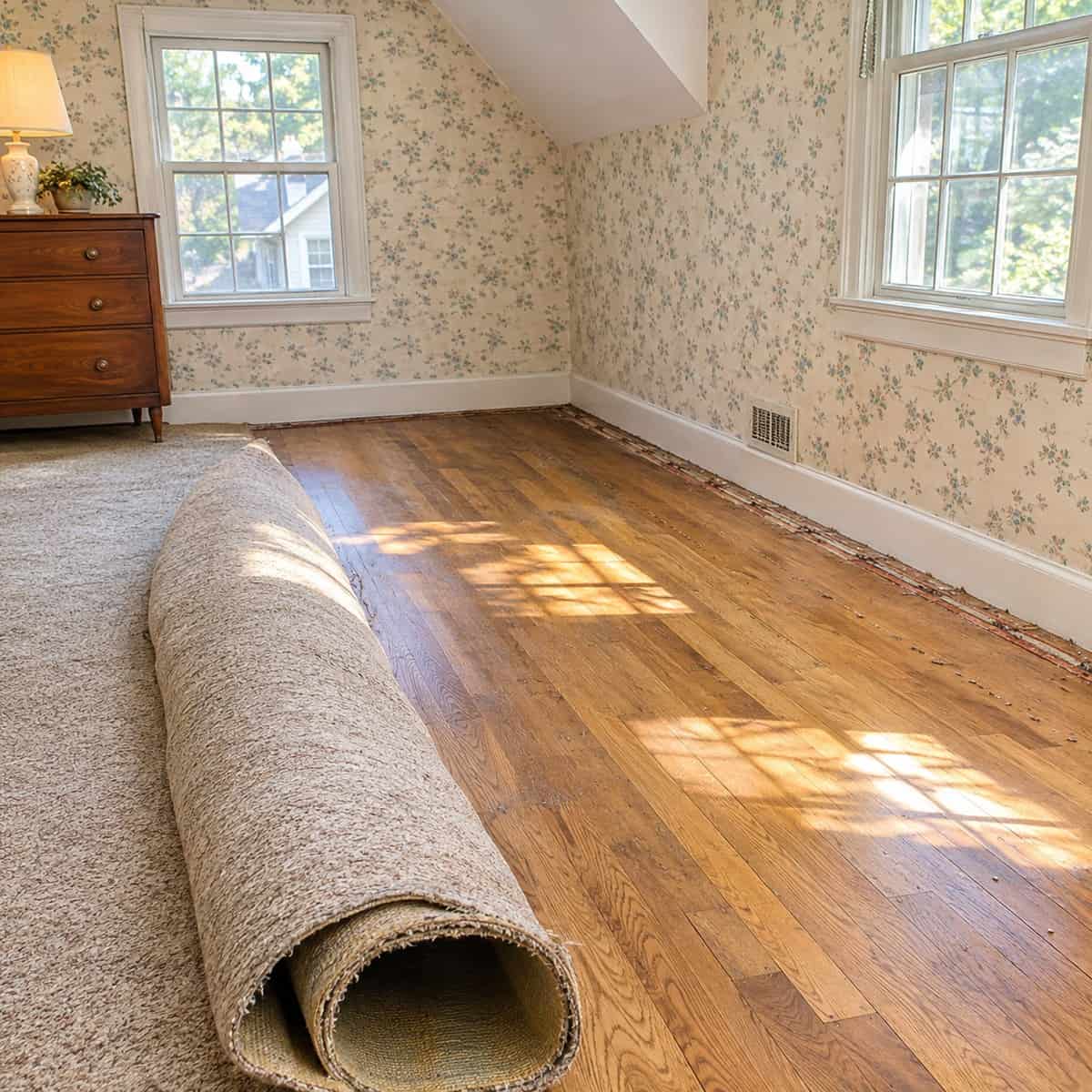
From the 1950s through the 1980s, many owners covered oak floors with wall-to-wall carpet. Installers nailed tack strips around every room and stapled the pad straight into the wood.
When the carpet finally comes up, the floor is often sound but scarred: rows of nail holes along the walls, thousands of staple holes and sometimes adhesive residue. Pulling every staple can eat a full weekend.
The damage is usually repairable. A refinisher can fill holes, replace the worst boards and sand the rest. If softness underfoot matters, area rugs over felt pads give it without covering the original floor again.
25. Near-White Marble-Look Porcelain

Large white porcelain printed with faint gray veining became the default bathroom floor of the late 2010s. With so little pattern, it looks spotless in listing photos and almost nowhere else.
Hair, lint, dust, dried water and the gray line along the base of the toilet all stand out against a near-solid white field. Many owners end up wiping the floor daily just to keep it looking clean.
Tile with stronger veining, a warm cream background or some tonal variation hides daily debris far better. A matte surface cuts visible water spots, and grout one shade darker than the tile keeps the joints from becoming the focal point.
26. Thin Brick Pavers in a Kitchen

Thin brick, about 1/2 inch thick, brings an old-world or farmhouse look and became a popular kitchen floor in the late 2010s. Its rough, porous face is a big part of the appeal.
In a kitchen, that texture traps grease and crumbs, and unsealed brick absorbs spills. Grout joints are often wide and recessed, forming ridges that snag mops and make wiping harder. Edges can chip when a heavy pot lands on them.
If brick is the goal, choose a sealed or glazed paver, apply a penetrating sealer plus a topcoat, and keep the joints close to flush. Many owners save the look for an entry hall or mudroom instead.
27. White-Painted Plank Floors

White-painted pine boards suggest a Maine cottage or a Swedish farmhouse, and they look bright and airy the week they are finished.
Paint is a surface coating, so it wears off wherever feet stop and pivot: doorways, the base of stairs, the spot in front of the stove. Chair legs and dog nails chip it, exposing raw wood that turns gray. Spot repairs rarely blend, since the older paint has dulled or yellowed.
For painted floors, use a porch and floor enamel over a bonding primer, topped with two coats of water-based polyurethane. Expect to repaint busy paths every three to five years. White oak with a natural or white-tinted finish gives a similar pale look that can be sanded instead of scraped.
28. Cork in a Bright, Sunny Room
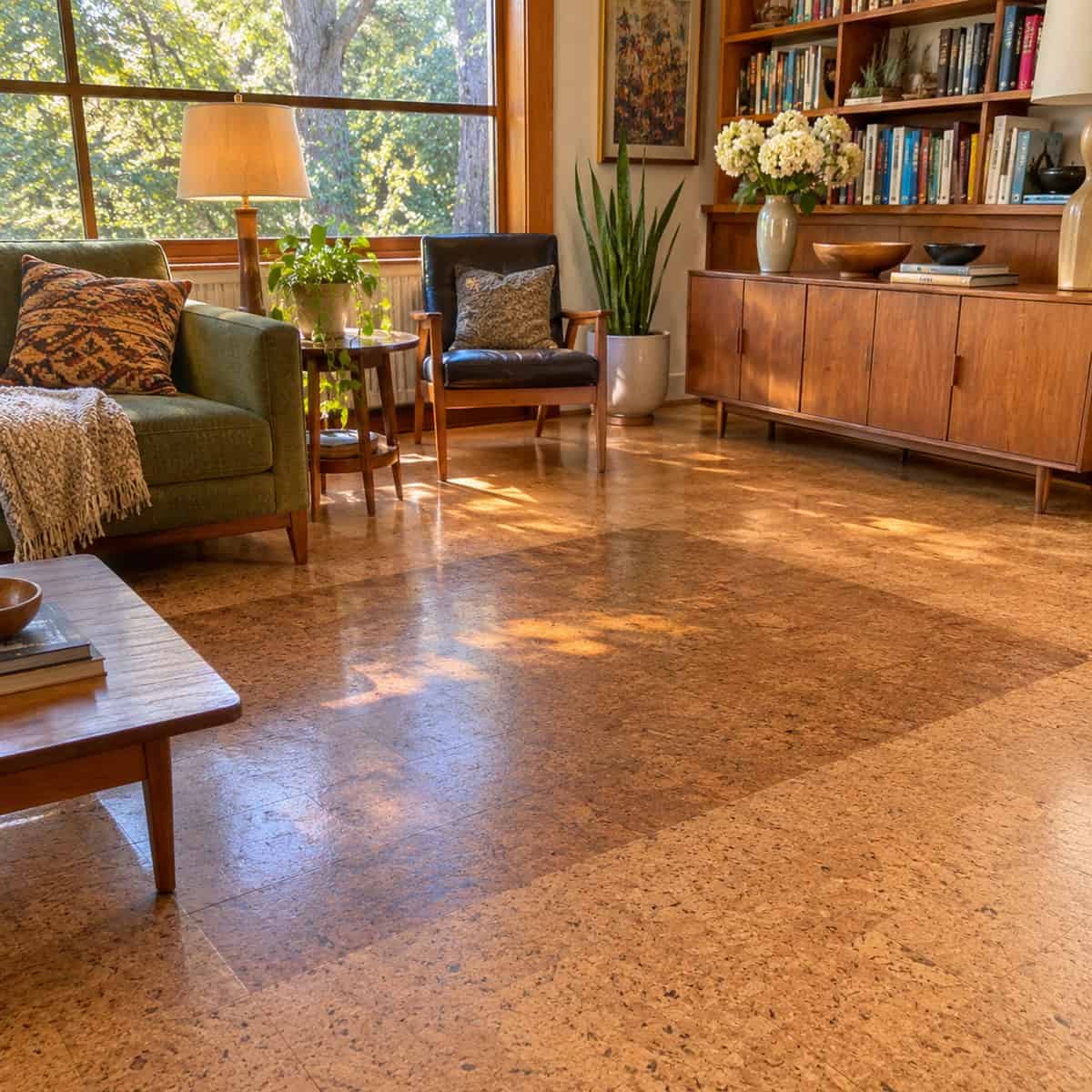
Cork is warm, quiet and easy on the joints, which is why it shows up in kitchens and playrooms. It was common in midcentury houses and returned in the 2000s as a renewable option.
It is also very sensitive to sunlight. Rooms with large south or west windows fade cork unevenly, so moving a sofa or rug can reveal a darker outline beneath. Its soft cell structure dents under heavy appliances and tears from pet claws.
Cork does best in rooms with indirect light or UV-filtering window film. Wide furniture cups, trimmed pet nails and a fresh topcoat every few years keep it looking good.
29. Solid Oak in a Full Bathroom

Wood in a bathroom feels warm and unexpected, and plenty of older houses have oak strip running right into the bath. Once a tub or shower is involved, though, the floor faces water every single day.
Moisture creeps under baseboards, around the toilet and along the tub. Boards darken, cup and can rot at the toilet flange, where a slow leak may go unnoticed for months. Sealing every seam against splashes is nearly impossible.
Wood works far better in a powder room with only a sink. In a full bath, wood-look porcelain gives the look without the risk. When keeping an existing wood bath floor, recaulk the tub regularly and check the toilet seal for leaks.
30. A Weekend Epoxy Kit on the Garage Floor

Big-box epoxy kits promise a showroom garage for around $150 to $300. Many start peeling within a year or two.
Most failures trace back to prep. Acid etching rarely opens the concrete enough for a strong bond, especially where oil or old sealer remains. Moisture rising through the slab pushes the coating off from below, and hot tires soften thin epoxy and lift it in patches.
A lasting garage floor needs diamond grinding, crack repair, a moisture test and a thick commercial-grade epoxy or polyaspartic system. Professional installs typically run $4 to $9 a square foot and usually come with a warranty.
31. A Floating Floor on an Uneven Subfloor

Click laminate, rigid vinyl and floating engineered wood lock together and rest on the subfloor without nails or glue. Over a dip or a hump, the planks bridge the gap and flex with every step.
That flexing wears the locking edges. Early signs are a soft spot underfoot, a faint clicking sound and small gaps at plank ends. Later, joints separate or snap. Most manufacturers require flatness within 3/16 inch over 10 feet, and ignoring it can void the warranty.
Check the floor with a long straightedge or a laser before installing. Fill low spots with patching compound or self-leveler, and grind or sand the high spots. That prep often adds $1 to $3 a square foot and is money well spent.
32. Polished Black Stone in a Bathroom
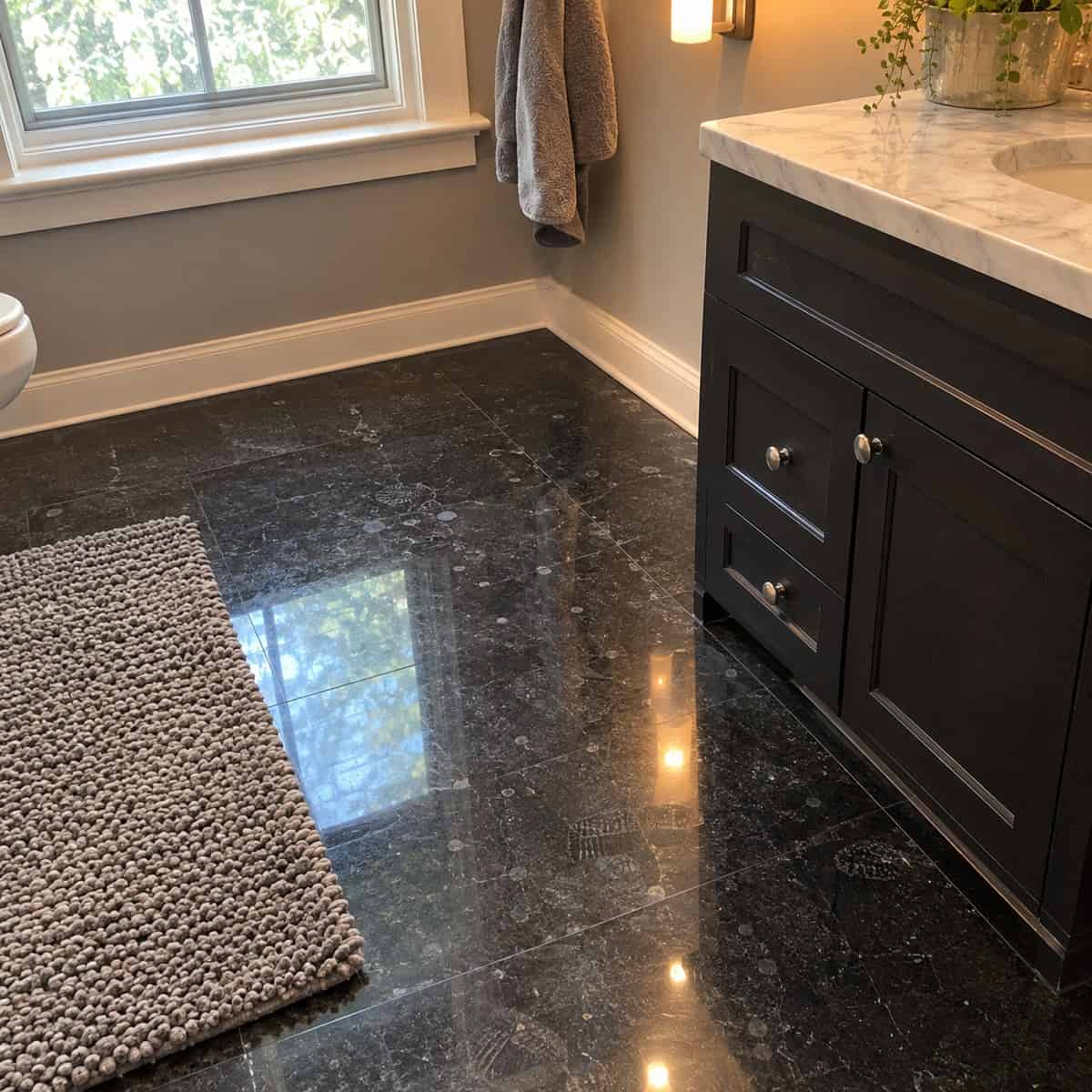
Polished black granite, black marble and glossy black porcelain make a powder room look sharp in photos. The finish behaves like a mirror and shows every smudge.
Footprints, dust, lint and dried water spots stand out on dark gloss, and hard water leaves a chalky white film that needs a mineral remover rather than everyday cleaner. Fine grit tracked from other rooms scratches the polish, and a wet glossy surface offers little grip.
For a dark floor that forgives daily use, choose a honed or textured finish in charcoal or soft black. Slate, soapstone and matte porcelain look rich without constant wiping. A whole-house water softener also cuts spotting.
What to Ask Before the Order Goes In
Most floors on this list are decent materials placed in the wrong room or bought at the wrong spec. The failures were written on the box or the install sheet long before anyone noticed them on the floor.
Before buying, get three answers in writing: the wear layer or veneer thickness, the manufacturer’s moisture and flatness requirements, and whether the room actually meets them. A $30 moisture test and a 10-foot straightedge catch problems that no showroom sample will reveal.
When an older house already has a solid wood floor, start with a refinishing quote. Repairing what is there is usually cheaper, and it often lasts longer than whatever would replace it.