

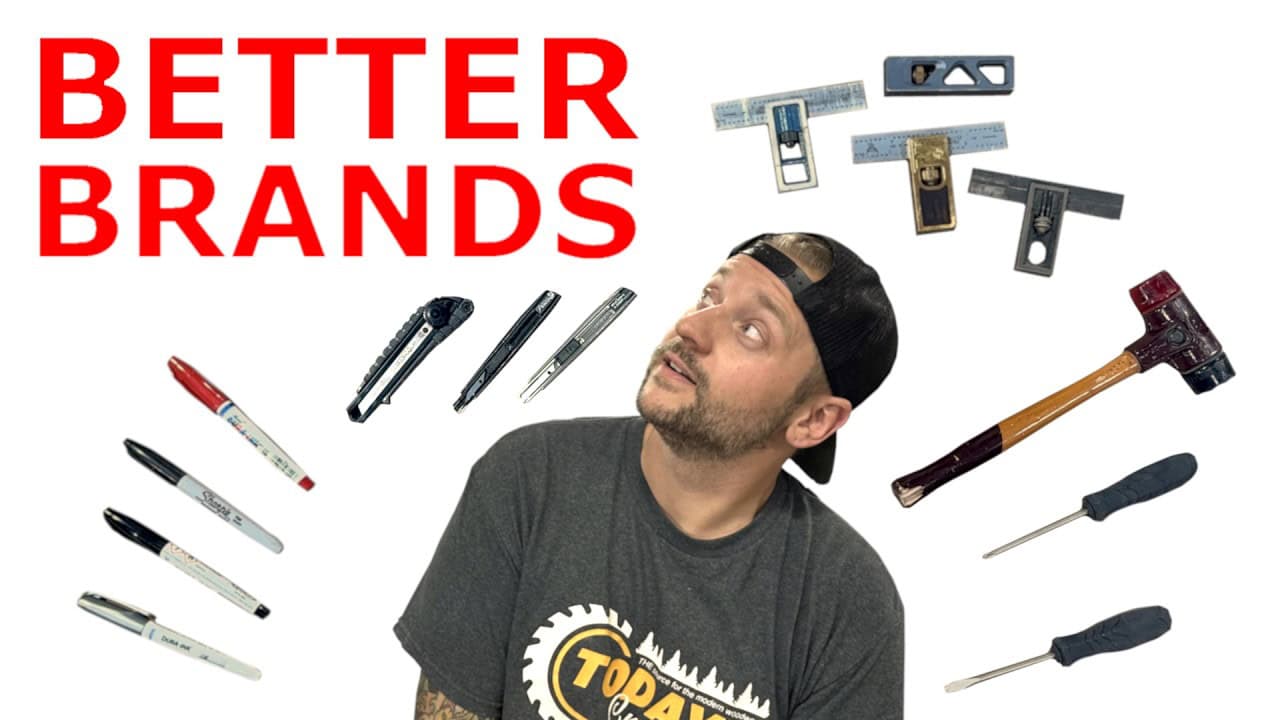
Jeff and Jon from TodaysCraftsmen shared the woodworking tip featured in this video.
Most tradespeople end up buying the same handful of tool brands simply because they are the most familiar names on the shelf. This video breaks that habit by highlighting five lesser-known brands that Jeff and Jon have switched to over the years, covering everything from marking tools to screwdrivers. Each one is presented as a direct upgrade over the more common options most people already own.
Watch the full video and subscribe to TodaysCraftsmen:


A Better Marking Pen
The video opens with a simple swap that inspired the whole idea: trading a standard permanent marker for a fine-tip pen made by a different manufacturer. Jeff explains that the alternative holds its point far longer than a typical marker, even after being used on rough lumber that would normally wear down a standard tip quickly.
The price is comparable to what most people already pay for a marker, making it an easy switch with no real downside. For anyone who marks layout lines constantly throughout the day, a longer-lasting tip means fewer replacements and cleaner, more consistent marks.
Snap-Off Utility Knives
Jeff moved away from traditional fixed utility knives years ago in favor of snap-off blade knives, and within that category, he eventually found a brand he prefers over the more commonly known Japanese manufacturer most people default to. The alternative brand offers a diecast body with a similar internal mechanism, but with a noticeably better feel in the hand and a more adjustable, tactile locking mechanism.
Several sizes are shown, including a smaller precision blade and a larger one fitted with a small pull-saw accessory blade, which turns the knife into a multi-purpose tool for a tool belt. Pricing stays in the same range as the more popular brand, so the upgrade comes without any real cost tradeoff.
An Upgraded Mallet
A common two-face mallet made in the USA gets compared to a German-made alternative that Jeff has relied on for several years. The main difference comes down to replaceable faces: the more common mallet has a fixed head that becomes damaged and unusable once it gets marred up, while the German version allows worn faces to be swapped out affordably.
Different face materials, from soft rubber to hard plastic, can be mixed and matched depending on the task at hand. This kind of modularity extends the life of the tool significantly and makes it a smarter long-term investment for anyone doing repetitive assembly work.
Precision Squares Beyond the Big Name
Machinist squares from a well-known American brand are often considered the gold standard, but Jeff points out that there are accurate, US-made alternatives available for less money, especially when buying blemished units that only have cosmetic imperfections. These squares perform identically to the premium name-brand version while costing a fraction of the price.
The video also touches on custom-made square bodies crafted from materials like brass and exotic wood, paired with the same precision blades used in the budget-friendly alternative. These custom versions are positioned as a splurge item for woodworkers who already have their core tool needs covered and want something special to add to their kit.
Everyday Screwdrivers
Rounding out the list is a set of screwdrivers from a Japanese brand that Jeff started using in place of the classic hardware store sets most people grew up with. The set includes a full range of Phillips, slotted, and stubby drivers, all housed in a full-tang design that can handle light prying or mallet taps without damage.
The price point is well below premium retail options while still outperforming basic hardware store sets in both grip comfort and build quality. It is presented as one of the easiest upgrades on the list, delivering noticeably better tools for a modest cost increase.
Why It’s Worth Branching Out
None of the alternatives featured in this video require a big leap in budget, yet each one offers a tangible improvement in durability, comfort, or precision. The larger takeaway is that sticking with the most recognizable brand name is not always the best path to the best tool for the job.
Trying out lesser-known manufacturers, especially in categories where everyone tends to buy the same default option, can lead to small but meaningful upgrades in daily shop work. Jeff and Jon’s rundown offers a good starting point for anyone looking to rethink their everyday tool choices.
See Jeff’s plans here: https://www.todayscraftsmen.com/

Matt’s Take
These are my personal thoughts and tips based on my own experience in the shop. This section is not written, reviewed, or endorsed by the original creator of this project.
I like this list because it’s not about chasing shiny new gear, it’s about paying attention to the tools you touch every single day. Marking pens, utility knives, screwdrivers – these are the things that get picked up dozens of times per project, so small improvements in feel or durability add up fast over time.
The mallet upgrade is worth thinking about if you do a lot of assembly work. A fixed-head mallet eventually gets chewed up and that’s it, you’re buying a new one. Modular faces let you keep the handle and body for years while just swapping out the wear parts. It’s the same logic as buying a plane you can re-sharpen versus a disposable one – upfront cost matters less than long-term value.
On the squares, buying blemished units from a quality manufacturer is a solid move that more woodworkers should know about. Cosmetic flaws don’t affect accuracy, and checking a square against a known-true reference or a machined edge before you trust it is just good practice regardless of brand or price point.
One general safety note on snap-off utility knives: always snap off dull segments cleanly using the built-in breaker slot, and dispose of the used blade sections in a dedicated sharps container. It’s easy to get casual with these blades since they feel disposable, but a dull or cracked tip is more likely to slip than a fresh one.