

You find the house. The kitchen’s perfect. The light in the living room is exactly right. And then a semi downshifts outside the window and you remember where you’re standing.
Here’s what agents know that most buyers learn too late. The house is only half the purchase. The street is the other half — and you can’t renovate a street.
Some locations cost you money the day you sign. Some cost you your sanity at 3 a.m. Some quietly follow you all the way to the closing table when you try to sell.
None of them show up in the listing photos.
Here are 24 streets to think hard about before you fall in love with the house on them.
1. Four-Lane Arterial Roads and Busy Through-Streets

This is the most common trap of all. Buyers tour the house, fall for it, then stand at the curb and hear the traffic.
Arterials carry steady noise all day and headlights all night. The house doesn’t get a break, and neither will you.
Agents will tell you these homes sell slower and for less. Steady all-day traffic can quietly shave value off an otherwise great house, and every buyer after you will hear exactly what you’re hearing now.
Tour it at rush hour. Not on a quiet Sunday morning.
2. Streets Right Off a Highway On-Ramp or Freeway

Freeway-adjacent living is a double hit. There’s the relentless noise. And then there’s the part you can’t hear.
People living within roughly 200 meters of a major highway breathe far more ultrafine particulate than people a few blocks back, and studies have tied that pollution gradient to elevated asthma risk in children. Research from Imperial College London has even linked chronic road noise to higher heart-disease risk.
The noise you’ll adjust to. The air is a health question, not a comfort one.
Walk away.
3. Streets Backing Onto Active Railroad Tracks

Trains might run four times a day. Buyers will act like they run four times an hour.
Homes within about 1,000 feet of tracks tend to sell for roughly 10% less and sit on the market longer, even on lightly used lines. The fear does the damage whether or not the freight actually comes.
And when it does come, it comes at night, with a horn built to be heard a half-mile away.
You’ll be selling to the same skittish buyer pool you’re standing in right now.
4. Streets Running Under High-Voltage Transmission Lines

Not the wooden telephone poles down every street. The big steel lattice towers marching across the landscape.
Homes within 1,000 feet of high-voltage lines have been measured selling for roughly 17.9% less than comparable homes. That’s not a rounding error — that’s a room’s worth of value.
The worst part is permanence. The utility easement means those towers aren’t going anywhere, ever.
You buy at a discount. You sell at a discount. The tower wins both times.
5. Streets Facing an Electrical Substation

Less famous than the big towers, and still a turnoff. A substation is a fenced industrial box that hums, and buyers don’t love humming.
Homes within 100 meters have been found selling 2% to 9% less, with the biggest drag when the substation sits in direct sightline of the front windows.
Add the EMF worries — fair or not — and you’ve shrunk your future buyer pool before you’ve unpacked.
A fence and a shrub won’t hide it.
6. Streets With a Cell Tower on the Block

The federal government put this one in writing. HUD classifies a nearby cell tower as a hazard and nuisance that an appraiser is expected to comment on.
Most people have no idea that’s official. Surveys consistently show the majority of buyers would pay less for a home near a tower.
Perception is the whole game here. It doesn’t matter whether the tower is safe — it matters that your buyer thinks it isn’t.
Skip it.
7. Streets Inside a FEMA High-Risk Flood Zone
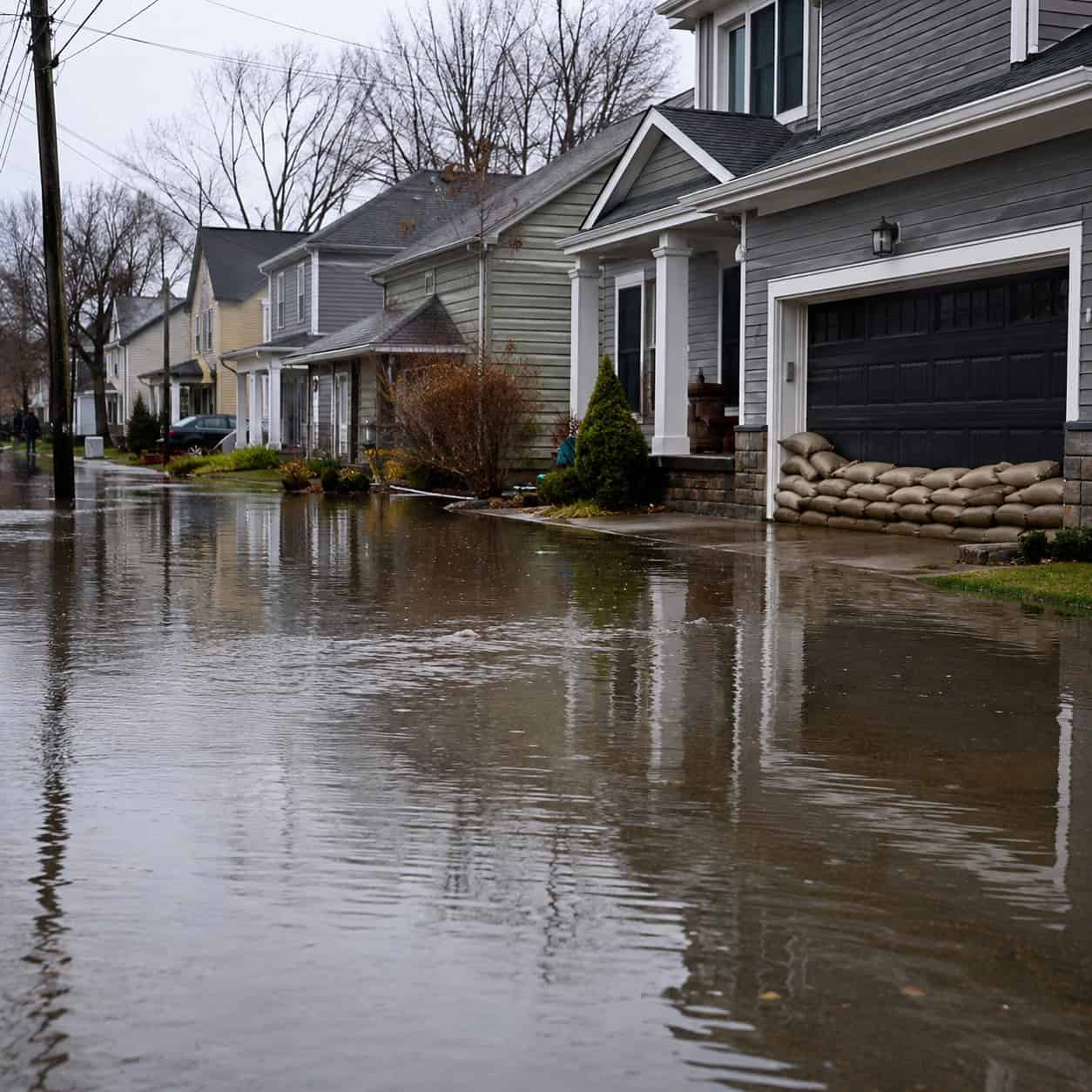
This is the one that can quietly bleed you for the entire time you own the house.
A home inside a FEMA high-risk zone — a Special Flood Hazard Area — usually comes with mandatory flood insurance if you have a federally backed mortgage. That’s not a one-time cost. That’s a bill every single year, and premiums have climbed sharply under FEMA’s Risk Rating 2.0 pricing, sometimes running well into the thousands annually.
The resale drag stacks on top. A National Bureau of Economic Research study cited by lenders found floodplain homes valued roughly 4.4% to 13.3% below comparable homes on dry ground.
Before you make an offer, pull the flood map yourself. The National Association of Realtors publishes plain-language flood-zone tips, and FEMA’s own map service lets you check any address free. Ask for an Elevation Certificate — it can dramatically change your premium. Ask the seller for their actual insurance bill, not an estimate.
And remember that zones get redrawn. A house on the edge of a zone today can land squarely inside it after the next map revision. If you’re already weighing an older property, this belongs right next to the other red flags that can bankrupt you before you notice.
Great house, wrong dot on the map, and you’re paying for it forever.
8. Streets at the Bottom of a Hill or in a Floodway
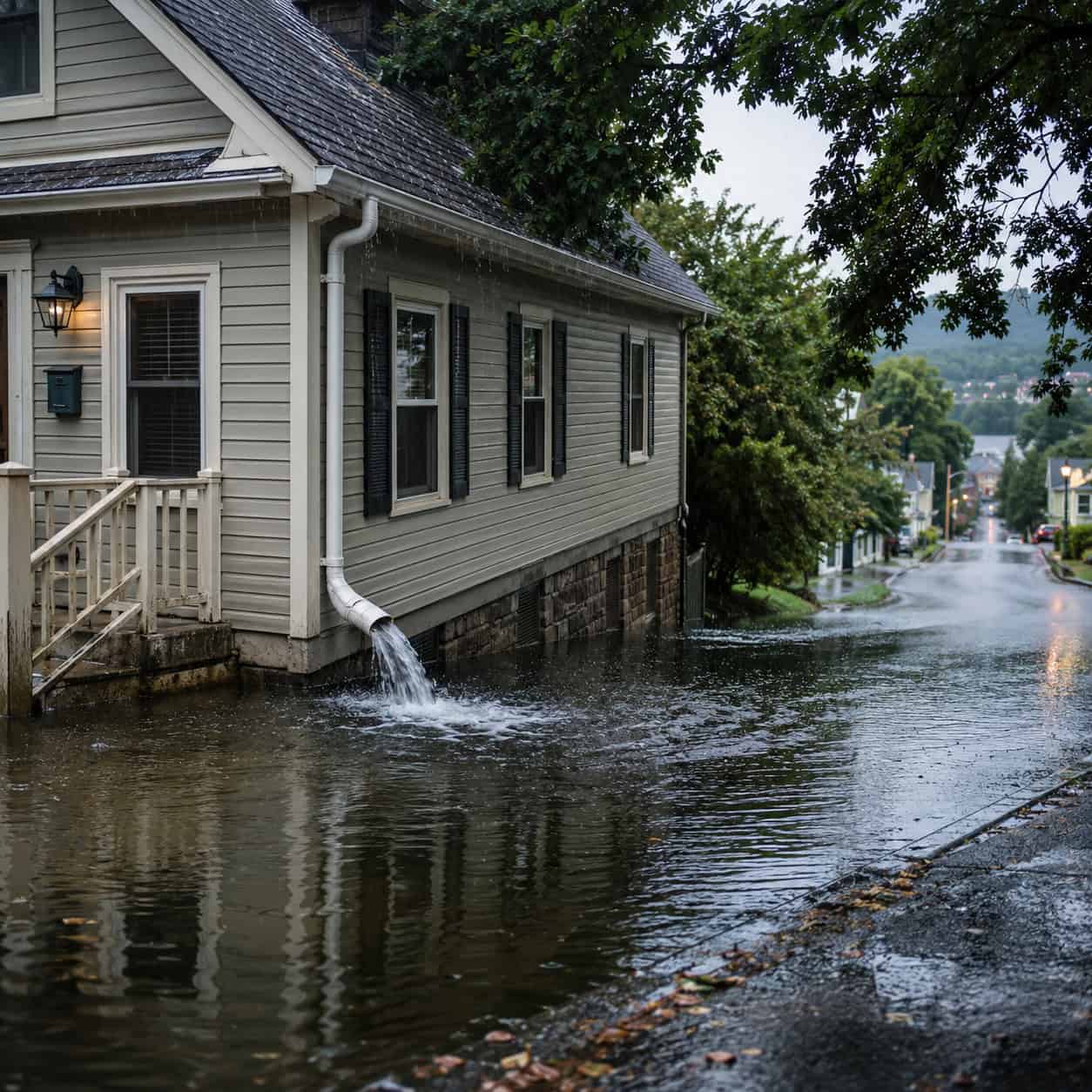
This one isn’t about a map. It’s about physics.
The lowest street in a neighborhood is where every neighbor’s runoff ends up. Rain from a dozen higher lots funnels down and pools right where you parked.
A mapped flood zone is one problem. An active floodway is another entirely — it’s so heavily restricted for construction that you may not even be allowed to rebuild or expand the way you’d want to. That’s one of the clearest walk-away signals in real estate.
Look at the grading before you look at the granite. Does the ground slope toward the foundation or away from it? Are there stains on the basement walls at a consistent height? Is there a sump pump — and if so, why did someone decide it was necessary?
Visit after a hard rain. That’s when the truth shows up. A house can look bone-dry in July and take on water every March, and no photo will ever tell you that.
Standing water against a foundation is slow, expensive destruction. Cracked footings, heaving slabs, and mold don’t announce themselves until the repair bill does.
9. Streets Bordering a Landfill or Old Dump

The smell and the truck traffic are the obvious part. The buried history is the expensive part.
Research pegs the value hit at anywhere from 2.7% to 14%, with active landfills dragging harder than closed ones. Even a long-shuttered dump can carry contamination and land-use restrictions that never fully go away.
Closed landfills also generate methane for decades. That’s why capped sites have gas-monitoring wells — the gas has to go somewhere, and you don’t want it migrating toward a basement.
Do the homework before you commit. Check the EPA’s records and your state environmental agency for the site’s history and any monitoring requirements. Ask whether there’s an environmental deed restriction on the parcel. If the property is close, a Phase I environmental assessment is money well spent.
An old dump doesn’t stay in the past. It sits under the ground and keeps producing problems.
10. Streets Downwind of a Sewage Treatment Plant

The cruel twist here is timing. You can tour the house three times and smell absolutely nothing.
Then you move in, and one humid morning the wind shifts and the whole street reeks.
Agents flag these blocks for a reason, and the homes reliably sell for less. Odor is intermittent, which means it’s unpredictable, which means buyers assume the worst.
Protect yourself before you sign. Check the plant’s overflow and violation records — most treatment facilities report to the EPA, and the data is public. Learn the prevailing wind direction for the area and see whether the house sits downwind of the plant on a typical day.
Talk to the neighbors, honestly. Ask them straight: how often does it smell out here? People who live with it will tell you.
You can’t renovate away a bad breeze.
11. Streets With a Gas Station on the Corner

Appraisers treat this one seriously. Because of the flammable liquids stored on site, a gas station near the property actually gets recorded on the FHA appraisal report as a health and safety consideration.
That’s not stigma. That’s a documented hazard flag.
The bigger long-term worry is underground. Older stations sit on top of steel fuel tanks, and leaking underground tanks have contaminated soil and groundwater at sites across the country.
If a station is next door or nearby, take it seriously. Ask whether the tanks have been upgraded to modern double-walled standards, check state environmental records for any reported leaks or remediation, and consider soil testing if the house is directly adjacent.
Convenient for filling the tank. Not convenient for anything else.
12. Corner Lots at a Busy Intersection

Not every corner lot is a problem. A quiet corner in a sleepy neighborhood can mean a bigger yard and more light.
A corner at a busy intersection is a different animal.
Now you’ve got traffic on two sides instead of one. Headlights sweep across the living room from two directions, and the accident risk climbs where cars are turning and stopping.
The tell is the stop sign or signal. A four-way stop at your corner means every car brakes, idles, and accelerates right outside your window — all day, every day.
Know which corner you’re buying.
13. Streets That Dead-End Into a Commercial Strip

You’d think being able to walk to shops would help. In the suburbs, it often doesn’t.
An MIT-cited study found suburban homes sitting too close to retail clusters sold for about 8% less. Walkable retail lifts urban condos and sinks suburban houses — same amenity, opposite effect.
The reasons are unglamorous. Parking spillover onto your street, dumpster smells drifting over the fence, and delivery trucks beeping at 5 a.m.
Convenience has a volume knob, and someone else controls it.
14. Streets Ringing a Cemetery
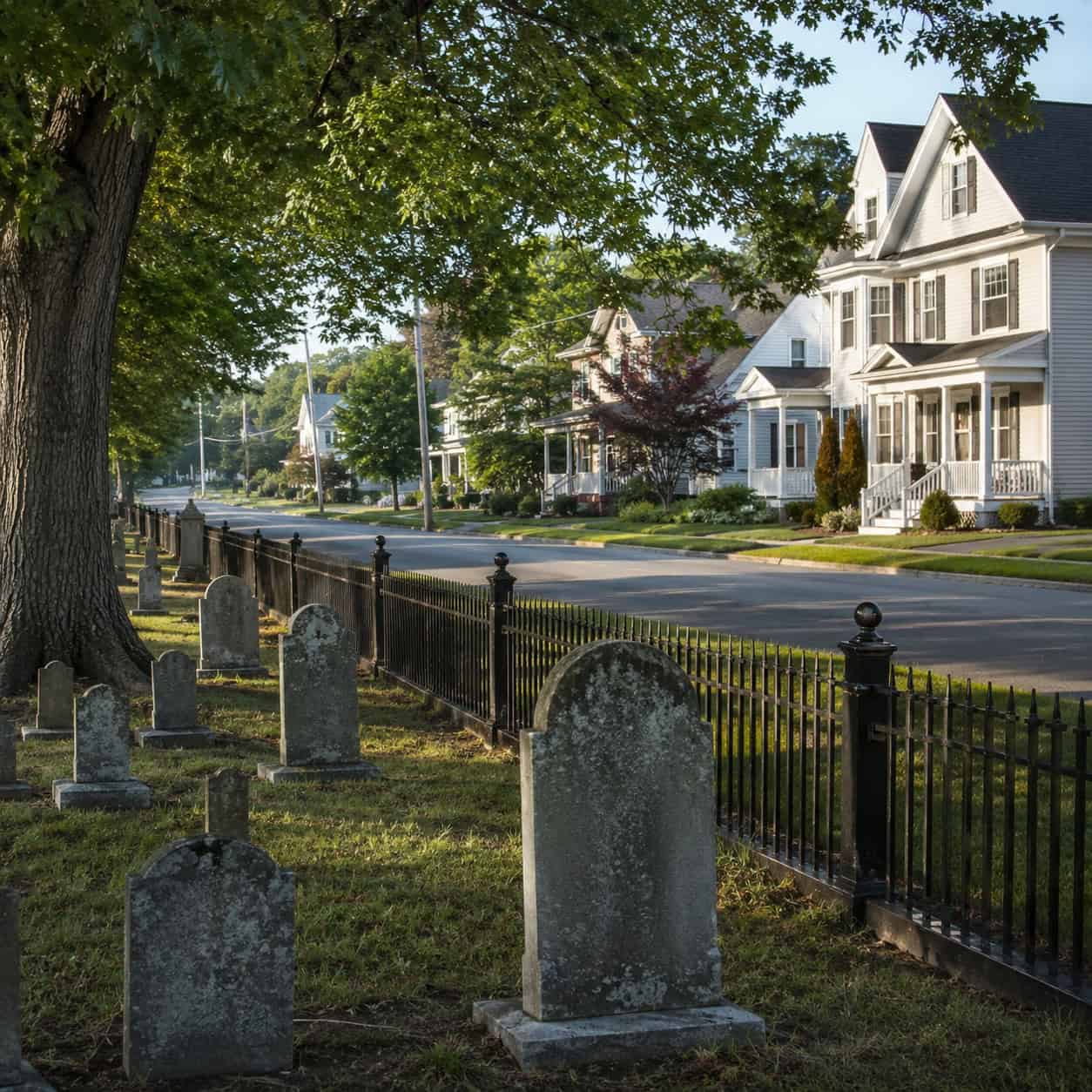
Here’s an honest one. The hard data is murky — several appraisal studies find no consistent value effect from living near a cemetery.
But Realtor.com data has shown median prices roughly 12% lower near cemeteries. Not because of anything physical. Purely because of stigma and a smaller pool of buyers willing to consider it.
A cemetery is quiet. It never gets developed. Traffic is minimal. On paper it’s a decent neighbor.
The problem is that your future buyer votes with their gut, and some of them will simply cross the street off their list. Fewer buyers means less competition for your house when you sell.
15. Streets Under an Airport Flight Path

You can muffle road noise. Trees help, fences help, a berm helps.
Nothing you plant stops a jet passing overhead every few minutes.
Airports sit right alongside highways and rail lines on the classic list of proximity problems that appraisers and buyers dock for. And flight paths change — the FAA can reroute approaches, so a quiet house today can end up under the pattern tomorrow.
Stand in the backyard for an hour. Count the planes. That’s your future summer evening.
16. Streets Backing Onto an Industrial Zone or Rail Yard

Industrial proximity is a named noise-pollution value killer, and the trouble stacks.
Early-morning truck traffic. Floodlights that never turn off. Fumes on a still day. Backup alarms before dawn.
Then there’s expansion risk. An industrial zone is zoned to grow, which means the operation behind your fence can get bigger and louder, and you have almost no say.
It pairs with the landfill and sewage problems for a reason — same category of neighbor you can’t negotiate with.
17. Streets Packed With Rentals, Foreclosures, and Vacant Homes

Your house can be immaculate and still lose value from what surrounds it.
Foreclosures and vacant, abandoned homes drag the comparable sales down. When the appraiser pulls comps, those distressed sales count against you whether you like it or not.
A block that’s tipped heavily toward rentals and empty houses is telling you something about where the neighborhood is headed.
Drive it on a weeknight. Count the dark windows, the overgrown lawns, the for-rent signs. The listing won’t mention any of them. If you want a fuller checklist of these warning signs, this rundown of home red flags to spot no matter how good the price looks covers plenty more.
18. Streets on a Hospital or Fire Station Siren Route

Living near emergency services sounds smart until your first bad night.
The approach roads to hospitals and fire stations carry sirens around the clock. Convenient during a crisis, miserable at three in the morning when you’re not the one having the crisis.
Buyers underestimate this until they’ve spent one night on the block. Then they never forget it.
Sit on the porch one evening before you decide. Your ears will tell you the truth faster than any inspection.
19. Streets Right Beside a School’s Drop-Off Zone

A strong school district lifts your value. The street directly at the drop-off gate is a separate story.
Twice a day, that block turns into a parking lot. Cars idling, doors slamming, crossing guards, a river of brake lights for forty-five minutes each morning and afternoon.
Then there’s the after-hours schedule — games, practices, events, and the parking that comes with all of it.
Near the school is an asset. At its curb is a headache. Know which one you’re touring.
20. Streets Clustered With Bars and Late-Night Nightlife

Fun by day. Chaos by midnight.
Closing time brings crowds, car alarms, and parking wars right to your doorstep. Loud, raucous surroundings measurably damage resale appeal, and this is the opposite of that quiet cemetery block.
The catch is the schedule. A nightlife strip is calmest exactly when buyers tour it — weekday afternoons.
Come back on a Friday at midnight before you make an offer. That’s the version of the street you’ll actually be sleeping next to.
21. Streets Near a Stadium or Arena

Dozens of times a year, your street becomes someone else’s parking lot.
Game nights and concerts turn quiet blocks into tailgate zones and traffic jams. Picture the playoffs: cars packed bumper to bumper, and you sitting in your own driveway, unable to back out.
Some homeowners rent their driveways on event days and make peace with it. Most just grit their teeth.
Ask how many events the venue hosts a year. The number is usually higher than you’d guess.
22. Streets Near an Old Quarry, Mine, or Sinkhole-Prone Ground

This one’s about what’s under the ground, not beside it.
Land above old mines, quarries, or karst limestone can subside, and subsidence cracks foundations. It also spooks lenders and insurers, which makes both the buying and the selling harder.
It’s more regional than most items on this list — but if you’re in an area with a mining or sinkhole history, it’s non-negotiable homework.
Check the geology before you check the countertops. A cracked foundation from ground movement is among the ugliest bills a homeowner can face.
23. Streets With No Sidewalks or Poor Walkability

This is the quiet one. No siren, no smell, no tower — just an absence.
Walkability consistently lifts home value, so its absence works against you in the background. A street where you can’t safely walk the dog or push a stroller is a harder sell than one where you can.
It’s softer than the rest of this list. It won’t wreck you. But it’s a slow, steady drag on desirability that follows the house to resale.
Buyers notice sidewalks even when they don’t realize they’re noticing.
24. Streets Bordering a Prison, Jail, or Halfway House

The stigma here is heavy, and stigma shrinks your buyer pool fast.
Plenty of these facilities are quiet and well-run, and the real-world impact is often smaller than the fear. But you’re not just buying — you’re eventually selling, and your future buyer inherits the same first reaction you probably just had reading this line.
A smaller buyer pool means longer days on market and softer offers.
Fair or not, that’s the math you’ll be selling into.
Here’s the thread running through all 24. Every one of these is something the house can’t fix. New paint, a gut renovation, a stunning kitchen — none of it moves the tracks, quiets the freeway, or fills in the flood zone.
Let’s put the worst offenders side by side, because they fail in different ways.
| Hits Your Wallet | Hits Your Quality of Life | |
|---|---|---|
| Flood zone | Yearly insurance + resale | Water anxiety |
| Power lines | ~18% value cut | Permanent eyesore |
| Freeway | Slower, cheaper resale | Noise + air quality |
| Nightlife strip | Weaker resale appeal | Weekend noise |
| Railroad | ~10% haircut | Night horns |
Some of these cost you money. Some cost you sleep. The bad ones cost you both — and they never stop.
Tour the street, not just the house. Go at rush hour, go at midnight, go after a hard rain. The listing photos will never show you what you actually need to see.
Fall in love with a house all you want. Just make sure you can live with its address.
My friend lives between the railroad tracks and a fire station!
Yeah, man, that ~10% HAIRCUT living next to a railroad is killer!
I live near a cell tower, but I can’t see it because of surrounding trees. It has premium 5G and cell service that never goes down. I think that’s a good thing.